Guanábana Cimarrona
Annona montana
Quick facts
Native Region
Central America, Caribbean, northern South America
Max Height
5-12 meters (16-40 feet)
Family
Annonaceae
Conservation
LC — Least Concern
Uses
Safety Information
CAUTION
The fruit pulp is SAFE to eat after completely removing ALL seeds—but the taste is very sour/acidic and the texture is fibrous and grainy, making it less enjoyable than cultivated guanábana (*A. muricata*). Use in juice with added sugar or mix with sweeter fruits. NEVER eat seeds—they are poisonous. Do NOT use leaves medicinally without expert supervision. Traditional medicinal uses have risks. Pregnant and breastfeeding women should avoid consuming any parts except the seedless fruit pulp. The sap may cause mild skin irritation—avoid contact with eyes.
Toxicity Details
The SEEDS are HIGHLY TOXIC and must NEVER be consumed. Seeds contain high concentrations of annonacin and other acetogenins that are potently neurotoxic. Ingestion of seeds can cause severe nausea, vomiting, diarrhea, and potentially serious neurological symptoms including tremors and altered consciousness. The FRUIT PULP is SAFE to eat when ALL seeds are completely removed—however, the pulp is very sour and fibrous, making it less palatable than cultivated guanábana. LEAVES contain the same neurotoxic compounds as seeds and should NOT be consumed except under expert guidance (traditional medicinal use of leaf tea has been associated with atypical Parkinsonism syndrome when consumed chronically). BARK and ROOTS also contain toxic alkaloids.
Skin Contact Risks
Sap and leaf contact may cause mild skin irritation in sensitive individuals. Wash hands after handling leaves or bark. The fruit flesh is safe to handle.
Allergenic Properties
Low risk of allergic reactions. Rare cases of oral allergy syndrome have been reported in individuals sensitized to other Annona species or tropical fruits. Contact dermatitis from sap is uncommon but possible.
Structural Hazards
No structural risks. Tree has a relatively small stature and flexible branches that rarely break. Does not pose hazards to structures or people.
Wildlife & Pet Risks
Seeds are toxic to most domestic animals including dogs, cats, birds, and livestock. Fruit pulp (completely seedless) is generally safe for wildlife. Wild animals (monkeys, bats, birds) safely consume and disperse seeds—but pets should not be allowed near fruits or seeds.
First Aid & Emergency Response
• If ingested, seek immediate medical attention. Do not induce vomiting unless directed by medical professional.
• If sap contacts skin, wash immediately with soap and water. Seek medical attention if blistering or severe irritation occurs.
• If sap enters eyes, flush immediately with clean water for 15 minutes and seek emergency medical care.
Costa Rica Emergency: 911
Costa Rica Poison Control: 2223-1028
Season
Flowering
Mar-Jul
Fruiting
Jun-Nov
How to identify
Guanábana Cimarrona (Wild Soursop)
The Guanábana Cimarrona (Annona montana), also called Wild Soursop or Mountain Guanábana, is the wild, untamed relative of the beloved cultivated guanábana (A. muricata). Native to the humid forests of Central and South America, this vigorous tree produces medium-sized yellowish fruits that, while edible, are significantly more sour, acidic, and fibrous than their cultivated cousin. The Spanish name "cimarrona" (from cimarrón, meaning "wild" or "untamed") reflects its forest origins and less-domesticated character. While not commonly cultivated for fruit, Guanábana Cimarrona is valued as a hardy shade tree, wildlife food source, and ingredient in traditional medicine and beverages where its extreme tartness can be balanced with sugar.
Quick Reference
iNaturalist Observations
Community-powered species data
📸 Photo Gallery
Whole tree
📷 (c) Marco Acuña, some rights reserved (CC BY-NC)(CC BY-NC)
View source ↗Leaves
📷 (c) Stamatis Zogaris, some rights reserved (CC BY-NC)(CC BY-NC)
View source ↗Whole tree
📷 (c) Stamatis Zogaris, some rights reserved (CC BY-NC)(CC BY-NC)
View source ↗Leaves
📷 (c) Stamatis Zogaris, some rights reserved (CC BY-NC)(CC BY-NC)
View source ↗Whole tree
📷 (c) Marco Acuña, some rights reserved (CC BY-NC)(CC BY-NC)
View source ↗Photos sourced from iNaturalist's community science database. Browse all observations →↗
Taxonomy and Classification
- Annona: From Taíno "anón" (indigenous Caribbean fruit name) - montana: Latin for "of the mountains" (though the tree grows in lowlands, not true mountains—possibly refers to "wild" highland forests in its native range) - Cimarrona: Spanish for "wild," "untamed," or "feral" (from cimarrón, originally referring to escaped livestock or runaway slaves; now applied to wild relatives of domesticated plants) - Wild Soursop: English name distinguishing it from cultivated soursop (A. muricata)
Common Names
The Annona Family in Costa Rica
The genus Annona includes many species with varying degrees of domestication. A. montana represents the wild end of the spectrum—edible but not cultivated for taste.
While Annona montana fruits are edible and non-toxic (seeds removed), they are FAR less palatable than cultivated Annona species. The flesh is extremely sour/acidic, very fibrous and grainy, and has an astringent, somewhat unpleasant flavor raw. This is a wild species—not improved through centuries of selection like guanábana or anona. Plant it for shade, wildlife, traditional medicine, or experimental juices (with lots of sugar!)—but not expecting delicious fresh fruit.
Physical Description
General Form
Guanábana Cimarrona is a small to medium-sized evergreen tree with a dense, spreading crown. It is more vigorous and fast-growing than cultivated guanábana, often reaching larger size. The tree has an upright to slightly irregular growth habit typical of wild forest trees.
Identification Features
Bark and Trunk
- Bark color: Gray-brown, sometimes with greenish tinge
- Texture: Smooth to slightly rough; lenticels prominent on young branches
- Branching: Dense, spreading; branches numerous
- Form: Often multi-stemmed or low-branching; trunk 15-30 cm diameter
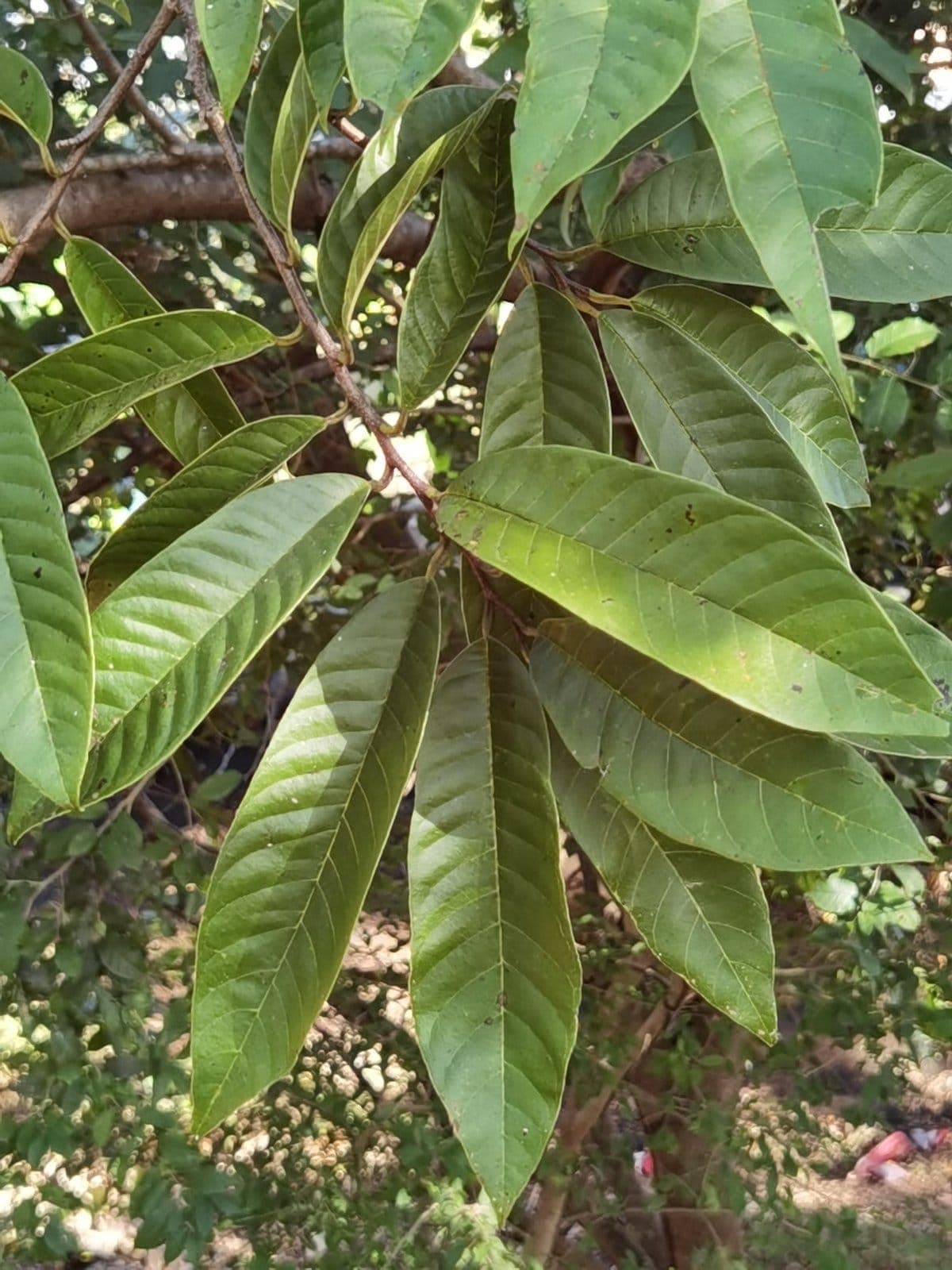
Leaves
- Type: Simple, alternate arrangement
- Shape: Oblong to elliptic-obovate
- Size: 7-15 cm long, 3-6 cm wide (smaller and narrower than A. muricata)
- Texture: Leathery, glossy above, slightly hairy beneath when young
- Color: Dark green above, paler beneath; aromatic when crushed
- Venation: Prominent midrib, lateral veins distinct
- Petiole: Short, 5-10 mm
- Leaf retention: Evergreen; leaves persist year-round
Flowers
- Location: On trunk, older branches, and smaller twigs (cauliflorous and axillary)
- Size: 2-3 cm long, similar to A. muricata but slightly smaller
- Color: Yellowish-green to greenish, fleshy
- Structure: 3 outer petals (thick, triangular), 3 inner petals (smaller, less prominent)
- Fragrance: Mild, fruity, somewhat fermented (attracts beetle pollinators)
- Timing: March-July, sometimes sporadically year-round
- Pollination: Beetles; protogyny (female phase precedes male phase)
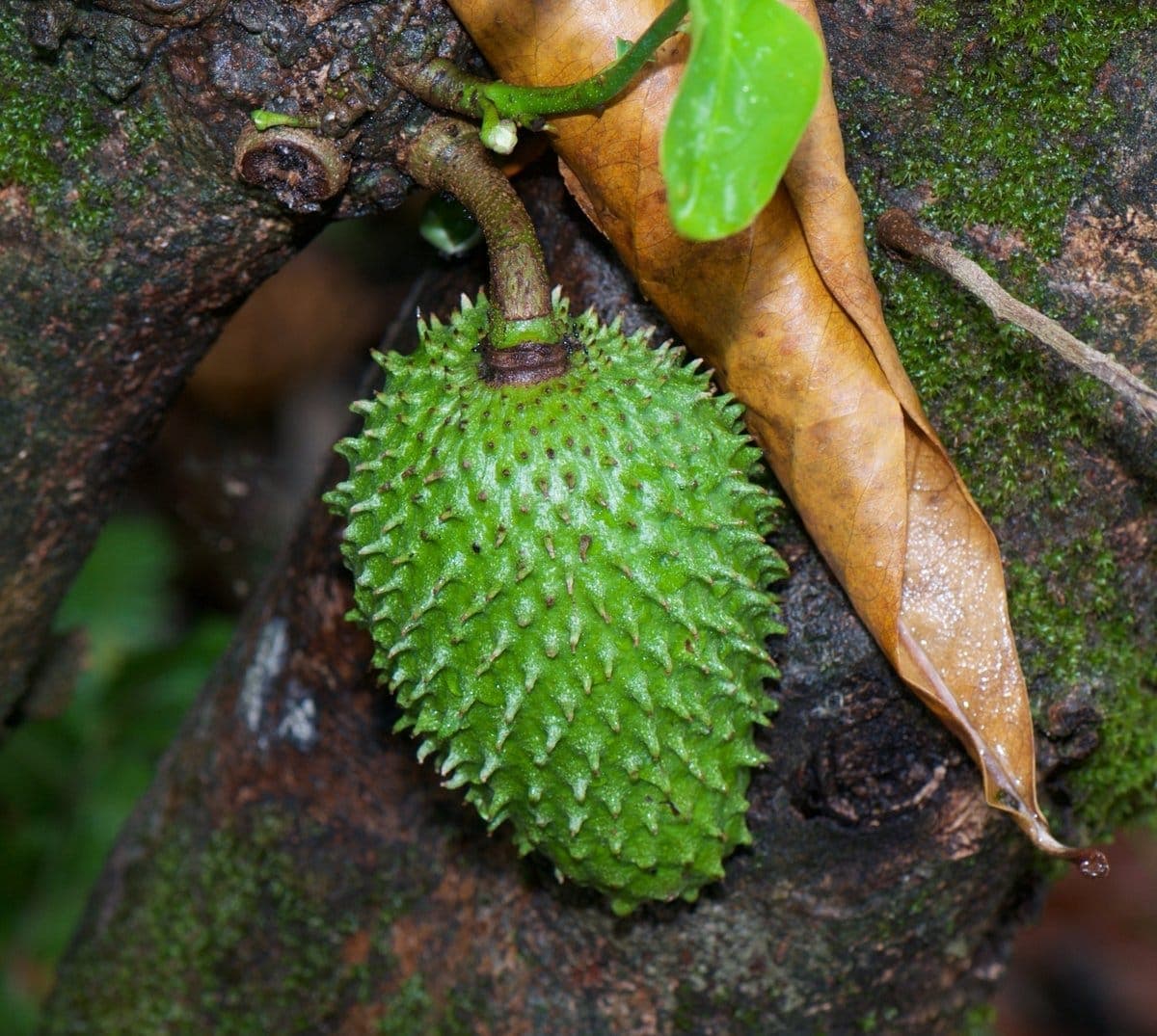
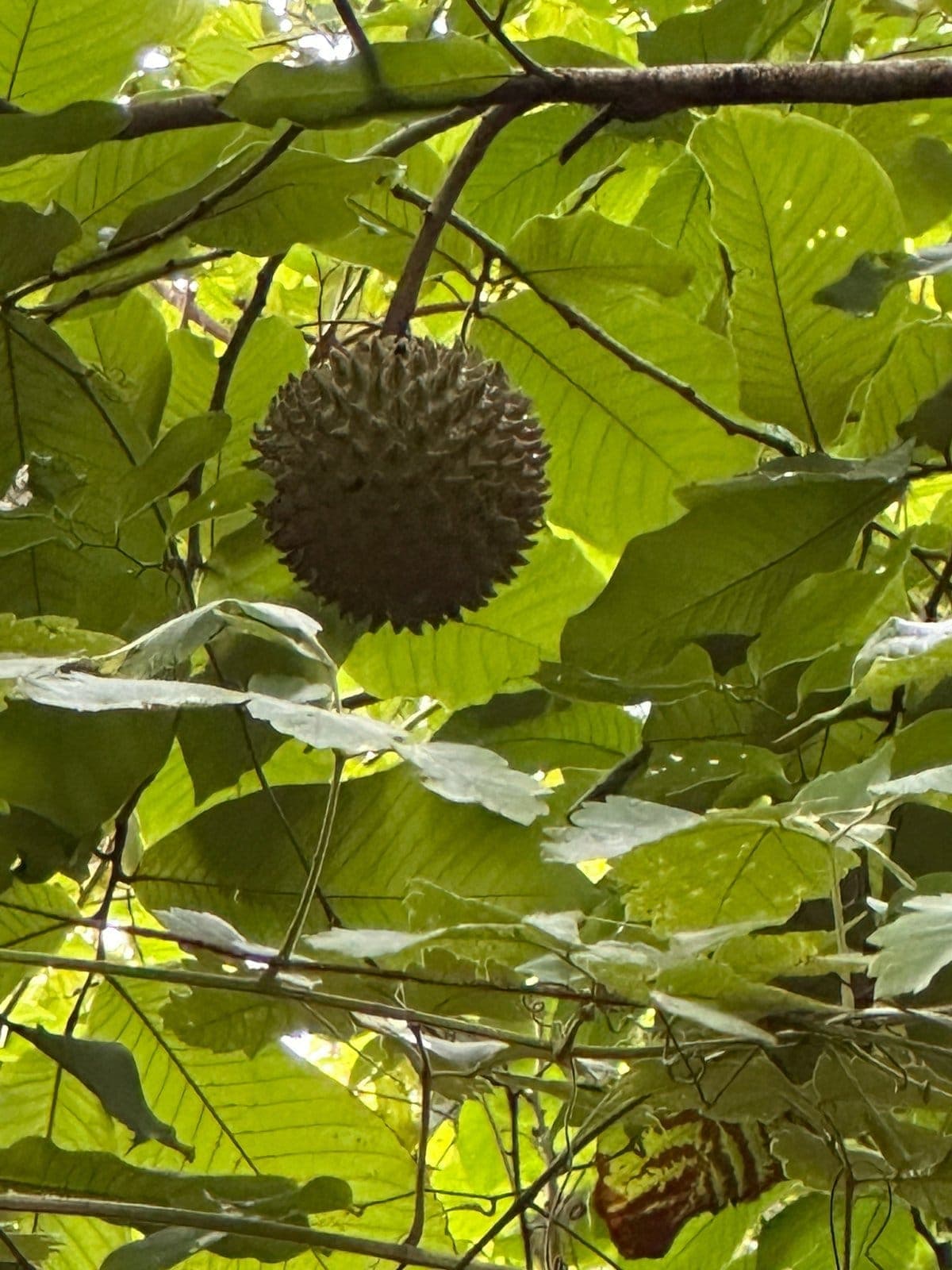
Fruit (KEY IDENTIFIER)
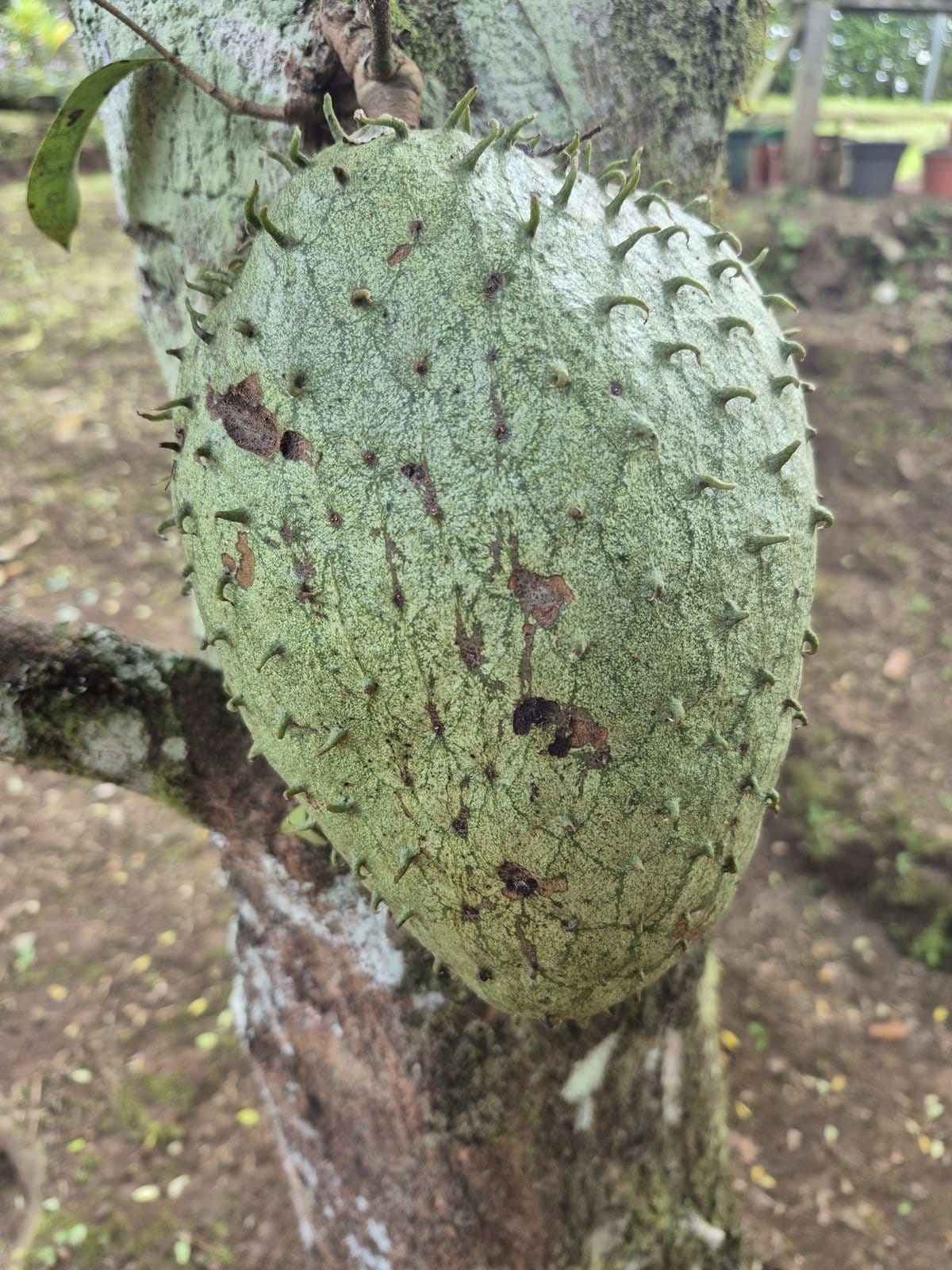
- Shape: Ovoid to ellipsoid, somewhat irregular (NOT heart-shaped)
- Size: 15-20 cm long, 8-12 cm diameter (smaller than A. muricata)
- Weight: Typically 0.8-1.2 kg (lighter than cultivated guanábana)
- Skin: Yellowish to greenish-yellow when ripe, covered with soft curved spines (similar to but smaller than A. muricata)
- Flesh color: Creamy white to slightly yellowish
- Flesh texture: VERY FIBROUS, GRAINY, DRY (MUCH less juicy than A. muricata)
- Seeds: Black, numerous (100+), embedded in flesh
- Taste: VERY SOUR, ACIDIC, ASTRINGENT (not sweet like cultivated guanábana)
- Aroma: Mild fruity scent, less aromatic than A. muricata
Fruit comparison:
A. montana (Cimarrona):
- Smaller fruits (15-20 cm), yellowish skin when ripe
- Flesh very fibrous, dry, grainy texture
- Extremely sour/acidic, astringent taste
- Less aromatic
A. muricata (Cultivated Guanábana):
- Larger fruits (20-30+ cm), darker green even when ripe
- Flesh creamy, juicy, smooth texture
- Sweet-tart, delicious, balanced flavor
- Very aromatic
If you bite into what you think is ripe guanábana and it's unbearably sour with a grainy, fibrous texture, you've found cimarrona!
Geographic Distribution
Native Range
Distribution in Costa Rica
Annona montana occurs naturally in humid lowland forests on both the Caribbean and Pacific slopes. It is not widely cultivated but is occasionally found in rural areas, agroforestry systems, and forest edges.
Elevation and Climate
Elevation Range
- Optimal: 0-600 m
- Range: 0-1000 m
- Upper limit: Rarely above 1000 m; prefers warm, humid lowlands
Climate Requirements
- Temperature: 22-32°C (72-90°F) year-round
- Rainfall: 2000-4000 mm annually (wet climates)
- Seasonality: Tolerates wet conditions well; less tolerant of dry season than A. muricata
- Humidity: High (70-95%)
Habitat Preferences
- Forest type: Wet tropical forests, riverbanks, swamp edges
- Light: Full sun to partial shade; tolerates shade better than A. muricata
- Soil moisture: Consistently moist to wet; tolerates waterlogging
- Disturbance: Moderate tolerance; colonizes forest edges and disturbed areas
Conservation Status
- IUCN: Least Concern (LC)
- Threats: Habitat loss from deforestation
- Population trend: Stable; not threatened
- Cultivation: Limited interest due to poor fruit quality
Ecology and Habitat
Forest Role
Annona montana plays a role in humid tropical forest ecosystems as a mid-sized fruiting tree, though it is of less ecological importance than some other Annona species due to the poor palatability of its fruits.
Ecological Functions
- Wildlife food: Fruits eaten by some monkeys, bats, birds despite sourness
- Seed dispersal: Large seeds dispersed by mammals and birds
- Nectar source: Flowers provide food for pollinators
- Pioneer/edge species: Colonizes disturbed areas and forest edges
Wildlife Interactions
Pollinators:
- Nitidulid beetles (primary pollinators)
- Other beetle species
Seed Dispersers:
- Howler monkeys (tolerate sour fruit)
- Capuchin monkeys
- Fruit-eating bats
- Large birds (toucans, oropendolas)
- Seeds sometimes spread by water (tree grows near streams)
Reproductive Biology
Like other Annona species, A. montana exhibits protogyny (female phase before male phase in flowers), promoting cross-pollination. However, fruit set is generally good without hand pollination, as beetle pollinators are usually abundant in forest environments.
Soil and Water Relations
Unlike cultivated guanábana (A. muricata), which prefers well-drained soils, A. montana TOLERATES wet, poorly-drained, even periodically flooded sites. This makes it suitable for swampy areas, riverbanks, and heavy clay soils where cultivated Annona species struggle.
Traditional and Modern Uses
Culinary Uses (Limited)
Due to its very sour, fibrous fruit, Guanábana Cimarrona is NOT a preferred fruit tree. However, it can be used:
Preparing Guanábana Cimarrona Juice
If you want to try making juice from wild Guanábana Cimarrona fruit (for curiosity or when nothing else is available):
- Wait for fruit to soften and fall from tree (ripe when slightly soft)
- Cut fruit open and scoop out flesh into bowl
- CRITICAL: Remove and discard ALL seeds—they are TOXIC
- Add 3-4 parts water to 1 part pulp
- Blend well (helps break down fibers)
- Strain through fine mesh or cheesecloth to remove fibers
- Add LOTS of sugar or other sweetener(expect to use 2-3x as much as with cultivated guanábana)
- Optionally mix with other sweeter fruit juices (pineapple, mango)
- Serve chilled
Result: A tart, astringent juice with medicinal/herbal undertones—an acquired taste, not a crowd-pleaser like cultivated guanábana juice.
Traditional Medicine
Annona montana has been used in traditional medicine systems, particularly in indigenous and rural communities. However, scientific validation is limited and risks are significant.
CAUTION: All parts of Annona montana except the fruit pulp (seeds removed) contain toxic compounds (acetogenins, alkaloids).
Traditionaluses (NOT recommended without expert supervision):
- Leaf tea: Consumed for digestive issues, infections, inflammation (contains neurotoxic compounds—chronic use linked to Parkinson-like syndrome)
- Bark decoction: Used externally for skin infections (internal use dangerous)
- Crushed seeds: Applied externally as insecticide, lice treatment (NEVER ingest—highly toxic)
- Root preparations: Rarely used; very toxic
IMPORTANT: Modern medicine offers safer alternatives for all conditions traditionally treated with Annona preparations. Do NOT self-medicate with Guanábana Cimarrona. The neurotoxic acetogenins accumulate in the brain and may cause irreversible damage with chronic use.
Modern Research Interest
Research on Annona montana focuses on:
- Acetogenin compounds: Leaves, bark, and seeds contain Annonaceous acetogenins with potential anticancer properties (laboratory studies only—NOT safe for human consumption)
- Antimicrobial activity: Extracts show activity against bacteria and fungi
- Neurotoxicity concerns: Chronic consumption of Annona extracts linked to atypical Parkinsonism in some populations
- Comparison with A. muricata: Differences in chemical profiles and toxicity
Conservation Status
Not Evaluated
IUCN Red List Status
Current Status
Annona montana is not threatened. It is adaptable, fast-growing, and colonizes disturbed areas readily. Conservation efforts focus on habitat protection rather than species-specific interventions.
Growing Guide
Is Guanábana Cimarrona Right for You?
Good reasons to plant Guanábana Cimarrona:
✅ You want a hardy, fast-growing shade tree
✅ You need a tree that tolerates wet, poorly-drained soils
✅ You want wildlife food (even if fruit is sour)
✅ You're interested in traditional medicine (expert guidance required)
✅ You want a living fence or windbreak
✅ You're curious about wild tropical fruits
❌ DON'T plant this tree if: You want delicious fresh fruit (plant A. muricata or A. reticulata instead), you have limited space (tree is large and vigorous), or you don't want seedlings spreading (fruits drop and seeds sprout readily).
Propagation
From Seed (Easy and Common)
- Collect seeds from ripe fruit (soft, yellowish)
- Clean pulp from seeds
- Plant fresh (within 1-2 weeks) in moist, well-draining medium
- Plant 1-2 cm deep
- Keep warm (25-30°C) and moist
- Germination: 2-4 weeks (fast and reliable)
- Transplant seedlings when 20-30 cm tall
Grafting (uncommon but possible onto A. muricata or A. glabra rootstock)
Site Selection and Planting
- Climate: Warm, humid tropical lowlands (0-1000m)
- Light: Full sun to partial shade
- Soil: Adaptable—clay, loam, sandy; tolerates wet soils
- Spacing: 6-8 m from structures and other trees
- Planting time: Rainy season (May-November) best
Planting steps: Dig hole 50x50x50 cm, add compost, plant at same depth as pot, water deeply, mulch.
Care and Maintenance
Watering: Regular watering first 1-2 years; mature trees drought-tolerant but prefer consistent moisture
Fertilization: Optional—tree grows well without fertilizer. Apply compost 2-3x/year for faster growth.
Pruning: Minimal—remove dead wood and shape if desired
Pests/Diseases: Generally pest-resistant; occasional scale insects
Harvesting
Fruits ripen June-November. Harvest when fruit softens and falls from tree or twists off easily. Fruit does not ripen well off tree—wait for full ripeness.
Agroforestry Applications
Annona montana is occasionally used in agroforestry:
- Shade tree for coffee and cacao: Medium-sized tree provides moderate shade
- Living fences and property borders: Dense growth, multiple stems, thorny relatives nearby
- Wildlife corridors: Fruits eaten by forest animals
- Wet site pioneer: Establishes quickly in swampy,problem areas
Good companions: Coffee, cacao, banana, Inga species
Comparison with Cultivated Guanábana
Key Differences: A. montana vs. A. muricata
If you want fruit for eating, choose A. muricata (cultivated guanábana). It is sweeter, creamier, and far more delicious. Choose A. montana (cimarrona) only if you need a hardy shade tree for wet sites or are interested in wild tropical fruits.
Where to Find Guanábana Cimarrona in Costa Rica
Annona montana is not commonly cultivated but can be found in wild and semi-wild areas:
Wild/Natural Areas
- Caribbean lowlands (Limón, Talamanca): Common in humid forests, forest edges, riverbanks
- Osa Peninsula (Puntarenas): Occasionally in wet forests
- San Carlos lowlands (Alajuela): Occasional along rivers and wetland edges
- Protected areas: Tortuguero, Braulio Carrillo, Corcov ado (wild populations)
Cultivated/Semi-Cultivated
- Rural properties in wet regions: Occasionally planted as shade tree
- Local markets: RARE—not comercially sold; might find in Caribbean market towns during season
- Botanical collections: CATIE (Turrialba), university collections may have specimens
If you're interested in seeing or tasting Guanábana Cimarrona, ask farmers in the Caribbean lowlands (Limón, Talamanca) or San Carlos. Many know where wild trees grow. Be prepared for extreme sourness—it's an acquired taste!
Cultural Significance
Annona montana is less culturally significant than cultivated Annona species, but it has local importance:
- Indigenous knowledge: Used by indigenous groups for medicine and occasional food
- Rural communities: Known to farmers and forest workers as "guanábana de monte" (forest guanábana)
- Traditional beverages: Occasionally used in homemade drinks with sweetening
- Not commercially popular: Its poor flavor limits cultural prominence
Advanced Care Guidance
Site Design and Planting
- Use humid lowland or wet premontane sites with 6-8 m spacing to accommodate vigorous canopy development.
- Prioritize deep soils with high organic matter; this species tolerates periodic saturation better than cultivated guanábana.
- Plant at rainy-season onset and maintain thick mulch rings to stabilize moisture and suppress weeds.
Watering Program
- Establishment (0-6 months): Deep watering 2 times per week if rainfall is irregular.
- Juvenile phase (6-24 months): Water every 7-12 days during dry-season peaks.
- Established trees: Irrigate only in prolonged drought; avoid repeated severe dry cycles during fruit development.
Fertilization Schedule
- Incorporate compost at planting and repeat organic top-dressing 2-3 times per year.
- Apply balanced fertilizer (14-14-14 or 15-15-15) at early and mid rainy season for stable growth.
- Use low-dose potassium support before peak fruit fill where soils are heavily leached.
Pruning and Structure
- Train one main leader in years 1-2, then allow a broad, accessible production canopy.
- Remove weak interior branches and dead wood annually after major harvest windows.
- Keep lower canopy height manageable for safe harvest and sanitation tasks.
Pest and Disease Management
- Monitor for fruit flies, anthracnose, and scale insects in humid periods.
- Remove fallen fruit and prune diseased shoots quickly to reduce inoculum loads.
- Promote airflow and biological controls before escalating to targeted chemical treatments.
Companion Planting
- Recommended companions: Cacao, guaba, peach palm, banana, and moisture-loving medicinal understory species.
- Agroforestry role: Hardy, wildlife-supporting mid-canopy option for humid mixed farms and buffer zones.
- Avoid nearby: Drought-adapted species that require prolonged dry rooting zones.
Seasonal Care Calendar (Costa Rican Conditions)
- Dry season (Dec-Apr): Supplemental irrigation for juveniles, mulch renewal, and structural inspections.
- Early rains (May-Jul): Primary planting and fertility window; execute formative pruning.
- Peak rains (Aug-Oct): Intensive sanitation, disease scouting, and drainage oversight.
- Transition (Nov): Light canopy cleanup and preparation for next flowering cycle.
Growth Timeline and Harvest Notes
- Fruiting often begins in years 3-4 from seed under warm, humid conditions.
- Mature production stabilizes around years 5-7 with steady moisture and canopy maintenance.
- Harvest at slight softening on-tree; process quickly because shelf life is short once ripe.
External Resources
Global biodiversity occurrence data and distribution maps
Conservation status and species assessment
Community observations and photos
References and Further Reading
Scientific Literature
- Taxonomy: Rainer, H. (2007). Monographic studies in the genus Annona. Annalen des Naturhistorischen Museums in Wien.
- Phytochemistry: Liaw, C.C., et al. (2010). An nonaceous acetogenins from Annona species. Journal of Natural Products.
- Neurotoxicity: Capar ós-Lefebvre, D., et al. (2002). Guadeloupean Parkinsonism: A cluster of progressive supranuclear palsy-like tauopathy. Brain.
- Ethnobotany: Bernal, H.Y., et al. (2011). Plantas Medicinales de los Andes. Bogotá.
Online Resources
- iNaturalist: Annona montana observations↗
- Tropicos: Taxonomic database (Missouri Botanical Garden)
- Useful Tropical Plants: Species profile
Summary
Identification: Wild relative of guanábana with smaller (15-20 cm), yellowish fruits that are very sour, fibrous, and unpalatable compared to cultivated guanábana.
Ecology: Native to wet tropical lowlands (0-1000m) of Central and South America; tolerates wet, poorly-drained soils better than cultivated Annona species.
Uses: Limited culinary use (very sour juice with heavy sweetening); traditional medicine (risks significant); better suited as shade tree, wildlife food, living fence.
Cultivation: Easy to grow from seed; fast-growing, vigorous, low-maintenance. Tolerates wet conditions. NOT recommended for fruit production—plant A. muricata instead for eating.
Safety: Seeds TOXIC—never consume. Leaves and bark contain neurotoxic compounds. Fruit flesh safe but very sour.
Why grow it?: Hardy shade tree for wet sites; wildlife food source; curiosity/wild fruit research; traditional medicine (expert use only). NOT for delicious fruit.
Document Information:
- Last Updated: January 22, 2025
- Content Status: Complete
- Bilingual Pair: Guanábana Cimarrona (Spanish)
- Scientific Review: Community-contributed content; corroborate uses with expert consultation
Safety Information Disclaimer
Safety information is provided for educational purposes only. Individual reactions may vary significantly based on age, health status, amount of exposure, and individual sensitivity. Always supervise children around plants. Consult a medical professional or certified arborist for specific concerns. The Costa Rica Tree Atlas is not liable for injuries or damages resulting from interaction with trees described in this guide.
• Always supervise children around plants
• Consult medical professional if unsure
• Seek immediate medical attention if poisoning occurs
Information compiled from authoritative toxicology sources, scientific literature, and medical case reports.
Help improve this page
Know something about this tree? Share local knowledge, suggest a correction, or submit a photo to improve this guide for everyone.