Rambutan
Nephelium lappaceum
Quick facts
Native Region
Southeast Asia (introduced to Costa Rica)
Max Height
15-24 meters (49-79 feet)
Family
Sapindaceae
Conservation
LC — Least Concern
Uses
Safety Information
Toxicity Details
The fruit flesh (aril) is safe and delicious to eat. However, the fruit wall (rind) contains a toxic saponin and should not be consumed. Seeds are mildly toxic with narcotic properties and should not be eaten raw—roasting reduces toxicity but consumption is not recommended.
Skin Contact Risks
No skin irritation reported from handling the fruit or any plant parts. The soft spines are not sharp and pose no hazard.
Allergenic Properties
Low allergen risk. As with any food, some individuals may have sensitivities. Related to lychee and longan, so those with allergies to those fruits should exercise caution.
Season
Flowering
Jan-Apr
Fruiting
Aug-Oct
How to identify
Rambutan
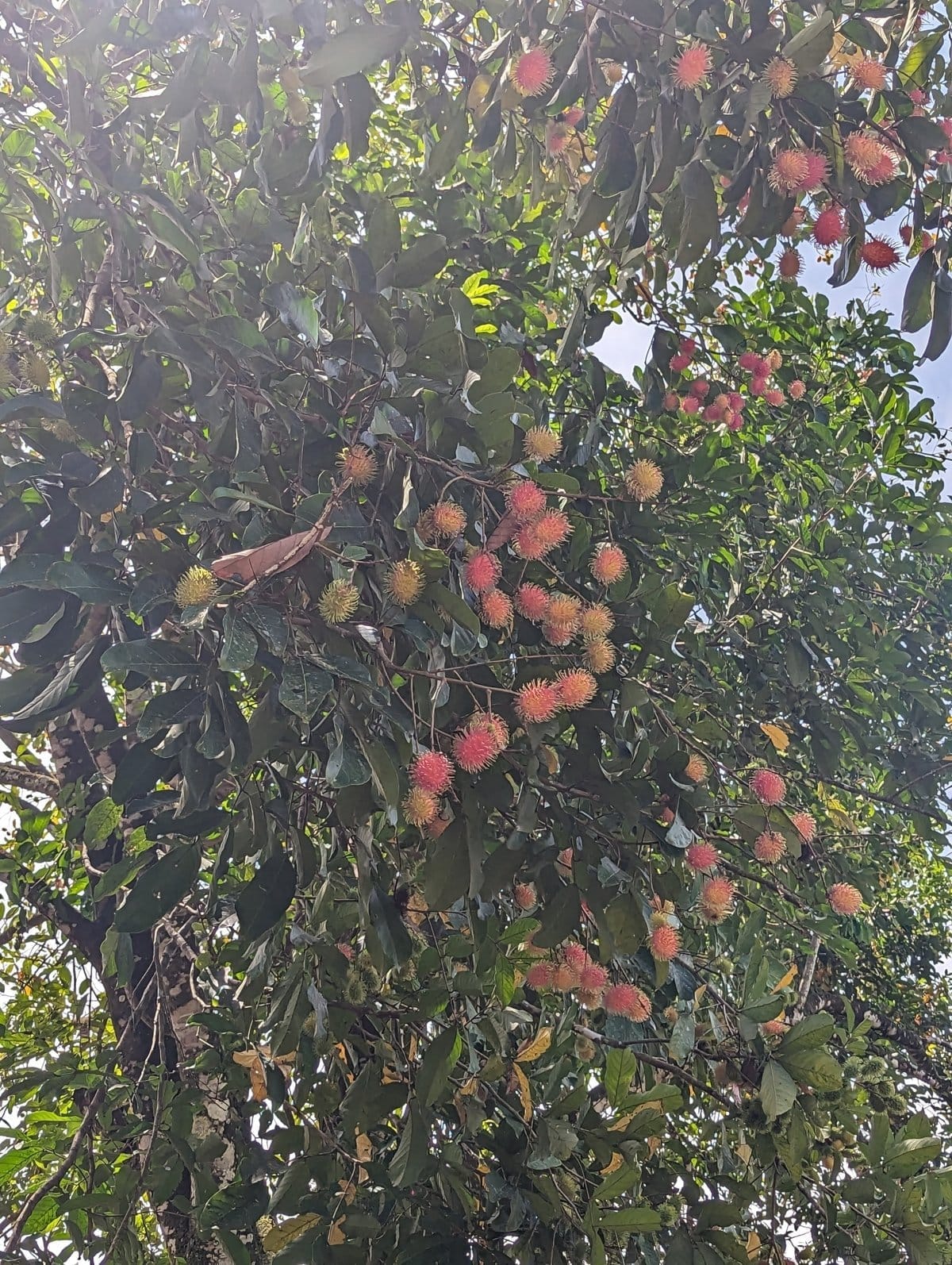
The Rambutan (Nephelium lappaceum) is one of the most visually striking and delicious tropical fruits in the world. Native to Southeast Asia and closely related to lychee and longan, this evergreen tree produces clusters of golf ball-sized fruits covered in soft, hair-like spines—giving rise to its name from the Malay word rambut meaning "hair." Beneath this exotic exterior lies translucent, grape-like flesh that has made rambutan increasingly popular in Costa Rica's humid lowlands, where it has found an ideal second home in the Caribbean and Central Valley regions.
Quick Reference
iNaturalist Observations
Community-powered species data
📸 Photo Gallery
Whole tree
📷 (c) Eric Watts, some rights reserved (CC BY)(CC BY-NC)
View source ↗Leaves
📷 (c) Eric Watts, some rights reserved (CC BY)(CC BY-NC)
View source ↗Fruit
📷 (c) Sabrina, some rights reserved (CC BY-NC)(CC BY-NC)
View source ↗Whole tree
📷 (c) Fabrício Mil Homens Riella, some rights reserved (CC BY)(CC BY-NC)
View source ↗Leaves
📷 (c) Eric Watts, some rights reserved (CC BY)(CC BY-NC)
View source ↗Photos sourced from iNaturalist citizen science database. View all observations →↗
Taxonomy and Classification
Nephelium lappaceum was described by Carl Linnaeus. The genus name Nephelium derives from the Greek nephele meaning "cloud," possibly referring to the cloud-like appearance of the fruit clusters or the shape of the leaves. The rambutan belongs to the Sapindaceae family, commonly called the soapberry family, which includes many tropical fruit trees including lychee (Litchi chinensis), longan (Dimocarpus longan), and mamón chino (Melicoccus bijugatus).
Common Names
Physical Description
General Form
The rambutan is an evergreen tree with an open, spreading crown. Wild trees can reach impressive heights of 15-24 meters, but cultivated varieties are typically maintained at 4-7 meters for easier harvesting. The tree has been selected over centuries for compact growth habits that maximize fruit accessibility.
Distinctive Features
Trunk and Bark
- Trunk: Straight, sometimes buttressed
- Diameter: 40-60 cm typical, up to 125 cm
- Bark: Grayish-brown, moderately rough
- Crown: Open, spreading canopy
- Branches: Dense, well-branched
Leaves
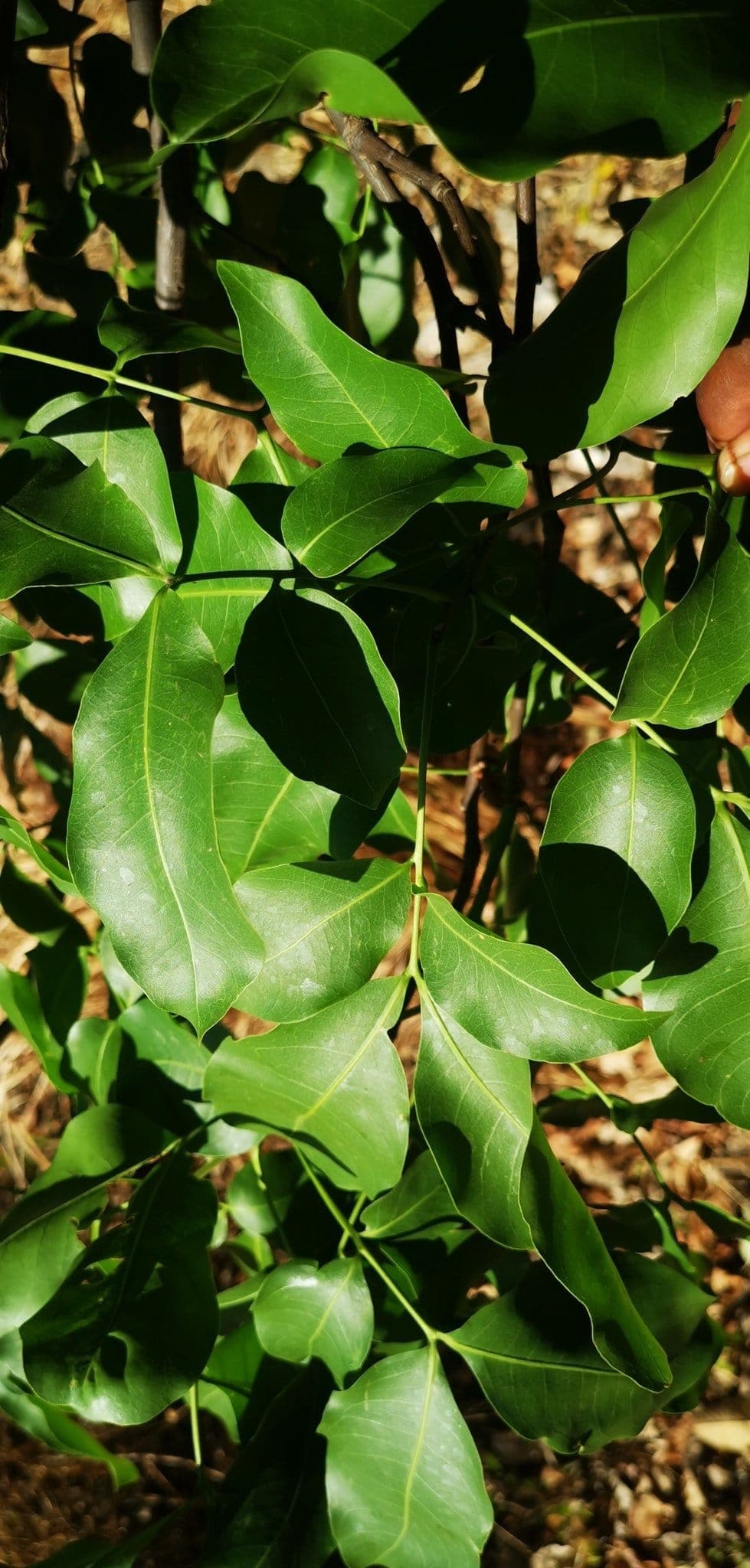
- Type: Alternate, pinnately compound
- Length: 14-30 cm total
- Leaflets: 3-11 per leaf
- Leaflet size: 5-15 cm × 3-10 cm
- Margin: Entire (smooth edges)
- Color: Dark green, glossy above
- Texture: Leathery
Flowers
- Size: Very small, 2.5-5 mm
- Petals: None (apetalous)
- Color: Greenish-white to greenish-yellow
- Arrangement: Terminal panicles 15-30 cm wide
- Fragrance: Faintly sweet
- Sex: Trees may be male, female, or hermaphroditic
- Pollination: Bees (especially Apis species)
Fruit
- Type: Drupe
- Size: 3-6 cm long, 3-4 cm wide
- Color: Red, rarely orange or yellow
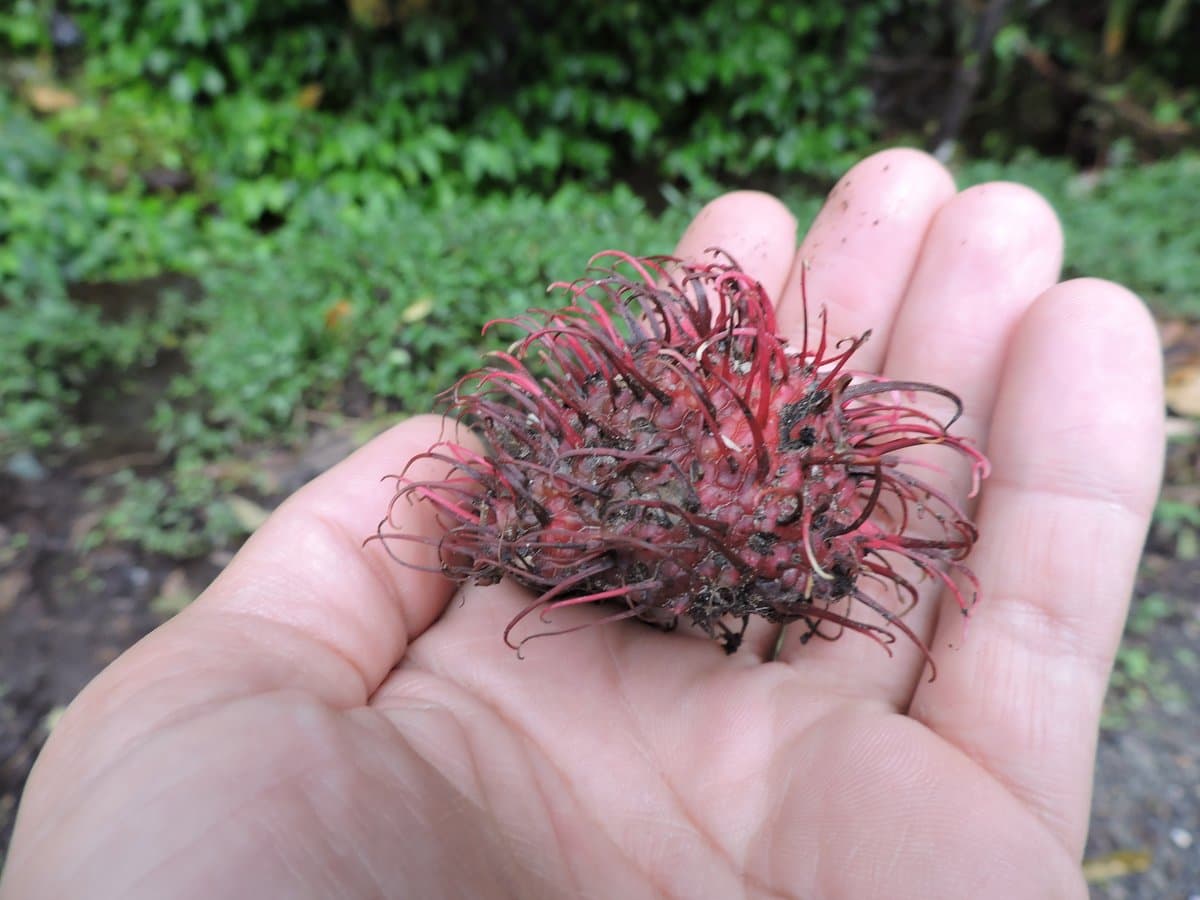
- Surface: Covered with soft, fleshy spines ("hairs")
- Flesh: Translucent white, sweet, grape-like
- Seed: Single, glossy brown, 1-1.3 cm
- Clusters: 10-20 fruits per pendant cluster
The rambutan is unmistakable when in fruit—look for the distinctive clusters of bright red fruits covered with soft, hair-like spines. The fruits hang in grape-like bunches from branch tips. When not fruiting, identify by the pinnately compound leaves with 3-11 glossy, leathery leaflets and the open, spreading crown. Related to lychee but easily distinguished by the hairy (vs. bumpy) fruit surface.
Distribution and Habitat
Native Range
Geographic Distribution
Rambutan is native to Southeast Asia, with the Indonesian region being the center of genetic diversity. It has been cultivated throughout the region for centuries and spread via trade routes to East Africa, the Caribbean, and Central America in the 19th and early 20th centuries.
Distribution in Costa Rica
Rambutan was introduced to Costa Rica and has found excellent growing conditions in the humid lowlands, particularly the Caribbean slope and lower Central Valley. Costa Rica's rainy season timing produces fruit from August to October, coinciding with global market demand.
Preferred Habitat
Ecological Significance
Pollinator Relationships
Primary Pollinators
Rambutan flowers are highly attractive to bees due to their abundant nectar production:
- Honey bees (Apis dorsata, A. cerana): Primary pollinators
- Stingless bees (Trigona spp.): Important in Southeast Asia
- Various flies (Diptera): Secondary pollinators
- Ants (Solenopsis spp.): Incidental pollinators
Female flowers produce 2-3× more nectar than male flowers, attracting more pollinator visits.
Pollination Requirements
- Cross-pollination is essential for most cultivars
- Commercial varieties are hermaphroditic but require pollinators
- Only ~1% of female flowers set fruit under natural conditions
- Hand pollination can achieve 13% fruit set
- Adequate bee populations crucial for commercial production
- In Costa Rica, native stingless bees supplement honey bees
Wildlife Value
Cultural and Economic Importance
Global Significance
Economic Importance
Rambutan is one of the most important tropical fruits commercially:
- Thailand: Largest producer (~450,000 tonnes/year)
- Indonesia: Second largest (~100,000 tonnes/year)
- Malaysia: Third (~60,000 tonnes/year)
- Costa Rica: Growing export industry
- Vietnam, Philippines: Significant production
The fruit is primarily sold fresh due to its short shelf life, though canned rambutan is exported globally.
Cultural Significance
In Southeast Asia, rambutan has deep cultural roots:
- Thailand: Annual Rambutan Fair in Surat Thani (August)
- Indonesia: Traditional garden fruit since pre-colonial era
- Malaysia: Festival fruit, symbol of abundance
- Vietnam: Associated with celebration and hospitality
- Sri Lanka: Traditional home garden tree
In Costa Rica, rambutan represents the growing "exotic fruit" industry that diversifies agricultural exports.
Traditional Uses
Conservation Status
Current Assessment
Conservation Status
Unlike many tropical fruit trees, rambutan is not threatened in its native range. It remains common in primary and secondary forests throughout Southeast Asia while also being extensively cultivated. The species' adaptability and commercial value have ensured its persistence. However, wild genetic diversity should be preserved as cultivated varieties represent only a fraction of the species' genetic potential.
Cultivation and Propagation
Growing Rambutan
Site Requirements
Climate Needs
- Humid tropical lowlands only
- Year-round warmth (21-35°C optimal)
- Extremely frost-sensitive
- High humidity essential
- 2,000-3,000 mm rainfall preferred
Soil and Light
- Clay loam rich in organic matter
- Acid conditions (pH 5.0-6.5)
- Good drainage but moisture retention
- Full sun for mature trees
- Wind protection important
Propagation
From Seed (not recommended for production)
- Seeds viable only fresh (days)
- Wash seeds, sow immediately
- Germination in 7-20 days
- Seedlings grow rapidly
- First fruit in 6-8 years
- Unpredictable fruit quality
Vegetative (preferred)
- Grafting: Most common commercial method
- Air-layering: Traditional method
- Budding: For specific cultivars
- Grafted trees fruit in 2-3 years
- Ensures consistent fruit quality
Maintenance Requirements
Common Problems
Identification Guide
How to Identify Rambutan
Where to See Rambutan in Costa Rica
External Resources
Observations and photos from around the world
Conservation status details
Detailed botanical and cultivation information
Kew botanical database entry
Global biodiversity occurrence data and distribution maps
References
📚 Scientific References & Further Reading
Barstow, M. (2017). Nephelium lappaceum. The IUCN Red List of Threatened Species
Morton, J.F. (1987). Fruits of Warm Climates: Rambutan
Tindall, H.D. (1994). Rambutan Cultivation
Le Bellec, F. (2014). Rambutan: The hairy cousin from the tropics
Useful Tropical Plants Database (2024). Nephelium lappaceum
Few tropical fruits offer such an immediate sensory experience as the rambutan. From the moment you pick up one of these "hairy" fruits, you're engaging with something wonderfully exotic—the soft spines yielding under your fingers, the satisfying pop as you break through the rind, and the sweet, refreshing flesh that tastes like the tropics distilled into a single bite. While native to Southeast Asia, rambutan has found a welcoming home in Costa Rica's Caribbean lowlands, adding another dimension to the country's remarkable fruit diversity. Whether you encounter rambutan at a roadside stand in Limón or at a farmer's market in San José during August and September, take the opportunity to taste this remarkable fruit—it's a flavor you won't forget.
Safety Information Disclaimer
Safety information is provided for educational purposes only. Individual reactions may vary significantly based on age, health status, amount of exposure, and individual sensitivity. Always supervise children around plants. Consult a medical professional or certified arborist for specific concerns. The Costa Rica Tree Atlas is not liable for injuries or damages resulting from interaction with trees described in this guide.
• Always supervise children around plants
• Consult medical professional if unsure
• Seek immediate medical attention if poisoning occurs
Information compiled from authoritative toxicology sources, scientific literature, and medical case reports.
Help improve this page
Know something about this tree? Share local knowledge, suggest a correction, or submit a photo to improve this guide for everyone.