Palma de Escoba
Cryosophila albida
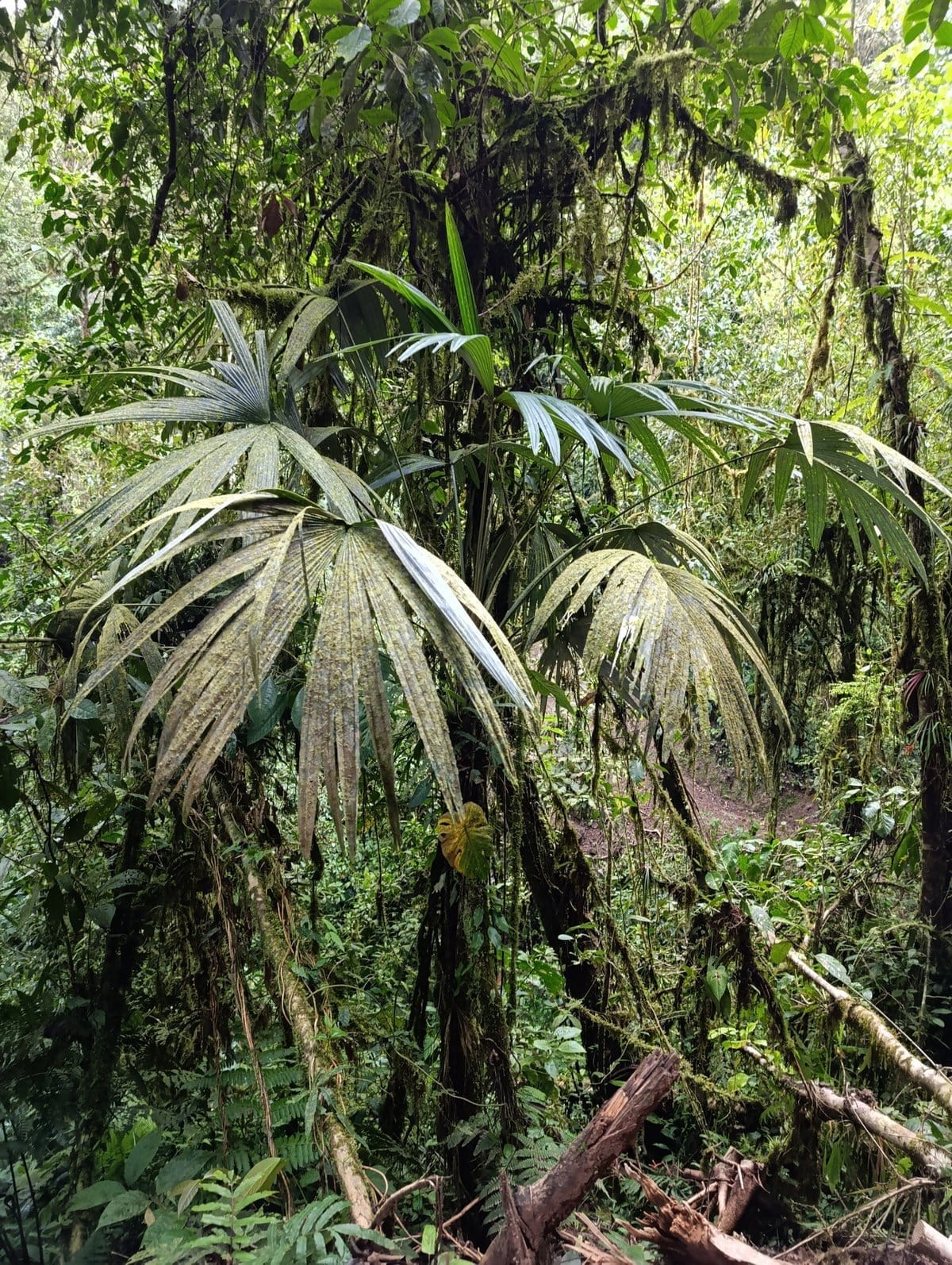
Quick facts
Native Region
Central America (Costa Rica, Panama)
Max Height
4-10 meters (13-33 feet)
Family
Arecaceae
Conservation
LC — Least Concern
Uses
Safety Information
Toxicity Details
Cryosophila albida is non-toxic. The small, round fruits are not typically consumed by humans but are non-toxic and eaten by birds and small mammals. The palm heart is technically edible but harvesting kills the single-stemmed palm, and the species is conservation-sensitive. No toxic compounds have been identified in any part of the plant.
Skin Contact Risks
Moderate skin contact risk due to root spines. The trunk of Cryosophila albida is armed with sharp, branching, root-derived spines — a distinctive genus characteristic. These spines are 5-15 cm long, sharp-tipped, and can cause painful puncture wounds and scratches. They are particularly dense on the lower trunk. Wear heavy gloves and long sleeves when working near the trunk. The leaf petioles have no spines.
Allergenic Properties
Low allergen risk. The small, inconspicuous flowers produce limited pollen that is insect-dispersed. No significant airborne pollen production. Not a known allergen source.
Structural Hazards
The sharp root spines on the trunk are the primary structural hazard. They point downward and outward, making it dangerous to brush against the trunk or attempt to climb the palm. The spines can penetrate clothing and skin, potentially causing infections if wounds are not cleaned properly. Do not plant along pathways or in areas where people might accidentally contact the trunk.
Wildlife & Pet Risks
Non-toxic to all wildlife. Fruits are an important food source for birds including toucans and trogons. The trunk spines provide protection for nesting birds and roosting bats. No toxicity concerns for domestic animals, though the spines can injure curious dogs.
Season
Flowering
Feb-May
Fruiting
Jun-Oct
How to identify
Palma de Escoba (Broom Palm)
Palma de Escoba (Cryosophila albida), the Broom Palm, is one of Costa Rica's most distinctive native palms. Its slender trunk bristling with sharp, branching root spines looks like something from a fairy tale — a natural defense against climbing predators. The elegant fan-shaped leaves, silver-white beneath and deep green above, have been used for centuries by rural communities to make the traditional brooms (escobas) that give the palm its common name.
Quick Reference
Key Information
📸 Photo Gallery
Overview
Cryosophila albida belongs to a small, exclusively New World genus of fan palms characterized by one of the most unusual features in the palm kingdom: their trunks are armed not with conventional spines or thorns, but with modified adventitious roots that grow downward from the trunk surface, forming sharp, branching, often forked spines. These root spines give the genus its common English name "rootspine palms" and make Cryosophila palms instantly recognizable.
In Costa Rica, the Palma de Escoba is found as an understory palm in tropical wet and moist forests from sea level to about 1,200 meters. It favors the deep shade of mature primary forest and older secondary forest, growing beneath the canopy of taller trees in a dappled light environment. The species is most common on the Pacific slope, particularly in the Osa Peninsula, the Carara region, and the lower mountain slopes of the Cordillera de Tilarán and Cordillera de Guanacaste.
The common name "Palma de Escoba" (Broom Palm) refers to the traditional use of the leaves. Rural communities throughout Costa Rica have long harvested the palm's fan-shaped leaves and split them into strips to manufacture traditional brooms. These hand-made brooms — light, flexible, and effective on swept-earth floors and patios — were once ubiquitous in Costa Rican rural life and remain in use today, though commercial brooms have largely replaced them in urban areas.
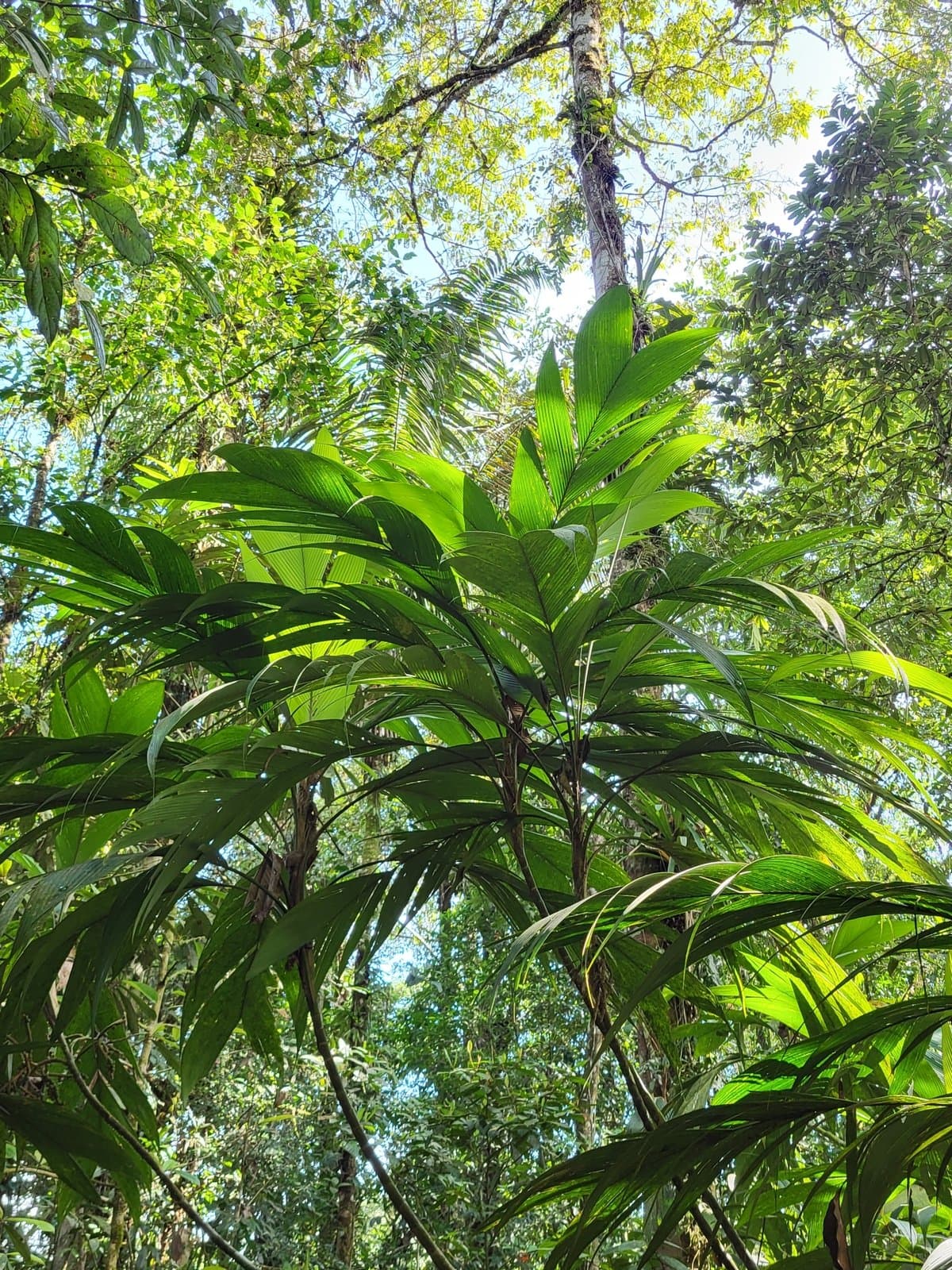
The leaves themselves are beautiful: palmate (fan-shaped), deeply divided into 15–25 segments, and distinctively bicolored — dark green above and silvery-white to chalky-white below (the specific epithet albida means "whitish"). When the wind catches the leaves, the flashing silver undersides create a striking visual effect in the forest understory.
Unfortunately, the combination of habitat loss (deforestation of lowland forests) and harvesting pressure for broom-making has made Cryosophila albida a conservation concern. Wild populations have declined in some accessible areas, and regional discussions often treat the species cautiously even though the current atlas audit does not surface a formal IUCN category for the public-facing status field.
📸 Photo Gallery
Whole tree
📷 (c) emilyerice, some rights reserved (CC BY-NC)(CC BY-NC)
View source ↗Leaves
📷 (c) victormadrigale, some rights reserved (CC BY-NC)(CC BY-NC)
View source ↗Whole tree
📷 (c) victormadrigale, some rights reserved (CC BY-NC)(CC BY-NC)
View source ↗Leaves
📷 (c) victormadrigale, some rights reserved (CC BY-NC)(CC BY-NC)
View source ↗Whole tree
📷 (c) Leonardo Álvarez-Alcázar, some rights reserved (CC BY-NC)(CC BY-NC)
View source ↗Photos sourced from iNaturalist's community science database. Browse all observations →↗
Taxonomy and Classification
Common Names by Region
Taxonomic Notes
The genus Cryosophila contains about 10 species restricted to Central America and southern Mexico. The name comes from the Greek kryo (cold, referring to the chalky-white leaf undersides) and sophia (wisdom, an obscure reference). C. albida is one of the most widespread species in the genus, occurring from Costa Rica to Panama. The genus is closely related to Chelyocarpus (South America) and Itaya (Amazonia) in the tribe Cryosophileae. The root-spine characteristic is unique to this tribe of palms.
Physical Description
Growth Form
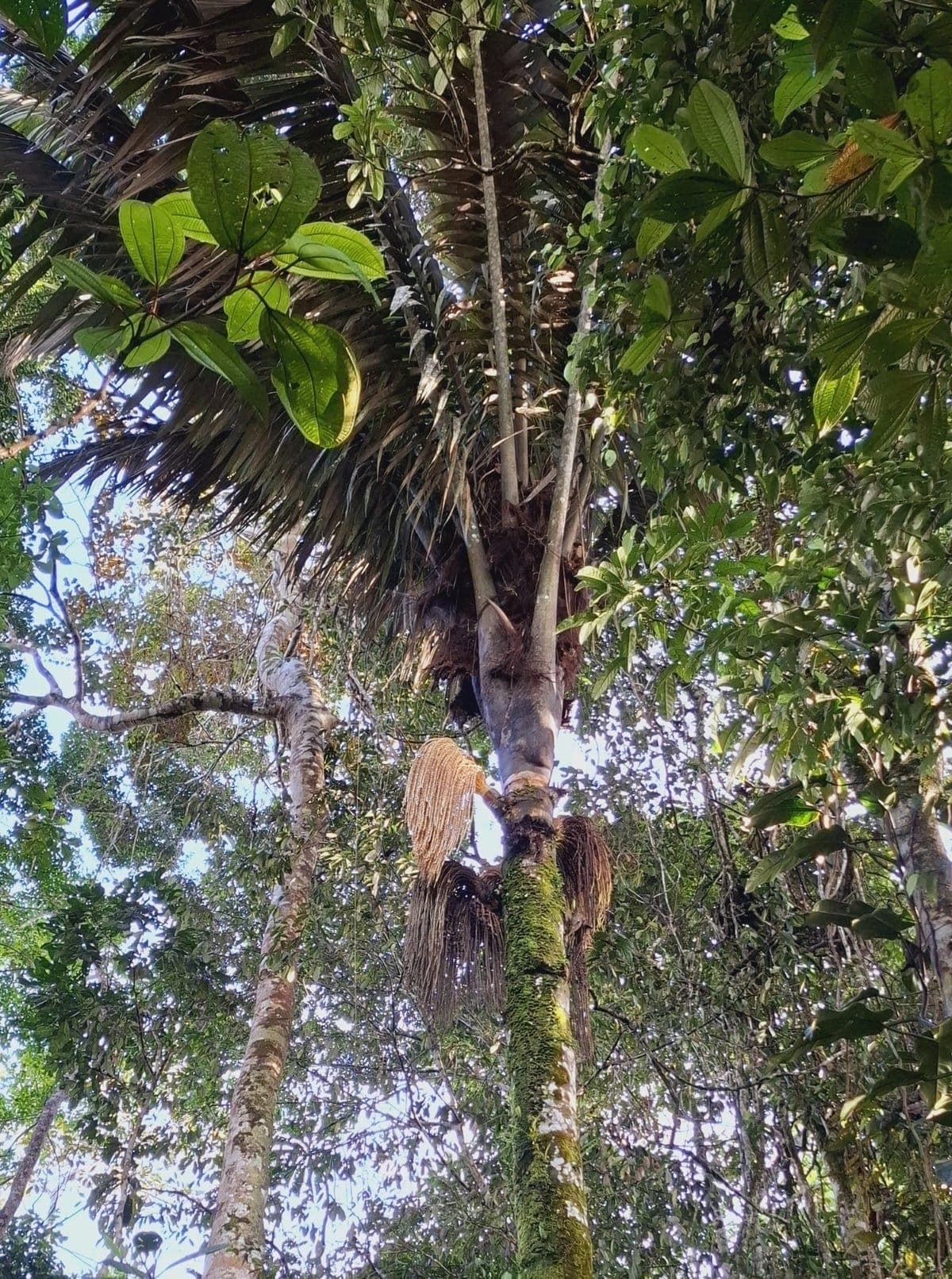
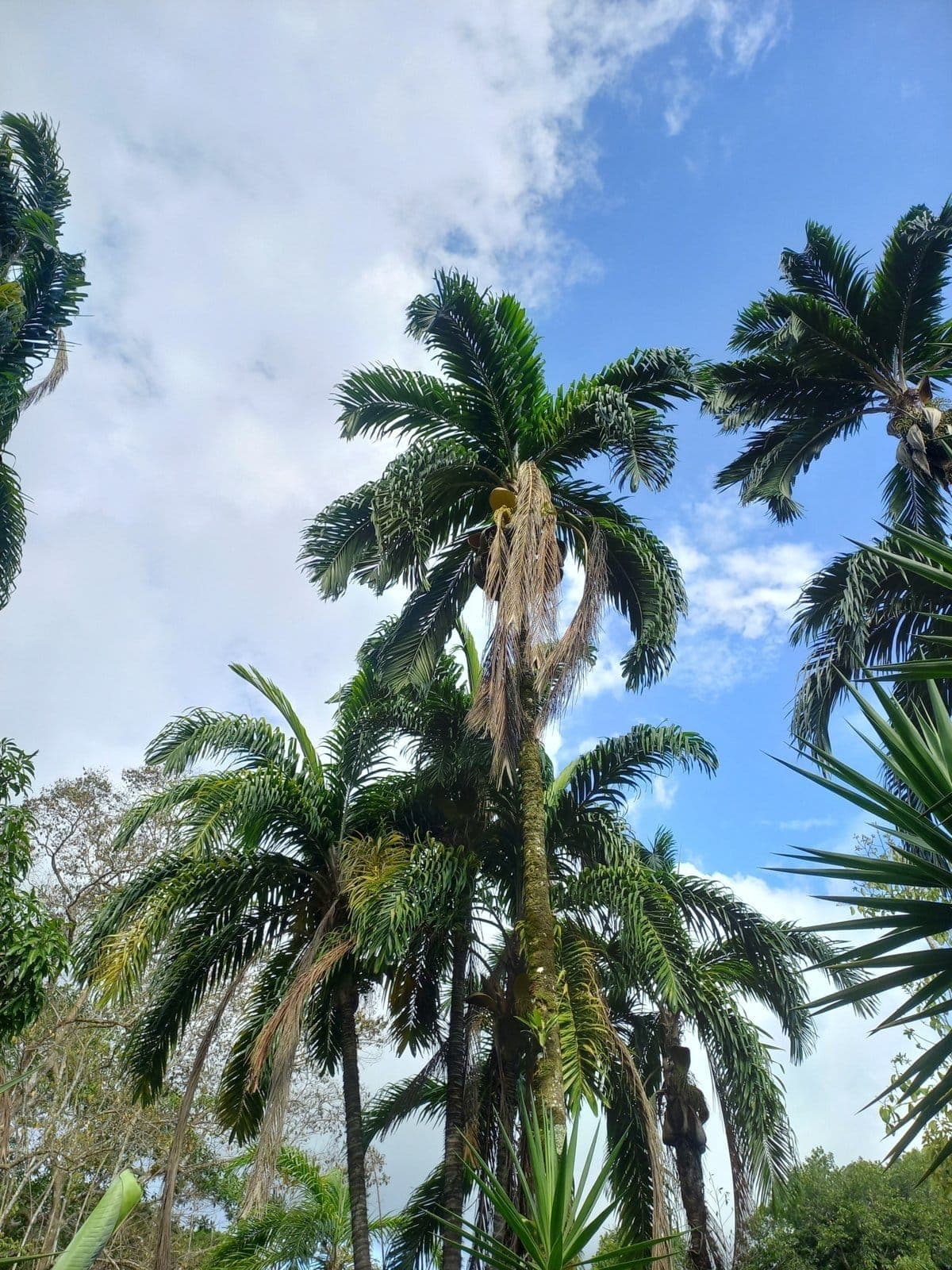
The Palma de Escoba is a slender, single-trunked understory palm that develops its characteristic form over many years. Young plants are stemless rosettes of fan leaves, gradually developing a visible trunk that can eventually reach 4–10 meters in height. The overall form is elegant and architectural — a narrow, spiny column crowned by a symmetrical rosette of silver-backed fan leaves.
Trunk and Root Spines
The trunk is the palm's most distinctive feature. It is slender (8–15 cm in diameter), straight or slightly curved, and armored with clusters of root spines from ground level to below the crown. These modified adventitious roots emerge from the trunk surface, grow outward and downward, then branch once or twice, forming sharp, woody, thorn-like structures 5–15 cm long. The root spines are dense on the lower trunk, becoming sparser near the crown. Young root spines are covered in a reddish-brown sheath that weathers to gray. The function of these spines is debated — they likely deter climbing animals (snakes, rodents, raccoons) from reaching the crown and its fruits.
Leaves (Fronds)
The leaves are palmate (fan-shaped), 60–100 cm in diameter, deeply divided into 15–25 stiff, pointed segments. The leaf blade is held nearly horizontal on a slender, unarmed petiole 60–100 cm long. The leaf's most striking feature is its sharply bicolored surface: the upper side is deep green and glossy, while the underside is covered with a dense, chalky-white or silvery-white waxy coating (albida = whitish). A mature crown holds 12–20 leaves. Dead leaves are shed cleanly, not persisting on the trunk.
Flowers
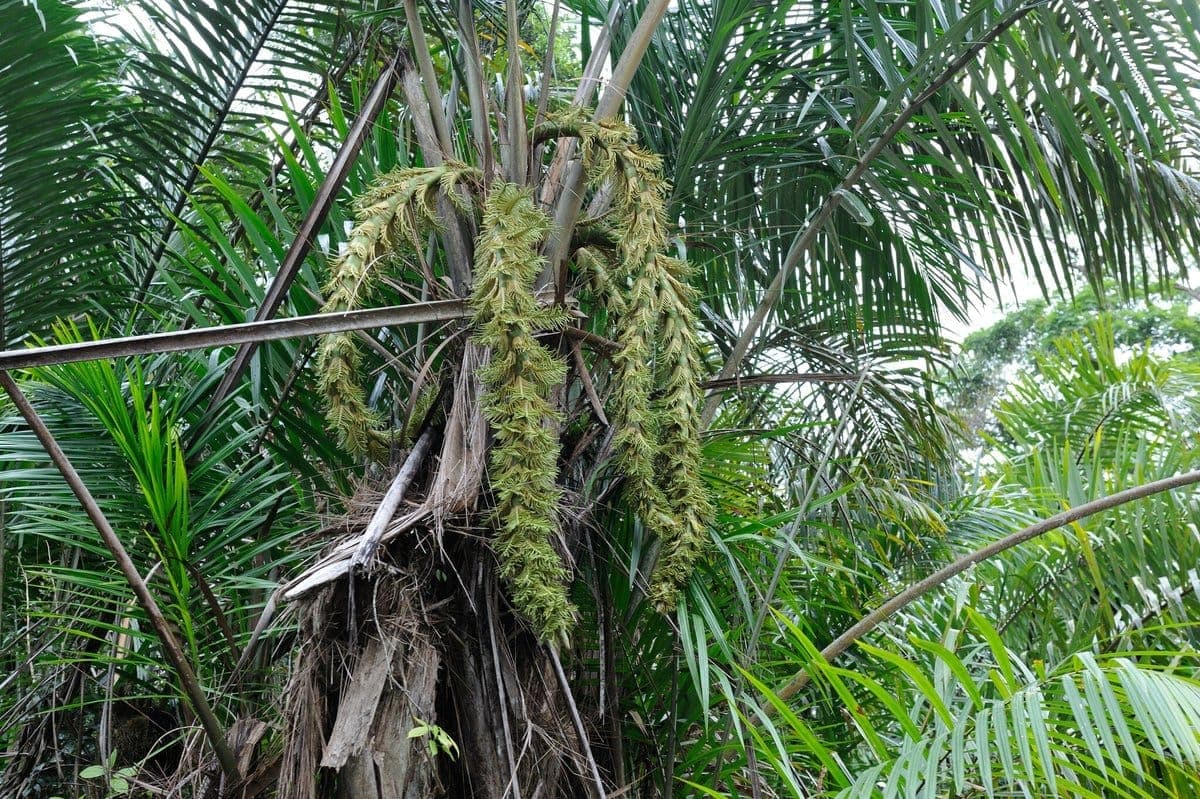
The inflorescences are branched panicles that emerge from among the leaf bases, 40–80 cm long, bearing many small, white to cream-colored, bisexual flowers. Flowering occurs mainly during the dry season to early rainy season (February–May). Flowers are fragrant and attract small beetles and flies as pollinators.
Fruit and Seeds
The fruits are small, round drupes, 8–12 mm in diameter, turning from green to white or yellowish-white when ripe. Each fruit contains a single hard seed. The fleshy covering of the fruit is thin but sweet enough to attract frugivorous birds, which are the primary seed dispersers. Fruiting occurs from June to October.
Geographic Distribution
Range in Costa Rica
In Costa Rica, the Palma de Escoba occurs primarily on the Pacific slope:
- Osa Peninsula: Primary forests of Corcovado National Park and surrounding areas — some of the healthiest populations
- Carara National Park: Transition forest between dry and wet zones; readily observed along trails
- Cordillera de Tilarán: Lower slopes, particularly around Monteverde and San Ramón
- Cordillera de Guanacaste: Moist forest areas on lower slopes
- Central Pacific coast: Forest remnants in the Jacó-Quepos corridor
Populations have declined significantly in accessible lowland areas due to deforestation and leaf harvesting.
Broader Distribution
Cryosophila albida ranges from southwestern Costa Rica through Panama. Related species extend the genus range from southern Mexico through Central America. The genus is entirely Mesoamerican — a distinctly New World lineage with no Old World counterparts.
Habitat and Ecology
Ecological Role
The Palma de Escoba plays several important roles in forest understory ecology:
- Seed dispersal network: Fruits are consumed and dispersed by toucans, trogons, bellbirds, and other frugivorous birds. This palm is an important component of the fruit resource network that supports migratory and resident frugivores throughout the year. The white fruits contrast visually against the silvery leaf undersides, making them highly visible to birds.
- Wildlife shelter: The spiny trunk provides safe nesting sites for small birds and roosting sites for bats — the spines deter predators from climbing. Studies have documented several bird species preferentially nesting in Cryosophila palms due to this protection. Bats use the dense spines as anchoring points for roosting, protected from tree-climbing snakes.
- Forest structure: As an understory element, it contributes to the multi-layered architecture of tropical forests. The palm layer creates microclimates beneath the canopy — areas of reduced light, cooler temperatures, and higher humidity that are critical for forest-dependent amphibians, insects, and specialized plants.
- Indicator species: Presence of healthy Cryosophila populations indicates mature, undisturbed forest — they are sensitive to disturbance. Because the palm grows very slowly and requires deep shade, it cannot colonize young secondary forests or regenerate quickly after logging. Finding substantial populations indicates forest areas with extended periods of minimal human impact.
- Root spine ecology: The spines themselves support communities of mosses, lichens, and small ferns. These epiphytic plants create micro-habitats for invertebrates in the mid-story of the forest. The root-spine system effectively increases the structural complexity of the understory environment.
- Palm heart sustainability: Unlike many palms harvested for palm heart (which kills the plant), the Broom Palm is rarely used for this purpose due to its slow growth, small size, and conservation status — helping preserve wild population numbers.
Wildlife Associations
Uses and Applications
Sources: Henderson et al. 1995 — Field Guide to the Palms of the Americas↗, Evans 1995 — Cryosophila systematics↗, Tropicos — Cryosophila albida↗
Traditional Brooms
The primary traditional use of the Palma de Escoba — and the source of its name — is broom-making. The fan-shaped leaves are harvested, split along the ribs into individual segments, dried, and bundled tightly to create effective sweeping brooms. These escobas de palma have been used throughout rural Costa Rica for generations:
- Light weight and easy to maneuver
- Effective on packed-earth floors, patios, and outdoor areas
- Flexible leaf segments sweep into corners and tight spaces
- Each broom lasts 2-4 months of regular use
- A single leaf can produce 2-3 small brooms
The broom-making process is a skilled craft that requires knowledge of proper leaf selection, harvesting timing (best during dry season), drying techniques, and binding methods. Traditionally, the petiole (leaf stem) is used as the broom handle, and the leaf segments are tightly bound with strips of bark or commercial twine. The finished broom is lightweight yet durable.
Sustainable Harvesting Practices
Proper harvesting is critical for species conservation:
- Selective cutting: Harvest only 2-3 of the oldest (lowest) leaves per palm per year
- Timing: Cut during dry season when leaves are most durable
- Cutting technique: Use sharp machete to cut cleanly at the base of the petiole, avoiding damage to younger leaves
- Rotation: Do not return to the same palm more than once per year
- Avoidance: Never harvest from palms with fewer than 10 leaves total — this stresses the palm severely
- Protection: Do not harvest from palms growing in protected areas
Excessive harvesting — taking too many leaves or returning to the same palm too frequently — weakens the palm and can eventually kill it. This unsustainable practice has contributed to population declines in accessible areas.
Other Traditional Uses
- Thatching: Leaves used to thatch rustic structures and shelters
- Handicrafts: Young leaves woven into fans, small baskets, and decorative items
- Folk medicine: Root decoctions traditionally used for kidney ailments (not scientifically validated)
Ornamental Value
The Palma de Escoba is increasingly valued as an ornamental for shaded tropical gardens:
- Elegant silhouette and architectural form
- Striking bicolored leaves (green/silver)
- Unusual spiny trunk is a conversation piece
- Suitable for understory planting in naturalistic gardens
- Low maintenance once established
Cultural and Historical Significance
The Palma de Escoba is deeply connected to rural Costa Rican life and traditional knowledge systems. For generations, making brooms from its leaves was a household skill passed down through families — a practical craft that connected rural communities to the forest and its resources.
Traditional Broom-Making Craft
In many rural communities, particularly on the Pacific slope (Osa, Carara, Quepos regions), the annual leaf harvest was a communal and often intergenerational activity:
- Families would venture into the forest to collect leaves during the dry season (January-April when leaves are most durable)
- Experienced harvesters knew which palms could sustain harvest and which should be left to grow
- Evenings were spent processing leaves — splitting them along the ribs into individual fiber strips
- Children learned the craft by watching elders and practicing with discarded leaf segments
- The binding technique (using bark strips, vine fibers, or later commercial twine) was regionally variable, with families proud of their specific methods
- Finished brooms were used at home, given as gifts, or sold/traded at local markets
The craftsmanship involved in making a quality escoba de palma should not be underestimated — selecting leaves of proper maturity, timing the harvest, properly drying and splitting the segments, and binding them into a balanced, durable tool all required skill and experience.
Cultural Shifts and Decline
The decline of traditional broom-making reflects broader socioeconomic changes in Costa Rica:
- Urbanization: Rural-to-urban migration reduced the population maintaining traditional forest-use skills
- Manufactured alternatives: Mass-produced plastic and synthetic-fiber brooms became widely available and cheaper than hand-made alternatives
- Forest access: Deforestation and land-use changes eliminated forest access for many communities; remaining populations are often in protected areas where harvesting is restricted
- Economic shifts: Time-intensive craft work became economically unviable compared to wage labor
- Knowledge loss: Younger generations in rural areas often lack the traditional knowledge to identify, harvest, and process palm leaves properly
Contemporary Significance
Despite these changes, the Palma de Escoba retains cultural significance:
- Handmade palm brooms remain available at some rural markets and are valued by traditionalists who appreciate their quality and cultural connection
- The palm and its uses are part of rural Costa Rican identity and folklore
- Environmental education programs in coastal communities sometimes include broom-making workshops to preserve traditional knowledge
- The species serves as an example of sustainable forest use when harvest practices are properly managed
Indigenous Connections
Indigenous Boruca and Brunca communities on the southern Pacific slope have historically integrated Cryosophila leaves into their material culture:
- Thatching for traditional structures and ceremonial buildings
- Weaving into mats, fans, and ceremonial items
- Use in traditional medicine systems (though specific applications vary by community and are often closely held knowledge)
- Connection to forest management practices and sacred forest sites
The relationship between indigenous communities and Cryosophila reflects broader patterns of non-destructive forest use — harvesting renewable resources (leaves) without damaging the plant or degrading the ecosystem
Conservation Status
Plants of the World Online (Kew) treats Cryosophila albida as a synonym of the accepted taxon Cryosophila warscewiczii (H.Wendl.) Bartlett, which the IUCN Red List has assessed as Least Concern (assessment 55958224). We carry that global status here for consistency with the canonical taxonomy. However, regional assessments and Costa Rican botanical literature consistently treat the Costa Rican populations as Vulnerable due to the combined impacts of deforestation, habitat fragmentation, and unsustainable leaf harvesting — wild populations have declined significantly, particularly in accessible lowland areas. The species' slow growth rate and dependence on mature forest make regional recovery challenging even where the global status is secure.
Sources: POWO — Cryosophila warscewiczii↗ (accepted name), IUCN Red List — Cryosophila warscewiczii↗, GBIF — Cryosophila albida↗, Tropicos — Cryosophila albida↗
Threats
- Habitat loss: Deforestation of lowland and premontane forests — the palm's primary habitat
- Unsustainable harvesting: Excessive leaf collection for broom-making can weaken or kill individual palms
- Slow reproduction: Very slow growth means populations recover slowly from disturbance
- Forest fragmentation: Isolated populations may lose genetic diversity and pollinator/disperser networks
- Climate change: Potential shifts in rainfall patterns could affect suitable habitat
Conservation Actions
- Protected areas: Significant populations exist within Corcovado National Park, Carara National Park, and Monteverde reserves
- Sustainable harvest guidelines: Limiting harvest to 2-3 leaves per palm per year allows sustainable broom-making
- Cultivation: Propagation from seed in botanical gardens and nurseries can reduce pressure on wild populations
- Education: Raising awareness of the palm's conservation value among rural communities
- Research: Population monitoring and genetic studies needed to inform conservation strategies
Growing the Palma de Escoba
Site Selection
The Broom Palm requires conditions that mimic its natural forest understory habitat:
- Partial to deep shade — never full sun (the leaves will burn)
- Moist, humid environment — consistent moisture and high humidity
- Rich, well-drained soil — humus-rich forest soil or equivalent
- Sheltered location — protected from wind, which desiccates the leaves
- Warm climate — lowland to premontane elevations (0-1,200 m)
Ideal as an understory planting beneath tall canopy trees, in shaded courtyards, or on the north side of buildings.
Propagation
From Seed (Only Method): Collect ripe white fruits and remove the fleshy coating by soaking and rubbing. Plant seeds immediately — viability drops rapidly with desiccation. Sow 1 cm deep in moist, well-drained seedling mix. Keep warm (25-30°C) and consistently moist. Germination is slow: 2-6 months. Seedlings grow very slowly — trunk development begins only after several years of stemless growth. Be patient.
Planting and Care
- Plant in a shaded location with humus-rich soil
- Water regularly to maintain consistent moisture (not waterlogging)
- Mulch with leaf litter to replicate forest floor conditions
- Apply slow-release palm fertilizer twice yearly in garden settings
- Remove dead fronds by cutting close to the trunk (wear heavy gloves)
- Never remove the root spines — they are living tissue
- Protect from direct sun, wind, and drought
Where to See the Palma de Escoba
In Costa Rica
- Corcovado National Park: Primary forest trails; best populations in the country
- Carara National Park: Readily observable along main trail; accessible from San José
- Monteverde / Santa Elena reserves: Premontane forest understory
- Wilson Botanical Garden (Las Cruces, San Vito): Cultivated specimens with labels
- La Selva Biological Station: Some populations in primary forest
- Rainmaker Conservation Project (near Quepos): Forest trails with understory palms
Best Viewing Season
The Palma de Escoba is visible year-round as an evergreen. The silvery leaf undersides are most dramatic during breezy conditions when the leaves flip, creating a flashing silver effect. Look for the distinctive spiny trunks in the forest understory — once you recognize the root spines, the palm is unmistakable.
External Resources
References
- Henderson, A., Galeano, G., & Bernal, R. (1995). Field Guide to the Palms of the Americas. Princeton University Press.
- Evans, R. J. (1995). Systematics of Cryosophila (Palmae). Systematic Botany Monographs, 46, 1–70.
- Dransfield, J., et al. (2008). Genera Palmarum: The Evolution and Classification of Palms. Kew Publishing.
- Hammel, B. E., Grayum, M. H., Herrera, C., & Zamora, N. (2003). Manual de Plantas de Costa Rica, Vol. II. Missouri Botanical Garden.
- Chazdon, R. L. (1991). Plant size and form in the understory palm genus Geonoma: Are species variations on a theme? American Journal of Botany, 78, 680–694.
- Quero, H. J. (1995). Las palmas de México: presente y futuro. Boletín de la Sociedad Botánica de México, 56, 55–62.
Safety Information Disclaimer
Safety information is provided for educational purposes only. Individual reactions may vary significantly based on age, health status, amount of exposure, and individual sensitivity. Always supervise children around plants. Consult a medical professional or certified arborist for specific concerns. The Costa Rica Tree Atlas is not liable for injuries or damages resulting from interaction with trees described in this guide.
• Always supervise children around plants
• Consult medical professional if unsure
• Seek immediate medical attention if poisoning occurs
Information compiled from authoritative toxicology sources, scientific literature, and medical case reports.
Help improve this page
Know something about this tree? Share local knowledge, suggest a correction, or submit a photo to improve this guide for everyone.