Corozo
Elaeis oleifera
Quick facts
Native Region
Central and South America
Max Height
5-12 meters (16-40 feet)
Family
Arecaceae
Conservation
NE — Not Evaluated
Uses
Safety Information
Toxicity Details
Elaeis oleifera is non-toxic. The fruit mesocarp (pulp) and palm heart are edible and have been consumed by indigenous communities for centuries. The oil extracted from the fruit is high quality, rich in oleic acid and carotenoids, and considered a superior cooking oil. The kernel oil is also edible. No toxic compounds have been identified in any part of the plant. Seeds and fruit are consumed by wildlife without adverse effects.
Skin Contact Risks
Low skin contact risk. The leaf petioles have short spines along their margins that can cause minor scratches or pricks when handling fronds. The fruit bunches have a rough surface that can cause abrasion during harvesting. Wear gloves when pruning or harvesting. The oil from the fruit is actually used in traditional skincare and is non-irritating.
Allergenic Properties
Low allergen risk. Like most palms, Elaeis oleifera produces pollen that is primarily insect-dispersed (by weevils), not windborne. Cross-reactivity with other palm pollen allergens is possible in highly sensitive individuals but uncommon. The fruit and oil are not common food allergens.
Structural Hazards
The primary structural risk is from falling fruit bunches. Mature fruit bunches can weigh 5-15 kg and drop from the crown when ripe. This poses a risk to anyone sitting or walking beneath the tree during fruiting season (August-December). The creeping trunk growth habit means the crown is usually at a lower height than African oil palm, somewhat reducing the hazard. Dead fronds can also fall but are relatively lightweight.
Wildlife & Pet Risks
Non-toxic to all wildlife. Fruits are an important food source for many mammals including peccaries, agoutis, monkeys, and rodents. Birds consume the fruit pulp. No toxicity concerns for domestic animals. Dogs may chew on fallen fruits without adverse effects.
Season
Flowering
Mar-Jun
Fruiting
Aug-Dec
How to identify
Corozo (American Oil Palm)
Corozo (Elaeis oleifera) is the Americas' own oil palm — a remarkable native species that produces high-quality edible oil with a superior fatty acid profile compared to its famous African relative. With its distinctive creeping trunk, natural disease resistance, and tolerance for waterlogged soils, the Corozo is both an ecologically important species in Costa Rica's lowland forests and a genetically invaluable resource for the global palm oil industry.
Quick Reference
Key Information
Overview
Elaeis oleifera, the American Oil Palm or Corozo, is the lesser-known sister species of the African Oil Palm (Elaeis guineensis) that dominates the global palm oil industry. While the African species has been planted across the tropics in massive monocultures, the native American species remains largely wild, growing in lowland forests, swamps, and riverbanks from southern Mexico through Central America to the Amazon basin.
What makes the Corozo scientifically and economically remarkable is its unique combination of traits that the African oil palm lacks: natural resistance to lethal bud rot disease (the primary threat to oil palm plantations in the Americas), a fatty acid profile much higher in heart-healthy oleic acid (similar to olive oil), high carotenoid content giving the oil a deep orange color rich in provitamin A, and tolerance for waterlogged conditions. These traits have made E. oleifera genetic material invaluable for breeding hybrid oil palms (E. oleifera × E. guineensis) that combine disease resistance with higher yields.
In Costa Rica, wild Corozo populations are found primarily in lowland Caribbean and Pacific forests, particularly in seasonally flooded areas and along watercourses. The species plays an important ecological role, providing fruit for peccaries, monkeys, agoutis, and numerous bird species. Its presence often indicates areas with high water tables and fertile alluvial soils.
The Corozo's distinctive growth habit sets it apart from all other palms familiar to most people. Rather than growing a tall, straight trunk, the Corozo develops a prostrate or semi-prostrate trunk that creeps along the ground for several meters before turning upward. This creates a characteristic curved or S-shaped trunk profile that is immediately recognizable. The creeping growth habit is thought to be an adaptation to periodic flooding and to maximize light capture in the understory of tropical forests.
📸 Photo Gallery
Whole tree
📷 (c) Eduardo Chacón Madrigal, some rights reserved (CC BY)(CC BY-NC)
View source ↗Leaves
📷 (c) oliver-autrey, some rights reserved (CC BY-NC)(CC BY-NC)
View source ↗Whole tree
📷 (c) oliver-autrey, some rights reserved (CC BY-NC)(CC BY-NC)
View source ↗Leaves
📷 (c) Marvin López M., some rights reserved (CC BY-NC)(CC BY-NC)
View source ↗Whole tree
📷 (c) Marvin López M., some rights reserved (CC BY-NC)(CC BY-NC)
View source ↗Photos sourced from iNaturalist's community science database. Browse all observations →↗
Taxonomy and Classification
Common Names by Region
Taxonomic Notes
The genus Elaeis contains only two species: the African Oil Palm (E. guineensis) from West Africa and the American Oil Palm (E. oleifera) from tropical America. Their separation reflects the ancient geological split between Africa and South America. Despite ~60 million years of independent evolution, the two species remain interfertile, producing vigorous hybrid offspring (interspecific hybrids, or OxG hybrids) that are increasingly important in commercial palm oil production. The species was first described by Kunth in 1816 from specimens collected by Humboldt and Bonpland during their legendary expedition through the Americas.
Physical Description
Growth Form
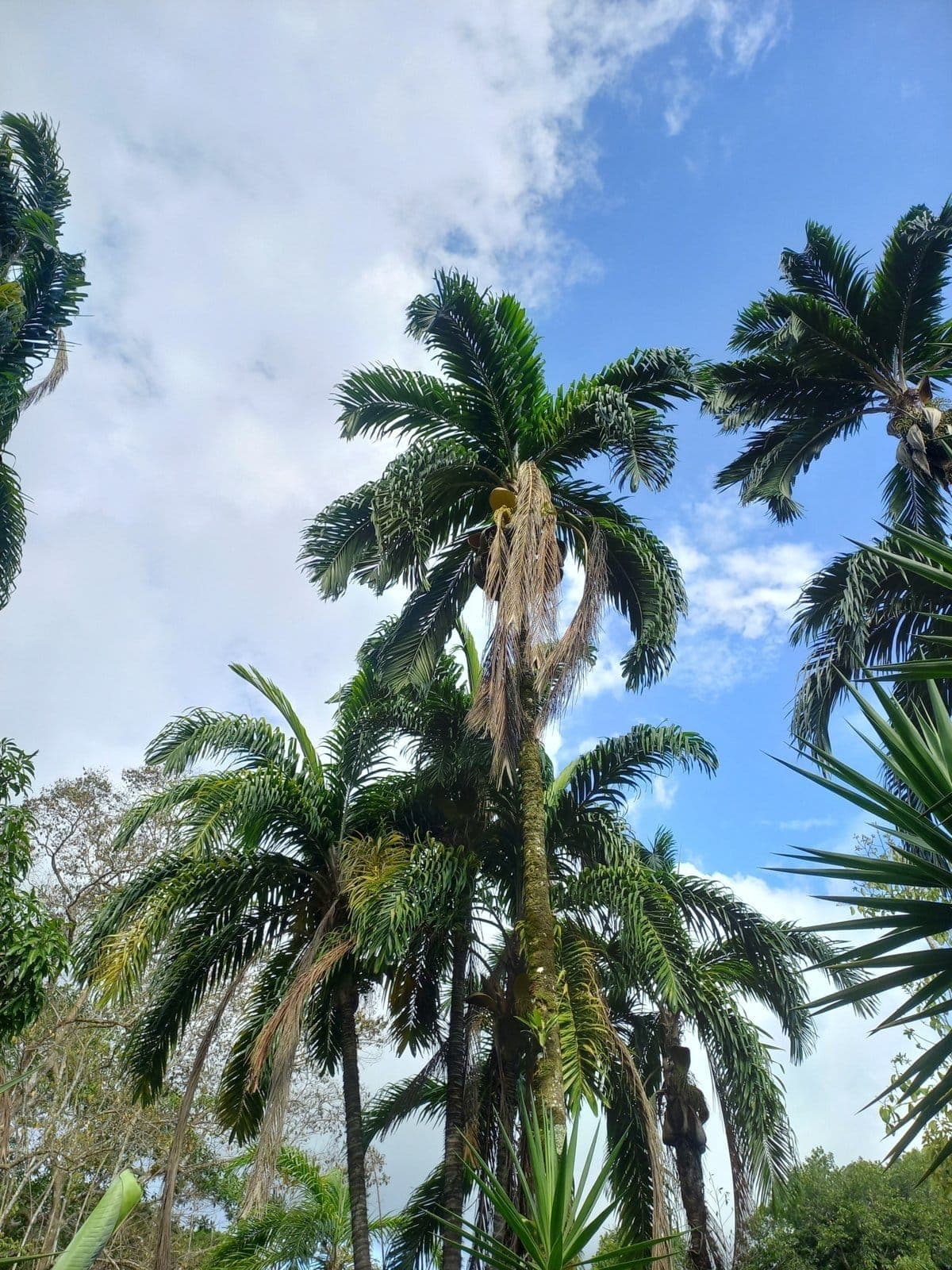
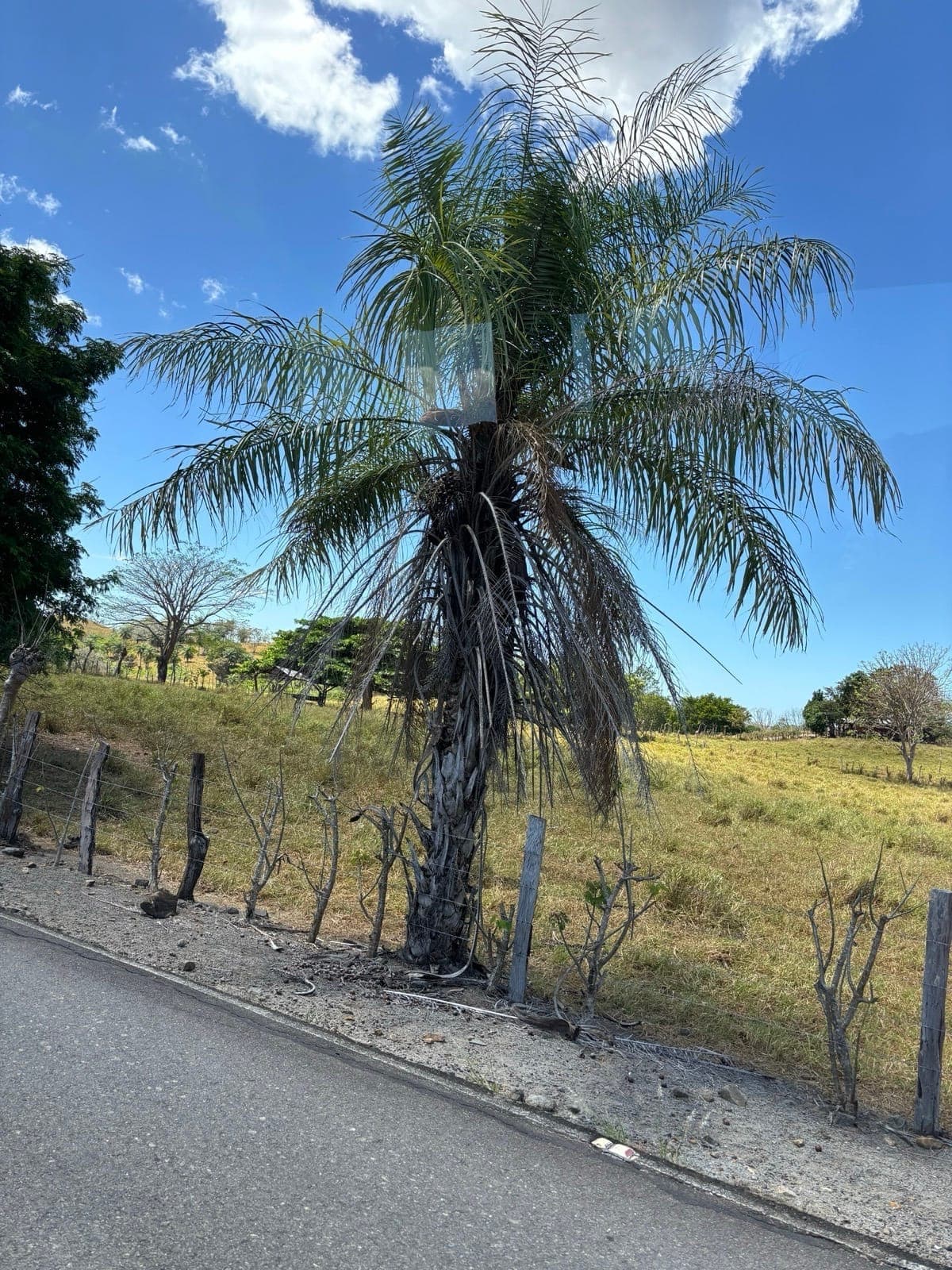
The Corozo is a medium-sized, single-trunked palm with a unique prostrate growth habit. Unlike most palms that grow vertically from germination, the young Corozo trunk grows horizontally along the ground, sometimes for 5–10 meters, before gradually curving upward. This creates the characteristic S-shaped or reclining trunk profile. The total length of the trunk (including the prostrate portion) can reach 15–20 meters, though the crown typically only reaches 5–12 meters above ground level.
Trunk and Bark
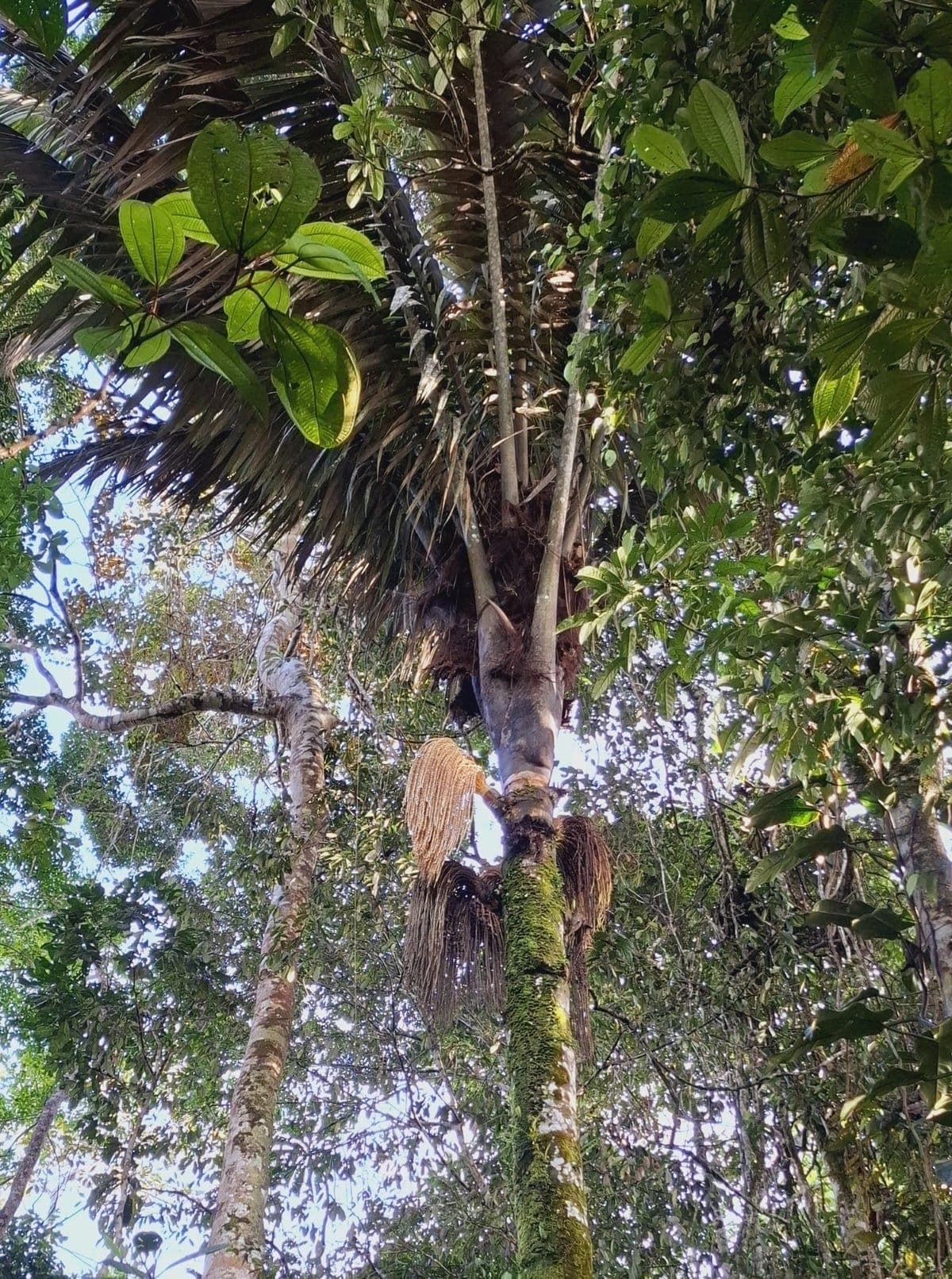
The trunk is 30–50 cm in diameter, light gray to brown, and marked with prominent leaf scars in a spiral pattern. Old persistent leaf bases remain attached to the trunk for years. The prostrate portion of the trunk is often partially buried in leaf litter and soil, with adventitious roots emerging from the underside. In old specimens, the horizontal section may be completely covered in moss, ferns, and epiphytes.
Leaves (Fronds)
The crown holds 15–25 pinnate (feather-shaped) fronds, each 4–6 m long. Individual leaflets (pinnae) are arranged in a single plane (unlike the African oil palm's leaflets which point in various directions), giving the fronds a flatter, more organized appearance. Leaflets are 60–100 cm long and 4–6 cm wide, dark green and glossy above, lighter below. The petiole (leaf stalk) is armed with short spines along its margins.
Flowers
The Corozo is monoecious, producing separate male and female inflorescences on the same tree. Male inflorescences are elongated, finger-like spikes with hundreds of tiny flowers rich in pollen. Female inflorescences are globose and compact, developing into fruit bunches when pollinated. Natural pollination is primarily by the weevil Elaeidobius kamerunicus (introduced from Africa for this purpose) and other insects. Flowering occurs primarily during the dry season to early rainy season.
Fruit and Seeds
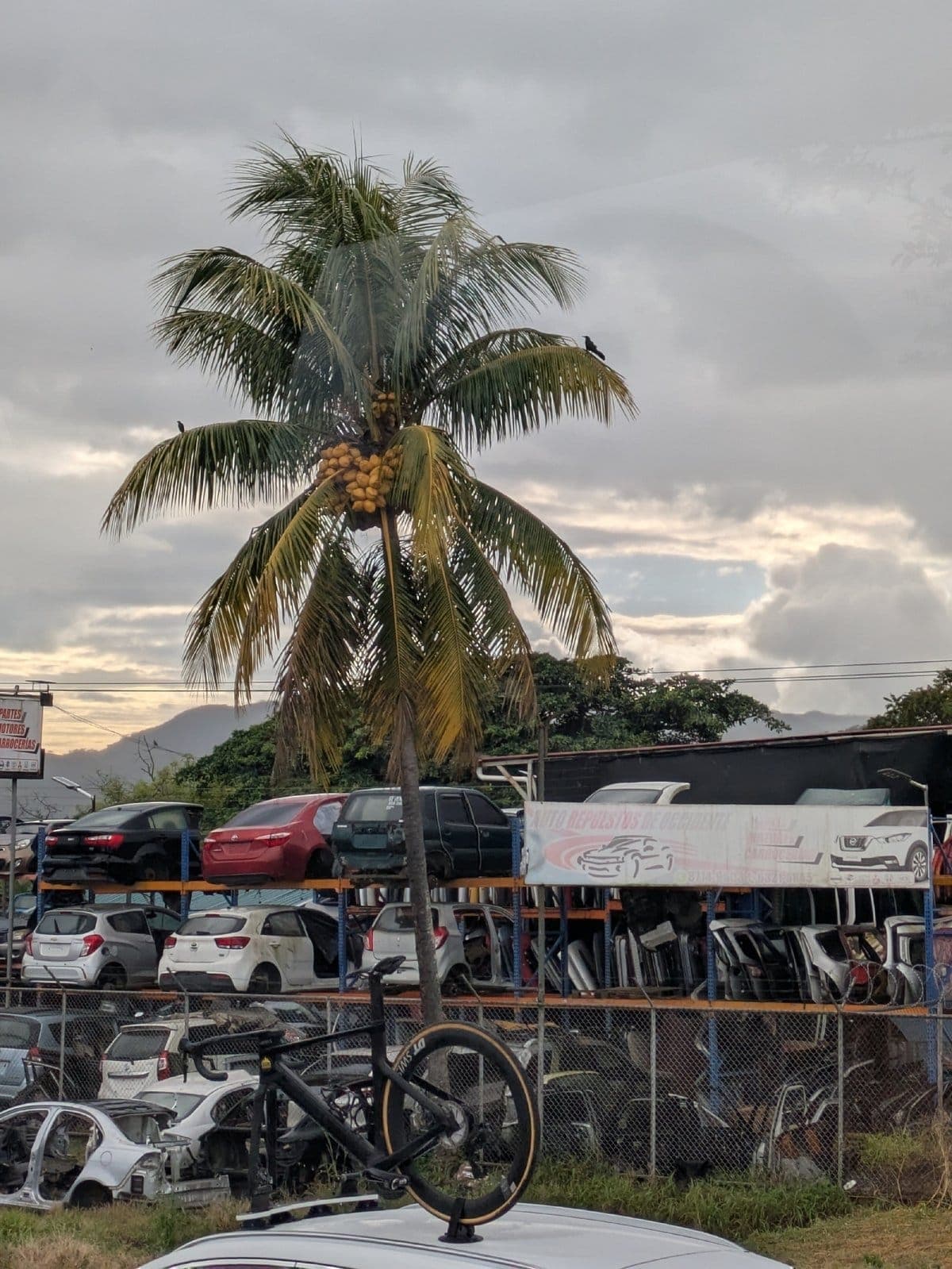
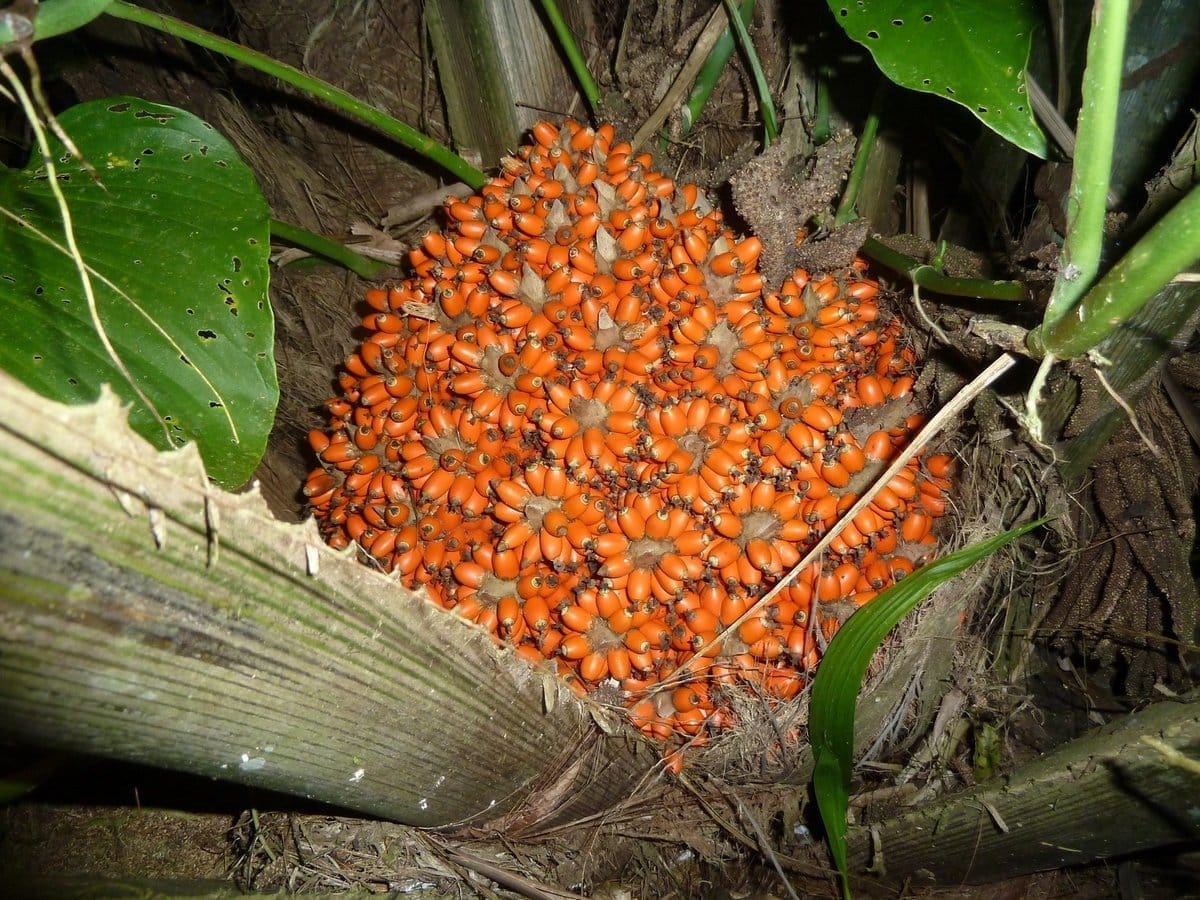
Fruits are ovoid drupes, 2–4 cm long and 1.5–3 cm in diameter, borne in dense bunches of 50–200+ fruits. The fruit has a thin outer skin (exocarp) that turns from green to orange-red when ripe, a fibrous oily mesocarp (pulp) that is deep orange and rich in oil and carotenoids, and a hard endocarp (shell) enclosing a single kernel (endosperm). Fruit bunches weigh 5–15 kg at maturity. The oil content of the mesocarp is lower than African oil palm (15-25% vs 45-55%) but the oil quality is superior.
Geographic Distribution
Range in Costa Rica
In Costa Rica, the Corozo is found primarily in the Caribbean lowlands (Limón Province) and the southern Pacific slope (Osa Peninsula, Golfo Dulce region). Important populations exist in:
- Tortuguero region: Swamp forests and canal margins
- Barra del Colorado Wildlife Refuge: Riverine forests
- Osa Peninsula: Primary forest and forest margins
- Térraba-Sierpe wetlands: Swamp and riverine forests
- Northern lowlands: Scattered populations in San Carlos and Sarapiquí
The species has declined significantly due to deforestation of lowland habitats for agriculture (particularly banana and oil palm plantations, ironically) and cattle ranching. Remaining populations are increasingly fragmented.
Broader Distribution
Elaeis oleifera ranges from southern Mexico (Tabasco, Veracruz, Chiapas) through Central America (Belize, Guatemala, Honduras, Nicaragua, Costa Rica, Panama) and into South America (Colombia, Venezuela, Ecuador, Peru, Brazil, Suriname, French Guiana). The largest wild populations are in the Colombian Chocó, Amazonian Peru, and Brazilian Amazon.
Habitat and Ecology
Ecological Role
The Corozo plays several important roles in lowland tropical ecosystems:
- Wildlife food source: Fruit is consumed by white-lipped and collared peccaries, agoutis, pacas, spider monkeys, howler monkeys, great green macaws, toucans, and many other species
- Seed dispersal: Large mammals (especially peccaries) are primary seed dispersers, carrying seeds away from parent trees in their gut
- Wetland indicator: Presence often indicates high water table and fertile alluvial soils
- Forest structure: The creeping trunk and dense root system contribute to soil stabilization along waterways
- Epiphyte substrate: Prostrate trunks support communities of ferns, mosses, and orchids
Wildlife Associations
Conservation Significance
The Corozo has dual conservation importance:
-
As a wild species: Declining due to habitat loss in lowland tropical forests. Costa Rica's official 2021 SINAC/MINAE threatened-species resolution lists Elaeis oleifera as Vulnerable nationally. Remaining wild populations in Costa Rica require protection.
-
As a genetic resource: Invaluable for developing disease-resistant, high-quality oil palms. Wild populations contain genetic diversity that has not been captured in breeding programs. Wild gene pools must be preserved for future agricultural improvement.
Uses and Applications
Sources: GBIF — Elaeis oleifera↗, IUCN Red List↗, iNaturalist — Elaeis oleifera↗
Edible Oil
The primary economic importance of the Corozo lies in its oil, which has a unique and superior composition:
The high oleic acid content makes Corozo oil comparable to olive oil in its health profile. It has been used traditionally as cooking oil in rural communities throughout its range. The deep orange color indicates extremely high carotenoid (provitamin A) content, making it nutritionally valuable, particularly in communities with limited access to vitamin A-rich foods.
Interspecific Hybridization
Perhaps the most globally significant use of E. oleifera is in breeding with E. guineensis to create OxG (oleifera × guineensis) hybrid oil palms. These hybrids combine:
- Disease resistance from E. oleifera (particularly against bud rot, Phytophthora palmivora)
- Higher oil quality (higher oleic acid, lower saturated fat)
- Higher oil yield from E. guineensis
- Slower vertical growth (easier harvesting)
OxG hybrid palms are now planted commercially in Colombia, Costa Rica, and Ecuador, particularly in areas where bud rot has devastated conventional oil palm plantations.
Traditional Uses
Indigenous and rural communities use the Corozo for:
- Cooking oil: Extracted from fruit pulp by traditional methods
- Palm heart: Young growing tip consumed as vegetable (harvesting kills the palm)
- Medicine: Oil applied topically for skin conditions; fruit decoctions for respiratory ailments
- Construction: Fronds used for thatching, trunk for rustic construction
- Cosmetics: Oil used in traditional skincare and haircare
Cultural and Historical Significance
The Corozo has been used by indigenous peoples of Central and South America for millennia. Archaeological evidence suggests that pre-Columbian communities actively managed and possibly cultivated E. oleifera populations, concentrating them near settlements for oil production. The oil was an important dietary fat source and trade commodity.
In Costa Rica, indigenous Bribri and Cabécar communities of the Caribbean slope have traditionally harvested Corozo fruit for oil extraction. The oil was valued for cooking, medicine, and ceremonial purposes
The modern significance of the Corozo lies primarily in its genetic value. As the palm oil industry faces the existential threat of lethal bud rot disease spreading across Latin American oil palm plantations, E. oleifera genes offer the primary solution. Costa Rica's wild Corozo populations contain genetic diversity essential for developing the disease-resistant oil palms of the future.
Conservation Status
Elaeis oleifera has no global assessment on the IUCN Red List to date and is therefore classified as Not Evaluated (NE) in our schema. However, Costa Rica's official SINAC/MINAE threatened-species resolution (Resolución Nº R-SINAC-CONAC-008-2021, 24 Mar 2021) lists Elaeis oleifera as Vulnerable nationally, reflecting significant habitat loss in lowland tropical forests. Wild populations are fragmented and declining. The species requires conservation attention both as a component of tropical biodiversity and as a critical genetic resource for global agriculture.
National source: SINAC/MINAE, Resolución Nº R-SINAC-CONAC-008-2021: Lista oficial de especies en peligro de extinción y con poblaciones reducidas y amenazadas (2021)↗
Threats
- Habitat destruction: Lowland tropical forests — the Corozo's habitat — have been extensively cleared for agriculture, cattle ranching, and ironically, African oil palm plantations
- Population fragmentation: Remaining wild populations are isolated, reducing gene flow and long-term genetic viability
- Limited awareness: The species receives little conservation attention compared to charismatic fauna sharing its habitat
- Climate change: Changes in rainfall patterns could affect swamp and wetland habitats
Conservation Actions Needed
- In-situ conservation: Protect remaining wild populations in existing reserves (Tortuguero, Osa, Barra del Colorado)
- Ex-situ collections: Establish germplasm banks capturing genetic diversity across the species' range
- Corridor restoration: Connect fragmented populations through habitat corridors
- Research: Study population genetics, pollination ecology, and seed dispersal dynamics
- Community engagement: Support indigenous communities in traditional Corozo management
Growing the Corozo
Site Selection
Choose a low-lying site with consistently moist to wet soil and full sun. The Corozo is ideal for areas that are too wet for most other trees — riverbanks, pond margins, seasonally flooded areas, and high water table locations. It will not thrive in well-drained, dry conditions. Provide ample space (8-10 m) for the sprawling growth habit.
Propagation
From Seed (Only Method): The Corozo is propagated exclusively from seed, as palms cannot be propagated vegetatively. Collect fresh, ripe fruit (orange-red) and remove the pulp. Seeds require 3–6 months to germinate at 30–35°C in moist conditions. Scarification (filing through the hard shell) can improve germination rates. Plant germinated seeds in nursery bags with rich, moist potting mix and grow for 2–3 years before field planting.
Planting and Care
- Plant at the beginning of the rainy season
- Ensure the site has consistently moist soil
- Water regularly during establishment (first 2-3 years)
- Apply balanced fertilizer (12-12-12) every 6 months for fruiting
- Remove dead fronds by cutting cleanly at the trunk
- Monitor for bud rot symptoms (wilting of spear leaf, brown discoloration)
Companion Planting for Wet-Site Restoration
- Upper canopy support: Pair with floodplain trees such as Higuerón and Guácimo to create layered habitat and wind buffering around young Corozo palms.
- Wetland understory: Use moisture-loving understory plants (for example native heliconias and shade-adapted ferns) to protect soil, retain humidity, and reduce weed pressure.
- Riparian corridors: Integrate with other native wet-zone species in strips along quebradas and river margins to improve wildlife movement and reduce bank erosion.
- Avoid: Dry-forest species and crops that require frequent soil drying; Corozo performs poorly in mixed plantings designed for drought-tolerant trees.
Care Calendar
Where to See the Corozo
In Costa Rica
- Tortuguero National Park: Swamp forests along canals
- Barra del Colorado Wildlife Refuge: Riverine forests
- Osa Peninsula / Corcovado: Primary lowland forests
- Térraba-Sierpe National Wetland: Swamp and riverine habitats
- CATIE, Turrialba: Research collections with labeled specimens
- Oil palm plantations (Pacific slope): OxG hybrid palms derived from Corozo genetics
Best Viewing Season
The Corozo can be observed year-round but is most interesting during the fruiting season (August–December) when the bright orange-red fruit bunches are visible. Look for the distinctive creeping trunk — once you recognize the growth habit, you will not confuse it with any other palm species.
Advanced Care Guidance
Site Design and Planting
- Plant in lowland humid zones with permanent soil moisture and 7-9 m spacing for full crown and root expansion.
- Prioritize deep alluvial or organic-rich soils; this species performs poorly on drought-prone ridges.
- In restoration sites, establish with hydrology first: preserve drainage channels and seasonal flooding dynamics.
Watering Program
- Establishment (0-12 months): Maintain consistently moist substrate, watering 2-3 times weekly if rainfall drops.
- Juvenile palms (1-3 years): Deep watering every 5-7 days during unusual dry spells.
- Mature palms: Normally rain-fed in wet zones, but avoid prolonged drying of upper root layers.
Fertilization Schedule
- Use palm-specific blends with potassium and magnesium support (for example 12-8-16 + Mg).
- Apply 2-3 split doses through rainy season, with reduced rates in flood-prone soils.
- Add organic mulch annually to stabilize moisture and reduce nutrient leaching.
Pruning and Structure
- Remove only fully dry fronds; over-pruning weakens fruiting and increases stress.
- Keep pruning tools sanitized when moving between palms to reduce disease spread.
- Maintain clear access paths before fruiting season for safe bunch harvesting.
Pest and Disease Management
- Monitor for palm weevil activity, bud rot symptoms, and foliar fungal lesions in stagnant humid air.
- Improve airflow and avoid trunk injuries that attract boring insects.
- Use integrated control: sanitation, pheromone monitoring, and targeted intervention when thresholds are exceeded.
Companion Planting
- Recommended companions: Palma Yolillo, Cacao in semi-shade systems, Guaba species, and wetland grasses.
- Restoration role: Supports fauna corridors and stabilizes saturated riparian soils.
- Avoid nearby: Xeric species requiring hard dry cycles and aggressive drainage alterations.
Seasonal Care Calendar (Costa Rican Conditions)
- Dry season (Dec-Apr): Supplemental irrigation in atypically dry lowlands and mulch renewal.
- Early rains (May-Jul): Main fertilization, replanting, and early pest scouting.
- Peak rains (Aug-Oct): Drainage and flood monitoring, minimal pruning, and bud health checks.
- Transition (Nov): Harvest logistics planning and access-path maintenance.
Growth Timeline and Harvest Notes
- Juvenile development is moderate; first meaningful bunch production often begins around years 4-6.
- Peak fruiting responds strongly to stable moisture and potassium nutrition.
- Harvest with protective gear because heavy bunches and wet surfaces increase slip and impact risk.
Similar Species and Common Confusions
Key Distinction
The creeping trunk is diagnostic. No other palm in Costa Rica grows horizontally along the ground before turning upward. If you encounter a palm with a curved or S-shaped trunk in a lowland wet area, it is almost certainly Elaeis oleifera. African oil palm (E. guineensis), by contrast, always grows a straight, upright trunk.
Field Identification Checklist
- Location: Lowland wet habitat (0-800 m), swamp forest, riverbank, or seasonally flooded area
- Trunk: Prostrate or semi-prostrate — trunk creeps along the ground before curving upward (the single most diagnostic feature)
- Trunk diameter: 30-50 cm, gray to brown, marked with spiral leaf scars
- Fronds: Pinnate, 4-6 m long; leaflets arranged in a single flat plane (unlike the multi-directional leaflets of African oil palm)
- Petiole spines: Short marginal spines on the leaf stalk
- Fruit bunches: Dense clusters of ovoid fruits, orange-red when ripe, each 2-4 cm long
- Fruit oil: Crush a ripe fruit — mesocarp is deep orange, oily, and rich in carotenoids
- Crown height: Typically only 5-12 m above ground despite total trunk length of 15-20 m
- Epiphytes: Prostrate trunk section often colonized by ferns, mosses, and orchids
- Associates: Found with other wetland-adapted palms, Raphia, and swamp forest trees
Genetic Conservation and Breeding Value
Why Wild Corozo Populations Matter
Costa Rica's wild E. oleifera populations hold irreplaceable genetic resources:
- Disease resistance genes: Natural resistance to bud rot (Phytophthora palmivora) — the most devastating disease of oil palm plantations in the Americas — is encoded in E. oleifera germplasm
- Oil quality alleles: Genes controlling high oleic acid content and carotenoid synthesis are essential for improving palm oil nutrition
- Stress tolerance: Wetland adaptation genes enable cultivation in marginal, flood-prone soils
- Genetic diversity: Each isolated wild population may contain unique allelic combinations not captured in existing breeding programs
Conservation Genetics Priorities
Oil Quality and Processing Parameters
Seed Supply and Nursery Protocol
Seed Collection
- Timing: Collect fruit from ripe (orange-red) bunches during August-December; peak availability September-November
- Source selection: Harvest from wild populations in at least 3-4 separate locations (Tortuguero, Osa, Caribbean lowlands, northern plains) to capture genetic breadth
- Processing: Remove fruit pulp by hand or soaking; clean and dry shells before cracking to extract kernels; seeds lose viability within months, so process promptly
Nursery Production
Quality Control
- Germination rate target: ≥40% (lower than most palms due to hard endocarp)
- Source material from at minimum 3 wild populations per batch
- Cull seedlings showing persistent chlorosis or root rot symptoms
- Record collection site GPS, date, and parent tree characteristics for genetic traceability
Research Priorities in Costa Rica
- Population census: Complete inventory of remaining wild Corozo populations across Limón, Puntarenas, and northern lowlands
- Genetic characterization: Use microsatellites or SNP markers to assess genetic diversity and population structure
- Pollination ecology: Study native pollinator effectiveness versus introduced Elaeidobius weevils
- Hybridization potential: Evaluate natural gene flow between wild E. oleifera and nearby E. guineensis plantations
- Wetland restoration: Test Corozo as a focal species for restoring degraded lowland wetlands
- Disease resistance mechanisms: Characterize the molecular basis of bud rot resistance for transfer to commercial varieties
- Traditional knowledge: Document indigenous Bribri and Cabécar oil extraction methods and uses before knowledge is lost
External Resources
References
- Corley, R. H. V., & Tinker, P. B. (2016). The Oil Palm (5th ed.). Wiley-Blackwell.
- Henderson, A., Galeano, G., & Bernal, R. (1995). Field Guide to the Palms of the Americas. Princeton University Press.
- Hardon, J. J., & Tan, G. Y. (1969). Interspecific hybrids in the genus Elaeis. Euphytica, 18, 372–379.
- Patiño, V. M. (1963). Plantas Cultivadas y Animales Domésticos en América Equinoccial. Cali: Imprenta Departamental.
- Rey, L., et al. (2004). Lipid composition of the American oil palm (Elaeis oleifera). Journal of the American Oil Chemists' Society, 81, 513–516.
- Montúfar, R., & Pintaud, J. C. (2006). Variation in species composition and abundance of palms between western Amazonian terra firme forests. Journal of Tropical Ecology, 22, 421–429.
- SINAC/MINAE. (2021). Resolución Nº R-SINAC-CONAC-008-2021: Lista oficial de especies en peligro de extinción y con poblaciones reducidas y amenazadas. https://leap.unep.org/en/countries/cr/national-legislation/resolucion-no-r-sinac-conac-008-2021-lista-oficial-de-especies-en
Safety Information Disclaimer
Safety information is provided for educational purposes only. Individual reactions may vary significantly based on age, health status, amount of exposure, and individual sensitivity. Always supervise children around plants. Consult a medical professional or certified arborist for specific concerns. The Costa Rica Tree Atlas is not liable for injuries or damages resulting from interaction with trees described in this guide.
• Always supervise children around plants
• Consult medical professional if unsure
• Seek immediate medical attention if poisoning occurs
Information compiled from authoritative toxicology sources, scientific literature, and medical case reports.
Help improve this page
Know something about this tree? Share local knowledge, suggest a correction, or submit a photo to improve this guide for everyone.