Palma Cacho de Venado
Oenocarpus bataua
Quick facts
Native Region
Central and South America (Honduras to Bolivia and Brazil)
Max Height
15-25 meters (50-80 feet)
Family
Arecaceae
Conservation
LC — Least Concern
Uses
Safety Information
Toxicity Details
Oenocarpus bataua is completely non-toxic. The fruits are widely consumed by humans and wildlife — the mesocarp is rich in high-quality edible oil comparable to olive oil. The palm heart is edible and nutritious but harvesting kills the palm (single-stemmed). Seeds, leaves, roots, and trunk are chemically inert. No toxic compounds have been identified in any part of this palm.
Skin Contact Risks
No skin contact risk. The trunk is smooth and unarmed — no spines or irritating fibers. The leaves are large but smooth-edged and non-irritating. The fruit pulp is oily and may leave residue on skin but causes no irritation. No dermatological reactions have been reported.
Allergenic Properties
Low allergen risk. Flowers produce moderate amounts of pollen but are largely insect- and gravity-pollinated. The large inflorescences may trigger mild reactions in highly sensitive individuals during peak flowering. Not a significant allergen source for most people.
Structural Hazards
Moderate structural considerations due to large size. Heavy fruit bunches (5-15 kg each) drop from heights of 15-25 m when ripe. Falling fronds are large (3-5 m long) and can cause injury. The trunk is tall and robust but generally wind-resistant. Plant away from high-traffic areas and seating. Mature specimens should be assessed for structural integrity.
Wildlife & Pet Risks
Completely safe and beneficial for wildlife. Fruits are a critical food source for toucans, parrots, spider monkeys, peccaries, agoutis, and many other rainforest animals. One of the most important wildlife food palms in neotropical forests.
Season
Flowering
Jan-Apr
Fruiting
May-Oct
How to identify
Palma Cacho de Venado (Milpesos Palm)
Palma Cacho de Venado (Oenocarpus bataua) is one of the most valuable wild food palms in the neotropics. Its dark purple fruits yield an oil so similar in composition to olive oil that early European explorers called it "American olive oil." Rising 15-25 meters into the canopy of Costa Rica's wet forests, this majestic palm feeds an extraordinary diversity of wildlife — from toucans and spider monkeys to peccaries and agoutis — making it one of the most ecologically important trees in the tropical rainforest. Indigenous communities across its vast range, from Honduras to Bolivia, have relied on its nutritious fruit for millennia.
Quick Reference
Key Information
Overview
Oenocarpus bataua is one of the great palms of the neotropical rainforest — a tall, elegant, single-stemmed species that rises through the mid-canopy and sub-canopy layers of lowland wet forests. It belongs to the family Arecaceae, tribe Euterpeae, closely related to the açaí palm (Euterpe oleracea) and sharing similar fruit ecology. The genus Oenocarpus contains about 9 species, all restricted to tropical America, and O. bataua is by far the most widespread and economically important.
In Costa Rica, the palm is known as "Cacho de Venado" (deer antler) — a name that refers to the distinctive shape of the inflorescence, whose long, drooping rachillae resemble the branching tines of a deer's antler. Across its broader South American range, it goes by many names: seje, milpesos, patawa, batauá, ungurahui — each reflecting deep cultural connections with indigenous peoples who have harvested its fruit for thousands of years.
The fruit of O. bataua contains an oil remarkably similar in fatty acid composition to olive oil, with 75-80% oleic acid (the same monounsaturated fatty acid that gives olive oil its health benefits). This nutritional quality has made it a focus of research into sustainable non-timber forest products (NTFPs). Unlike oil palms that require plantation monocultures, O. bataua produces valuable food within intact forest ecosystems, offering a model for conservation-compatible economic use of tropical forests.
In Costa Rica, the palm reaches the northern limit of its range and is found primarily in the Caribbean lowland forests of Limón province and the wet forests of the Osa Peninsula. While less culturally prominent in Central America than in Amazonia, it remains an important wildlife food source and a component of the mature forest canopy.
📸 Photo Gallery
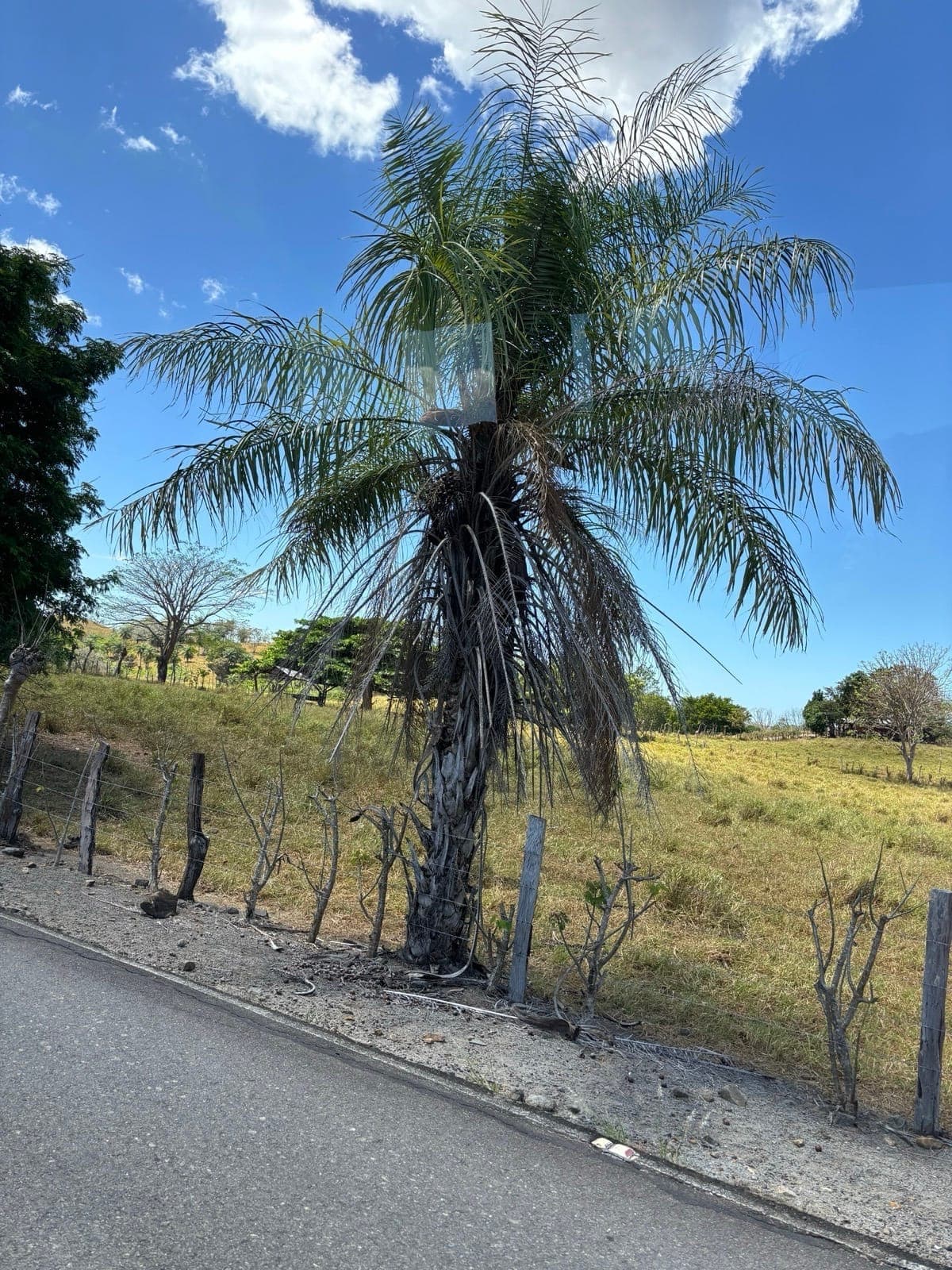
Whole tree
📷 (c) Jens-Christian Svenning, some rights reserved (CC BY)(CC BY-NC)
View source ↗Leaves
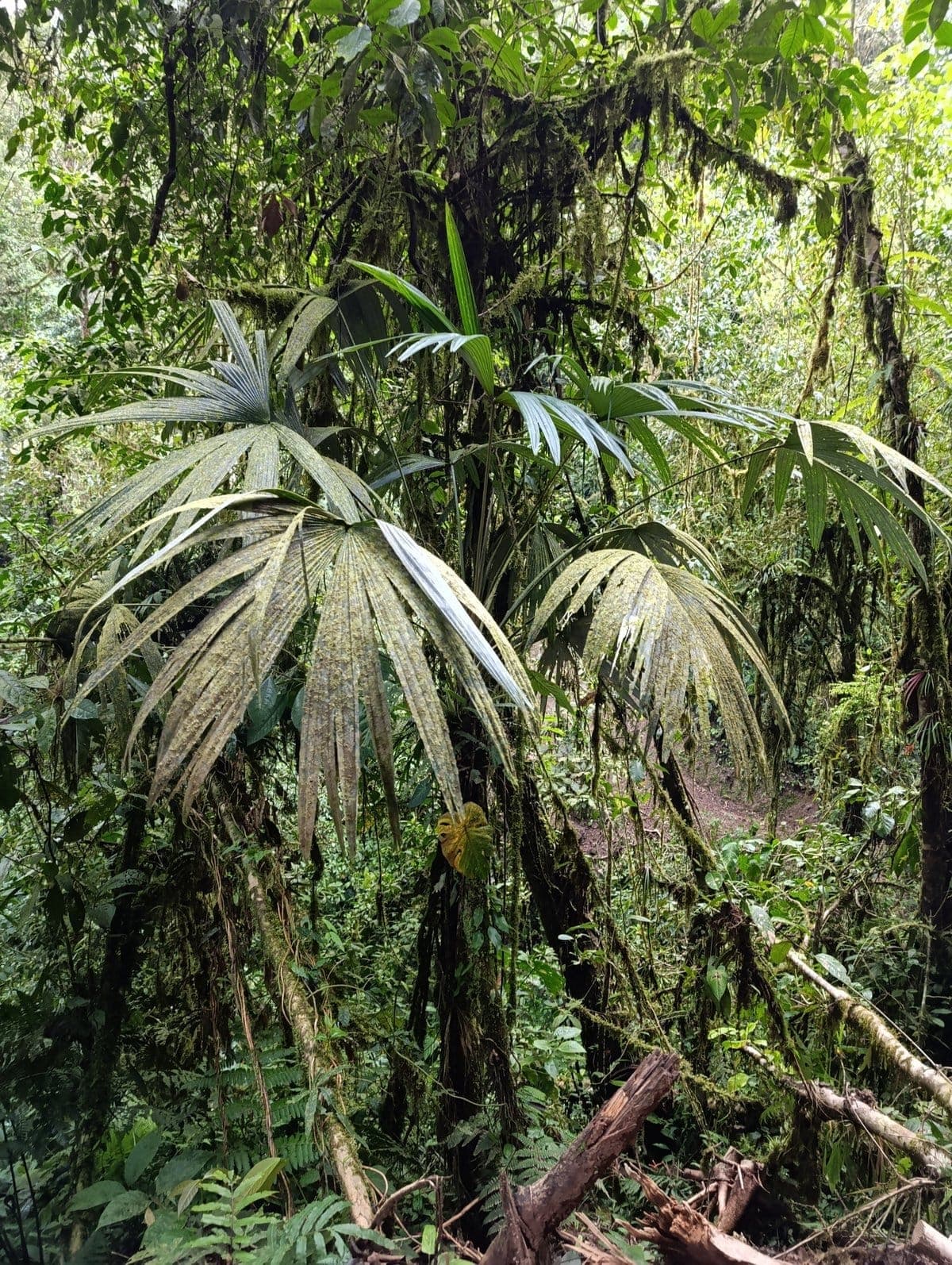
📷 (c) verneau, some rights reserved (CC BY-NC-ND)(CC BY-NC)
View source ↗Whole tree
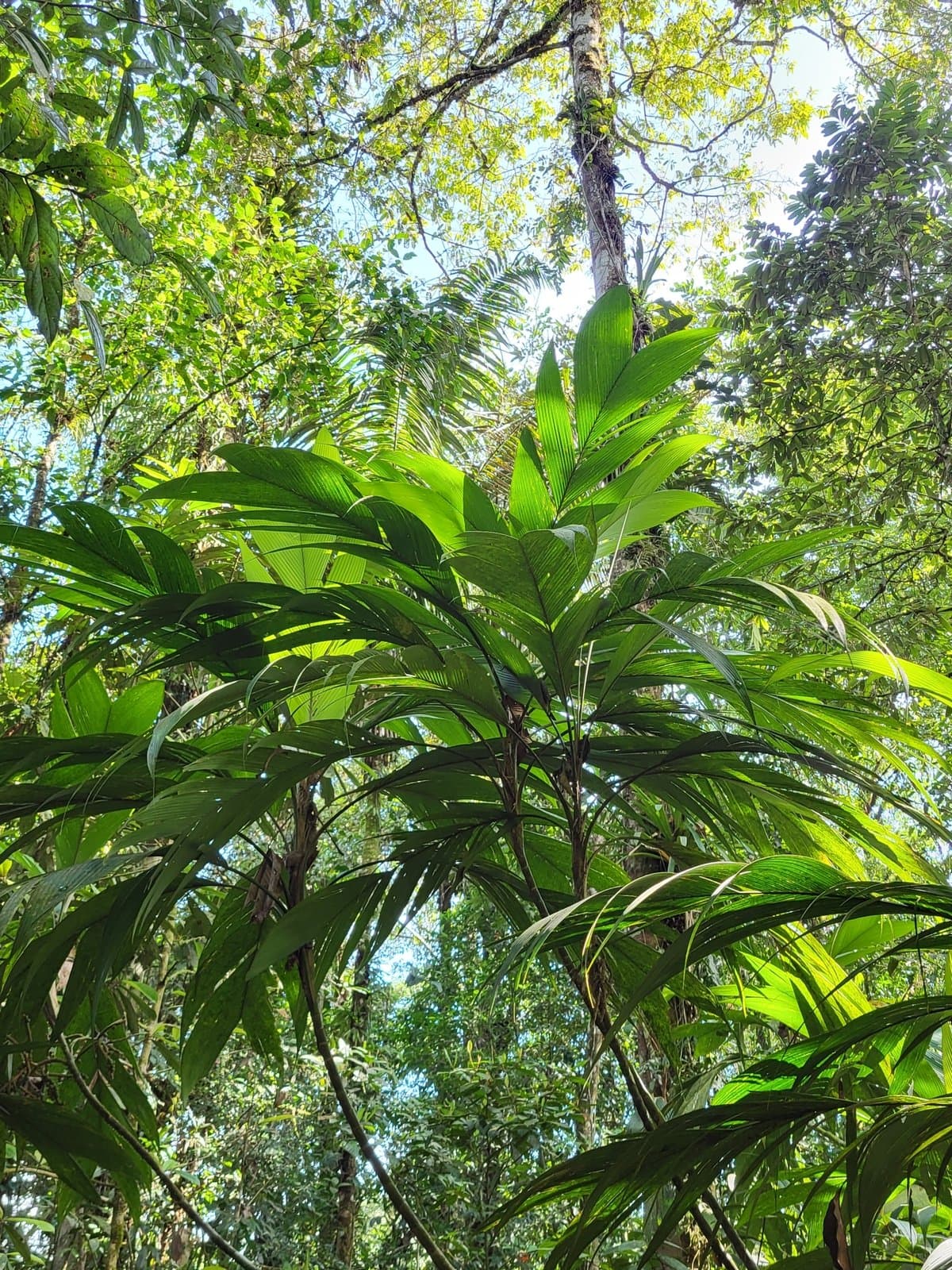
📷 (c) Lissette Bustos, some rights reserved (CC BY-NC)(CC BY-NC)
View source ↗Leaves
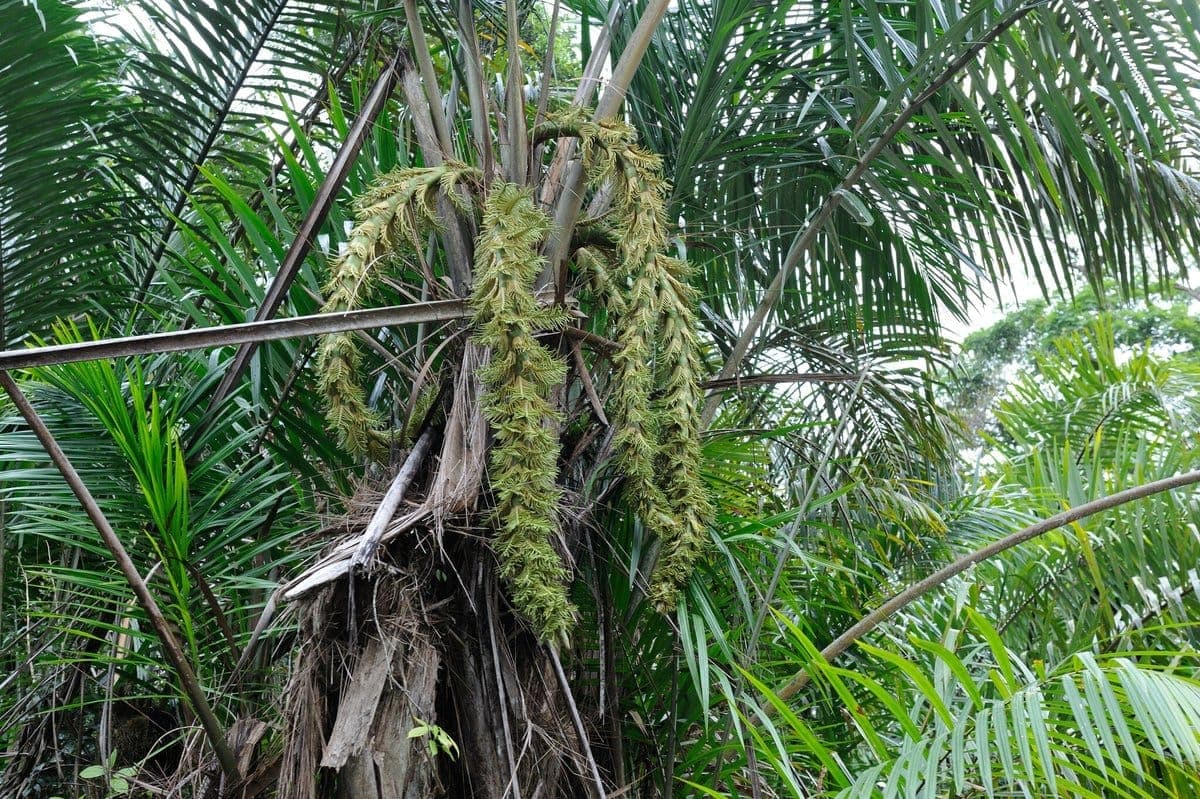
📷 (c) T R Shankar Raman, some rights reserved (CC BY)(CC BY-NC)
View source ↗Whole tree
📷 (c) Maël Lemaitre, some rights reserved (CC BY-NC)(CC BY-NC)
View source ↗Photos sourced from iNaturalist's community science database. Browse all observations →↗
Taxonomy and Classification
Common Names by Region
Taxonomic Notes
The genus Oenocarpus was named by the German botanist Carl Friedrich Philipp von Martius in 1823, from the Greek "oinos" (wine) and "karpos" (fruit), referring to the wine-like beverage made from the fruits. O. bataua was originally described by Martius in 1823 and has been remarkably stable taxonomically — unusual for a widespread tropical species. Some older literature refers to it as Jessenia bataua, reflecting a now-abandoned genus split.
Physical Description
Growth Form
The Milpesos Palm is a tall, solitary, single-stemmed palm that typically reaches 15-25 meters in height in Costa Rica, with exceptional individuals reaching 30 meters in ideal conditions in South America. The overall form is stately and dignified — a straight, columnar trunk crowned by a spreading rosette of large, pinnate fronds that arch gracefully outward and downward.
Trunk
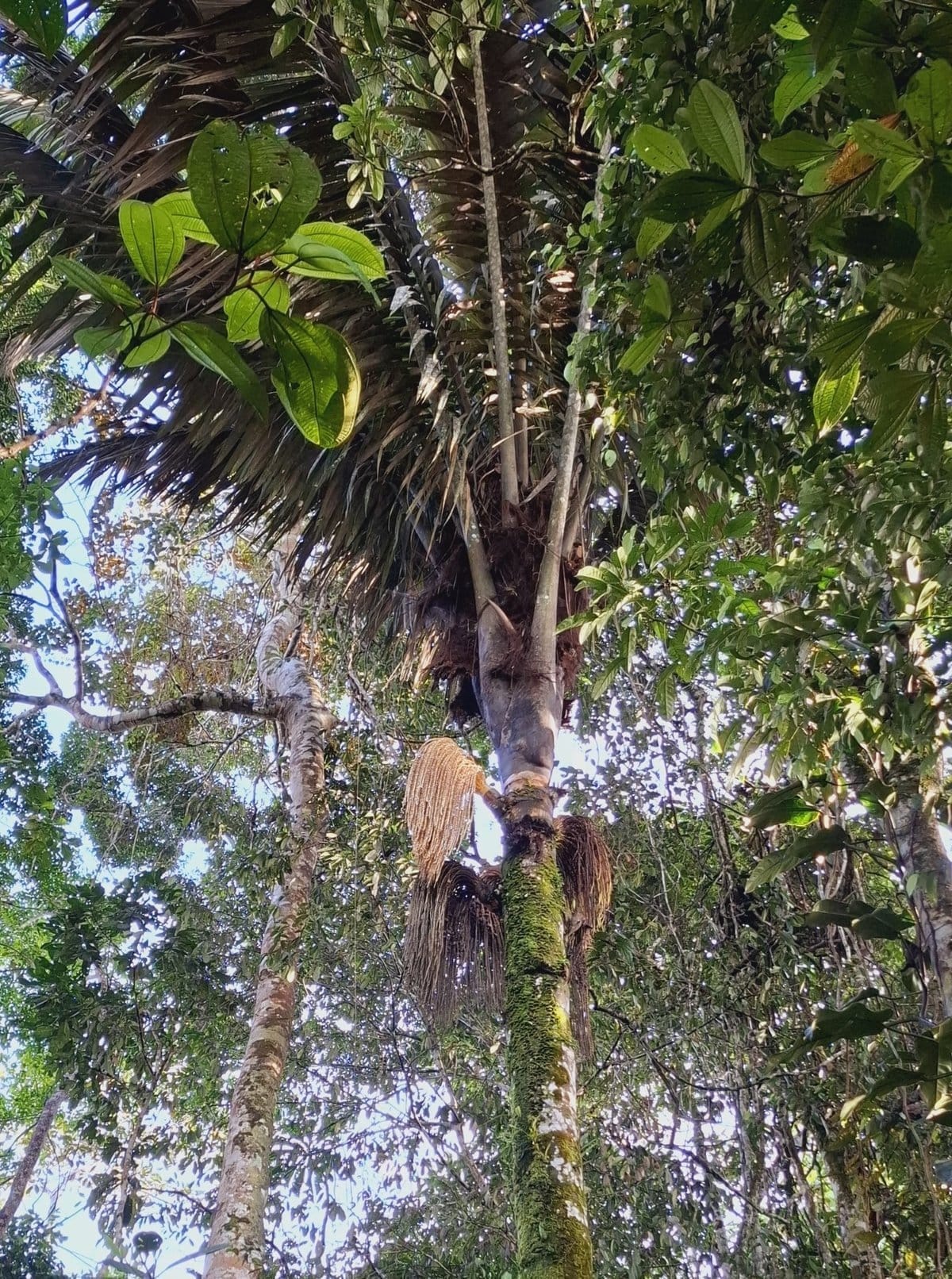
The trunk is straight, smooth, and cylindrical, 15-25 cm in diameter, with a slightly swollen base. The surface is pale gray to whitish, marked with prominent, closely spaced leaf scar rings. The trunk lacks spines and is clean of persistent leaf bases. An extended, well-defined crownshaft (30-60 cm long) — a smooth, green to olive-green sheath at the top of the trunk — is a distinctive feature, similar to royal palms.
Leaves (Fronds)
The leaves are pinnately compound, 3-5 meters long, with 40-80 pairs of leaflets arranged in a single plane (giving the leaf a flat, feather-like appearance). The leaflets are linear, 60-100 cm long and 3-5 cm wide, dark green and glossy above, sometimes with a silvery or whitish underside. The leaf crown contains 10-20 leaves at any time, creating a spread of 6-10 meters. Leaves droop gracefully from the crown, with older leaves hanging downward before detaching cleanly.
Flowers
The inflorescence is one of the most distinctive features — a large, branched structure that emerges from below the crownshaft and hangs downward like a horse's tail or deer antler (hence "cacho de venado"). It consists of numerous long, pendulous rachillae (branches), 50-100 cm long, densely covered with small, yellowish to cream-colored flowers. The inflorescence is initially enclosed in a large, woody, boat-shaped bract (spadix) that splits open dramatically to release the hanging flower branches. Each palm produces 1-4 inflorescences per year.
Fruit and Seeds
The fruits are drupes, oblong-ellipsoid, 2.5-3.5 cm long, turning from green through purple to dark violet-black when ripe. The thin mesocarp (fruit flesh) is oily and nutritious — this is the source of the valuable "seje oil" or "milpesos oil." Each fruit contains a single hard seed. Fruit bunches weigh 5-15 kg and contain 500-3000 individual fruits. Fruiting peaks during the wet season (May-October in Costa Rica).
Geographic Distribution
Range in Costa Rica
The Palma Cacho de Venado is found primarily in Costa Rica's wettest forests:
- Caribbean lowlands: Most abundant in Talamanca region (Limón province), particularly in primary forests from sea level to ~500 m
- Osa Peninsula: Scattered populations in primary wet forest areas of Corcovado and surrounding forests
- Sarapiquí region: Recorded in La Selva Biological Station and surrounding forests
- Northern lowlands: Scattered records in the San Carlos-Boca Tapada corridor
Broader Distribution
Oenocarpus bataua has one of the broadest ranges of any Neotropical palm, stretching from Honduras and Costa Rica through Panama, across the northern Andes of Colombia, Venezuela, Ecuador, and Peru, into the vast Amazon basin of Brazil and Bolivia, and onto the Guiana Shield. It is most abundant in western Amazonia, where it can form extensive groves on alluvial floodplains. Costa Rica represents the northern edge of its range.
Habitat and Ecology
Ecological Role
The Milpesos Palm is a keystone species in neotropical wet forests:
- Keystone food resource: Fruits are consumed by an extraordinary diversity of mammals, birds, and fish — often ranked among the top 10 most important wildlife food plants in Amazonian forests
- Canopy structure: Contributes to mid-canopy architecture, providing perching and nesting sites
- Nutrient cycling: Large leaf falls contribute significant organic matter to the forest floor
- Hydrological indicator: Concentrated along watercourses and in seasonally flooded areas, indicating water availability
- Carbon storage: Long-lived canopy palms store significant carbon in their trunks and root systems
Wildlife Associations
Uses and Applications
Edible Oil (Seje/Milpesos Oil)
The most valuable product of O. bataua is the oil extracted from the fruit mesocarp:
- Composed of 75-80% oleic acid — nearly identical to olive oil
- Rich in vitamins A and E, beta-carotene, and essential fatty acids
- Traditionally extracted by boiling ripe fruits and skimming the oil from the surface
- Light golden color with a mild, pleasant flavor
- Used for cooking, salad dressing, and medicinal applications
- Potential commercial product for sustainable forest management
Fruit Beverage (Chicha de Seje)
A traditional non-alcoholic beverage prepared across the palm's range:
- Ripe fruits are soaked in warm water and kneaded to separate flesh from seeds
- The resulting thick, purple-tinged liquid is rich in oils, proteins, and vitamins
- Consumed as a refreshing, nutritious drink
- Traditionally important for indigenous communities throughout Amazonia
Construction and Materials
- Trunk: Split trunks used for flooring, walls, and temporary bridges in rural construction
- Leaves: Large fronds used for thatching roofs — durable and waterproof
- Fibers: Leaf fibers woven into mats, baskets, and carrying bags
- Bows: Wood from outer trunk used for making bows by indigenous hunters
Traditional Medicine
- Fruit oil: Applied topically for skin conditions, hair care, and wound healing
- Root decoction: Used as traditional remedy for respiratory ailments
- Palm heart: Consumed for nutritional value during illness recovery
Cultural and Historical Significance
The Milpesos Palm holds deep cultural significance across its range, particularly among indigenous Amazonian peoples. The name "milpesos" (a thousand pesos) reflects the high value placed on this palm. In many indigenous cosmologies, the O. bataua palm is considered a gift from the forest spirits — a tree that provides food, shelter, and medicine.
In Costa Rica, the palm's cultural importance is less prominent than in South America, reflecting its position at the northern edge of its range where it is less abundant. However, indigenous Bribri and Cabécar communities in the Talamanca mountains have traditionally recognized and utilized this palm. The local name "Cacho de Venado" (deer antler) evokes the distinctive shape of the drooping inflorescence, connecting the palm to the fauna of the forest in rural Costa Rican imagination.
Internationally, O. bataua has become a symbol of sustainable forest use. Research by ethnobotanists has demonstrated that standing forests of Milpesos Palms produce more economic value through fruit harvest over their lifetime than the same land cleared for cattle or crops — a powerful argument for forest conservation.
Conservation Status
Oenocarpus bataua is classified as Least Concern (LC) by the IUCN due to its vast range and large populations, particularly in Amazonia. However, populations in Central America — including Costa Rica — are small, scattered, and vulnerable to habitat loss. The palm's importance as a keystone wildlife food source makes its conservation a priority in wet forest ecosystems.
Threats
- Deforestation: Loss of primary wet forest eliminates habitat; the palm does not colonize disturbed areas well
- Overharvesting palm heart: Destructive harvest kills the single-stemmed palm
- Climate change: Increasing dry season intensity threatens this moisture-dependent species
- Forest fragmentation: Small populations in Central America are vulnerable to genetic isolation
- Illegal logging: Road access to remote forests exposes populations to exploitation
Conservation Actions
- Protected within Corcovado National Park, La Amistad International Park, and other reserves
- Research into sustainable fruit harvest as a non-timber forest product
- Included in reforestation and agroforestry programs in the Talamanca region
- Seed banks maintained at CATIE and other research institutions
- International attention as a model species for forest-based livelihoods
Growing the Palma Cacho de Venado
Site Selection
The Milpesos Palm requires specific conditions to thrive:
- Warm, wet climate — temperatures 22-32°C, rainfall >2500 mm/year
- Deep, fertile soils — alluvial or clay-loam soils with good organic matter
- Partial shade initially — young palms need shade; adults tolerate more light
- Consistent moisture — near water sources or in areas with reliable rainfall
- Wind protection — large fronds are susceptible to wind damage
Ideal for: large gardens in wet tropical lowlands, restoration plantings in riparian corridors, agroforestry systems, botanical gardens.
Propagation
From Seed: Collect ripe dark purple/black fruits. Remove mesocarp by soaking in warm water for 24-48 hours and scrubbing. Sow seeds immediately — viability drops rapidly after 2-4 weeks. Plant 3-5 cm deep in moist, well-drained germination medium. Keep at 25-30°C in partial shade. Germination is moderate: 1-4 months. Seedling growth is slow for the first 2-3 years, then accelerates.
Planting and Care
- Plant in a permanently moist location with partial shade during establishment
- Amend soil with compost and organic matter at planting
- Mulch heavily to maintain soil moisture
- Water regularly during dry periods — do not allow roots to dry out
- Provide shade for young palms (first 3-5 years)
- Apply balanced palm fertilizer twice yearly (March and September)
- Remove dead fronds as they detach naturally
- Monitor for weevil attacks, especially in damaged or stressed palms
- Allow 10+ meters of clearance from structures for mature specimens
Where to See the Palma Cacho de Venado
In Costa Rica
- Corcovado National Park (Osa Peninsula): Best chance to see wild specimens in primary wet forest along trail systems
- La Selva Biological Station (Sarapiquí): Documented populations in lowland wet forest
- Hitoy-Cerere Biological Reserve (Limón): Pristine Caribbean lowland forests with Oenocarpus populations
- Braulio Carrillo National Park: Caribbean slope wet forests
- Cahuita National Park: Coastal wet forest with scattered palms
- Kèköldi Indigenous Reserve (Talamanca): Area where Bribri communities traditionally use the palm
Best Viewing Tips
Look for this palm in primary or old-growth wet forest in lowland areas (below 500 m) on the Caribbean slope or Osa Peninsula. The tall, straight trunk with its distinctive crownshaft is an identifying feature visible from forest trails. During fruiting season (May-October), look for large, drooping clusters of dark purple fruits beneath the crown. The hanging inflorescences — the "deer antler" shape — are distinctive even from a distance.
Community Harvest and Monitoring Protocol
In Costa Rica, the best long-term strategy for using Oenocarpus bataua is to treat each palm as a multi-decade food infrastructure tree rather than a one-time resource. Non-destructive fruit harvest, careful drop-zone management, and annual crown monitoring let communities benefit from oil-rich fruits while preserving habitat for toucans, parrots, bats, and terrestrial mammals.
Non-Destructive Harvest Steps
Annual Monitoring Checklist
Keep harvest pressure moderate and predictable. In mixed-use landscapes, a dependable annual yield with healthy wildlife visitation is more valuable than maximum extraction in a single season.
Field Team Safety Minimums
External Resources
References
- Henderson, A., Galeano, G., & Bernal, R. (1995). Field Guide to the Palms of the Americas. Princeton University Press.
- Balick, M. J. (1992). Jessenia and Oenocarpus: Neotropical oil palms worthy of domestication. FAO Plant Production and Protection Paper No. 88. FAO, Rome.
- Miller, C. (2002). Fruit production of the ungurahua palm (Oenocarpus bataua) in an indigenous managed reserve. Economic Botany, 56(2), 165-176.
- Hammel, B. E., Grayum, M. H., Herrera, C., & Zamora, N. (2003). Manual de Plantas de Costa Rica, Vol. II. Missouri Botanical Garden.
- Montúfar, R., & Pintaud, J.-C. (2006). Variation in species composition, abundance and microhabitat preferences among western Amazonian terra firme palm communities. Botanical Journal of the Linnean Society, 151, 127-140.
- Santos, A. J., & Coelho-Ferreira, M. (2012). Oenocarpus bataua Mart.: A palm of multiple uses. Palms, 56(1), 21-32.
Safety Information Disclaimer
Safety information is provided for educational purposes only. Individual reactions may vary significantly based on age, health status, amount of exposure, and individual sensitivity. Always supervise children around plants. Consult a medical professional or certified arborist for specific concerns. The Costa Rica Tree Atlas is not liable for injuries or damages resulting from interaction with trees described in this guide.
• Always supervise children around plants
• Consult medical professional if unsure
• Seek immediate medical attention if poisoning occurs
Information compiled from authoritative toxicology sources, scientific literature, and medical case reports.
Help improve this page
Know something about this tree? Share local knowledge, suggest a correction, or submit a photo to improve this guide for everyone.