Palma Yolillo
Raphia taedigera
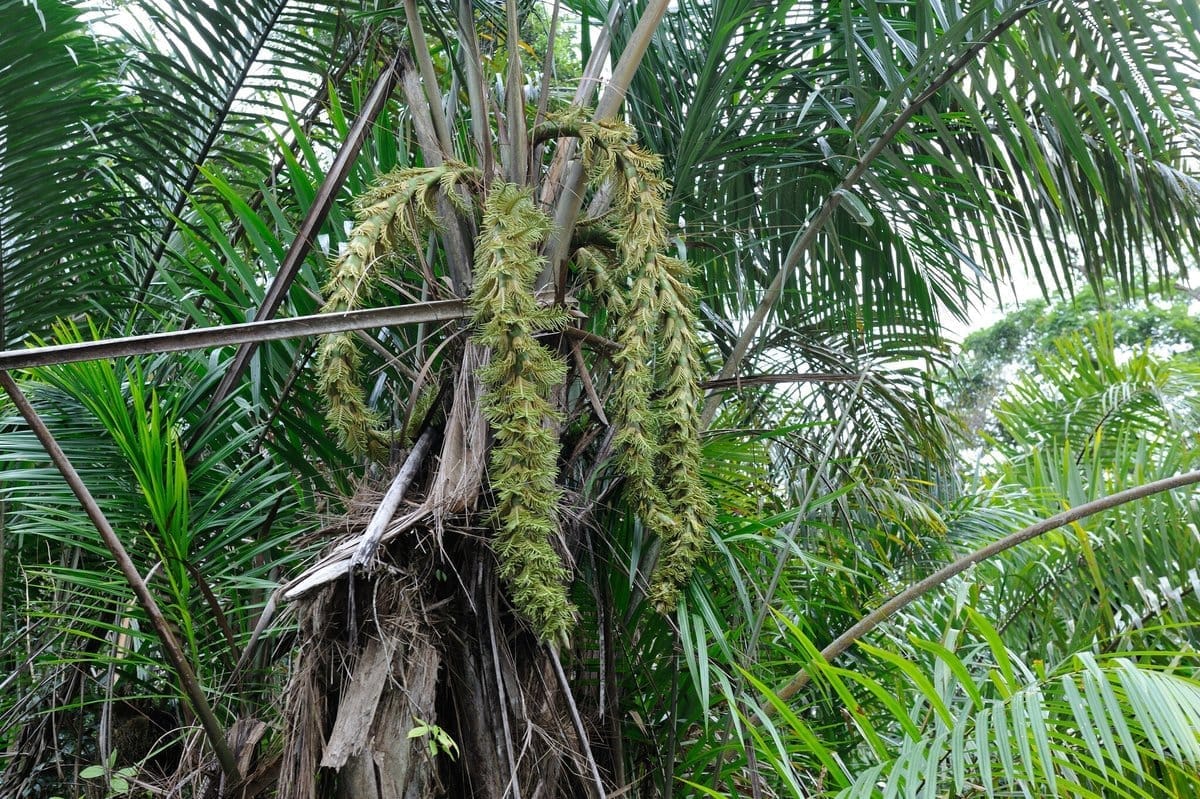
Quick facts
Native Region
Central America and West Africa (disjunct)
Max Height
10-20 meters (33-66 feet)
Family
Arecaceae
Conservation
LC — Least Concern
Uses
Safety Information
Toxicity Details
Raphia taedigera is non-toxic. The mesocarp (flesh) of the fruit is edible, rich in oils, and consumed by wildlife. The palm heart is also edible when harvested. The sap is non-irritating. No toxic compounds have been identified in any part of the plant. However, the fruits' hard, scaly exterior is inedible. The oily fruit pulp can cause mild digestive upset if consumed in large quantities.
Skin Contact Risks
Moderate skin contact risk. The leaf rachis (midrib) and petioles bear small but sharp recurved spines that can scratch skin. The massive leaf bases have rough, fibrous edges that can cause friction burns or cuts. The fruit scales are hard and sharp-edged — handle fruits with gloves. Some individuals may experience mild irritation from contact with the waxy leaf surfaces. Always wear leather gloves and long sleeves when working with Raphia fronds.
Allergenic Properties
Low allergen risk. Flowers are primarily wind-pollinated, producing moderate amounts of pollen, but the swampy habitat limits human exposure. No significant allergenic reactions have been documented. Cross-reactivity with other palm pollens is theoretically possible.
Structural Hazards
Significant structural hazards due to the enormous size of this palm. Individual leaves can weigh 50-100 kg when mature; a falling frond from height could cause serious injury or death. The massive fruit clusters (up to 60 cm across) are heavy and can fall without warning. Dead fronds hang loosely before detaching. Never stand or camp under the crown. The swampy habitat adds drowning risk. Root systems create tripping hazards in dark water.
Wildlife & Pet Risks
Non-toxic to wildlife. The oily fruits are a critical food source for green macaws, tapirs, peccaries, and many smaller mammals. Decomposing fruit attracts a rich invertebrate community. The large fronds provide nesting habitat for numerous bird species. Safe for all wildlife; the palm is a keystone species in its swamp ecosystem.
Season
Flowering
Mar-Jun
Fruiting
Aug-Dec
How to identify
Palma Yolillo (Yolillo Palm)
Palma Yolillo (Raphia taedigera) holds one of the most remarkable records in the plant kingdom: its leaves can reach 25 meters in length — the longest leaves of any plant on Earth. This massive swamp palm forms dense stands called yolillales in Costa Rica's Caribbean lowlands, creating primeval landscapes where enormous fan-like fronds arch overhead and armored fruits cluster in heavy bunches. A keystone species of tropical swamp ecosystems, the Yolillo Palm is as ecologically vital as it is visually spectacular.
Quick Reference
Key Information
📸 Photo Gallery
Overview
Raphia taedigera is one of the most extraordinary palms in the Americas — and one of the most remarkable plants on Earth. Its claim to fame is its leaves, which are the longest of any plant species, with individual fronds measured at up to 25 meters (82 feet) from base to tip. These massive, pinnate (feather-shaped) leaves arch gracefully outward from an often-clustered trunk, creating canopies that can shade entire clearings.
The genus Raphia has a fascinating biogeographic story: most of its approximately 20 species occur in tropical Africa and Madagascar, making R. taedigera the sole New World representative. This "disjunct" distribution — populations separated by the Atlantic Ocean — is one of the great puzzles of palm biogeography. Whether the species crossed the Atlantic via ocean currents, land bridges, or was present before the continents separated remains debated.
In Costa Rica, the Palma Yolillo is found exclusively in the Caribbean lowlands, where it dominates vast swamp ecosystems called yolillales. These yolillales — named for the palm — are one of the most distinctive wetland types in the country. They occur in permanently or seasonally flooded areas along the Caribbean coastal plain, particularly in the Tortuguero-Barra del Colorado corridor, along Caribbean river floodplains, and in the Sarapiquí lowlands. In these swamps, Raphia forms near-monospecific stands where thousands of palms grow together, their enormous fronds creating a canopy 15-20 meters above the dark, tea-colored water.
The yolillales are critically important ecosystems. They function as giant sponges, absorbing and slowly releasing floodwaters and helping to regulate water flow in the Caribbean lowlands. They provide habitat for an extraordinary diversity of wildlife, including the endangered Great Green Macaw, which depends on Raphia fruits as a primary food source.
📸 Photo Gallery
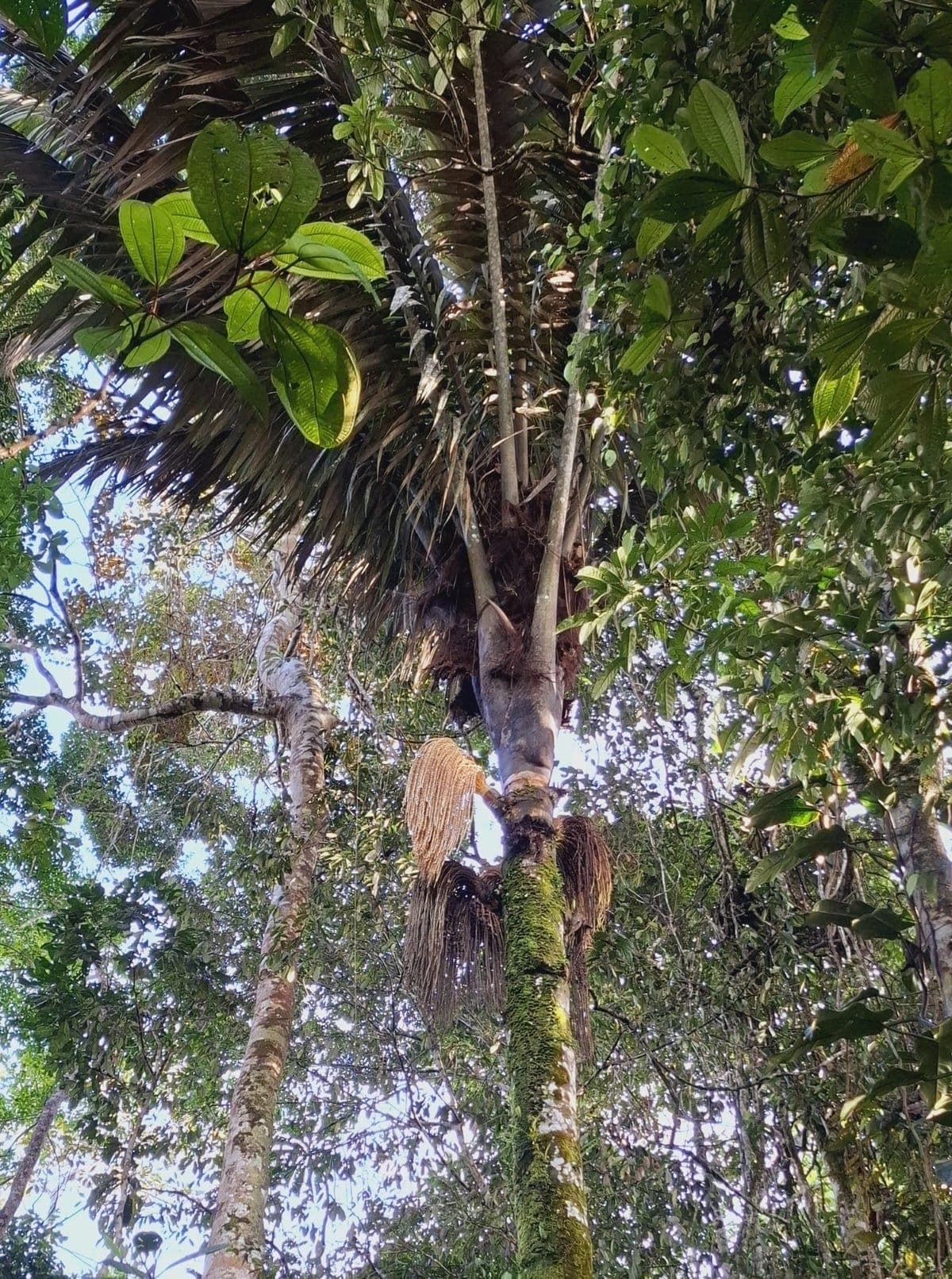
Whole tree
📷 (c) Abelardo Aparicio, some rights reserved (CC BY-NC)(CC BY-NC)
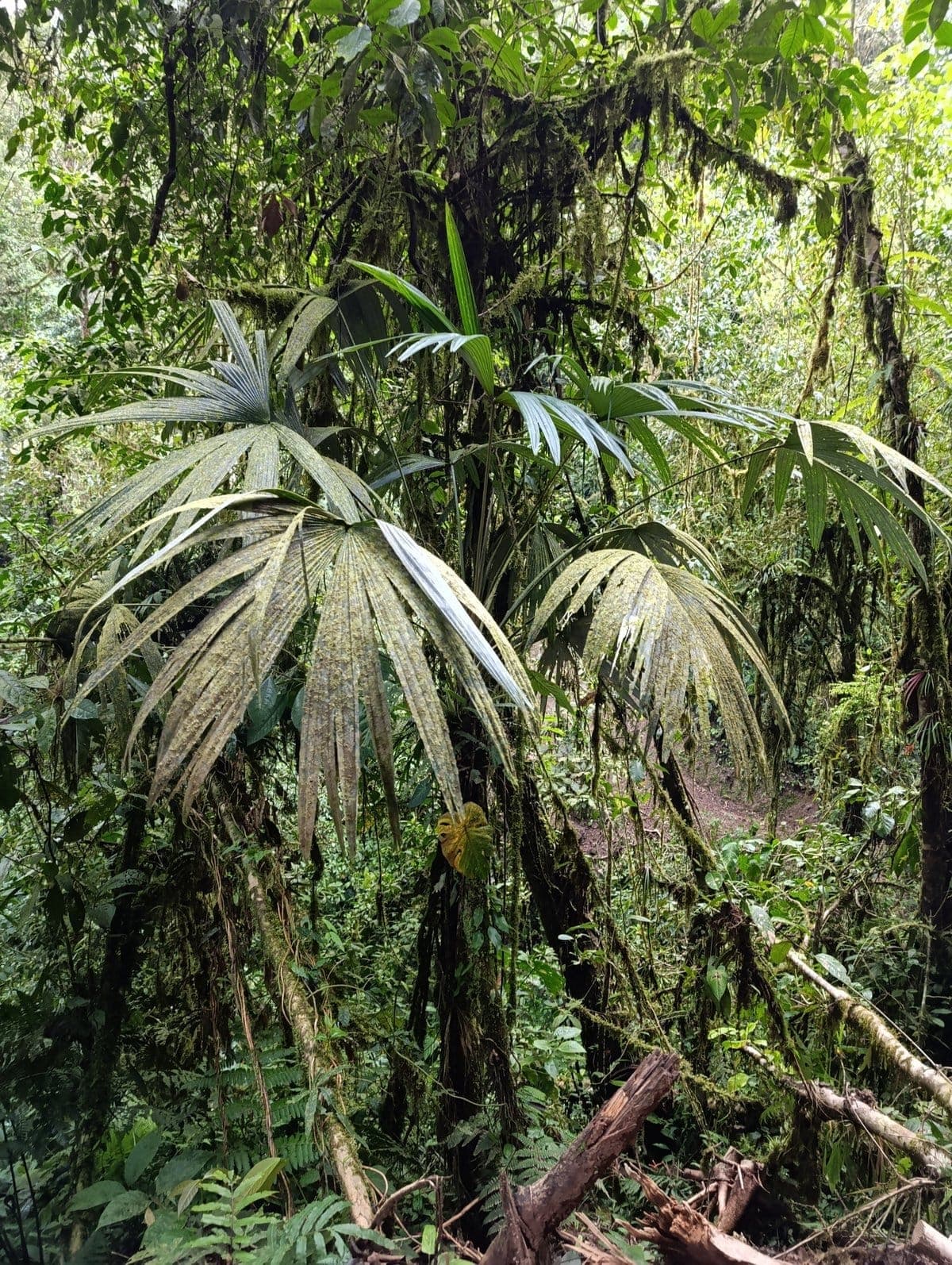
View source ↗Leaves
📷 (c) Abelardo Aparicio, some rights reserved (CC BY-NC)(CC BY-NC)
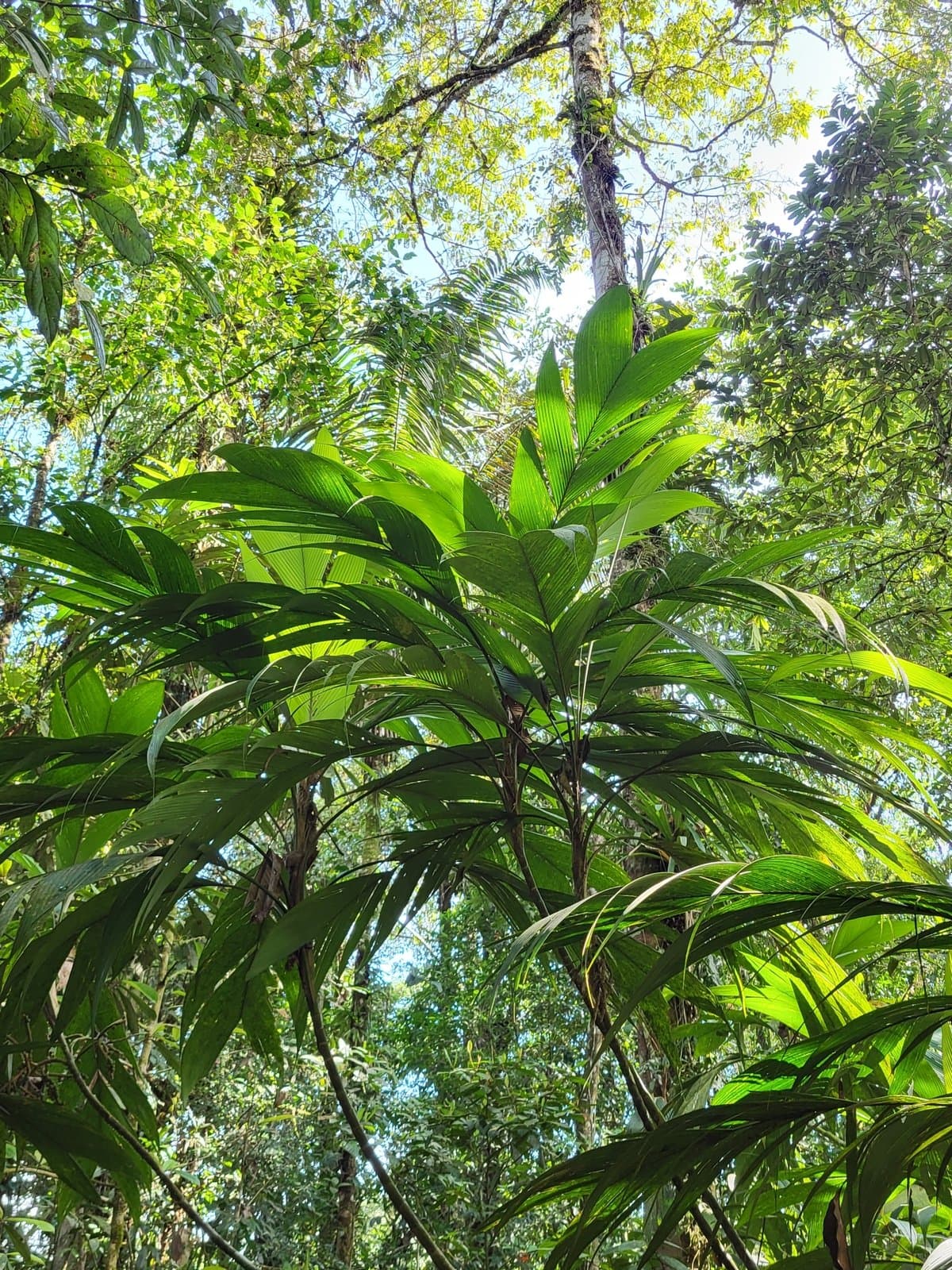
View source ↗Whole tree
📷 (c) gavin_miller, some rights reserved (CC BY-NC)(CC BY-NC)
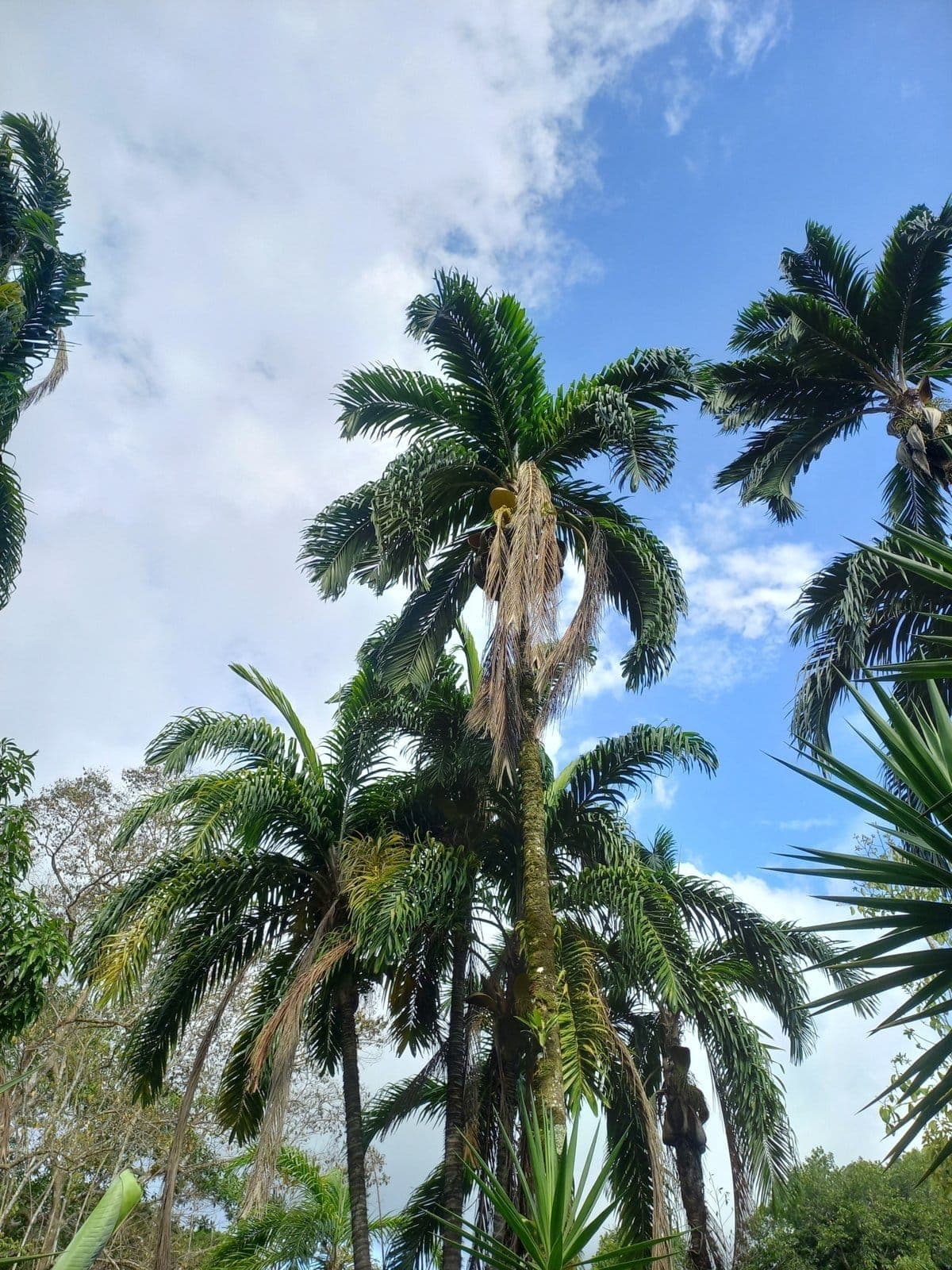
View source ↗Leaves
📷 (c) lestex48, some rights reserved (CC BY-NC)(CC BY-NC)
View source ↗Whole tree
📷 (c) lestex48, some rights reserved (CC BY-NC)(CC BY-NC)
View source ↗Photos sourced from iNaturalist's community science database. Browse all observations →↗
Taxonomy and Classification
Common Names by Region
Taxonomic Notes
Raphia is the only genus in the palm family placed in the subtribe Raphiinae. The genus contains about 20 species, of which 19 are restricted to tropical Africa and Madagascar. R. taedigera is the sole American species, making it one of the most biogeographically isolated palms in the New World. The African species R. hookeri and R. farinifera are the commercially important raffia palms of commerce, providing the raffia fiber used globally in horticulture and craft. R. taedigera also produces usable raffia fiber but is not commercially harvested at scale.
Physical Description
Growth Form
The Palma Yolillo is a massive, clustering palm that forms multi-stemmed clumps in swampy conditions. Individual stems reach 10–20 meters in height, often leaning at various angles. The overall habit is dramatic: a cluster of thick, rough trunks from which enormous pinnate leaves radiate outward and upward like giant green feathers. The crown of a single stem may hold 8–15 leaves, each potentially exceeding 15 meters in length.
Trunk
The trunk is stout (30–50 cm diameter), rough-textured with persistent leaf bases, and typically grows in clusters of 3–10 stems from a common base. The trunk surface is covered in the fibrous remains of old leaf sheaths, giving it a shaggy, unkempt appearance. Aerial roots sometimes emerge from the lower trunk, providing additional stability in the soft swamp substrate.
Leaves (Fronds)
The leaves are the defining feature of this species and hold the world record for leaf length. They are pinnate (feather-shaped, not fan-shaped), with a massive central rachis from which 150–200 leaflets (pinnae) emerge on either side. Total leaf length: 15–25 meters. The rachis is armed with small recurved spines. Individual leaflets are 1–2 meters long and 5–10 cm wide, dark green above and lighter below. Young, emerging leaves stand erect before arching outward as they mature.
Flowers and Reproduction
Raphia taedigera exhibits an unusual reproductive strategy: it is hapaxanthic (monocarpic or oligocarpic), meaning that each stem flowers once (or a few times) and then dies. Flowering involves the production of massive, branched inflorescences up to 2 meters long, bearing hundreds of small, yellowish flowers. After fruiting, the individual stem dies, but new stems continue to emerge from the clump base.
Fruit and Seeds
The fruits are large (5–7 cm long), ovoid, and covered with distinctive, hard, glossy, reddish-brown overlapping scales — resembling a pinecone more than a typical palm fruit. Each fruit contains a single large seed surrounded by an oily, edible mesocarp (flesh). The fruit clusters are heavy, with each raceme bearing dozens of fruits. Fruiting occurs from August through December.
Geographic Distribution
Range in Costa Rica
In Costa Rica, the Palma Yolillo is restricted to the Caribbean lowlands:
- Tortuguero-Barra del Colorado corridor: Extensive yolillales; seen from canals
- Caño Negro Wildlife Refuge: Seasonal swamp populations
- Sarapiquí lowlands: River floodplains and backswamps
- Matina-Siquirres area: Floodplain swamps along rivers
- Sixaola River valley: Near the Panama border
Broader Distribution
Raphia taedigera ranges from southern Nicaragua south through Costa Rica and Panama, along the Caribbean coast of Colombia, and into the Orinoco and Amazon basins. The remarkable disjunct distribution — with close relatives restricted to Africa — makes this one of the most biogeographically significant plants in the Americas.
Habitat and Ecology
Yolillales: The Raphia Swamp Ecosystem
The yolillales of Costa Rica are unique wetland ecosystems dominated by dense stands of Palma Yolillo. These swamp forests represent one of the most distinctive and important wetland types in Central America:
- Cover extensive areas: Historic yolillales covered thousands of hectares of Caribbean lowlands; remaining stands still occupy substantial areas, particularly in the Tortuguero and Caño Negro regions
- Dark tannin-stained water: Blackwater swamps where decomposing organic matter releases tannins, staining water tea-brown or black. This acidic, nutrient-poor water supports specialized aquatic communities
- Stable water regimes: Unlike seasonally flooded forests, yolillales maintain relatively constant water levels year-round, creating permanently aquatic conditions. Water depth typically ranges from ankle-deep to over a meter.
- Specialized biodiversity: The permanent inundation, low oxygen levels, and acidic water exclude many generalist species while favoring specialists — including endemic fish, amphibians uniquely adapted to blackwater conditions, and specialized aquatic plants
- Hydrological buffers: Yolillales function as natural "sponges" — absorbing excess water during heavy rains and slowly releasing it over time. This buffers downstream areas from flooding and maintains dry-season baseflow in rivers.
- Carbon sequestration: The waterlogged, anoxic soils of yolillales prevent complete decomposition of organic matter, leading to gradual peat accumulation. These peat deposits store enormous quantities of carbon — making yolillales critically important carbon sinks at a time of global climate change. Draining or degrading yolillales releases this stored carbon as CO₂.
- Unique ecosystem structure: The palm-dominated canopy creates distinctive light, temperature, and humidity conditions. Unlike forested swamps with mixed tree species, yolillales have a simpler structure but specialized communities.
Field Identification
Palma Yolillo is unmistakable due to:
- Massive size: One of the largest palms in the Americas — 15-25 m tall with leaves up to 25 m long
- Habitat: Always found in or adjacent to standing water — permanent swamps, flooded forests, riverine wetlands
- Pinnate leaves: Enormous, drooping leaves with regular, parallel leaflets
- Scales: Young leaves and leaf bases covered with rusty-brown to golden scales (visible from distance)
- Clustering: Often forms nearly pure, dense stands (yolillales)
- Swamp-adaptation marks: Pneumatophores (breathing roots) emerging from water around the base
Confusion Species: None — no other palm in Costa Rica matches the combination of enormous size, swamp habitat, and scaled appearance.
Ecological Significance
Wildlife Associations
Uses and Applications
Traditional Uses
- Thatching: The enormous fronds provide excellent roofing material; a single leaf can cover several square meters of roof
- Raffia fiber: The young, unexpanded leaves yield long, strong fibers used for tying and weaving (the original "raffia" comes from African Raphia species)
- Construction: The sturdy petioles and rachis are used as building materials for rural structures
- Food: The palm heart is edible (harvesting kills the stem); oily fruit pulp is consumed by indigenous communities
- Canoe poles: Straight pieces of the rachis are used as poles for navigating swamp canoes
Ecological Services
The most important "use" of the Palma Yolillo is the ecosystem services provided by intact yolillales:
- Flood control and water regulation in the Caribbean lowlands
- Habitat for the endangered Great Green Macaw
- Carbon sequestration in peat soils
- Water filtration and quality maintenance
- Fisheries support through nursery habitat
Cultural and Historical Significance
The yolillales of Costa Rica's Caribbean coast have shaped human settlement patterns and livelihoods for centuries. Indigenous Bribri and Cabécar communities navigated and utilized yolillales, harvesting leaves for thatching, fruits for food, and fibers for cordage. The name "yolillo" is embedded in Costa Rican Caribbean culture — it names not just the palm but the entire swamp ecosystem.
For Caribbean lowland communities, the yolillales have always been spaces of abundance but also of mystery and danger. The dark, flooded forests with their towering palm fronds are home to caiman, snakes, and jaguars. Stories and legends of the yolillal are part of Limón province's rich oral tradition.
The Palma Yolillo's connection to the Great Green Macaw has made it an icon of conservation in Costa Rica. The "Save the Great Green Macaw" campaigns of the early 2000s drew international attention to the importance of protecting yolillales and the broader Caribbean lowland forest ecosystem.
Conservation Status
While Raphia taedigera itself is classified as Least Concern (LC) due to its large range across Central and South America, the yolillal ecosystems in Costa Rica are threatened. Drainage for agriculture (particularly pineapple and banana plantations), land-use change, and climate change threaten these unique swamp forests. The palm's conservation is inseparable from the conservation of its wetland habitat.
Threats to Yolillales
- Agricultural drainage: Conversion of wetlands to pineapple and banana plantations
- Canal and road construction: Disruption of water flow patterns that maintain yolillales
- Climate change: Potential changes in rainfall and flooding patterns
- Peat fires: Drained peatlands can burn, destroying the accumulated carbon and the palm root systems
- Pollution: Agricultural runoff contaminating yolillal waters
Conservation Actions
- Tortuguero National Park: Protects significant areas of yolillal
- Barra del Colorado Wildlife Refuge: Large areas of protected yolillales
- Great Green Macaw conservation: Efforts to protect macaw habitat benefit Raphia swamps
- Ramsar designation: Some Costa Rican wetlands containing yolillales have Ramsar protection
- Community-based conservation: Local communities increasingly involved in yolillal protection
Growing the Palma Yolillo
The Palma Yolillo is a wild swamp species that cannot be grown in home gardens. It requires permanently waterlogged, acidic soils and tropical lowland conditions. Its enormous size (leaves up to 25 m), structural hazards, and strict wetland requirements make it unsuitable for any cultivated setting. This section is provided for conservation context and botanical interest.
Habitat Requirements
- Permanently waterlogged soil — standing water for most or all of the year
- Acidic, organic-rich peat soils — pH 4.5-6.5
- Hot, humid tropical lowlands — 0-200 m elevation
- High annual rainfall — 3,000-6,000 mm
- Full sun — forms the canopy in open swamp settings
Propagation Notes
Seeds germinate readily when fresh but lose viability rapidly. In academic or conservation contexts, sow fresh seeds in waterlogged substrate. Germination takes 3-6 months. Seedlings require swamp conditions from the start. This palm is only propagated for ecological restoration or research purposes.
Restoration Establishment Guidance
- Prioritize hydrology first: protect or restore natural flood pulses before planting
- Plant seedlings only in verified permanent or seasonal inundation zones
- Use locally sourced seeds from within the same watershed
- Initial establishment may require protection from nutrient-enriched water runoff
- Pair with other wetland canopy species like Prioria copaifera where appropriate
Yolillal Restoration and Management Strategies
The restoration and conservation of yolillal ecosystems requires specialized approaches different from terrestrial forest restoration:
Hydrology Management
Critical Success Factor: Maintaining natural water regimes
- Avoid drainage: Any attempt to drain yolillales for agriculture or development kills the ecosystem and releases stored carbon
- Natural flooding cycles: Protect seasonal flood pulses that maintain water levels and deliver nutrients
- Upstream watershed protection: Deforestation upstream can alter flooding patterns and sediment loads that sustain yolillales
- Road and development impacts: Culverts and roads that alter water flow can degrade downstream yolillales
Carbon Conservation
Yolillales are globally significant carbon stores:
- Undisturbed yolillal peat may contain 50-200 tons of carbon per hectare in organic soils
- Drainage and degradation release this carbon as CO₂ and CH₄ over decades
- Conservation of existing yolillales is one of the highest-impact climate mitigation strategies available in Costa Rica
- Carbon credit programs increasingly recognize wetland protection — yolillales should be priority targets
Wildlife Corridor Function
Yolillales serve as critical habitat connectivity in the Caribbean lowlands:
- Great Green Macaw corridors: Yolillales link forest fragments allowing macaw movement between nesting and feeding areas
- Aquatic species refugia: Blackwater swamps support endemic fish and amphibians found nowhere else
- Migratory waterbird habitat: Yolillales provide feeding areas for both resident and migratory wetland birds
Restoration Priorities
Passive restoration (natural recovery with protection):
- Prevent further degradation: stop drainage, prevent fire, control invasive species
- Allow natural Raphia seed dispersal from remnant trees to colonize suitable sites
- Timeline: 50-100+ years for substantial recovery — wetland restoration is a multi-generational project
Active restoration (planting and intervention):
- Re-establish hydrology: remove or modify drainage infrastructure
- Plant Raphia seedlings in appropriate microsites
- Control competing vegetation that invades drained areas
- Monitor establishment and adapt strategies based on survival
Community Engagement
Local communities are essential partners:
- Traditional knowledge about yolillales, sustainable harvest practices, and seasonal patterns
- Livelihood alternatives to unsustainable wetland conversion (ecotourism, sustainable palm heart harvest)
- Community-based wetland monitoring and fire prevention
- Support for traditional suita thatching cooperatives that promote conservation through sustainable use
Research Needs
Priority questions for yolillal conservation:
- Population genetics: How connected are Raphia populations? Are barriers fragmenting gene flow?
- Climate resilience: How will sea-level rise and altered rainfall affect Caribbean yolillales?
- Carbon quantification: What are precise carbon storage values to support conservation finance?
- Restoration techniques: What methods accelerate natural recovery while maintaining ecological integrity?
- Use cluster planting (3-5 seedlings per microsite) to improve early survival
- Maintain natural nurse vegetation on site; avoid full clearing of wetland edges
- Exclude drainage channels, fill activities, and heavy machinery from restoration zones
Where to See the Palma Yolillo
In Costa Rica
- Tortuguero National Park: Boat tours through canals pass through extensive yolillales — the most accessible viewing location
- Barra del Colorado Wildlife Refuge: Large yolillal areas visible from waterways
- Caño Negro Wildlife Refuge: Seasonal flooding supports Raphia stands
- Sarapiquí River lowlands: Visible from bridges and riverboat tours
- EARTH University (Guácimo, Limón): Conservation areas with accessible yolillales
Best Viewing Tips
The Palma Yolillo is best observed from boats navigating the canals and rivers of the Caribbean lowlands. The enormous, arching fronds are unmistakable from any watercraft. Look for the distinctive scaly fruits hanging in heavy clusters. With patience, you may spot a Great Green Macaw feeding on the fruits — one of Costa Rica's most memorable birding experiences.
External Resources
References
- Henderson, A., Galeano, G., & Bernal, R. (1995). Field Guide to the Palms of the Americas. Princeton University Press.
- Dransfield, J., et al. (2008). Genera Palmarum: The Evolution and Classification of Palms. Kew Publishing.
- Myers, R. L. (1990). Palm swamps. In A. E. Lugo, M. Brinson, & S. Brown (Eds.), Forested Wetlands (Ecosystems of the World 15). Elsevier.
- Hammel, B. E., Grayum, M. H., Herrera, C., & Zamora, N. (2003). Manual de Plantas de Costa Rica, Vol. II. Missouri Botanical Garden.
- Stiles, F. G., & Skutch, A. F. (1989). A Guide to the Birds of Costa Rica. Cornell University Press.
- Monge-Nájera, J. (2008). Ecological biogeography in the Neotropics: the raffia palm puzzle. Revista de Biología Tropical, 56(S1), 77–84.
Safety Information Disclaimer
Safety information is provided for educational purposes only. Individual reactions may vary significantly based on age, health status, amount of exposure, and individual sensitivity. Always supervise children around plants. Consult a medical professional or certified arborist for specific concerns. The Costa Rica Tree Atlas is not liable for injuries or damages resulting from interaction with trees described in this guide.
• Always supervise children around plants
• Consult medical professional if unsure
• Seek immediate medical attention if poisoning occurs
Information compiled from authoritative toxicology sources, scientific literature, and medical case reports.
Help improve this page
Know something about this tree? Share local knowledge, suggest a correction, or submit a photo to improve this guide for everyone.