Red Mangrove
Rhizophora mangle
Quick facts
Native Region
Tropical and subtropical coastlines of the Americas and West Africa
Max Height
20-30 meters (65-100 feet)
Family
Rhizophoraceae
Conservation
LC — Least Concern
Uses
Safety Information
Toxicity Details
Red mangrove bark contains high concentrations of tannins which give it astringent properties. The tannins are not highly toxic but can cause stomach upset if bark is consumed in large quantities. Not a concern for casual contact.
Skin Contact Risks
Generally safe for skin contact. The bark contains tannins that may cause mild skin irritation in sensitive individuals after prolonged contact. Wear gloves when handling bark for extended periods.
Allergenic Properties
Low allergen risk. Some individuals may experience mild respiratory irritation from pollen during flowering season. No significant reports of allergic reactions to this species.
Structural Hazards
PRIMARY HAZARD: The distinctive prop roots create an uneven, slippery substrate when walking through mangrove forests, especially at low tide. Risk of tripping and falling. Prop roots can be sharp when broken. Walking on exposed roots can damage the tree's structural integrity. Stay on designated paths when visiting mangrove areas.
Wildlife & Pet Risks
Safe for wildlife. Provides critical habitat for fish, crabs, birds, and other coastal species. Not toxic to marine life or terrestrial animals.
Season
Flowering
Apr-Aug
Fruiting
How to identify
Red Mangrove
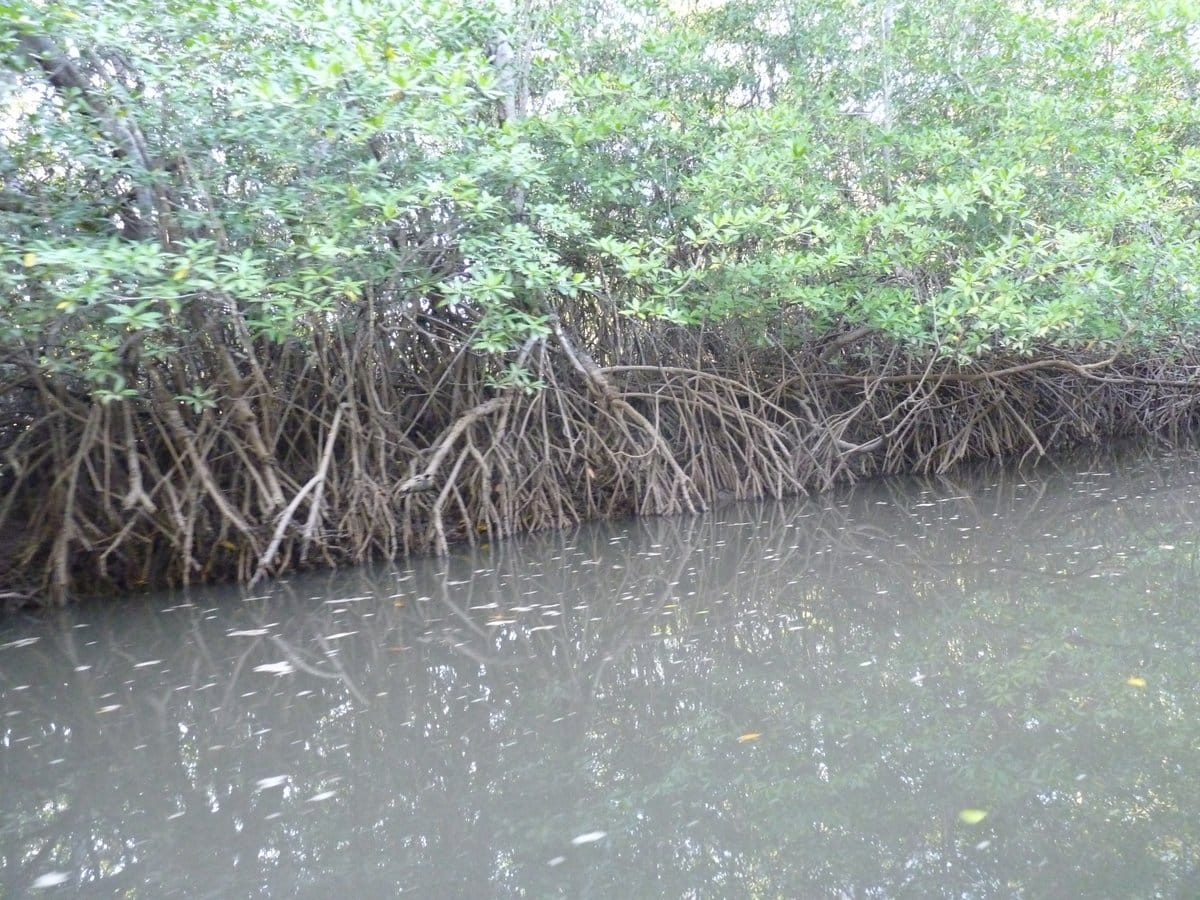
Red Mangrove (Rhizophora mangle) is the iconic mangrove species instantly recognizable by its dramatic prop roots that arch from branches into the water. These coastal forests are among the most productive ecosystems on Earth, serving as critical nursery grounds for fish and shrimp while protecting shorelines from storms and erosion.
Quick Reference
iNaturalist Observations
Community-powered species data
📸 Photo Gallery
Whole tree
📷 (c) heliastes21, some rights reserved (CC BY-NC)(CC BY-NC)
View source ↗Leaves
📷 no rights reserved(CC0)
View source ↗Flowers
📷 (c) Leonardo Álvarez-Alcázar, some rights reserved (CC BY-NC)(CC BY-NC)
View source ↗Whole tree
📷 (c) davidrosenbaum, some rights reserved (CC BY-NC)(CC BY-NC)
View source ↗Leaves
📷 no rights reserved(CC0)
View source ↗Taxonomy & Classification
Common Names by Region
Etymology
- Rhizophora: From Greek rhiza (root) + phoros (bearing), referring to the distinctive aerial prop roots
- mangle: Spanish word for mangrove, derived from Taino (indigenous Caribbean) mangle
- The "red" common name comes from the reddish color of the wood and tannin-rich bark
Physical Description
Tree Form
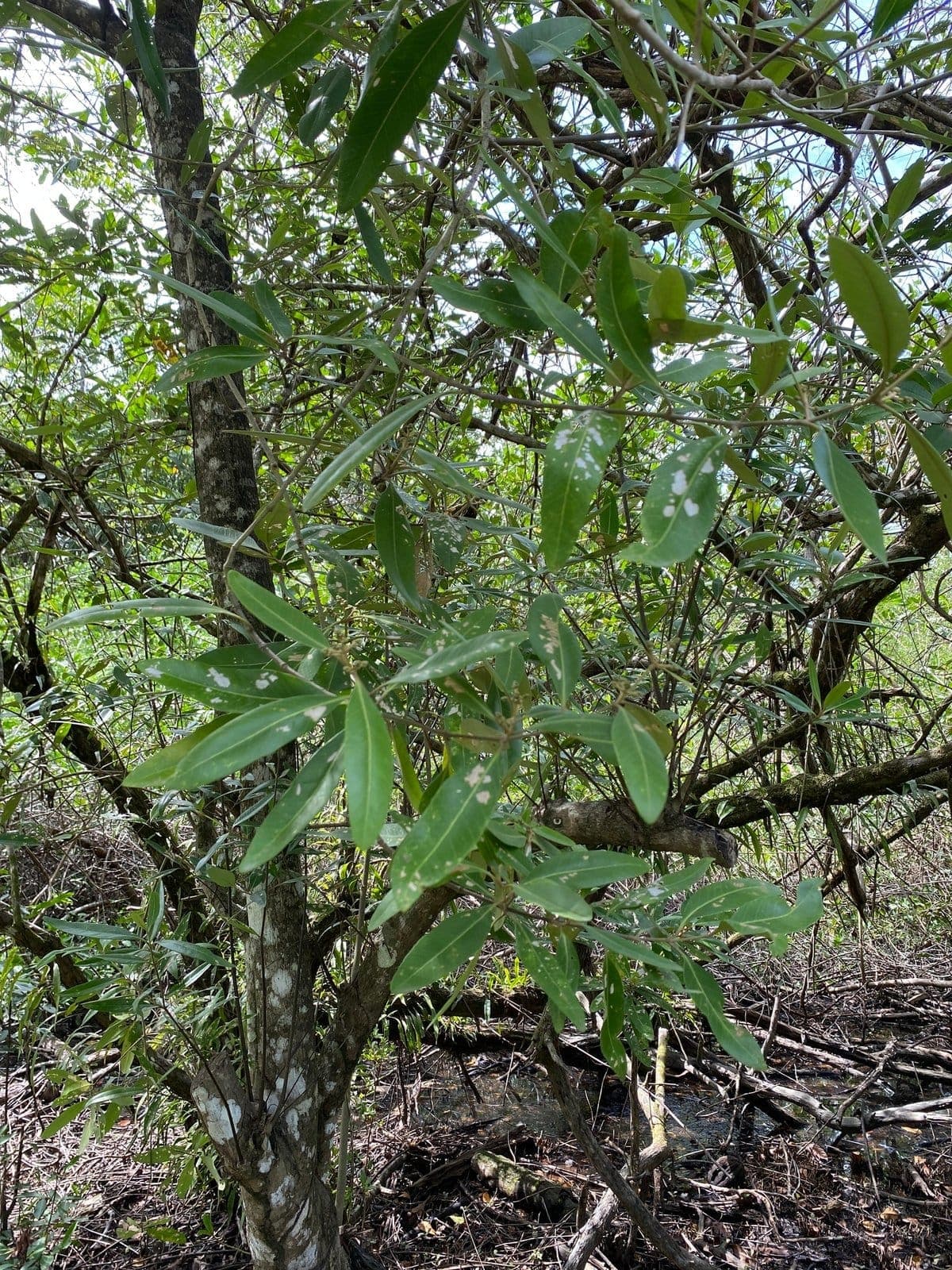
Red Mangrove is a distinctive evergreen tree reaching 20-30 meters in optimal conditions, though often smaller (8-12 m) in more exposed coastal sites. The most recognizable feature is the complex system of prop roots - arching aerial roots that descend from the trunk and lower branches into the water or mud, creating a tangled, stilt-like support structure. Trees often have multiple trunks emerging from a common base. The crown is relatively dense and rounded, with thick, leathery foliage.
Bark
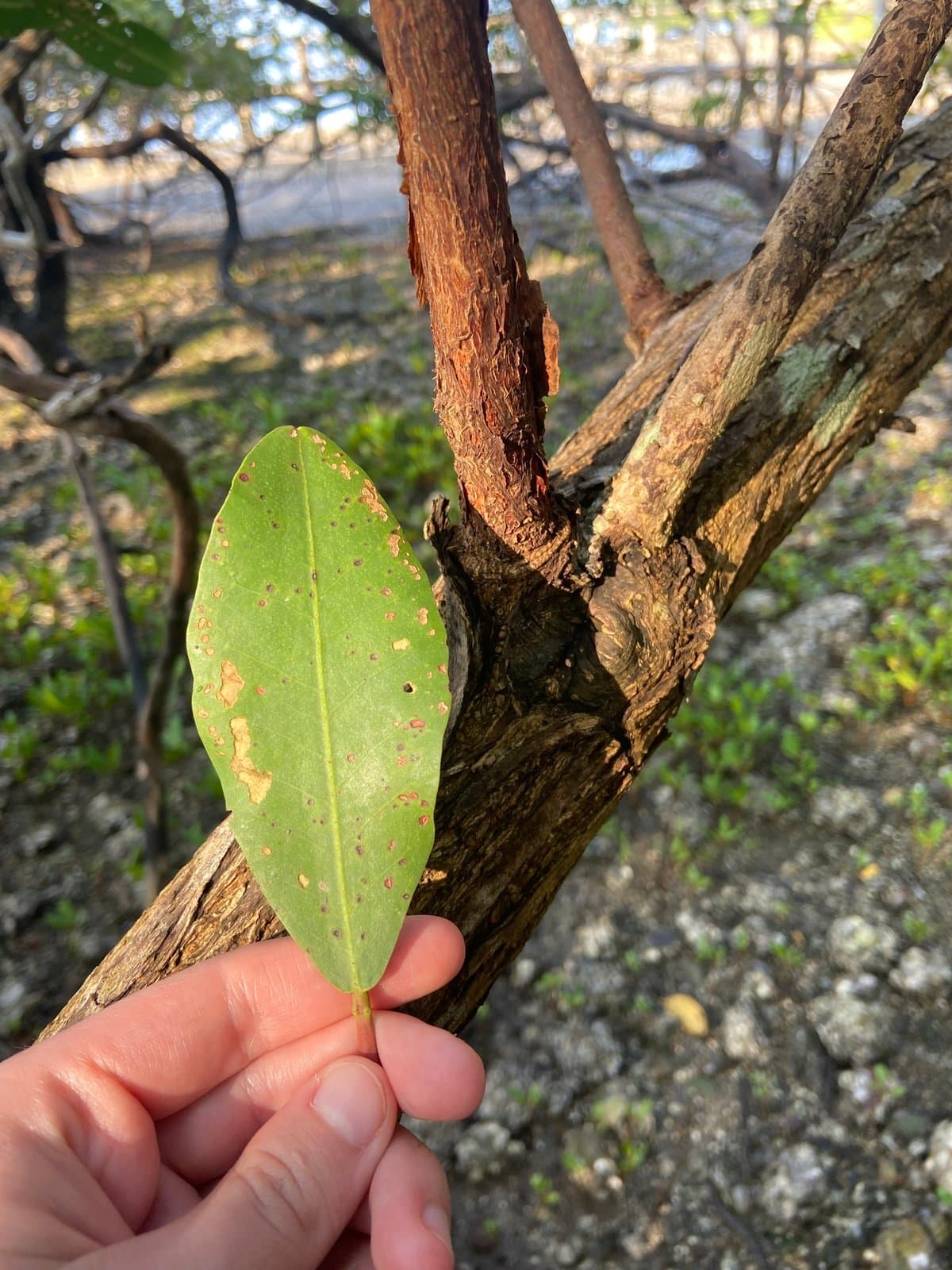
Bark is smooth to slightly fissured, gray-brown to reddish-brown on the outer surface. The inner bark is distinctly reddish and contains high concentrations of tannins. When cut, the wood oxidizes to a red color, giving the tree its common name. The bark has been traditionally used as a source of tannins for leather processing.
Prop Root System
The prop roots are the tree's most distinctive feature:
- Aerial origin: Roots emerge from trunk and branches above water level
- Arching growth: Roots curve downward toward water/mud substrate
- Anchoring: Once established, roots provide stability in soft, shifting substrate
- Gas exchange: Lenticels (pores) on roots allow oxygen absorption in anaerobic mud
- Buttressing: Create a wide base for stability against waves and tides
Leaves
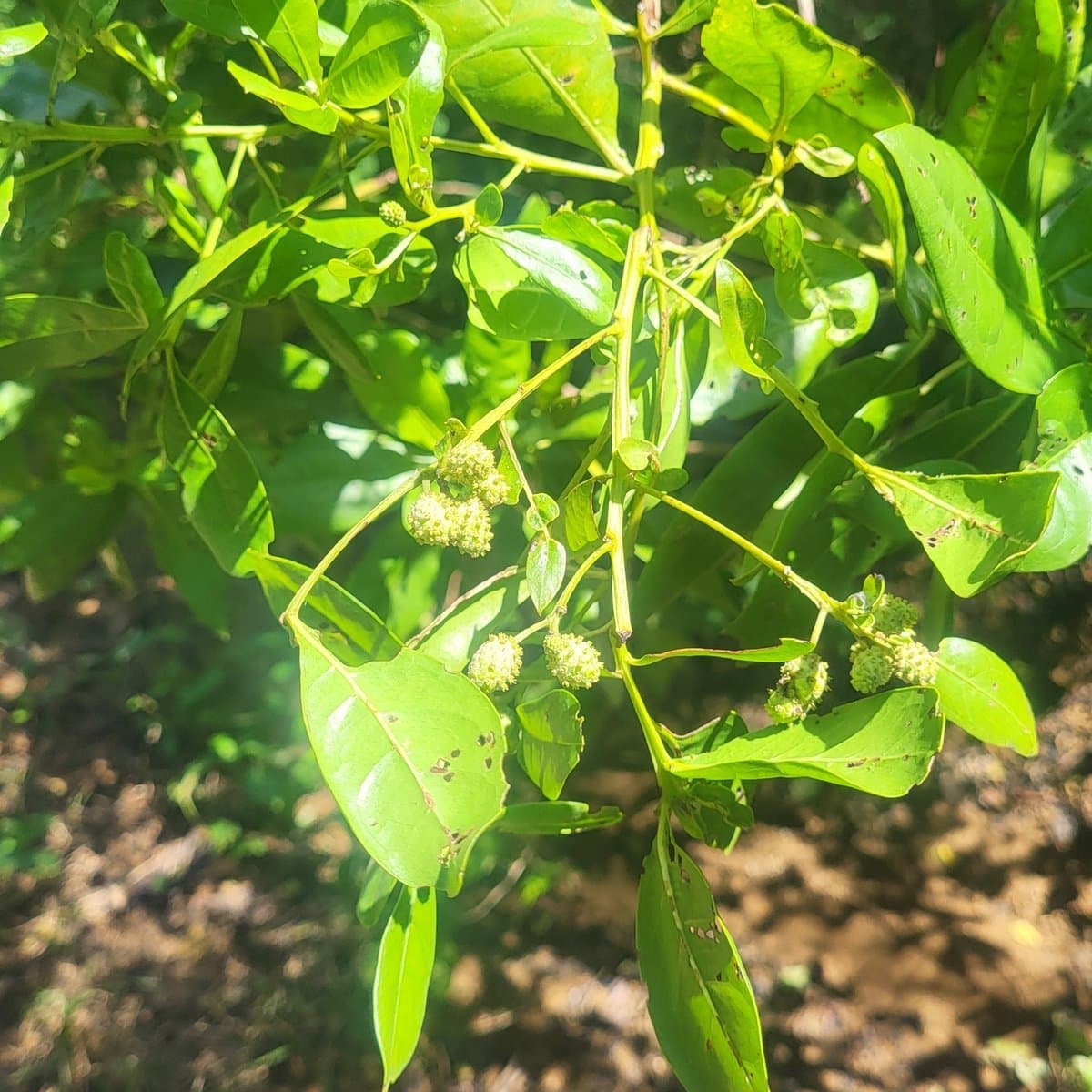
Leaves are thick and succulent, adapted to conserve water in saline environments. The waxy cuticle reduces water loss. Unlike Black Mangrove (Avicennia germinans), which has salt-excreting glands on its leaves, Red Mangrove manages salinity primarily through ultrafiltration at the roots, excluding up to 97% of salt before it enters the xylem.
Flowers
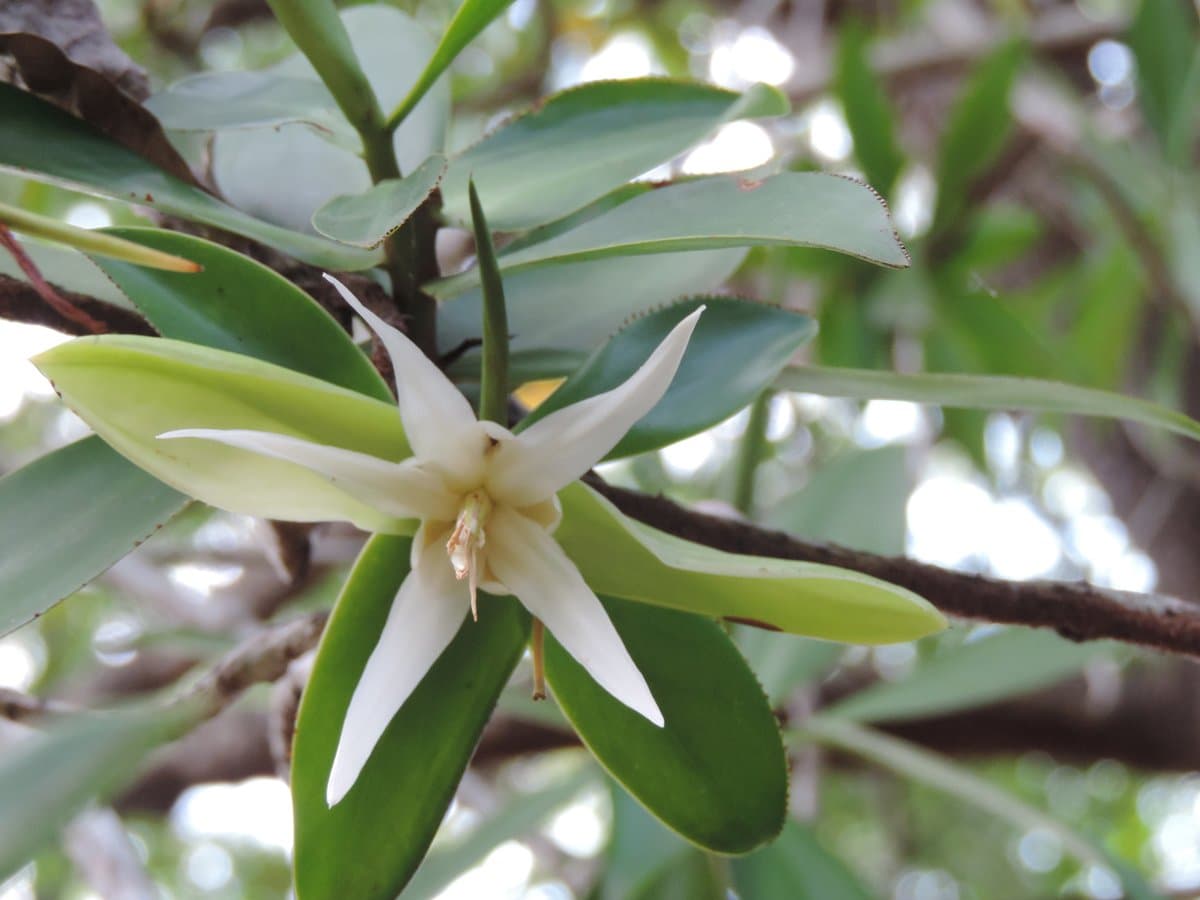
Red Mangrove produces small, pale yellow flowers:
- Size: 2-3 cm across
- Arrangement: Clusters of 2-4 flowers
- Petals: 4 narrow petals, pale yellow to cream
- Blooming: April through August, with peak in May-June
- Pollination: Primarily wind-pollinated, some insect visitation
Flowers are not showy but are important for the unique reproductive strategy.
Fruit & Propagules
Red Mangrove exhibits vivipary - the seed germinates while still attached to the parent tree:
- Propagule: Elongated, pencil-like structure 15-30 cm long
- Color: Green when developing, brown when mature
- Development time: 6-12 months on parent tree
- Dispersal: Propagules drop and can float for weeks, establishing when they reach suitable substrate
- Establishment: Propagule sticks into mud at low tide, rapidly developing roots
This adaptation allows the seedling to establish quickly in the challenging intertidal environment.
Geographic Distribution
Distribution in Costa Rica
Red Mangrove is found along both coasts of Costa Rica:
Pacific Coast:
- Golfo de Nicoya (extensive mangrove forests)
- Térraba-Sierpe Delta (largest mangrove complex in Central America)
- Manuel Antonio and Corcovado coastal areas
- Guanacaste estuaries and protected bays
Caribbean Coast:
- Tortuguero canals and coastal lagoons
- Cahuita and Puerto Viejo coastal areas
- Gandoca-Manzanillo Wildlife Refuge
- Coastal wetlands near Limón
Optimal Sites:
- Protected bays and estuaries
- River mouths and deltas
- Sheltered lagoons with tidal exchange
- Areas with soft mud substrate
Habitat & Ecology
Ecological Role
Red Mangrove plays a critical role in coastal ecosystems:
Coastal Protection:
- Dissipates wave energy, protecting shorelines from erosion
- Reduces storm surge impacts during hurricanes
- Stabilizes coastlines with extensive root system
- Traps sediment, building up coastal land
Carbon Sequestration:
- Mangrove forests are among the most efficient carbon sinks on Earth
- Store 3-5 times more carbon per hectare than tropical rainforests
- Carbon locked in both biomass and deep mud sediments
- Critical for climate change mitigation
Water Quality:
- Filters pollutants and excess nutrients from runoff
- Traps sediments before they reach coral reefs and seagrass beds
- Improves coastal water clarity
Wildlife Associations
Red Mangrove forests support exceptional biodiversity:
Nursery Ecosystem:
- 75% of commercial fish species in tropics depend on mangroves during juvenile stages
- The prop root structure provides protection from predators
- Rich detrital food web supports invertebrates
- Critical link between terrestrial and marine ecosystems
Adaptations to Saline Environment
Uses & Applications
Traditional Uses
Tannin Extraction:
- Bark contains 20-30% tannins
- Historically used for leather tanning
- Natural dye for fabrics and rope
- Bark tea used as astringent
Wood Products:
- Firewood: Dense, burns hot and long
- Charcoal: High-quality charcoal production
- Construction poles: Durable in wet conditions
- Boat ribs: Traditional small boat construction
- Tool handles: Dense, strong wood
Medicinal Applications:
- Bark decoction for diarrhea and dysentery
- Astringent for wounds and skin infections
- Leaf poultice for skin inflammation
- Treatment for hemorrhoids
- Anti-diabetic properties (traditional use)
Modern Applications
Ecosystem Services (Most Valuable):
- Coastal protection: Estimated at $1,000-$36,000 per hectare/year in storm protection
- Fisheries support: Nursery grounds sustain valuable commercial fisheries
- Carbon sequestration: Blue carbon credits in emerging markets
- Water quality improvement: Nutrient and sediment filtering
- Biodiversity habitat: Supports high species richness
Restoration & Conservation:
- Mangrove restoration projects to rebuild damaged coastlines
- Living shorelines as alternative to seawalls
- Nature-based solutions for climate adaptation
- Community-based mangrove management programs
Ecotourism:
- Kayaking and boat tours through mangrove tunnels
- Birdwatching platforms
- Educational programs on coastal ecology
- Photography opportunities
Wood Properties
Wood is extremely dense and durable, but difficult to work. High tannin content provides natural resistance to rot and marine borers. Primarily used for firewood and charcoal rather than construction timber due to small dimensions and twisted growth form.
Cultural & Historical Significance
Indigenous Uses
Indigenous coastal peoples throughout the Americas have relied on mangroves for millennia:
- Coastal tribes: Built homes on stilts in mangrove forests
- Fishing: Used mangrove channels for fish traps
- Tannin source: Bark for leather and rope preservation
- Medicine: Bark decoctions for various ailments
- Dyes: Natural red-brown dye from bark
Role in Coastal Communities
Traditional Fisheries:
- Artisanal fishers recognize mangroves as "cradles of the sea"
- Piangua (mangrove cockle) harvesting - important income source
- Blue crab harvesting in mangrove roots
- Small-scale fishing in mangrove channels
Cultural Value:
- Symbol of coastal identity in many communities
- Traditional knowledge about tides, seasons, and wildlife
- Source of legends and folklore about mangrove spirits
- Important in coastal landscape aesthetics
Modern Conservation Recognition
Red Mangrove has gained recognition as a critical ecosystem globally:
- RAMSAR sites: Many mangrove areas designated as wetlands of international importance
- UNESCO protection: Some mangrove forests included in Biosphere Reserves
- Blue carbon initiatives: Recognition of carbon storage value
- International agreements: Protected under numerous coastal zone management laws
In Costa Rica, mangroves are protected by law, and it is illegal to cut or destroy mangrove forests without authorization.
Conservation Status
Least Concern
IUCN Red List Status
IUCN Red List: Least Concern (LC)
Red Mangrove has a widespread distribution and large populations, resulting in a Least Concern conservation status. However, mangrove ecosystems globally face significant threats.
Population Trends
- Global: Declining - estimated 1-2% loss per year
- Historical loss: 35-50% of global mangrove coverage lost since 1980
- Costa Rica: Relatively stable with protection measures, but local losses continue
- Hotspots: Some well-protected areas in national parks and wildlife refuges
Threats
Protection Measures
Legal Protection in Costa Rica:
- Mangroves protected under Forestry Law and Wildlife Conservation Law
- 50-meter protective zone around mangrove forests
- Permits required for any activities affecting mangroves
- Criminal penalties for unauthorized mangrove destruction
Conservation Strategies:
- Protected areas: National parks, wildlife refuges, RAMSAR sites
- Restoration projects: Replanting degraded areas
- Community management: Co-management with local communities
- Payment for ecosystem services: Carbon credits, fisheries support valuation
- Sustainable use certification: Certified charcoal production
- Research: Monitoring programs tracking mangrove health
Key Protected Areas in Costa Rica:
- Térraba-Sierpe National Wetland (largest mangrove area)
- Tortuguero National Park
- Gandoca-Manzanillo Wildlife Refuge
- Isla del Caño Biological Reserve
- Golfo de Nicoya RAMSAR site
Growing Red Mangrove
Red Mangrove requires very specific conditions - full saltwater or brackish water inundation in tidal zones. This is not a tree for typical landscaping. Growing information is primarily for restoration and conservation projects.
Propagation
From Propagules (Recommended):
- Collection: Harvest mature propagules (brown, 20-30 cm long) from parent trees
- Timing: Collect when propagules naturally begin to drop (mature)
- Storage: Can store in seawater for a few days if needed
- Viability: Test by placing in water - viable propagules float horizontally
- Planting: Plant immediately for best results
Planting Technique:
- Site selection: Choose intertidal zone at proper elevation (regularly flooded by tides)
- Substrate: Soft mud or sand-mud mix
- Depth: Push propagule 10-15 cm into substrate
- Angle: Plant vertically or at slight angle
- Spacing: 2-3 m apart for restoration projects
- Timing: Plant during calm weather, preferably during wet season
- Protection: May need temporary fencing to prevent herbivory and wave damage
Success Factors:
- Proper elevation (tidal zone appropriate for red mangrove)
- Protection from strong wave action during establishment
- Good water quality (not heavily polluted)
- Monitoring and maintenance for first year
Site Requirements
Maintenance
Years 1-2 (Establishment):
- Monitor for survival and growth
- Remove accumulated debris that might damage young trees
- Protect from physical damage (boats, foot traffic)
- Watch for herbivory by crabs
- No fertilization needed
Years 3-5 (Growth):
- Trees becoming self-sufficient
- Prop roots developing
- Begin producing propagules
- Continue protection from human disturbance
Mature Stage (5+ years):
- Self-sustaining
- No maintenance required
- Monitor for health indicators
- Protect from threats (pollution, overharvesting)
Restoration Success Factors
Research on mangrove restoration shows these factors improve success:
- Hydrologic restoration first: Ensure proper tidal flow before planting
- Natural regeneration: Sometimes better to remove barriers and allow natural recolonization
- Mixed species: Plant multiple mangrove species at appropriate elevations
- Community involvement: Local stewardship improves long-term success
- Monitoring: Track survival, growth, and ecosystem function over time
- Patience: Restored mangroves may take 15-30 years to achieve mature ecosystem function
Where to See Red Mangrove in Costa Rica
Best Viewing Locations
Pacific Coast:
-
Térraba-Sierpe National Wetland (Puntarenas)
- Largest mangrove complex in Central America
- Boat tours available from Sierpe
- Extensive red mangrove forests
- Access: Guided tours from Sierpe village
-
Damas Island Mangrove (Manuel Antonio area)
- Easy access, popular kayaking destination
- Well-developed ecotourism infrastructure
- Excellent wildlife viewing
- Access: Tours from Quepos
-
Tempisque River Delta (Guanacaste)
- Palo Verde National Park area
- Boat tours available
- Excellent birdwatching
- Access: Tours from park headquarters
Caribbean Coast:
-
Tortuguero Canals
- Combine rainforest and mangrove ecosystems
- Boat tours through canals
- High biodiversity
- Access: Boat from La Pavona or Puerto Viejo de Sarapiquí
-
Gandoca-Manzanillo Wildlife Refuge
- Southern Caribbean coast
- Less touristy, pristine mangroves
- Kayaking opportunities
- Access: From Manzanillo village
Viewing Tips
- Best time: Early morning or late afternoon for wildlife viewing
- What to bring: Binoculars, camera with zoom lens, sunscreen, insect repellent
- Mode of transport: Kayak or boat (walking in mangroves damages roots)
- Wildlife: Look for herons, egrets, crocodiles, crabs, and fish in shallow water
- Safety: Stay in boat/kayak, watch for tide changes, bring water
- Respect: Do not break prop roots, leave no trace, stay on designated routes
Ecotourism Operators
Many certified ecotourism operators offer mangrove tours with naturalist guides who can explain the ecology and identify wildlife. Choose operators committed to sustainable, low-impact tourism.
External Resources
Conservation status assessment and distribution information
Community observations, photos, and distribution map
Global biodiversity database with occurrence records
Taxonomic information and nomenclature
Detailed botanical description and range information
References
📚 Scientific References & Further Reading
Duke, N.C., et al. (2010). A World Without Mangroves?. Science[Link ↗]
Ellison, A.M. & Farnsworth, E.J. (1996). Anthropogenic disturbance of Caribbean mangrove ecosystems: past impacts, present trends, and future predictions. Biotropica
Jiménez, J.A. (1999). Ambiente, distribución y características estructurales de los manglares del Pacífico de Centroamérica: contrastes climáticos
Alongi, D.M. (2002). Present state and future of the world's mangrove forests. Environmental Conservation
Spalding, M., et al. (2010). World Atlas of Mangroves
Saenger, P. (2002). Mangrove Ecology, Silviculture and Conservation
Conservation Note: Red Mangrove forests are protected by law in Costa Rica. It is illegal to cut, damage, or destroy mangrove trees without authorization from environmental authorities. These ecosystems provide invaluable services including coastal protection, fisheries support, and carbon storage. Report illegal mangrove destruction to SINAC (National System of Conservation Areas) or MINAE (Ministry of Environment).
Safety Information Disclaimer
Safety information is provided for educational purposes only. Individual reactions may vary significantly based on age, health status, amount of exposure, and individual sensitivity. Always supervise children around plants. Consult a medical professional or certified arborist for specific concerns. The Costa Rica Tree Atlas is not liable for injuries or damages resulting from interaction with trees described in this guide.
• Always supervise children around plants
• Consult medical professional if unsure
• Seek immediate medical attention if poisoning occurs
Information compiled from authoritative toxicology sources, scientific literature, and medical case reports.
Help improve this page
Know something about this tree? Share local knowledge, suggest a correction, or submit a photo to improve this guide for everyone.