Black Mangrove
Avicennia germinans
Quick facts
Native Region
Tropical and subtropical Atlantic and Pacific coasts of the Americas and West Africa
Max Height
15-25 meters (50-80 feet)
Family
Acanthaceae
Conservation
LC — Least Concern
Uses
Safety Information
CAUTION
Black mangrove is moderately safe but requires awareness of its unique adaptations. The main concerns are the extensive pneumatophore field creating serious tripping hazards, and the high salt content in leaves. Not suitable for areas where children might play. Protected species in Costa Rica - do not disturb or remove. Important coastal ecosystem component.
Toxicity Details
Black mangrove leaves excrete salt and can have visible salt crystals on surfaces. The leaves themselves are not highly toxic, but high salt content makes them unpalatable and potentially irritating if consumed in quantity. Seeds contain compounds that may cause mild gastrointestinal upset if ingested. Not considered dangerously toxic, but not for consumption.
Skin Contact Risks
Leaves excrete salt through specialized glands, and salt crystals can accumulate on leaf surfaces. Direct handling of leaves may cause minor skin irritation in sensitive individuals due to high salt concentration and rough texture. The sap can cause mild skin irritation. Wear gloves when handling extensively. Salt on leaves can sting eyes - avoid touching face after handling.
Allergenic Properties
Low allergen risk for most people. Pollen may cause allergic reactions in sensitive individuals during flowering season. The flowers are highly attractive to bees and can trigger reactions in those allergic to bee stings when working near flowering trees. Generally not a significant allergen source.
Structural Hazards
PNEUMATOPHORE HAZARD: Black mangrove produces thousands of pencil-like breathing roots (pneumatophores) that stick up vertically from the ground, typically 10-30 cm tall. These create an extremely uneven surface that is a significant tripping hazard. Pneumatophores can be sharp-tipped and may puncture footwear or cause injury if stepped on forcefully. Walking through black mangrove areas requires extreme caution. The muddy substrate between pneumatophores is often very slippery. Stay on designated boardwalks and paths.
Wildlife & Pet Risks
Leaves high in salt - not typically consumed by terrestrial wildlife. Seeds may cause mild stomach upset if pets consume them in quantity, but rarely eaten due to bitter taste. Not a significant wildlife toxicity concern. Provides important habitat and food for coastal wildlife.
First Aid & Emergency Response
• If ingested, seek immediate medical attention. Do not induce vomiting unless directed by medical professional.
• If sap contacts skin, wash immediately with soap and water. Seek medical attention if blistering or severe irritation occurs.
• If sap enters eyes, flush immediately with clean water for 15 minutes and seek emergency medical care.
Costa Rica Emergency: 911
Costa Rica Poison Control: 2223-1028
Season
Flowering
Jan-Aug
Fruiting
How to identify
Black Mangrove
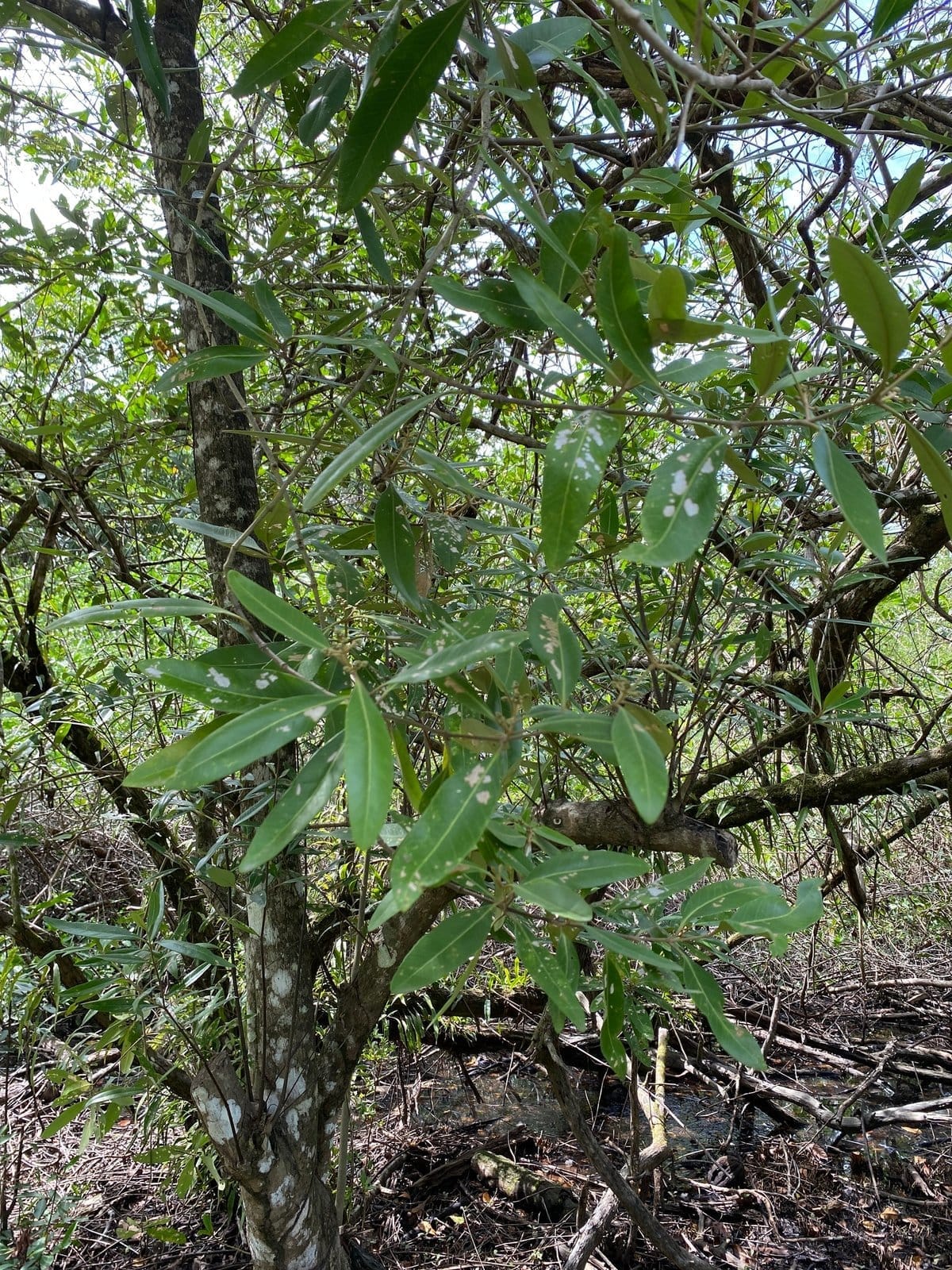
Black Mangrove (Avicennia germinans) is instantly recognizable by the thousands of pencil-like breathing roots (pneumatophores) that emerge from the mud around the tree. These specialized roots allow the tree to breathe in oxygen-poor tidal soils, and the tree's remarkable ability to excrete salt through its leaves makes it one of the most salt-tolerant trees on Earth.
Quick Reference
iNaturalist Observations
Community-powered species data
📸 Photo Gallery
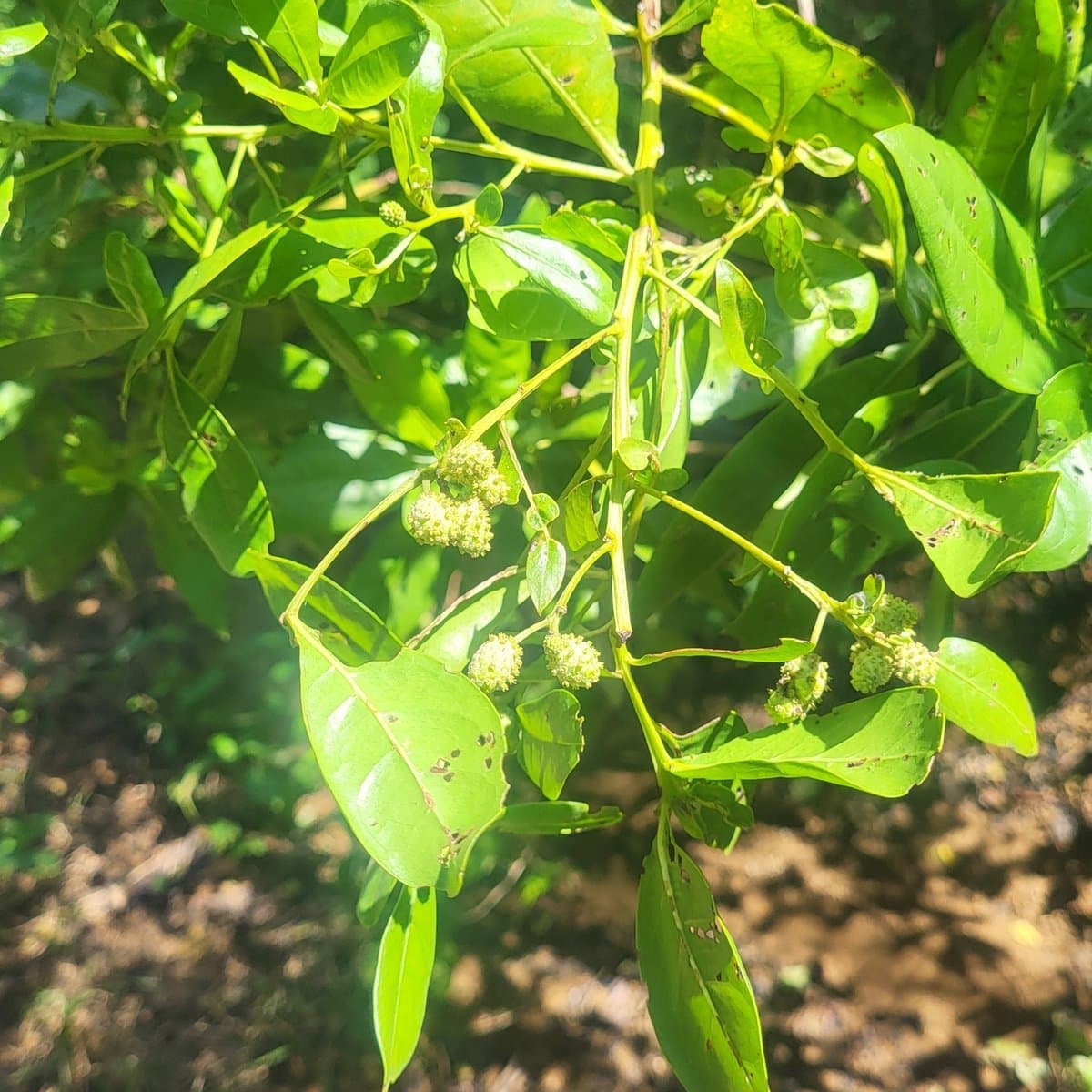
Whole tree
📷 (c) alutz3, some rights reserved (CC BY-NC)(CC BY-NC)
View source ↗Leaves
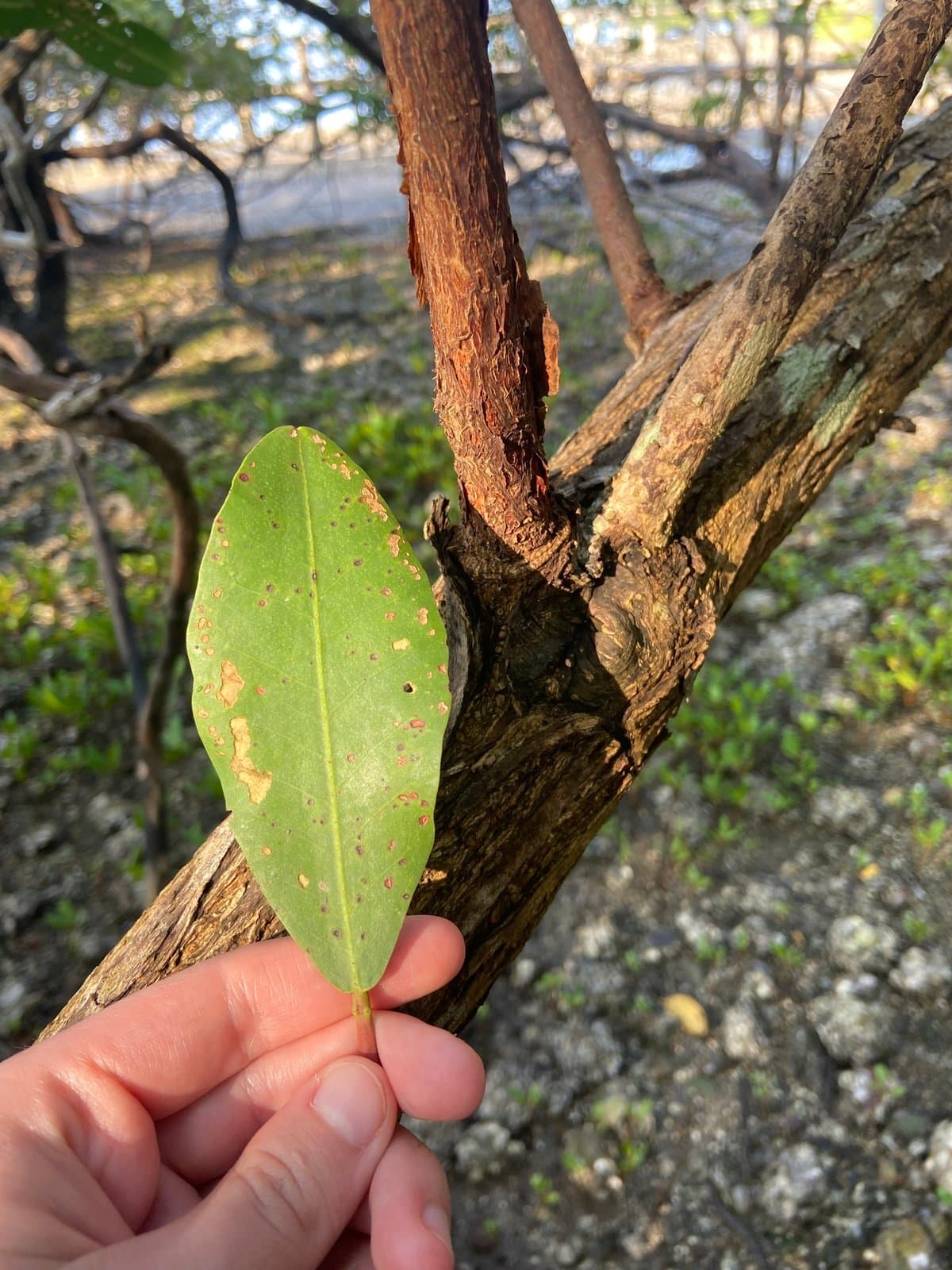
📷 (c) alutz3, some rights reserved (CC BY-NC)(CC BY-NC)
View source ↗Whole tree
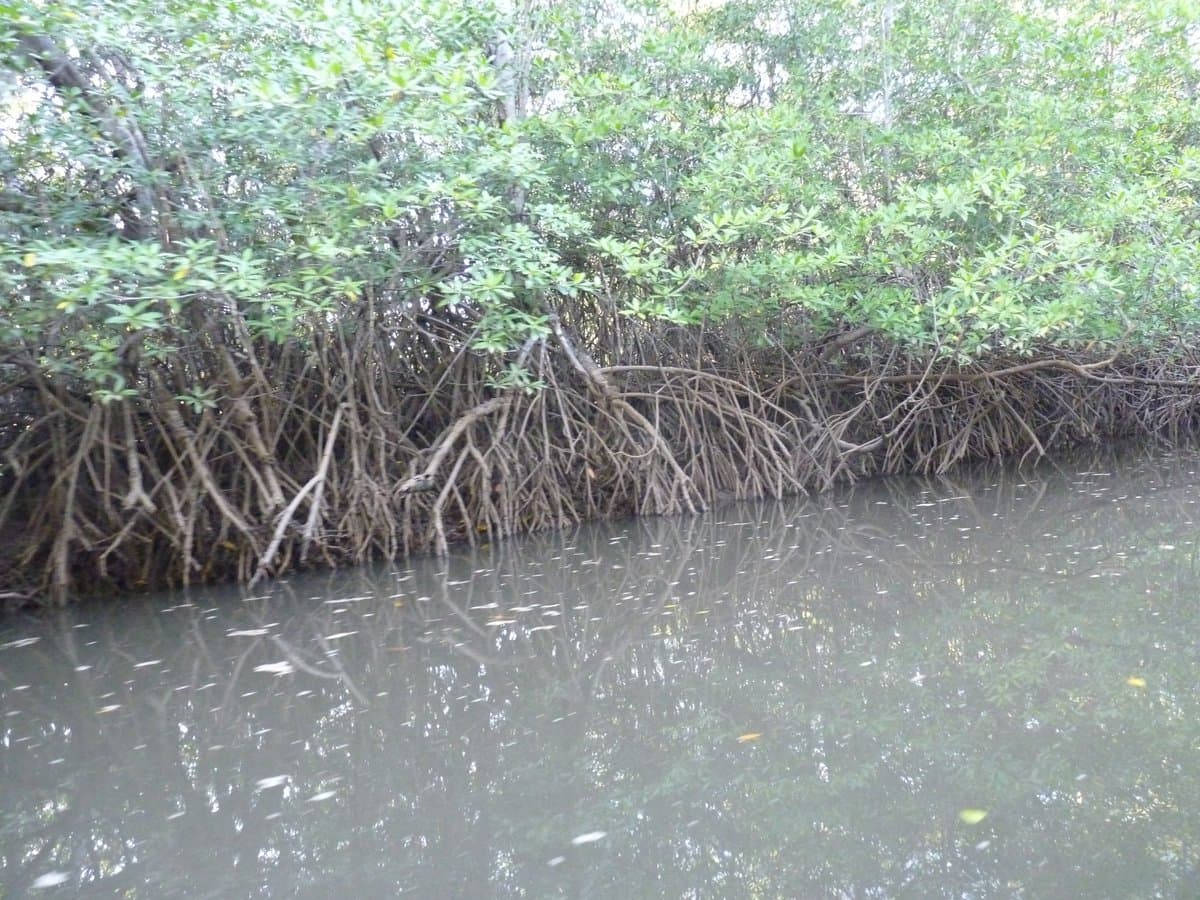
📷 (c) Pablo Fraire, some rights reserved (CC BY-NC)(CC BY-NC)
View source ↗Leaves
📷 (c) Pablo Fraire, some rights reserved (CC BY-NC)(CC BY-NC)
View source ↗Whole tree
📷 (c) David Garrigues, some rights reserved (CC BY-NC)(CC BY-NC)
View source ↗Taxonomy & Classification
Common Names by Region
Etymology
- Avicennia: Named after the Persian philosopher and physician Avicenna (Ibn Sina, 980-1037 CE)
- germinans: Latin for "germinating" or "sprouting," referring to the viviparous seed germination
- "Black" mangrove refers to the dark bark, which contrasts with the lighter wood interior
- "Palo de Sal" (salt stick) in Spanish refers to the salt excretion on leaves
Taxonomic Notes
Black mangrove belongs to the Acanthaceae family, making it only distantly related to red mangrove (Rhizophoraceae) and white mangrove (Combretaceae). This is an example of convergent evolution - different plant families independently evolved similar adaptations to the mangrove environment.
Physical Description
Tree Form
Black Mangrove is an evergreen tree typically reaching 15-25 meters in optimal conditions, though often smaller (5-15 m) in more stressful environments. The tree usually has a single main trunk or multiple trunks emerging from a common base. The crown is dense, rounded to irregular, with thick foliage. The most distinctive feature is not the trunk but the pneumatophore field - thousands of vertical breathing roots surrounding the tree, extending several meters outward in all directions.
Bark
Bark is dark gray to nearly black on the outer surface (giving the tree its common name), rough, and deeply fissured on older trees. The bark becomes increasingly thick and furrowed with age. Inner bark is lighter brown to yellowish. The dark, fissured bark helps distinguish this species from other mangroves even from a distance.
Pneumatophores (Breathing Roots)
The most characteristic and remarkable feature of black mangrove:
- Function: Vertical roots that emerge from lateral underground roots to access atmospheric oxygen
- Appearance: Pencil-thick, 10-40 cm tall, smooth-barked vertical projections
- Distribution: Cover the ground around the tree in a dense field extending several meters from trunk
- Density: Can exceed 100 pneumatophores per square meter in mature stands
- Structure: Contains aerenchyma tissue (spongy air-conducting tissue) and lenticels (pores) for gas exchange
- Adaptation: Essential for survival in anaerobic (oxygen-poor) tidal mud
The pneumatophore field is so distinctive that black mangrove habitat can be identified from a distance by the "stubble-field" appearance of the ground.
Leaves
Leaves are thick and succulent with a distinctive adaptation: salt excretion glands on both upper and lower surfaces. In high-salinity conditions, visible salt crystals form on leaf surfaces as the tree excretes excess salt. This salt excretion gives the tree its Spanish name "Palo de Sal" (salt stick). Leaves taste intensely salty - DO NOT EAT.
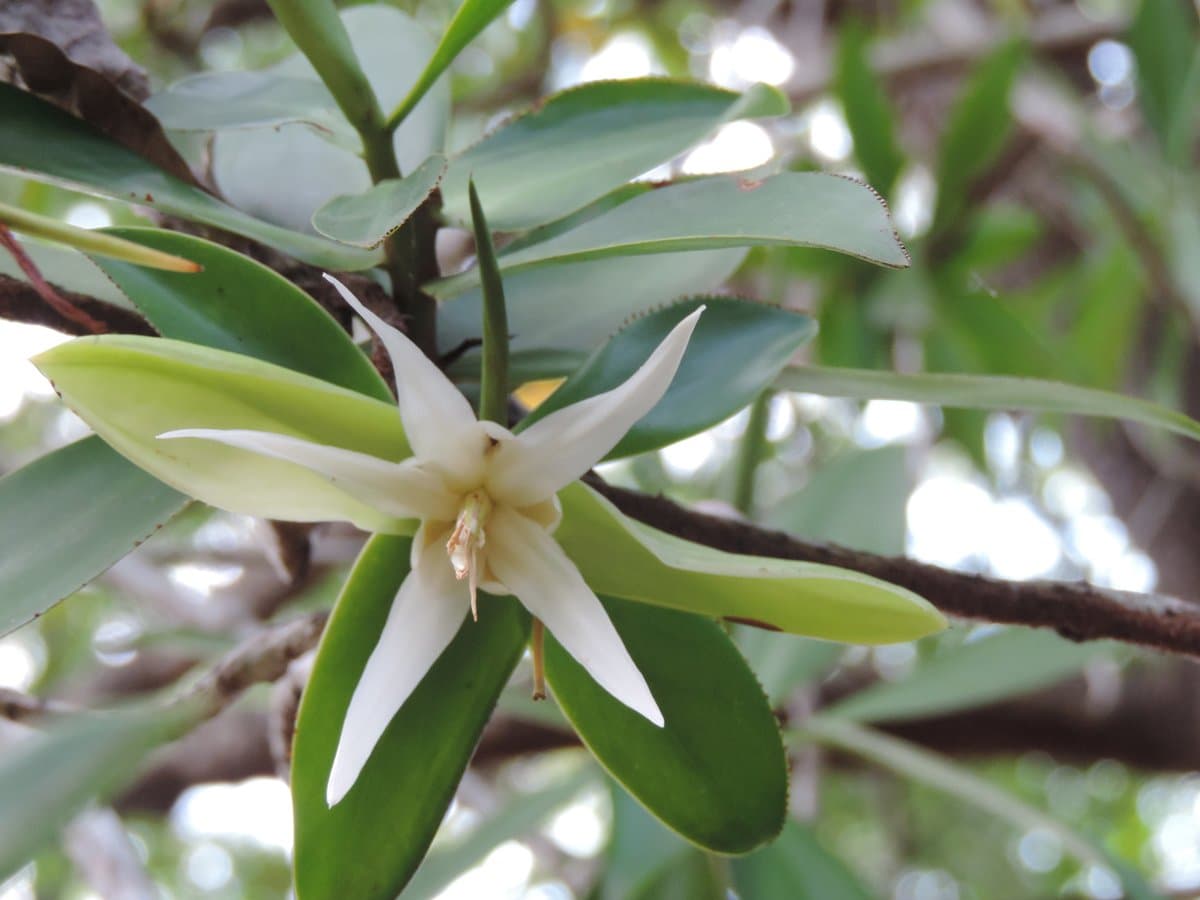
Flowers
Black Mangrove produces small, fragrant white to cream flowers:
- Size: 8-12 mm across
- Arrangement: Dense terminal clusters (spikes)
- Petals: 4 petals, white to pale yellow
- Blooming: Can flower throughout year, peak January-August
- Fragrance: Sweet scent, highly attractive to bees
- Pollination: Primarily by bees and other insects
The flowers are a major honey source - black mangrove honey is prized for its distinctive flavor and light color.
Fruit & Propagules
Black Mangrove exhibits vivipary, though less dramatically than red mangrove:
- Propagule: Flattened, asymmetrical, 2-4 cm long
- Color: Green initially, becoming yellow-brown when mature
- Shape: Rounded to irregular, not elongated like red mangrove
- Development: Seeds begin germination on parent tree
- Dispersal: Propagules drop and can float for days to weeks
- Establishment: Takes root quickly when stranded in suitable mud substrate
The flattened shape allows propagules to float effectively and wedge into mud when deposited by tides.
Geographic Distribution
Distribution in Costa Rica
Black Mangrove is found along both coasts of Costa Rica, typically in the upper intertidal zone and areas with higher salinity:
Pacific Coast:
- Golfo de Nicoya (extensive stands, often with red and white mangrove)
- Térraba-Sierpe Delta (important component of mangrove complex)
- Guanacaste estuaries (particularly in seasonally dry areas)
- Tárcoles River area
- Manuel Antonio coastal wetlands
Caribbean Coast:
- Tortuguero lagoons and protected areas
- Gandoca-Manzanillo wetlands
- Cahuita coastal zones
- Areas near Limón with suitable salinity
Optimal Habitat:
- Upper intertidal zones (higher elevation than red mangrove)
- Areas with moderate to high salinity
- Protected bays, lagoons, and estuaries
- Behind red mangrove zones in tidal progression
- Can tolerate hypersaline conditions better than other mangrove species
Zonation Pattern
In typical mangrove zonation from sea to land:
- Red Mangrove (Rhizophora) - lowest intertidal zone, flooded twice daily
- Black Mangrove (Avicennia) - middle to upper intertidal zone, flooded less frequently
- White Mangrove (Laguncularia) - highest intertidal zone, occasional flooding
Black mangrove's superior salt tolerance allows it to occupy zones where salinity is too high for red mangrove.
Habitat & Ecology
Ecological Role
Black Mangrove plays critical ecological roles in coastal systems:
Extreme Salt Tolerance:
- Most salt-tolerant of all mangrove species
- Can survive and thrive in hypersaline conditions (>60 ppt) that kill other mangroves
- Salt excretion mechanism removes 90% of absorbed salt through leaves
- Important in areas with high evaporation and seasonal hypersalinity
Coastal Protection:
- Dense pneumatophore fields dissipate wave energy
- Reduces coastal erosion in upper intertidal zones
- Complements red mangrove protection in a tiered system
- Stabilizes soil with extensive shallow root system
Carbon Sequestration:
- Stores significant carbon in both biomass and soil
- Contributes to blue carbon reserves in coastal wetlands
- Important for climate change mitigation
Pollinator Support:
- Flowers are critical nectar source for bees
- Supports honey production - economic benefit
- Provides food for butterflies and other pollinators
- Can flower almost year-round in tropics
Wildlife Associations
Black Mangrove forests support diverse coastal wildlife:
Pneumatophore Microhabitat:
- The dense pneumatophore field creates a unique microhabitat
- Provides shelter for juvenile crabs and small fish at high tide
- Traps organic matter, supporting detrital food web
- Barnacles and algae colonize pneumatophores, increasing habitat complexity
Adaptations to Extreme Environment
Uses & Applications
Traditional Uses
Honey Production (Primary Economic Value):
- Black mangrove honey is highly prized
- Light amber color, mild sweet flavor
- Flowers provide abundant nectar almost year-round
- Important income source for coastal beekeepers
- One of the most valuable non-timber products from mangroves
Wood Products:
- Firewood: Burns hot, high BTU value
- Charcoal: Quality charcoal production
- Poles: Small construction poles (corrals, fences)
- Tool handles: Dense, durable wood
- Limited timber use due to relatively small size and mangrove protection laws
Salt Extraction (Historical):
- Leaves historically harvested for salt content
- Dried leaves burned, ash processed for salt
- Traditional practice in some coastal communities
- Rarely practiced today due to mangrove protection
Medicinal Uses:
- Bark decoction for diarrhea and dysentery
- Leaf poultice for wounds and skin infections
- Anti-inflammatory applications
- Treatment for respiratory ailments
- Antiseptic properties
Modern Applications
Ecosystem Services (Most Valuable Today):
- Honey production: Sustainable income for beekeepers - no tree damage
- Coastal protection: Storm buffering worth thousands per hectare
- Carbon sequestration: Blue carbon credit potential
- Water quality: Filtering nutrients and pollutants
- Fisheries support: Nursery habitat for commercial species
- Biodiversity: Supporting threatened coastal ecosystems
Conservation & Restoration:
- Restoration of degraded coastal areas
- Living shorelines and natural infrastructure
- Climate change adaptation strategies
- Community-based mangrove management
- Ecotourism and environmental education
Research:
- Model organism for studying salt tolerance
- Biotechnology applications (salt tolerance genes)
- Climate change research (carbon sequestration rates)
- Coastal resilience studies
Wood Properties
The wood is hard and dense with good rot resistance, but trees are generally too small for commercial timber. Protected status limits harvesting. Primary value is in ecosystem services, not wood products.
Cultural & Historical Significance
Indigenous Uses
Coastal indigenous peoples throughout the black mangrove's range have utilized this species for centuries:
- Salt source: Leaves harvested and processed for salt in areas without access to evaporated sea salt
- Firewood: Preferred fuel for smoking fish and meat
- Medicine: Bark and leaves used in traditional healing
- Bee forage: Traditional knowledge of honey sources
- Ecological indicators: Used to predict tides and weather patterns
Role in Coastal Communities
Beekeeping Tradition:
- Black mangrove is the foundation of coastal honey production
- Beekeeping families maintain hives near black mangrove stands
- "Mangrove honey" is a premium product in local markets
- Provides sustainable income without harming trees
- Cultural practices passed through generations
Fishing Communities:
- Black mangrove areas known as juvenile fish habitat
- Traditional fishing spots near mangrove fringes
- Crab harvesting (sustainable) in pneumatophore fields
- Ecological knowledge about seasonal patterns
Climate Resilience:
- Growing recognition of mangroves protecting coastal villages
- Traditional knowledge about mangrove expansion and contraction
- Community participation in mangrove restoration
- Cultural identity tied to mangrove landscapes
Modern Conservation Recognition
Black Mangrove, like other mangroves, has gained international conservation attention:
- Blue Carbon Initiative: Recognition for climate change mitigation
- Ramsar Convention: Inclusion in protected wetlands of international importance
- Community conservation: Co-management programs empowering local stewardship
- Sustainable honey: Certification programs for mangrove honey
- Legal protection: Strong laws protecting mangroves in Costa Rica and globally
Conservation Status
Least Concern
IUCN Red List Status
IUCN Red List: Least Concern (LC)
Black Mangrove has a wide distribution and large populations, resulting in a Least Concern status globally. However, like all mangroves, local populations face significant threats.
Population Trends
- Global: Declining due to coastal development and climate change
- Mangrove loss: Estimated 1-2% annual loss of mangrove cover globally
- Costa Rica: Relatively stable with strong protection laws, but localized losses continue
- Restoration: Active restoration projects increasing area in some locations
Threats
Protection Measures
Legal Protection in Costa Rica:
- Mangroves (including black mangrove) protected under national law
- 50-meter buffer zone around mangrove forests
- Permits required for any activities affecting mangroves
- Criminal penalties for unauthorized destruction
- Strong enforcement in protected areas
Conservation Strategies:
- Protected areas: National parks, wildlife refuges, RAMSAR sites
- Community management: Sustainable use programs (honey production)
- Restoration: Science-based restoration of degraded areas
- Research: Monitoring programs tracking mangrove health
- Education: Public awareness about mangrove ecosystem services
- Blue carbon projects: Financial incentives for mangrove conservation
Key Protected Areas in Costa Rica:
- Térraba-Sierpe National Wetland
- Tortuguero National Park
- Gandoca-Manzanillo Wildlife Refuge
- Golfo de Nicoya RAMSAR site
- Palo Verde National Park wetlands
Growing Black Mangrove
Black Mangrove requires specific coastal conditions - saline water and appropriate tidal inundation. This is primarily information for restoration projects, not typical landscaping. Growing mangroves outside their natural habitat is generally unsuccessful and unnecessary.
Propagation
From Propagules:
- Collection: Gather mature propagules (yellow-brown, fallen or about to fall)
- Viability: Test in water - viable propagules float
- Storage: Can store in seawater for several days if needed
- Planting: Plant soon after collection for best results
Planting Technique:
- Site selection: Upper intertidal zone, higher than red mangrove zone
- Salinity: Suitable for brackish to hypersaline areas
- Substrate: Firm to soft mud
- Method: Press propagule horizontally into mud, covering partially
- Depth: Bury 1/3 to 1/2 of propagule
- Spacing: 3-4 m apart for restoration
- Season: Best during wet season
- Protection: May need fencing to prevent herbivory and trampling
Success Factors:
- Correct tidal elevation (higher than red mangrove)
- Adequate but not excessive tidal flooding
- Good water quality
- Protection during establishment phase
Site Requirements
Maintenance
Establishment Phase (1-2 years):
- Monitor survival and growth
- Protect from physical damage
- Remove debris
- Watch for herbivore damage
- No fertilization needed
Growth Phase (3-5 years):
- Trees developing pneumatophore fields
- Beginning to produce flowers and seeds
- Becoming self-sufficient
- Minimal intervention needed
Mature Stage (5+ years):
- Self-sustaining
- Producing honey-rich flowers
- Supporting wildlife
- Monitor overall health
- Protect from human disturbance
Where to See Black Mangrove in Costa Rica
Best Viewing Locations
Pacific Coast:
-
Térraba-Sierpe Wetland (Puntarenas)
- Extensive black mangrove stands
- Boat tours from Sierpe
- See zonation patterns with other mangrove species
- Observe pneumatophore fields
-
Palo Verde National Park (Guanacaste)
- Wetland complex with mangroves
- Good for observing birds in mangroves
- Educational trails and viewing platforms
-
Tárcoles River Area (Central Pacific)
- Easy access from San José
- Mixed mangrove forest
- Excellent wildlife viewing (crocodiles, birds)
Caribbean Coast:
-
Tortuguero Canals
- Boat access only
- Pristine mangrove ecosystems
- Combine with sea turtle conservation visit
-
Gandoca-Manzanillo (Southern Caribbean)
- Less touristed
- Kayak through mangrove channels
- Excellent for photography
Viewing Tips
- Observe pneumatophores: Look at the ground to see the distinctive breathing root field
- Check leaves for salt: In dry season, look for white salt crystals on leaves
- Listen for bees: During flowering, buzzing of bees is prominent
- Best time: Early morning for birdwatching, any time for mangrove observation
- Stay on paths: Don't walk through pneumatophore fields - causes damage and is hazardous
- Bring: Binoculars, camera, field guide, water, insect repellent
External Resources
Conservation assessment and distribution
Community observations and photos
Global biodiversity database
Taxonomic information
Detailed species information
References
📚 Scientific References & Further Reading
Tomlinson, P.B. (2016). The Botany of Mangroves, 2nd Edition
Duke, N.C. (2006). Australia's Mangroves: The authoritative guide to Australia's mangrove plants
Jiménez, J.A. & Sauter, K. (1991). Structure and dynamics of mangrove forests along a flooding gradient. Estuaries
Ball, M.C. (1988). Ecophysiology of mangroves. Trees - Structure and Function
Twilley, R.R. & Rivera-Monroy, V.H. (2005). Developing performance measures of mangrove wetlands using simulation models of hydrology, nutrient biogeochemistry, and community dynamics. Journal of Coastal Research
Conservation Note: Black Mangrove is protected by law in Costa Rica. The species and its habitat may not be disturbed without proper authorization. These trees provide critical ecosystem services including coastal protection, honey production, and carbon storage. If you observe illegal mangrove destruction, report it to SINAC or MINAE. Support sustainable mangrove honey production to provide economic incentives for conservation.
Safety Information Disclaimer
Safety information is provided for educational purposes only. Individual reactions may vary significantly based on age, health status, amount of exposure, and individual sensitivity. Always supervise children around plants. Consult a medical professional or certified arborist for specific concerns. The Costa Rica Tree Atlas is not liable for injuries or damages resulting from interaction with trees described in this guide.
• Always supervise children around plants
• Consult medical professional if unsure
• Seek immediate medical attention if poisoning occurs
Information compiled from authoritative toxicology sources, scientific literature, and medical case reports.
Help improve this page
Know something about this tree? Share local knowledge, suggest a correction, or submit a photo to improve this guide for everyone.