White Mangrove
Laguncularia racemosa
Quick facts
Native Region
Tropical and subtropical coastlines of the Americas and West Africa
Max Height
12-18 meters (40-60 feet)
Family
Combretaceae
Conservation
LC — Least Concern
Uses
Safety Information
Toxicity Details
White mangrove bark contains moderate concentrations of tannins which give it astringent properties. The tannins are not highly toxic but can cause mild stomach upset if bark is consumed in large quantities. Leaves and fruits are not toxic. Not a concern for casual contact with the tree.
Skin Contact Risks
Safe for skin contact. No irritation from leaves, bark, or sap. The salt glands on leaf petioles are harmless to touch. No reports of skin sensitivity or dermatitis from this species.
Allergenic Properties
Low allergen risk. Flowers are small and inconspicuous, producing minimal pollen. Some individuals may experience very mild respiratory irritation during heavy flowering. No significant allergic reactions documented.
Structural Hazards
The main hazard is the muddy, slippery substrate where white mangroves grow, especially during low tide. The inland location means fewer prop roots to trip over compared to red mangrove, but footing can still be unstable. Stay on designated paths in protected mangrove areas.
Wildlife & Pet Risks
Safe for all wildlife. Provides important habitat for birds, crabs, insects, and serves as food source for various species. Not toxic to marine life or terrestrial animals.
Season
Flowering
Mar-Aug
Fruiting
How to identify
White Mangrove
White Mangrove (Laguncularia racemosa) forms the landward edge of mangrove ecosystems, growing in the upper tidal zones where land meets sea. Distinguished by unique salt-excreting glands on its leaf petioles, this adaptable tree creates the transition between coastal mangrove forests and terrestrial vegetation.
Quick Reference
iNaturalist Observations
Community-powered species data
📸 Photo Gallery
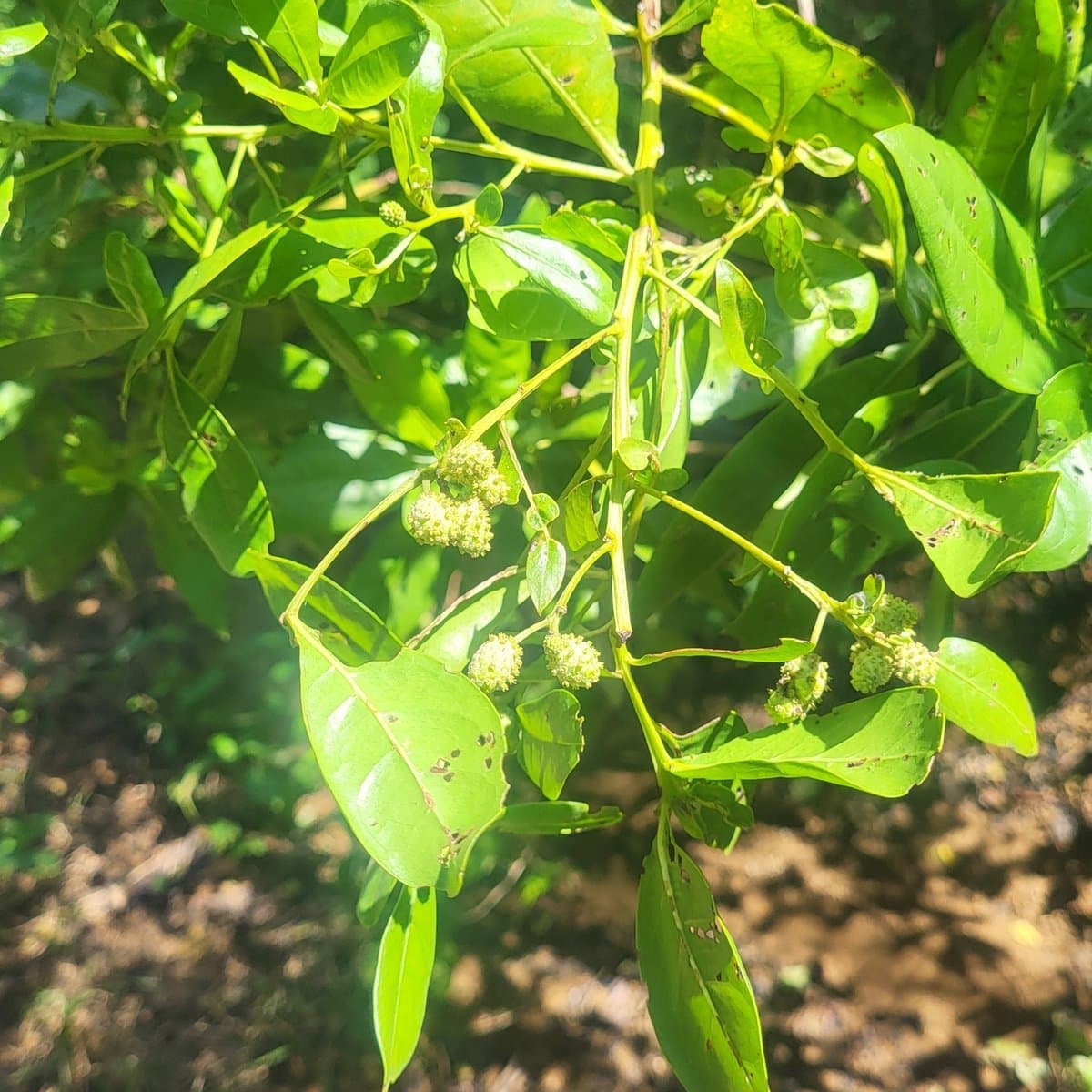
Whole tree
📷 (c) arobey63, some rights reserved (CC BY-NC)(CC BY-NC)
View source ↗Leaves
📷 (c) arobey63, some rights reserved (CC BY-NC)(CC BY-NC)
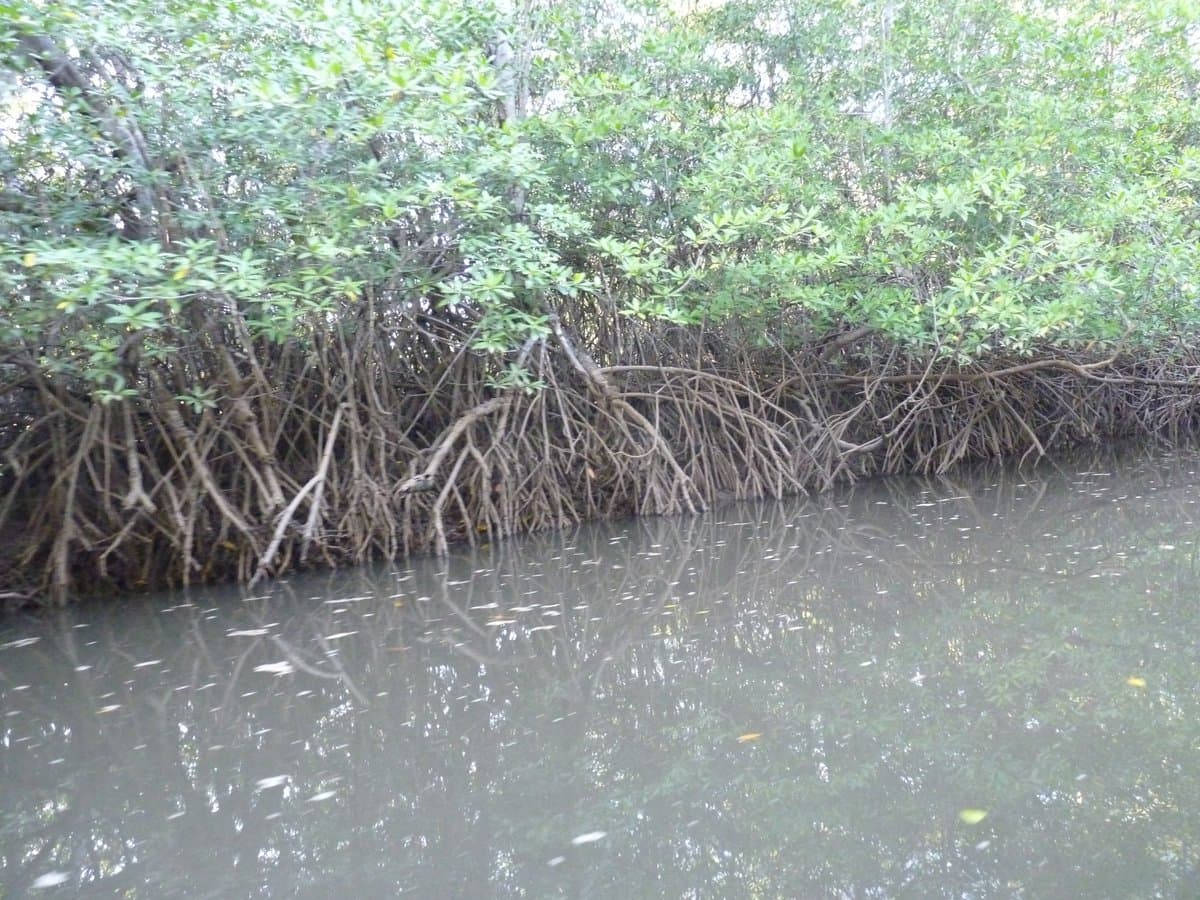
View source ↗Whole tree
📷 (c) David Garrigues, some rights reserved (CC BY-NC)(CC BY-NC)
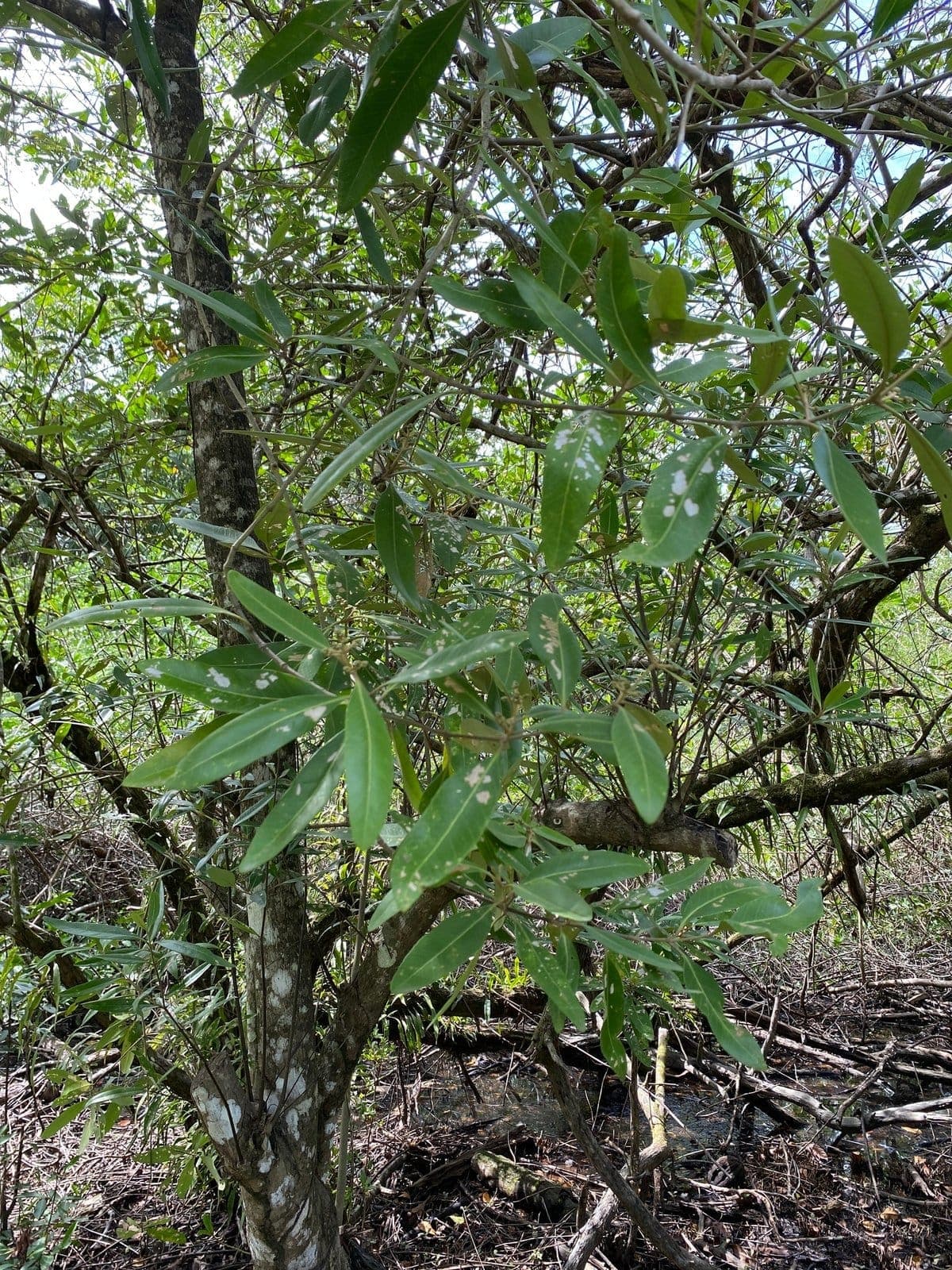
View source ↗Leaves
📷 (c) arobey63, some rights reserved (CC BY-NC)(CC BY-NC)
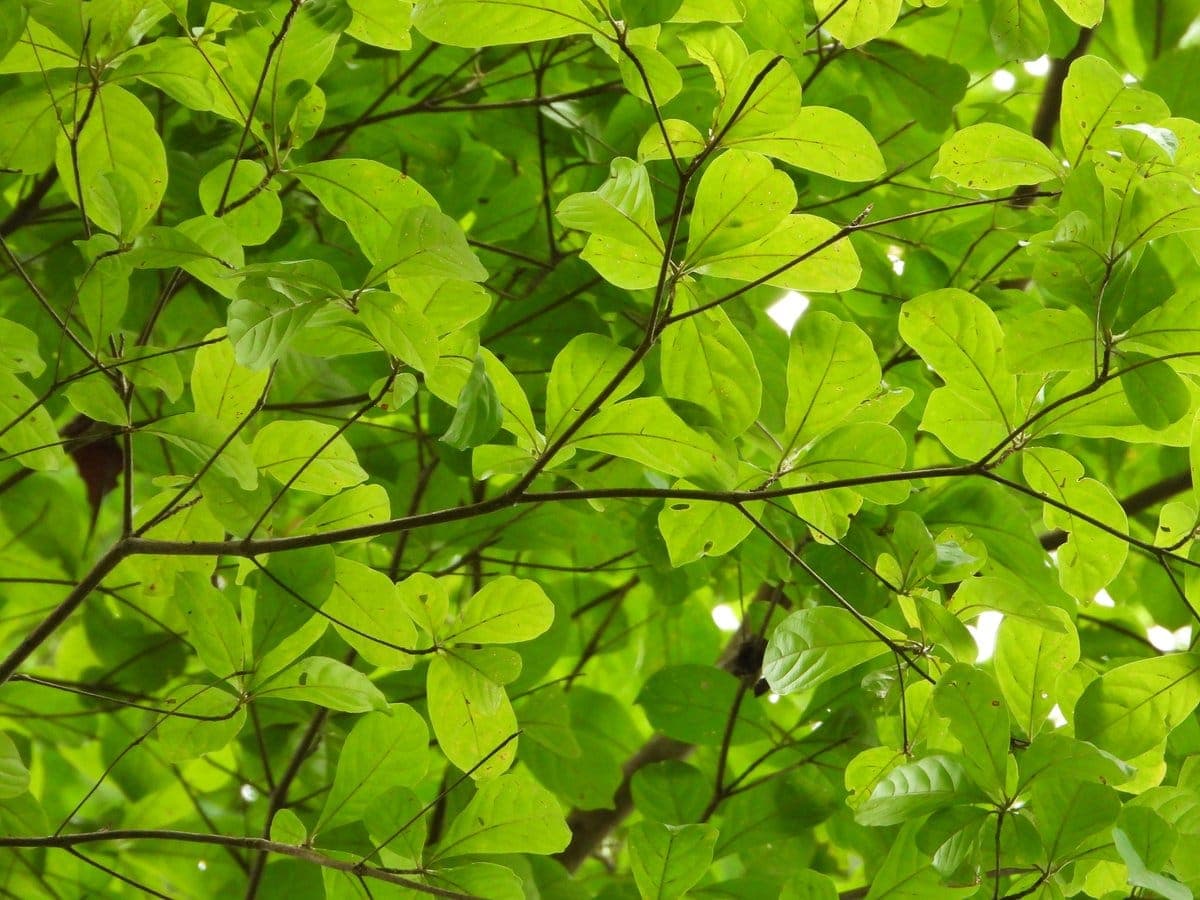
View source ↗Whole tree
📷 (c) Pete Woodall, some rights reserved (CC BY-NC)(CC BY-NC)
View source ↗Photos to be sourced from iNaturalist's community science database. View all observations →↗
Taxonomy and Classification
- Laguncularia: Latin for "lagoon dweller," referring to its coastal lagoon habitat - racemosa: Latin for "raceme," describing the flower arrangement - White Mangrove: Named for lighter-colored bark compared to red and black mangroves - Mangle Blanco: Spanish common name in Costa Rica
Common Names
Physical Description
General Form
The White Mangrove is a medium-sized evergreen tree or large shrub with a variable growth form depending on environmental conditions. Unlike the red mangrove's dramatic prop roots, white mangrove typically develops a more conventional root system, though it may produce pneumatophores (breathing roots) or stilt roots in frequently flooded areas. The crown is rounded and dense with leathery foliage.
Distinctive Features
The Signature Salt Glands
- Location: Two distinct glands on each leaf petiole
- Function: Excrete excess salt from tree's tissues
- Appearance: Small, raised bumps near leaf base
- Color: Often crystalline white when salt dries
- Innovation: Allows survival in saline environments
Leaves
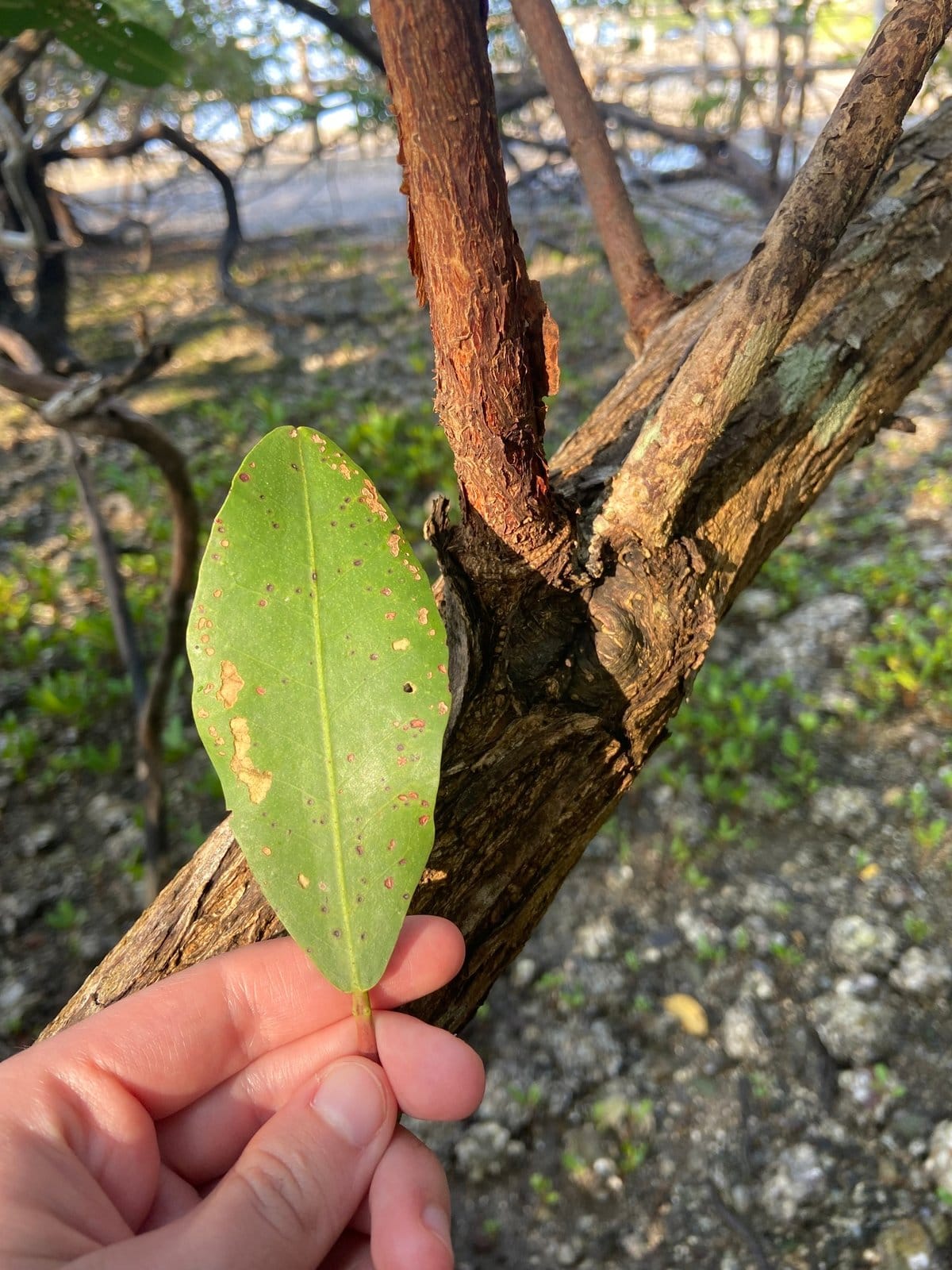
- Type: Simple, opposite arrangement
- Shape: Elliptical to oblong
- Size: 3-12 cm long, 2-6 cm wide
- Texture: Thick, leathery, smooth
- Color: Light yellow-green above, paler below
- Venation: Pinnate with prominent midrib
Flowers and Fruit
- Flower Type: Perfect (bisexual)
- Color: White to cream
- Size: Small (5-6 mm)
- Arrangement: Terminal spikes or panicles
- Fragrance: Mildly fragrant
- Fruit: Almond-shaped drupe
- Fruit Color: Reddish-brown when mature
- Size: 12-20 mm long
- Seed: Single seed per fruit
- Dispersal: Water-borne
Bark and Roots
- Bark Color: Gray-brown to reddish
- Texture: Fissured and scaly with age
- Roots: May develop pneumatophores if flooded
- Root Depth: Spreading, relatively shallow
- Adaptations: Salt-tolerant tissues
White mangrove is easy to identify by its salt glands on leaf petioles - no other mangrove species has this feature. Look for two small bumps near the base of each leaf where it attaches to the stem. These glands actively excrete salt, sometimes visible as white crystals.
Distribution and Habitat
Native Range
Geographic Distribution
Distribution in Costa Rica
Found along both Pacific and Caribbean coastlines:
Habitat Preferences
Ecological Importance
The Transition Zone Specialist
White Mangrove occupies a unique niche: Zonation: - Landward of red and black mangroves - Upper tidal zones with periodic flooding - Transition between mangrove and terrestrial vegetation Function: - Stabilizes inland boundaries of mangrove forests - Provides habitat for terrestrial and coastal species - Critical carbon storage in coastal peat soils - Buffer zone protecting inland areas from storms
Wildlife Relationships
Birds
- Herons: Nest in canopy
- Egrets: Forage in surrounding areas
- Kingfishers: Perch on branches
- Warblers: Seasonal migrants
- Frigatebirds: Roost in taller trees
- Mangrove Vireo: Endemic species habitat
Marine and Terrestrial Life
- Crabs: Land crabs forage under canopy
- Fish: Juvenile fish use root systems
- Mollusks: Gastropods on stems and roots
- Insects: Various pollinators and herbivores
- Mammals: Raccoons, opossums visit
- Reptiles: Iguanas in branches
Adaptations to Coastal Life
Salt Management Strategy
The Salt Gland Innovation
White mangrove's most remarkable adaptation: How It Works: 1. Uptake: Roots absorb water with high salt content 2. Transport: Salt moves through xylem to leaves 3. Concentration: Salt accumulates in specialized cells 4. Excretion: Glands on petioles actively pump out excess salt 5. Result: Salt crystals form on gland surface This sophisticated system allows white mangrove to thrive where most plants would die from salt toxicity.
Other Coastal Adaptations
Conservation and Management
Conservation Status
White mangrove is widespread and abundant across its range. However, local populations face threats: - Coastal development: Direct habitat loss - Pollution: Oil spills, agricultural runoff - Climate change: Sea level rise, changing salinity patterns - Overharvesting: For firewood and charcoal - Land conversion: To shrimp farms and agriculture
Importance for Coastal Protection
Cultural and Economic Uses
Traditional Uses
Materials
- Firewood: Burns slowly, good heat
- Charcoal: Traditional production
- Tannins: Bark used for leather tanning
- Timber: Small-scale construction
- Dye: Bark produces brown dye
Medicine
- Bark: Astringent properties
- Leaves: Poultices for wounds
- Sap: Traditional skin treatments
- Tea: Infusions for various ailments
- Note: Limited documentation of efficacy
Modern Conservation Value
Mangrove Ecosystem Zonation
Understanding the Zones
Mangrove forests display characteristic zonation from sea to land: Zone 1 - Seaward (0-1m): - Red Mangrove (Rhizophora mangle) - Daily tidal inundation - Prominent prop roots Zone 2 - Middle (1-3m): - Black Mangrove (Avicennia germinans) - Periodic tidal flooding - Pneumatophores (breathing roots) Zone 3 - Landward (3-5m): - White Mangrove (Laguncularia racemosa) - Occasional tidal reach - Conventional roots with salt glands
Where to See White Mangrove in Costa Rica
To observe white mangrove in the field: - Location: Look landward of red and black mangroves - Identification: Check for salt glands on leaf petioles - Timing: Low tide offers best access - Equipment: Binoculars for bird watching - Safety: Wear appropriate footwear for muddy conditions
- Ethics: Stay on trails, don't damage roots
Restoration & Cultivation
White mangrove is not grown as a garden tree — it is cultivated exclusively for coastal restoration and wetland rehabilitation. Establishing healthy stands requires careful hydrological site assessment.
Propagation
- Seed collection: Gather mature propagules (small, oval, greenish-brown) from trees during the main dispersal season (August–November)
- Nursery method: Plant propagules upright 1–2 cm deep in containers filled with a 1:1 mix of sandy soil and composted organic matter; maintain waterlogged conditions with brackish water (10–20 ppt salinity)
- Germination: 2–4 weeks; keep in partial shade (50%) during early development
- Hardening: Gradually increase salinity and sun exposure over 4–6 weeks before field planting
- Transplant size: 20–40 cm height (3–6 months old)
Site Selection for Restoration
Planting & Establishment
- Spacing: 1–2 m for dense shoreline stabilisation; 2–3 m for mixed-species restoration
- Planting method: Dig holes slightly deeper than root ball; firm substrate around base; use bamboo stakes in exposed sites
- Protection: Install temporary wave barriers (coconut coir logs, brush fences) to reduce wave energy on newly planted sites
- Watering: Not needed in tidal zones; for supratidal plantings, irrigate with brackish water during extended dry periods
Maintenance
- Weed control: Remove competing terrestrial vegetation (invasive grasses, Casuarina seedlings) from planting zones
- Debris management: Clear plastic waste and marine debris that can smother seedlings
- Monitoring: Check survival rates monthly for the first year; replant gaps at the next planting season
- Pruning: Not recommended — allow natural form development
- Fertilization: Generally unnecessary in restored tidal sites; if growth is extremely poor, apply slow-release fertiliser stakes (low-nitrogen, e.g., 5-10-10) at 50 g per tree
Seasonal Restoration Calendar
Restoration Success Indicators
- Year 1: ≥60% seedling survival; root establishment visible
- Year 2–3: Canopy closure begins; natural recruitment of associated species (crabs, molluscs, birds)
- Year 5: Self-sustaining stand with natural propagule production
- Year 10+: Fully functional mangrove ecosystem services (wave attenuation, carbon sequestration, fisheries nursery)
Successful mangrove restoration is 90% hydrology and 10% planting. Before planting a single propagule, ensure the site has the correct tidal regime — most mangrove restoration failures result from planting at the wrong elevation or in sites where hydrology has been disrupted by roads, dikes, or drainage channels.
External Resources
Community observations and photos
Mangrove research and conservation
Global mangrove conservation
Costa Rican marine research
Global biodiversity occurrence data and distribution maps
Conservation status and species assessment
References
📚 Scientific References & Further Reading
Tomlinson, P.B. (2016). The Botany of Mangroves. Cambridge University Press, 2nd Edition
Duke, N.C. (2017). Mangrove Floristics and Biogeography Revisited. Annals of Botany 120(4): 561-578
Ellison, A.M. et al. (2020). The Global Status of Mangrove Ecosystems. Biotropica 52(5): 849-856
The White Mangrove may not have the dramatic prop roots of its red cousin or the striking pneumatophores of the black mangrove, but its role is equally vital. As the bridge between sea and land, it stabilizes coastal boundaries, provides critical wildlife habitat, and demonstrates nature's ingenuity in adapting to one of Earth's most challenging environments. Its simple salt glands—visible as tiny bumps on leaf stalks—represent millions of years of evolution solving the problem of thriving in salt water. Every white mangrove forest is a living buffer zone, protecting both marine and terrestrial ecosystems while storing carbon and supporting biodiversity.
Safety Information Disclaimer
Safety information is provided for educational purposes only. Individual reactions may vary significantly based on age, health status, amount of exposure, and individual sensitivity. Always supervise children around plants. Consult a medical professional or certified arborist for specific concerns. The Costa Rica Tree Atlas is not liable for injuries or damages resulting from interaction with trees described in this guide.
• Always supervise children around plants
• Consult medical professional if unsure
• Seek immediate medical attention if poisoning occurs
Information compiled from authoritative toxicology sources, scientific literature, and medical case reports.
Help improve this page
Know something about this tree? Share local knowledge, suggest a correction, or submit a photo to improve this guide for everyone.