Tea Mangrove
Pelliciera rhizophorae
Quick facts
Native Region
Pacific coast from Nicaragua to Ecuador (endemic)
Max Height
15-20 meters (50-65 feet)
Family
Tetrameristaceae
Conservation
VU — Vulnerable
Uses
Safety Information
Toxicity Details
Tea mangrove leaves contain tannins and related compounds that give them astringent properties. The common name comes from historical use of leaves as tea substitute. Not toxic to humans - leaves have been used for centuries in traditional preparations. Tannin content may cause mild stomach upset if consumed in very large quantities.
Skin Contact Risks
Completely safe for skin contact. No irritation from leaves, bark, flowers, or sap. The cone-shaped adventitious roots and bark are safe to touch. No reports of dermatitis or skin sensitivity.
Allergenic Properties
Low allergen risk. Large showy flowers produce nectar for hummingbirds and bats. Pollen production is moderate. No significant reports of allergic reactions in humans.
Structural Hazards
The distinctive cone-shaped base formed by layers of adventitious roots can be uneven to walk around. Roots may be slippery when wet. Growing in tidal areas means substrate is typically muddy and unstable. Stay on designated paths. CRITICAL: This is a rare, vulnerable species - avoid damaging roots or disturbing habitat.
Wildlife & Pet Risks
Safe and vitally important for wildlife. Primary nectar source for endangered Mangrove Hummingbird. Flowers also visited by bats (pollinators). Not toxic to any wildlife. Critical component of Pacific coastal biodiversity.
Season
Flowering
Feb-Jun
Fruiting
May-Aug
How to identify
Tea Mangrove (Mangle Piñuela)
Tea Mangrove (Pelliciera rhizophorae) is the rarest of all true mangrove species, found only along a narrow strip of the Pacific coast from Nicaragua to Ecuador. This ancient lineage—a living fossil—faces extinction due to habitat loss and climate change. Its survival is intimately linked with the endangered Mangrove Hummingbird, which depends on its spectacular flowers for nectar.
Quick Reference
iNaturalist Observations
Community-powered species data
📸 Photo Gallery
Whole tree
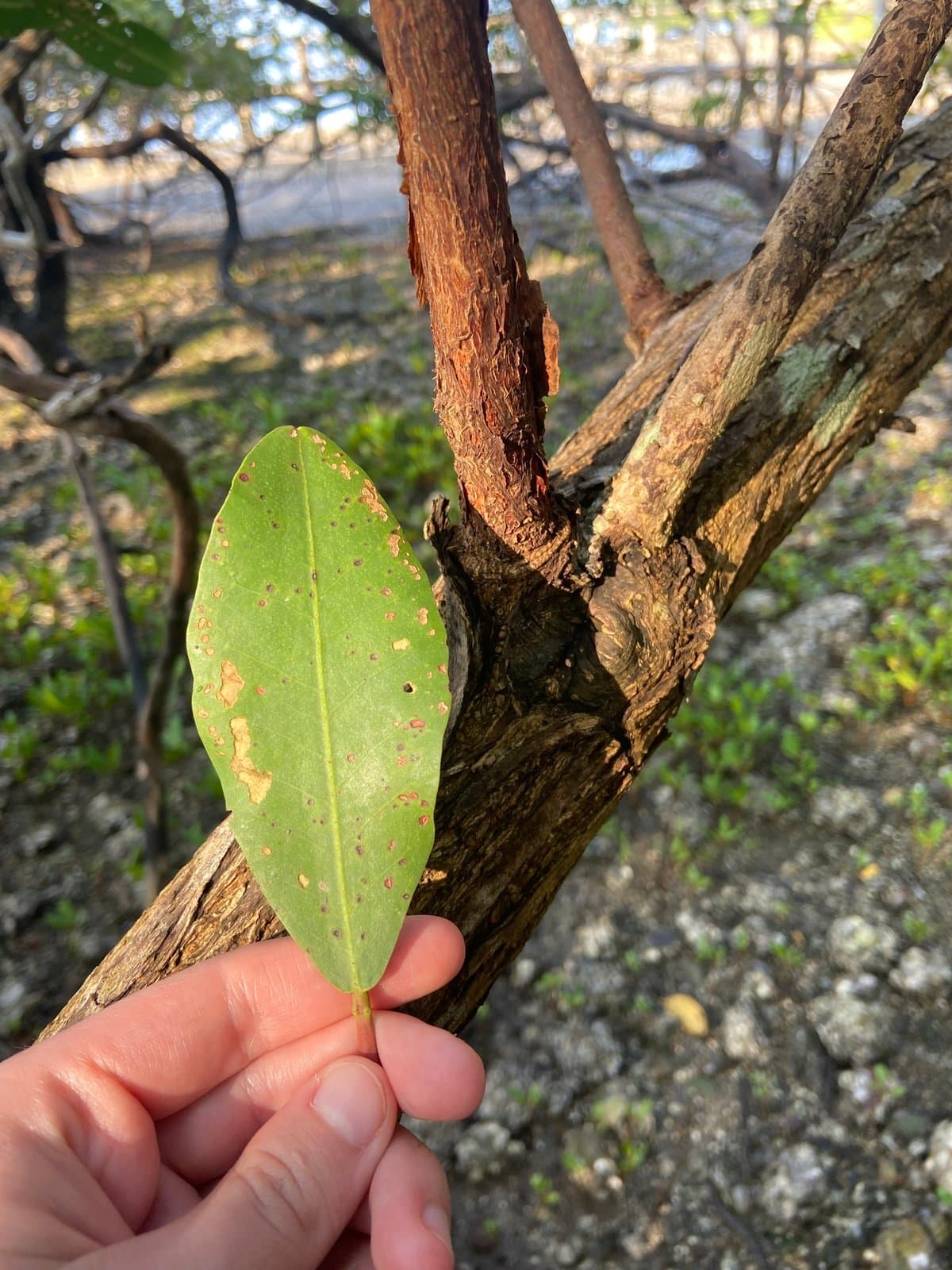
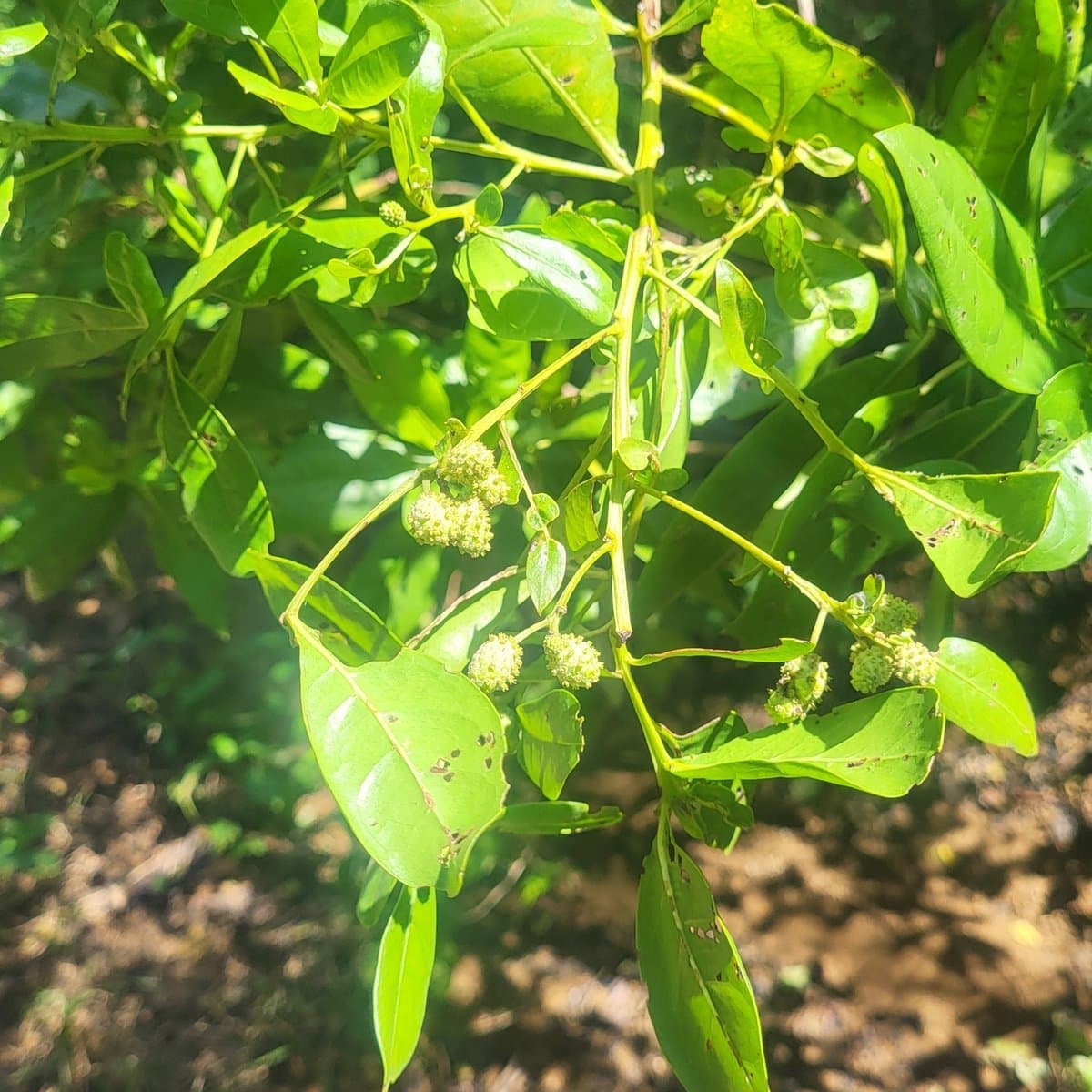
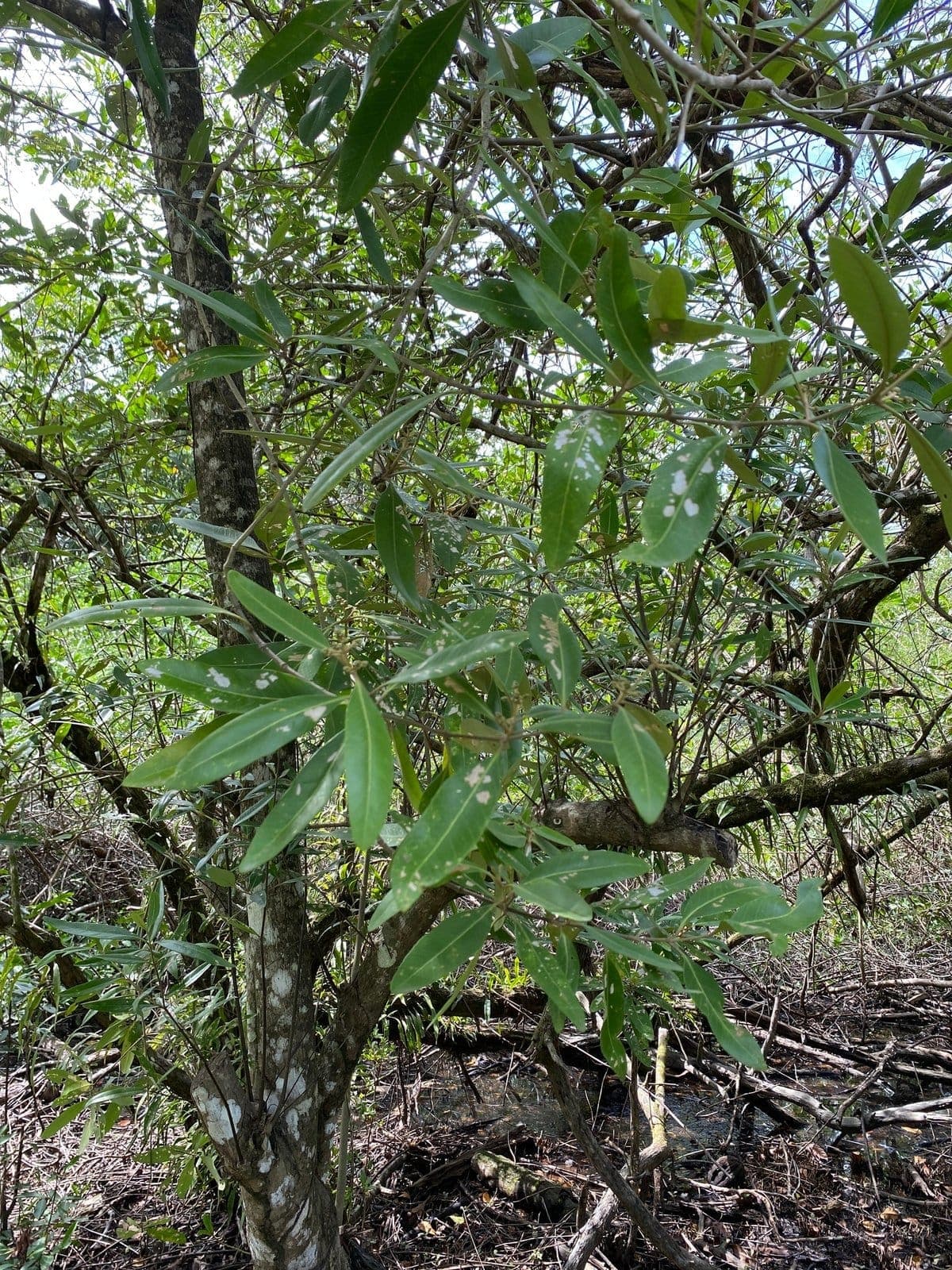
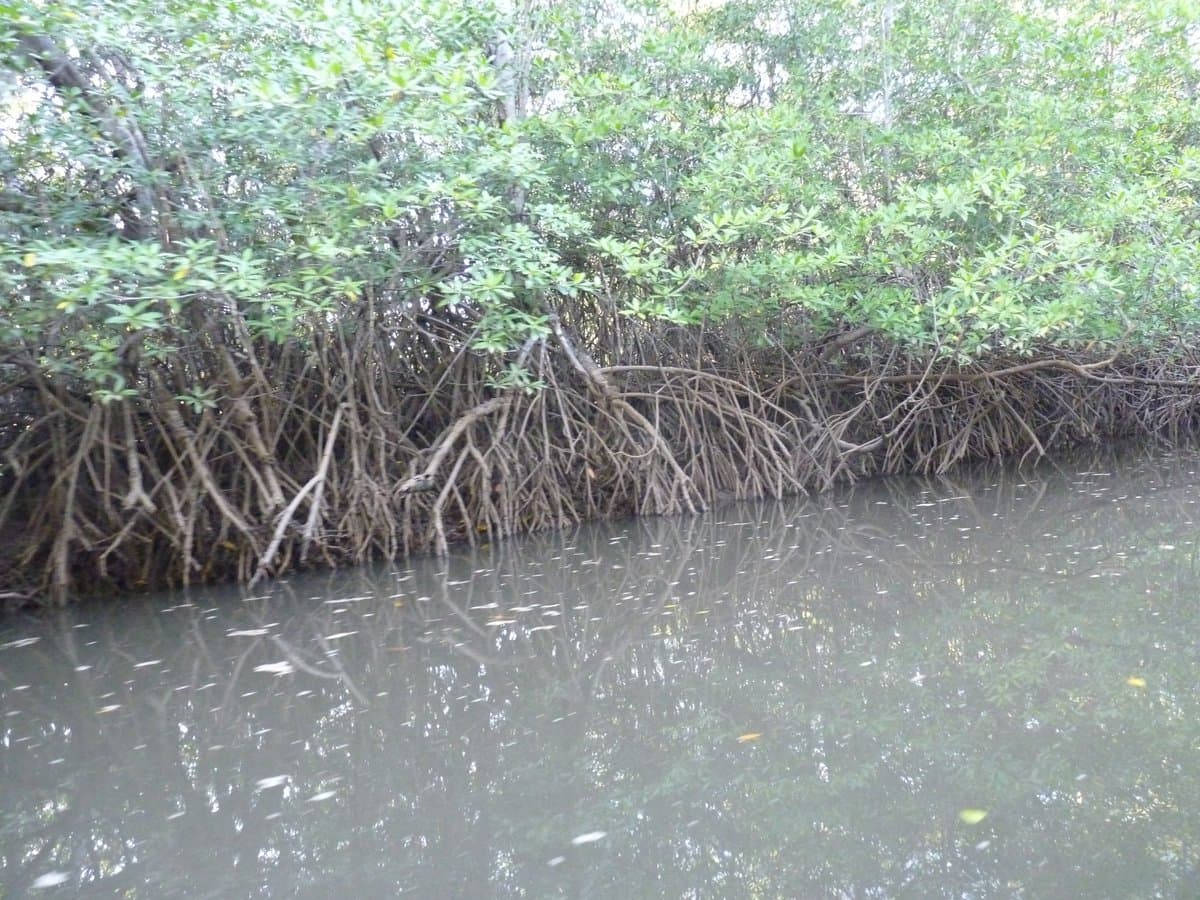
📷 (c) Stephanie Valle Cubero, some rights reserved (CC BY-NC)(CC BY-NC)
View source ↗Leaves
📷 (c) Stephanie Valle Cubero, some rights reserved (CC BY-NC)(CC BY-NC)
View source ↗Bark
📷 (c) Jerry Kosanovich, some rights reserved (CC BY-NC)(CC BY-NC)
View source ↗Whole tree
📷 (c) David A. Rodríguez Arias, some rights reserved (CC BY)(CC BY-NC)
View source ↗Leaves
📷 (c) psweet, some rights reserved (CC BY-NC)(CC BY-NC)
View source ↗Photos to be sourced from iNaturalist and conservation organizations. View all observations →↗
Taxonomy and Classification
- Pelliciera: Named after 19th-century botanist - rhizophorae: Latin for "root-bearing," referring to root structure - Tea Mangrove: Leaves used as tea substitute by coastal communities - Mangle Piñuela: Spanish name in Costa Rica - Ancient Lineage: Fossil evidence from Eocene epoch (40+ million years ago) - Monotypic Genus: Only species in its genus
Common Names
Physical Description
General Form
Tea Mangrove is instantly recognizable by its distinctive cone-shaped base formed by layers of adventitious roots that create a spongy, corky structure. This adaptation is unique among mangroves and crucial for gas exchange in anaerobic soils. The tree typically grows to medium height with a relatively narrow crown and large, leathery leaves.
Distinctive Features
The Signature Cone-Shaped Base
- Structure: Layered adventitious roots
- Function: Gas exchange in waterlogged soils
- Texture: Spongy, corky outer covering
- Appearance: Distinctive cone shape, widest at base
- Uniqueness: No other mangrove has this feature
- Importance: Critical adaptation for survival
Leaves
- Type: Simple, opposite arrangement
- Shape: Elliptical to obovate
- Size: 8-15 cm long, 4-8 cm wide
- Texture: Very thick, leathery, waxy
- Color: Dark glossy green above, paler below
- Venation: Prominent midrib and lateral veins
- Chemistry: Contains tannins and tea-like compounds
The Spectacular Flowers
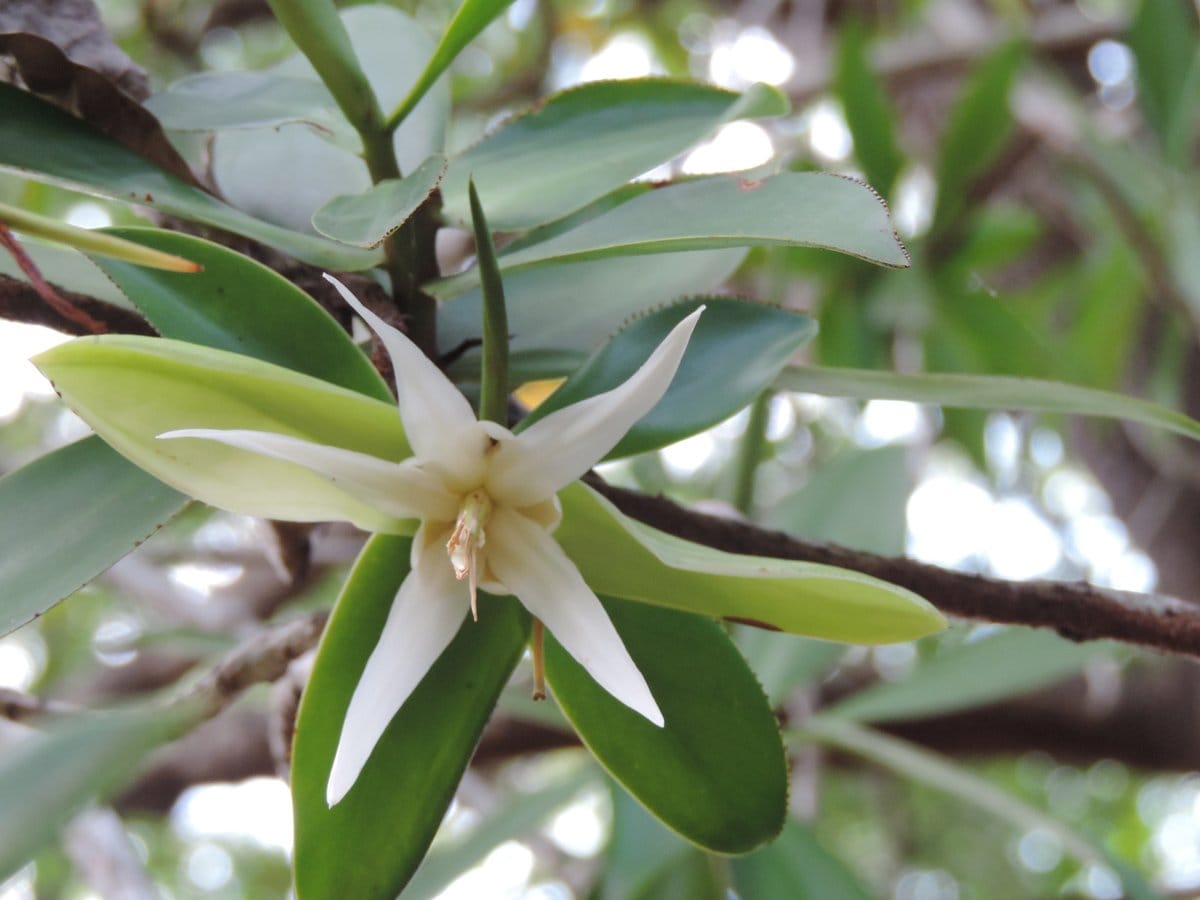
- Size: LARGE - 5-8 cm diameter
- Color: Pink-red to greenish-white (two variants)
- Petals: 4-6 large, showy petals
- Bracts: Colorful, conspicuous
- Nectar: Abundant for hummingbirds
- Pollinators: Mangrove Hummingbird, bats
- Bloom Time: February to June
Fruit and Seeds
- Type: Capsule
- Size: 3-5 cm long
- Shape: Ellipsoid
- Color: Brown when mature
- Seeds: Multiple small seeds per capsule
- Dispersal: Water-borne
- Germination: Requires specific brackish conditions
Tea mangrove is UNMISTAKABLE: 1. Cone-shaped base - no other tree has this 2. Large pink-red flowers (when blooming) 3. Very thick, dark green leaves 4. Growing in brackish mangrove zones 5. Often with Mangrove Hummingbirds present If you see this tree, you've found something special! Document the location and report to conservation authorities.
Distribution and Habitat
Restricted Pacific Range
Geographic Distribution
Distribution in Costa Rica
Found ONLY on the Pacific coast in specific locations:
Habitat Requirements
Tea mangrove's rarity is due to: - Narrow niche: Requires specific salinity (8-15 ppt) - Competition: Outcompeted by more salt-tolerant species - Habitat loss: Coastal development destroys brackish zones - Climate change: Sea level rise alters salinity patterns - Small populations: Isolated stands with poor gene flow - Ancient decline: Was more widespread in geological past
Ecological Importance
A Critical Wildlife Partnership
The Mangrove Hummingbird Connection
Tea mangrove and the Mangrove Hummingbird (Amazilia boucardi) share an intimate ecological relationship: The Hummingbird: - Endemic to Pacific Costa Rica - Endangered species - Depends on tea mangrove flowers for food - Range closely matches tea mangrove distribution The Partnership: - Large flowers produce abundant nectar - Bloom period coincides with hummingbird breeding - Hummingbirds are primary pollinators - Also pollinated by bats at night Conservation Implication: - Protecting tea mangrove protects hummingbird - Loss of either species threatens the other - Joint conservation efforts essential
Ecosystem Role
Wildlife Support
- Primary: Mangrove Hummingbird nectar source
- Bats: Nighttime pollination
- Fish: Juvenile habitat in root zone
- Crabs: Forage in leaf litter
- Insects: Various pollinators and herbivores
- Birds: Nesting and perching
Coastal Function
- Erosion control: Root systems stabilize soil
- Storm buffering: Reduces wave energy
- Carbon storage: Biomass and peat accumulation
- Water filtration: Improves coastal water quality
- Habitat structure: Adds diversity to mangrove zones
- Genetic reservoir: Ancient lineage biodiversity
Conservation Status and Threats
IUCN Status: Vulnerable
Tea mangrove is classified as Vulnerable on the IUCN Red List: - Population Trend: Declining - Area of Occupancy: Below threshold for Vulnerable - Fragmentation: Highly fragmented, small isolated populations
- Threats: Multiple and intensifying - Projection: Risk increases with climate change
Major Threats
Conservation Efforts
Cultural and Scientific Significance
Traditional Uses
Historical
- Tea substitute: Leaves brewed for beverage
- Tannins: Bark used for leather tanning
- Medicine: Traditional treatments (limited documentation)
- Spiritual: Cultural significance to coastal communities
- Indicator: Sign of healthy brackish zones
Scientific Value
- Living fossil: Ancient mangrove lineage
- Evolution: Studies of mangrove adaptation
- Paleontology: Fossil record insights
- Climate: Proxy for past environmental conditions
- Conservation: Flagship species for mangrove protection
- Genetics: Unique evolutionary adaptations
Modern Conservation Value
Beyond its intrinsic value, tea mangrove protection provides: - Biodiversity hotspot: Supports unique species assemblage - Ecosystem services: Carbon storage, coastal protection - Cultural heritage: Traditional knowledge preservation - Scientific insights: Evolutionary studies - Indicator species: Reflects coastal ecosystem health - Co-benefits: Protects Mangrove Hummingbird and other species - Tourism: Ecotourism and education opportunities
Where to See Tea Mangrove in Costa Rica
If you're fortunate enough to observe tea mangrove: - Hire local guides: Support communities and get expert guidance - Stay in boat: Don't walk on roots or disturb habitat - No harvesting: Protected species - illegal to collect - Photograph only: Document but don't disturb - Report sightings: Help conservation monitoring - Watch for hummingbirds: May see endangered Mangrove Hummingbird - Respect regulations: Follow all protected area rules
How You Can Help
Conservation Actions
Restoration & Conservation Cultivation
Tea mangrove is extremely rare and restricted to specific estuarine conditions. Restoration work requires specialised knowledge and is carried out only within managed conservation programmes.
Propagation
- Seed source: Collect mature fruits (fleshy, pear-shaped, 3–5 cm) from known populations. Coordinate with SINAC for collection permits — this is a protected species
- Nursery method: Plant fresh seeds (within 48 hours of collection) 1–2 cm deep in containers with estuarine mud mixed with fine sand; maintain standing brackish water (15–25 ppt) at soil surface
- Germination: 3–6 weeks; highly variable — expect ≤40% germination rate
- Seedling care: Maintain 50% shade; keep soil saturated; transition to full sun over 8 weeks
- Transplant readiness: 30–50 cm height (6–12 months); only transplant to carefully assessed sites
Restoration Site Assessment
Planting Protocols
- Spacing: 2–3 m to allow for the species' spreading canopy form
- Method: Plant during low tide; create planting holes with minimal substrate disturbance; firm soil gently around root ball
- Support: Use mangrove-compatible biodegradable stakes (bamboo) in high-current areas
- Protection: Exclude livestock and limit boat traffic in restoration zones; install floating debris barriers upstream
Monitoring & Management
- Survival checks: Monthly for the first year, quarterly thereafter
- Growth measurement: Record height, stem diameter, and leaf count at each check
- Herbivory protection: Install mesh guards if crab damage is observed on seedlings
- Sedimentation management: Remove accumulated debris or sediment that may bury seedlings
- Water quality: Monitor salinity and turbidity quarterly; report sudden changes to SINAC
- No fertilisation: The species is adapted to nutrient-poor estuarine conditions; external nutrients may encourage algal competition
Seasonal Calendar
Tea mangrove restoration should only be attempted by trained professionals working within SINAC-authorised conservation programmes. The species' extreme habitat specificity means even small errors in site selection lead to total failure. Partner with the Térraba-Sierpe Wetland management team or CATIE-trained mangrove specialists.
External Resources
Community observations and range data
Official conservation status and threats
Conservation work in Osa Peninsula
National conservation authority
Global mangrove conservation
Global biodiversity occurrence data and distribution maps
References
📚 Scientific References & Further Reading
Duke, N.C., et al. (2020). A systematic revision of the vulnerable mangrove genus Pelliciera. Blumea 65(2): 75-94
Jiménez, J.A. (1999). Ambiente, distribución y características estructurales de los manglares del Pacífico de Centroamérica. Revista de Biología Tropical 47(1-2): 69-80
Rueda, C., Contreras, M., & Madrinan, S. (2019). Pelliciera rhizophorae assessment. IUCN Red List of Threatened Species
The Tea Mangrove is more than a rare tree—it's a window into ancient mangrove evolution, a critical habitat for endangered wildlife, and a symbol of the fragility of coastal ecosystems. Every individual matters. Every stand is precious. From its distinctive cone-shaped base to its spectacular flowers that feed the equally rare Mangrove Hummingbird, Pelliciera rhizophorae reminds us that some of nature's most extraordinary adaptations hang by a thread. Protecting this species means protecting the brackish tidal zones where fresh water meets the sea, where carbon is stored, where storms are buffered, and where evolution's ancient experiments continue. Let's not let millions of years of adaptation disappear on our watch.
Safety Information Disclaimer
Safety information is provided for educational purposes only. Individual reactions may vary significantly based on age, health status, amount of exposure, and individual sensitivity. Always supervise children around plants. Consult a medical professional or certified arborist for specific concerns. The Costa Rica Tree Atlas is not liable for injuries or damages resulting from interaction with trees described in this guide.
• Always supervise children around plants
• Consult medical professional if unsure
• Seek immediate medical attention if poisoning occurs
Information compiled from authoritative toxicology sources, scientific literature, and medical case reports.
Help improve this page
Know something about this tree? Share local knowledge, suggest a correction, or submit a photo to improve this guide for everyone.