Jícaro
Crescentia alata
Quick facts
Native Region
Mexico to Costa Rica
Max Height
6-12 meters
Family
Bignoniaceae
Conservation
LC — Least Concern
Indigenous Names
Names used by the indigenous peoples of Costa Rica, preserving traditional ecological knowledge.
Chorotega
- Jícara— Drinking vessel made from the gourd(Source: Ferrero, 2000)
Bribri
- Sorbó— Gourd tree(Source: Jara & García, 2003)
Uses
Safety Information
CAUTION
This is generally a safe tree for families and landscapes. The main consideration is the fruit pulp, which should not be consumed casually. The dried gourds (jícaras) that are made from the fruit shell are completely safe—they've been used as drinking vessels for thousands of years. Craft use is safe and traditional. Do not allow children or pets to eat the raw fruit pulp. The tree itself poses no significant hazards.
Toxicity Details
The FRUIT PULP of Jícaro has been used in traditional medicine but should be approached with caution. The pulp contains various compounds that can be toxic if consumed in large quantities. Traditional preparations (syrups, infusions) have been used for respiratory and digestive ailments, but dosage and preparation are important. The pulp is NOT recommended for consumption without traditional knowledge or expert guidance. Modern scientific study of safety is limited. The SHELL/GOURD itself is completely safe and non-toxic—it's an inert material once dried. Craft use is entirely safe.
Skin Contact Risks
No known skin contact risks from handling the tree, fruit, or dried gourds. The tree does not produce irritating sap or latex. Safe to touch and handle.
Allergenic Properties
No significant allergenic properties documented. Pollen and plant contact appear safe for most individuals.
Structural Hazards
Small tree (6-12 meters) with spreading branches. Falling branches possible during storms but less hazardous than larger trees. Fruits can fall but are not heavy enough to cause serious injury. Consider placement near structures.
Wildlife & Pet Risks
Safe for wildlife. Bats pollinate the flowers, and various animals (horses, cattle, wild herbivores) consume the fruit without apparent harm. The wildlife consumption suggests lower toxicity, but human consumption requires caution due to limited scientific study.
First Aid & Emergency Response
• If ingested, seek immediate medical attention. Do not induce vomiting unless directed by medical professional.
• If sap contacts skin, wash immediately with soap and water. Seek medical attention if blistering or severe irritation occurs.
• If sap enters eyes, flush immediately with clean water for 15 minutes and seek emergency medical care.
Costa Rica Emergency: 911
Costa Rica Poison Control: 2223-1028
Season
Flowering
Apr-Aug
Fruiting
All
How to identify
Jícaro (Mexican Calabash)
The Jícaro (Crescentia alata), called the Mexican Calabash or Gourd Tree, has provided containers for humanity since before memory. Its hard-shelled, round fruits hanging directly from trunk and branches are the original bowls, cups, and ladles of Mesoamerica—vessels that served civilizations from the Maya to today's rural communities. This small but distinctive tree of the dry forests is instantly recognizable by its spreading form, strange trunk-borne flowers, and the signature spherical gourds that give it purpose and name. In Costa Rica's Guanacaste, the Jícaro remains a living connection to traditional ways, still providing craft material and medicine as it has for thousands of years.
Quick Reference
iNaturalist Observations
Community-powered species data
📸 Photo Gallery
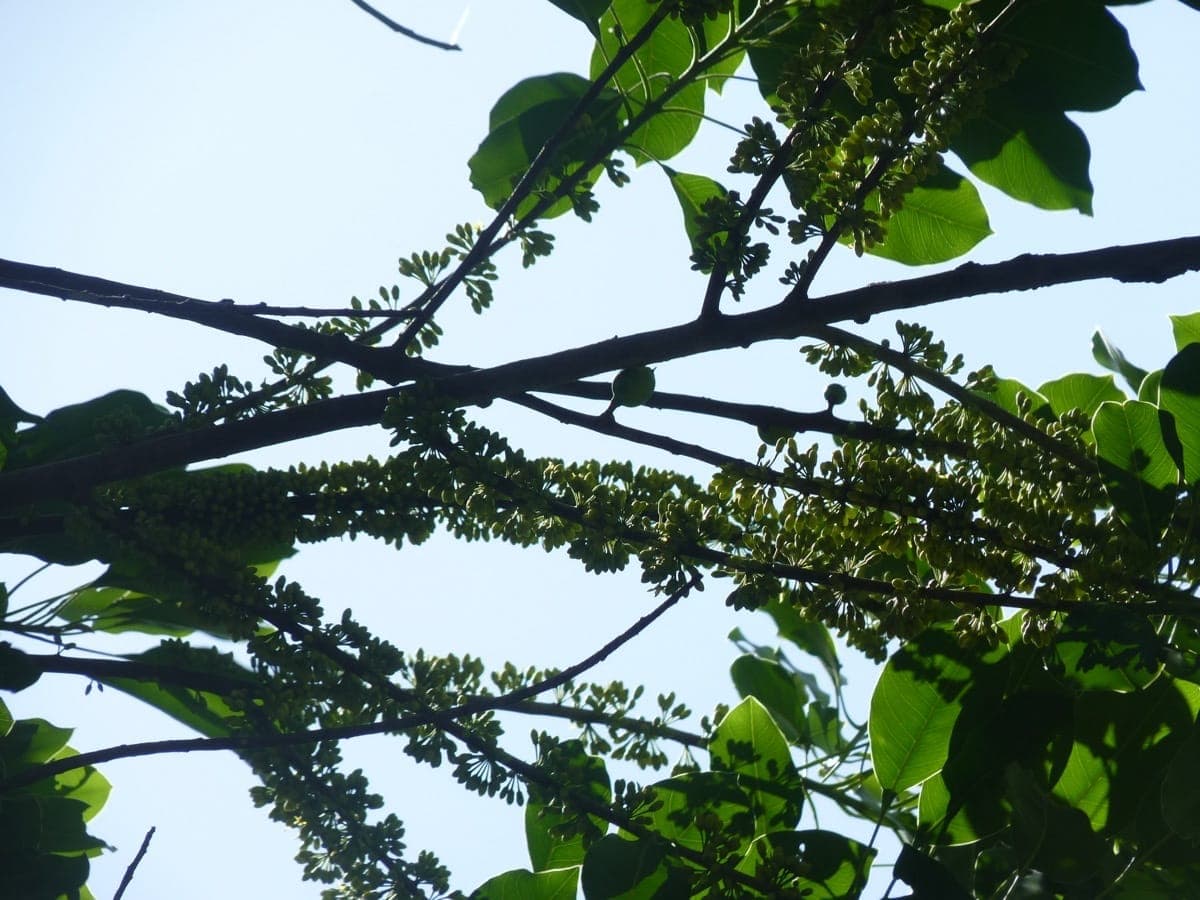
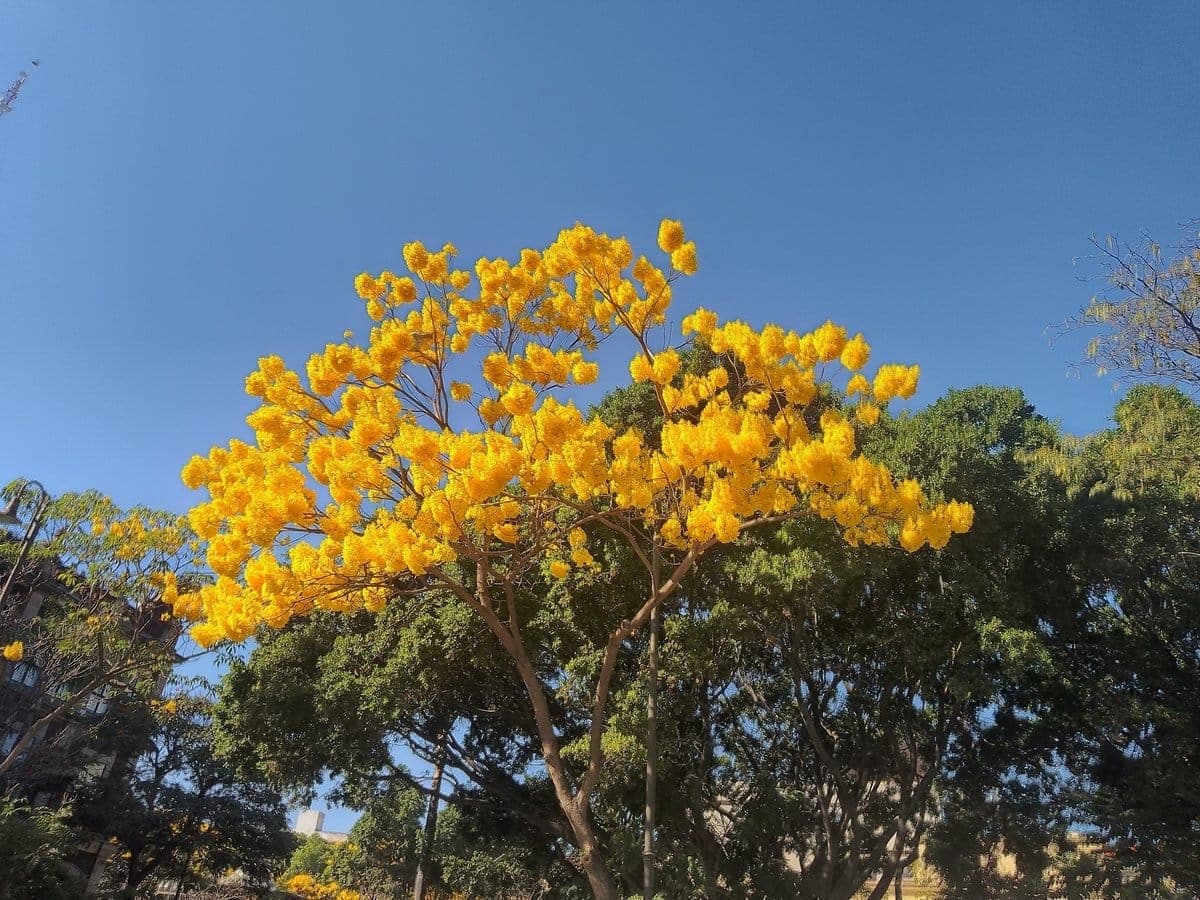
Whole tree
📷 (c) Eduardo Quintero 🌵, some rights reserved (CC BY-NC)(CC BY-NC)
View source ↗Leaves
📷 (c) Eduardo Quintero 🌵, some rights reserved (CC BY-NC)(CC BY-NC)
View source ↗Whole tree
📷 (c) dinosaurman97, some rights reserved (CC BY-NC)(CC BY-NC)
View source ↗Leaves
📷 (c) dinosaurman97, some rights reserved (CC BY-NC)(CC BY-NC)
View source ↗Whole tree
📷 (c) ellieemde, some rights reserved (CC BY-NC)(CC BY-NC)
View source ↗Photos sourced from the iNaturalist citizen science database. View all observations →↗
Taxonomy and Classification
- Crescentia: After Pietro Crescenzi, Italian botanist/agriculturalist - alata: Latin for "winged" - referring to the winged leaf stalks - Bignoniaceae: The trumpet vine family (also includes Jacaranda!) - "Jícara" comes from Nahuatl "xicalli" - the gourd vessel
Common Names
Related Species
Costa Rica has TWO Crescentia species: Crescentia alata (THIS species): - Winged leaf stalks (alata = winged) - Dry forest preference - More common in Guanacaste - Compound/trifoliate leaves Crescentia cujete: - Simple, unwinged leaves - More humid tolerant - Wider distribution - Larger fruits typically Both produce usable gourds, but C. alata is more characteristic of the dry Pacific side.
Physical Description
General Form
The Jícaro is a small, distinctive tree with a short trunk and spreading, often tortuous branches. Its open, irregular crown gives it a characteristic silhouette, especially when laden with its spherical fruits hanging from trunk and branches.
Identification Features
Bark and Trunk
- Bark color: Grayish-brown
- Texture: Rough, fissured
- Trunk: Short, often crooked
- Branches: Spreading, twisted
- Overall: Distinctive spreading form
Leaves
- Type: Compound (trifoliate or 3-parted)
- Leaf stalk: WINGED (key identifier!)
- Leaflets: Obovate, 4-10 cm
- Texture: Leathery
- Arrangement: Clustered at branch tips
- Deciduous: Drops leaves in dry season
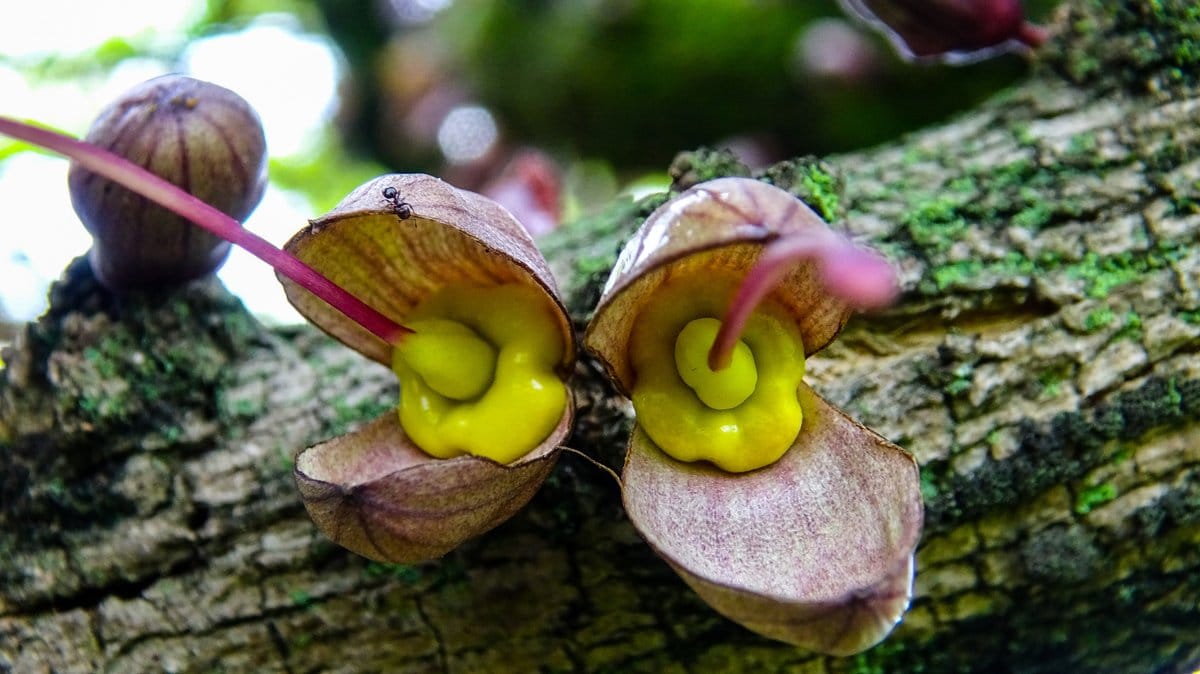
Flowers
- Location: On trunk and branches (cauliflorous!)
- Size: 5-7 cm long
- Shape: Bell-shaped, 2-lipped
- Color: Yellowish-green with purple veins
- Odor: Musky, bat-attracting
- Timing: Dry season mainly
Fruit (The Jícara!)
- Shape: Spherical to oval
- Size: 8-15 cm diameter
- Shell: Hard, woody when dry
- Color: Green, turning brown
- Contents: Pulp with many seeds
- Persistence: Long time on tree
The easiest way to confirm Crescentia alata: Look at the Leaf Stalk: - Stalk has flat "wings" running along it - Makes the stalk look flattened - Connects 3 leaflets (trifoliate) - WINGED = "alata" in the scientific name Compare to C. cujete: - C. cujete has simple, unwinged leaves - Leaves grouped but not compound - Stalks round, not winged This single feature separates the two species!
Distribution and Habitat
Global Distribution
Geographic Distribution
Distribution in Costa Rica
Habitat Preferences
The Jícara: Cultural Significance
Mesoamerica's Original Dishware
The jícara gourd has served humanity for millennia: Historical Use: - Pre-Columbian drinking vessels - Maya ceremonial cups for cacao - Storage containers - Ladles and scoops - Musical instruments (maracas) How It Works: - Hard shell when dried - Easily hollowed out - Natural bowl shape - Waterproof - Durable with care Traditional Preparation: - Harvest mature green fruit - Cut open, remove pulp/seeds - Clean interior thoroughly - Dry in sun - May be lacquered/decorated Modern Use: - Craft and souvenir items - Traditional drinking cups (rural areas) - Decorative carved art - Some ceremonial use continues The word "jícara" itself has entered Spanish as a common term for a drinking cup or bowl.
Traditional Crafts
Ecological Importance
Pollination
The Jícaro's strange flowers are perfectly designed for bats: Flower Adaptations: - Open at night - Musky, fermented odor - Pale/greenish color - Large, sturdy structure - Produced on trunk (accessible) Main Pollinators:
- Nectar-feeding bats - Especially leaf-nosed bats - Also some moths The Relationship: - Bats visit for nectar - Pollen on face transferred - Tree gets cross-pollination - Bats get food resource Conservation Implication:
- Jícaro depends on healthy bat populations - Loss of bats = less fruit production - Tree supports bat populations - Mutual dependency
Wildlife Value
Mammals
- Bats: Primary pollinators
- Horses/Cattle: Eat fallen fruit
- Wild herbivores: Consume fruit
Birds
- Parrots: May feed on seeds
- Other birds: Some fruit consumption
- Nesting: Open crown provides sites
Uses
Traditional/Craft
Traditional Medicine
The fruit pulp has been used medicinally but: Considerations: - Traditional ≠ proven safe - Some preparations may be toxic in large amounts - Pulp contains various compounds - Not recommended without traditional guidance Safe Use: - The shell is completely safe (no consumption) - Medicinal use should follow traditional protocols - Modern use is primarily for crafts, not medicine
Other Uses
Cultivation
Growing Jícaro
Identification Guide
How to Identify Jícaro
Where to See Jícaro in Costa Rica
The Jícaro is easy to spot once you know what to look for: When to Visit:
- Dry season: Trees often leafless, fruits visible - Any season: Fruits persist on tree - Flowering: Mainly dry season What to Look For: - Small spreading trees in open areas - Round green/brown fruits on trunk - Open, irregular crown - Often in pastures (left standing) Cultural Experience: - Visit craft markets for jícaras - Ask locals about traditional uses - Rural sodas may serve drinks in jícaras Photography: - The gourd-laden trunk is very photogenic - Dry season shows fruits best - Silhouette against sunset dramatic
External Resources
Community observations and photos
Nomenclature, type specimens, and taxonomic references
Global occurrence records and distribution mapping
Database of useful tropical plants
Conservation status and species assessment
References
📚 Scientific References & Further Reading
Janzen, D.H. (1983). Costa Rican Natural History. University of Chicago Press
Gentry, A.H. (1992). Bignoniaceae - Part II. Flora Neotropica Monograph 25
Zamora, N., Jiménez, Q., & Poveda, L. (2004). Árboles de Costa Rica Vol. III. INBio, Santo Domingo de Heredia
Long before plastic, before clay pots became common, before metal vessels arrived with Europeans, the peoples of Mesoamerica had their bowls and cups growing on trees. The Jícaro provided then and provides now—hard-shelled gourds that need only to be hollowed and dried to become functional vessels. The Maya sipped their sacred cacao from jícaras. Rural Costa Ricans still drink from them today. These are not relics or curiosities but living tradition, trees planted and protected because they give something useful, something beautiful, something biodegradable in an age choking on plastic. The Jícaro stands in Guanacaste's pastures, its spreading form unmistakable, its spherical fruits hanging like promises from trunk and branch. Bats pollinate the strange night-blooming flowers; cattle eat the fallen fruit and spread the seeds. It's a perfect little ecosystem of mutual benefit, and humans have been part of it for thousands of years. When you drink from a jícara, you drink from history itself, from a tradition as old as civilization in these lands.
Safety Information Disclaimer
Safety information is provided for educational purposes only. Individual reactions may vary significantly based on age, health status, amount of exposure, and individual sensitivity. Always supervise children around plants. Consult a medical professional or certified arborist for specific concerns. The Costa Rica Tree Atlas is not liable for injuries or damages resulting from interaction with trees described in this guide.
• Always supervise children around plants
• Consult medical professional if unsure
• Seek immediate medical attention if poisoning occurs
Information compiled from authoritative toxicology sources, scientific literature, and medical case reports.
Help improve this page
Know something about this tree? Share local knowledge, suggest a correction, or submit a photo to improve this guide for everyone.