Sardinillo
Tecoma stans
Quick facts
Native Region
Americas, from Arizona and Florida to Argentina
Max Height
3-10 meters (10-33 feet)
Family
Bignoniaceae
Conservation
LC — Least Concern
Uses
Safety Information
Toxicity Details
Tecoma stans contains alkaloids (tecomanine and tecostanine) primarily in the leaves, bark, and roots. These compounds have been studied for their hypoglycemic (blood-sugar-lowering) effects and are used in traditional medicine. In normal contact or accidental minor ingestion, the risk is very low. Large quantities of leaves would need to be consumed to produce adverse effects. The plant is not considered dangerous in typical landscape use.
Skin Contact Risks
No skin irritation from contact with any part of the plant. Leaves, flowers, and stems are safe to handle without protection. No reports of contact dermatitis.
Allergenic Properties
Low allergen risk. Pollen may cause mild reactions in individuals with severe sensitivities. The flowers are primarily bee-pollinated, limiting airborne pollen. Overall allergen risk is minimal.
Structural Hazards
No structural risks. This is a small tree or large shrub that does not produce heavy branches. No spines, thorns, or falling hazards.
Wildlife & Pet Risks
Safe for wildlife. Produces nectar and is highly attractive to bees, butterflies, and hummingbirds. Seeds are consumed by birds. No toxicity concerns for domestic animals at typical exposure levels.
Season
Flowering
Jan-Dec
Fruiting
Mar-Nov
How to identify
Sardinillo (Yellow Bells)
Sardinillo (Tecoma stans) is one of the most cheerful and prolific flowering plants in Costa Rica. This fast-growing native shrub or small tree produces cascading clusters of bright yellow trumpet flowers almost continuously throughout the year, earning it the common name "Yellow Bells." It is one of the easiest and most rewarding plants to grow in tropical landscapes, providing color, habitat, and traditional medicinal value.
Quick Reference
Key Information
📸 Photo Gallery
Overview
Tecoma stans, commonly known as Sardinillo in Costa Rica or Yellow Bells in English, is one of the most widespread and recognizable flowering plants in the Americas. This versatile member of the Bignoniaceae family ranges from the southwestern United States through Central America to Argentina, making it one of the most broadly distributed native species in the Western Hemisphere.
In Costa Rica, Sardinillo is ubiquitous. It grows wild along roadsides, in vacant lots, on rocky hillsides, and in forest edges from sea level to 2,000 meters elevation. It is equally at home in the hot, dry lowlands of Guanacaste and the temperate highlands of the Central Valley. This remarkable adaptability, combined with nearly year-round flowering, makes it perhaps the most versatile native ornamental plant available to Costa Rican gardeners.
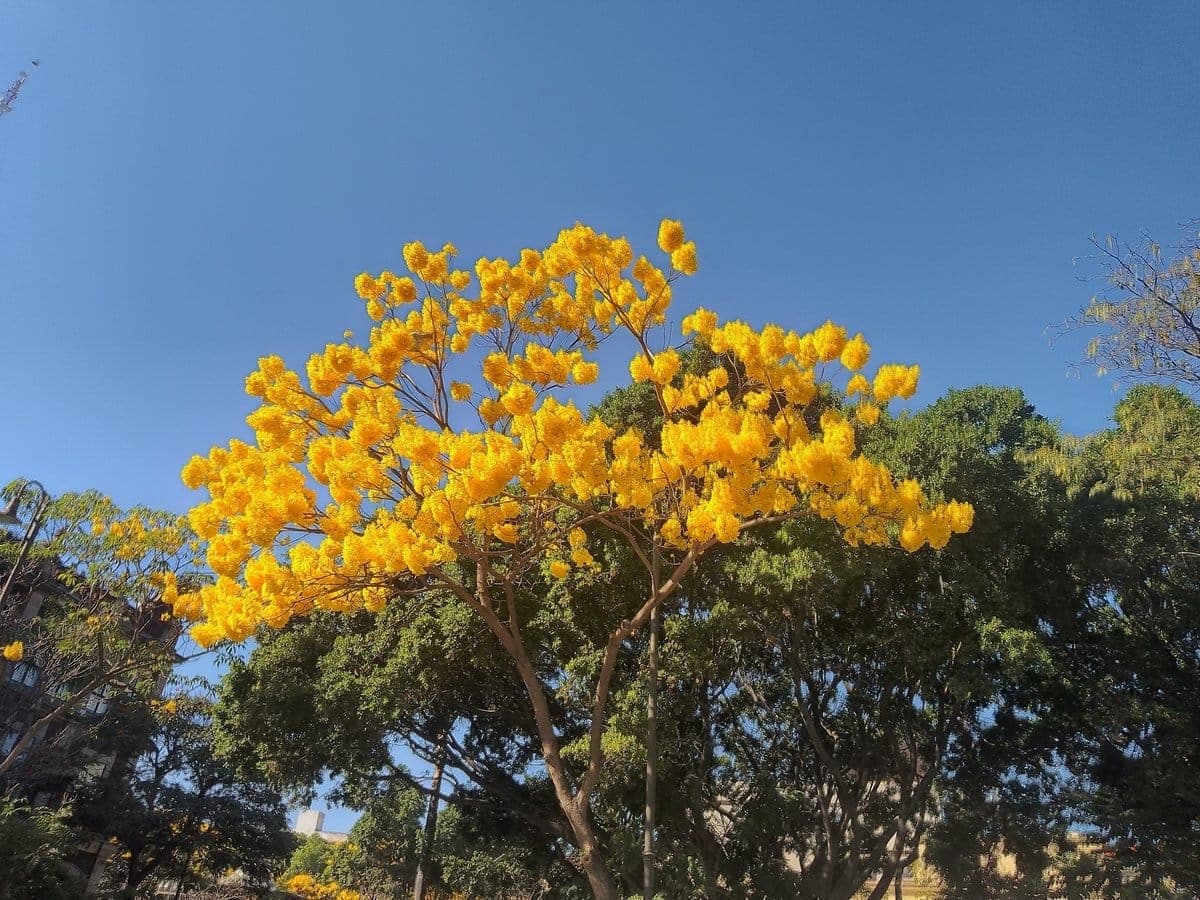
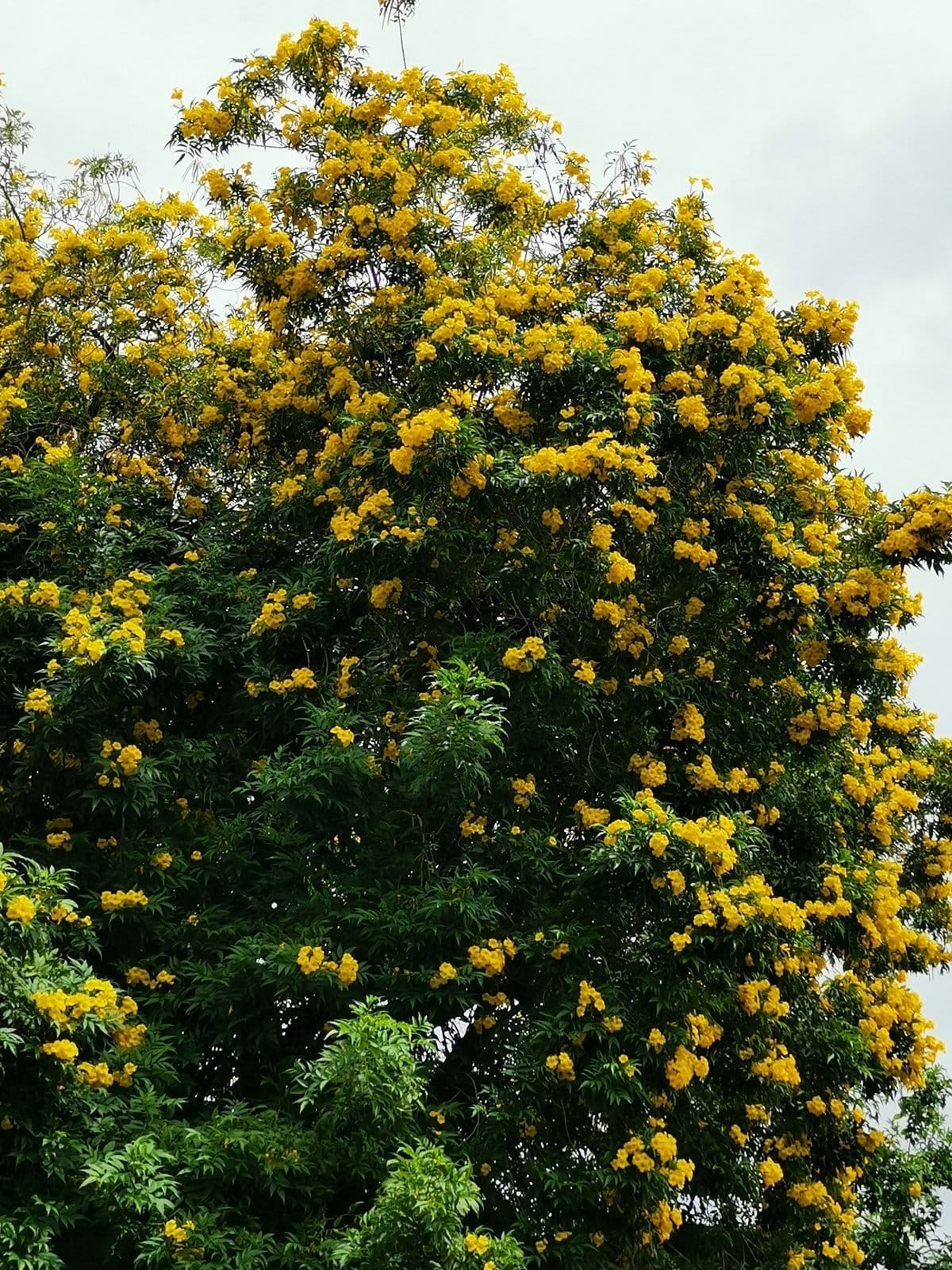
The plant's common name "Sardinillo" in Costa Rica refers to its elongated seed pods, which resemble small sardines. The flowers are bright, butter-yellow trumpets produced in terminal clusters, attracting a constant stream of bees, butterflies, and hummingbirds. Each cluster may contain 20-50 flowers that open successively over weeks, ensuring a long display period.
Beyond its ornamental value, Sardinillo has been used for centuries in traditional medicine across Latin America. The leaves and bark contain alkaloids with documented hypoglycemic properties, and research continues into their potential for diabetes management. The plant is also valued for erosion control, living fences, and as a critical pollinator resource in urban environments.
📸 Photo Gallery
Whole tree
📷 (c) Bernardo Boscoso, some rights reserved (CC BY-NC)(CC BY-NC)
View source ↗Leaves
📷 (c) Bernardo Boscoso, some rights reserved (CC BY-NC)(CC BY-NC)
View source ↗Whole tree
📷 (c) Norman Salazar Arguedas, some rights reserved (CC BY-SA)(CC BY-SA)
View source ↗Leaves
📷 (c) Bernardo Boscoso, some rights reserved (CC BY-NC)(CC BY-NC)
View source ↗Whole tree
📷 (c) baileybartich, some rights reserved (CC BY-NC)(CC BY-NC)
View source ↗Photos sourced from iNaturalist's community science database. Browse all observations →↗
Taxonomy & Classification
Common Names by Region
Taxonomic Notes
Tecoma stans was first described by Carl Linnaeus in 1753 as Bignonia stans, then transferred to the genus Tecoma by Antoine Laurent de Jussieu in 1789. The genus name Tecoma is derived from the Nahuatl (Aztec) word tecomaxochitl, meaning "clay pot flower," referring to the shape of the blooms. Two main varieties are recognized: T. stans var. stans (typical form with pinnate leaves) found throughout the range, and T. stans var. velutina (with densely pubescent leaves) found in drier habitats of Mexico and Central America. The species is the official flower of the U.S. Virgin Islands (as "Yellow Cedar") and the national flower of the Bahamas.
Physical Description
Plant Form
Sardinillo is a large, semi-evergreen shrub or small tree typically reaching 3–10 meters in height. In favorable conditions with deep soil and ample moisture, it can occasionally reach 10 meters, but most specimens remain in the 3–5 meter range, especially when pruned. The plant often develops multiple stems from the base, forming a dense, bushy crown. However, it can be trained as a single-trunk small tree with formative pruning.
Bark
The bark is thin, light gray to tan, smooth on young stems and becoming slightly fissured on older trunks. Young branches are green and somewhat angular, becoming rounded and woody with age. The inner bark is light-colored and fibrous.
Leaves
Leaves are opposite, pinnately compound with 3–13 leaflets (typically 5–7). Leaflets are lanceolate to ovate, 3–10 cm long and 1–4 cm wide, with serrate (toothed) margins and acuminate tips. The foliage is bright green, somewhat glossy, and semi-evergreen — dropping partially during severe drought but retaining most leaves through the dry season in most Costa Rican locations.
Flowers
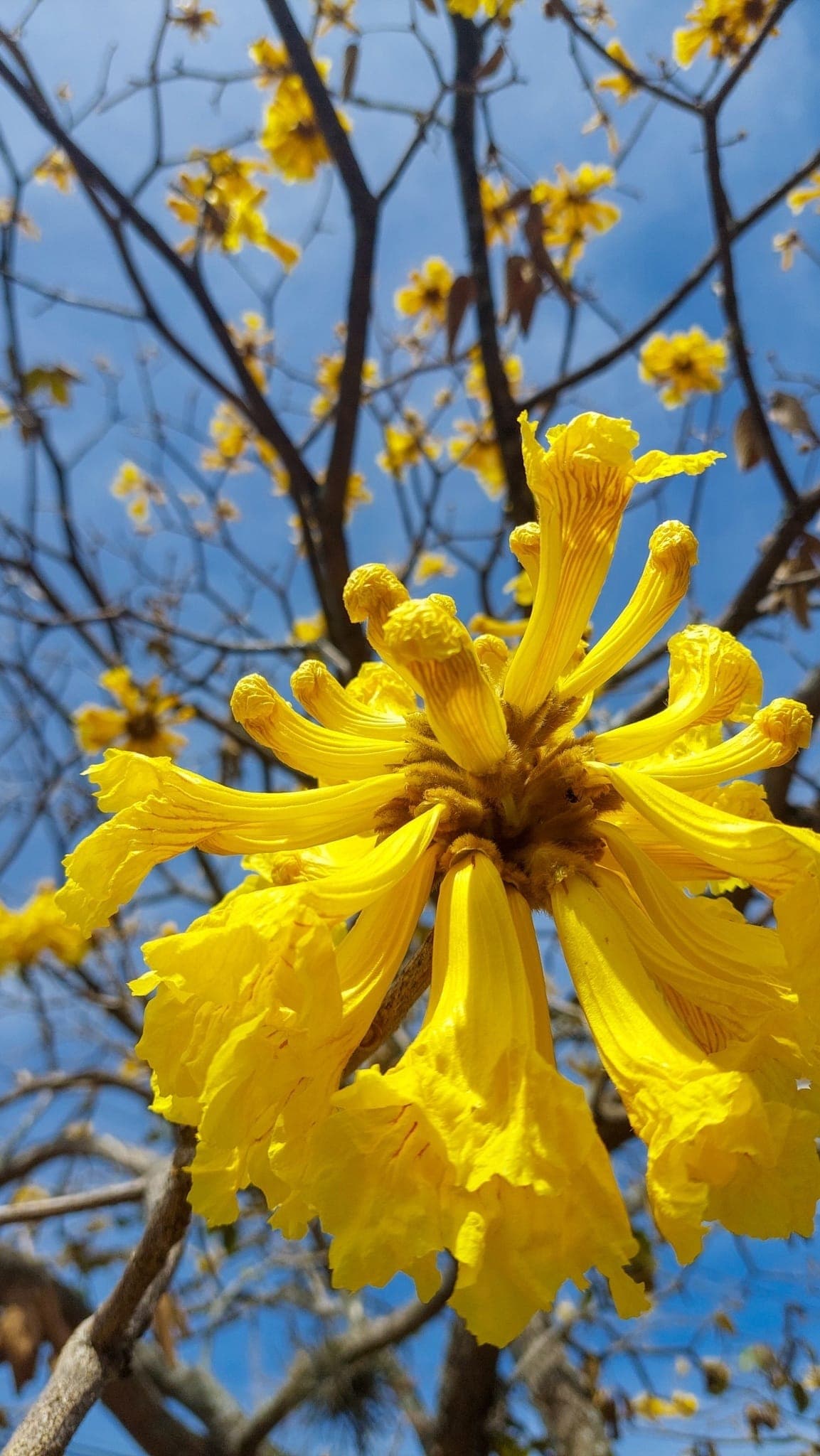
The flowers are the plant's defining feature. They are bright, butter-yellow, trumpet-shaped (campanulate), 3–5 cm long, with five fused petals forming a tube that flares into rounded, slightly ruffled lobes. Faint orange or red lines mark the throat, serving as nectar guides for pollinators. Flowers are borne in terminal racemes of 10–50 blooms, opening sequentially from the base upward over several weeks. Flowering occurs virtually year-round in Costa Rica, with peak production during the dry season (December–April) and after heavy rains.
Fruit and Seeds
The fruit is a narrow, linear capsule 10–20 cm long and 0.5–0.8 cm wide, resembling a small bean pod or sardine (hence the common name). Capsules are green when young, drying to brown and splitting to reveal numerous flat, winged seeds approximately 5 mm long with two delicate membranous wings for wind dispersal. Fruit production is prolific and nearly continuous.
Geographic Distribution
Range in Costa Rica
Sardinillo is found throughout all seven provinces of Costa Rica, making it one of the most widely distributed native plants in the country. It thrives in the hot dry forests of Guanacaste, the humid Caribbean lowlands of Limón, the temperate Central Valley, and the premontane slopes up to about 2,000 meters. It is particularly common in disturbed habitats — roadsides, pasture edges, fence lines, vacant lots, and urban areas — where its pioneer nature and drought tolerance give it a competitive advantage.
Broader Distribution
Tecoma stans has one of the broadest natural ranges of any Neotropical plant, extending from southern Arizona and Florida in the United States through Mexico, Central America, and the Caribbean to northern Argentina. It has been introduced and naturalized in tropical regions worldwide, including Africa, Asia, Australia, and the Pacific Islands, where it can occasionally become invasive.
Habitat & Ecology
Ecological Role
Sardinillo plays a disproportionately important ecological role relative to its size. As one of the few native plants that flowers nearly year-round, it provides a continuous food source for pollinators when other species are dormant or between flowering periods. This makes it a keystone species for maintaining pollinator populations in urban and agricultural landscapes.
The plant's pioneer nature means it rapidly colonizes disturbed areas, stabilizing soil and initiating ecological succession. Its root system helps prevent erosion on slopes and riverbanks. In degraded landscapes, Sardinillo often serves as a "nurse plant" that creates microhabitat conditions favorable for the establishment of larger tree species.
Wildlife Associations
Sardinillo's nearly continuous flowering cycle makes it an exceptionally valuable wildlife plant. During Costa Rica's dry season (December-April), when many native plants are dormant or not flowering, Sardinillo provides one of the few reliable nectar sources for pollinators. This makes it a true "keystone species" in urban and disturbed environments.
Studies have documented over 40 species of bees visiting Sardinillo flowers, including both native and introduced species. The flowers produce copious nectar and pollen, supporting both specialist and generalist pollinators. In agricultural landscapes, Sardinillo hedgerows adjacent to crop fields significantly increase pollination services and crop yields.
The plant's dense, multi-stemmed structure provides excellent nesting habitat for small birds. Species such as seedeaters, finches, and doves frequently nest in established Sardinillo hedges. The thorny interior branches (not spiny to touch, but densely interwoven) provide protection from predators.
Sphinx moth larvae (hornworms) occasionally feed on Sardinillo foliage but rarely cause significant damage. These larvae are important food sources for insectivorous birds and contribute to the plant's role in supporting wildlife food webs.
Ecological Adaptations
Sardinillo's extraordinary success across such diverse environments is due to several key adaptations:
- Drought tolerance: Deep taproot accessing deep soil moisture; waxy leaf cuticle reducing transpiration; ability to shed leaves during extreme drought to minimize water loss
- Fire resilience: Resprouts vigorously from protected root crowns after fire; common in fire-prone dry forests and savannas
- Prolific reproduction: Continuous seed production throughout the year; each plant produces thousands of wind-dispersed seeds annually; high germination rates ensure rapid colonization
- Soil flexibility: Mycorrhizal associations enhance nutrient uptake; thrives in nutrient-poor subsoils, compacted soils, rocky substrates, and even alkaline conditions
- Light optimization: Rapid apical growth toward light openings; efficient photosynthesis in full sun; tolerance of partial shade as juvenile
Field Recognition and Identification
Sardinillo is easily identified by the combination of:
- Flowers: Unmistakable bright golden-yellow trumpets in terminal clusters — no other commonly encountered plant in Costa Rica has this exact flower form and color
- Leaves: Opposite, pinnately compound with 5-7 serrated leaflets — unique among yellow-flowered shrubs in the region
- Fruit: Long, narrow, bean-like pods (10-20 cm) — the sardine-shaped capsules are diagnostic
- Habitat: Typically found in disturbed, sunny locations — roadsides, pasture edges, urban areas
- Seasonality: Flowers present year-round with peaks during dry season — if you see yellow trumpets blooming in the hot dry season, it's likely Sardinillo
Common Confusion Species: Although Sardinillo is quite distinctive in Costa Rica, it is sometimes confused with:
- vs. Handroanthus ochraceus (Yellow Corteza): Sardinillo has persistent foliage with smaller flowers (4-5 cm vs. 8-12 cm); Yellow Corteza is deciduous with massive flowering bursts on bare branches
- vs. Senna spectabilis (Canary Flower): Sardinillo has pinnate leaves with narrow leaflets and trumpet-shaped flowers; Senna species have broader leaflets and open yellow flowers with 5 rounded petals
- vs. Cassia fistula (Golden Shower): Sardinillo produces upright clusters with few flowers; Golden Shower has spectacular hanging clusters 30-60 cm long
- vs. Golden Shrimp Plant (Pachystachys lutea): The latter has overlapping bracts rather than true trumpet flowers
Uses & Applications
Ornamental Value
Sardinillo is one of the most popular and widely planted ornamental shrubs in tropical and subtropical gardens worldwide. Its continuous production of bright yellow flowers, ease of care, drought tolerance, and adaptability to pruning make it ideal for:
- Flowering hedges and screens
- Foundation plantings
- Specimen focal points
- Container gardening
- Highway median plantings
- Public park displays
Traditional Medicine
Tecoma stans has a long history of medicinal use throughout the Americas. The most significant traditional use is as a treatment for diabetes — indigenous peoples and rural communities have used leaf infusions to help control blood sugar levels for centuries. Scientific research has validated these uses:
- Hypoglycemic effects: Alkaloids tecomanine and tecostanine have documented blood-sugar-lowering properties
- Anti-inflammatory: Leaf extracts show anti-inflammatory activity in laboratory studies
- Antimicrobial: Various plant extracts demonstrate activity against certain bacteria and fungi
- Antioxidant: Rich in phenolic compounds with free-radical scavenging activity
Note: Medicinal use should be supervised by qualified healthcare professionals. Do not self-treat diabetes or any condition with plant preparations.
Honey Production
Beekeepers across the Americas consider Sardinillo one of the most valuable honey plants. Its year-round flowering provides constant nectar flow, supporting colony health during periods when other forage is unavailable. The honey produced is light-colored with a mild, pleasant flavor.
Sources: iNaturalist observations↗, GBIF species profile↗, Tropicos↗, Gentry (1992)↗
Cultural & Historical Significance
Sardinillo holds cultural importance across the Americas. In El Salvador, it is the national flower (known as "Flor de San Andrés"). In the U.S. Virgin Islands, it is the territorial flower (as "Yellow Cedar"). In many Central American communities, its constant golden flowers symbolize cheerfulness and resilience.
In Costa Rica, Sardinillo is a familiar and beloved sight in both rural and urban landscapes. Its presence along country roads and in rural gardens is deeply associated with the Costa Rican paisaje (landscape). Older generations recognize it as a medicinal plant — "para el azúcar" (for sugar/diabetes) — and maintain patches near kitchen gardens for occasional medicinal use.
Indigenous and Traditional Uses
Pre-Columbian peoples of Mesoamerica extensively utilized Tecoma stans. The Nahuatl name tecomaxochitl indicates its importance in Aztec culture. Uses included:
- Medicine: Leaf and bark preparations for digestive and inflammatory conditions
- Dye: Yellow dye extracted from flowers
- Construction: Stems used in light construction and tool handles
- Spiritual: Associated with sun symbolism and fertility in some traditions
Conservation Status
Sardinillo is classified as Least Concern (LC) by the IUCN. It is one of the most common and widespread native plants in the Americas, with stable or expanding populations. Its ability to colonize disturbed habitats, tolerate extreme conditions, and reproduce prolifically ensures that it faces no conservation threats. In some regions outside its native range, it is actually considered invasive and requires management.
Sources: IUCN Red List↗, GBIF species profile↗, World Flora Online↗, iNaturalist observations↗
Growing Sardinillo
Site Selection
Choose a location with full sun for best flowering performance. Sardinillo tolerates nearly any well-drained soil type, including poor, rocky, and alkaline soils. Avoid waterlogged areas. The plant is extremely heat-tolerant and drought-resistant, making it ideal for challenging sites where other ornamentals struggle.
Propagation
From Seed: Collect dry brown pods when they begin splitting. Seeds germinate readily in 7–14 days without pretreatment. Direct sow or start in containers. Self-seeding occurs freely once established.
From Cuttings: Semi-hardwood cuttings (20–30 cm) taken during the growing season root easily in 3–4 weeks. Dip in rooting hormone for best results. This method produces flowering plants more quickly than seed.
Planting and Care
- Plant at any time during the rainy season in Costa Rica
- Minimal soil preparation needed — Sardinillo thrives in poor soil
- Water regularly for first 2–3 months, then only during severe drought
- Prune after each major flush to maintain shape and encourage reblooming
- No fertilizer needed in most soils; excessive nitrogen promotes leaves over flowers
Companion Planting for Pollinator Corridors
- Flowering hedge mixes: Pair with species such as Flor de Itabo and native salvias to extend nectar availability across dry and wet seasons.
- Farm-edge companion: Use as a sunny-border shrub around citrus, mango, and home-garden plots to attract beneficial insects and improve pollination.
- Soil-recovery strips: Combine with deep-rooted pioneers in degraded soils to reduce erosion and accelerate revegetation on road cuts and pasture edges.
- Avoid: Planting under dense tree canopies; flowering and medicinal leaf production drop sharply in heavy shade.
Care Calendar
Pest and Disease Management
Sardinillo is remarkably pest-resistant. Occasional issues include:
- Whiteflies: May congregate on young growth; spray with water jets or insecticidal soap
- Leaf-cutter ants: May harvest foliage; use ant baits if damage is significant
- Aphids: Occasional infestations on tender new growth; usually controlled by natural predators
- Spider mites: Can appear during very dry, dusty conditions; increase humidity around plant
- Root rot: Only in waterlogged soils — ensure good drainage
Where to See Sardinillo
In Costa Rica
- Throughout the Central Valley: Roadside plantings, gardens, and naturalized in vacant areas
- Guanacaste Province: Common along roads and in dry forest edges
- San José: Urban parks and residential gardens
- Monteverde area: Both planted and wild specimens up to 1,800 m elevation
- Pacific coastal towns: Common in beach town landscaping
- Rural roadsides nationwide: Naturalized along most highways and country roads
Best Viewing
Sardinillo flowers year-round in Costa Rica, but peak displays occur during January–April (dry season) and immediately after the first heavy rains of the wet season. Look for the bright yellow trumpet clusters against the backdrop of dry-season landscapes.
Advanced Care Guidance
Site Design and Planting
- Establish in full sun with 3-4 m spacing for hedgerows and 5-6 m for standalone ornamental trees.
- Tolerates poor and rocky soils, but best flowering occurs in well-drained loam with moderate compost incorporation.
- Plant at rainy-season onset and keep a 50-70 cm mulch ring free from direct trunk contact.
Watering Program
- Establishment (0-4 months): Water 2-3 times weekly if rainfall is irregular.
- Development (4-18 months): Deep watering every 7-10 days during dry season.
- Mature plants: Drought tolerant, but monthly deep watering in severe drought maintains bloom cycles.
Fertilization Schedule
- Use a moderate balanced formula (12-12-12 or 15-15-15) at early and mid-rainy season.
- In highly leached soils, add micronutrient support (Mg, Zn, B) once per year.
- Avoid high nitrogen late in rainy season, which drives weak vegetative growth instead of flowering.
Pruning and Structure
- Train a clear trunk if tree form is desired, or maintain multi-stem shape for habitat hedges.
- Prune lightly after major flowering flushes to stimulate branching and repeat blooms.
- Remove dead interior twigs annually to improve light penetration and disease prevention.
Pest and Disease Management
- Watch for whiteflies, aphids, and scale on tender growth; encourage natural predators.
- Root and collar rot risk increases in poorly drained heavy clay.
- Sanitation pruning and controlled irrigation are usually sufficient for disease suppression.
Companion Planting
- Recommended companions: Flor de Itabo, Nance, native salvias, and pollinator herbs.
- Landscape role: Excellent bee and hummingbird support species for dry-forest gardens.
- Avoid nearby: Dense, highly competitive canopy trees that suppress flowering with heavy shade.
Seasonal Care Calendar (Costa Rican Conditions)
- Dry season (Dec-Apr): Selective irrigation, mulch reinforcement, and light renewal pruning.
- Early rains (May-Jul): Fertilize, plant new individuals, and monitor sap-feeding insects.
- Peak rains (Aug-Oct): Drainage checks, fungal scouting, and tip pruning only if needed.
- Transition (Nov): Shape correction and bloom planning for the next cycle.
Growth Timeline and Flowering Notes
- Rapid establishment in warm lowland and premontane sites.
- First strong flowering events usually appear within 12-24 months.
- Regular light pruning plus controlled fertility produces the most continuous ornamental display.
External Resources
References
- Gentry, A. H. (1992). Bignoniaceae: Part II (Tribe Tecomeae). Flora Neotropica Monograph 25.
- Maroni, B. C., et al. (2006). Pharmacological validation of the ethnobotanical use of Tecoma stans. Journal of Ethnopharmacology, 107(1), 105–109.
- Kameshwaran, S., et al. (2012). Pharmacological and phytochemical studies of Tecoma stans. International Journal of Phytomedicine, 4, 21–29.
- Holdridge, L. R., & Poveda, L. J. (1975). Árboles de Costa Rica. Centro Científico Tropical.
- Stevens, W. D., et al. (2001). Flora de Nicaragua. Missouri Botanical Garden Press.
Safety Information Disclaimer
Safety information is provided for educational purposes only. Individual reactions may vary significantly based on age, health status, amount of exposure, and individual sensitivity. Always supervise children around plants. Consult a medical professional or certified arborist for specific concerns. The Costa Rica Tree Atlas is not liable for injuries or damages resulting from interaction with trees described in this guide.
• Always supervise children around plants
• Consult medical professional if unsure
• Seek immediate medical attention if poisoning occurs
Information compiled from authoritative toxicology sources, scientific literature, and medical case reports.
Help improve this page
Know something about this tree? Share local knowledge, suggest a correction, or submit a photo to improve this guide for everyone.