Cortez Negro
Tabebuia impetiginosa
Quick facts
Native Region
Mexico to Argentina
Max Height
20-35 meters (65-115 feet)
Family
Bignoniaceae
Conservation
NT — Near Threatened
Uses
Safety Information
Toxicity Details
Non-toxic. All parts of the tree are safe. Tabebuia species (now Handroanthus) are generally non-toxic. Flowers, leaves, and bark do not contain dangerous compounds. Bark has been used medicinally (lapachol compound has antimicrobial properties). Safe tree overall.
Skin Contact Risks
No skin irritation from any part of the tree. Safe to handle flowers, leaves, and bark.
Allergenic Properties
Very low allergen risk. Not known to cause significant allergic reactions. Pollen production is minimal compared to wind-pollinated trees as this is bee-pollinated. Wood dust from sawing is not notably allergenic.
Wildlife & Pet Risks
Completely safe for all wildlife and pets. Flowers are visited by bees and hummingbirds. Safe for livestock.
Season
Flowering
Feb-Apr
Fruiting
Apr-Jun
How to identify
Cortez Negro (Pink Trumpet Tree)
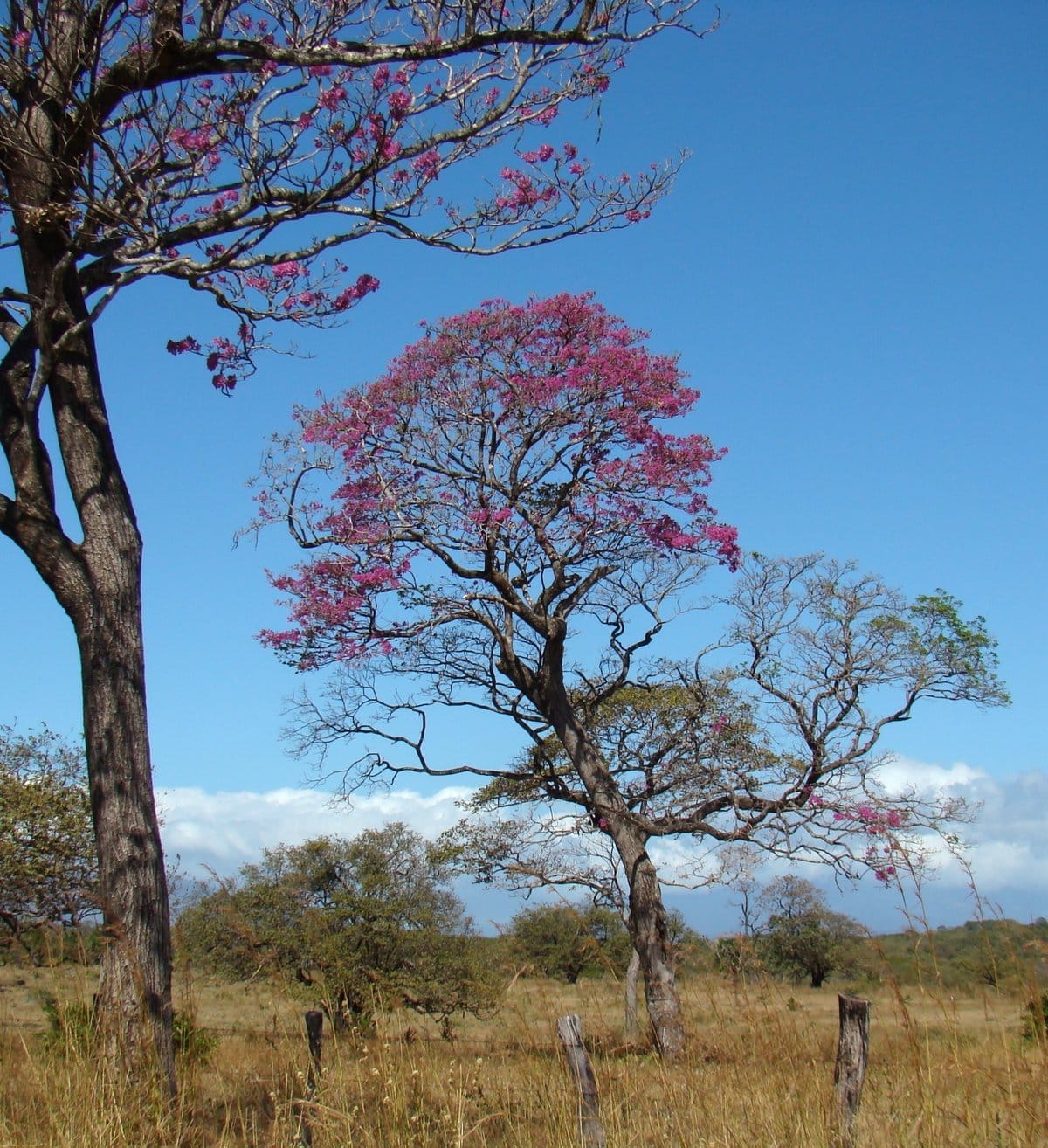
The Cortez Negro (Tabebuia impetiginosa) creates one of nature's most breathtaking spectacles when it bursts into bloom during Costa Rica's dry season. For a few magical weeks, the leafless tree becomes a stunning mass of pink-purple trumpet flowers, visible from great distances and attracting countless pollinators.
Quick Reference
iNaturalist Observations
Community-powered species data
📸 Photo Gallery
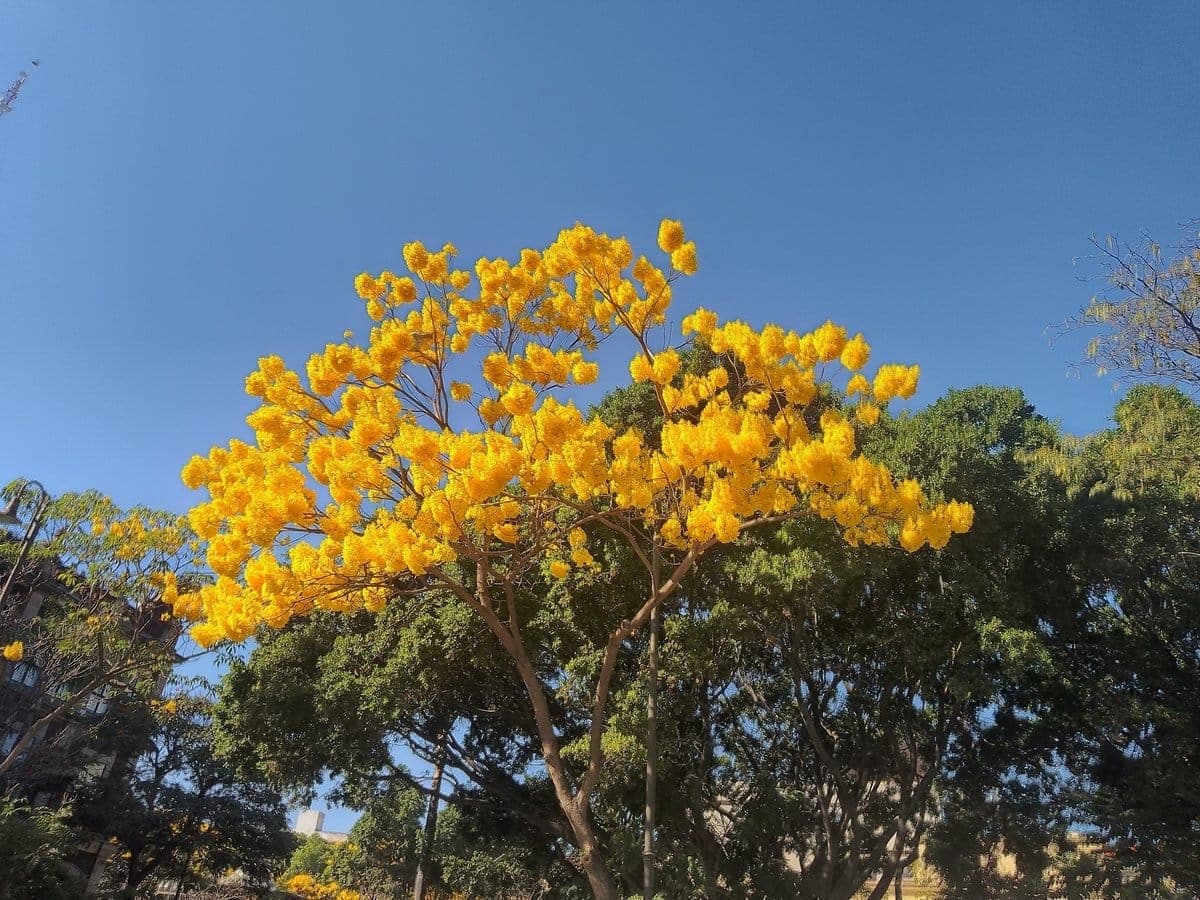
Whole tree
📷 (c) Carlos Venegas-Elizondo, some rights reserved (CC BY-NC)(CC BY-NC)
View source ↗Leaves
📷 (c) Leonardo Álvarez-Alcázar, some rights reserved (CC BY-NC)(CC BY-NC)
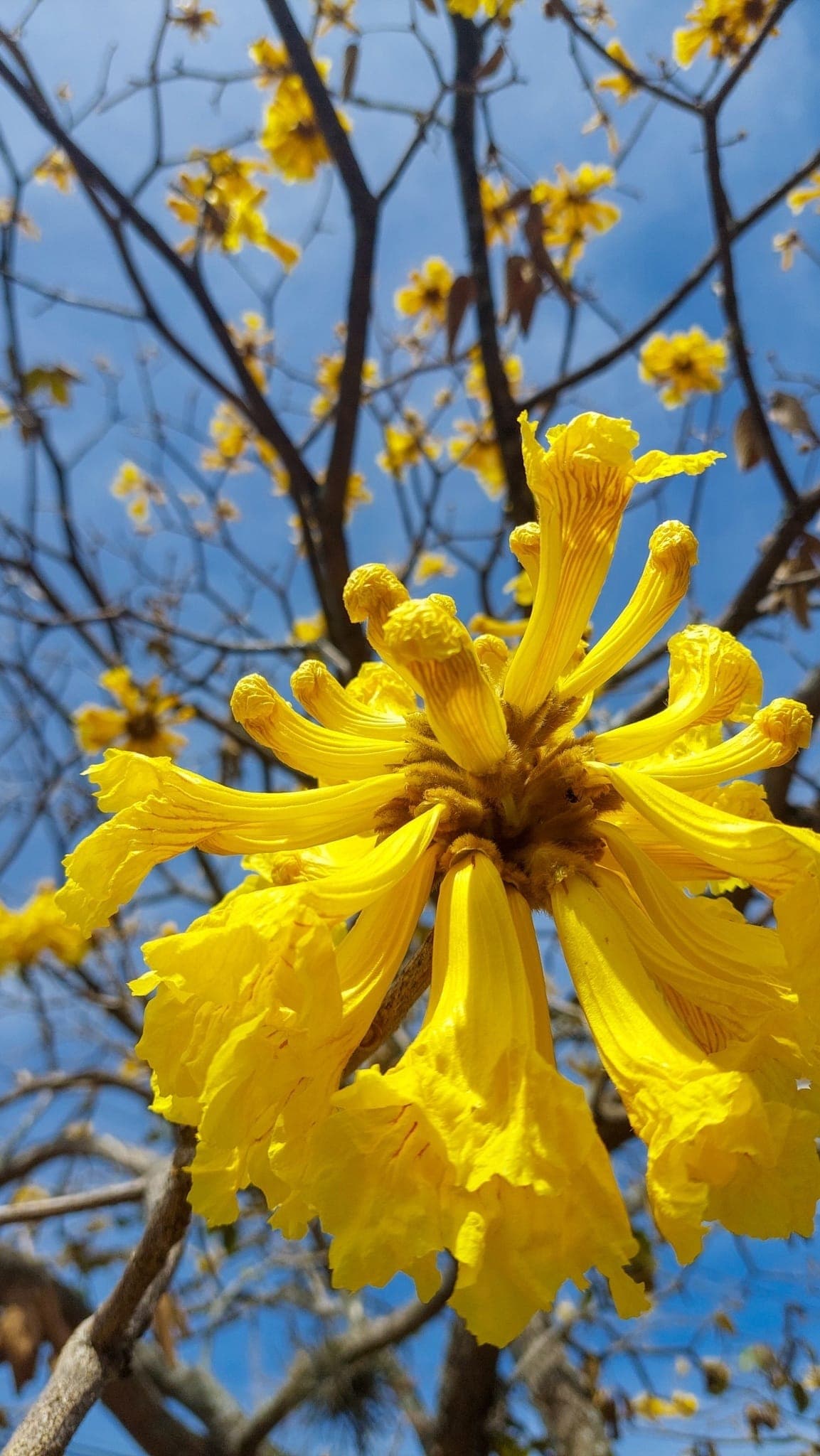
View source ↗Flowers
📷 (c) Anita Gould, some rights reserved (CC BY-NC)(CC BY-NC)
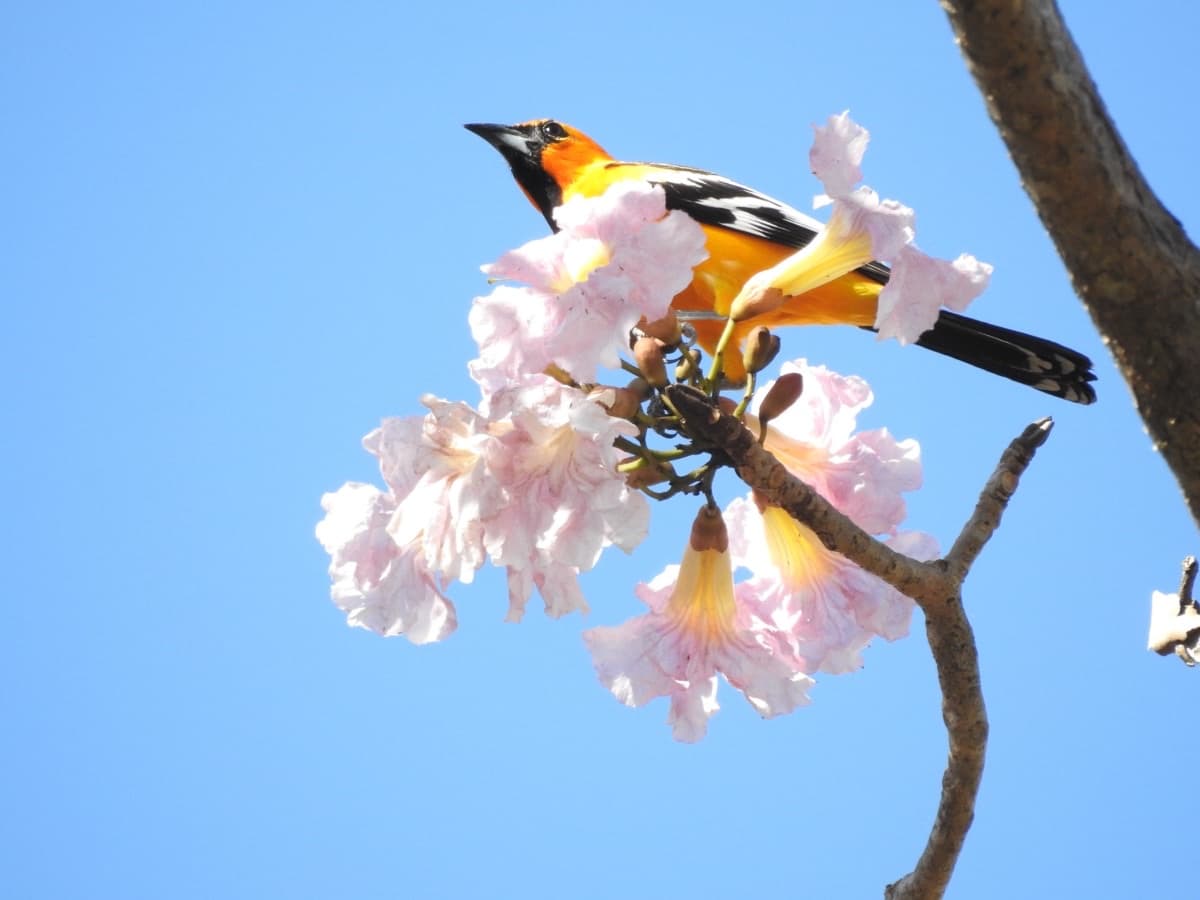
View source ↗Whole tree
📷 (c) Hubert Lagrange, some rights reserved (CC BY-NC)(CC BY-NC)
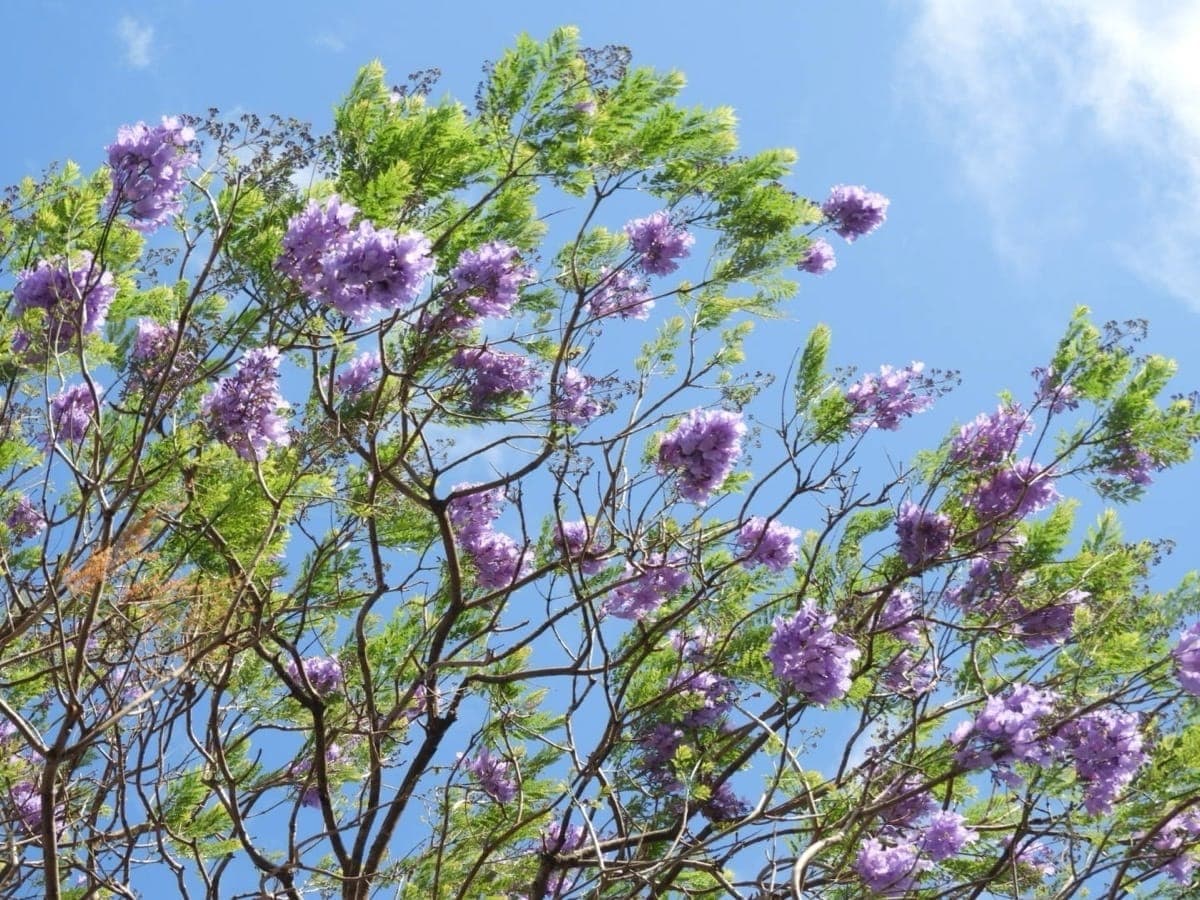
View source ↗Leaves
📷 (c) Leonardo Álvarez-Alcázar, some rights reserved (CC BY-NC)(CC BY-NC)
View source ↗Photos sourced from iNaturalist community science database. View all observations →↗
Taxonomy and Classification
- Tabebuia: From the Taino/Arawak name for these trees - impetiginosa: Latin, referring to resemblance to skin disease patterns on bark - Cortez Negro: Spanish for "Black Cortez" (dark bark) - Also known as Pink Ipê, Pink Lapacho, or Pink Trumpet Tree
Common Names
Physical Description
Overall Form
The Cortez Negro is a medium to large deciduous tree with a rounded, spreading crown. Its distinctive dark, fissured bark gives it the name "Negro" (black). The tree sheds its compound leaves during the dry season, just before producing its magnificent floral display.
Distinctive Features
Leaves
- Type: Palmately compound
- Leaflets: 5-7 per leaf
- Size: Each leaflet 6-15 cm long
- Shape: Elliptic to obovate
- Texture: Leathery
- Timing: Deciduous in dry season
Bark
- Color: Dark gray to almost black
- Texture: Deeply fissured
- Thickness: Up to 2 cm
- Feature: Very hard and durable
Flowers
- Shape: Trumpet-shaped
- Size: 5-8 cm long
- Color: Pink to magenta-purple
- Arrangement: Terminal clusters
- Timing: Dry season (Feb-Apr)
- Fragrance: Mildly sweet
Fruits
- Type: Long capsule
- Size: 20-40 cm long
- Seeds: Winged, wind-dispersed
- Maturity: April to June
Ecological Importance
Pollinator Magnet
During the dry season when few other trees are blooming, Cortez Negro provides crucial nectar and pollen resources for bees, hummingbirds, and butterflies. Its mass flowering synchronization ensures effective cross-pollination.
Pollinator Services
- Large carpenter bees: Primary pollinators
- Hummingbirds: Important visitors
- Butterflies: Nectar source
- Stingless bees: Collect pollen
Ecosystem Benefits
- Dry season food source
- Seed dispersal by wind
- Soil stabilization
- Shade for understory
Distribution in Costa Rica
Cortez Negro is found throughout Costa Rica's Pacific lowlands and Central Valley, particularly in seasonally dry forests and urban areas. Peak flowering is typically in March.
Key Observation Sites
Timber and Uses
Premium Hardwood
The wood of Cortez Negro is among the finest tropical hardwoods—extremely dense, durable, and resistant to decay. Known commercially as "Ipê," it's prized for outdoor applications where durability is essential.
Wood Properties
- Density: 0.92-1.05 g/cm³ (sinks in water)
- Hardness: Extremely hard
- Durability: Class 1 (25+ years outdoors)
- Color: Olive-brown to dark brown
- Grain: Fine, interlocked
Common Uses
- Outdoor decking
- Boardwalks and docks
- Garden furniture
- Tool handles
- Flooring
- Musical instruments
Traditional Medicine
Pau d'Arco Tradition
The bark of Cortez Negro (known as Pau d'Arco in Brazil) has been used in traditional medicine for centuries:
- Inner bark tea: Used for various ailments
- Anti-inflammatory: Traditional remedy
- Immune support: Folk medicine use
- Modern research: Contains lapachol and other compounds
Traditional medicine claims require scientific validation. Consult healthcare professionals before medicinal use.
Growing Information
Cultivation Requirements
Urban Planting
Cortez Negro is increasingly popular for urban landscapes due to:
- Spectacular seasonal display
- Drought tolerance
- Disease resistance
- Manageable size
- Deep root system (sidewalk-friendly)
Similar Species
Interesting Facts
Cultural Significance
In Costa Rica, the flowering of the Cortez Negro marks the height of the dry season and has become associated with the approach of Semana Santa (Holy Week). The spectacular pink blooms against a backdrop of brown, dormant vegetation create some of the most photographed natural scenes in the country. The tree has been increasingly planted in parks and along avenues, transforming urban areas into temporary pink wonderlands each February and March.
Brazil's National Flower
The Pink Ipê (Handroanthus impetiginosus, formerly Tabebuia impetiginosa) is the national flower of Brazil, where spectacular avenues lined with these trees create the famous "túneis rosa" (pink tunnels). Brazil also honors the yellow-flowered species as its national tree, reflecting the deep cultural significance of the Tabebuia genus throughout Latin America.
Conservation Status
IUCN Status: Least Concern (LC)
While globally secure, local populations of Cortez Negro face pressure from:
- Selective logging: Highly valued timber leads to extraction
- Habitat conversion: Dry forests being cleared for agriculture
- Slow growth: Replacement takes decades
In Costa Rica: Protected within national parks and increasingly planted in urban areas. The species benefits from its popularity as an ornamental, which helps maintain genetic diversity.
Where to See Cortez Negro
Where to Find Cortez Negro in Costa Rica
National Parks (Best Wild Specimens):
Urban Areas (Planted specimens):
For the spectacular flowering display, visit between mid-February and late March. The trees bloom when completely leafless, typically after a period of drought, creating the most dramatic visual impact. Peak bloom usually lasts only 1-2 weeks per tree.
External Resources
Community observations and photos
Global distribution data
Kew Gardens taxonomic information
Botanical nomenclature and specimens
Conservation status and species assessment
References
📚 Scientific References & Further Reading
Grose, S.O. & Olmstead, R.G. (2007). Taxonomic revisions in the polyphyletic genus Tabebuia s.l. (Bignoniaceae). Systematic Botany
Zamora, N. et al. (2004). Árboles de Costa Rica Vol. III. INBio, Santo Domingo de Heredia
Record, S.J. & Hess, R.W. (1943). Timbers of the New World. Yale University Press, New Haven
Park, B.S. et al. (2003). Selective growth-inhibiting effects of compounds from Tabebuia impetiginosa on human cancer cell lines. Phytotherapy Research
Safety Information Disclaimer
Safety information is provided for educational purposes only. Individual reactions may vary significantly based on age, health status, amount of exposure, and individual sensitivity. Always supervise children around plants. Consult a medical professional or certified arborist for specific concerns. The Costa Rica Tree Atlas is not liable for injuries or damages resulting from interaction with trees described in this guide.
• Always supervise children around plants
• Consult medical professional if unsure
• Seek immediate medical attention if poisoning occurs
Information compiled from authoritative toxicology sources, scientific literature, and medical case reports.
Help improve this page
Know something about this tree? Share local knowledge, suggest a correction, or submit a photo to improve this guide for everyone.