Granadillo
Dalbergia tucurensis
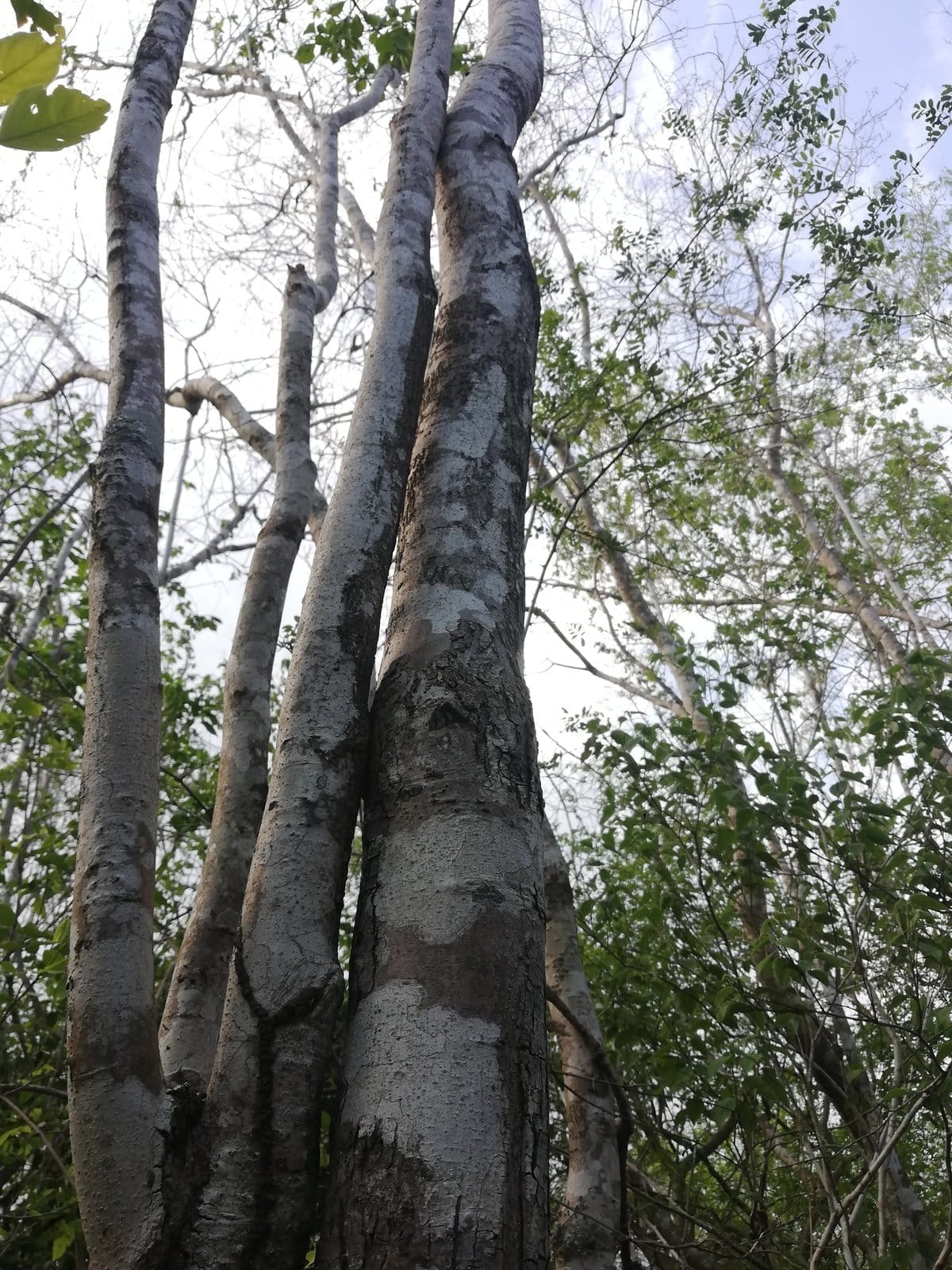
Quick facts
Native Region
Mexico to Panama
Max Height
25 m
Family
Fabaceae
Conservation
EN — Endangered
Uses
Safety Information
Toxicity Details
Dalbergia sawdust can cause respiratory sensitization with prolonged occupational exposure. The wood itself is not toxic to touch in finished form.
Skin Contact Risks
Dalbergia species sawdust is a known sensitizer that can cause contact dermatitis in woodworkers. Finished wood surfaces are safe to handle.
Allergenic Properties
Moderate allergen risk from fine sawdust during woodworking. Wear a dust mask and gloves when cutting or sanding.
Structural Hazards
No unusual structural hazards.
Wildlife & Pet Risks
No significant risks to wildlife or livestock.
Season
Flowering
Apr-Jun
Fruiting
Jul-Sep
How to identify
Granadillo (Guatemalan Rosewood)
Granadillo is currently listed as Endangered on the IUCN Red List (reassessed upward from Vulnerable as overharvesting pressure has intensified). Due to its valuable timber, distinct from but related to Cocobolo, it faces severe pressure from selective logging. It is protected under CITES Appendix II, regulating its international trade to ensure survival.
Quick reference
iNaturalist Observations
Community-powered species data
📸 Photo Gallery
Mature Tree
📷 Placeholder - community contributions welcome(CC BY-SA)
Help Document This Species: Granadillo is a newly added species requiring community photo contributions. If you have quality images of this tree (bark, leaves, flowers, wood), please contribute through our photo submission page.
Taxonomy & Classification
Dalbergia tucurensis is one of approximately 250 species in the genus Dalbergia, the true rosewoods. While all Dalbergia produce valuable hardwoods, Granadillo is particularly prized for its resonant acoustic properties, making it a preferred choice for high-end musical instruments. It shares the genus with famous species like Brazilian Rosewood (D. nigra), Indian Rosewood (D. latifolia), and the closely related Cocobolo (D. retusa).
Common Names by Region
Etymology
- Genus: Dalbergia honors Swedish botanist Nils Dahlberg (1736-1820)
- Species: tucurensis likely refers to Tucurú or a similar locality
- Common name "Granadillo": Diminutive of "granada" (pomegranate), possibly referring to the wood's reddish hues or the tree's valued status
Key Distinction from Cocobolo
Granadillo (D. tucurensis) is often confused with Cocobolo (D. retusa), but they are distinct species with important differences:
Physical Description
Overall Form
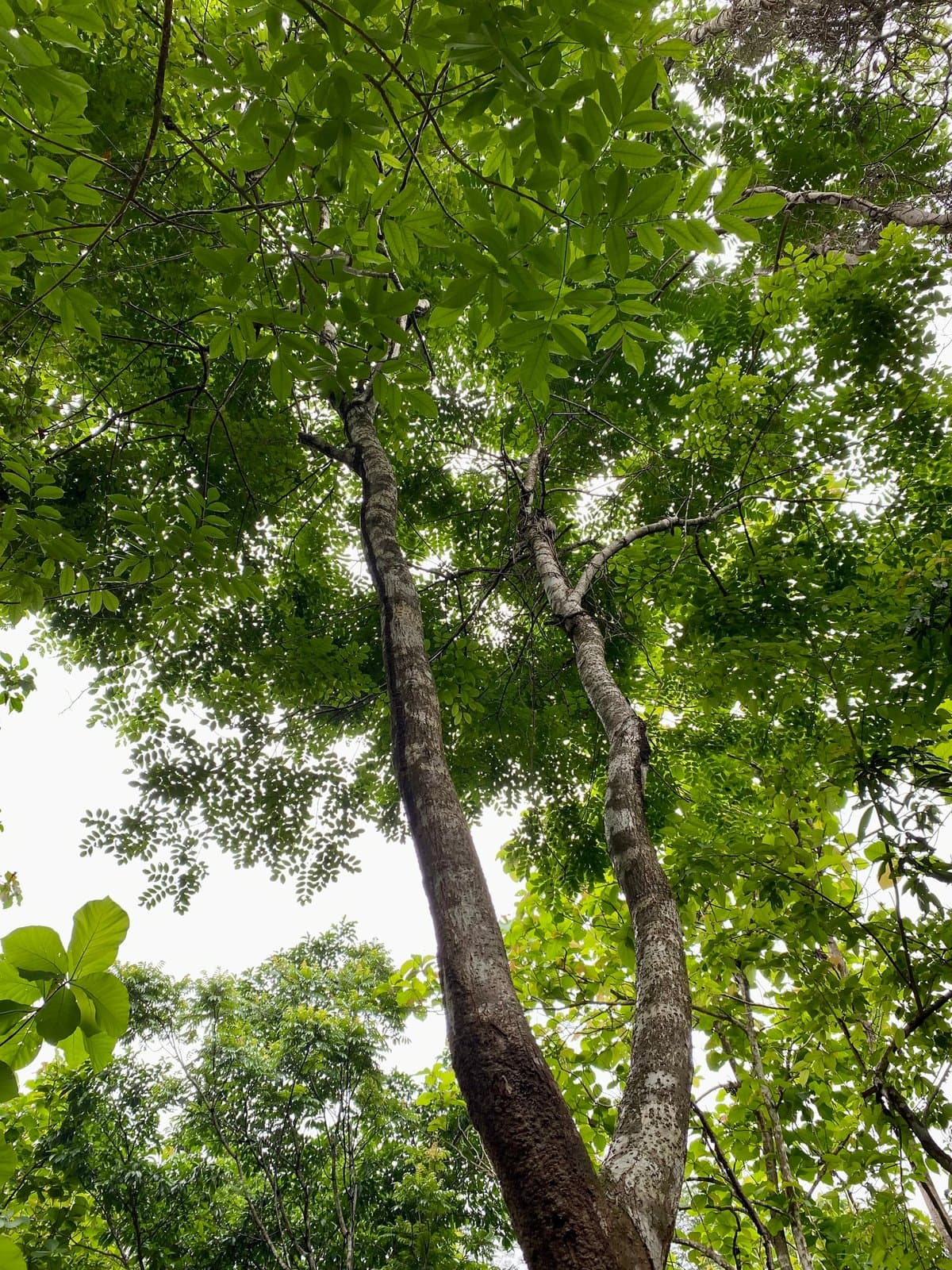
Granadillo is a medium-sized deciduous tree with a generally straight, cylindrical trunk—a valuable characteristic for timber production. Trees typically develop an open, spreading crown when growing in open conditions, but form taller, more vertical crowns in forest settings. The tree loses its leaves during the dry season, a common adaptation in its native range.
Distinctive Features
Trunk & Bark
- Trunk: Usually straight, cylindrical (better form than Cocobolo)
- Bark: Smooth to slightly fissured, greyish
- Texture: Less deeply furrowed than other Dalbergia
- Heartwood: Golden-orange to reddish-brown
- Sapwood: Pale yellow, clearly demarcated
- Grain: Straight to slightly interlocked
Leaves
- Type: Pinnately compound (imparipinnate)
- Leaflets: 9-15 per leaf
- Arrangement: Alternate on rachis
- Shape: Ovate to elliptic
- Size: Individual leaflets 2-4 cm long
- Color: Light to medium green (lighter than Cocobolo)
- Texture: Thin, slightly papery
- Deciduous: Drops leaves in dry season
Flowers
- Color: White to cream
- Size: Small, 5-8 mm across
- Arrangement: Axillary panicles
- Timing: Dry season (April-June)
- Fragrance: Lightly fragrant
- Pollinators: Bees, small insects
Fruit & Seeds
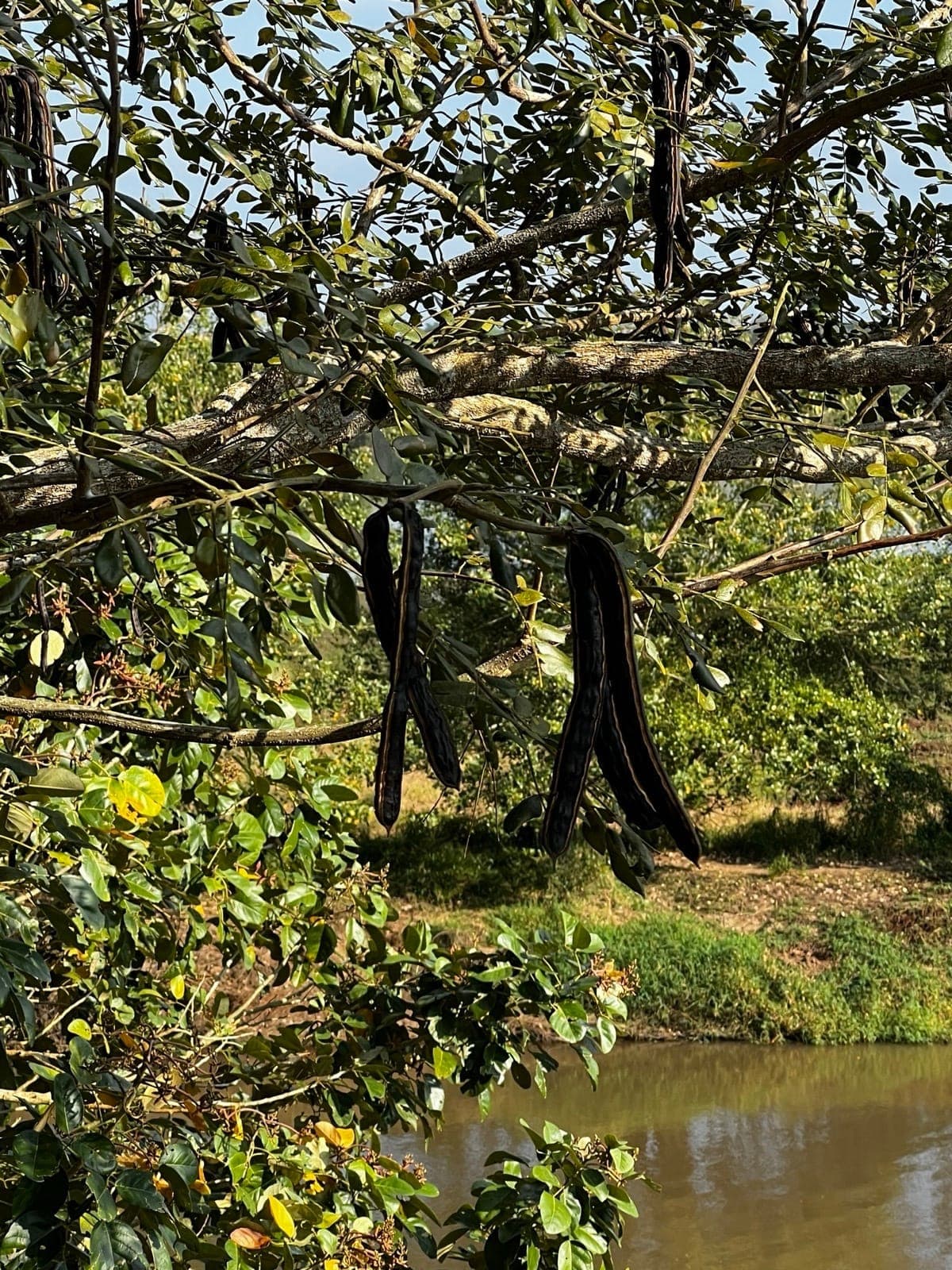
- Type: Legume (flat pod)
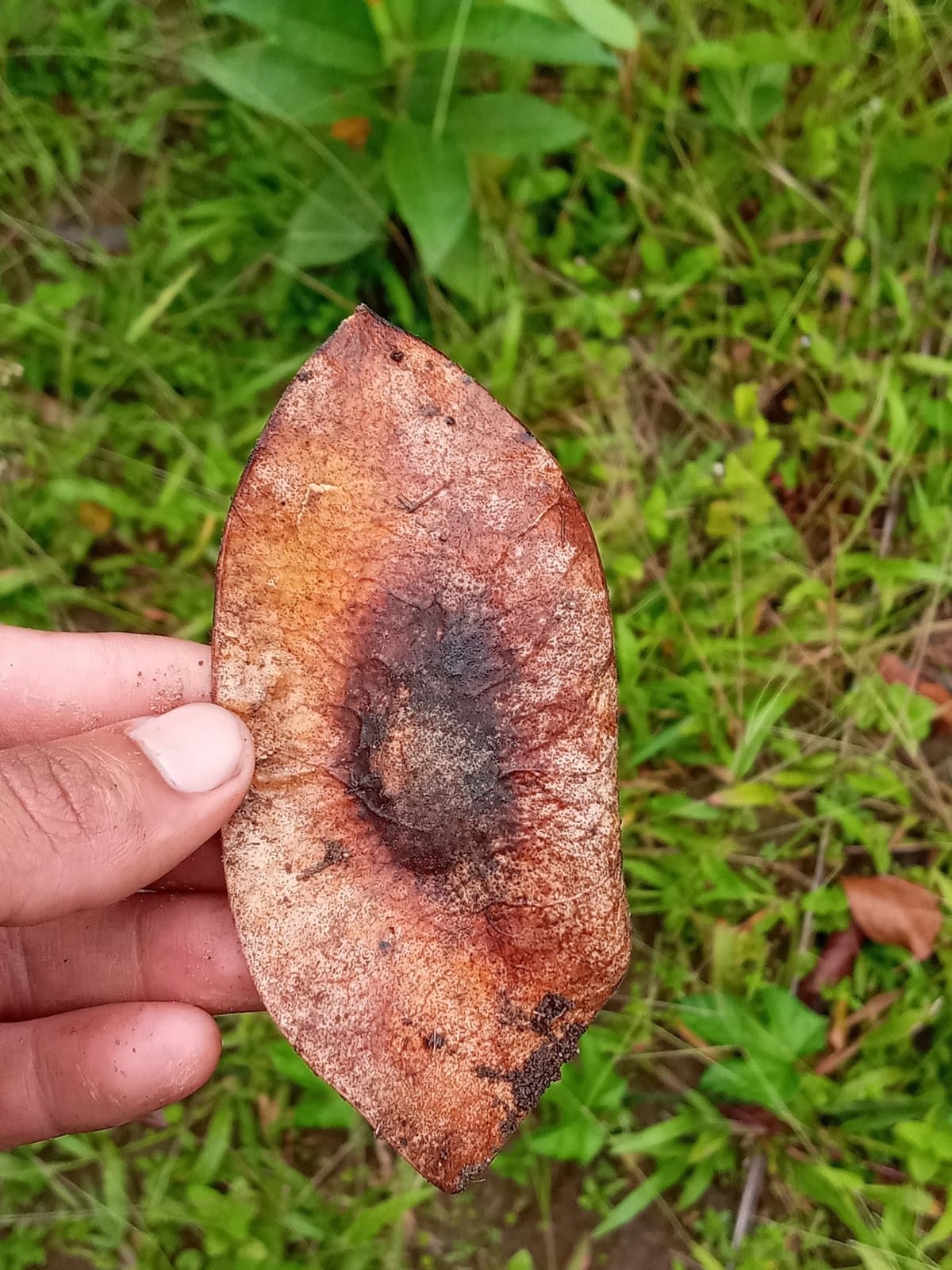
- Appearance: Paper-like samaras
- Shape: Narrow, oblong
- Length: 5-9 cm
- Width: 1.5-2.5 cm
- Seeds: 1-2 per pod
- Maturation: Dry season (July-September)
- Dispersal: Wind (samara wings aid flight)
Wood Properties
Granadillo produces one of the most valued tonewoods in the world. Its acoustic properties have made it a premium choice for musical instrument makers:
Geographic Distribution
Native Range
Geographic Distribution
Native Range
Granadillo is native to Southern Mexico through Central America to Panama, with populations documented from:
- Mexico: Chiapas, Oaxaca, Veracruz
- Guatemala: Pacific slope, Caribbean lowlands
- Belize: Central and southern regions
- Honduras: Both coasts
- Nicaragua: Pacific and Caribbean slopes
- Costa Rica: Throughout (see below)
- Panama: Western and central provinces
Distribution in Costa Rica
In Costa Rica, Granadillo has a wider elevational and ecological range than its cousin Cocobolo, making it more widespread:
Key Costa Rican Locations:
- Guanacaste: Dry forests of Santa Rosa, Palo Verde
- Puntarenas: Coastal areas, Osa Peninsula
- Alajuela: Mid-elevation transitional forests
- Heredia: Sarapiquí region, mid-elevation slopes
- San José: Central Valley margins, transitional zones
- Limón: Caribbean lowland forests
The species' ability to adapt to elevations up to 1500m (versus Cocobolo's 0-600m range) gives it access to Central Valley and intermediate forest zones, making it historically more available yet still over-harvested.
Habitat & Ecology
Forest Type & Ecological Role
Granadillo is found across multiple forest types, reflecting its ecological flexibility:
-
Tropical Dry Forests (Pacific lowlands)
- Deciduous forests of Guanacaste
- Associates with other dry forest legumes
- Loses leaves in 4-6 month dry season
-
Moist Intermediate Forests (500-1500m)
- Transitional zones between dry and wet
- Mixed forest composition
- Partially deciduous behavior
-
Secondary Growth (disturbed areas)
- Colonizes gaps and edges
- Moderate pioneer ability
- Benefits from canopy openings
Wildlife Associations
As a member of the Fabaceae (legume) family, Granadillo plays important ecological roles:
- Nitrogen Fixation: Like many legumes, fixes atmospheric nitrogen, enriching soil
- Bee Forage: Flowers provide nectar and pollen for native bees
- Seed Dispersal: Wind-dispersed samaras colonize open areas
- Insect Habitat: Foliage supports various caterpillar and beetle species
- Not Major Wildlife Food: Unlike some legumes, seeds not heavily consumed by mammals
Soil & Water Relations
Granadillo demonstrates good drought tolerance while preferring moderate moisture:
- Drought Adaptation: Deep taproot system allows dry season survival
- Drainage Critical: Will not tolerate waterlogged or poorly drained soils
- Moisture Preference: Best growth with consistent but not excessive moisture
- Dry Season: Fully deciduous, conserving water during driest months
- Soil Improvement: Nitrogen fixation benefits neighboring plants
Uses & Applications
Musical Instruments – "The Wood That Sings"
Granadillo's premier use is as a tonewood for high-quality musical instruments. Its acoustic properties have made it a sought-after alternative to increasingly rare Brazilian Rosewood:
Marimba Construction
- Traditional Use: Indigenous and modern marimba makers
- Sound Quality: Rich, resonant, clear tone
- Guatemalan Tradition: National instrument of Guatemala
- Costa Rican Makers: Used by regional craftsmen
- Tonal Range: Excellent low-frequency response
String Instruments
- Acoustic Guitars: Backs, sides, and fretboards
- Classical Guitars: Preferred for traditional Spanish guitar
- Mandolins & Ukuleles: High-end instrument backs
- Violins: Occasionally used for fittings
- Sound Character: Warm, balanced, responsive
Wind Instruments
- Clarinets: Premium wood for body and keys
- Oboes: High-end instrument construction
- Flutes: Wooden flute construction
- Tone Quality: Stable, resonant, consistent
Why Granadillo Works for Music
- Dimensional stability (doesn't warp)
- High density = good sustain and projection
- Fine, uniform grain = consistent tone
- Takes polish to high gloss
- Doesn't deaden tone with finishes
- Less allergenic than Cocobolo (safer for makers)
Fine Woodworking & Crafts
Advantages Over Cocobolo
Woodworkers often prefer Granadillo over Cocobolo for several practical reasons:
- Gluing: Bonds readily with standard woodglues (Cocobolo's oils resist adhesion)
- Finishing: Accepts finishes easily without special preparation
- Safety: Non-allergenic (Cocobolo causes severe dermatitis in many people)
- Workability: Dust is less irritating
- Color Stability: Mellows to warm brown (Cocobolo can turn black)
- Cost: Generally less expensive (though still premium)
Traditional & Medicinal Uses
While not as well-documented as some tropical legumes, Granadillo has traditional applications:
- Construction: Historically used for durable posts and beams where available
- Tool Handles: Long-lasting handles for agricultural implements
- Folk Medicine: Bark decoctions used traditionally (not scientifically validated)
- Dye: Wood chips can produce brown dyes
Sources: IUCN Red List↗, CITES Species Database↗, GBIF↗, The Wood Database↗
Conservation Status & Threats
Population trend: Decreasing
CITES Protection
Granadillo is listed under CITES Appendix II, alongside all Dalbergia species:
- International Trade: Requires permits and documentation
- Export Controls: Exporting countries must monitor and limit harvest
- Enforcement Challenges: Distinguishing Dalbergia species is difficult
- Look-alike Issue: Can be confused with Cocobolo and other rosewoods
Current Threats
-
Commercial Overexploitation
- High demand from musical instrument industry
- Premium prices incentivize illegal logging
- Slow growth (40-60+ years to maturity) limits sustainability
- Selective cutting targets largest, best trees (genetic impact)
-
Habitat Loss
- Forest conversion to agriculture (cattle, crops)
- Pacific dry forests heavily impacted
- Urban expansion in Central Valley areas
- Road construction in previously remote areas
-
Climate Change
- Longer, more severe dry seasons stress trees
- Changing rainfall patterns affect regeneration
- Increased fire frequency in dry forest habitats
- Phenology shifts may affect pollination success
Recovery Efforts
- Reforestation: Small-scale plantings for timber and conservation
- Agroforestry Integration: Trees planted in coffee and cacao systems
- Protected Areas: Present in numerous Costa Rican national parks
- Sustainable Harvest: Some certified operations (limited)
- Alternative Species: Woodworkers encouraged to use more common species
Sources: IUCN Red List↗, CITES Species Database↗, GBIF↗, INaturalist↗
Growing Granadillo / Cultivation
Propagation
Seed Collection & Preparation:
- Collect pods when they turn brown (July-September)
- Dry pods until they split naturally
- Extract seeds from pods
- Seeds can be stored in cool, dry location 6-12 months
- Before planting: Scarify seed coat OR soak 12-24 hours in hot water (not boiling)
Seedling Care:
- Plant 1-2 cm deep in well-drained potting mix
- Keep moist but not waterlogged
- Germination in 2-4 weeks
- Grow in pots 6-12 months before outplanting
- Provide light shade initially, gradually increase sun exposure
- Protect from excessive dry season stress first 2-3 years
Site Requirements
Planting & Establishment
Timing: Plant at beginning of rainy season (May-June in Pacific slope, flexible in wetter Caribbean slope)
Site Preparation:
- Clear competing vegetation
- Dig holes 40x40x40 cm
- Mix soil with compost or aged manure
- Ensure good drainage (critical)
Outplanting:
- Plant seedlings 30-60 cm tall
- Water thoroughly at planting
- Mulch around base (keep mulch off trunk)
- Stake if in windy location
First Year Care (Critical for Success):
- Water during dry season (weekly to bi-weekly)
- Weed control essential (young trees easily overtopped)
- Protect from browsing animals (fence if cattle present)
- Monitor for pests (generally resistant)
Long-term Management
Growth Rate: Moderate to slow - expect 30-50 cm height growth per year under good conditions
Timeline to Maturity:
- Height 5m: 8-12 years
- Height 15m: 25-35 years
- Timber size (40+ cm diameter): 40-60+ years
- This is a long-term investment tree
Maintenance:
- Formative pruning: Remove lower branches to develop straight trunk
- Years 1-5: Prune annually to shape
- Fertilization: Generally not needed (nitrogen-fixing)
- Thinning: If planted densely, thin to favor best-formed trees
- Patience required: This tree rewards long-term thinking
Production:
- Timber harvest at 40-60+ years minimum
- Sustainable harvest requires management plan and permits
- CITES documentation required for international trade
- Consider non-timber uses (erosion control, reforestation) as primary goals
Common Challenges:
- Slow growth tests patience - not for short-term investors
- Dry season stress in young trees - irrigation first 2-3 years critical
- Browsing by cattle/deer - protection needed
- Weed competition - aggressive control required in early years
- Long investment period - 40-60+ years to harvestable timber
Cultural & Historical Significance
Musical Tradition
Granadillo holds deep cultural significance in Central American musical traditions, particularly in Guatemala, where it is the preferred wood for the marimba, the national instrument.
Marimba Heritage:
- Indigenous Guatemalans have used Granadillo for marimbas for centuries
- The wood's resonant properties are central to marimba's distinctive sound
- Traditional knowledge of wood selection passed through generations
- Marimba orchestras are fundamental to Guatemalan cultural identity
- Similar traditions in southern Mexico (Chiapas, Oaxaca)
Indigenous Knowledge
While less documented than some other Central American timber species, Granadillo features in indigenous ethnobotany:
- Traditional Construction: Durable posts and beams when available
- Tool Making: Handles and implements from waste wood
- Forest Indicators: Presence indicates specific soil and moisture conditions
- Medicinal: Bark used in some traditional medicine systems (not scientifically validated)
Contemporary Significance
Today, Granadillo represents both craftsmanship tradition and conservation challenges:
- Luthier Community: High-end guitar and marimba makers seek sustainably sourced Granadillo
- Conservation Symbol: Its Endangered status highlights Central American forest conservation needs
- Sustainable Forestry: Small-scale efforts to grow Granadillo for future timber
- Cultural Preservation: Maintaining traditional instrument-making while protecting remaining forests
Safety & Woodworking Considerations
Health & Safety Profile
Granadillo is notably safer to work with than Cocobolo, making it preferred by many woodworkers:
Working Properties
Advantages
- Easy Gluing: Bonds well with standard woodglues
- Finishes Well: Accepts oils, lacquers, shellac readily
- Machines Cleanly: Sharp tools give clean cuts
- Takes Polish: Buffs to high natural luster
- Stable: Low movement after drying
- Non-Oily: Unlike Cocobolo, doesn't clog sandpaper
Considerations
- Hardness: Sharp tools required (dulls blades faster than softwoods)
- Dust: Fine dust - use dust collection
- Grain: Can tear if planed against grain
- Cost: Premium price limits availability
- Sourcing: Verify legal harvest and CITES compliance
- Color Variation: Heartwood/sapwood contrast requires planning
###standard Safety Precautions
While Granadillo is safer than many tropical hardwoods, follow basic woodworking safety:
- Dust Control: Use dust collection and respirator (standard practice for all tropical hardwoods)
- Eye Protection: Safety glasses when machining
- Sharp Tools: Reduces tearout and effort
- Ventilation: Good airflow in workspace
- First Time Use: Monitor for any personal sensitivity (rare but possible)
Comparison: Granadillo vs. Cocobolo Safety
For woodworkers with known Dalbergia allergies (especially Cocobolo sensitivity), Granadillo is generally well-tolerated, but individual testing on small sample is recommended.
Sources: The Wood Database↗, IUCN Red List↗, CITES Species Database↗
Where to See Granadillo in Costa Rica
Protected Areas
Granadillo can be found in numerous Costa Rican national parks and reserves, though identifying it requires familiarity with Dalbergia features:
Pacific Dry Forests:
- Santa Rosa National Park (Guanacaste) - Dry forest habitat
- Palo Verde National Park (Guanacaste) - Wetland margins
- Rincón de la Vieja National Park - Mid-elevation slopes
Pacific Humid Forests:
- Carara National Park (Puntarenas) - Transitional forest
- Corcovado National Park (Osa Peninsula) - Humid forest edges
- Manuel Antonio National Park - Coastal forest
Central Valley & Intermediate:
- Braulio Carrillo National Park - Wide elevation range
- Irazú Volcano National Park - Mid-elevation forest remnants
Caribbean Slope:
- Tortuguero National Park - Lowland humid forests
- Barra del Colorado Wildlife Refuge - Riparian zones
Identification in the Wild
Look for these field identification features:
- Tree Form: Medium-sized, relatively straight trunk (straighter than Cocobolo's typical crookedness)
- Bark: Smooth to slightly fissured, greyish (lighter than Cocobolo)
- Leaves: Compound with 9-15 leaflets, deciduous in dry season
- Elevation: Above 100m (Cocobolo typically below 600m is key differentiator)
- Habitat: Wider ecological range - dry forest up to mid-elevation moist forest
Advanced Care Guidance
Site Design and Planting
- Establish in full sun with 5-7 m spacing for mixed timber systems and canopy access.
- Prioritize deep, well-drained soils; install early erosion control on slopes before planting.
- Plant at rainy-season onset and protect seedlings from grazing, fire, and severe weed pressure.
Watering Program
- Establishment (0-10 months): Deep watering weekly during dry interruptions.
- Juvenile phase (10-36 months): Water every 10-14 days in strong dry-season stress.
- Established trees: Minimal irrigation needed except in prolonged drought events.
Fertilization Schedule
- Incorporate compost at planting plus a low-dose phosphorus starter to support root anchoring.
- Apply moderate balanced fertilizer once per rainy season in low-fertility restoration sites.
- Maintain organic mulch to buffer moisture swings and reduce nutrient losses.
Pruning and Structure
- Conduct formative pruning in years 1-5 to build a straight bole and well-spaced scaffold branches.
- Remove forks and low branches gradually to optimize future timber quality.
- Avoid severe topping; maintain steady structural corrections over multiple seasons.
Pest and Disease Management
- Monitor for stem borers, defoliators, and fungal staining on stressed juveniles.
- Rapidly remove damaged biomass and maintain clean pruning cuts.
- Diversified mixed plantings reduce concentrated pest pressure and improve resilience.
Companion Planting
- Recommended companions: Guaba, madero negro, cacao in partial-shade mosaics, and native soil-cover legumes.
- Agroforestry role: Long-cycle premium timber species integrated with medium-cycle crops and habitat trees.
- Avoid nearby: High-water-demand species in poorly drained microsites and unmanaged pasture grasses.
Seasonal Care Calendar (Costa Rican Conditions)
- Dry season (Dec-Apr): Juvenile irrigation support, firebreak checks, and structure monitoring.
- Early rains (May-Jul): Main planting and fertility support period; execute formative pruning.
- Peak rains (Aug-Oct): Disease scouting, weed control, and selective canopy adjustments.
- Transition (Nov): Mulch renewal and planning for next-year survival interventions.
Growth Timeline and Harvest Notes
- Early growth is moderate; strong form development in the first 5 years is critical for timber value.
- Mid-rotation management (years 8-20) determines stem quality and stand stability.
- Harvestable premium timber generally requires long rotations (40+ years) with regulated legal compliance.
External Resources & Further Reading
Conservation & Scientific Resources
- IUCN Red List - Dalbergia tucurensis↗ - Official conservation assessment
- CITES Species Database↗ - International trade regulations
- Global Biodiversity Information Facility (GBIF)↗ - Occurrence records and distribution data
- The Wood Database - Granadillo↗ - Wood properties and working characteristics
Research & Identification
- INaturalist - Dalbergia tucurensis↗ - Community observations
- Tropicos - Missouri Botanical Garden↗ - Taxonomic information
- Manual de Plantas de Costa Rica - Comprehensive Costa Rican flora reference
Related Species in This Atlas
- Cocobolo (Dalbergia retusa) - Critically endangered cousin
- Cristóbal (Platymiscium pinnatum) - Another valuable Central American hardwood
- Cristobalito (Platymiscium parviflorum) - Related conservation-concern species
Quick Identification Guide
Granadillo vs. Cocobolo - Quick Field Distinctions: ✓ Granadillo: Found 100-1500m elevation | Straighter trunk | Less oily wood | Non-allergenic | Golden-brown heartwood | Wider range of habitats ✓ Cocobolo: Found 0-600m elevation | Often crooked trunk | Very oily wood | Highly allergenic | Orange-black heartwood | Dry Pacific forests only If you're above 600m elevation and find a Dalbergia with compound leaves and straight trunk, it's likely Granadillo, not Cocobolo.
References
- IUCN. (2018). Dalbergia tucurensis. The IUCN Red List of Threatened Species.
- Sousa, M., & Rudd, V. E. (1993). Dalbergia (Leguminosae: Papilionoideae) in Mexico. Annals of the Missouri Botanical Garden.
- Hoadley, R. B. (2000). Understanding Wood: A Craftsman's Guide to Wood Technology. Taunton Press.
- Richter, H. G., & Dallwitz, M. J. (2000). Commercial timbers: descriptions. DELTA System.
- Zamora, N. (2010). Arboles de Costa Rica Vol. II. INBio, Costa Rica.
Contributions welcome - If you have photos or traditional knowledge about Granadillo, please contribute.
Safety Information Disclaimer
Safety information is provided for educational purposes only. Individual reactions may vary significantly based on age, health status, amount of exposure, and individual sensitivity. Always supervise children around plants. Consult a medical professional or certified arborist for specific concerns. The Costa Rica Tree Atlas is not liable for injuries or damages resulting from interaction with trees described in this guide.
• Always supervise children around plants
• Consult medical professional if unsure
• Seek immediate medical attention if poisoning occurs
Information compiled from authoritative toxicology sources, scientific literature, and medical case reports.
Help improve this page
Know something about this tree? Share local knowledge, suggest a correction, or submit a photo to improve this guide for everyone.