Cacao
Theobroma cacao
Quick facts
Native Region
Amazon Basin and Central America
Max Height
4-8 meters (13-26 feet)
Family
Malvaceae
Conservation
NE — Not Evaluated
Indigenous Names
Names used by the indigenous peoples of Costa Rica, preserving traditional ecological knowledge.
Bribri
- Tsirú— Sacred cacao, used in traditional ceremonies(Source: Bozzoli de Wille, 1979)
Cabécar
- Tsirú— Cacao tree, ceremonial drink ingredient(Source: Constenla Umaña, 1998)
Ngäbe
- Kugwe— Cacao(Source: Guionneau-Sinclair, 1987)
Uses
Safety Information
Toxicity Details
Cacao seeds and chocolate are SAFE for humans but TOXIC TO PETS. The seeds contain theobromine, a compound similar to caffeine that humans can metabolize easily but dogs, cats, and some other animals cannot. For PETS, theobromine causes vomiting, diarrhea, rapid heart rate, tremors, seizures, and can be FATAL. Darker chocolate and raw cacao are more dangerous than milk chocolate due to higher theobromine content. For HUMANS, cacao is safe and nutritious—theobromine in normal amounts provides the pleasant stimulant effect of chocolate. Overconsumption can cause caffeine-like effects (jitteriness, insomnia) but is not dangerous.
Wildlife & Pet Risks
TOXIC TO DOGS, CATS, HORSES, and most domestic animals due to theobromine. Severity depends on amount consumed and animal size. Dark chocolate and raw cacao beans are most dangerous. Wild animals that co-evolved with cacao (like agoutis, monkeys) can consume small amounts safely but domestic animals cannot.
Season
Flowering
Jan-Dec
Fruiting
Jan-Dec
How to identify
Cacao (Chocolate Tree)
The Cacao tree (Theobroma cacao)—whose scientific name literally means "food of the gods"—is the source of all chocolate. This small understory tree has been cultivated by Mesoamerican peoples for over 4,000 years, first as a ceremonial beverage and currency, now as one of the world's most valuable tropical crops.
Quick Reference
iNaturalist Observations
Community-powered species data
📸 Photo Gallery
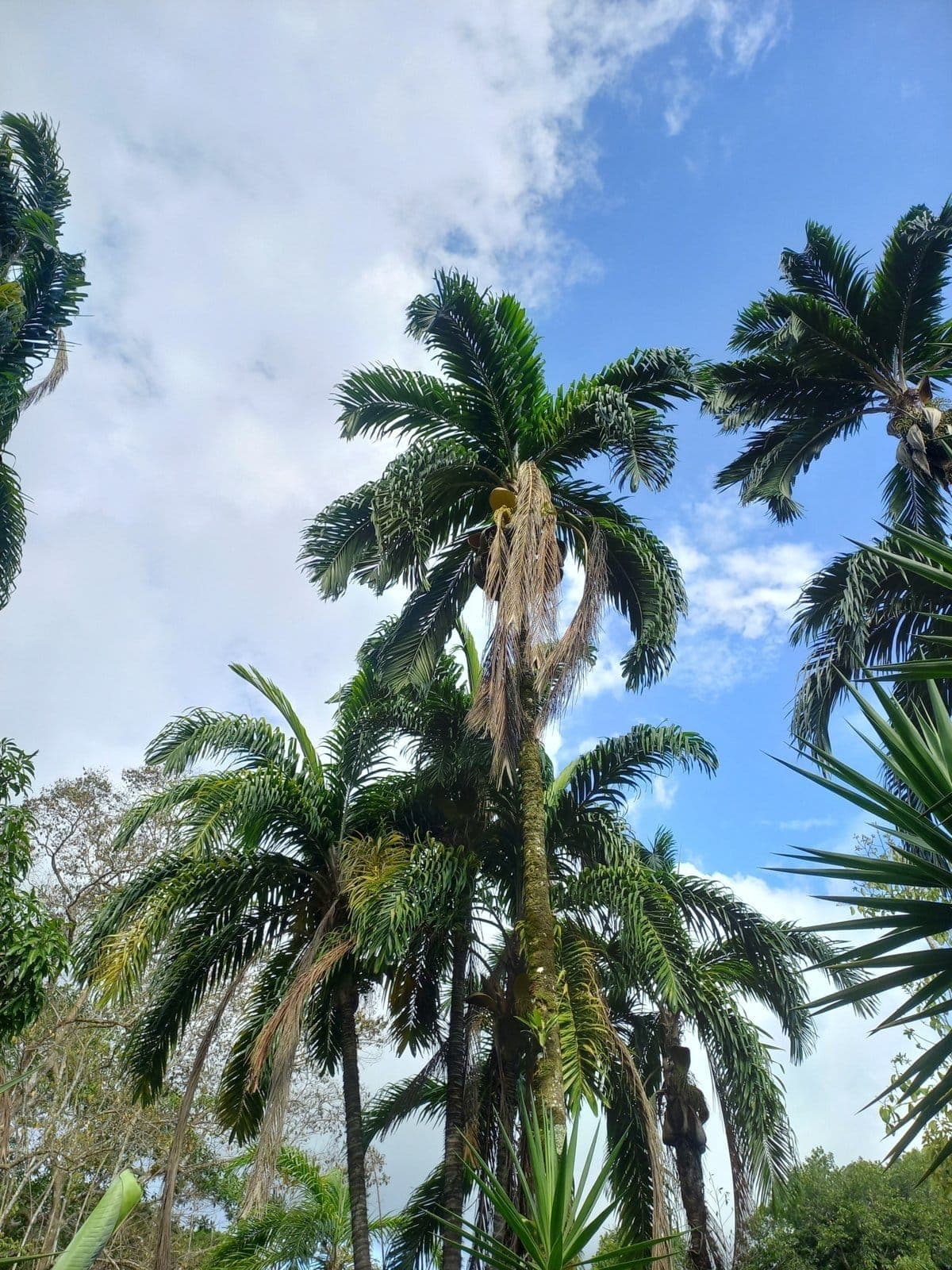
Whole tree
📷 (c) grinnin, some rights reserved (CC BY-NC)(CC BY-NC)
View source ↗Leaves
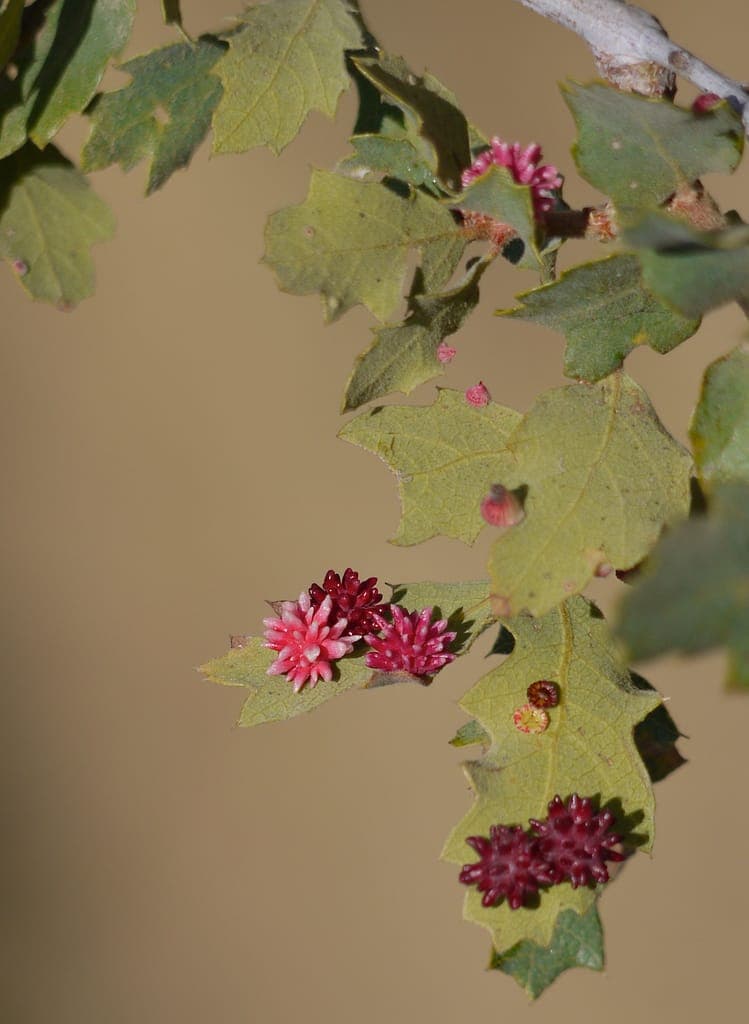
📷 (c) grinnin, some rights reserved (CC BY-NC)(CC BY-NC)
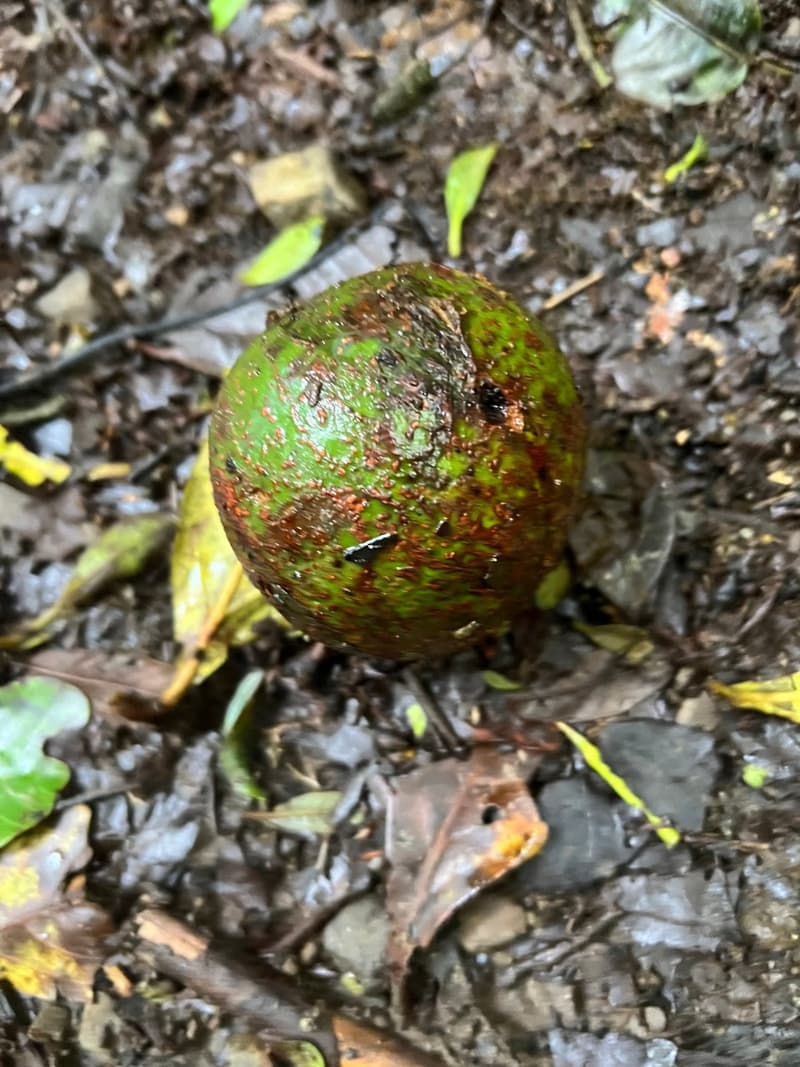
View source ↗Whole tree
📷 (c) meldoy, some rights reserved (CC BY-NC)(CC BY-NC)
View source ↗Leaves
📷 (c) grinnin, some rights reserved (CC BY-NC)(CC BY-NC)
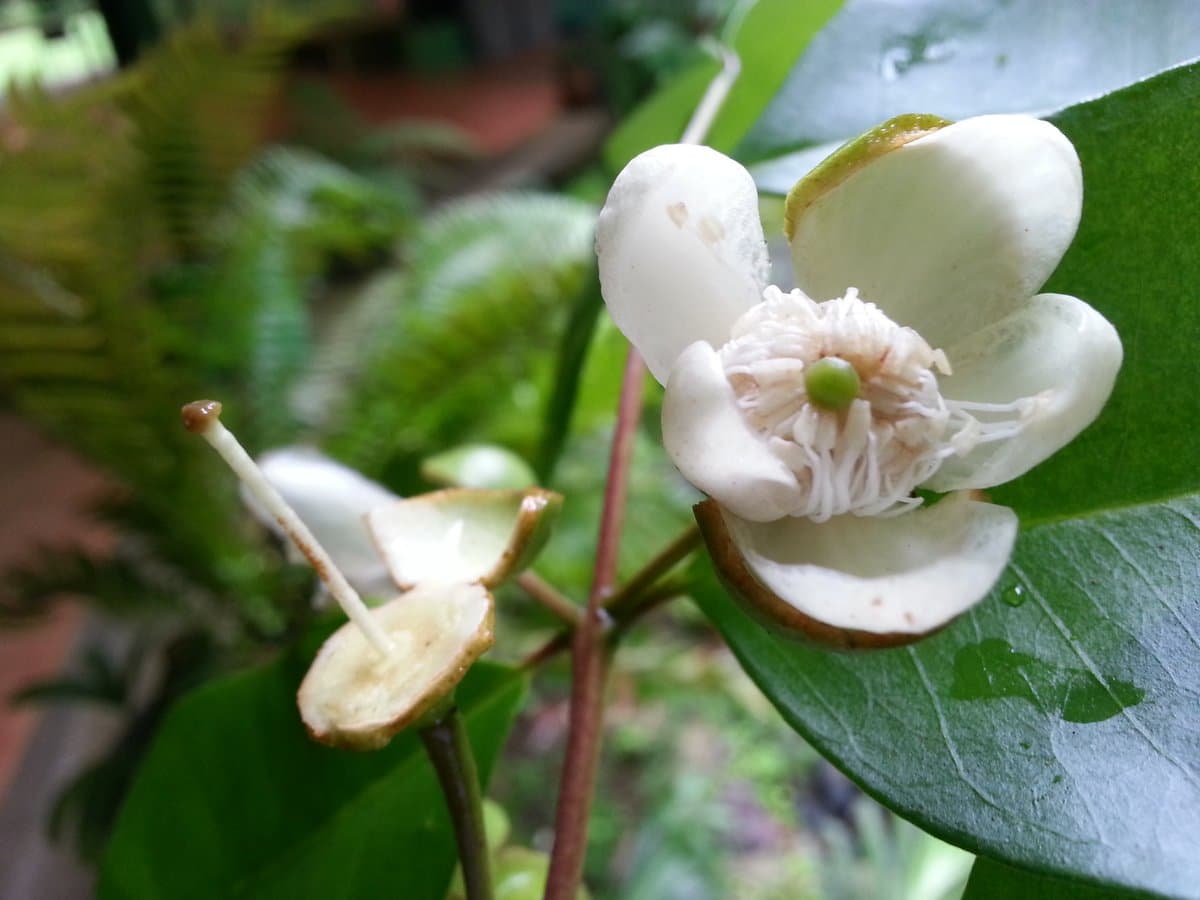
View source ↗Whole tree
📷 (c) Cole Wolf, some rights reserved (CC BY)(CC BY)
View source ↗Photos sourced from iNaturalist community science database. View all observations →↗
Taxonomy and Classification
- Theobroma: Greek for "food of the gods" (theos = god, broma = food) - cacao: From Mayan/Olmec "kakaw" - Chocolate: From Nahuatl "xocolātl" (bitter water) - The tree is in the same family as hibiscus and cotton
Common Names
Physical Description
Overall Form
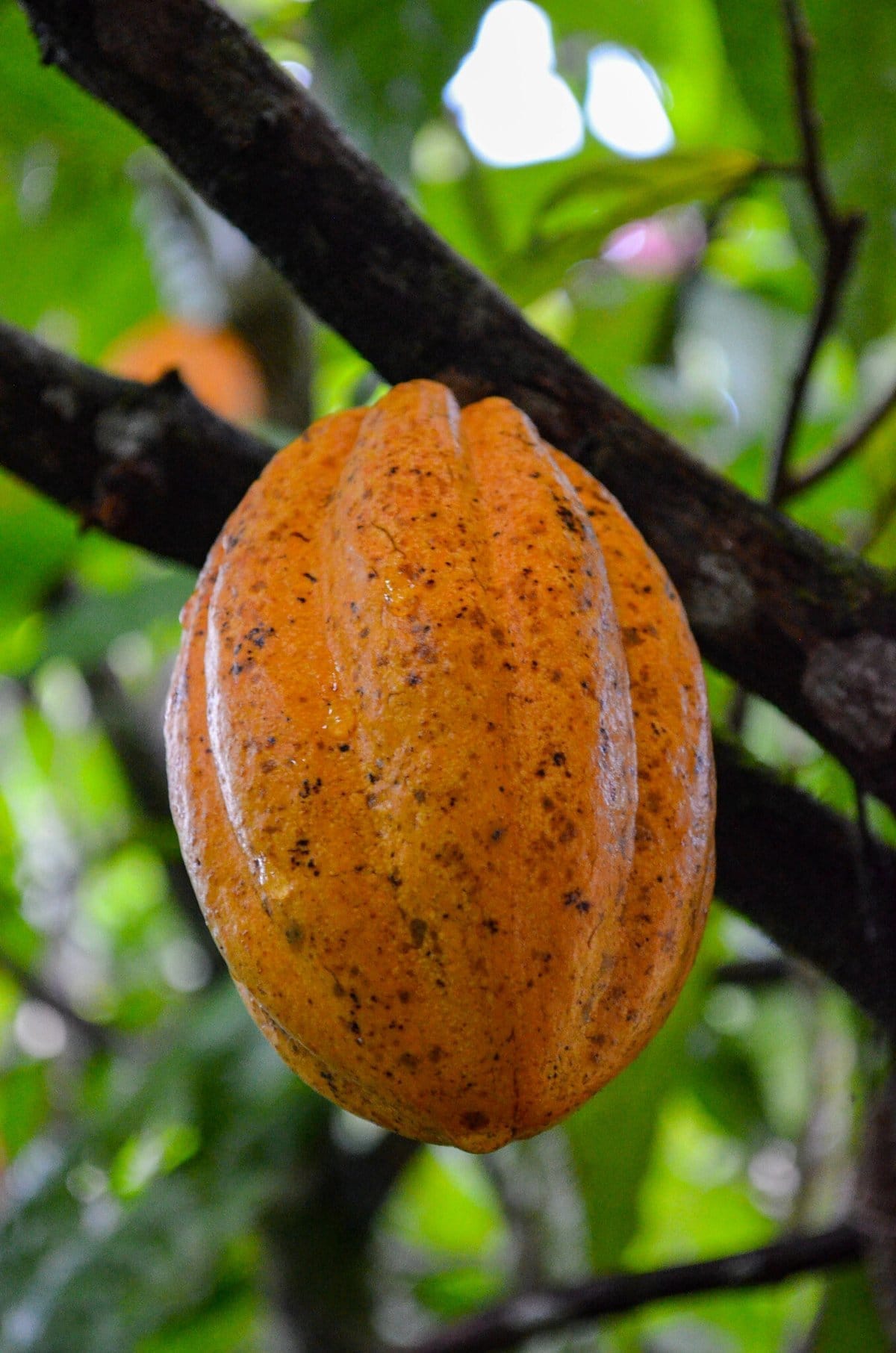
Cacao is a small, shade-loving understory tree with a distinctive growth pattern. It produces flowers and fruits directly from its trunk and main branches (cauliflory)—an unusual trait that allows pollinators and harvesters easy access. The large, colorful pods hanging from the trunk make it instantly recognizable.
Distinctive Features
Leaves
- Type: Simple, alternate
- Size: 20-40 cm long
- Shape: Oblong-elliptic
- Color: New leaves often red/bronze
- Texture: Leathery when mature
- Feature: Large, pendulous when young
Bark
- Color: Gray-brown
- Texture: Smooth to slightly rough
- Feature: Flowers emerge directly from bark
- Pattern: Cauliflorous growth
Flowers
- Size: Only 1-2 cm diameter
- Color: White, pink, or yellowish
- Location: Directly on trunk/branches
- Abundance: Thousands per tree/year
- Pollination: Tiny midges (Ceratopogonidae)
- Success Rate: Less than 5% become pods
Fruits (Pods)
- Type: Berry (botanically)
- Size: 15-35 cm long
- Color: Yellow, orange, red, or purple
- Seeds: 20-50 per pod
- Pulp: White, sweet, edible
- Maturation: 5-6 months
From Bean to Chocolate
The Transformation Process
Raw cacao beans taste nothing like chocolate—they're bitter and astringent. The familiar chocolate flavor only develops through careful fermentation, drying, roasting, and processing. This complex transformation was discovered by ancient Mesoamericans thousands of years ago.
Cacao Varieties
Main Types Grown in Costa Rica
Criollo
- Original Mesoamerican variety
- Finest flavor, most aromatic
- Low yield, disease susceptible
- "The aristocrat of cacao"
- Rare (< 5% world production)
Forastero
- Most common worldwide (80%+)
- Hardy, high-yielding
- Stronger, more bitter flavor
- Basis of most commercial chocolate
- Originally from Amazon basin
Trinitario
- Hybrid of Criollo × Forastero
- Balanced flavor and yield
- Moderately disease resistant
- Common in fine chocolate
- Originated in Trinidad (1700s)
Costa Rican Specialty
- Heritage Criollo populations
- Fine-flavor designation
- Growing organic/specialty market
- Tourism chocolate experiences
- Indigenous cultivation traditions
Cultural Significance
Ancient Mesoamerican Heritage
For the Maya and Aztecs, cacao was far more than food—it was currency, medicine, and divine offering. Cacao beans were used to pay taxes, buy goods, and even pay soldiers. The chocolate beverage was reserved for royalty and sacred ceremonies.
Historical Uses
- Currency (exchange value)
- Tribute payments to rulers
- Royal ceremonial beverage
- Marriage ceremony offerings
- Burial offerings for afterlife
- Medicinal applications
Costa Rican Indigenous Traditions
- Bribri chocolate ceremonies
- Traditional fermentation methods
- Sacred significance maintained
- Sustainable farming practices
- Cultural tourism programs
Sources: The True History of Chocolate↗, PNAS early cacao beverages evidence↗, CATIE↗
Distribution in Costa Rica
Cacao thrives in Costa Rica's Caribbean lowlands where high rainfall and humidity provide ideal growing conditions. The Talamanca region, home to Bribri communities, has the longest continuous tradition of cacao cultivation.
Key Growing Regions
Habitat & Ecology
Natural Habitat
In the wild, Theobroma cacao is an understory tree of lowland tropical rainforests. It evolved beneath the dense canopy of the Amazon basin and Central American forests, where it receives filtered light, constant humidity, and protection from wind. This evolutionary history makes cacao uniquely adapted to shaded environments—unlike most crop trees, it performs poorly in full sun.
In Costa Rica, wild or semi-wild cacao populations persist in the Caribbean lowlands, particularly in the Talamanca region where indigenous Bribri communities have maintained traditional cacao groves for centuries. These "jardines de cacao" (cacao gardens) blur the line between wild forest and managed cultivation.
Ecological Role in Agroforestry
Shade-Grown Benefits
- Maintains forest canopy structure
- Provides wildlife habitat comparable to natural forest
- Carbon storage in shade trees (2-3× more than full-sun plantations)
- Reduced erosion on slopes through understory root networks
- Natural pest control via habitat for predatory insects and birds
- Pollinator habitat preservation (leaf litter for midge breeding)
- Maintains soil moisture and microclimate stability
Wildlife in Cacao Farms
- Primates: White-faced capuchins, spider monkeys (eat pod pulp)
- Birds: 100+ species documented in shade-grown cacao, including migratory warblers
- Midges: Forcipomyia spp. (essential, exclusive pollinators)
- Bats: Fruit bats assist seed dispersal
- Agoutis: Central American agoutis cache and disperse seeds
- Lizards & frogs: Anoles, poison dart frogs use bromeliad-cacao habitat
- Beneficial insects: Parasitoid wasps, predatory beetles
The Midge-Cacao Mutualism
Cacao's tiny flowers (1-2 cm) can only be pollinated by equally tiny midges in the family Ceratopogonidae, primarily Forcipomyia species. These flies are just 1-3 mm long—small enough to navigate the complex flower structure. Research shows that fewer than 5% of cacao flowers successfully set fruit, making pollination the primary bottleneck in chocolate production worldwide.
The ceratopogonid midges that pollinate cacao breed in decomposing organic matter on the forest floor—rotting leaves, decaying fruit, and banana stems. This is why traditional agroforestry systems with abundant leaf litter produce more cacao than "clean" plantations. Studies in Costa Rica's Talamanca region have shown that maintaining leaf litter and decomposing organic matter on the ground can increase pollination rates by 60-80%.
Cacao and Biodiversity Conservation
Shade-grown cacao plantations serve as important biological corridors in fragmented tropical landscapes. In Costa Rica's Caribbean lowlands, where much of the original forest has been cleared for banana and cattle, cacao farms under diverse shade canopy provide:
- Habitat connectivity between forest fragments
- Refuge for forest-dependent species that cannot survive in open pastureland
- Stepping stones for migratory birds using the Caribbean flyway
- Genetic reservoirs for wild cacao and associated plant species
Research at CATIE (Centro Agronómico Tropical de Investigación y Enseñanza) in Turrialba has demonstrated that diversified cacao agroforests can harbor 60-70% of the bird species found in adjacent primary forest.
Growing Information
Cultivation Requirements
Propagation
From Seed: The most common method for smallholder farmers. Seeds (beans) must be planted within 1-2 weeks of extraction from the pod, as they lose viability rapidly—they have no dormancy period.
- Collection: Select ripe pods (color changes from green to yellow/orange/red depending on variety)
- Extraction: Split pods carefully, extract beans with surrounding pulp
- Planting: Sow 2-3 cm deep in nursery bags filled with rich, well-draining soil mix
- Germination: 7-14 days at 25-30°C with consistent moisture
- Viability warning: Seeds cannot be dried or stored—plant immediately
Grafting: Preferred for commercial plantations to ensure varietal consistency and disease resistance. Bud grafting or cleft grafting onto vigorous rootstock produces trees true to type that begin bearing 1-2 years earlier than seedlings.
Budding: Patch budding is widely used in Costa Rica, especially at CATIE where improved clones are distributed to farmers.
Shade Management
Cacao cannot be grown without shade. Direct sun causes leaf scorch, reduces yields, increases pest pressure, and dramatically shortens tree lifespan. Proper shade management is the single most important factor in successful cacao cultivation.
Traditional Costa Rican shade system (recommended):
- Temporary shade (Years 0-3): Plant bananas (Musa spp.) or plantains at 3 m spacing to provide 60-80% shade while permanent shade trees grow
- Medium-term shade (Years 3-10): Erythrina poeppigiana (Poró) or Gliricidia sepium (Madero Negro)—nitrogen-fixing legume trees pruned to regulate shade
- Permanent canopy (Year 10+): Timber trees like Cordia alliodora (Laurel) or Terminalia amazonia (Amarillón) at 15-20 m spacing, plus fruit trees like breadfruit or avocado
Pest and Disease Management
Growth Expectations
- Year 1: 50-80 cm growth; establish shade system, water regularly
- Years 2-3: 1-1.5 m/year; first flowers may appear (remove to strengthen tree)
- Years 3-5: First harvestable pods; 0.5-1 kg dried beans per tree
- Years 5-8: Production increasing; 1-2 kg dried beans per tree/year
- Years 8-15: Peak production; 2-3 kg dried beans per tree/year with good management
- Years 15-30+: Sustained production with declining vigor; consider renovation or replanting
Companion Planting for Cacao
Cacao evolved as an understory tree in complex rainforest ecosystems. Traditional Costa Rican cacao farmers replicate this by creating multi-layered agroforests with complementary species—a practice that enhances biodiversity, soil health, and long-term productivity.
Essential Shade Trees (required for cacao survival):
Temporary/Nursery Shade (Years 0-3):
- Musa spp. (Banana/Plantain) - Rapid establishment, edible fruit, 3m spacing
- Heliconia spp. - Ornamental, attracts pollinators
- Large-leaved Xanthosoma (Taro relatives) - Ground-layer shade
Medium-Term Nitrogen-Fixing Shade (Years 3-15):
- Erythrina poeppigiana (Poró) - Traditional choice, excellent pruning response
- Gliricidia sepium (Madero Negro) - Harder wood, living fence integration
- Inga spp. (Guaba/Ice cream bean) - Edible pods, high organic matter production
- All provide green manure when pruned, eliminate fertilizer need
Permanent Canopy Trees (Year 10+):
- Cordia alliodora (Laurel) - Premium timber value, light filtered shade
- Terminalia amazonia (Amarillón) - Valuable timber, minimal branch loss
- Dipteryx panamensis (Almendro) - Endangered timber, wildlife food source
- Persea americana (Avocado) - Fruit production + shade
- Brosimum alicastrum (Ojoche/Ramon) - Wildlife tree, edible seeds
- Artocarpus altilis (Breadfruit) - Food security, consistent shade
Compatible Understory Crops:
- Xanthosoma and Colocasia (Dasheen, Malanga) - Edible roots, shade-tolerant
- Vanilla planifolia (Vanilla) - High-value spice, grows on cacao trunks
- Ginger (Zingiber officinale) and Turmeric (Curcuma longa) - Medicinal crops, compatible moisture needs
- Piper auritum (Hoja santa) - Culinary herb, aromatic pest deterrent
- Shade coffee (Coffea arabica) - Compatible in 60-70% shade zones
Plants to Avoid:
- Fast-growing invasive species that create excessive shade (>80%)
- Allelopathic species (walnut family)
- Host plants for cocoa pests and diseases
- Species with aggressive surface roots competing with cacao
- Trees prone to branch drop (hazard to cacao canopy)
Traditional Bribri Polyculture System (recommended): Indigenous cacao gardens (kákaw in Bribri language) contain 40-60 plant species including:
- 3-4 canopy layers providing 50-70% shade
- Medicinal plants interspersed throughout
- Timber trees for future income
- Fruit trees for food security
- Sacred plants for ceremonial use
This system mimics natural forest, requires minimal inputs, and has sustained production for generations.
Seasonal Care Calendar
December-February (Dry Season):
- Flowering peak - Maintain consistent moisture despite reduced rainfall
- Supplemental irrigation critical if dry period exceeds 3 weeks
- Monitor trees closely for water stress (leaf wilting indicates emergency)
- Light mulching around base (10-15cm organic matter) retains soil moisture
- Scout for thrips and mirids (more active in dry season)
- Perform major pruning of shade trees to regulate light (aim for 50-60% shade)
- Remove diseased wood, dead branches, and witches' broom infections
March-April (Early Rainy Season Transition):
- Reduce irrigation as rains begin
- Peak pod development season
- Apply balanced organic fertilizer (compost, aged manure) if not using nitrogen-fixing shade
- Monitor drainage as rain increases (cacao roots susceptible to waterlogging)
- Begin intensive black pod disease monitoring (Phytophthora thrives in wet conditions)
- Harvest ripe pods twice weekly (prevents overripening and pest colonization)
- Scout for frosty pod rot (white fungal growth on developing pods)
May-August (Peak Rainy Season):
- CRITICAL DISEASE PERIOD - Black pod, frosty pod, and monilia thrive
- Harvest mature pods every 3-5 days minimum (reduces disease spread)
- Remove and bury/burn all diseased pods immediately (sanitation is primary control)
- Improve air circulation by pruning dense canopy areas
- Thin excessive shade if exceeding 70% (promotes air movement, reduces humidity)
- Apply copper-based fungicide if disease pressure is severe
- Monitor for pod borer entry holes
- Ensure good drainage around tree bases (no standing water)
- Clear debris from ground to reduce disease inoculum
September-November (Late Rainy/Transition to Dry):
- Continue frequent harvesting (still disease risk)
- Second major harvest period for many Costa Rican regions
- Repair or improve drainage systems before next rainy season
- Clean up fallen leaves and pod husks (disease control)
- Scout and remove witches' broom infections (prune 30cm below infection)
- Evaluate shade tree structure - plan January-February pruning
- Final organic fertilizer application if needed
- Consider trunk protection (copper paste) on susceptible varieties
- Prepare for reduced watering regime as dry season approaches
Where to See This Tree
Costa Rica offers world-class cacao farm tours combining education, tasting, and cultural immersion. The Caribbean lowlands are the heartland, but accessible options exist in several regions.
- Bribri Indigenous Territory, Talamanca — The most authentic cacao experience in Costa Rica. Bribri families offer tours of traditional cacao gardens with centuries of heritage. Ceremonial chocolate preparation included.
- Caribeans Chocolate, Playa Cocles — Popular farm-to-bar tour near Puerto Viejo. See the complete process from tree to chocolate bar.
- Tirimbina Biological Reserve, Sarapiquí — Excellent chocolate tour in a protected rainforest setting. Great for birdwatching combined with cacao education.
- La Anita Rainforest Ranch, Drake Bay — Organic cacao plantation in the Osa Peninsula region. Tours include wildlife spotting.
- CATIE, Turrialba — The world's most important cacao gene bank with 1,100+ accessions. Academic tours available showing the genetic diversity of cacao.
- Finca La Isla, Puerto Viejo — Botanical garden and organic farm with diverse cacao varieties among tropical fruit trees.
- Sibu Chocolate, Heredia — Artisan chocolate maker offering bean-to-bar workshops and tastings.
Conservation Status
Theobroma cacao is classified as Least Concern (LC) by the IUCN due to its extensive cultivation throughout the tropics. However, wild populations face significant threats, and the genetic diversity essential for the future of chocolate is at risk.
Wild vs. Cultivated Populations
While cultivated cacao is widespread across tropical nations, truly wild Theobroma cacao populations are increasingly rare. The species' center of origin in the upper Amazon basin faces ongoing deforestation, and many wild genetic lineages have never been collected or characterized.
Threats to Cacao
- Genetic erosion: Most commercial cacao derives from a very narrow genetic base. The loss of wild populations reduces the gene pool needed for disease resistance and climate adaptation.
- Climate change: Rising temperatures and changing rainfall patterns threaten cacao-growing regions. Models predict that many current growing areas will become unsuitable by 2050.
- Disease pressure: Frosty pod rot, black pod, and witches' broom cause 30-40% annual crop losses globally. New strains continue to evolve.
- Deforestation: Conversion of shade-grown cacao to full-sun monoculture or cattle pasture eliminates biodiversity benefits.
- Economic pressures: Low commodity prices push farmers to abandon cacao for more profitable crops.
Conservation Efforts
- CATIE Gene Bank (Turrialba, Costa Rica): Maintains the world's largest living cacao collection with 1,100+ accessions from across the Americas. This is a critical global resource for cacao breeding and conservation.
- In-situ conservation: Programs to protect wild cacao populations in the Amazon basin.
- Participatory plant breeding: CATIE works with Costa Rican farmers to develop locally adapted, disease-resistant varieties.
- Certification programs: Rainforest Alliance, Organic, and Fair Trade certifications incentivize shade-grown, biodiversity-friendly cultivation.
Sources: IUCN Red List↗, GBIF↗, CATIE Cacao Program↗, International Cocoa Organization (ICCO)↗
The Global Economics of Cacao
The global chocolate market exceeds $130 billion annually, yet most cacao farmers earn less than $2 per day. This economic paradox drives much of the sustainability and social justice work in the cacao sector.
Costa Rica's Chocolate Renaissance
Costa Rica was once a significant cacao producer, but the devastating arrival of Moniliophthora roreri (frosty pod rot) in the 1970s-80s collapsed the industry. By the 1990s, most farmers had abandoned cacao for banana or cattle.
Since the 2010s, a remarkable recovery has occurred, driven by:
- Specialty chocolate movement: Costa Rican cacao now commands premium prices as "fine-flavor" cacao, recognized by the International Cocoa Organization (ICCO)
- Agritourism: Chocolate farm tours generate income that often exceeds the value of the cacao itself
- Organic and Fair Trade: Costa Rica's strong environmental brand supports premium certifications
- Indigenous empowerment: Bribri communities leverage cultural heritage cacao as a source of economic independence
- Bean-to-bar artisans: Domestic chocolate makers like Sibu, Nahua, and Caribeans create world-class products from local beans
Theobromine: The Chemistry of Chocolate
The characteristic effects of chocolate come from theobromine (3,7-dimethylxanthine), a bitter alkaloid unique to cacao:
- Chemical class: Methylxanthine (related to caffeine)
- Concentration: 1-2% in cocoa powder, 0.5-1% in dark chocolate
- Human effects: Mild stimulant, vasodilator, mood enhancer, cough suppressant
- Pet toxicity: Dogs metabolize theobromine 6-10× slower than humans, making even moderate amounts dangerous
- Evolutionary role: Likely evolved as an insect deterrent, but ceratopogonid midges are unaffected
- Pharmacological interest: Under study for cardiovascular benefits, cognitive enhancement, and anti-inflammatory properties
Similar Species
Several related species in the genus Theobroma and family Malvaceae may be confused with cacao:
Theobroma bicolor (Pataste / Mocambo)
Key differences:
- Larger tree (8-15 m vs. 4-8 m for cacao)
- Pods are rounder, with a hard woody shell and prominent ridges
- Seeds produce "white chocolate" (pataste butter)
- More cold-tolerant than cacao
- Grown in Costa Rica primarily in indigenous gardens
- Pods do not change color when ripe (remain green)
Theobroma angustifolium (Cacao de Mono)
Key differences:
- Wild understory tree of Central American rainforests
- Smaller pods (8-12 cm) with thinner shell
- Seeds are smaller and less flavorful than T. cacao
- Not commercially cultivated
- Found in Costa Rica's Caribbean and southern Pacific forests
Herrania purpurea (Cacao de Montaña)
Key differences:
- Striking purple-red cauliflorous flowers (much larger and showier than cacao)
- Pods smaller, ribbed, covered in dense brown hairs
- Forest understory shrub/small tree
- Seeds edible but not commercially valuable
- Found in primary rainforest—indicator of undisturbed habitat
Cupuaçu (Theobroma grandiflorum)
Key differences:
- South American species, not native to Costa Rica
- Much larger, oblong pods (20-25 cm) with thick brown-fuzzy shell
- Pulp (not seeds) is the primary product—used for juice, ice cream, cosmetics
- Occasionally planted in Costa Rican botanical gardens
Identification Guide
Field Identification Key
- Habitat: Shaded understory in tropical lowland wet forest (0-800 m) → consistent with cacao
- Size: Small tree, 4-8 m tall → narrows candidates
- Cauliflory: Flowers and fruits emerge directly from trunk and main branches → diagnostic
- Pods: Large (15-35 cm), colorful, oblong pods on trunk → confirms Theobroma cacao
- Leaves: Simple, large (20-40 cm), alternate, pendulous when young → consistent
- New leaf color: Bronze to reddish flush → characteristic
Seasonal Identification
- Year-round: Flowers present on trunk (cauliflory); small white/pink, 1-2 cm
- Year-round: Pods at various stages—green immature pods alongside ripe yellow/orange/red pods
- Peak fruiting: In Costa Rica, two main harvest peaks: November-January (main crop) and May-July (mid-crop)
- New leaf flush: Bright bronze-red new leaves appear periodically, especially after dry spells
Distinguishing from Other Cauliflorous Trees
Cauliflory (flowering directly from the trunk) is unusual but not unique to cacao. In Costa Rica, distinguish from:
- Crescentia cujete (Jícaro): Larger tree, round hard-shelled gourds, different leaves
- Parmentiera valerii (Candelillo): Narrow bean-like fruits, compound leaves
- Theobroma bicolor (Pataste): See Similar Species above
Interesting Facts
External Resources
Community observations and photos from Costa Rica and worldwide
Global distribution data and occurrence records
World's largest cacao gene bank and tropical agriculture research center in Turrialba, Costa Rica
Botanical taxonomy and global distribution from Royal Botanic Gardens
Research, sustainability programs, and industry resources
Global cacao production data, fine-flavor cacao classifications
Conservation status and species assessment
References
-
Motamayor, J.C., Lachenaud, P., da Silva e Mota, J.W., et al. (2008). Geographic and genetic population differentiation of the Amazonian chocolate tree (Theobroma cacao L.). PLoS ONE 3(10): e3311.
-
Somarriba, E., Cerda, R., Orozco, L., et al. (2013). Carbon stocks and cocoa yields in agroforestry systems of Central America. Agriculture, Ecosystems & Environment 173: 46-57.
-
Coe, S.D. & Coe, M.D. (2013). The True History of Chocolate. 3rd edition. Thames & Hudson, London.
-
Phillips-Mora, W. & Wilkinson, M.J. (2007). Frosty pod of cacao: A disease with a limited geographic range but unlimited potential for damage. Phytopathology 97: 1644-1647.
-
Afoakwa, E.O. (2010). Chocolate Science and Technology. Wiley-Blackwell, Oxford.
-
Henderson, J.S., Joyce, R.A., Hall, G.R., et al. (2007). Chemical and archaeological evidence for the earliest cacao beverages. Proceedings of the National Academy of Sciences 104(48): 18937-18940.
-
Schroth, G. & Harvey, C.A. (2007). Biodiversity conservation in cocoa production landscapes: An overview. Biodiversity and Conservation 16: 2237-2244.
-
Hammel, B.E., Grayum, M.H., Herrera, C., & Zamora, N. (eds.) (2007). Manual de Plantas de Costa Rica, Vol. VI. Missouri Botanical Garden Press.
-
CATIE (2012). Cacao: Cultivation, Quality, and Sustainability in Central America. Technical Manual Series No. 65, Turrialba, Costa Rica.
-
Borenstein, S. (2019). Heritage cacao varieties of Talamanca: Genetic characterization and cultural significance. Genetic Resources and Crop Evolution 66: 1425-1438.
-
Young, A.M. (1994). The Chocolate Tree: A Natural History of Cacao. Smithsonian Institution Press, Washington D.C.
-
Cuatrecasas, J. (1964). Cacao and its allies: A taxonomic revision of the genus Theobroma. Contributions from the United States National Herbarium 35(6): 379-614.
-
Tscharntke, T., Clough, Y., Bhagwat, S.A., et al. (2011). Multifunctional shade-tree management in tropical agroforestry landscapes. Journal of Applied Ecology 48(3): 619-629.
Safety Information Disclaimer
Safety information is provided for educational purposes only. Individual reactions may vary significantly based on age, health status, amount of exposure, and individual sensitivity. Always supervise children around plants. Consult a medical professional or certified arborist for specific concerns. The Costa Rica Tree Atlas is not liable for injuries or damages resulting from interaction with trees described in this guide.
• Always supervise children around plants
• Consult medical professional if unsure
• Seek immediate medical attention if poisoning occurs
Information compiled from authoritative toxicology sources, scientific literature, and medical case reports.
Help improve this page
Know something about this tree? Share local knowledge, suggest a correction, or submit a photo to improve this guide for everyone.