Cortez Blanco
Roseodendron donnell-smithii
Quick facts
Native Region
Southern Mexico through Central America
Max Height
25-40 meters (82-130 feet)
Family
Bignoniaceae
Conservation
LC — Least Concern
Uses
Safety Information
Toxicity Details
Cortez Blanco is non-toxic. No parts of the tree—leaves, flowers, bark, or seeds—are harmful if ingested. The tree is safe for planting in areas frequented by children and pets. Some Bignoniaceae family members contain lapachol compounds, but Roseodendron donnell-smithii does not present toxicity concerns at levels encountered in normal contact.
Skin Contact Risks
No skin irritation risk from contact with leaves, bark, flowers, or sap. The tree is completely safe to touch and handle. No reports of contact dermatitis associated with the living tree.
Allergenic Properties
Low allergen risk. Pollen from the abundant trumpet-shaped flowers may cause mild reactions in individuals with severe pollen sensitivities during peak flowering (February-April). The flowers are primarily insect-pollinated, reducing airborne pollen dispersal. Overall allergen risk is minimal for the general population.
Structural Hazards
Large mature trees may drop heavy branches during strong winds or storms, typical of large deciduous trees. Dead branch shedding can occur during the dry season. Regular arboricultural inspection and pruning of dead wood recommended for trees planted near structures or pedestrian areas.
Wildlife & Pet Risks
Completely safe for wildlife. Flowers provide important nectar resources for bees, hummingbirds, and butterflies during the dry season when other food sources are scarce. Seeds are not toxic to any animals.
Season
Flowering
Feb-Apr
Fruiting
Apr-Jun
How to identify
Cortez Blanco (White Cortez)
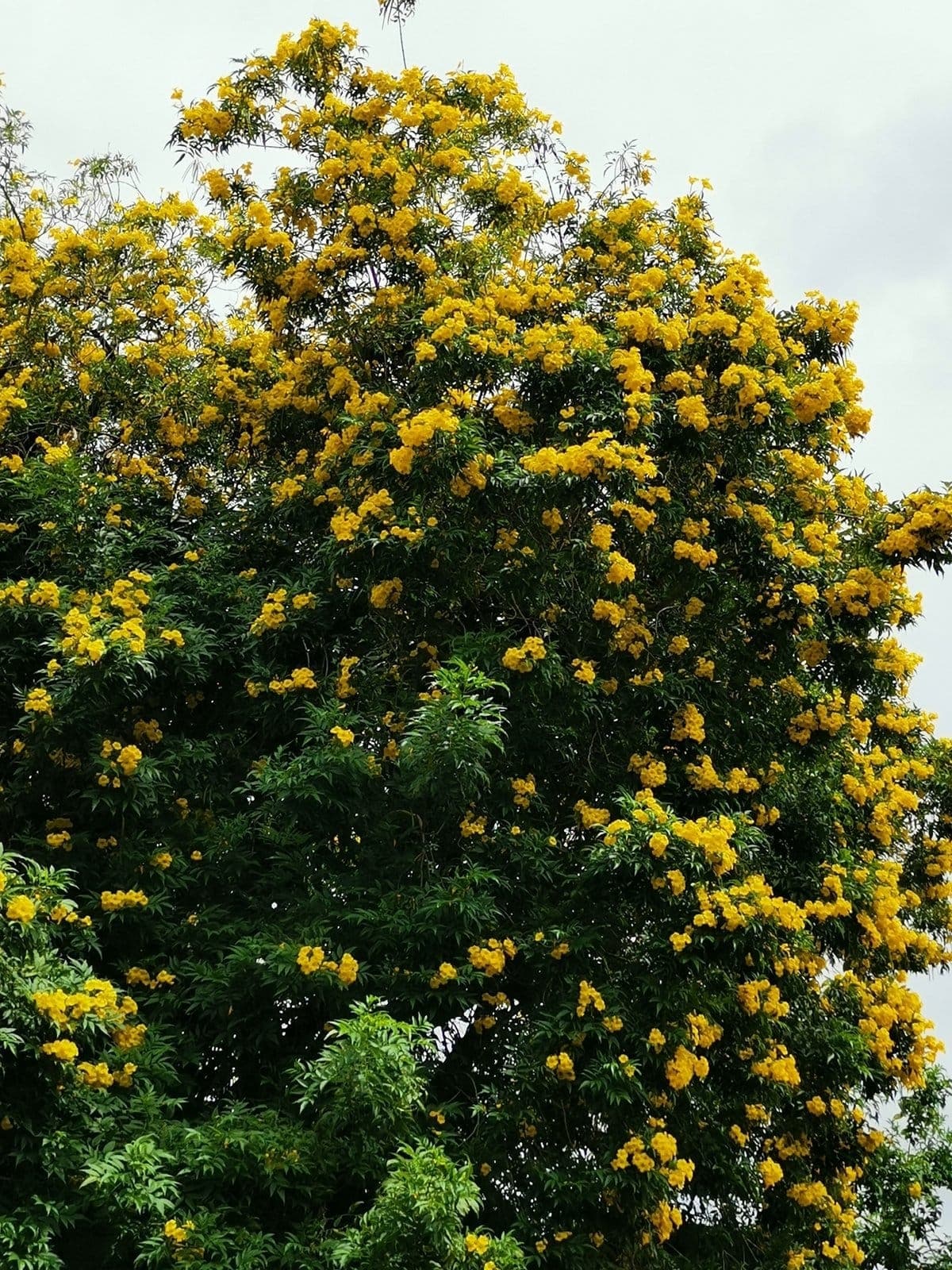
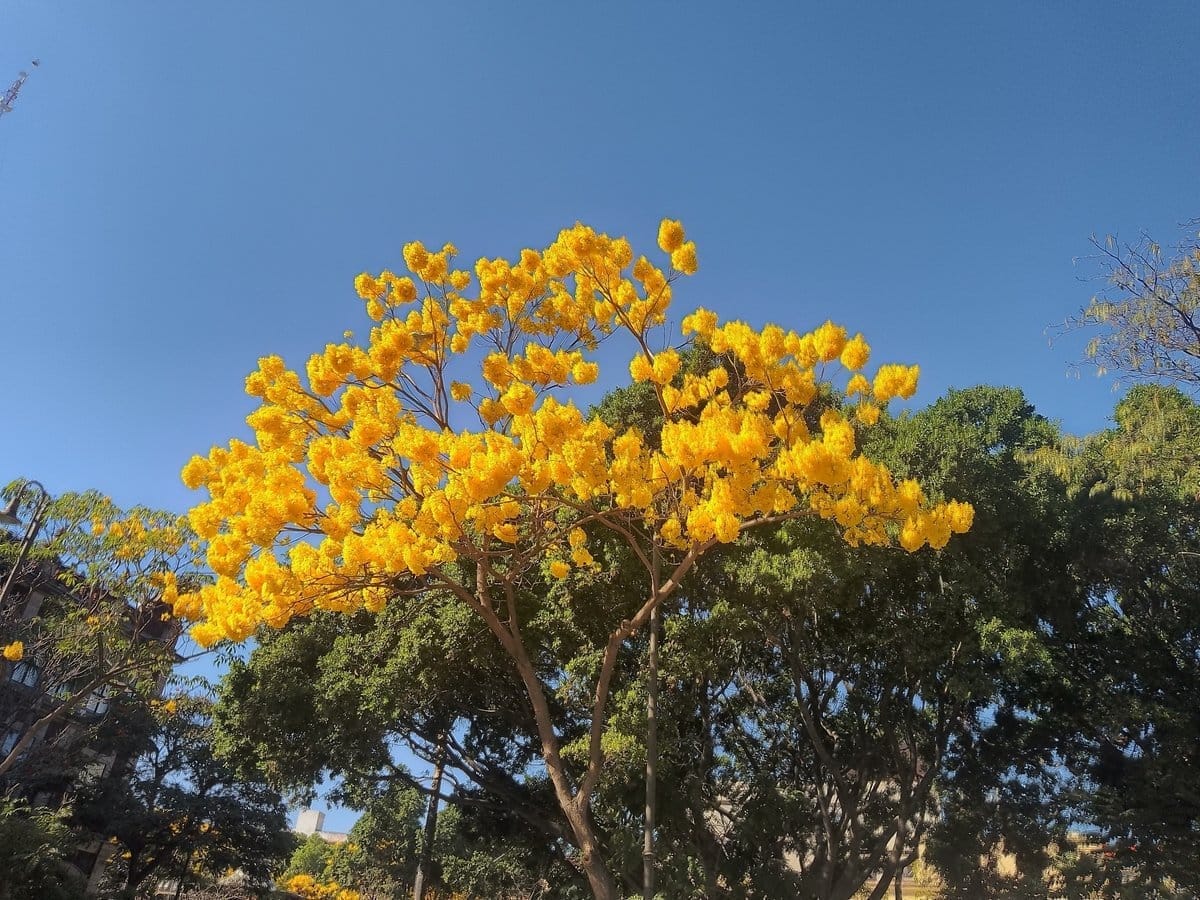
Cortez Blanco (Roseodendron donnell-smithii) is one of the most spectacular flowering trees in Central America. During the dry season, it explodes into a breathtaking display of bright golden-yellow trumpet flowers, completely covering the leafless crown and creating a dazzling vision against the blue tropical sky. Widely planted as an ornamental and street tree, it also yields excellent timber.
Quick Reference
Key Information
Overview
Roseodendron donnell-smithii (formerly classified as Tabebuia donnell-smithii), commonly known as Cortez Blanco or Primavera, is one of the most visually striking trees in the Neotropics. During the dry season, typically between February and April, this deciduous tree sheds its leaves entirely and erupts into an unforgettable mass of bright golden-yellow trumpet-shaped flowers that can be seen from great distances.
The tree is closely related to the other Tabebuia species found in Costa Rica, such as Corteza Amarilla (Tabebuia ochracea) and Cortez Negro (Tabebuia impetiginosa), but is distinguished by its larger overall size, lighter-colored bark, and exceptionally abundant flower production. The species was reclassified from Tabebuia to Roseodendron based on molecular phylogenetic studies that revealed it belongs to a distinct lineage within the Bignoniaceae family.
In Costa Rica, Cortez Blanco grows naturally in the Pacific lowlands and mid-elevation zones, particularly in Guanacaste and the Central Valley transition zones. It is one of the most widely planted ornamental trees in Central American cities, lining boulevards and gracing parks with its seasonal spectacle. The timber, known commercially as "Primavera," is highly valued for furniture making and interior finishing, sometimes called the "mahogany of the Bignoniaceae."
Unfortunately, over-harvesting for its prized wood has led to a Vulnerable (VU) conservation status, making reforestation and cultivation efforts increasingly important for the species' survival.
📸 Photo Gallery
Whole tree
📷 (c) María Elizalde Dávila, some rights reserved (CC BY-NC)(CC BY-NC)
View source ↗Leaves
📷 (c) Alfredo Diaz Torres, some rights reserved (CC BY-NC-SA)(CC BY-NC-SA)
View source ↗Flowers
📷 (c) Alfredo Diaz Torres, some rights reserved (CC BY-NC-SA)(CC BY-NC-SA)
View source ↗Whole tree
📷 (c) Alfredo Diaz Torres, some rights reserved (CC BY-NC-SA)(CC BY-NC-SA)
View source ↗Leaves
📷 no rights reserved(CC0)
View source ↗Photos sourced from iNaturalist's community science database. Browse all observations →↗
Taxonomy & Classification
Common Names by Region
Taxonomic Notes
The species was originally described as Cybistax donnell-smithii by John Donnell Smith in 1899, then reclassified to Tabebuia donnell-smithii. Modern molecular phylogenetic studies (Grose and Olmstead, 2007) demonstrated that the traditional genus Tabebuia was polyphyletic, leading to its reclassification into the monotypic genus Roseodendron. The specific epithet donnell-smithii honors the American botanist John Donnell Smith (1829–1928), who made significant contributions to Central American botany.
Physical Description
Tree Form
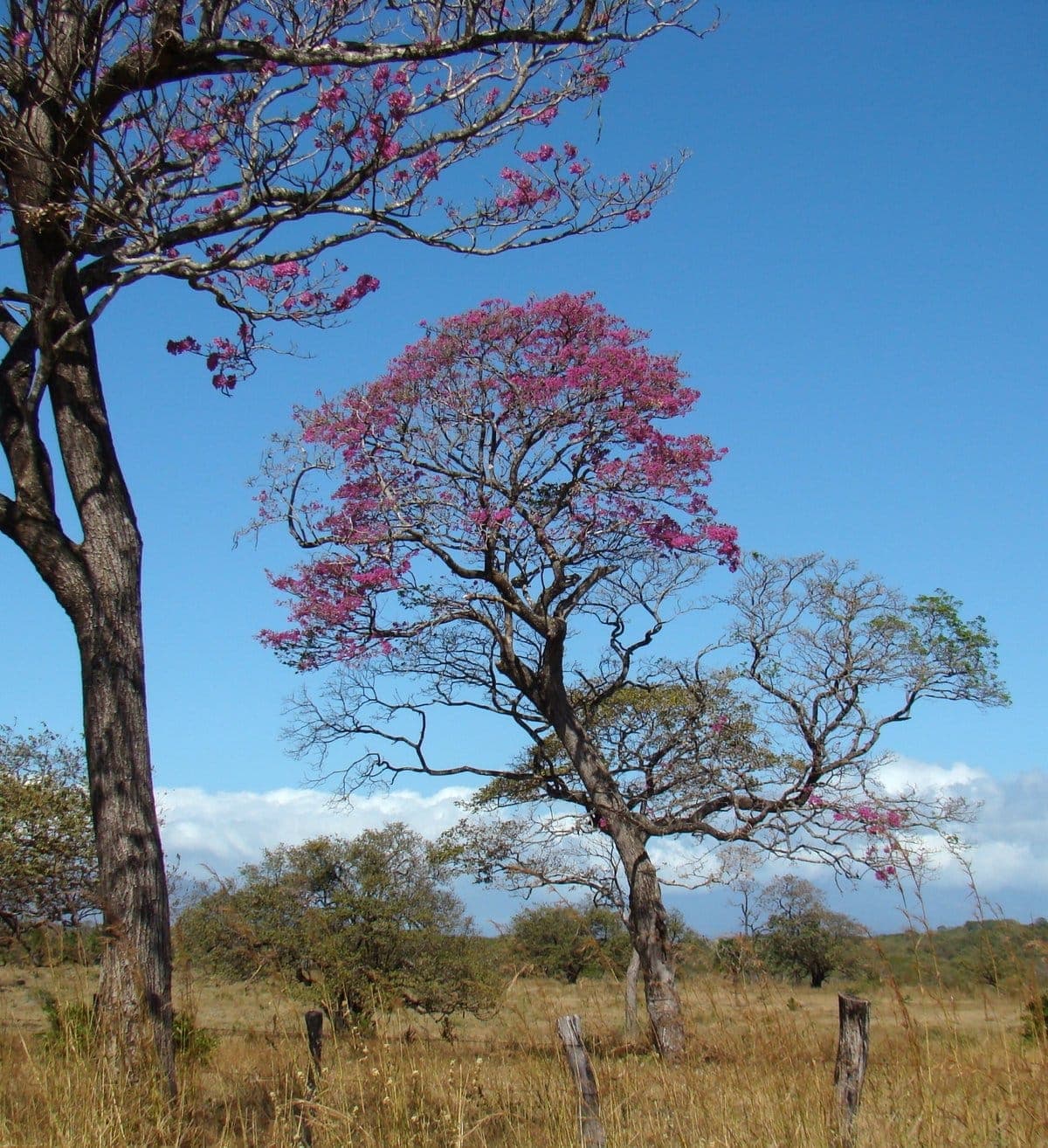
Cortez Blanco is a large deciduous tree reaching 25–40 meters in height with a trunk diameter of 50–100 cm. The trunk is typically straight and cylindrical, often clear of branches for the lower 10–15 meters in forest settings. The crown is broad, spreading, and somewhat irregular, providing excellent shade when in full leaf. During the dry season, the tree becomes completely leafless before flowering, making the golden flower display even more dramatic.
Bark
The bark is light gray to whitish, smooth on young trees and becoming moderately fissured and slightly roughened with age. The pale bark color contributes to the common name "Cortez Blanco" (White Cortez), distinguishing it from the darker-barked Cortez Negro. Inner bark is pale yellowish.
Leaves
Leaves are palmately compound with 5–7 leaflets arranged digitately at the end of a long petiole (15–30 cm). Individual leaflets are elliptic to obovate, 8–20 cm long and 4–8 cm wide, with entire margins and acuminate tips. The upper surface is dark green and slightly glossy; the lower surface is paler with fine pubescence along the veins. Leaves emerge after flowering, typically in May with the onset of rains.
Flowers
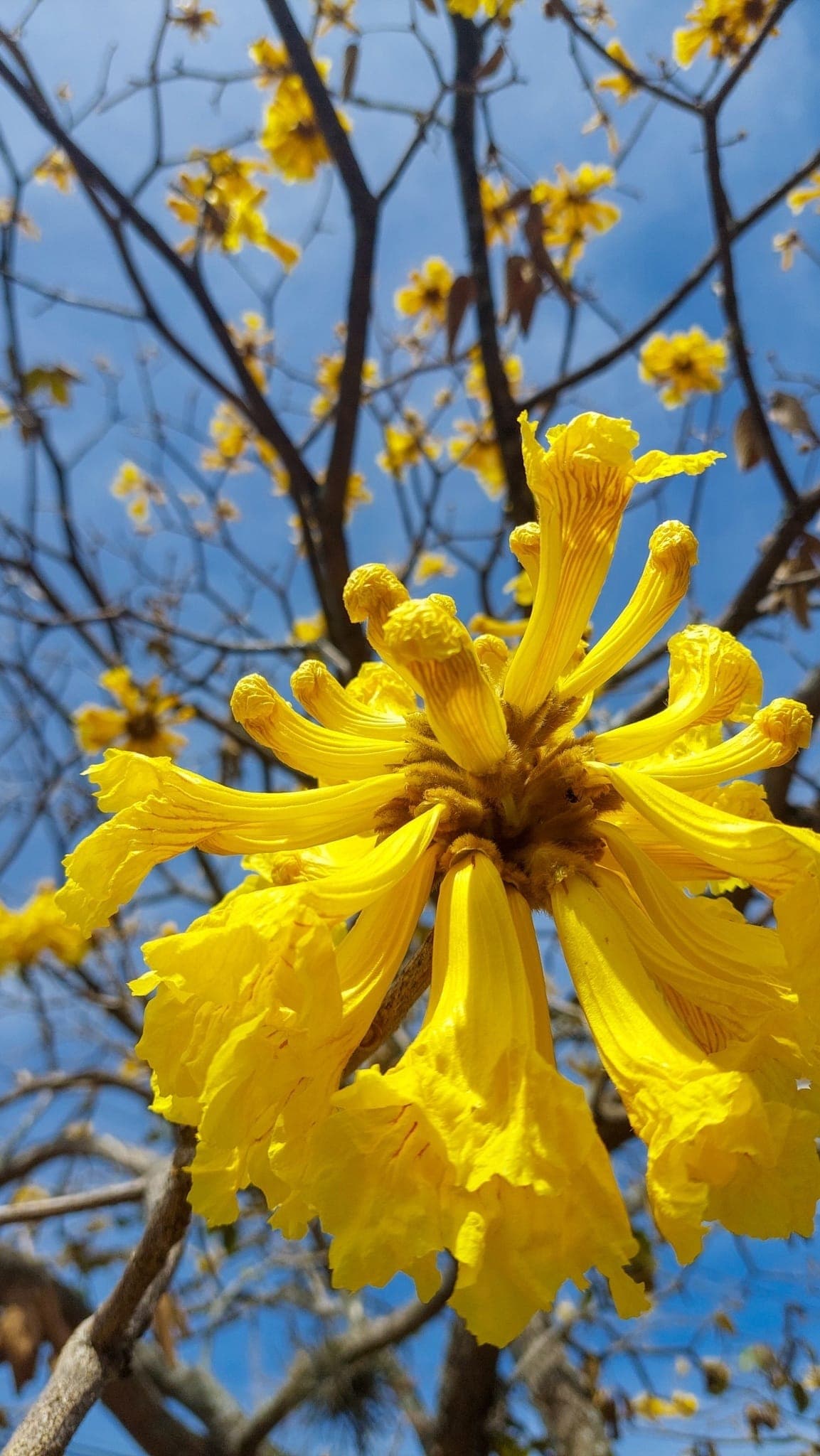
The flowers are the tree's most spectacular feature. They are large, trumpet-shaped (campanulate), 5–8 cm long and 4–6 cm wide, with a bright golden-yellow color. The corolla has five fused petals forming a broad tube that flares into ruffled lobes. The throat displays fine reddish-orange nectar guides that direct pollinators. Flowers are produced in dense terminal panicles of 20–50+ blooms, appearing on bare branches during February–April. The flowering is synchronous across the crown, creating a solid mass of yellow that is visible for kilometers.
Fruit and Seeds
The fruit is a linear capsule, 15–35 cm long and 1.5–2 cm wide, pendant from the branch tips. Capsules are smooth, greenish when young, drying to brown and splitting longitudinally to release numerous winged seeds. Each seed is thin, membranous, and equipped with transparent wings 1–2 cm wide that aid wind dispersal. Seeds are produced in abundance but lose viability rapidly, requiring prompt collection and sowing.
Geographic Distribution
Range in Costa Rica
In Costa Rica, Cortez Blanco is found primarily along the Pacific slope, from the dry forests of Guanacaste through the transition zones of the Central Valley to the moist Pacific lowlands of Puntarenas. It grows naturally in deciduous and semi-deciduous forests, often appearing along riversides and in fertile valley bottoms where deep soils provide optimal growing conditions.
The tree is particularly prominent in the Tempisque River basin in Guanacaste, where it forms part of the dry forest canopy alongside Guanacaste (Enterolobium cyclocarpum), Pochote (Pachira quinata), and other deciduous species. It also occurs in the transitional forests of the Nicoya Peninsula and the Dota-Pérez Zeledón corridor.
Broader Distribution
Beyond Costa Rica, the species ranges from southern Mexico (Guerrero, Oaxaca, Chiapas) through Guatemala, Honduras, El Salvador, and into northern Panama. It has been widely planted as an ornamental throughout the tropics, including South America, the Caribbean, and tropical Asia.
Habitat & Ecology
Ecological Role
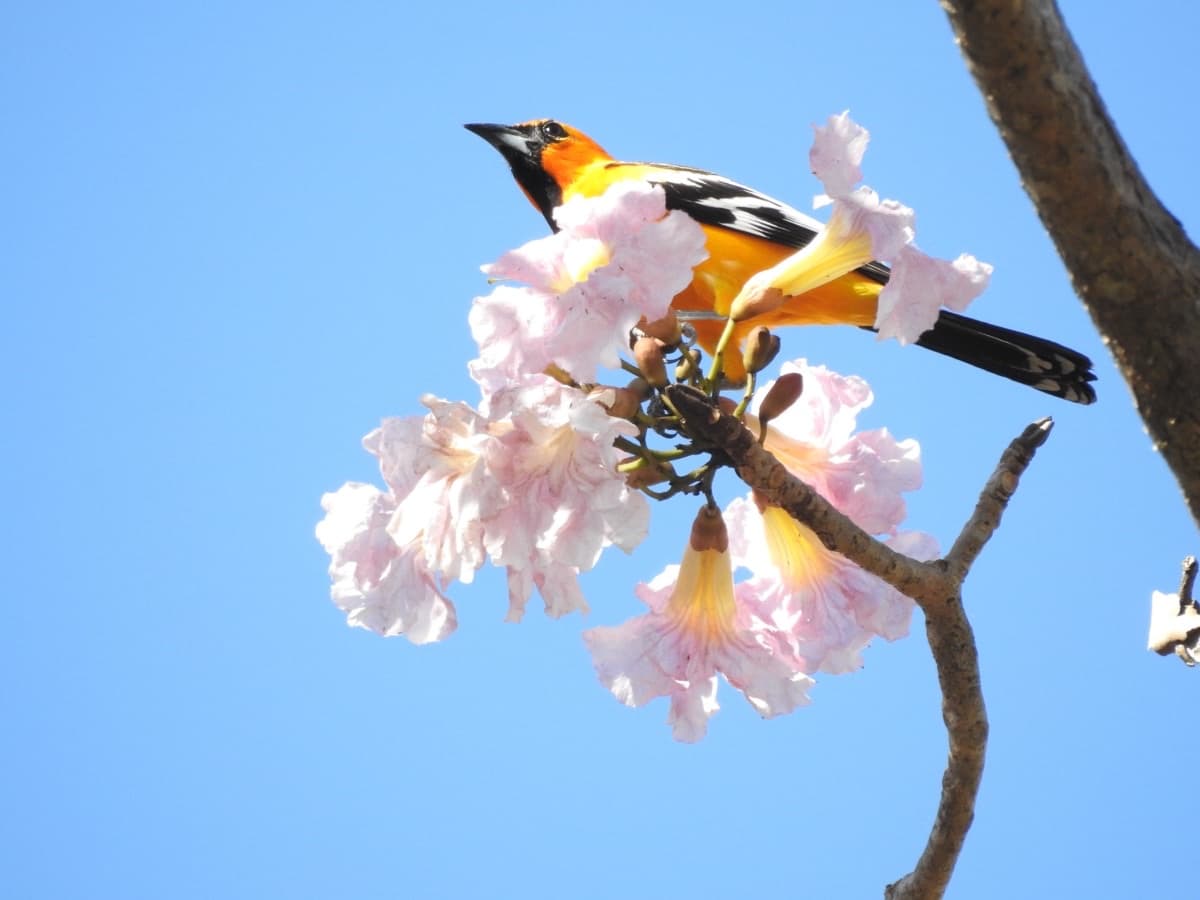
Cortez Blanco plays a significant ecological role, particularly during the dry season when few other trees are flowering. Its massive, synchronous flower production provides a critical nectar and pollen resource for bees, hummingbirds, butterflies, and other pollinators at a time when food sources are scarce. The flowers are especially important for native stingless bees (Meliponini) and large carpenter bees (Xylocopa) that are among the primary pollinators.
Wildlife Associations
- Pollinators: Large bees (Xylocopa, Centris, Eulaema), hummingbirds, butterflies
- Seed dispersers: Wind (anemochory) — winged seeds travel considerable distances
- Nesting habitat: Cavities in older trees used by parrots, toucans, and small mammals
- Epiphytes: Large branches support orchids, bromeliads, and ferns in moist areas
- Insect associations: Host to various caterpillar species (Sphingidae, Saturniidae)
Ecological Adaptations
The deciduous habit is a key drought adaptation. By shedding all leaves during the driest months, the tree minimizes water loss while channeling stored resources into spectacular flower production. This "big bang" reproductive strategy maximizes pollinator attraction and cross-pollination success. The timing of flower and fruit production before the rainy season ensures that the wind-dispersed seeds have optimal conditions for germination when the rains arrive.
Uses & Applications
Timber
The wood of Cortez Blanco, marketed internationally as Primavera, is one of the most valued light-colored hardwoods in the tropics. The heartwood ranges from pale yellowish to golden brown with an attractive grain pattern that sometimes displays ribbon-figure when quartersawn. It is moderately hard, works easily with hand and machine tools, takes finishes beautifully, and has excellent dimensional stability. The wood has been compared to mahogany in working properties and is used for:
- Fine furniture and cabinetwork
- Architectural paneling and molding
- Musical instrument components
- Decorative veneers
- Boat interiors
- High-quality plywood
Ornamental Value
Perhaps no other Central American tree produces a more spectacular urban display than Cortez Blanco in full flower. Rows of these trees lining boulevards and parks create corridors of brilliant gold in February and March. The tree is extensively planted in Central American and Mexican cities for this purpose. In Costa Rica, it is increasingly used in urban forestry programs in the Central Valley and Pacific lowland cities.
Honey Production
The abundant flowers produce copious nectar, making Cortez Blanco one of the most important honey trees in the dry Pacific region. Beekeepers in Guanacaste and the Nicoya Peninsula consider the Cortez flowering season a major honey flow. The resulting honey has a light color and delicate flavor.
Cultural & Historical Significance
Cortez Blanco holds deep cultural significance across Central America. In Guatemala and Mexico, the flowering of Primavera trees is celebrated as a harbinger of the rainy season and associated with renewal and hope. The Spanish common name "Primavera" literally means "spring," reflecting the tree's association with the transition from dry to wet season.
In Costa Rica, the annual flowering of Cortez trees (both Blanco and Amarillo) along roads and in fields is one of the most beloved natural spectacles. The brilliant yellow canopies against the parched, brown landscape of Guanacaste in February and March are among the most photographed natural scenes in the country, frequently featured in tourism promotion materials.
Indigenous Uses
Pre-Columbian peoples of Mesoamerica used the wood for construction and tool-making. The Chorotega people of Guanacaste incorporated the tree into their landscape management practices. The bark has been used in traditional medicine as an astringent and for treating skin conditions.
Economic Importance
The timber trade of Primavera has been historically significant, particularly in Mexico and Guatemala where the finest specimens were exported. Over-exploitation throughout the 20th century severely depleted natural populations, leading to the current Vulnerable conservation status and restrictions on international trade.
Conservation Status
Cortez Blanco is classified as Vulnerable (VU) by the IUCN due to over-exploitation for its valuable timber and habitat loss from deforestation. Populations have declined significantly throughout its range.
Threats
- Over-harvesting: The highly valued timber has been extensively logged without adequate replanting
- Habitat loss: Conversion of dry and transition forests to agriculture and cattle ranching
- Slow regeneration: Moderate growth rate limits natural recovery of harvested populations
- Fragmentation: Remaining populations are often isolated, reducing genetic exchange
- Climate change: Altered rainfall patterns may affect flowering synchrony and reproductive success
Conservation Measures
- Listed in CITES Appendix III (Guatemala) with trade monitoring
- Protected within several Costa Rican national parks and reserves
- Increasingly included in reforestation and urban forestry programs
- Seed collection and nursery propagation programs active in several countries
- Community-based conservation efforts in Guanacaste dry forest corridor
Growing Cortez Blanco
Site Selection
Choose a location with full sun exposure and deep, well-drained soil. Cortez Blanco performs best in areas with a distinct dry season (3–5 months) which triggers the spectacular flowering. Avoid waterlogged sites or heavy clay soils. The tree needs ample space for its large crown — plan for a mature spread of 12–18 meters.
Propagation
Seeds are the primary method of propagation. Collect capsules when they begin to turn brown and split (typically April–May). Extract winged seeds and sow immediately, as viability declines rapidly. Direct sow in nursery beds or individual containers at 1–2 cm depth. Germination occurs in 10–20 days with fresh seed. Seedlings grow quickly and can be transplanted at 30–50 cm height after 3–4 months.
Planting
Transplant seedlings at the beginning of the rainy season (May–June) for best establishment. Dig planting holes 50 × 50 × 50 cm and amend with compost if soil is poor. Water thoroughly after planting and provide weekly supplemental irrigation through the first dry season. Staking may be necessary in windy sites.
Companion Planting and Dry-Forest Integration
- Pollinator support layer: Plant nectar-rich shrubs such as Sardinillo nearby to maintain pollinator activity before and after Cortez Blanco flowering peaks.
- Nitrogen-fixing partners: Include species such as Madero Negro in mixed reforestation blocks to improve soil fertility and early shade moderation for young Primavera trees.
- Urban avenue pairing: In parks and roadsides, combine with lower understory ornamentals that tolerate dry-season stress to reduce bare-soil heat around the root zone.
- Avoid: Dense evergreen companions planted too close to the crown; heavy shade reduces flowering intensity and canopy architecture.
Care Calendar
Pest and Disease Management
Cortez Blanco is generally pest-resistant. Occasional issues include:
- Leaf miners: Can create unsightly trails in leaves but rarely threaten tree health
- Cerambycid beetles: May bore into weakened or damaged wood; maintain tree vigor through proper care
- Fungal leaf spots: Occur in overly humid conditions; ensure good air circulation
- Scale insects: May appear on young growth; treat with horticultural oil if severe
Where to See Cortez Blanco
In Costa Rica
- Guanacaste Province: Roadside plantings along the Interamericana highway; scattered in dry forest remnants
- Nicoya Peninsula: Town plazas and streets; semi-natural forests
- Central Valley: Urban plantings in San José, Alajuela, and Heredia parks
- Santa Rosa National Park: Wild specimens in transitional forest areas
- Palo Verde National Park: Riparian zones along the Tempisque River
Best Viewing Season
February through April, when trees are in full leafless flower. The peak display typically occurs in late February to mid-March. Dawn and late afternoon light produce the most dramatic visual effect, with the golden flowers glowing against the sky.
Advanced Care Guidance
Site Design and Planting
- Plant at the beginning of the rainy season (May-June) in full sun, with 6-8 m spacing for street or park plantings.
- Use deep, well-drained loam with moderate organic matter; avoid compacted urban fill and waterlogged pits.
- Stake only in windy sites and remove ties after 6-8 months to prevent stem deformation.
Watering Program
- Establishment (0-6 months): Deep watering 2 times per week in dry periods.
- Juvenile phase (6-24 months): Water every 7-10 days during strong dry-season heat.
- Established trees: Supplemental irrigation only during prolonged drought, especially before flowering.
Fertilization Schedule
- At planting, incorporate compost and a low-dose starter blend (10-30-10).
- Apply balanced fertilizer (15-15-15) at the start and midpoint of rainy season.
- In low-fertility soils, add potassium-rich support (12-8-20) at late rainy season to sustain flower bud development.
Pruning and Structure
- Perform formative pruning in years 1-3 to establish a single dominant trunk and 3-5 scaffold branches.
- Remove crossing branches after flowering flushes; avoid heavy pruning before peak bloom.
- Keep a 1.5-2 m clearance for sidewalks and roads in urban plantings.
Pest and Disease Management
- Monitor for scale insects, defoliating caterpillars, and sooty mold during humid transitions.
- Improve airflow to reduce fungal leaf spots and powdery mildew pressure.
- Prioritize sanitation pruning and biological controls before chemical intervention.
Companion Planting
- Recommended companions: Nance, Pochote, Corteza Amarilla, and native pollinator shrubs.
- Agroforestry role: Seasonal shade and nectar support for bees in mixed dry-forest restoration strips.
- Avoid nearby: Water-demanding wetland species and shallow-rooted turf planted directly at trunk base.
Seasonal Care Calendar (Costa Rican Conditions)
- Dry season (Dec-Apr): Mulch renewal, strategic deep irrigation, and pest scouting.
- Early rains (May-Jul): Main fertilization window, structural pruning, and replanting.
- Peak rains (Aug-Oct): Fungal monitoring, drainage checks, and minimal pruning.
- Transition (Nov): Soil amendment and irrigation plan for upcoming dry months.
Growth Timeline and Flowering Notes
- Fast juvenile growth under full sun; canopy architecture becomes stable by years 3-5.
- Showy flowering typically starts in years 4-6 in favorable lowland climates.
- Prioritize long-term crown health over aggressive annual pruning to preserve flowering intensity.
Monitoring Framework for Urban and Restoration Plantings
Cortez Blanco is frequently planted in roadsides, parks, and dry-forest restoration. A common monitoring protocol improves safety and flowering quality.
Core indicators
- Juvenile survival in first two dry seasons.
- Structural integrity class for trunk and scaffold branches.
- Flowering intensity index (low, moderate, peak) each year.
- Pest incidence around flowering and leaf flush windows.
- Soil compaction score in urban planting pits.
Recommended cadence
- Dry season: irrigation stress and branch safety checks.
- Early rains: establishment and fertilization assessment.
- Peak rains: fungal and drainage review.
- Transition: canopy structure and flowering prep planning.
Similar Species and Common Misidentification
| Species or group | Why confusion occurs | Quick field discriminator | | ----------------------------- | ---------------------------------------------- | ------------------------------------------------------------------- | | Corteza Amarilla complexes | Similar yellow-flowering seasonal display. | Bark texture, leaf details, and flowering phenology windows differ. | | Other ornamental Bignoniaceae | Shared avenue-tree use and showy blooms. | Compare pod shape, crown form, and leaf architecture together. | | Young dry-forest ornamentals | Overlap in nursery labeling and juvenile form. | Verify with reproductive traits once available and site records. |
Practical identification rule
In flowering season, combine crown silhouette with flower and pod traits rather than relying only on bloom color.
Field Checklist for Management Teams
- Confirm planting context (urban avenue, park, or restoration strip).
- Inspect branch unions for structural weakness before high-wind months.
- Record bark condition and stem injury from traffic or tools.
- Document flowering stage and canopy density.
- Photograph trunk base, crown profile, and reproductive structures.
- Register nearby infrastructure conflicts (power lines, sidewalks, drainage).
Minimum evidence package
- Full-tree profile.
- Trunk and butt area.
- Branch union close-up.
- Flower or pod detail (season permitting).
Dry-Forest Restoration Integration
Cortez Blanco can provide seasonal nectar pulses and canopy structure in lowland restoration mosaics.
Placement model
- Use as spaced anchor trees in mixed native corridors.
- Combine with species that flower in complementary windows.
- Maintain clear spacing to preserve flowering architecture.
Adaptive triggers
- Recurrent crown imbalance: adjust formative pruning schedule.
- Low flowering despite healthy canopy: review light exposure and nutrient timing.
- High mortality in year 1: revise planting-hole prep and early dry-season irrigation.
Operational Risk Matrix
| Risk | Likelihood | Impact | Control strategy | | ------------------------------------------- | ---------- | ----------- | ------------------------------------------------------------------ | | Branch breakage in exposed urban sites | Medium | High | Structural pruning and periodic safety inspections. | | Flowering decline from chronic over-pruning | Medium | Medium-High | Limit pruning intensity and schedule post-flowering interventions. | | Soil compaction around roots | Medium | Medium | Expand mulch zone and reduce trunk-adjacent hardscape pressure. | | Fungal leaf issues in poor airflow pockets | Low-Medium | Medium | Improve spacing and sanitation pruning. | | Mislabeling in mixed nurseries | Medium | Medium | Use provenance tags and verification at planting stage. |
Rapid Assessment Template
Run this scoring sheet annually for Cortez Blanco in urban and restoration settings.
| Indicator | Field score (1-5) | Notes to record | | ------------------------------------ | ----------------- | ------------------------------------------------ | | Juvenile survival through dry season | | Include irrigation support frequency. | | Structural safety condition | | Focus on branch unions and trunk defects. | | Flowering intensity | | Track by site type and light availability. | | Soil compaction and rooting space | | Note hardscape pressure near trunk base. | | Pest or fungal incidence | | Link with sanitation and airflow management. | | Pruning quality | | Confirm timing and intensity were appropriate. | | Species identity confidence | | Attach photos where labeling uncertainty exists. | | Record completeness | | Verify site ID, date, crew, and interventions. |
Scoring interpretation
- 4-5: Maintain current program and optimize locally.
- 3: Acceptable but needs corrective scheduling.
- 1-2: Elevated risk; initiate urgent management review.
Priority Actions for the Next 12 Months
- Strengthen structural-safety inspections before high-wind periods.
- Align pruning windows with flowering objectives.
- Improve root-zone protection in compacted urban sites.
- Standardize identity verification in mixed nursery pipelines.
- Centralize annual flowering and safety records for planning.
External Resources
References
- Gentry, A. H. (1992). Bignoniaceae: Part II (Tribe Tecomeae). Flora Neotropica Monograph 25.
- Grose, S. O., & Olmstead, R. G. (2007). Taxonomic revisions in the polyphyletic genus Tabebuia. Systematic Botany, 32(3), 660–670.
- Jiménez, Q. (1999). Árboles maderables en peligro de extinción en Costa Rica. INBIO.
- Holdridge, L. R., & Poveda, L. J. (1975). Árboles de Costa Rica. Centro Científico Tropical.
- Zamora, N., et al. (2004). Grasses, sedges, and trees of Guanacaste. INBio Press.
Safety Information Disclaimer
Safety information is provided for educational purposes only. Individual reactions may vary significantly based on age, health status, amount of exposure, and individual sensitivity. Always supervise children around plants. Consult a medical professional or certified arborist for specific concerns. The Costa Rica Tree Atlas is not liable for injuries or damages resulting from interaction with trees described in this guide.
• Always supervise children around plants
• Consult medical professional if unsure
• Seek immediate medical attention if poisoning occurs
Information compiled from authoritative toxicology sources, scientific literature, and medical case reports.
Help improve this page
Know something about this tree? Share local knowledge, suggest a correction, or submit a photo to improve this guide for everyone.