African Tulip Tree
Spathodea campanulata
Quick facts
Native Region
Tropical Africa (Senegal to Angola)
Max Height
10-35 meters (33-115 feet)
Family
Bignoniaceae
Conservation
LC — Least Concern
Uses
Safety Information
HIGH RISK
WARNING: This tree is beautiful but has serious concerns. POISONOUS SEEDS - keep children and pets away from fallen seed pods. TOXIC TO SOME BEES - flowers may harm native pollinators. INVASIVE SPECIES - spreading rapidly in Costa Rica, displacing native trees. NOT RECOMMENDED for new plantings. If you have one, monitor for spread and consider removal if near natural areas. Plant NATIVE Costa Rican species instead.
Toxicity Details
African tulip tree has significant toxicity concerns. SEEDS AND FRUIT are POISONOUS if ingested - in native Africa, boiled seeds are used to create arrow poison for hunting. Children should be kept away from fallen seed pods. The flowers contain nectar that is TOXIC TO SOME BEES AND INSECTS, though hummingbirds can safely feed on it. DO NOT consume any part of this tree. The wood and bark have been used medicinally in Africa but should only be used under expert guidance.
Skin Contact Risks
Low risk from direct contact with bark, leaves, or flowers. The sap is not caustic. However, avoid handling seeds or fruit pods. Wash hands after contact with any plant parts.
Allergenic Properties
Moderate allergen risk. The flowers produce pollen that may cause allergic reactions in sensitive individuals. Some people may experience respiratory irritation when trees are in heavy bloom. The flowers are also known to cause allergic reactions in some native bee species.
Structural Hazards
FALLING BRANCHES: This is a large tree (10-35 m) with a dense crown. Branches can break and fall, especially during storms. Plant well away from buildings, power lines, and high-traffic areas. AGGRESSIVE ROOTS: The tree produces root suckers and has an extensive root system that can damage sidewalks, foundations, and underground utilities. NOT suitable for small urban lots. INVASIVE SPREAD: Produces hundreds of wind-dispersed seeds and spreads rapidly, becoming weedy in disturbed areas.
Wildlife & Pet Risks
MIXED IMPACTS. Nectar attracts hummingbirds (safe for them) but is TOXIC TO SOME BEE SPECIES. Seeds are poisonous - do not allow pets to chew on seed pods. The tree's invasive nature HARMS BIODIVERSITY by displacing native species that support native wildlife. Overall negative ecological impact in Costa Rica.
First Aid & Emergency Response
• If ingested, seek immediate medical attention. Do not induce vomiting unless directed by medical professional.
• If sap contacts skin, wash immediately with soap and water. Seek medical attention if blistering or severe irritation occurs.
• If sap enters eyes, flush immediately with clean water for 15 minutes and seek emergency medical care.
Costa Rica Emergency: 911
Costa Rica Poison Control: 2223-1028
Season
Flowering
Jan-Dec
Fruiting
Mar-Aug
How to identify
African Tulip Tree (Llama del Bosque)
African Tulip Tree (Spathodea campanulata), known in Spanish as Llama del Bosque (Flame of the Forest), is a spectacular flowering tree from tropical Africa. While celebrated for its brilliant orange-red tulip-like blooms, this tree is recognized as one of the "World's Worst Invasive Alien Species" by the IUCN. It spreads aggressively in Costa Rica, displacing native trees and harming local ecosystems. NOT RECOMMENDED for new plantings.
Quick Reference
iNaturalist Observations
Community-powered species data
📸 Photo Gallery
High-quality images for this species need to be sourced from iNaturalist or botanical databases following the project's image guidelines.
📸 Photo Gallery
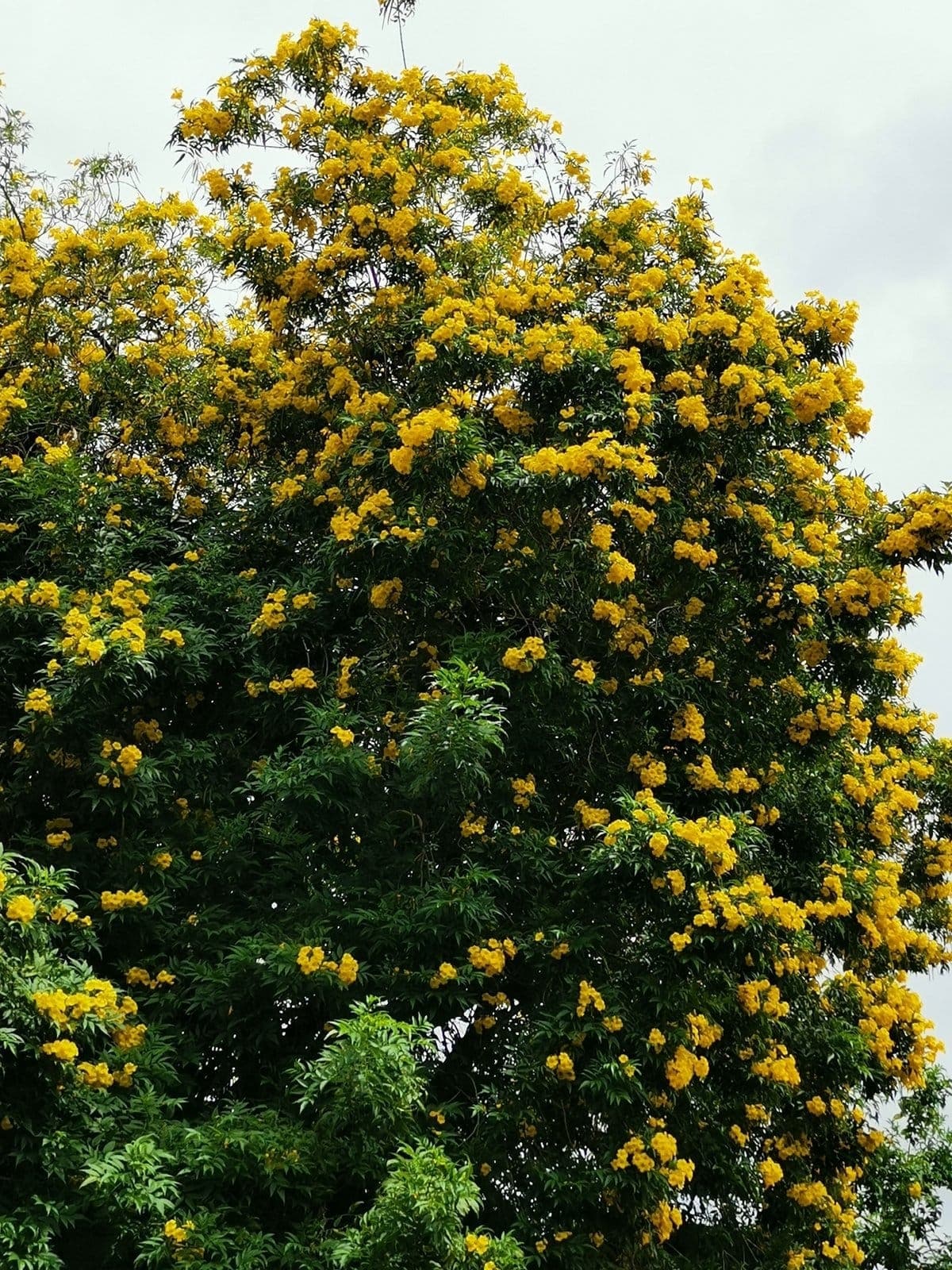
Whole tree
📷 (c) curymaria, some rights reserved (CC BY-NC)(CC BY-NC)
View source ↗Leaves
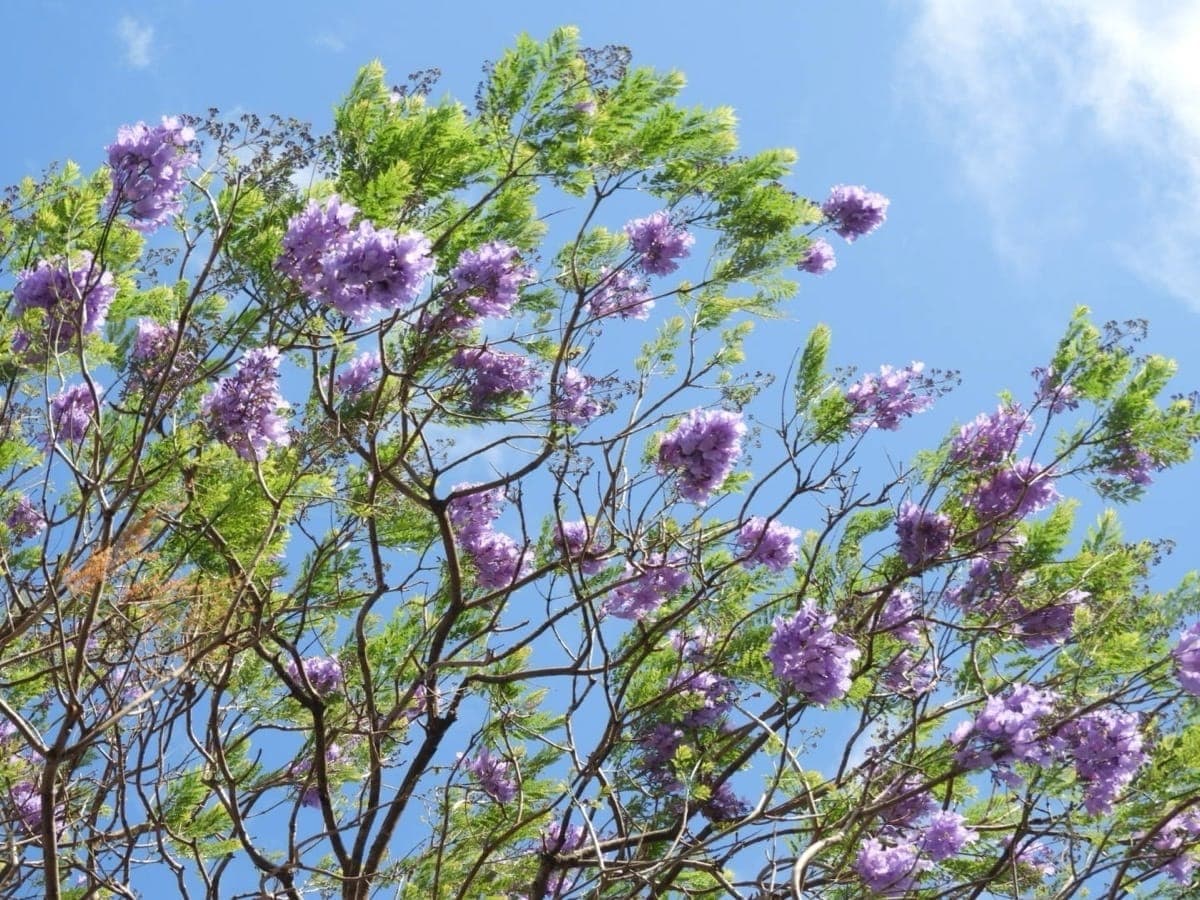
📷 (c) curymaria, some rights reserved (CC BY-NC)(CC BY-NC)
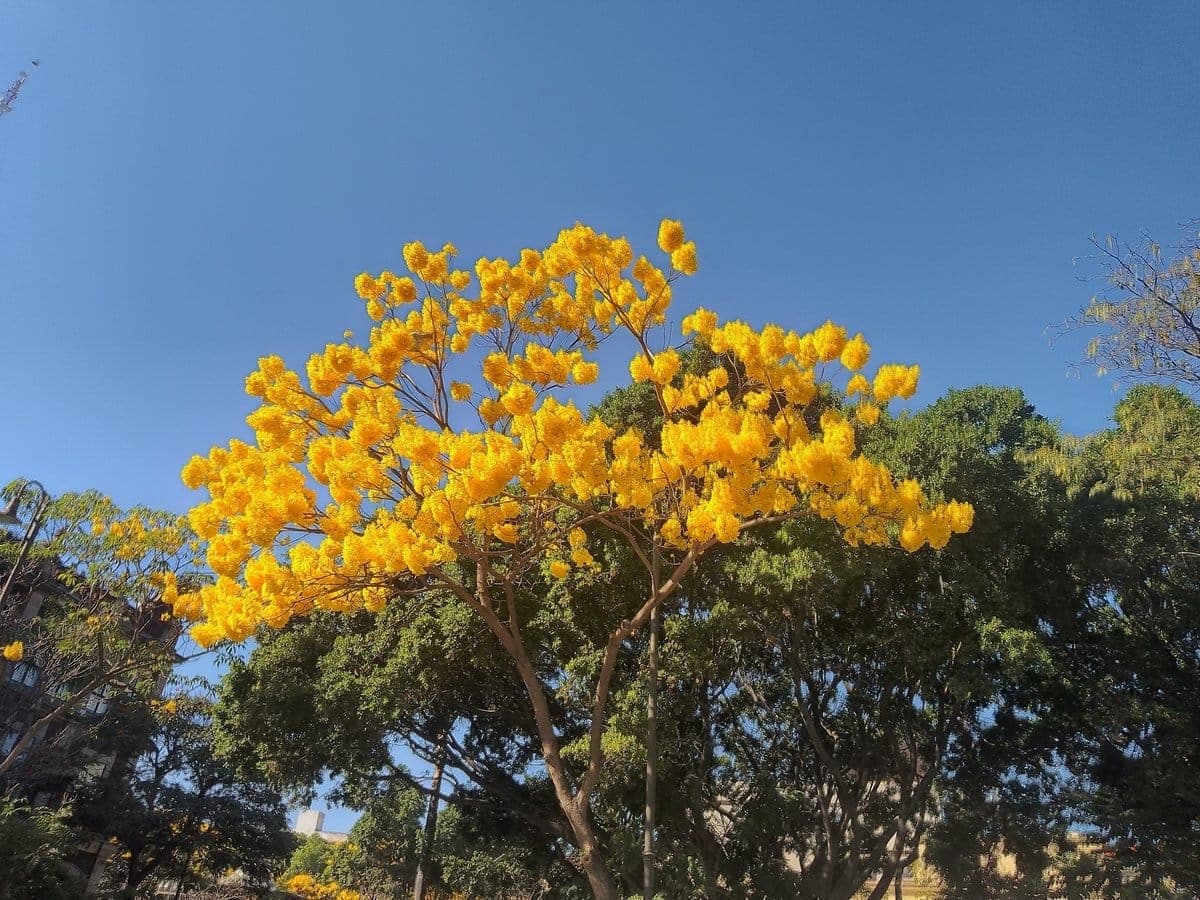
View source ↗Whole tree
📷 (c) sdecks, some rights reserved (CC BY-NC)(CC BY-NC)
View source ↗Leaves
📷 (c) curymaria, some rights reserved (CC BY-NC)(CC BY-NC)
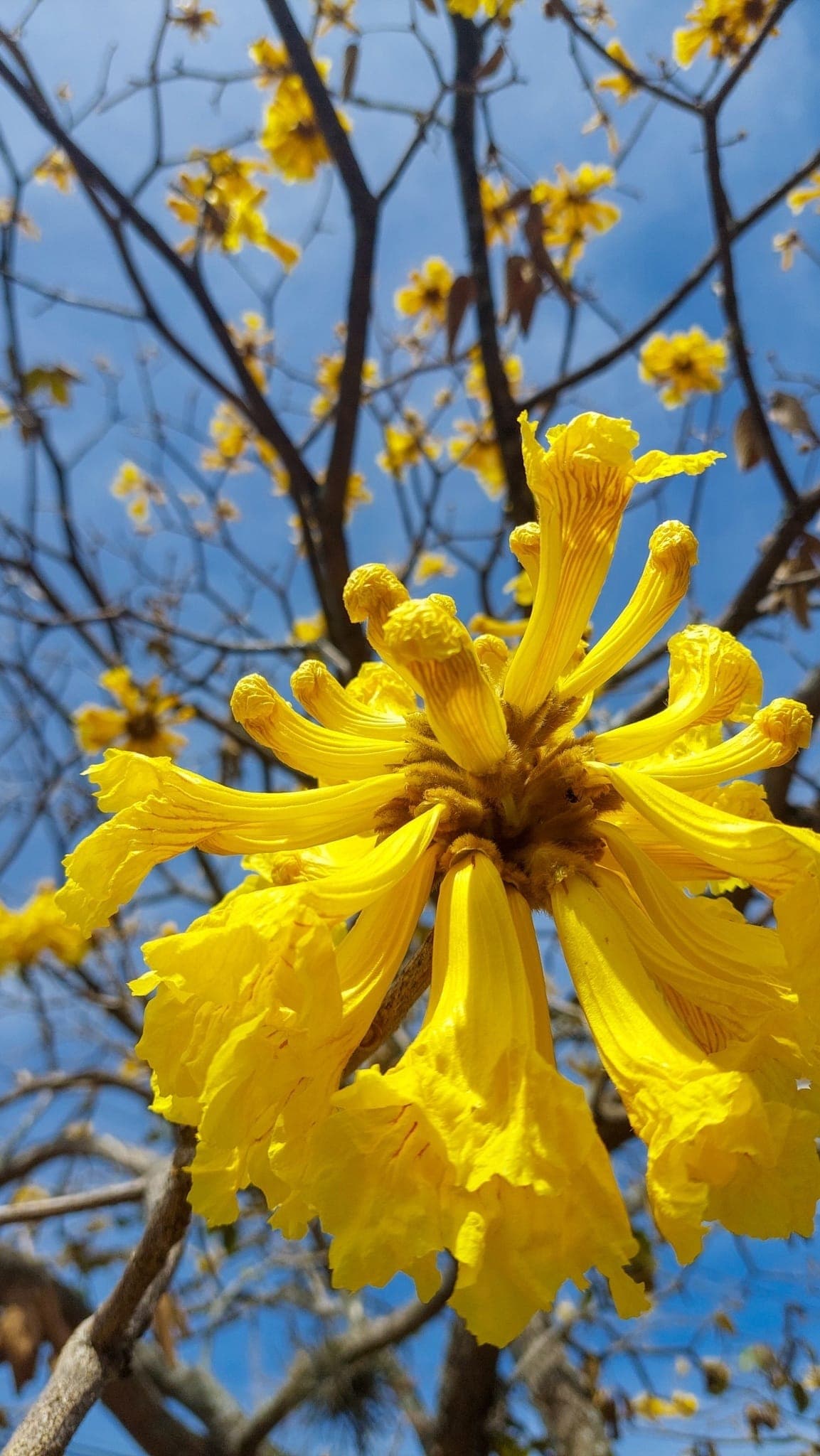
View source ↗Whole tree
📷 (c) Heiner Ziegler, some rights reserved (CC BY-NC)(CC BY-NC)
View source ↗Photos sourced from iNaturalist's community science database. Browse all observations →↗
Taxonomy & Classification
Common Names by Region
Taxonomic Notes
Spathodea campanulata is the only species in the genus Spathodea, endemic to tropical Africa. The genus name derives from the Greek "spathe" (blade), referring to the boat-shaped calyx. The species epithet "campanulata" means "bell-shaped," describing the flower form.
First described by Palisot de Beauvois in 1805, the tree has been widely distributed throughout the tropics for its ornamental value, becoming naturalized (and invasive) in many regions far from its native range.
Etymology
- Spathodea: From Greek "spathe" (blade/sword), referring to the spathe-like calyx
- campanulata: Latin for "bell-shaped," describing the campanulate (bell-shaped) flowers
Physical/Botanical Description
Tree Form
The African tulip tree is a large, fast-growing evergreen or semi-deciduous tree reaching 10-35 meters in height. It develops a straight, cylindrical trunk up to 1 meter in diameter and a dense, rounded to spreading crown. Young trees have a pyramidal shape that broadens with age.
The tree is notable for its rapid growth rate - it can add 1-2 meters of height per year under favorable conditions, reaching 10-15 meters in just 5-7 years. This aggressive growth contributes to its invasive character.
Bark
The bark is smooth and pale gray to greenish on young trees, becoming darker gray-black, rougher, and vertically fissured with age. The bark exfoliates in thin plates. When damaged, the bark may exude a slight sticky sap but it is not milky like some tropical trees.
Leaves
The leaves are opposite and pinnately compound (feather-like), consisting of 5-9 pairs of leaflets plus a terminal leaflet, for a total of 11-19 leaflets per leaf. Individual leaflets are oval to oblong, 6-15 cm long and 3-7 cm wide, with entire margins and an acute to acuminate tip.
Leaflets are dark green and glossy on the upper surface, paler beneath, with a prominent midrib. The leaf rachis (main axis) is 30-50 cm long. New growth emerges bronze-colored before turning green.
The foliage is dense, providing heavy shade beneath the crown.
Flowers
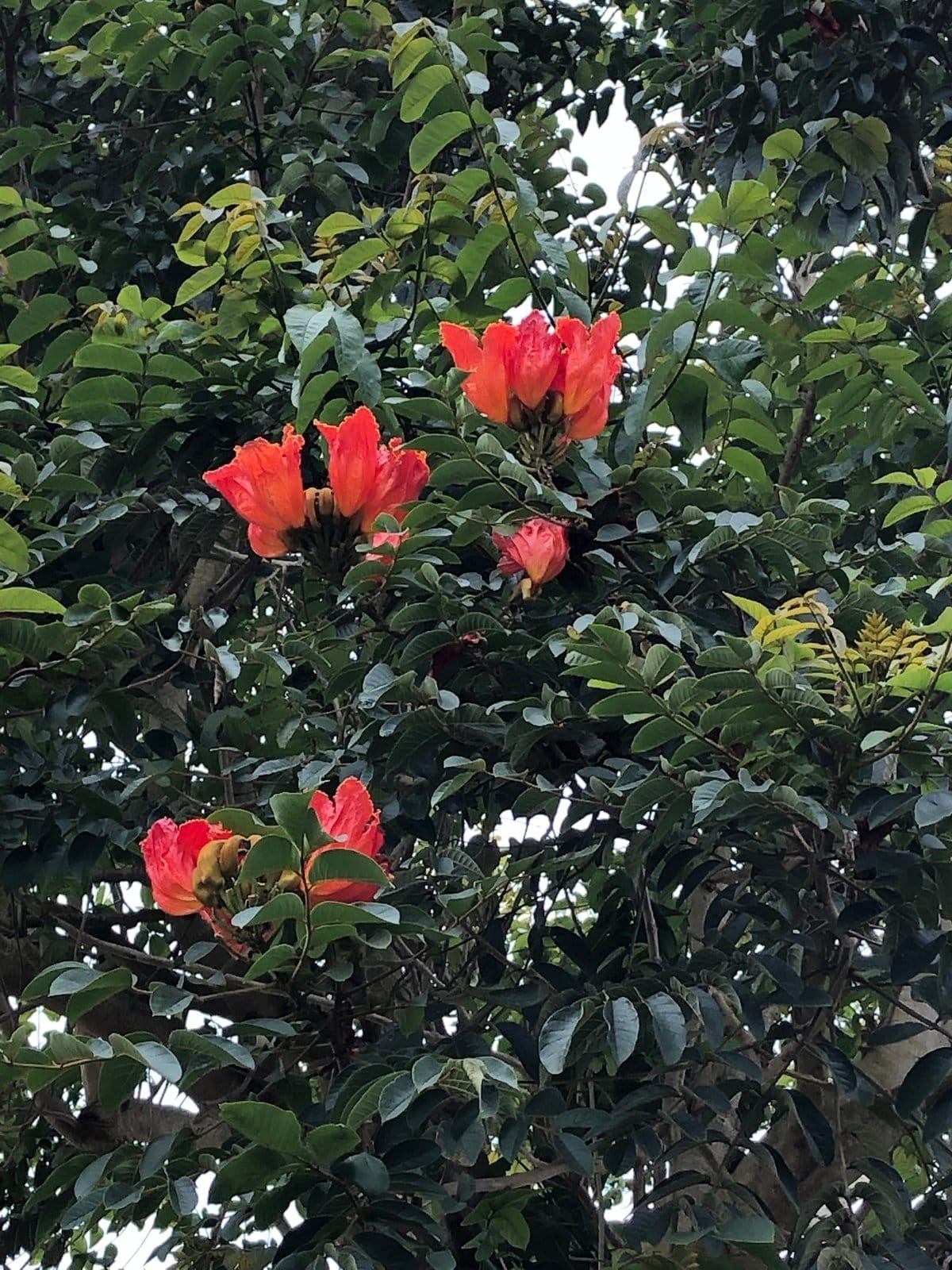
The flowers are the tree's most spectacular feature and the reason for its popularity as an ornamental. They are large (10-12 cm long), tulip-shaped, and brilliantly colored in shades of orange-red to deep scarlet. Rarely, trees produce yellow flowers (var. lutea).
Flowers are borne in dense terminal racemes (clusters) of 20-40 flowers at branch tips. The calyx is boat-shaped (spathe-like), brown, and splits on one side as the flower emerges. The corolla has five lobes that curl back at the tips, forming the characteristic tulip shape.
Unique Feature: Flower buds contain water, which can be squirted out when squeezed - a source of play for children in tropical regions (though this should be discouraged given the tree's problems).
Flowers are zygomorphic (bilateral symmetry) with a curved tube. The nectar attracts hummingbirds, which are the primary pollinators. WARNING: The nectar is toxic to some bee species.
Flowering can occur year-round in tropical Costa Rica, with peak blooming from February through June. Young trees begin flowering at 3-4 years old, sometimes earlier.
Fruit & Seeds
The fruit is a large, woody, boat-shaped capsule (pod), 15-25 cm long and 3-4 cm wide, brown when mature. The pod splits along two sutures to release the seeds.
Each pod contains 200-500 flat, papery, winged seeds that are dispersed by wind. This prolific seed production (a single tree can produce thousands of seeds annually) is a major factor in the species' invasiveness. The seeds are lightweight and can be carried long distances by wind.
WARNING: Seeds are poisonous. In Africa, they are boiled to create arrow poison.
Geographic Distribution
Native Distribution
The African tulip tree is native to tropical Africa, with its natural range extending from Senegal and Sierra Leone in West Africa eastward to Ethiopia, and south through Angola, Tanzania, and Uganda. In its native range, it is a component of lowland tropical rainforests and gallery forests.
Introduced Distribution (Global)
The tree has been widely introduced to tropical and subtropical regions worldwide for ornamental purposes:
- Americas: Caribbean islands, Central America, northern South America, southern Mexico, southern Florida
- Asia: India, Sri Lanka, Southeast Asia, southern China
- Pacific: Hawaii, Fiji, Samoa, Australia (Queensland), Papua New Guinea
In many of these regions, it has naturalized and become invasive.
Distribution in Costa Rica (Introduced)
African tulip tree is now found throughout Costa Rica, particularly in:
- Urban Areas: Common street tree in San José, Alajuela, Heredia, Cartago
- Disturbed Habitats: Roadsides, pastures, abandoned fields, forest edges
- All Provinces: Present in all seven provinces, from sea level to 1500 m
- Naturalized Populations: Spreading in disturbed forest areas, particularly in humid lowland and premontane zones
The tree was introduced as an ornamental in the early-mid 20th century and has spread extensively through seed dispersal.
Invasive Status in Costa Rica
HIGHLY INVASIVE: The African tulip tree is recognized as a problematic invasive species in Costa Rica. It:
- Colonizes disturbed sites rapidly
- Forms dense thickets that exclude native vegetation
- Reproduces both by seed and root suckers
- Is difficult to eradicate once established
- Threatens native forest regeneration
- Is spreading into protected areas
Habitat & Ecology
Ecological Role (Invasive)
As an invasive species, the African tulip tree has negative ecological impacts in Costa Rica:
- Displaces Native Species: Forms dense stands that shade out native trees and prevent forest regeneration
- Alters Soil Chemistry: Deep litter layer may change soil properties
- Harms Native Pollinators: Nectar is toxic to some native bee species
- Reduces Biodiversity: Areas dominated by African tulip have lower plant diversity
Habitat Preferences
The tree is highly adaptable but thrives in:
- Disturbed Sites: Roadsides, abandoned agricultural land, forest edges
- Moist Habitats: Areas with consistent rainfall or seasonal wetness
- Open to Partial Canopy: Fast-growing pioneer species that requires light
- Lowland to Mid-Elevations: Most common below 1000 m but found up to 1500 m
The tree is shade-tolerant as a seedling, allowing it to persist under forest canopy, but requires light to grow rapidly and reach the canopy.
Reproduction and Spread
The invasive success of S. campanulata is due to:
- Prolific Seed Production: Thousands of wind-dispersed seeds per tree annually
- High Germination Rate: Seeds germinate readily on bare soil
- Vegetative Reproduction: Produces root suckers that form new trees
- Fast Growth: Quickly reaches reproductive age (3-4 years)
- Adaptability: Tolerates various soil and moisture conditions
Uses & Applications
Historical and Current Uses
Ornamental: The tree has been widely planted as a street tree and garden specimen for its spectacular flowers. However, its invasive nature has led to a reevaluation of this use.
Shade: Provides dense shade with its broad crown. Used in coffee and cacao plantations in some regions, though this practice is discouraged.
Traditional Medicine (Africa): In its native Africa, various parts are used medicinally:
- Bark infusions for skin diseases and wounds
- Leaf extracts for fever
- Flowers for ulcers and skin conditions
Note: These medicinal uses should NOT be attempted without expert guidance, as the plant contains toxic compounds.
Wood: The wood is soft, lightweight, and not durable. It has limited use for:
- Carving and utensils
- Nesting cavities for birds (naturally formed)
- Firewood (low quality, burns quickly)
The wood is not commercially valuable and trees are typically considered a nuisance rather than a resource.
Recommendation for Costa Rica
DO NOT PLANT. If you are considering a flowering tree, choose native alternatives such as:
- Poró (Erythrina poeppigiana) - Native, nitrogen-fixing, stunning flowers
- Cortez Amarillo (Tabebuia ochracea) - Native, yellow flowers
- Jícaro (Crescentia cujete) - Native Bignoniaceae relative
- Roble Sabana (Tabebuia rosea) - Native, pink flowers
These native species provide similar ornamental value without the ecological harm.
Sources: IUCN GISD invasive profile↗, CABI Invasive Species Compendium↗, GBIF species profile↗, iNaturalist observations↗
Cultural & Historical Significance
In Native Africa
In tropical Africa, Spathodea campanulata is an appreciated part of the forest landscape and has traditional significance in some cultures. The striking flowers appear in African art and the tree is associated with celebration and vitality.
In Introduced Regions (Costa Rica)
The tree was introduced to Costa Rica in the early-mid 20th century as an ornamental, prized for its spectacular blooms. It became a popular street tree in urban areas, particularly in the Central Valley.
The Spanish name "Llama del Bosque" (Flame of the Forest) reflects its brilliant orange-red flowers that light up the landscape like flames.
However, awareness of its invasive impacts has grown since the 1990s, and the tree is now viewed with increasing concern. It represents the problematic legacy of introducing exotic species without understanding their ecological impacts.
Children's Tree
In many tropical countries, children enjoy squeezing the water-filled flower buds to make them squirt - giving rise to names like "Pichkari" (water pistol) in India. While this is a nostalgic memory for many, it's important to educate children about the tree's problems and discourage interaction with it.
Conservation Status & Invasive Species Information
While listed as Least Concern in its native African range, Spathodea campanulata is recognized as one of the "World's Worst Invasive Alien Species" by the IUCN Invasive Species Specialist Group. It is invasive throughout tropical regions worldwide, including Costa Rica.
Native Range Status
In its native tropical Africa, the species is common and faces no conservation threats. Populations are stable and the tree is not at risk of extinction.
Invasive Status (Costa Rica and Global)
Classification: One of the world's 100 worst invasive species (IUCN)
Impact Level: HIGH - Serious threat to native biodiversity
Management Priority: High - Should be controlled and prevented from spreading
Ecological Impacts in Costa Rica
- Forest Disruption: Seeds disperse into forest gaps and edges, establishing dense stands that prevent native tree regeneration
- Biodiversity Loss: Reduces plant species diversity under its canopy through heavy shading and possibly allelopathy
- Pollinator Harm: Nectar is toxic to some native bee species, affecting pollination networks
- Difficult Eradication: Trees resprout from cut stumps and produce root suckers, making removal challenging
- Seed Bank Persistence: Seeds can persist in soil, causing long-term invasion pressure
Current Management Approach
In Costa Rica and other invaded regions:
- Discouraged for Planting: Not recommended for landscaping or reforestation
- Removal Programs: Some conservation areas actively remove the species
- Public Education: Efforts to raise awareness about its invasive nature
- Native Alternatives Promoted: Encouraging planting of native flowering trees
What You Can Do
If you have an African tulip tree on your property:
- Consider Removal: Especially if near forests or protected areas
- Prevent Spread: Remove seedlings promptly
- Do Not Allow Seeds to Escape: Remove seed pods before they open
- Plant Natives Instead: Replace with native Costa Rican species
- Report Infestations: Contact local environmental authorities about large infestations
Never Plant: Do not plant new African tulip trees under any circumstances.
Sources: IUCN Red List↗, IUCN GISD invasive profile↗, CABI Invasive Species Compendium↗, GBIF species profile↗
Growing African Tulip Tree (NOT RECOMMENDED)
IMPORTANT: This section is provided for identification and management purposes only. African tulip tree should NOT be planted in Costa Rica or anywhere outside its native African range. Plant native species instead.
Why This Tree Should Not Be Cultivated
- Invasive Species: Spreads aggressively, harming native ecosystems
- Poisonous: Seeds and fruit are toxic to humans and pets
- Harms Native Bees: Nectar is toxic to some pollinator species
- Difficult to Control: Produces root suckers and abundant seeds
- Large Size: Requires extensive space and can cause property damage
If You Already Have One
Management Recommendations:
- Monitor Closely: Check regularly for seedlings spreading from your tree
- Remove Seedlings: Pull or dig up any seedlings immediately
- Collect Seed Pods: Remove and dispose of seed pods before they open (bag and trash, do not compost)
- Control Root Suckers: Cut and herbicide root suckers as they appear
- Consider Professional Removal: Especially if tree is near natural areas
- Do Not Prune to Encourage Flowering: More flowers = more seeds = more spread
Removal Methods
Small Trees (< 5 m):
- Manual removal with root excavation
- Cut stump and apply herbicide to prevent resprouting
Large Trees (> 5 m):
- Requires professional tree removal service
- Cut and herbicide treatment of stump
- Monitor and remove root suckers for 2-3 years after removal
- Consider girdling as alternative to removal in sensitive areas
Always: Dispose of wood, seeds, and roots properly - do not compost as seeds may remain viable.
Comparison: African Tulip vs. Native Alternatives
Costa Rica has beautiful native flowering trees that provide similar ornamental value without ecological harm. Choose native species for your landscape!
Why Choose Native Species?
- Support Native Wildlife: Native trees co-evolved with Costa Rican wildlife
- No Invasion Risk: Won't escape and harm natural ecosystems
- Adapted to Local Conditions: Better suited to Costa Rica's climate and soils
- Cultural Connection: Part of Costa Rica's natural heritage
- Ecological Benefits: Support complex food webs and ecosystem functions
Recommended Native Alternatives:
- Poró (Erythrina poeppigiana) - Brilliant orange-red flowers, nitrogen-fixing
- Cortez Amarillo (Tabebuia ochracea) - Masses of yellow trumpet flowers
- Roble Sabana (Tabebuia rosea) - Pink flowers, national tree of El Salvador
- Guachipelín (Diphysa americana) - Yellow pea flowers, nitrogen-fixing
- Copey (Clusia rosea) - Pink/white flowers, native coastal tree
Advanced Management Guidance (Invasive Context)
Site Design and Planting
- Do not establish new plantings of African tulip tree in Costa Rica.
- Where existing trees remain, maintain at least 8-10 m clearance from native forest edges and riparian corridors.
- Prioritize phased replacement plans with native ornamentals before canopy decline creates safety hazards.
Watering Program
- New planting: Not recommended.
- Existing juvenile trees (temporary retention): Minimal supplemental watering during severe dry stress only.
- Mature trees: Usually no irrigation required; avoid intensive watering that can accelerate spread.
Fertilization Schedule
- Do not apply high-nitrogen fertilization to established invasive trees.
- If structural stability is needed before removal, use only light organic amendments and monitor regrowth vigor.
- Redirect fertility investment to native replacement species planted nearby.
Pruning and Structure
- Remove flower clusters and immature pods where feasible to reduce seed rain.
- Perform crown risk pruning before wet-season winds; remove dead or weak limbs over roads and houses.
- Schedule progressive canopy reduction when transitioning to native replacements.
Pest and Disease Management
- Monitor for aggressive recruitment around parent trees, drainage lines, and disturbed soils.
- Remove volunteer seedlings quarterly, including root crowns.
- Combine sanitation with mulch and native groundcover establishment to suppress re-invasion.
Companion Planting
- Recommended replacements: Poro, corteza amarilla, roble sabana, guachipelin, and other native pollinator trees.
- Landscape strategy: Overplant natives 12-24 months before full removal to preserve shade continuity.
- Avoid nearby: Additional non-native ornamentals with invasive potential.
Seasonal Care Calendar (Costa Rican Conditions)
- Dry season (Dec-Apr): Priority seedling removal, pruning of hazardous branches, and replacement planting design.
- Early rains (May-Jul): Best window for planting native replacements and stump management.
- Peak rains (Aug-Oct): High germination period; intensify monitoring and seedling control rounds.
- Transition (Nov): Evaluate removals completed, prune residual risk branches, and schedule next-year suppression.
Growth Timeline and Management Notes
- African tulip reaches reproductive maturity quickly and can set heavy seed loads within a few years.
- Control programs are most effective when seed source trees are reduced before peak rainy-season dispersal.
- Treat this species as a transition canopy only, with clear end-state conversion to native trees.
External Resources
Conservation assessment: Least Concern (native range)
Detailed invasive species profile and management
Observations and photos from Costa Rica and worldwide
Comprehensive invasive species information
Botanical description and cultivation information
Global biodiversity occurrence data and distribution maps
References
-
Global Invasive Species Database (2024). Spathodea campanulata. Invasive Species Specialist Group (ISSG), IUCN. http://www.iucngisd.org/gisd/species.php?sc=75
-
Gómez-Ruiz, P.A., Lindig-Cisneros, R., & Vargas, J. (2013). Effect of Spathodea campanulata on the germination and growth of four native species in Mexico. Revista de Biología Tropical 61(2): 791-800.
-
Rivers, M.C. & Mark, J. (2019). Spathodea campanulata. The IUCN Red List of Threatened Species 2019: e.T34668A9876325.
-
USDA Forest Service (2002). Spathodea campanulata Beauv. Tropical Tree Seed Manual. https://www.fs.usda.gov/
-
World Agroforestry Centre (2009). Spathodea campanulata Beauv. Agroforestree Database. http://www.worldagroforestry.org/
-
Wagner, W.L., Herbst, D.R., & Sohmer, S.H. (1999). Manual of the Flowering Plants of Hawai'i. University of Hawaii Press, Honolulu.
-
Zamora, N., Jiménez, Q., & Poveda, L.J. (2000). Árboles de Costa Rica Vol. II. Centro Científico Tropical, San José, Costa Rica.
-
Zenni, R.D. & Ziller, S.R. (2011). An overview of invasive plants in Brazil. Revista Brasileira de Botânica 34(3): 431-446.
Safety Information Disclaimer
Safety information is provided for educational purposes only. Individual reactions may vary significantly based on age, health status, amount of exposure, and individual sensitivity. Always supervise children around plants. Consult a medical professional or certified arborist for specific concerns. The Costa Rica Tree Atlas is not liable for injuries or damages resulting from interaction with trees described in this guide.
• Always supervise children around plants
• Consult medical professional if unsure
• Seek immediate medical attention if poisoning occurs
Information compiled from authoritative toxicology sources, scientific literature, and medical case reports.
Help improve this page
Know something about this tree? Share local knowledge, suggest a correction, or submit a photo to improve this guide for everyone.