Quizarrá
Nectandra salicina
Quick facts
Native Region
Mexico to Panama
Max Height
5-20 meters (16-66 feet)
Family
Lauraceae
Conservation
LC — Least Concern
Uses
Safety Information
Toxicity Details
Nectandra salicina has no documented toxicity. The tree is considered safe, though as with all wild plants, caution should be exercised and plant parts should not be consumed without proper identification and knowledge.
Skin Contact Risks
Minimal risk from skin contact. The aromatic leaves contain lauraceous oils that may cause mild irritation in highly sensitive individuals, but this is uncommon. Generally safe to handle.
Allergenic Properties
Low allergen risk. Some individuals may experience mild allergic reactions to the aromatic compounds in crushed leaves or pollen, but significant allergies are rare.
Structural Hazards
No significant structural risks. This is a small to medium understory tree that does not present hazards from falling branches or aggressive root systems.
Wildlife & Pet Risks
Safe for wildlife. The fruits are consumed by birds and mammals. Not toxic to domestic animals.
Season
Flowering
Mar-May
Fruiting
Jun-Sep
How to identify
Quizarrá
Quizarrá (Nectandra salicina) is an evergreen cloud forest tree belonging to the Lauraceae (laurel) family — one of the most ancient angiosperm lineages, with fossil records dating back over 100 million years. This understory tree is an important component of Costa Rica's montane ecosystems, producing aromatic foliage rich in essential oils and nutrient-dense fruits that sustain quetzals, trogons, and other cloud forest birds. The crushed leaves emit a characteristic spicy-aromatic scent that makes this species unmistakable in the field.
Quick Reference
iNaturalist Observations
Community-powered species data
📸 Photo Gallery
Whole tree
📷 (c) Riley Fortier, some rights reserved (CC BY-NC)(CC BY-NC)
View source ↗Leaves
📷 (c) Riley Fortier, some rights reserved (CC BY-NC)(CC BY-NC)
View source ↗Whole tree
📷 (c) Jean Carlo Barrantes Rodríguez, some rights reserved (CC BY-NC)(CC BY-NC)
View source ↗Taxonomy & Classification
Common Names by Region
Taxonomic Notes
The species was originally described by C.K. Allen in 1945 as part of her comprehensive survey of Mexican and Central American Lauraceae. The genus Nectandra includes approximately 114 species distributed throughout tropical and subtropical America, with the greatest diversity in montane forests from southern Mexico to Bolivia. The genus name derives from Greek nektar (nectar) and andros (male), referring to the distinctive nectar-secreting stamens — a key characteristic that distinguishes Nectandra from closely related genera.
Recent molecular phylogenetic studies (van der Werff, 2002; Rohwer & Rudolph, 2005; Trofimov et al., 2016) have suggested that Nectandra as traditionally circumscribed is polyphyletic, and some authors have transferred species to the resurrected genus Damburneya. Under this revised classification the species is sometimes listed as Damburneya salicina. However, Nectandra salicina remains the most widely used and accepted name in Costa Rican botanical literature and the IUCN Red List.
The Lauraceae Family
Etymology
- Nectandra: From Greek nektar (nectar) + andros (male), referring to nectar-producing stamens
- salicina: Latin, meaning "willow-like," describing the lanceolate leaf shape reminiscent of willows (Salix)
- Quizarrá: A Costa Rican vernacular name of uncertain origin, possibly derived from indigenous Huetar or Bribri language
Physical/Botanical Description
Tree Form
Quizarrá is a small to medium-sized evergreen tree, typically 5-20 meters tall depending on environmental conditions. In exposed sites or at the upper limits of its elevation range, trees tend to be compact and shrubby (5-10 m), while in protected interior forest they can reach 15-20 meters with a well-defined trunk. The crown is compact and rounded, typical of shade-tolerant understory species, with a dense layer of aromatic foliage. Trunk diameter at breast height (DBH) typically reaches 15-40 cm at maturity.
Bark
The bark is gray to grayish-brown, smooth on young trees, becoming slightly rough with scattered lenticels as the tree ages but never deeply furrowed. The bark remains relatively thin throughout the tree's life. When slashed, the inner bark is reddish-brown and emits a faint aromatic scent — a useful diagnostic for the Lauraceae family.
Leaves
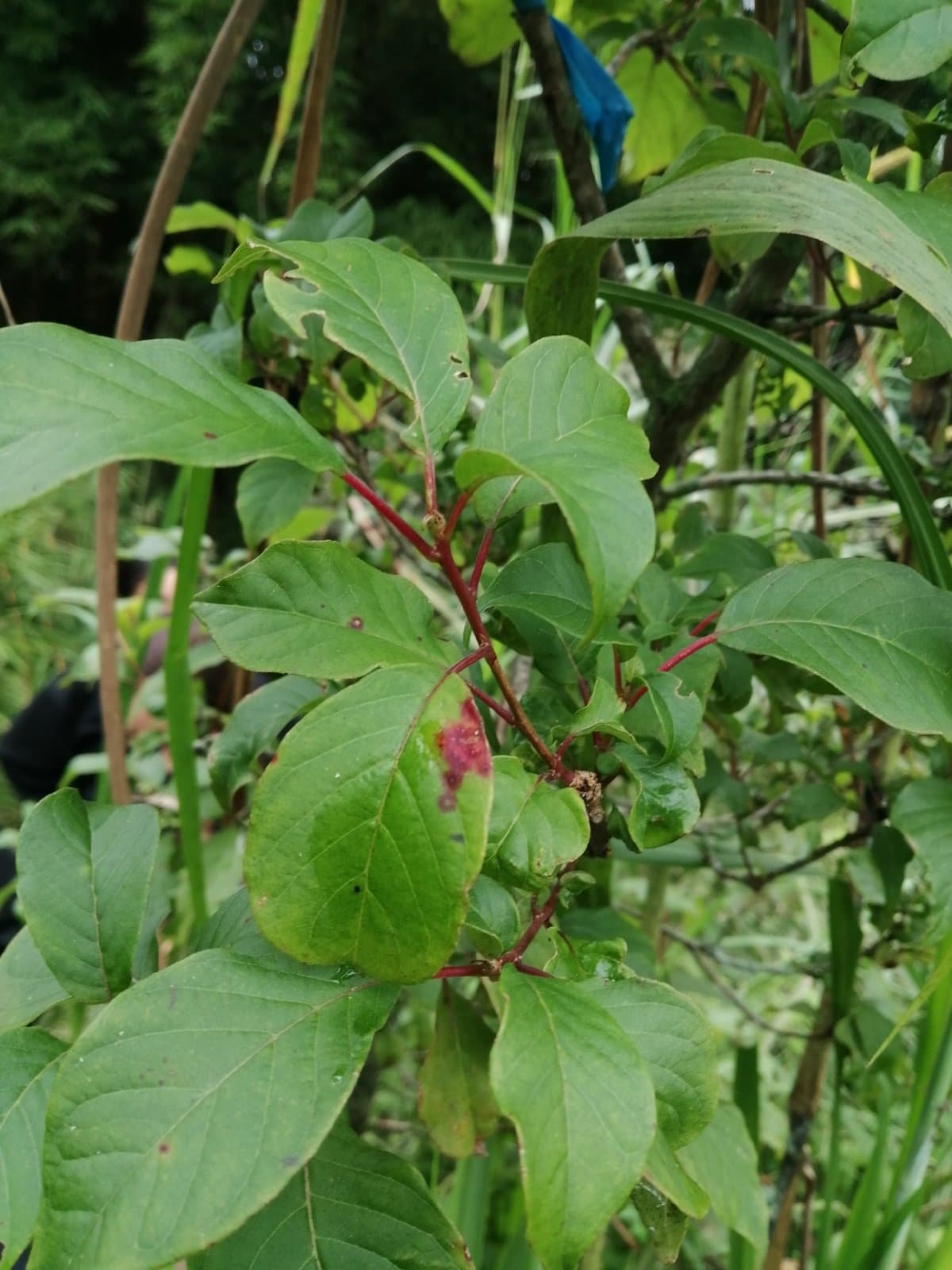
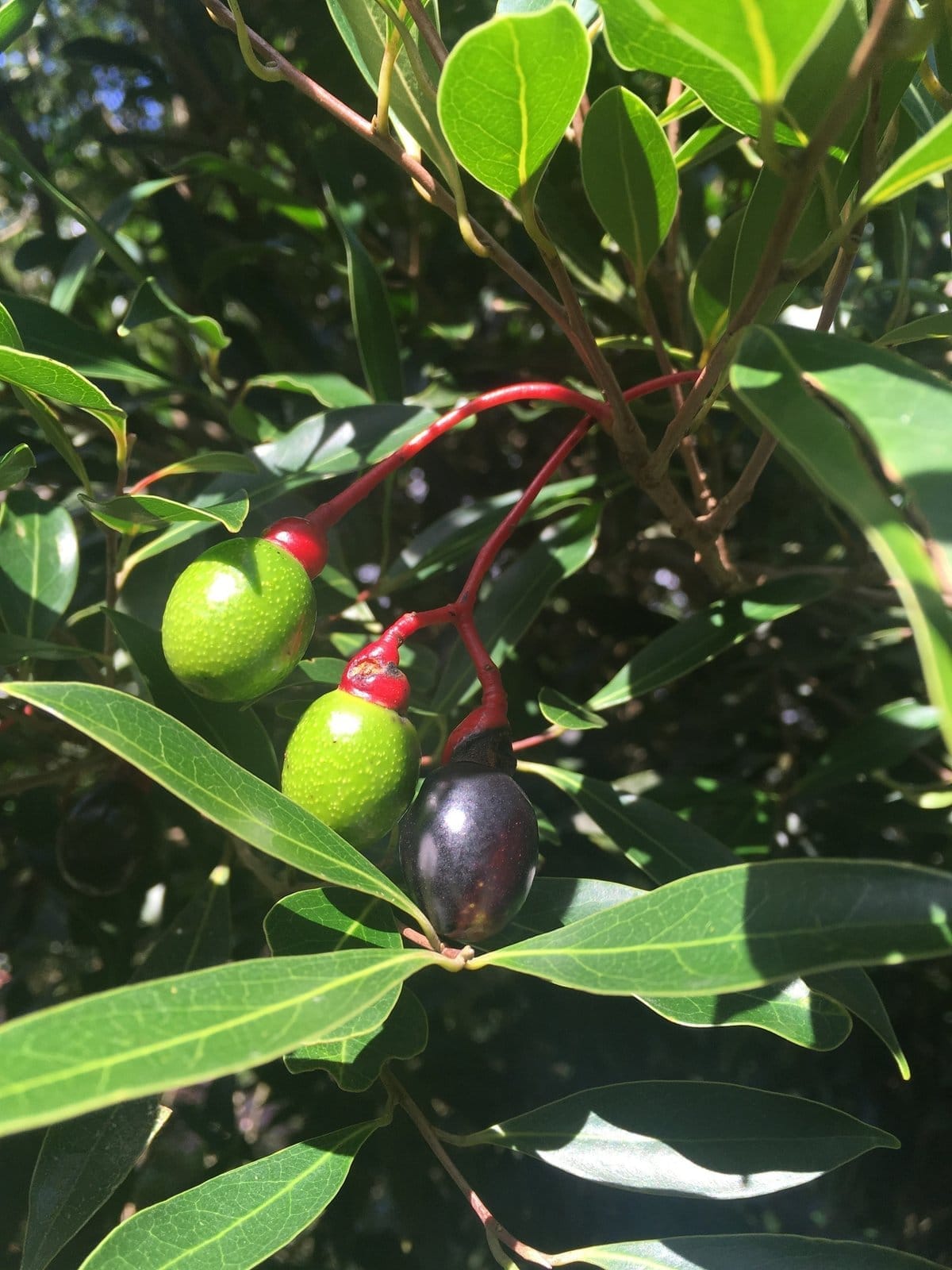
The leaves are one of the tree's most distinctive and diagnostic features. They are lanceolate (lance-shaped), with an entire (smooth) margin and an acute to acuminate apex. The upper surface is glossy dark green, while the lower surface is significantly paler and matte, often with a slightly glaucous appearance. Venation is pinnate, with the midrib prominent on both surfaces and 6-10 pairs of secondary veins.
Aromatic test: When crushed, the leaves release a strong, characteristic spicy-camphoraceous scent due to volatile terpenes and sesquiterpenes stored in specialized idioblast oil cells. This is the single most reliable field identification feature and distinguishes N. salicina from non-Lauraceae species with similar leaf shape.
Leaves are attached by slender, glabrous (hairless) petioles about 1-1.5 cm long. Young leaves may show a bronze or reddish tinge before maturing to dark green.
Flowers
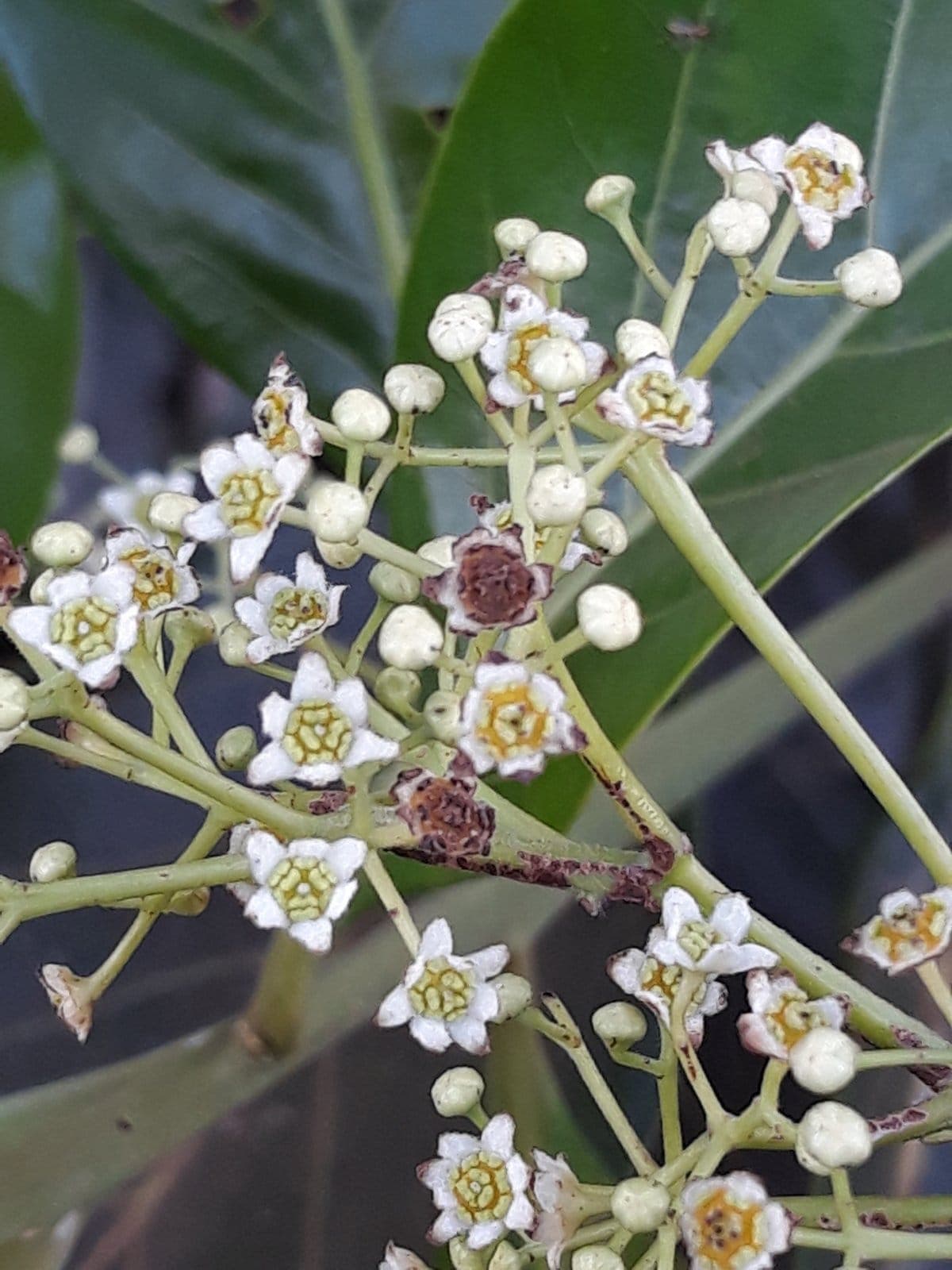
The flowers are small and inconspicuous, typical of Lauraceae. They are arranged in axillary panicles (branched clusters) up to 12 cm long that emerge from leaf axils along the branches. Individual flowers are only 2-3 mm in diameter, with a tubular perianth composed of 6 tepals that are white to pale yellow or greenish. The flowers are perfect (bisexual), with 9 stamens arranged in three whorls of three. The outer stamens produce nectar from paired glands at their base — a defining characteristic of the genus Nectandra.
Pollination is primarily by small flies, beetles, and thrips that are attracted to the sweet nectar and faint floral scent. Flowering occurs during the early dry season (March–May), synchronized across populations.
Fruit & Seeds
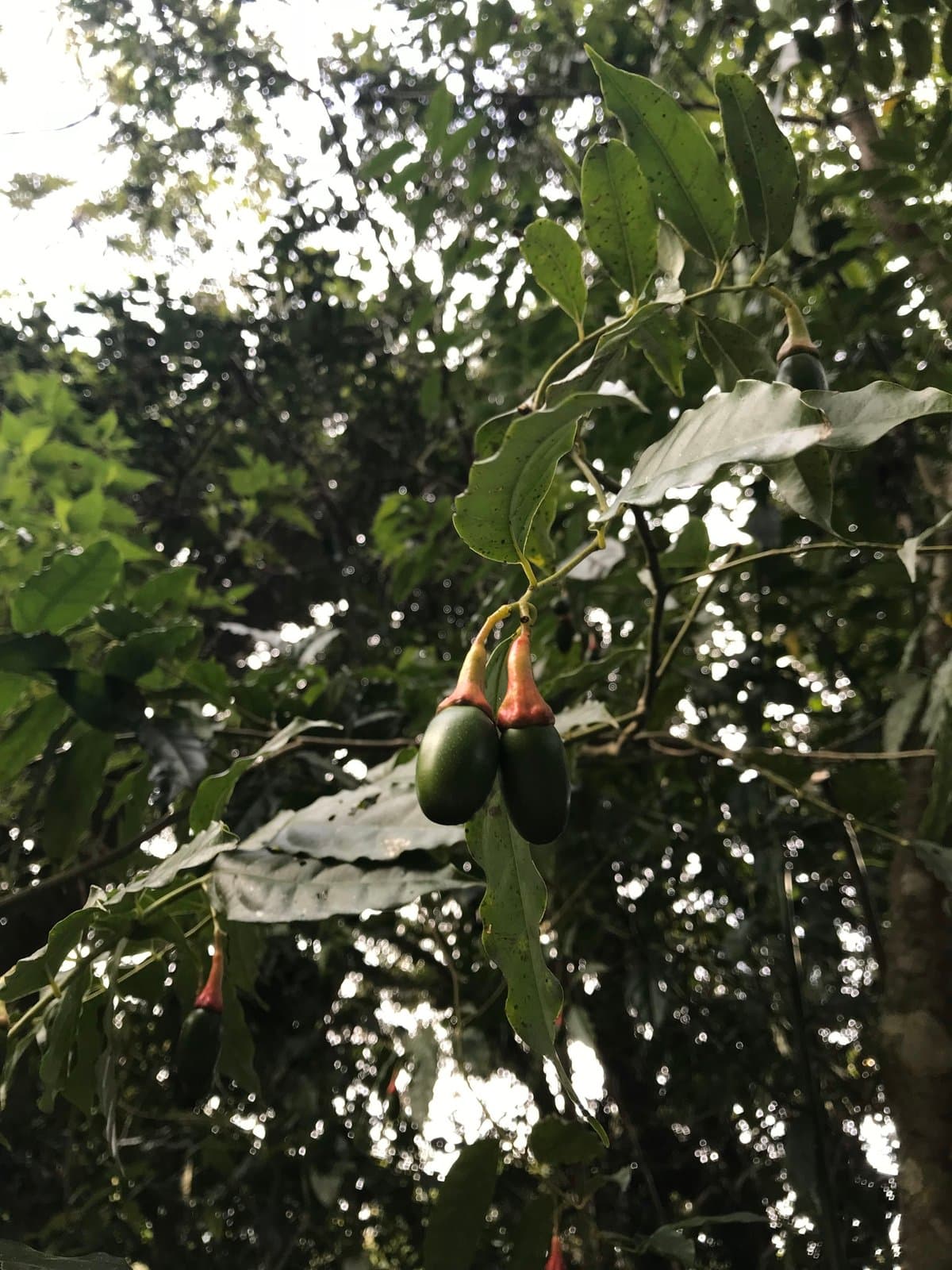
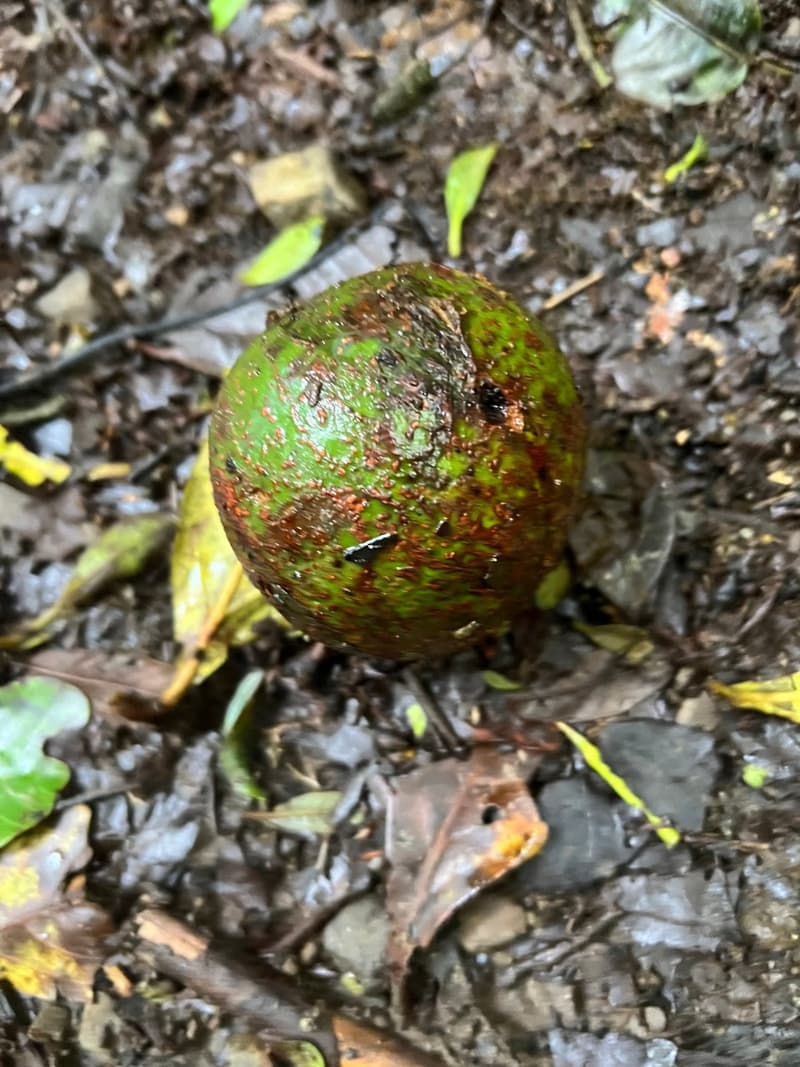
The fruit is a drupe (not a true berry), subglobose (nearly round), approximately 1.5-2 cm in diameter. Immature fruits are green, ripening to dark blue-black with a thin, fleshy mesocarp. The fruit sits in a distinctive red to reddish-orange cupule (cup-like structure) at the base — a hallmark of the genus Nectandra and an important identification feature. The cupule remains attached to the peduncle after the fruit is taken by birds or falls naturally.
Each fruit contains a single large seed rich in lipids and proteins — nutritional qualities that make Lauraceae fruits among the most energy-dense in tropical forests. The fruits ripen from June through September and are consumed by at least 15-20 bird species in Costa Rican cloud forests.
Like most Lauraceae, Quizarrá produces recalcitrant seeds that cannot survive drying and must germinate quickly after dispersal. This biological trait means seeds cannot be stored in conventional seed banks and must be planted fresh within days of collection — a significant consideration for conservation and restoration programs.
Geographic Distribution
Geographic Distribution
Cloud Forest Distribution
Quizarrá is characteristic of Costa Rica's cloud forest belt — the narrow elevational band where persistent cloud immersion creates cool, saturated conditions that support mosses, epiphytes, and shade-tolerant Lauraceae. These forests cover less than 2.5% of the world's tropical forest area but harbor a disproportionate fraction of tropical plant diversity, with many species found nowhere else.
Distribution in Costa Rica
The species ranges throughout Central America from southern Mexico (Chiapas, Oaxaca) through Guatemala, Honduras, El Salvador, Nicaragua, and Panama. It is most abundant in Costa Rica and western Panama, where cloud forest habitats are extensive and well-preserved.
Where to See Quizarrá
- Monteverde Cloud Forest Reserve — Common in the understory; look for the aromatic leaves along the main trail system
- Braulio Carrillo National Park — Abundant in middle-elevation forests (800-1,500 m) along the Barva sector trails
- Tapantí-Macizo de la Muerte National Park — Found along moist ravines and forest trails
- Chirripó National Park — Present in oak-dominated forests (1,500-2,500 m); less common above treeline transition
- Los Angeles Cloud Forest Reserve — Part of mixed montane forest near San Ramón
- Alberto Manuel Brenes Biological Reserve — Common Lauraceae component in pristine cloud forest
Habitat & Ecology
Ecological Role
Quizarrá plays several critical ecological roles in cloud forest ecosystems, contributing to both forest structure and wildlife nutrition.
Forest Associations
Quizarrá typically grows in association with characteristic cloud forest species:
- Oak forests (Quercus spp.) — Dominant canopy trees at 1,500-3,000 m; Quizarrá occupies the understory beneath these emergent oaks
- Other Lauraceae — Ocotea spp., Persea spp., and other Nectandra species, often forming Lauraceae-dominated understory guilds
- Tree ferns (Cyathea spp., Dicksonia spp.) — Co-dominant understory plants in wet cloud forest
- Understory palms (Geonoma, Chamaedorea) — Shade-tolerant palms sharing the same stratum
- Epiphyte communities — The frequently fog-drenched branches of Quizarrá support dense loads of mosses, liverworts, orchids, and bromeliads
Climate Requirements
Uses & Applications
Traditional and Local Uses
Timber: While not a major commercial timber species, Quizarrá wood is occasionally used locally for fence posts in rural mountain areas, rustic furniture or tool handles, firewood (though not preferred due to the tree's slow growth), and small construction projects in remote communities. The wood is moderately hard and durable but the tree's slow growth and typically small size limit its timber value. No large-scale commercial harvest occurs.
Traditional Knowledge: In highland communities around Monteverde, the Talamanca range, and the Central Valley highlands, experienced woodsmen and nature guides can identify Quizarrá by scent alone. When navigating dense cloud forest with limited visibility, the aromatic leaves serve as natural "scent landmarks." Crushing a leaf and recognizing the distinctive spicy-camphoraceous smell is a skill passed between generations of rural families.
Aromatic properties: The essential oils in the leaves — primarily terpenes and sesquiterpenes — have attracted interest from phytochemistry researchers. While N. salicina has not been commercially exploited for its oils, related Nectandra species yield essential oils used in traditional remedies and perfumery across Latin America.
Modern Applications
Ecological Restoration: Quizarrá is increasingly valued in cloud forest restoration programs for its native provenance and known wildlife associations. It is included in mixed-species planting designs for degraded cloud forest sites, particularly where the goal is to re-establish food resources for frugivorous birds. The species adapts well to secondary forest conditions and can establish under partial canopy, making it useful for enrichment planting.
Research value: As a member of the ecologically dominant Lauraceae, N. salicina serves as a model species for studying cloud forest dynamics, plant-bird mutualisms, and the impacts of climate change on montane ecosystems. It is included in long-term monitoring plots in Costa Rica's protected areas.
Sources: IUCN Red List (Damburneya salicina)↗, GBIF species profile↗, Kew POWO↗, Tropicos↗
Cultural & Historical Significance
The Laurel Family in Mesoamerican History
The Lauraceae family holds deep cultural significance across Mesoamerica. The avocado (Persea americana), domesticated from wild Lauraceae ancestors over 5,000 years ago, remains one of the most important crops in the region. Many Lauraceae species were recognized and named by indigenous peoples long before European contact, and their aromatic and medicinal properties were well documented in pre-Columbian pharmacopeia.
Indigenous and Local Knowledge
While Quizarrá does not carry the cultural weight of the avocado or cinnamon (Cinnamomum), it is an integral part of the traditional ecological knowledge of Costa Rica's highland communities. The Cabécar and Bribri peoples of the Talamanca range recognize cloud forest Lauraceae as indicators of healthy forests and reliable water sources. The name "Quizarrá" itself may derive from indigenous linguistic roots, though its exact etymology is uncertain.
Regional Identity
In the communities surrounding Monteverde, Tapantí, and Los Quetzales, the cloud forest is a source of local pride and identity. Quizarrá, as one of the characteristic understory trees, represents the intact montane forests that draw ecotourists from around the world. Its association with the Resplendent Quetzal — Costa Rica's most iconic bird — gives it additional symbolic value, as the survival of the quetzal depends on the continued availability of Lauraceae fruiting trees like Quizarrá.
Conservation Status
Nectandra salicina is assessed as Least Concern by the IUCN Red List. The species has a relatively wide distribution across Central America and is found in numerous protected areas. However, its cloud forest habitat faces growing threats from climate change.
Current Status
The species maintains stable populations across its Central American range. In Costa Rica specifically, it is common in protected cloud forests and montane biological reserves. Its presence in at least five major national parks and numerous private reserves provides a solid conservation baseline.
Threats
Cloud Forest Conservation Priorities
Protection Measures
Quizarrá benefits from protection of cloud forest habitats through Costa Rica's national park system, forestry laws prohibiting native timber harvest, inclusion in reforestation and restoration programs, and monitoring as part of long-term cloud forest biodiversity studies. The species occurs in several areas covered by the Payment for Ecosystem Services (Pago por Servicios Ambientales) program, which compensates private landowners for maintaining forest cover.
Sources: IUCN Red List (Damburneya salicina)↗, GBIF species profile↗, Kew POWO↗, World Flora Online↗
Growing Quizarrá
Quizarrá is a cloud forest specialist that requires cool temperatures, high humidity, and shade. It is not suitable for lowland gardens or dry Pacific slope conditions. Best results are achieved at elevations above 800 m in areas with frequent fog or mist.
Propagation
Site Selection
Choose a site that faithfully reproduces natural cloud forest conditions:
- Elevation: Best above 800 m in Costa Rica; optimal 1,000-2,000 m
- Shade: Partial to full shade, especially for young trees (60-80% shade cloth if no natural canopy)
- Protection: Sheltered from strong winds and direct afternoon sun
- Moisture: Area with consistent fog, mist, or high ambient humidity (>70% RH)
- Soil: Deep, organic-rich, well-drained forest soil; pH 5.0-6.5
Planting
- Plant during rainy season (May-November) for best establishment
- Dig hole twice the size of root ball in width and 1.5× in depth
- Mix excavated soil with compost or decomposed leaf litter
- Plant at same depth as in container — avoid burying the root collar
- Water thoroughly and apply 5-10 cm of organic mulch around the base
- Provide shade structure if site lacks natural canopy cover
Care Requirements
Watering: Keep soil consistently moist but not waterlogged. In areas without natural fog or mist, supplement with regular irrigation and consider misting systems. Newly planted trees need watering every 2-3 days during dry periods.
Fertilizing: Generally unnecessary in organic-rich soil. If growth is very slow after the first year, a light application of balanced organic fertilizer (e.g., 10-10-10 at half strength) in the early rainy season may help. Avoid high-nitrogen synthetic fertilizers.
Pruning: Minimal pruning needed. Remove dead or damaged branches as necessary. The natural growth form is already compact and well-shaped.
Common Growing Problems
Similar Species
Quizarrá can be confused with other Nectandra species and related Lauraceae in cloud forests. The following identification guide highlights key differences.
Identification Comparison
Key identification tip: The aromatic leaf-crush test is the simplest way to confirm Nectandra salicina in the field. The strong spicy-camphoraceous scent is distinctive and consistent. Combined with the narrow lanceolate leaves and cloud forest habitat, this makes field identification straightforward.
External Resources
Conservation status assessment: Least Concern
Community observations and photos from Costa Rica and Central America
Taxonomic information, synonyms, and global distribution
Comprehensive botanical database entry with accepted name and range
Specimen records, publications, and nomenclatural data
Detailed botanical description from the Flora of Costa Rica project
Global biodiversity occurrence data and distribution maps
References
-
Allen, C.K. (1945). Studies in the Lauraceae VI. Preliminary survey of the Mexican and Central American species. Journal of the Arnold Arboretum 26: 280-434.
-
Hammel, B.E., Grayum, M.H., Herrera, C., & Zamora, N. (eds.) (2003-2015). Manual de Plantas de Costa Rica (Vols. I-VIII). Missouri Botanical Garden Press, St. Louis.
-
Jiménez, Q. (1999). Árboles maderables de Costa Rica: ecología y silvicultura. Instituto Nacional de Biodiversidad (INBio), Santo Domingo de Heredia, Costa Rica.
-
Pounds, J.A., Fogden, M.P.L., & Campbell, J.H. (1999). Biological response to climate change on a tropical mountain. Nature 398: 611-615.
-
Pounds, J.A., Bustamante, M.R., Coloma, L.A., et al. (2006). Widespread amphibian extinctions from epidemic disease driven by global warming. Nature 439: 161-167.
-
Rohwer, J.G. & Rudolph, B. (2005). Jumping genera: The phylogenetic positions of Cassytha, Hypodaphnis, and Neocinnamomum (Lauraceae) based on different analyses of trnK intron sequences. Annals of the Missouri Botanical Garden 92: 153-178.
-
Standley, P.C. & Steyermark, J.A. (1946). Flora of Guatemala. Fieldiana: Botany 24(4): 234-235.
-
The IUCN Red List of Threatened Species. (2020). Damburneya salicina. Version 2024.1. https://www.iucnredlist.org
-
Trofimov, D., Rudolph, B., & Rohwer, J.G. (2016). Phylogenetic study of the genus Nectandra (Lauraceae), and reinstatement of Damburneya. Taxon 65(5): 980-996.
-
van der Werff, H. (2002). A synopsis of Ocotea (Lauraceae) in Central America and southern Mexico. Annals of the Missouri Botanical Garden 89: 429-451.
-
Wheelwright, N.T. (1983). Fruits and the ecology of Resplendent Quetzals. The Auk 100: 286-301.
Safety Information Disclaimer
Safety information is provided for educational purposes only. Individual reactions may vary significantly based on age, health status, amount of exposure, and individual sensitivity. Always supervise children around plants. Consult a medical professional or certified arborist for specific concerns. The Costa Rica Tree Atlas is not liable for injuries or damages resulting from interaction with trees described in this guide.
• Always supervise children around plants
• Consult medical professional if unsure
• Seek immediate medical attention if poisoning occurs
Information compiled from authoritative toxicology sources, scientific literature, and medical case reports.
Help improve this page
Know something about this tree? Share local knowledge, suggest a correction, or submit a photo to improve this guide for everyone.