Arrayán
Weinmannia pinnata
Quick facts
Native Region
Mexico to Peru, Caribbean
Max Height
20-30 meters (65-100 feet)
Family
Cunoniaceae
Conservation
LC — Least Concern
Uses
Safety Information
Toxicity Details
Arrayán is non-toxic and safe for humans and animals. No known toxic compounds in leaves, bark, or wood. The tree has been used in traditional medicine throughout its range without reports of toxicity.
Skin Contact Risks
No known skin contact risks. Safe to handle and work around.
Allergenic Properties
Low allergen risk. Wood dust from cutting may cause minor respiratory irritation as with any wood species. Use standard dust protection when working with the wood.
Wildlife & Pet Risks
Safe for all wildlife. Important habitat tree for birds, insects, and serves as host for numerous epiphytes including orchids, bromeliads, and ferns.
Season
Flowering
Mar-Jun
Fruiting
Jun-Sep
How to identify
Arrayán
Arrayán (Weinmannia pinnata) is one of the most characteristic and ecologically important trees of Costa Rica's cloud forests. Often dominating the canopy between 1500-3000 meters elevation, this evergreen tree's twisted branches draped with mosses, lichens, and epiphytes define the misty montane landscapes of the Central and Talamanca mountain ranges.
Quick Reference
iNaturalist Observations
Community-powered species data
📸 Photo Gallery
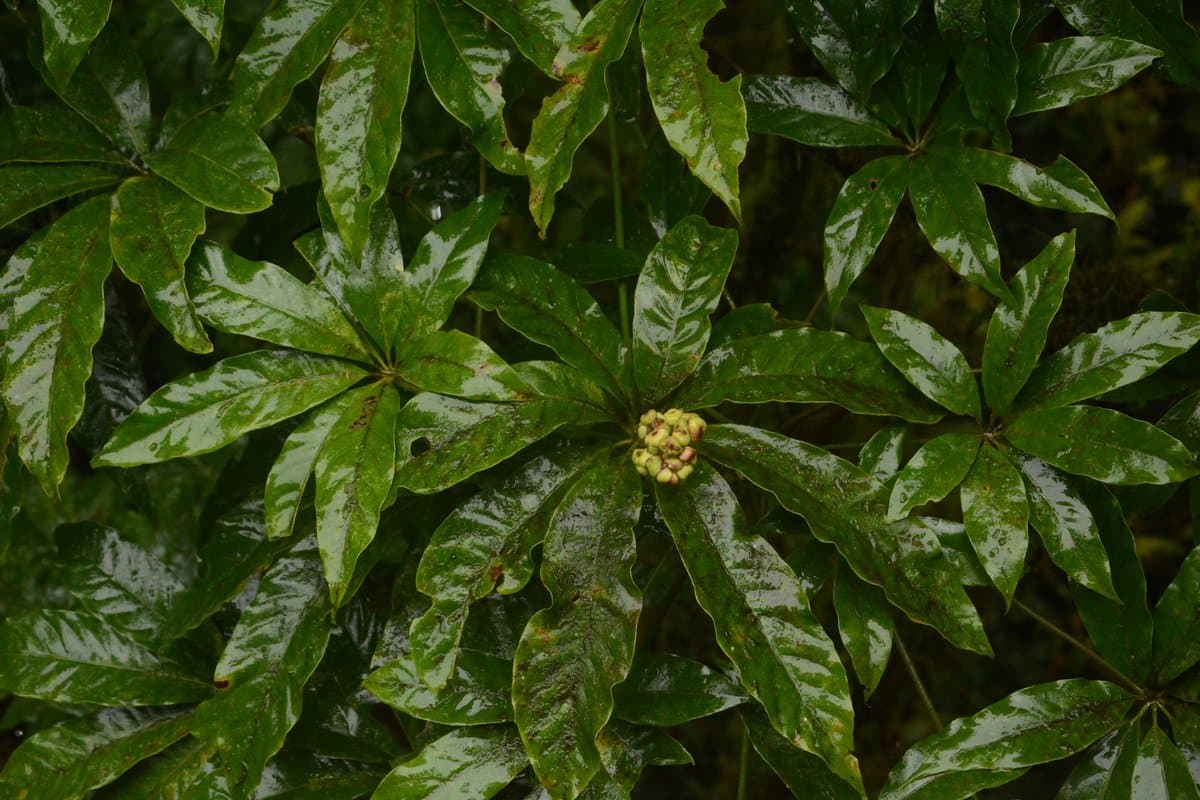
Whole tree
📷 (c) Leonardo Álvarez-Alcázar, some rights reserved (CC BY-NC)(CC BY-NC)
View source ↗Leaves
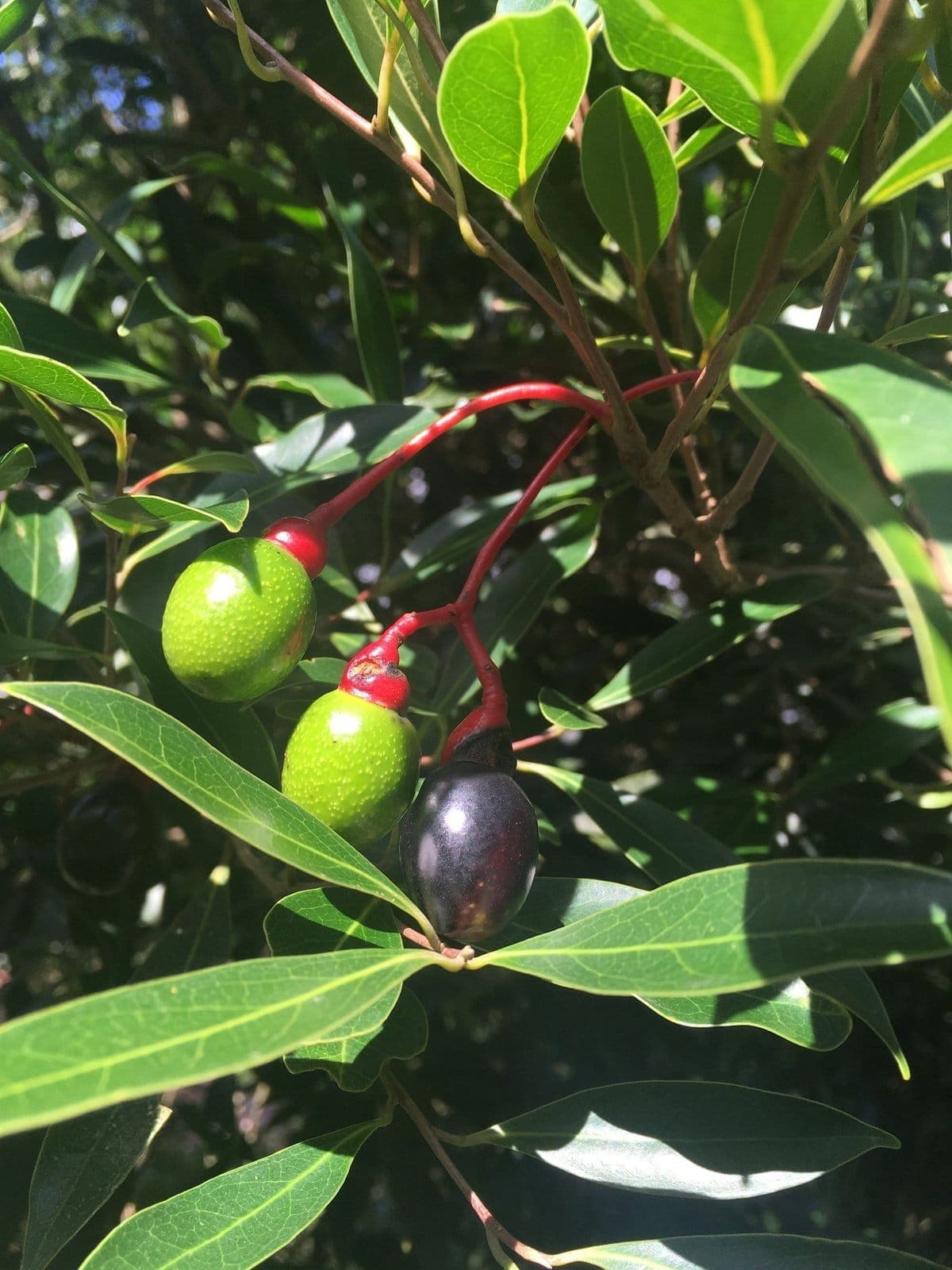
📷 (c) Leonardo Álvarez-Alcázar, some rights reserved (CC BY-NC)(CC BY-NC)
View source ↗Whole tree
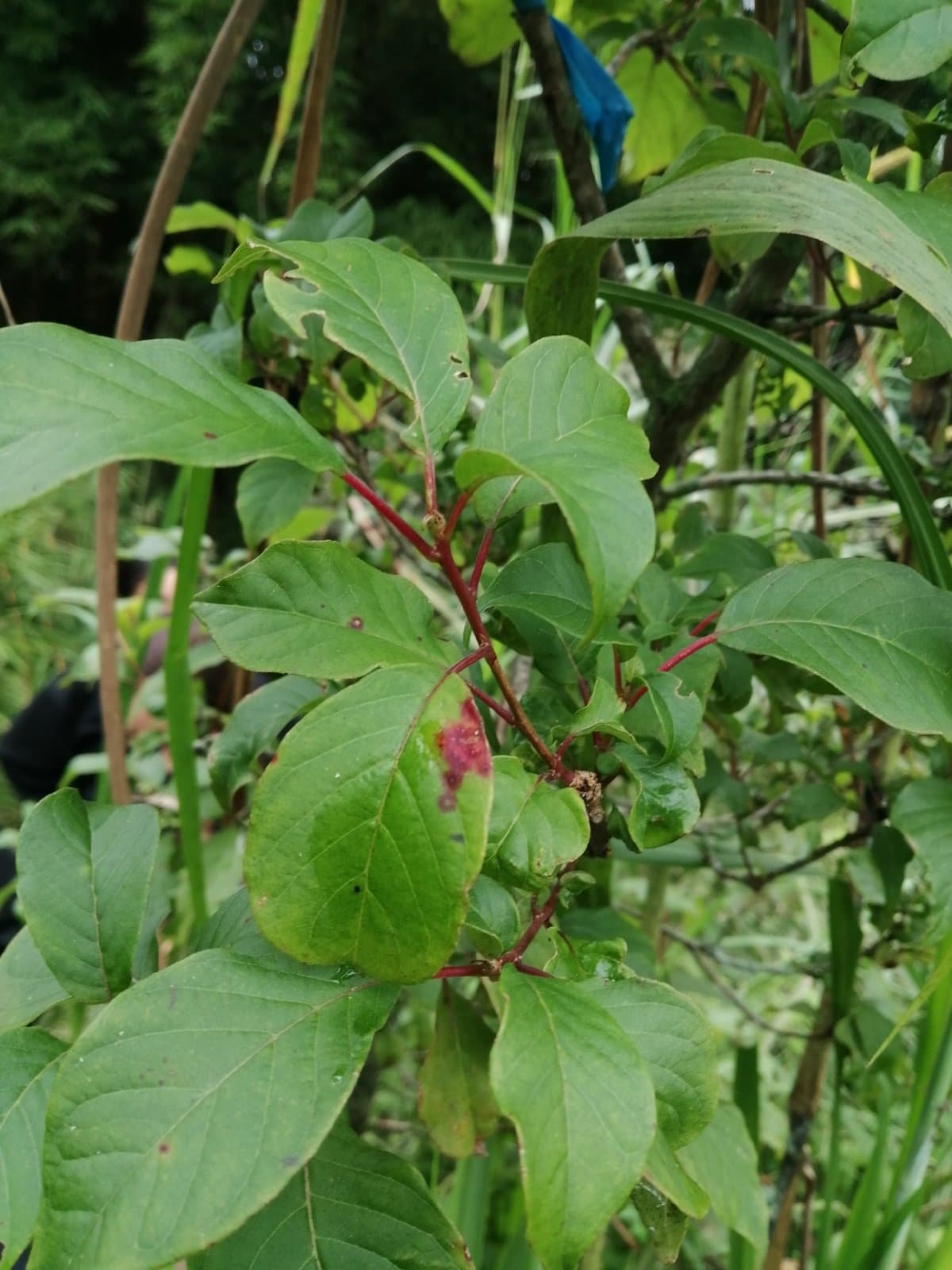
📷 (c) Octavio Rivera Hernández, some rights reserved (CC BY-NC)(CC BY-NC)
View source ↗Leaves
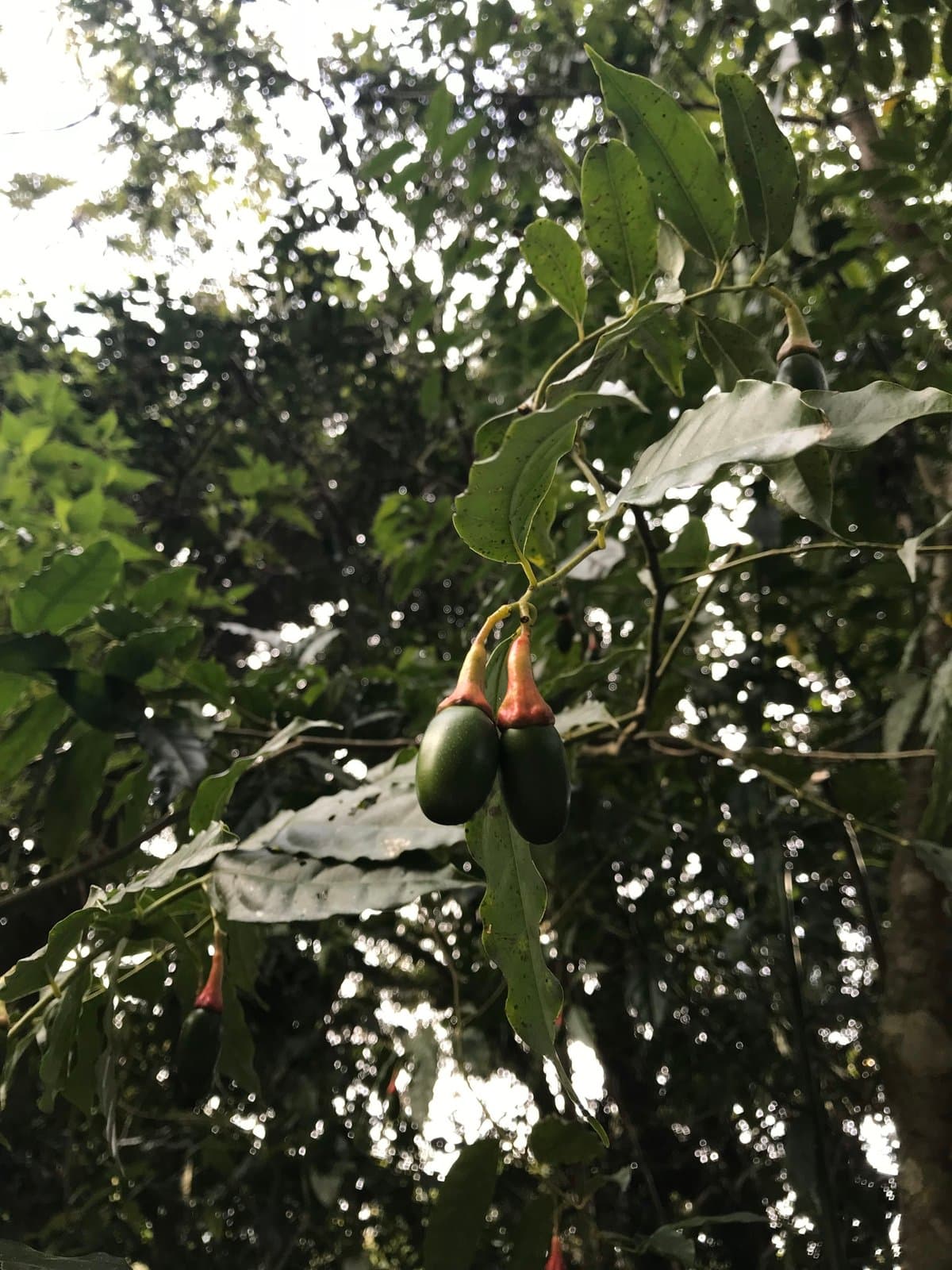
📷 (c) Leonardo Álvarez-Alcázar, some rights reserved (CC BY-NC)(CC BY-NC)
View source ↗Whole tree
📷 (c) Martin Reith, some rights reserved (CC BY-NC)(CC BY-NC)
View source ↗→ View more photos on iNaturalist↗
Taxonomy & Classification
Common Names by Region
Etymology
The genus name Weinmannia honors Johann Wilhelm Weinmann (1683-1741), a German botanist and pharmacist. The species epithet pinnata refers to the pinnately compound leaves (feather-like arrangement of leaflets along a central stem).
Physical Description
Tree Form
Arrayán is a medium to large evergreen tree typically reaching 20-30 meters in height with a trunk diameter of 50-80 cm. The tree has a characteristic form adapted to cloud forest conditions:
- Trunk: Often twisted and gnarled, especially in exposed sites; bark is dark brown to gray, rough and deeply fissured on mature trees
- Crown: Irregular and spreading, often broader than tall; branches contorted and heavily laden with epiphytes
- Growth Pattern: Evergreen; maintains foliage year-round
Bark Characteristics
The bark is one of the tree's distinctive features:
- Dark brown to grayish-brown color
- Deeply fissured and rough texture on mature trees
- Young bark smoother, becoming increasingly rugose with age
- Rich in tannins, historically used for leather tanning
- Often covered with mosses and lichens in humid conditions
Leaves
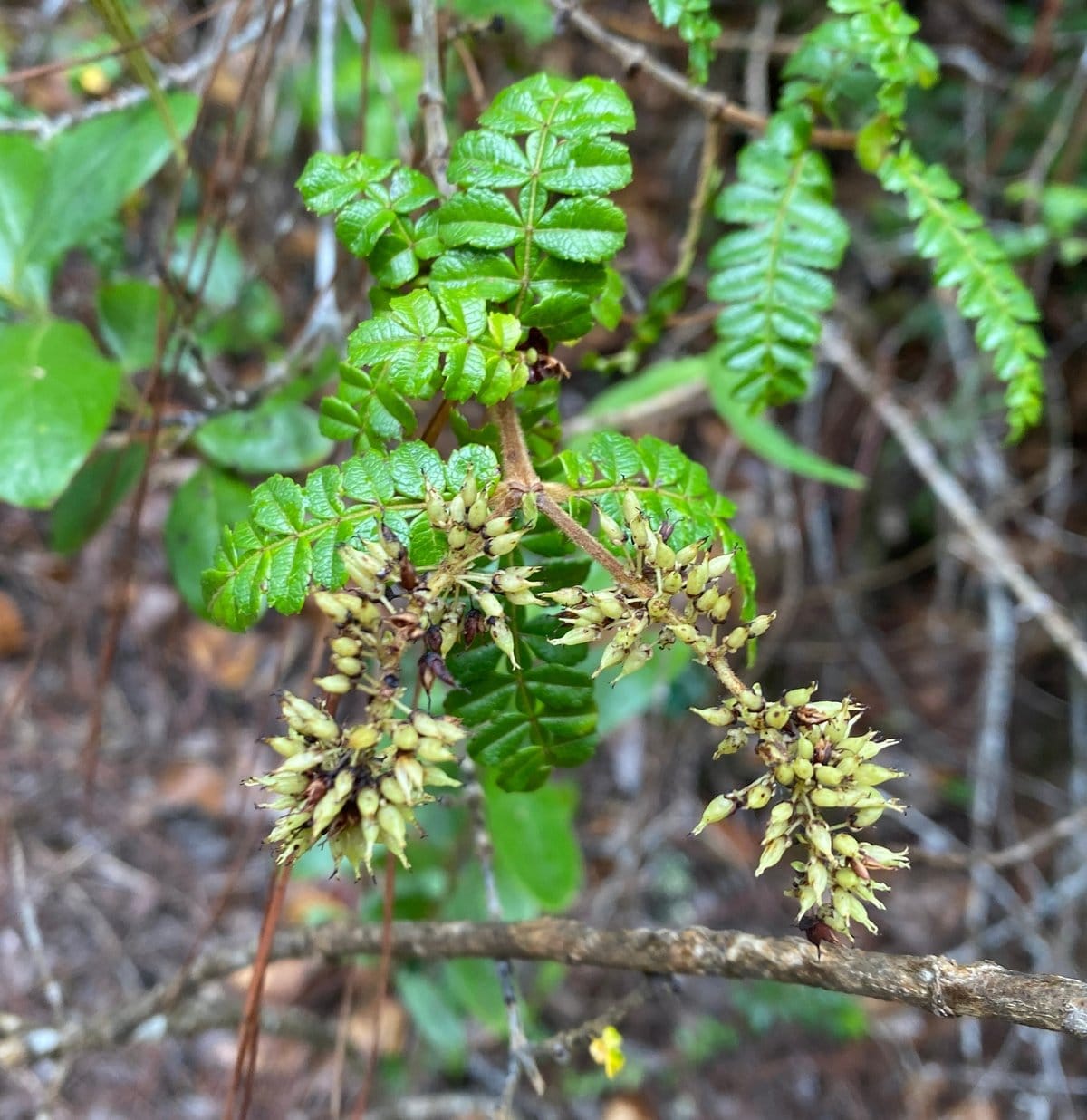
Detail: Each leaf consists of multiple paired leaflets along a central rachis. The leaflets are 2-5 cm long, elliptic to ovate, with sharply toothed margins. The glossy dark green upper surface contrasts with a paler lower surface. New growth often emerges bronze or reddish before turning green.
Flowers
Description: Flowers are small and inconspicuous individually but produced in showy terminal spikes (racemes) 5-15 cm long. Each flower has 4 white petals and 8 conspicuous stamens. The flowers are mildly fragrant and attract various insects.
Fruit & Seeds
- Type: Small woody capsule
- Size: 4-6 mm long
- Color: Brown when mature
- Opening: Splits open along two valves when ripe
- Seeds: Tiny, numerous, wind-dispersed
- Season: June-September
Geographic Distribution
Native Range
Weinmannia pinnata has an exceptionally wide distribution for a montane species, found from Mexico through Central America to Peru, and also in the Caribbean (Jamaica, Hispaniola). This broad range reflects the species' ancient origins and successful adaptation to montane environments throughout the Neotropics.
Distribution in Costa Rica
In Costa Rica, Arrayán is found throughout the mountain ranges:
- Central Volcanic Range: Poás, Barva, Irazú, Turrialba volcanoes
- Talamanca Range: Cerro de la Muerte, Chirripó, La Amistad
- Tilarán Range: Monteverde area
- Guanacaste Volcanic Range: Upper slopes of Rincón de la Vieja, Miravalles
Habitat & Ecology
Ecological Role
Arrayán plays a keystone role in cloud forest ecosystems:
- Canopy Dominant: Often the most abundant tree species in upper montane forests
- Epiphyte Host: Supports exceptional diversity of epiphytic plants (orchids, bromeliads, ferns, mosses, lichens)
- Wildlife Habitat: Provides nesting sites and food for numerous highland bird species
- Watershed Protection: Dense root systems stabilize steep slopes and regulate water flow
- Nutrient Cycling: Leaf litter contributes to soil formation in harsh montane conditions
Wildlife Associations
Forest Dynamics
- Succession: Can colonize disturbed areas but grows slowly; more common in mature forests
- Longevity: Long-lived trees, individuals can exceed 200-300 years
- Fire Sensitivity: Highly susceptible to fire; lacks adaptations to fire disturbance
- Climate Indicator: Presence indicates cloud forest conditions
Uses & Applications
Traditional and Historical Uses
Modern Applications
Conservation & Restoration:
- Excellent species for cloud forest restoration projects
- Used in watershed protection plantings
- Important for maintaining biodiversity in protected areas
Scientific Research:
- Model species for studying cloud forest ecology
- Research on epiphyte-host relationships
- Climate change indicator species
Cultural & Historical Significance
Indigenous Knowledge
Indigenous peoples throughout the tree's range have known and utilized Arrayán for generations:
- Source of materials in high-elevation settlements
- Marker of good quality land with reliable water sources
- Associated with cloud forest spirits in some highland cultures
Place in Costa Rican Heritage
While not as culturally prominent as lowland species, Arrayán is:
- Symbolic of Costa Rica's cloud forest ecosystems
- Associated with the country's most pristine high-elevation protected areas
- Important in local highland communities (Monteverde, Cerro de la Muerte area)
Conservation Status
Sources: IUCN Red List — Weinmannia pinnata↗, Tropicos — Weinmannia pinnata↗, GBIF — Weinmannia pinnata↗
Least Concern
IUCN Red List Status
IUCN Assessment
Weinmannia pinnata is assessed as Least Concern (LC) by the IUCN due to:
- Wide geographic distribution (Mexico to Peru)
- Occurrence in numerous protected areas
- Adaptability across a range of montane conditions
- Large total population size
Threats & Challenges
Despite its Least Concern status, the species faces local threats:
- Deforestation: Conversion of cloud forests to agriculture (especially coffee and dairy farming)
- Fire: Increasingly frequent fires in degraded highland areas harm this fire-sensitive species
- Climate Change:
- Rising temperatures may shift suitable habitat upward
- Changes in cloud patterns threaten moisture availability
- "Lifting cloud base" phenomenon reduces habitat
- Fragmentation: Isolation of cloud forest patches affects gene flow and epiphyte dispersal
Protection Status
The species is protected through conservation of its habitat:
- Costa Rica: Found in numerous national parks and reserves (La Amistad, Chirripó, Poás, Barva, many others)
- Protected Areas: Much of its range in Costa Rica is within protected status
- International: Occurs in multiple UNESCO World Heritage Sites (e.g., Talamanca Range)
Growing Arrayán
Propagation
From Seed:
- Collect capsules when they turn brown (June-September)
- Dry capsules split open to release tiny seeds
- Seeds are very small and require careful handling
- Surface sow on moist, sterile medium
- Keep consistently moist with high humidity
- Germination occurs in 2-4 weeks
- Seedlings grow slowly initially
From Cuttings:
- Semi-hardwood cuttings can root but success rate is low
- Requires mist propagation system
- Hormone treatment improves success
- Generally not recommended for large-scale propagation
Site Requirements
Critical: Arrayán is strictly a highland species and will not survive in lowland conditions.
Where to Plant:
- ✅ Cloud forest restoration sites above 1500m
- ✅ Highland properties with cool, moist conditions
- ✅ Watershed protection projects in montane zones
- ❌ Lowland areas (will not survive)
- ❌ Dry regions without year-round moisture
Planting & Establishment
- Timing: Plant at beginning of rainy season (May) or in areas with year-round rain
- Spacing:
- Restoration: 3-5 m spacing for rapid canopy closure
- Landscape: 8-12 m spacing for full development
- Soil Preparation: Minimal needed; adapts to poor montane soils
- Planting Depth: Plant at same depth as in container
- Initial Care: Keep moist but not waterlogged; mulch to retain moisture
Growth & Maintenance
- Growth Rate: Moderate; 1-2 feet per year in suitable conditions
- Young Trees: Protect from livestock if present; may need windbreak in very exposed sites
- Pruning: Generally unnecessary; let develop natural form
- Fertilization: Not needed; adapted to low-nutrient montane soils
- Pests/Diseases: Few significant problems; quite resistant
Time to Maturity
- Begins flowering at 10-15 years
- Reaches significant size at 30-50 years
- Maximum size attained at 100+ years
Where to See Arrayán in Costa Rica
National Parks & Protected Areas
Identification Tips
When looking for Arrayán in the field:
- Look for heavily epiphyte-laden trees in cloud forest
- Compound leaves with toothed leaflets distinguish it from other cloud forest trees
- Twisted, gnarled trunks are characteristic
- Often the most abundant canopy tree in suitable elevation zones
- Bark covered in mosses and lichens in humid conditions
External Resources
Official conservation assessment and population data
Community observations, photos, and distribution maps
Botanical database with nomenclature and specimens
Global occurrence data and biodiversity information
Local identification guide with photos
References
📚 Scientific References & Further Reading
Gentry, A.H. (1993). A Field Guide to the Families and Genera of Woody Plants of Northwest South America. Conservation International
Haber, W.A. (2000). Plants and Vegetation of Monteverde, Costa Rica. Monteverde: Ecology and Conservation of a Tropical Cloud Forest
Kappelle, M. (2006). Ecology and Conservation of Neotropical Montane Oak Forests. Springer
Nadkarni, N.M. (1984). Epiphyte Biomass and Nutrient Capital of a Neotropical Elfin Forest. Biotropica 16(4): 249-256[Link ↗]
Still, C.J., Foster, P.N., and Schneider, S.H. (1999). Simulating the effects of climate change on tropical montane cloud forests. Nature 398: 608-610[Link ↗]
The Arrayán (Weinmannia pinnata) is more than just a tree—it is the living architecture of Costa Rica's cloud forests. Its twisted branches, draped in gardens of epiphytes, create the misty, moss-hung landscapes that define the country's highlands. As climate change threatens these fragile ecosystems, protecting Arrayán and its cloud forest habitat becomes increasingly critical for maintaining the biodiversity and watershed functions that benefit all of Costa Rica.
Safety Information Disclaimer
Safety information is provided for educational purposes only. Individual reactions may vary significantly based on age, health status, amount of exposure, and individual sensitivity. Always supervise children around plants. Consult a medical professional or certified arborist for specific concerns. The Costa Rica Tree Atlas is not liable for injuries or damages resulting from interaction with trees described in this guide.
• Always supervise children around plants
• Consult medical professional if unsure
• Seek immediate medical attention if poisoning occurs
Information compiled from authoritative toxicology sources, scientific literature, and medical case reports.
Help improve this page
Know something about this tree? Share local knowledge, suggest a correction, or submit a photo to improve this guide for everyone.