Sigua
Nectandra cissiflora
Quick facts
Native Region
Southern Mexico to South America and Trinidad
Max Height
20-35 meters (66-115 feet)
Family
Lauraceae
Conservation
LC — Least Concern
Uses
Safety Information
Toxicity Details
Nectandra cissiflora has no documented toxicity to humans or animals. The tree is considered safe, though as with all wild plants, caution should be exercised and plant parts should not be consumed without proper identification and knowledge.
Skin Contact Risks
Minimal risk from skin contact. The aromatic wood and leaves contain lauraceous compounds that may cause mild irritation in highly sensitive individuals, but this is uncommon. The wood's strong odor is notable but not harmful. Generally safe to handle.
Allergenic Properties
Low allergen risk. Some individuals may experience mild allergic reactions to the aromatic compounds in the wood or crushed leaves, or to pollen during flowering season, but significant allergies are rare.
Structural Hazards
No significant structural risks from mature trees. This is a tall canopy to sub-canopy species with straight trunk. As with all large trees, falling branches from aging specimens should be monitored in developed areas.
Wildlife & Pet Risks
Safe for wildlife. The purple fruits are consumed by birds and mammals. Not toxic to domestic animals.
Season
Flowering
Jan-Mar
Fruiting
May-Jul
How to identify
Sigua
Sigua (Nectandra cissiflora) is a tall semi-deciduous tree belonging to the Lauraceae (laurel) family. This impressive canopy species is an important component of Costa Rica's lowland and premontane rainforests, valued for its durable timber with distinctive aromatic properties and its ecological role as a wildlife food source. The wood's strong odor makes it easily identifiable, though opinions vary on its appeal.
Quick Reference
iNaturalist Observations
Community-powered species data
📸 Photo Gallery
High-quality images for this species need to be sourced from iNaturalist or botanical databases following the project's image guidelines. Available observations can be found on iNaturalist.
📸 Photo Gallery
Whole tree
📷 (c) Laurent Quéno, some rights reserved (CC BY-NC)(CC BY-NC)
View source ↗Leaves
📷 (c) Laurent Quéno, some rights reserved (CC BY-NC)(CC BY-NC)
View source ↗Leaves
📷 (c) Laurent Quéno, some rights reserved (CC BY-NC)(CC BY-NC)
View source ↗Leaves
📷 (c) Laurent Quéno, some rights reserved (CC BY-NC)(CC BY-NC)
View source ↗Leaves
📷 (c) Laurent Quéno, some rights reserved (CC BY-NC)(CC BY-NC)
View source ↗Photos sourced from iNaturalist's community science database. Browse all observations →↗
Taxonomy & Classification
Common Names by Region
Taxonomic Notes
The species was described by Christian Gottfried Daniel Nees von Esenbeck, a prominent 19th-century German botanist. The genus Nectandra is one of the most diverse genera in the Lauraceae family, with approximately 114 species distributed throughout tropical and subtropical America. Many Nectandra species are valued timber trees with aromatic wood properties.
The genus name comes from Greek nektar (nectar) and andros (male), referring to the nectar-secreting glands on the stamens. Nectandra cissiflora is distinguished from related species by its larger leaves, pubescent young stems, and distinctive fruit structure.
Etymology
- Nectandra: From Greek, referring to nectar-producing stamens characteristic of the genus
- cissiflora: From Latin cissus (ivy) and flora (flower), possibly referring to the clustered flower arrangement
Physical/Botanical Description
Tree Form
Sigua is a tall, semi-deciduous tree reaching 20-35 meters in height, occasionally taller in optimal conditions. The trunk is straight and cylindrical, typically 60-90 cm in diameter, free of branches for much of its length. The crown is relatively sparse and vase-shaped, composed of ascending branches. The tree may lose some leaves during the dry season, particularly in drier parts of its range.
Bark
The bark is gray to gray-brown, relatively smooth on young trees, becoming slightly fissured and scaly with age. The outer bark is thin to moderately thick. Young stems are particularly distinctive, being densely covered with reddish-brown (rufous) hairs that gradually disappear as the stems mature. When cut, the bark and wood emit a strong, distinctive odor.
Leaves
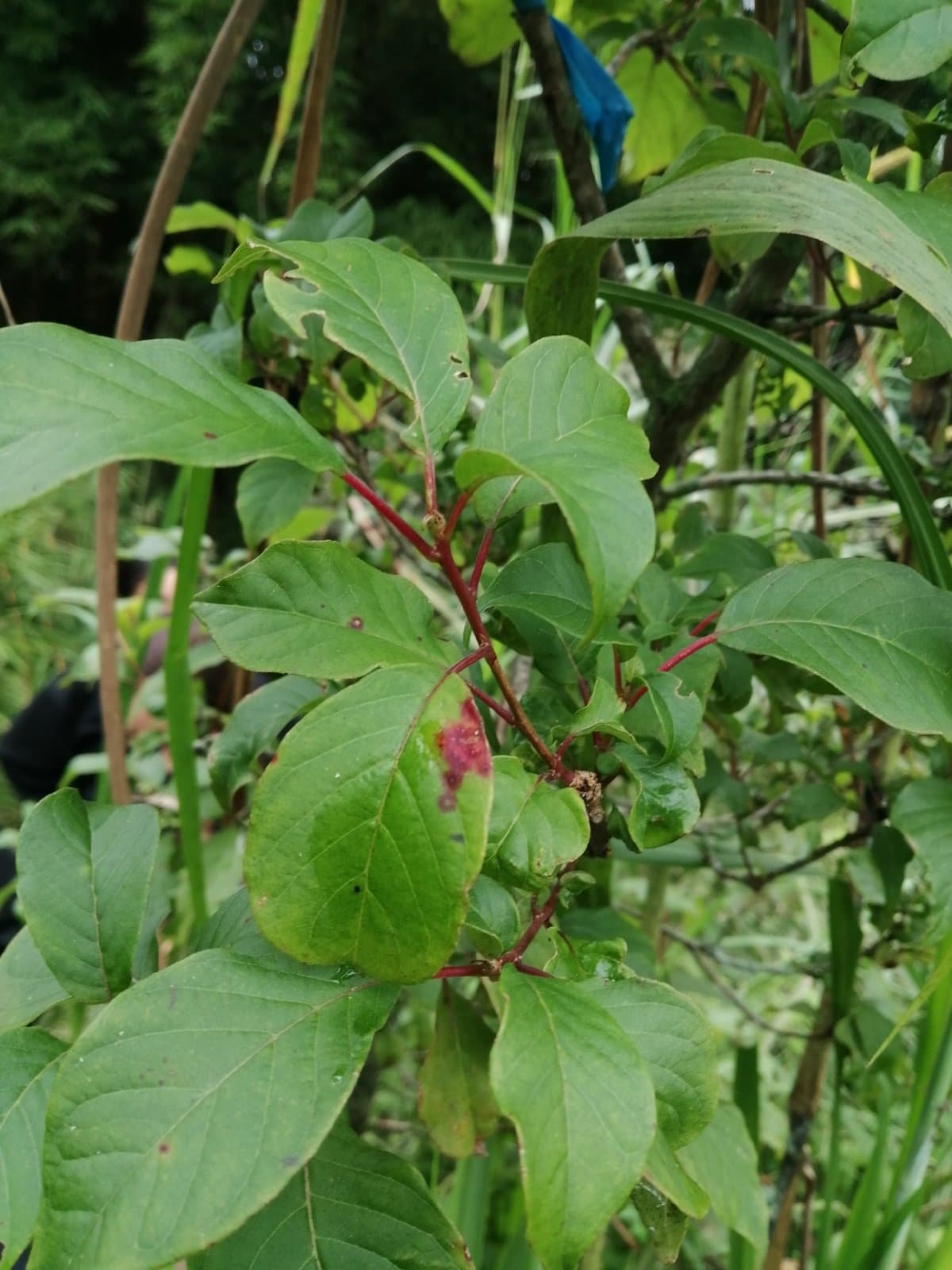
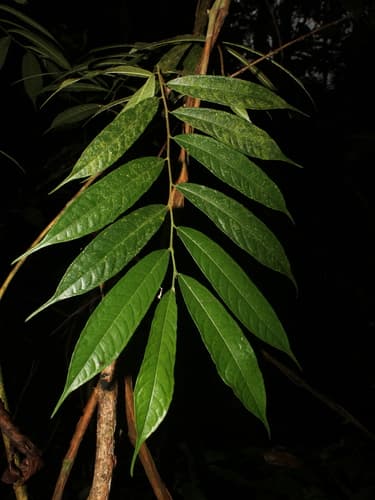
The leaves are larger than those of the related Nectandra salicina (Quizarrá), measuring 9-26 cm long and 5-10 cm wide. They are oblong-elliptic to oblanceolate (inverse lance-shaped) with an entire margin and acute to acuminate tip. The upper surface is dark green and relatively smooth at maturity, while the lower surface is paler and often covered with fine hairs (pubescent), especially along the veins.
Leaves are attached by short petioles. The venation is pinnate, with the midrib prominent on both surfaces. When crushed, the leaves emit a characteristic aromatic scent typical of the Lauraceae family, though less pronounced than the wood's odor.
Flowers
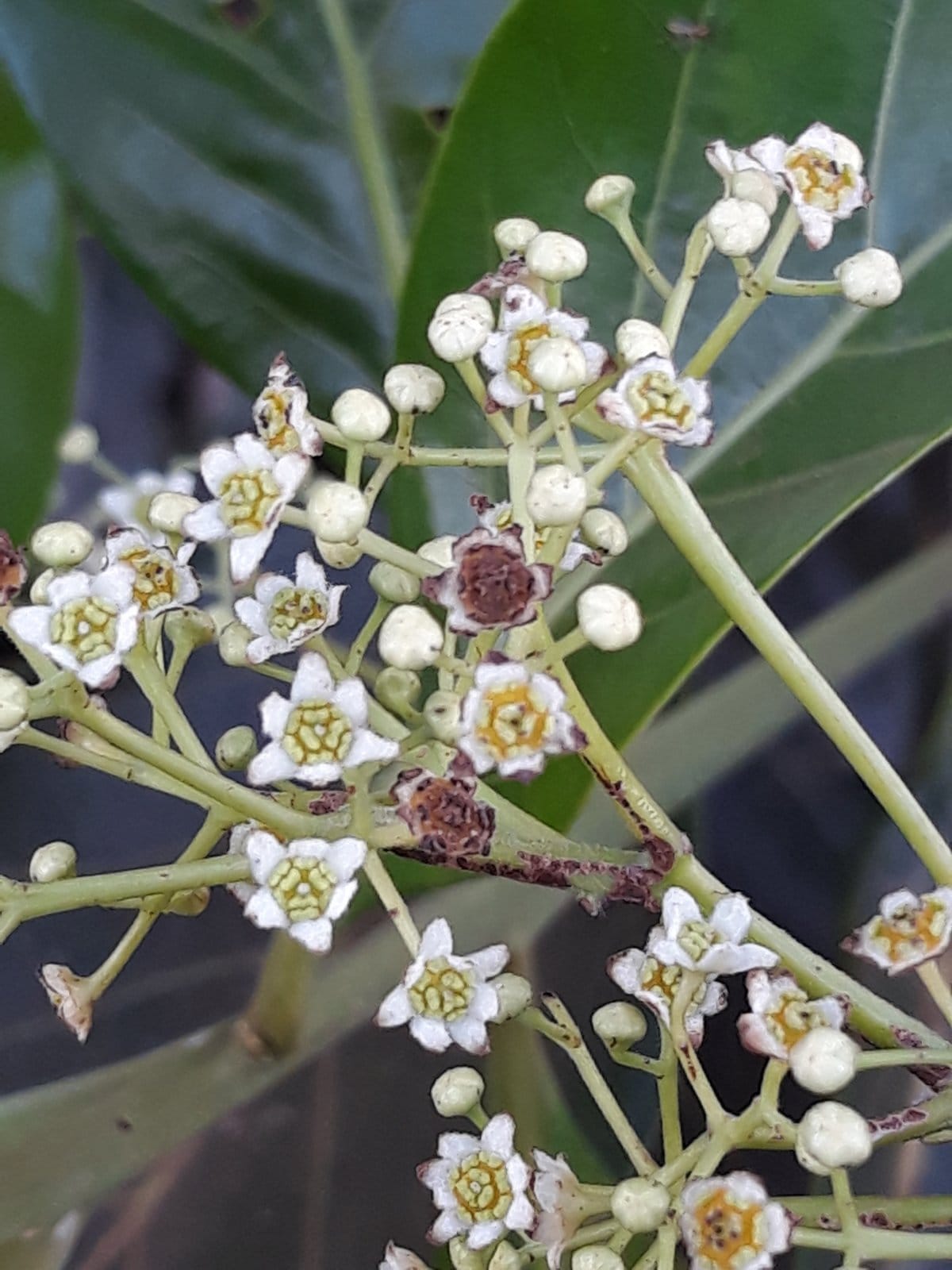
The flowers are small and inconspicuous, typical of the Lauraceae family. They appear in axillary panicles (branched clusters) arising from leaf axils. Individual flowers are only 3-5 mm in diameter, with a tubular perianth composed of tepals (undifferentiated petals and sepals) that are white to pale cream in color.
Flowers are perfect (bisexual), with 9 stamens arranged in three whorls. The stamens have nectar-producing glands at their base, which attract small insects for pollination. Flowering occurs primarily in the dry season (January-March), when the trees produce numerous flower clusters.
Fruit & Seeds
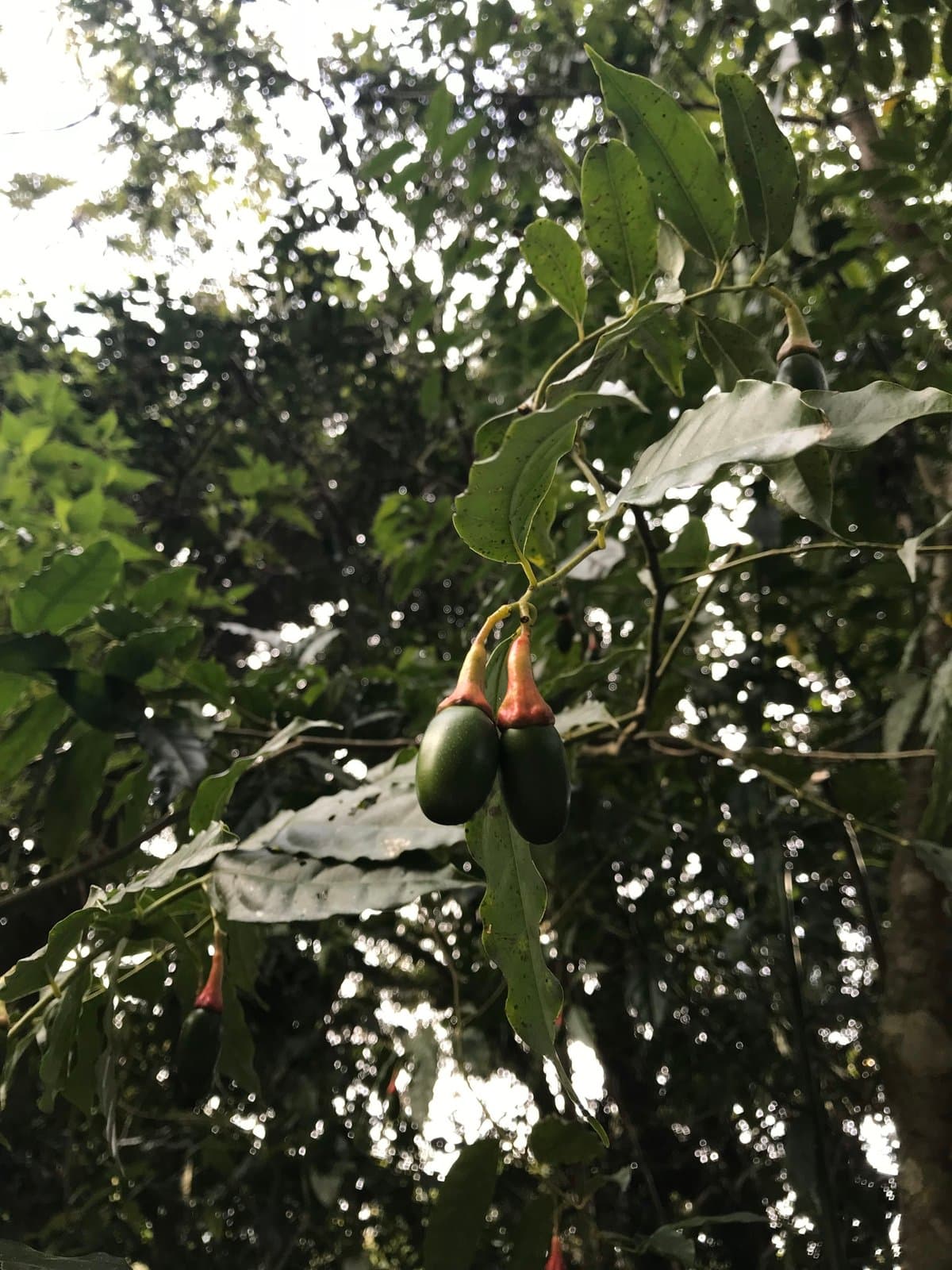
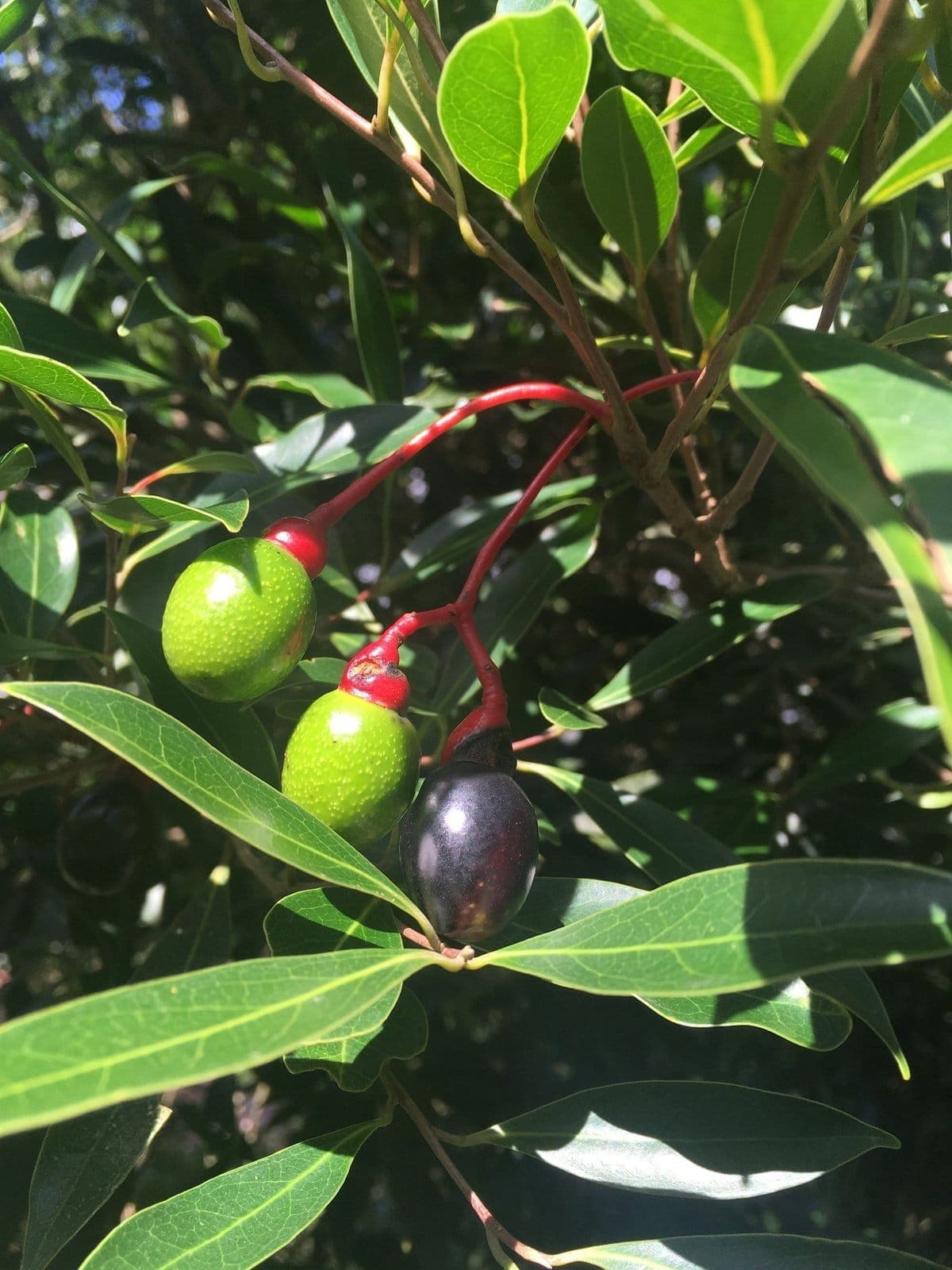
The fruit is a distinctive berry, approximately 1.5-2.5 cm long, ellipsoid to ovoid in shape. Immature fruits are green, becoming deep purple to nearly black when fully ripe. The fruit sits in a characteristic red or orange-red cupule (cup-like structure) at the base, which is a diagnostic feature of many Nectandra species. This red dome remains on the peduncle after the fruit is removed by birds or falls.
Each fruit contains a single large seed. The fruits ripen primarily from May through July and are an important food source for birds and mammals, including toucans, parrots, monkeys, and other forest wildlife. The fleshy fruit pulp is consumed by animals, which then disperse the seeds throughout the forest.
Geographic Distribution
Global Distribution
Sigua has a wide distribution across the Neotropics, ranging from southern Mexico and Central America (Guatemala, Belize, Honduras, Nicaragua, Costa Rica, Panama) through northern and central South America (Colombia, Venezuela, Ecuador, Peru, Bolivia, Brazil) to Trinidad.
Distribution in Costa Rica
In Costa Rica, Sigua is found in primary tropical and premontane rainforests on both the Caribbean and Pacific slopes:
- Limón: Caribbean lowland rainforests (0-500 m)
- Heredia: Braulio Carrillo and La Selva area, transitioning to premontane zones (100-1200 m)
- San José: Premontane forests on both slopes of the Central Valley (500-1500 m)
- Puntarenas: Osa Peninsula and southern Pacific rainforests (0-800 m)
- Alajuela: Northern lowlands and Arenal region (100-900 m)
- Guanacaste: Limited to wetter forest zones (200-800 m)
The species is most common at elevations from sea level to 1200 meters, though it can occur up to 2000 meters in cloud forest environments, where it overlaps with the related Nectandra salicina.
Where to See Sigua
- La Selva Biological Station - Common in primary forest
- Braulio Carrillo National Park - Present in lowland and premontane zones
- Corcovado National Park - Found in Osa Peninsula rainforests
- Tortuguero National Park - Caribbean lowland forests
- Monteverde area - Upper elevation limit in cloud forest transition
- Hitoy Cerere Biological Reserve - Caribbean slope rainforest
Habitat & Ecology
Ecological Role
Sigua plays several important roles in tropical rainforest ecosystems:
- Wildlife Food Source: The purple fruits are consumed by numerous bird species (toucans, parrots, trogons, tanagers) and mammals (monkeys, coatis, agoutis, peccaries), making it an important component of forest food webs
- Canopy Structure: Provides canopy to sub-canopy structure, contributing to forest vertical complexity
- Seed Dispersal Network: Fruit-eating animals disperse seeds widely, facilitating forest regeneration
- Wood Substrate: Dead wood provides habitat for insects, fungi, and epiphytes
Forest Associations
Sigua typically grows in association with diverse rainforest species including:
- Other Lauraceae family members (Ocotea, Persea, Beilschmiedia species)
- Canopy dominants like Dipteryx panamensis (Almendro), Lecythis ampla (Monkey Pot)
- Palms such as Welfia regia and Iriartea deltoidea
- Large-leaved understory species
- Dense epiphyte communities in the crown
Climate & Soil Requirements
The species is adapted to warm, humid tropical conditions:
- Temperature: Prefers warm tropical temperatures (20-28°C average), not frost-tolerant
- Rainfall: Requires substantial annual rainfall (2500-4000+ mm), though tolerates short dry seasons
- Humidity: Thrives in high humidity environments typical of tropical and premontane rainforests
- Soils: Adapts to various well-drained forest soils; performs best on deep, fertile soils but tolerates less ideal conditions
Wood Properties & Uses
Wood Characteristics
The wood of Sigua is notable for several properties:
- Texture: Medium-textured with straight grain
- Density: Moderately heavy and hard
- Mechanical properties: Excellent strength and durability
- Odor: Strong, distinctive smell that persists in dry wood (generally considered disagreeable by most, though not harmful)
- Workability: Good, though the odor is notable during milling and processing
- Durability: Good natural resistance to decay
Traditional and Commercial Uses
Timber Applications: Sigua wood is harvested from wild trees for various purposes:
- General construction: Beams, posts, and structural elements
- Furniture: Cabinets, tables, chairs, and other fine carpentry
- Doors and window frames: Valued for durability
- Decorative veneer: Used for interior finishing
- Boards and planks: General carpentry applications
- Cart bodies: Traditional rural use for its strength
The wood's main limitation is its strong odor, which some find objectionable. However, the odor typically diminishes somewhat over time, and the wood's excellent mechanical properties make it valuable for construction where aesthetics are less critical than durability.
Wildlife Value: Beyond timber, the tree provides important ecological services:
- Fruit production for wildlife (significant conservation value)
- Nesting sites in the crown for forest birds
- Shade for understory species
Modern Applications
Conservation & Reforestation: Sigua is increasingly recognized for:
- Native forest restoration projects
- Wildlife corridor establishment
- Mixed-species plantations combining timber and conservation values
- Sustainable forestry systems
Ornamental Use: Occasionally planted as an ornamental tree in tropical landscapes, valued for its stature and drought tolerance once established.
Cultural & Historical Significance
Traditional Knowledge
In rural communities throughout its range, Sigua has been recognized as a valuable timber tree for generations. The wood's distinctive odor makes it easily identifiable, and local woodworkers have learned to work with this characteristic.
Regional Importance
In lowland and premontane forest communities, Sigua represents one of many valuable timber species that provided construction materials before commercial logging and plantations. Its presence indicates primary or mature secondary forest conditions.
Indigenous Use
While specific indigenous uses of Nectandra cissiflora are not extensively documented, related Nectandra species have been used in traditional medicine for various purposes, and the genus as a whole is recognized throughout indigenous Amazonian and Central American cultures as containing useful species.
Conservation Status
Nectandra cissiflora is assessed as Least Concern (LC) by the IUCN. The species has a wide geographic distribution across Central and South America and remains relatively common in suitable habitats.
Current Status
The species is not currently threatened on a global scale and maintains populations throughout its extensive range. In Costa Rica, it remains present in protected rainforest areas and is not considered at risk.
Threats
Despite its "Least Concern" status, Sigua faces localized pressures:
- Habitat Loss: Conversion of lowland rainforests to agriculture (particularly banana and oil palm plantations) reduces available habitat
- Selective Logging: As a valuable timber species, it may be targeted for harvest in unprotected forests
- Forest Fragmentation: Isolated forest patches may not support long-term viable populations
- Climate Change: Shifting rainfall patterns could affect distribution, particularly at range margins
Protection Measures
Sigua benefits from various conservation efforts:
- Protected in numerous national parks and biological reserves throughout its range
- Included in sustainable forestry initiatives
- Recognized in reforestation programs for its dual timber/wildlife value
- Seeds and germplasm conserved in tropical forestry seed banks
Sources: IUCN Red List↗, GBIF species profile↗, Plants of the World Online (Kew)↗
Growing Sigua
Propagation
From Seed: Seeds must be collected from ripe fruits (deep purple) in May-July. The fleshy pulp should be removed, and seeds planted immediately, as they lose viability quickly and do not store well.
- Collection: Gather fruits directly from trees or from fresh-fallen fruits beneath parent trees
- Processing: Remove pulp by mashing and washing seeds
- Sowing: Plant in nursery beds or containers 1-2 cm deep in organic-rich potting mix
- Germination: Slow and irregular, typically taking 2-4 months; germination rates are often low (30-50%)
- Seedling care: Provide shade (50-70%) and consistent moisture; seedlings grow slowly initially
Note: Propagation from cuttings has not been well documented and is not a standard practice for this species.
Site Selection
Choose sites that mimic natural rainforest conditions:
- Climate: Warm, humid tropical to premontane zones
- Elevation: Sea level to 1200 m optimal; up to 1500-2000 m possible
- Rainfall: Areas receiving 2500+ mm annual rainfall
- Soil: Deep, well-drained soils preferred; adapts to various soil types
- Light: Full sun for timber production; tolerates partial shade when young
Planting
- Plant at beginning of rainy season (May-June) for best establishment
- Clear competing vegetation in 1-2 m radius around planting site
- Dig hole larger than root ball
- Plant at same depth as in nursery container
- Water thoroughly after planting
- Mulch around base to retain moisture and suppress weeds
- Stake if necessary in exposed locations
Spacing
- Timber production: 10-15 m spacing (44-100 trees/hectare)
- Mixed reforestation: Variable spacing in combination with other species
- Landscape use: 15-20 m from structures and other large trees
Care Requirements
Watering: Keep soil moist during establishment (first 1-2 years). Once established, trees are relatively drought-tolerant during short dry seasons.
Fertilizing: Generally not necessary if planted in good forest soil. In degraded sites, organic fertilizer or compost application during first 2-3 years may improve growth.
Pruning: For timber production, prune lower branches as tree grows to develop straight, clear trunk. Remove competing stems to maintain single leader.
Weeding: Critical during first 2-3 years; maintain weed-free zone around young trees.
Common Growing Problems
- Low germination rates: Solution - Collect abundant fresh seed, plant immediately, provide optimal nursery conditions
- Slow early growth: Solution - Be patient; growth accelerates after establishment phase
- Competition from aggressive species: Solution - Maintain weed control, consider planting in groups for mutual support
- Unsuitable for highland areas: Solution - Only plant in appropriate elevation zones (below 1200-1500 m)
Growth Expectations
- First 2 years: Slow establishment, 30-60 cm/year
- Years 3-10: Moderate growth, 60-100 cm/year
- Years 10-25: Continued vertical growth, crown development
- Timber size: 15-25 years depending on site quality and management
Similar Species
Sigua can be confused with other Nectandra species and related Lauraceae:
Nectandra salicina (Quizarrá)
Key differences:
- N. salicina has smaller, narrower leaves (6-11 cm × 2-3.4 cm) compared to N. cissiflora (9-26 cm × 5-10 cm)
- N. salicina occurs at higher elevations (500-2800 m), primarily in cloud forests
- N. cissiflora is a larger tree (20-35 m vs. 5-20 m)
- N. salicina lacks the rufous pubescence on young stems
- Habitat preference: N. salicina in cool montane forests, N. cissiflora in lowland/premontane rainforests
Other Nectandra Species
Several other Nectandra species occur in Costa Rican forests:
- Nectandra membranacea - Distinguished by leaf venation and membrane-like leaf texture
- Nectandra hihua - Lowland species with different fruit structure
- Nectandra turbacensis - Coastal and lowland forests
Key identification features for N. cissiflora:
- Large oblong-elliptic leaves with pubescent undersides
- Rufous-hairy young stems
- Purple fruits in red cupules
- Strong wood odor
- Lowland to premontane elevation range
Related Lauraceae
Other aromatic Lauraceae family trees in Costa Rica:
- Ocotea species - Often confused with Nectandra; Ocotea typically has different flower and fruit structures
- Persea americana (Avocado) - Larger fruits, cultivated species
- Beilschmiedia species - Similar habitat but different fruit structure
Identification Guide
Field Identification Key
- Habitat: Lowland to premontane rainforest (0-1200 m) → consistent with N. cissiflora
- Tree size: Tall canopy tree (20-35 m) → consistent
- Young stems: Rufous-hairy → diagnostic for N. cissiflora
- Leaves: Large (9-26 cm long), oblong-elliptic, pubescent beneath → diagnostic
- Fruits: Purple berries in red cupules → confirms Nectandra genus
- Wood odor: Strong, distinctive smell when cut → characteristic
Seasonal Identification
- January-March: Flowering period, small white flower clusters visible
- May-July: Fruiting period, purple fruits with red cupules
- Dry season: May show partial leaf loss (semi-deciduous)
- Year-round: Rufous hairs on young stems visible on actively growing branches
External Resources
Community observations and photos from across its range
Comprehensive botanical database entry
Taxonomic information and global distribution
Detailed uses and cultivation information
Global specimen records and distribution data
References
-
Nees von Esenbeck, C.G.D. (1833). Lauraceae. In: Systema Laurinarum. Berlin.
-
Hammel, B.E., Grayum, M.H., Herrera, C., & Zamora, N. (eds.) (2003-2015). Manual de Plantas de Costa Rica (Vols. I-VIII). Missouri Botanical Garden Press, St. Louis.
-
Jiménez, Q. (1999). Árboles maderables de Costa Rica: ecología y silvicultura. Instituto Nacional de Biodiversidad (INBio), Santo Domingo de Heredia, Costa Rica.
-
Rohwer, J.G. (1993). Lauraceae: Nectandra. Flora Neotropica Monograph 60. New York Botanical Garden Press.
-
van der Werff, H. (2002). A synopsis of Ocotea (Lauraceae) in Central America and southern Mexico. Annals of the Missouri Botanical Garden 89: 429-451.
-
Lobo, J., et al. (2007). Logging in the rainforest and its impact on tropical tree diversity in Costa Rica. Forest Ecology and Management 244: 136-145.
-
Martins-Da-Silva, R.C.V., et al. (2008). Lauráceas da Amazônia: química, farmacologia e etnobotânica. Acta Amazonica 38(2): 327-366.
-
The IUCN Red List of Threatened Species. (2024). Nectandra cissiflora. Version 2024.1. https://www.iucnredlist.org
Safety Information Disclaimer
Safety information is provided for educational purposes only. Individual reactions may vary significantly based on age, health status, amount of exposure, and individual sensitivity. Always supervise children around plants. Consult a medical professional or certified arborist for specific concerns. The Costa Rica Tree Atlas is not liable for injuries or damages resulting from interaction with trees described in this guide.
• Always supervise children around plants
• Consult medical professional if unsure
• Seek immediate medical attention if poisoning occurs
Information compiled from authoritative toxicology sources, scientific literature, and medical case reports.
Help improve this page
Know something about this tree? Share local knowledge, suggest a correction, or submit a photo to improve this guide for everyone.