Quina
Cinchona pubescens
Quick facts
Native Region
Bolivia, Colombia, Costa Rica, Ecuador, Peru, Venezuela
Max Height
10 m (33 ft)
Family
Rubiaceae
Conservation
LC — Least Concern
Uses
Safety Information
CAUTION
Do not allow children or pets to chew bark or ingest preparations. Keep medicinal extracts out of reach; quinine can cause nausea, tinnitus, and other symptoms in high doses.
Toxicity Details
The bark contains quinine and related alkaloids. Small medicinal doses were historically used to treat malaria, but larger amounts can be toxic. Avoid ingesting bark, powders, or concentrated extracts.
Skin Contact Risks
Low risk with normal handling of leaves and bark. Sap is not known to cause dermatitis. Wash hands after handling bark or powders.
Allergenic Properties
Low allergen risk. Sensitive individuals may react to airborne bark dust during processing.
Structural Hazards
No unusual structural hazards reported beyond normal branch fall in storms.
Wildlife & Pet Risks
Bark alkaloids deter herbivory; avoid allowing livestock or pets to browse bark.
First Aid & Emergency Response
• If ingested, seek immediate medical attention. Do not induce vomiting unless directed by medical professional.
• If sap contacts skin, wash immediately with soap and water. Seek medical attention if blistering or severe irritation occurs.
• If sap enters eyes, flush immediately with clean water for 15 minutes and seek emergency medical care.
Costa Rica Emergency: 911
Costa Rica Poison Control: 2223-1028
Season
Flowering
Mar-May
Fruiting
Jun-Aug
How to identify
Quina (Quinine Tree)
Quina (Cinchona pubescens) is the classic quinine tree. Its bark produces quinine, the alkaloid that revolutionized malaria treatment and flavored tonic water. The same chemistry that makes it valuable also makes bark preparations potent and potentially toxic if misused.
Quick Reference
iNaturalist Observations
Community-powered species data
📸 Photo Gallery
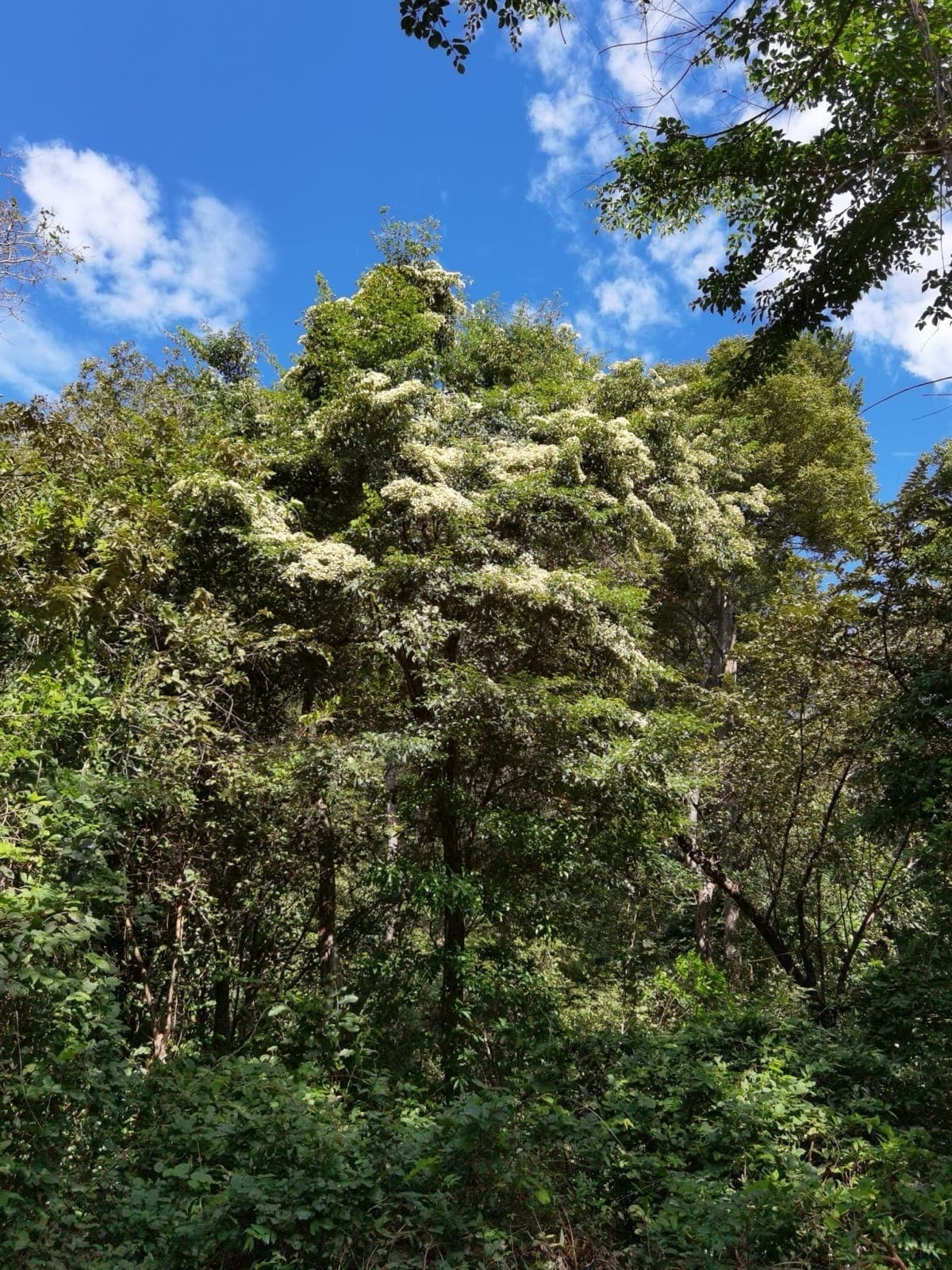
Whole tree
📷 (c) Pablo Gómez, some rights reserved (CC BY-NC)(CC BY-NC)
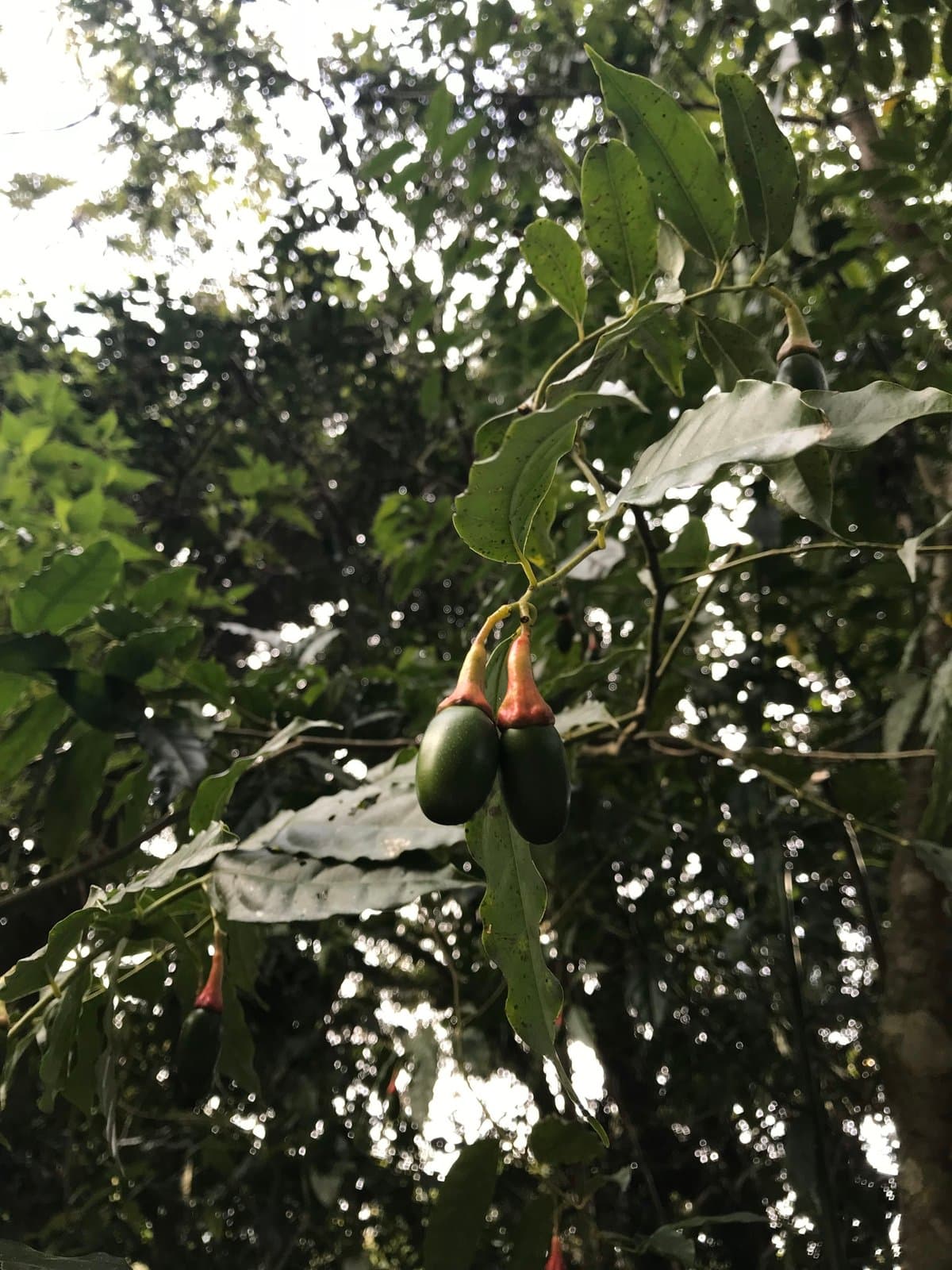
View source ↗Leaves
📷 (c) Pablo Gómez, some rights reserved (CC BY-NC)(CC BY-NC)
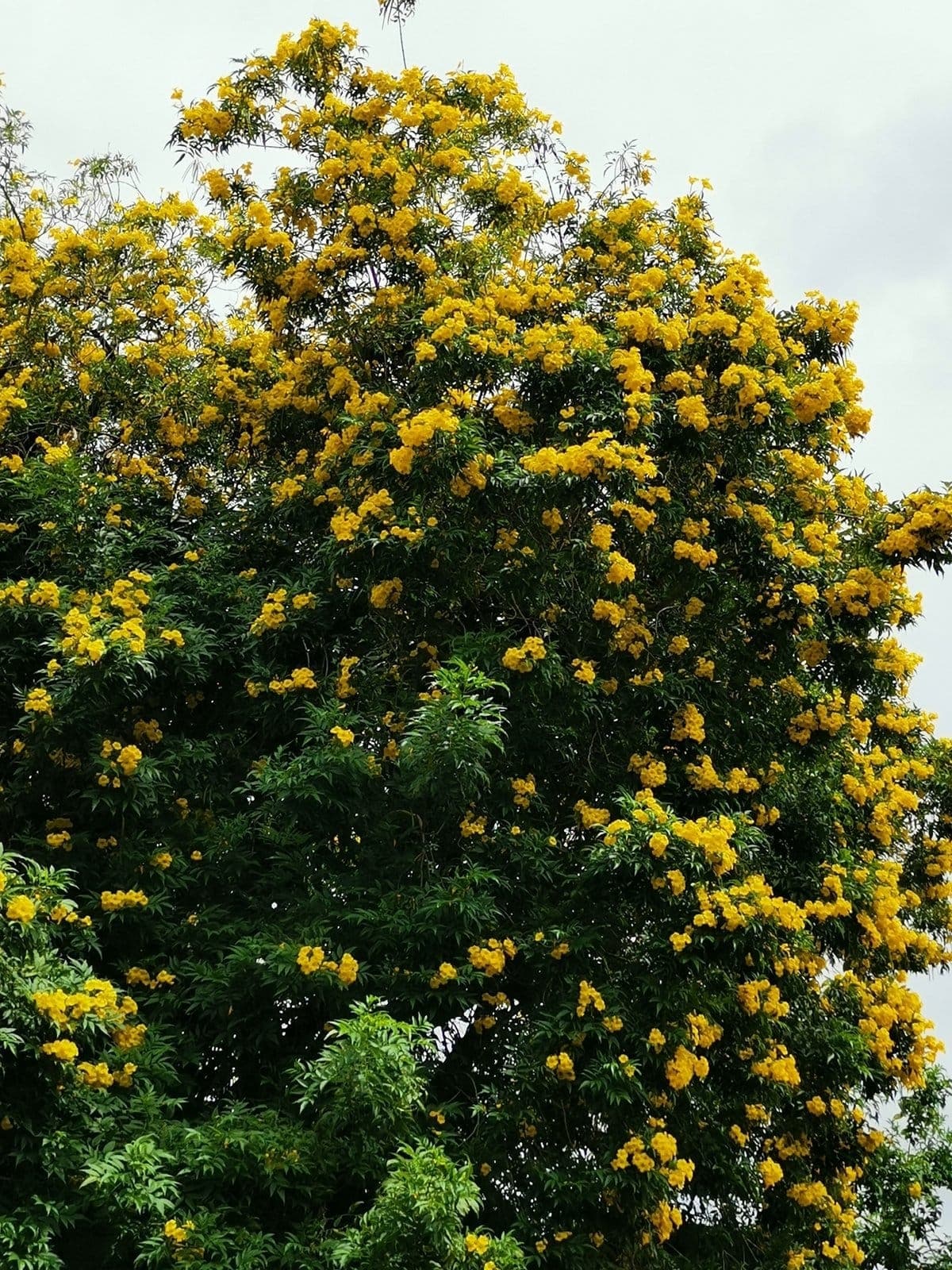
View source ↗Flowers
📷 (c) Valeria Ascencio Negrete, some rights reserved (CC BY-NC)(CC BY-NC)
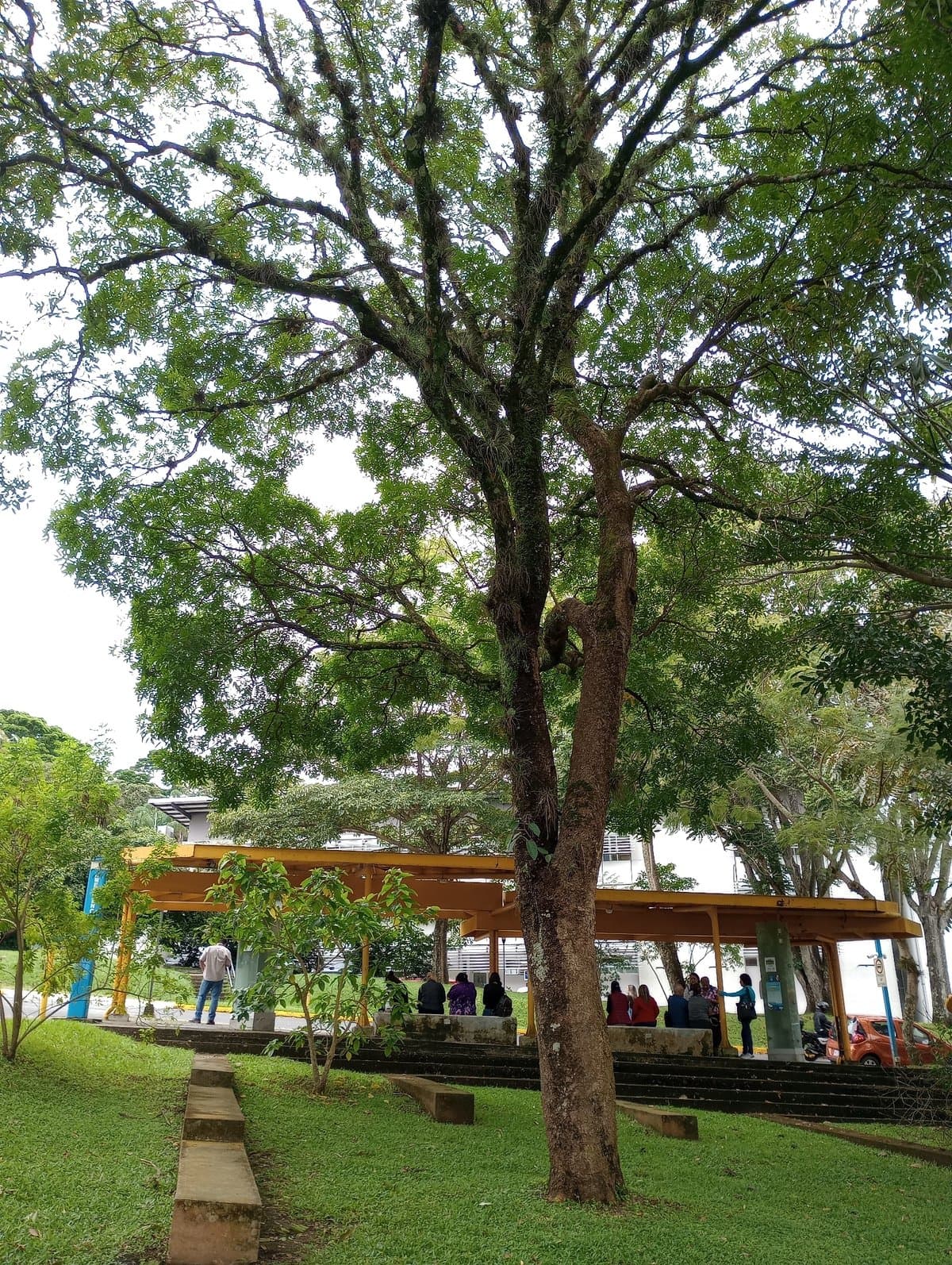
View source ↗Whole tree
📷 (c) Mateo Hernandez Schmidt, some rights reserved (CC BY-NC-SA)(CC BY-NC-SA)
View source ↗Leaves
📷 (c) Pablo Gómez, some rights reserved (CC BY-NC)(CC BY-NC)
View source ↗Photos sourced from Wikimedia Commons with their respective licenses.
Taxonomy & Classification
Physical & Botanical Description
Growth Form:
- Evergreen highland tree, typically 6-10 m tall with a rounded crown.
- Bark gray-brown on the outside; inner bark turns reddish and is intensely bitter due to alkaloids.
Leaves:
- Opposite, simple, leathery leaves, usually 7-20 cm long.
- Elliptic to oblong shape with soft hairs on the underside ("pubescent").
Flowers:
- Pink, star-shaped flowers in large terminal clusters.
- Fragrant and attractive to insects.
Fruit & Seeds:
- Dry capsule that splits to release many wind-dispersed seeds.
- Seed release is a key strategy for colonizing disturbed slopes.
Geographic Distribution
Geographic Distribution
Elevation: 1000-3000 m
Native Range
Quina is native to the northern Andes and parts of Central America, including Costa Rica.
Introduced & Cultivated Range
- Widely introduced to tropical regions for quinine production.
- Naturalized in some islands (notably the Galapagos), where it can be invasive.
- Cultivated in parts of East Africa and Southeast Asia for medicinal bark.
Habitat & Ecology
- Cloud-forest specialist thriving in cool, humid montane climates.
- Prefers misty slopes with steady rainfall and well-drained volcanic soils.
- Flowers attract a range of pollinating insects.
- Seeds are light and wind-dispersed, aiding rapid colonization after disturbances.
- Outside its native range, it can naturalize aggressively, forming dense stands that shade out native understory plants.
Uses & Applications
Medicinal Bark
The bark is a historical source of quinine, a compound that became the first effective treatment for malaria. Extracts are powerful and must be used with caution due to toxicity at high doses.
Culinary & Beverage Uses
Quinine's bitter flavor is the signature taste of tonic water and some bitters.
Ornamental & Educational Plantings
Because of its attractive flowers and historic importance, quina is sometimes planted in botanical gardens and educational forests.
Cultural & Historical Significance
- Andean Indigenous knowledge identified quinine bark as a fever remedy long before it entered European medicine.
- The genus name honors the Countess of Chinchon, associated with the early spread of quinine to Europe.
- National tree of Peru and Ecuador, symbolizing the botanical heritage of the Andes.
Conservation Status
Least Concern
IUCN Red List Status
Assessment Summary
- Listed as Least Concern due to broad native distribution and continued cultivation.
- Local populations can still be threatened by habitat conversion or overharvest of bark.
Management Notes
- Sustainable bark harvest (small strips, rotational harvesting) helps avoid killing trees.
- Avoid planting in sensitive island ecosystems where it may become invasive.
Growing Quina
Propagation
Site Requirements
- Light: Partial shade when young; brighter light as it matures.
- Moisture: Consistent humidity and regular rainfall.
- Soils: Deep, well-drained loams or volcanic soils.
Care Tips
- Mulch heavily to mimic cloud-forest leaf litter.
- Protect young trees from strong winds and lowland heat.
- Prune lightly; avoid heavy bark removal without a management plan.
Seasonal Management Calendar
Sustainable Bark Stewardship
Removing bark all around the trunk interrupts cambium flow and usually kills the tree. Any bark use must be rotational, partial, and tied to legal management plans.
Practical Harvest Principles
- Harvest only from mature trees with trunk diameter greater than 20 cm.
- Remove narrow vertical strips rather than broad panels.
- Leave at least 70-80% of bark intact per harvest cycle.
- Rotate harvest faces and allow multi-year recovery before revisiting the same side.
- Suspend harvest when drought stress, pest pressure, or canopy dieback is observed.
Community and Legal Considerations
- Prioritize cultivated or managed quina sources instead of wild extraction.
- Coordinate with local conservation authorities in protected montane zones.
- Record each harvest event with date, tree ID, and bark volume removed.
- Pair bark-use projects with enrichment planting to maintain population structure.
Similar Species and Common Confusions
Field Identification Checklist
Restoration and Monitoring Use
Why quina is useful in restoration
- Adds historical and cultural value to montane restoration programs.
- Provides nectar resources during key dry-season flowering windows.
- Supports educational trails linking medicinal history with conservation.
Monitoring checklist for planted populations
- Survival: Record alive/dead status at 3, 6, 12, and 24 months.
- Growth: Measure height and stem diameter at least twice yearly.
- Health: Note scorch, dieback, bark wounds, and pest symptoms.
- Reproduction: Track first flowering and capsule production by site.
- Recruitment: Observe natural seedlings to evaluate long-term establishment.
Research Timeline and Knowledge Gaps
Priority research needs in Costa Rica
- Quantify natural regeneration rates across elevation gradients.
- Compare seedling survival in forest edge versus interior microsites.
- Document pollinator assemblages during dry-season flowering pulses.
- Evaluate climate sensitivity under warmer nighttime temperature scenarios.
Handling Risk Matrix
Where to See Quina in Costa Rica
- Look for cultivated specimens in high-elevation botanical gardens and cloud-forest reserves.
- Most likely in montane areas of the Central Volcanic Range and Talamanca regions.
External Resources
- Kew - Cinchona Tree↗
- Plants of the World Online (POWO)↗
- IUCN Red List↗
- GBIF Species Profile↗
- iNaturalist Observations↗
References
- Kew Gardens. “Cinchona tree (Cinchona pubescens).”
- Plants of the World Online (Kew).
- GBIF Species Profile for Cinchona pubescens.
- IUCN Red List assessment (Least Concern).
- Wikimedia Commons image credits (Forest & Kim Starr; USGS; scott.zona).
Safety Information Disclaimer
Safety information is provided for educational purposes only. Individual reactions may vary significantly based on age, health status, amount of exposure, and individual sensitivity. Always supervise children around plants. Consult a medical professional or certified arborist for specific concerns. The Costa Rica Tree Atlas is not liable for injuries or damages resulting from interaction with trees described in this guide.
• Always supervise children around plants
• Consult medical professional if unsure
• Seek immediate medical attention if poisoning occurs
Information compiled from authoritative toxicology sources, scientific literature, and medical case reports.
Help improve this page
Know something about this tree? Share local knowledge, suggest a correction, or submit a photo to improve this guide for everyone.