Madroño
Calycophyllum candidissimum
Quick facts
Native Region
Mexico to Central America
Max Height
15-25 meters
Family
Rubiaceae
Conservation
LC — Least Concern
Uses
Safety Information
Toxicity Details
No toxic parts. The tree is completely safe. No documented toxicity to humans or animals. The flowers are visited by bees for honey production. No ingestion hazards from any part of the tree.
Skin Contact Risks
No skin contact risk. The tree can be touched and handled safely. The bark, leaves, and flowers pose no irritation risk.
Allergenic Properties
LOW. Wood dust may cause standard respiratory irritation during woodworking (use dust mask when sanding), but the wood is not listed among allergenic species. Not a significant allergen source.
Season
Flowering
Apr-Jun
Fruiting
Jul-Sep
How to identify
Madroño (Lemonwood)
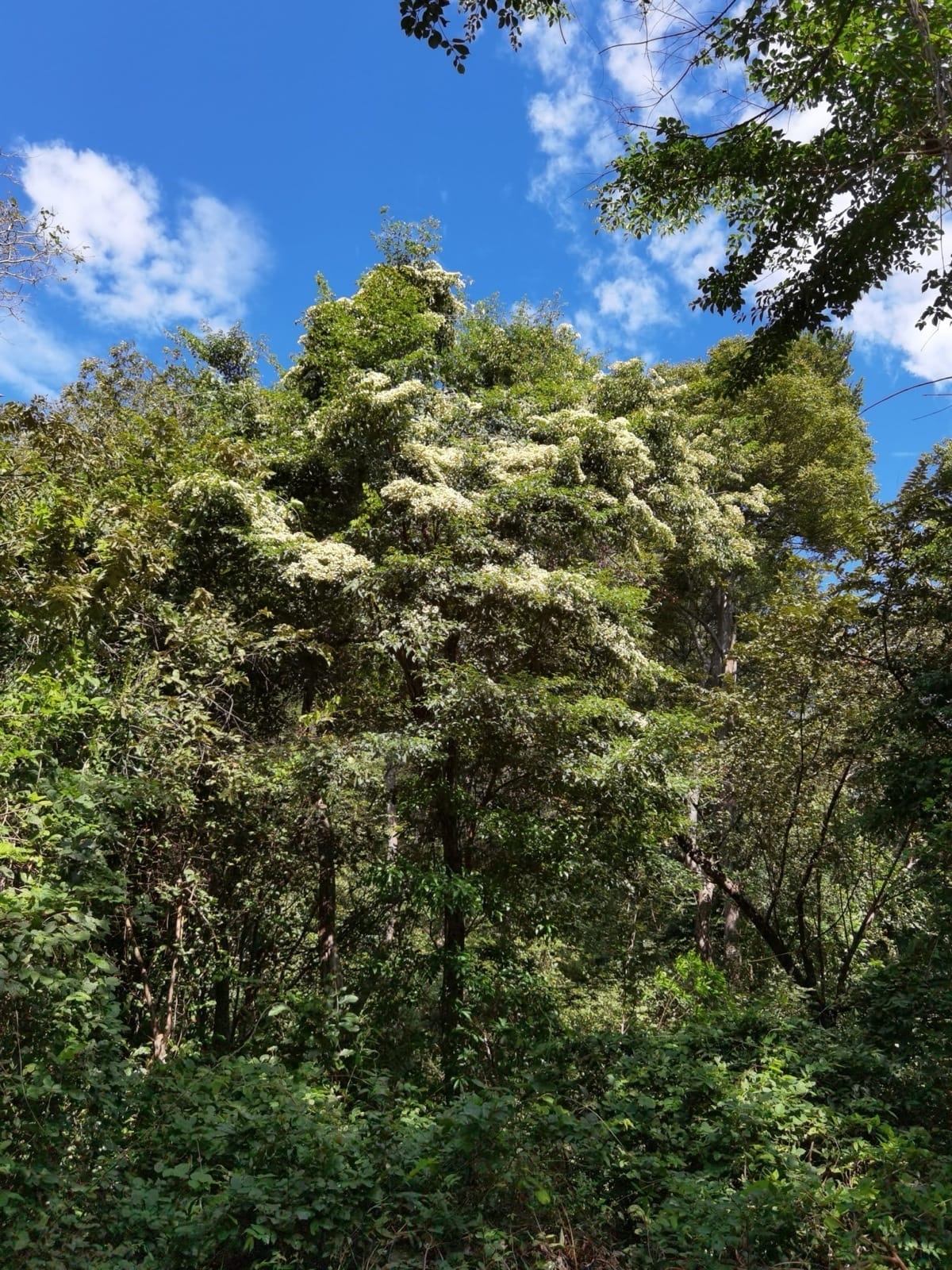
The Madroño (Calycophyllum candidissimum), known in English as Lemonwood or Degame, creates one of Central America's most breathtaking natural spectacles. During the dry season, when most trees stand bare or subdued, the Madroño explodes into bloom, covering itself so completely with tiny white flowers that the entire tree appears to be dusted with snow. This stunning display has earned it the affection of peoples throughout its range—Nicaragua has even chosen it as their national tree. In Costa Rica's Guanacaste region, the flowering Madroño is an unforgettable sight, standing bright white against the brown dry forest backdrop like a beacon of beauty.
Quick Reference
iNaturalist Observations
Community-powered species data
📸 Photo Gallery
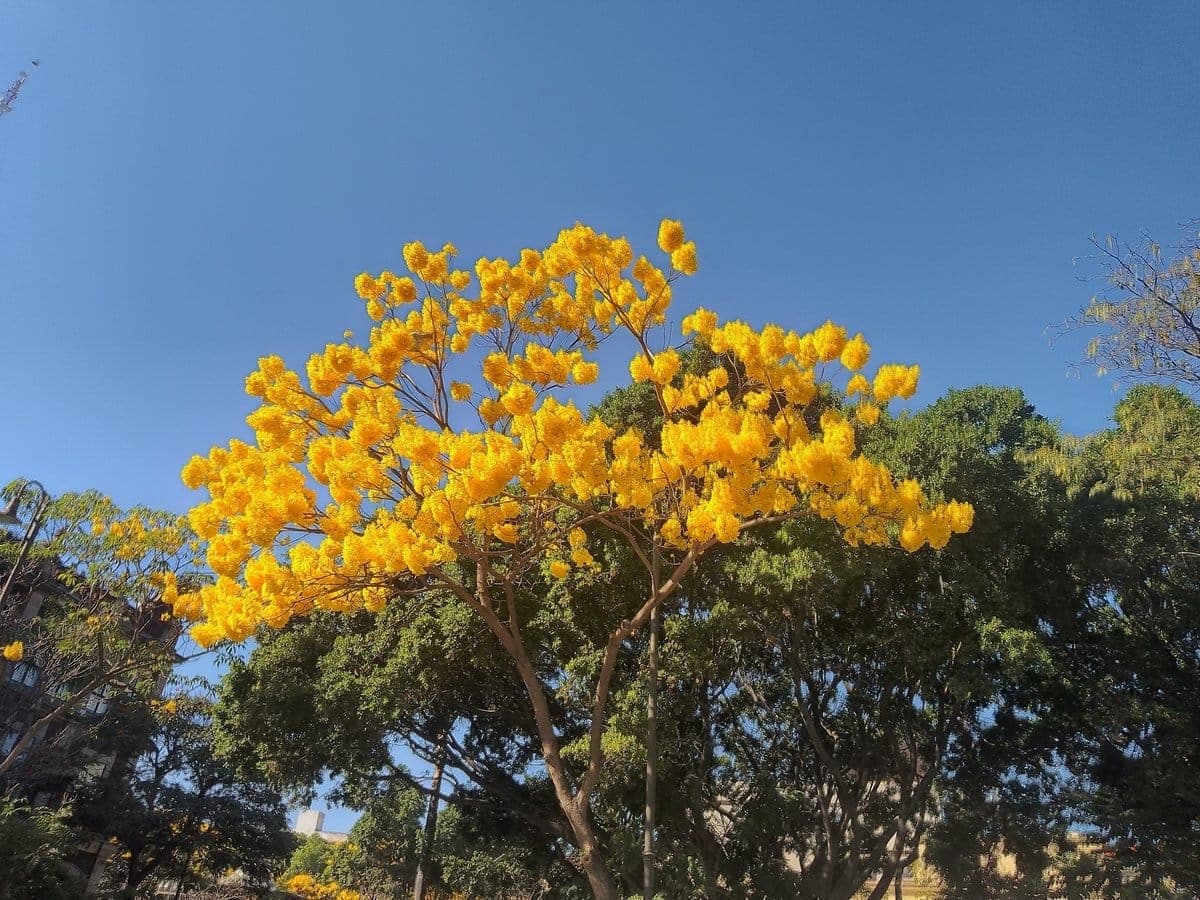
Whole tree
📷 (c) Eduardo Chacón Madrigal, some rights reserved (CC BY)(CC BY)
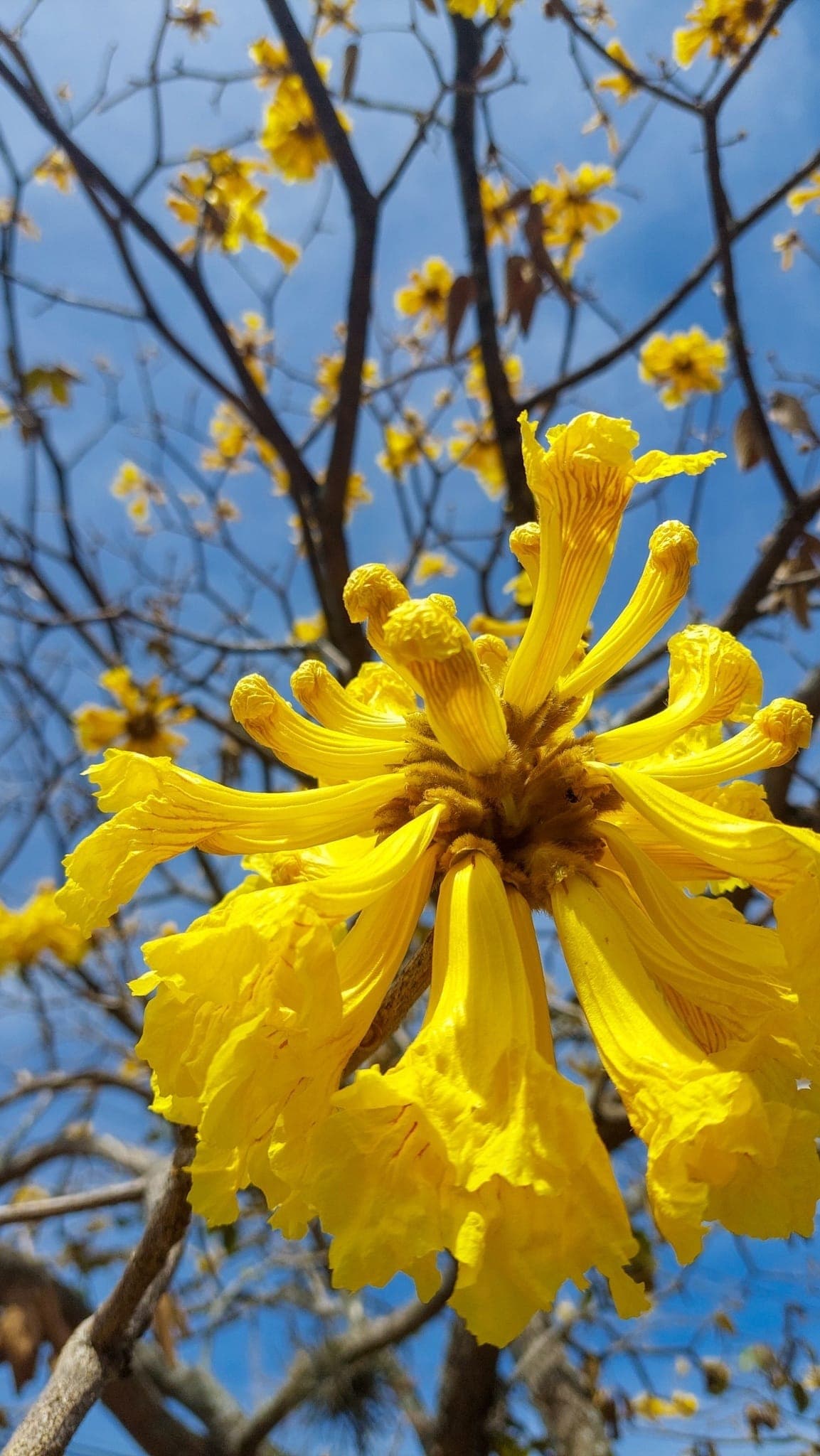
View source ↗Leaves
📷 (c) Eduardo Chacón Madrigal, some rights reserved (CC BY)(CC BY)
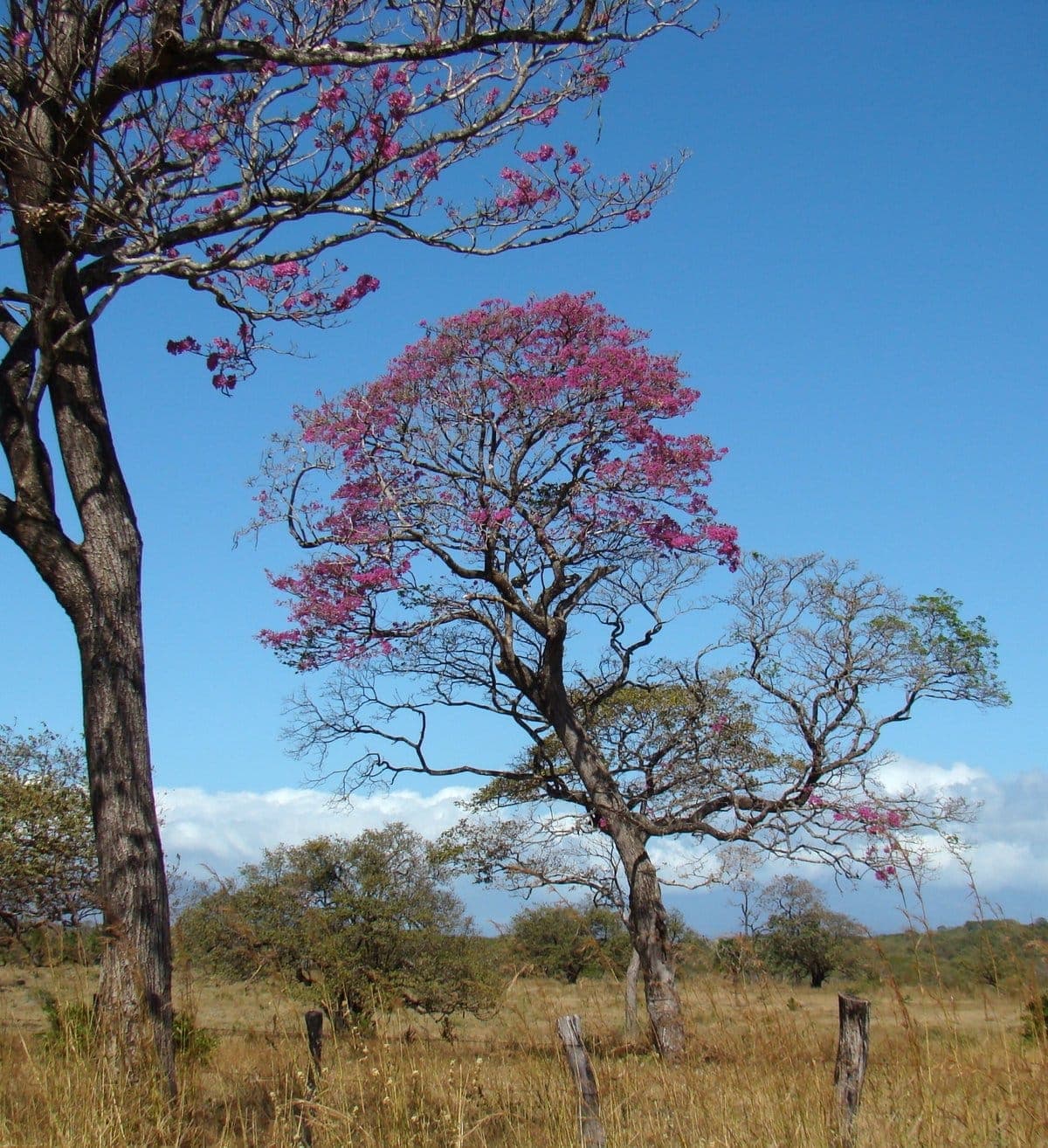
View source ↗Whole tree
📷 (c) Anneke Jonker, some rights reserved (CC BY-NC)(CC BY-NC)
View source ↗Leaves
📷 (c) Eduardo Chacón Madrigal, some rights reserved (CC BY)(CC BY)
View source ↗Whole tree
📷 (c) David Garrigues, some rights reserved (CC BY-NC)(CC BY-NC)
View source ↗Photos sourced from the iNaturalist citizen science database. View all observations →↗
Taxonomy and Classification
- Calycophyllum: From Greek "kalyx" (cup) + "phyllon" (leaf) - calyx-like leaves - candidissimum: Latin for "most white" - referring to the flowers
- Rubiaceae: The coffee family! - English name "Lemonwood" refers to the yellowish wood
Common Names
Related Species in Costa Rica
Physical Description
General Form
The Madroño is a medium-sized tree with a rounded to irregular crown. Its smooth, grayish bark and relatively small leaves give way during flowering season to an explosion of white that completely transforms the tree's appearance.
Identification Features
Bark and Trunk
- Bark color: Grayish to light brown
- Texture: Smooth to slightly fissured
- Pattern: May peel in thin strips
- Trunk: Usually single, straight
- Inner bark: Yellowish (hence "lemonwood")
Leaves
- Type: Simple, opposite
- Shape: Elliptic to oblong
- Size: 6-15 cm long
- Texture: Leathery, glossy
- Color: Dark green above, paler below
- Margin: Entire (smooth edge)
Flowers
- Size: Small (5-8 mm)
- Color: Pure white
- Arrangement: Dense terminal clusters
- Fragrance: Sweet, honey-like
- Timing: Dry season (January-April)
- Coverage: COMPLETE - entire crown white!
Fruit
- Type: Small capsule
- Size: 5-8 mm
- Seeds: Tiny, wind-dispersed
- Timing: Following flowering
- Appearance: Inconspicuous
The Madroño's flowering is one of nature's great shows in the dry forest: What Happens: - Tree drops many leaves - Flower buds develop at branch tips - Thousands of tiny white flowers open simultaneously - Entire crown becomes WHITE The Effect: - Visible from great distances - Appears snow-covered - Glows in sunlight - Stunning against brown dry forest Timing (Costa Rica): - Usually February-April - Peak of dry season - Lasts 2-4 weeks - Visit Guanacaste to see it! Why It Works: - Pollinators easily find tree - Massive display attracts bees - Coordinates flowering for outcrossing - Energy invested all at once
Distribution and Habitat
Global Distribution
Geographic Distribution
Distribution in Costa Rica
Habitat Preferences
Cultural Significance
National Tree of Nicaragua
The Madroño holds special cultural status in Central America: Nicaraguan National Symbol: - Official national tree of Nicaragua - Represents the country's natural beauty - Celebrated in poetry and art - Symbol of resilience in dry conditions Why the Madroño?: - Spectacular native beauty - Thrives in Nicaraguan dry forests - Provides practical benefits (wood, shade) - Blooms during national celebrations In Costa Rica: - Beloved dry forest icon - Featured in nature tourism - Guanacaste cultural identity - Agricultural/ranch heritage connection Traditional Meanings: - Purity (white flowers) - Hope (blooming in harsh season) - Beauty in adversity
Historical & Traditional Uses
Indigenous & Colonial Era
- Tool Making: Extremely hard wood used for axe handles, machete handles, and agricultural implements
- Construction: Used for fence posts that resist rot and insect damage for decades
- Firewood: Dense wood burns slowly and provides intense heat
- Traditional Medicine: Bark extracts used for various ailments (though not widely documented)
- Rural Economy: Important trade wood in dry forest regions
Modern Cultural Role
- Symbolic Value: Represents dry forest landscapes and Guanacaste identity
- Tourism: Spectacular flowering attracts ecotourists
- Honey Production: "Madroño honey" is a sought-after artisanal product
- Urban Landscaping: Increasingly planted in parks and public spaces
- Environmental Education: Used to teach dry forest ecology
Regional Names & Meanings
The name "Madroño" connects this tree to broader cultural themes:
In Costa Rica's Guanacaste Province, the flowering Madroño has become synonymous with the transition from dry to rainy season:
Cultural Associations:
- Elder residents remember landscapes "painted white" with Madroño blooms
- Farmers used flowering timing as seasonal indicator for planting
- Sabanero (cowboy) culture associated the tree with ranch life
- Modern tour guides highlight flowering Madroños as dry forest gems
Contemporary Significance:
- Featured prominently in dry forest conservation campaigns
- Used as educational example of dry forest adaptation
- Symbol of regional pride in Guanacaste's unique ecosystems
- Inspiration for local artists and photographers
The Madroño represents not just a tree, but the identity of an entire region and its relationship with the seasonal dry forest.
Wood Craftsmanship Tradition
Madroño wood has been prized for generations:
Conservation & Population Status
Current Status Assessment
Least Concern
IUCN Red List Status
IUCN Red List: Least Concern (LC)
The Madroño maintains stable populations throughout its Central American range, though localized pressures exist:
Positive Factors
- Wide Distribution: Mexico through Central America
- Dry Forest Specialist: Thrives in seasonal environments
- Fast Growth: Can establish quickly in suitable conditions
- Cultural Protection: National tree status in Nicaragua provides recognition
- Multiple Uses: Value ensures propagation and planting
Concerns & Pressures
- Habitat Loss: Conversion of dry forests to agriculture/pasture
- Wood Demand: Prized for tool handles - selective logging
- Dry Forest Decline: Overall reduction in dry forest area
- Climate Change: Potential effects on dry season timing
- Fire Pressure: Increased fire frequency in degraded dry forests
Regional Conservation Status
Protected Populations in Costa Rica
The Madroño is well-represented in Costa Rica's protected areas:
The Madroño represents a conservation success story, but with important caveats:
Why It's Doing Well:
- Spectacular beauty ensures appreciation and protection
- Economic value motivates planting and sustainable use
- Adaptability to disturbed sites aids survival outside pristine forests
- National tree status raises conservation awareness
- Protected areas safeguard significant populations
Remaining Challenges:
- Overall dry forest decline affects all dry forest species
- Genetic diversity concerns if only isolated populations remain
- Climate change may alter flowering patterns and dry season timing
- Wood harvest pressure on larger individuals continues
The Bigger Picture: While the Madroño itself is secure, it serves as a flagship species for dry forest conservation. Protecting Madroño populations means protecting entire dry forest ecosystems.
Seasonal Changes & Phenology
Annual Cycle in Dry Forest
The Madroño's dramatic seasonal changes are tightly synchronized with Guanacaste's pronounced wet-dry cycle:
The Flowering Spectacle: Timing & Triggers
Environmental Triggers
- Drought Stress: Extended dry season prepares trees
- Day Length: Increasing day length signals timing
- Temperature: Rising heat triggers bud break
- First Rains: Initial rains may trigger or enhance bloom
- Tree Age: Mature trees flower most reliably
- Site Conditions: Full sun specimens flower most profusely
Flowering Details
- Duration: 3-6 weeks at peak
- Flower Density: Thousands of small flowers per tree
- Color: Pure white (occasionally cream-tinted)
- Fragrance: Subtle, slightly sweet
- Timing Variation: Can vary 2-4 weeks year to year
- Synchronized: Trees in an area often bloom together
Prime Viewing: Late April to Early May
To experience the spectacular "snow in the forest" phenomenon:
Where to Go:
- Área de Conservación Guanacaste: Multiple locations with roadside viewing
- Santa Rosa National Park: Hiking trails pass flowering trees
- Palo Verde National Park: Wetland overlooks with dry forest views
- Landscape Zone: Along Highway 21 between Liberia and La Cruz
What to Bring:
- Camera with telephoto lens for canopy shots
- Binoculars to observe bee activity
- Water (it's hot and dry!)
- Early morning = best light and bee activity
Photography Tips:
- Shoot in early morning for soft light
- Contrast white flowers against blue sky
- Include brown dry forest for dramatic context
- Close-ups of bee-covered flower clusters
- Wide shots showing entire white crown
Important: Flowering timing varies by 2-4 weeks depending on yearly rainfall patterns. Contact local ranger stations or tour operators for current bloom status.
Fruit & Seed Development
Phenological Variation by Location
Timing shifts based on local conditions:
Recent observations suggest potential shifts in Madroño phenology:
Reported Changes:
- Some years showing earlier flowering (by 1-2 weeks)
- More variable bloom timing year to year
- Occasional "false starts" with brief blooms that abort
- In some locations, reduced deciduous period
Potential Causes:
- Earlier onset of dry season in some years
- Temperature increases triggering earlier responses
- Rainfall pattern changes affecting tree water stress
- Interaction of multiple climate variables
Research Needs: Long-term phenology monitoring would help document and understand these potential shifts. Citizen scientists and photographers can contribute by documenting flowering dates annually.
Ecological Importance
Wildlife Value
Pollinators
- Bees: Primary pollinators
- Butterflies: Visit flowers
- Moths: Some nocturnal pollination
- Honey production: Excellent source
Habitat
- Dry forest ecosystem: Key component
- Secondary forest: Pioneer species
- Birds: Nesting sites in crown
Ecological Services
- Dry season flowers: Critical nectar source
- Soil stabilization: Deep root system
- Shade: Livestock and wildlife
- Carbon storage: Long-lived trees
The Madroño provides critical resources when little else blooms: Why This Matters: - Dry season = few flowers available - Many bees, butterflies need nectar - Madroño provides massive resource - Timing fills a crucial gap For Beekeepers: - Excellent honey tree - "Madroño honey" is prized - Light colored, mild flavor - Monofloral honey possible For Wildlife: - Energy for dry season survival - Supports pollinator populations - Cascading ecosystem benefits The Madroño is a dry season lifeline for the pollinator community of the tropical dry forest.
Uses
Timber
Wood Properties
Other Uses
Cultivation
Growing Madroño
Identification Guide
How to Identify Madroño
Where to See Madroño in Costa Rica
To witness the Madroño's legendary white display: Best Time: - February to April - Peak of dry season - After hottest days Best Places: - Santa Rosa National Park - Guanacaste Province roadsides - Palo Verde National Park - Rural areas of Nicoya What to Look For: - Bright white crowns visible from distance - Trees that appear "snowy" - Strong sweet fragrance nearby - Clouds of bees visiting Photography Tips: - Early morning/late afternoon light - Blue sky background ideal - Individual trees or landscapes - Include dry forest context This is one of Costa Rica's great natural spectacles— don't miss it if you're in Guanacaste during dry season!
External Resources
Community observations and photos
International Tropical Timber Organization
Global biodiversity occurrence data and distribution maps
Conservation status and species assessment
References
📚 Scientific References & Further Reading
Janzen, D.H. (1983). Costa Rican Natural History. University of Chicago Press
Francis, J.K. (1991). Calycophyllum candidissimum - Madroño. USDA Forest Service Fact Sheet
In the heart of the dry season, when Guanacaste's forests stand brown and dusty under the relentless sun, the Madroño catches fire— not with flame, but with flowers. Thousands upon thousands of tiny white blossoms open simultaneously, transforming each tree into a beacon of pure white against the parched landscape. It's a sight that stops travelers in their tracks, that draws photographers from around the world, that has earned this tree the honor of being Nicaragua's national symbol. The sweetness of the flowers fills the air as bees work frantically to gather the precious nectar, one of the only abundant food sources in this harsh season. This is the Madroño's genius—to bloom when no one else can, to offer abundance when all around is scarcity, to make beauty from adversity. Its wood is among the hardest and most durable in Central America, fitting for a tree that has learned to thrive where others merely survive. To see a Madroño in full bloom is to understand something profound about timing, about strategy, about the spectacular ways that nature has evolved to fill every niche and season.
Safety Information Disclaimer
Safety information is provided for educational purposes only. Individual reactions may vary significantly based on age, health status, amount of exposure, and individual sensitivity. Always supervise children around plants. Consult a medical professional or certified arborist for specific concerns. The Costa Rica Tree Atlas is not liable for injuries or damages resulting from interaction with trees described in this guide.
• Always supervise children around plants
• Consult medical professional if unsure
• Seek immediate medical attention if poisoning occurs
Information compiled from authoritative toxicology sources, scientific literature, and medical case reports.
Help improve this page
Know something about this tree? Share local knowledge, suggest a correction, or submit a photo to improve this guide for everyone.