Papayillo
Vasconcellea cauliflora
Quick facts
Native Region
Central America and Andes
Max Height
3-8 meters (10-26 feet)
Family
Caricaceae
Conservation
NE — Not Evaluated
Uses
Safety Information
Toxicity Details
Like all members of the Caricaceae family, Vasconcellea cauliflora contains papain-like proteolytic enzymes (cysteine proteases) in its latex and unripe fruit. The unripe green fruit contains concentrated latex that can cause mouth and throat irritation, nausea, and digestive discomfort if consumed. As the fruit ripens, enzyme concentrations decline significantly and the ripe fruit becomes edible, though less flavorful than commercial papaya. The seeds contain benzyl isothiocyanate (also present in papaya seeds) which has mild toxicity. The milky white latex that exudes from cuts to the bark, leaves, or unripe fruit is an irritant. Overall toxicity is low — comparable to that of unripe papaya.
Skin Contact Risks
Moderate skin contact risk from the latex. The milky white latex that exudes from cut stems, leaves, and especially unripe fruit contains proteolytic enzymes that can cause skin irritation, redness, itching, and in sensitive individuals, contact dermatitis or mild chemical burns. Latex exposure is most likely during fruit harvesting or pruning. Wash affected skin immediately with soap and water. Wear gloves when handling cut branches or harvesting fruit. Avoid touching face and eyes after handling the plant.
Allergenic Properties
Moderate allergen risk. Cross-reactivity exists between Caricaceae family members and latex allergy (latex-fruit syndrome). Individuals with known latex allergy may experience allergic reactions to Vasconcellea fruit and latex, ranging from mild oral allergy symptoms to more severe reactions. Cross-reactivity with papaya, kiwi, avocado, and banana allergens is documented. Pollen allergy risk is low as the plant is primarily insect-pollinated.
Wildlife & Pet Risks
The latex and unripe fruit may cause gastrointestinal irritation in dogs and cats if consumed. Ripe fruit is generally safe for wildlife. Birds and small mammals consume the ripe fruit without adverse effects. The primary concern is for curious pets that may chew on fallen unripe fruit or bark. Monitor pets in areas where Papayillo is growing.
Season
Flowering
Mar-Jun
Fruiting
Jun-Oct
How to identify
Papayillo (Wild Mountain Papaya)
Papayillo (Vasconcellea cauliflora) is a charming small tree of Costa Rica's cloud forests — a wild relative of the common papaya that produces small fruit directly from its trunk (cauliflory). Though less well-known than its commercial cousin, the Papayillo is an important component of highland forest ecosystems and holds significant genetic value as a source of disease resistance and cold tolerance for papaya breeding programs worldwide.
Quick Reference
Key Information
Overview
Vasconcellea cauliflora is one of the most fascinating members of the papaya family (Caricaceae) found in Costa Rica. While most people are familiar with the common papaya (Carica papaya) of the tropical lowlands, few realize there is an entire genus of wild papayas — Vasconcellea — adapted to the cool, misty highlands of Central America and the Andes. The Papayillo is Costa Rica's representative of this remarkable group.
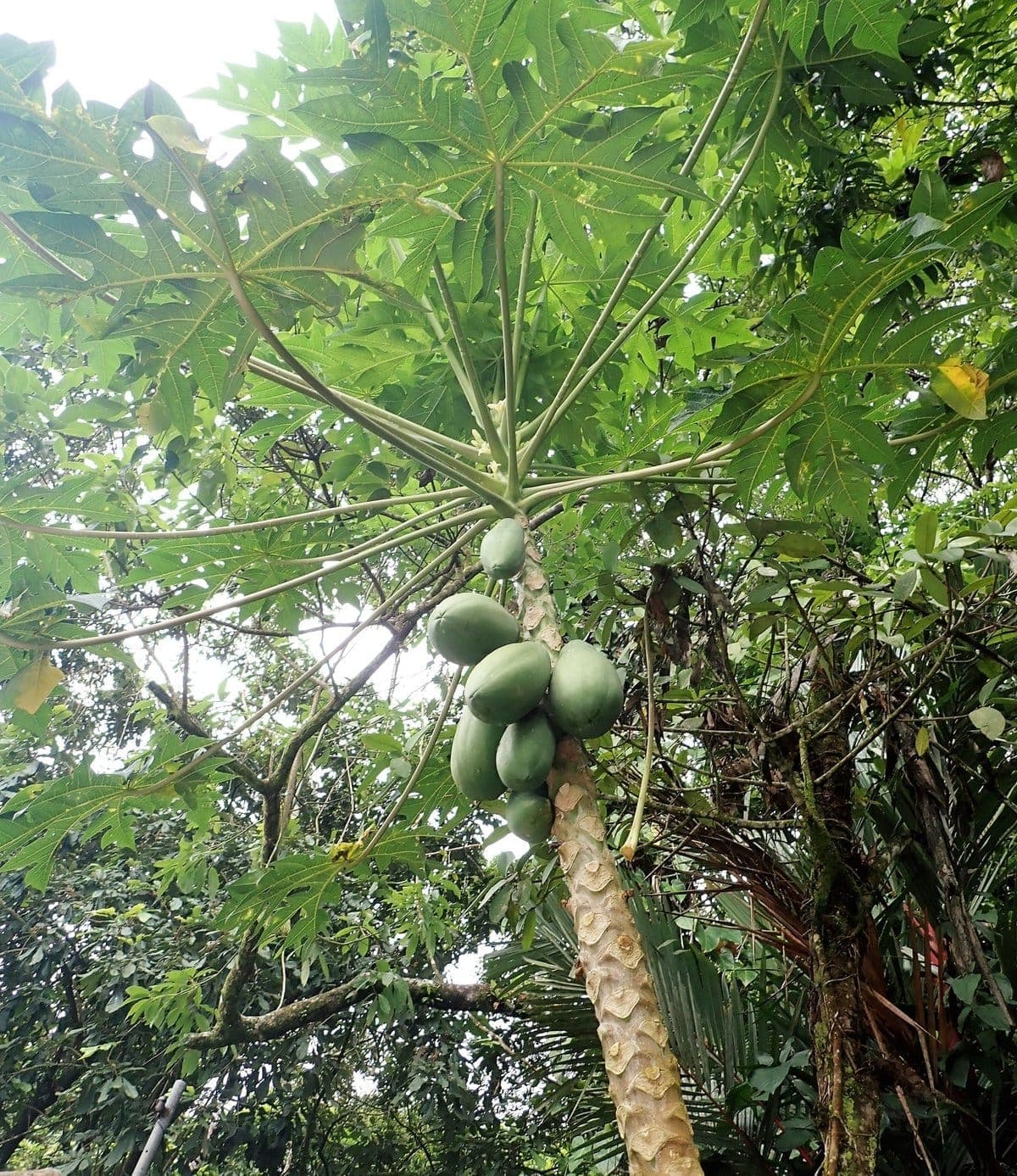
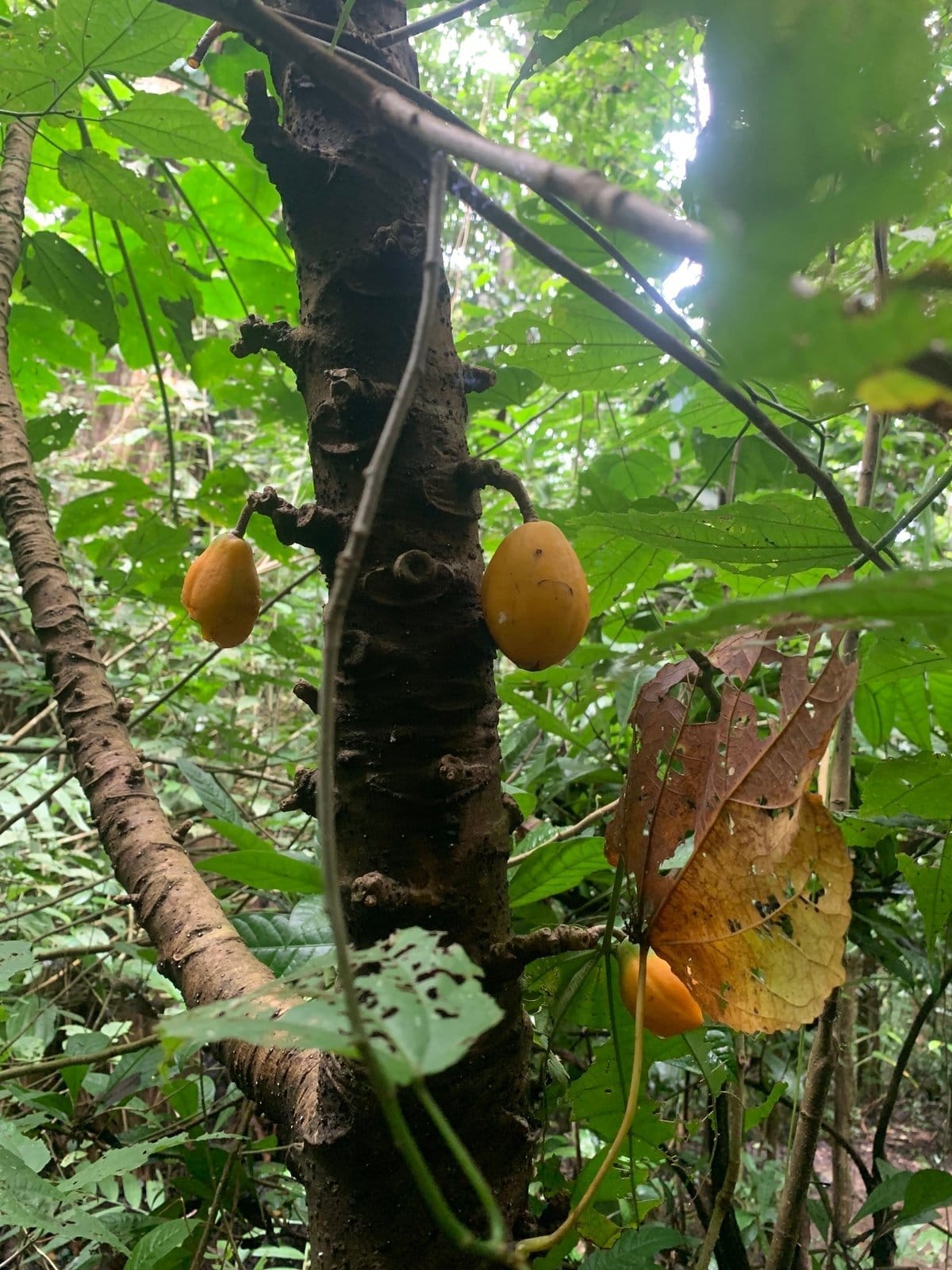
The name "cauliflora" refers to the plant's most striking feature: its habit of producing flowers and fruit directly from the trunk rather than from the crown. This cauliflorous trait is relatively rare in the plant kingdom and is particularly dramatic in the Papayillo, where clusters of small, elongated fruit hang directly from the stem, creating an unusual and memorable appearance.
In the wild, the Papayillo grows as an understory tree in premontane and montane wet forests, typically at elevations between 1,200 and 2,800 meters. It favors the steep, humid slopes and ravines of Costa Rica's central mountain ranges — the Cordillera de Talamanca, Cordillera Central, and Cordillera de Tilarán. In these misty forests, it grows in the shade of taller canopy trees, its large palmate leaves catching the filtered light that penetrates the canopy.
The Papayillo's global significance extends beyond its ecological role. The genus Vasconcellea contains species with natural resistance to papaya ringspot virus (PRSV), the most devastating disease of commercial papaya worldwide. V. cauliflora and its relatives are being studied intensively as potential sources of disease resistance genes that could be transferred to commercial papaya through breeding or genetic engineering. Wild populations of Papayillo represent irreplaceable genetic resources for the future of one of the world's most important tropical fruit crops.
📸 Photo Gallery
Whole tree
📷 (c) Jacob Martin, some rights reserved (CC BY-NC)(CC BY-NC)
View source ↗Leaves
📷 (c) Jacob Martin, some rights reserved (CC BY-NC)(CC BY-NC)
View source ↗Whole tree
📷 (c) Marvin López M., some rights reserved (CC BY-NC)(CC BY-NC)
View source ↗Leaves
📷 (c) Marvin López M., some rights reserved (CC BY-NC)(CC BY-NC)
View source ↗Whole tree
📷 (c) Marvin López M., some rights reserved (CC BY-NC)(CC BY-NC)
View source ↗Photos sourced from iNaturalist's community science database. Browse all observations →↗
Taxonomy and Classification
Common Names by Region
Taxonomic Notes
The genus Vasconcellea was formerly included within Carica (the genus of the commercial papaya), but molecular phylogenetic studies in the early 2000s showed that Carica as traditionally defined was paraphyletic. The highland species were segregated into the genus Vasconcellea, named after the 19th-century Colombian botanist José Jerónimo Triana Vasconcelos. The genus contains approximately 20 species, all native to the American tropics and subtropics, primarily in montane habitats. V. cauliflora is distinguished from other Vasconcellea species by its pronounced cauliflorous habit and its distribution in Central America rather than the South American Andes where most species occur.
Physical Description
Growth Form
The Papayillo is a small, slender, mostly unbranched tree reaching 3–8 meters in height, though typically 3–5 meters in the understory. Its overall appearance is like a miniature papaya tree — a straight, relatively soft stem topped with a cluster of large, deeply lobed palmate leaves. The growth form is tree-like but the stem is semi-succulent, more herbaceous than truly woody.
Trunk and Bark
The trunk is straight, slender (5–15 cm diameter), and somewhat soft and succulent internally, similar to papaya but smaller in diameter. The bark is light gray to greenish-gray, smooth, and marked with prominent leaf scars in a spiral pattern. When cut, the bark and stem exude a white, milky latex rich in proteolytic enzymes. The trunk is relatively fragile and can be snapped by strong winds.
Leaves
Leaves are large, deeply palmately lobed (5–7 lobes), 30–60 cm in diameter, borne on long petioles (up to 60 cm) at the top of the trunk. The leaf blade is dark green above, lighter below, with a somewhat leathery texture. Leaves are arranged spirally and concentrated at the crown, giving the tree its characteristic "palm-like top" appearance. Unlike commercial papaya, the leaves tend to be somewhat smaller and darker green, reflecting adaptation to lower light conditions.
Flowers
The most distinctive feature of the Papayillo is its cauliflorous flowering habit — flowers emerge directly from the trunk and older branches, not from the leaf axils at the crown. Individual flowers are small (2–3 cm), cream to pale yellow, with five petals. The species is typically dioecious (separate male and female plants), though some individuals may be monoecious. Female flowers are solitary or in small clusters along the trunk. Male flowers are produced in longer pendulous inflorescences. Pollination is primarily by small insects, including flies and small bees.
Fruit and Seeds
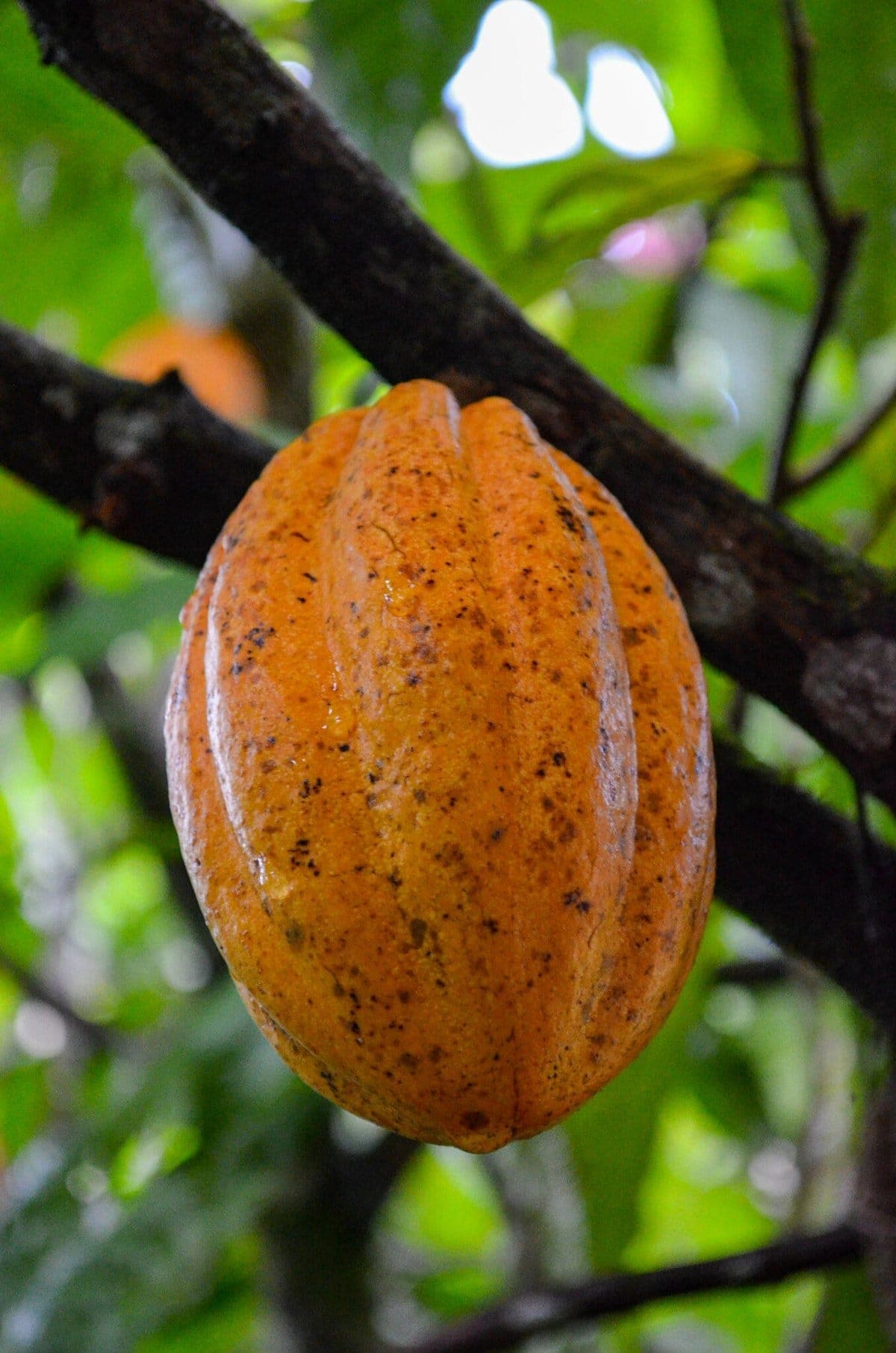
Fruits are small, elongated berries, 5–12 cm long and 2–4 cm in diameter, produced in clusters directly from the trunk and older stems. Shape is oblong to pyriform (pear-shaped), with 5 longitudinal ridges. Color changes from green to yellow or orange when ripe. The flesh is soft, aromatic, and orangey, with a somewhat insipid to mildly sweet flavor — less sweet and flavorful than commercial papaya. The central cavity contains numerous small, dark brown to black seeds each enclosed in a gelatinous aril.
Geographic Distribution
Range in Costa Rica
In Costa Rica, the Papayillo is found in the highland forests of the central mountain ranges:
- Cordillera de Talamanca: Most populations, particularly on the Caribbean slope; Cerro de la Muerte area, Chirripó foothills
- Cordillera Central: Slopes of Volcán Barva, Volcán Irazú, Volcán Turrialba
- Cordillera de Tilarán: Monteverde region and surroundings
- Dota / Los Santos region: Premontane forests on both slopes
- Cerro de las Vueltas / Los Quetzales: Montane forest habitat
The species is not common anywhere in its range but can be locally abundant in suitable microhabitats — particularly in humid ravines, stream margins, and forest edges at appropriate elevations.
Broader Distribution
Vasconcellea cauliflora ranges from southern Mexico through Central America (Guatemala, Honduras, El Salvador, Nicaragua, Costa Rica, Panama) and into northwestern South America (Colombia, Ecuador, Venezuela). Related Vasconcellea species extend through the Andes to Bolivia and Argentina. The genus reaches its maximum diversity in the Ecuadorian and Colombian Andes.
Habitat and Ecology
Ecological Role
The Papayillo fulfills several ecological functions in cloud forest ecosystems:
- Understory fruit production: Provides fruit at the forest floor level, accessible to terrestrial and small arboreal mammals
- Cauliflorous fruiting: The trunk-borne fruit is accessible to animals that cannot reach canopy fruits, including agoutis, ground birds, and climbing rodents
- Gap-phase dynamics: Colonizes small forest gaps and edges, contributing to forest regeneration after disturbance
- Genetic resource: Wild populations maintain genetic diversity crucial for papaya crop improvement
Wildlife Associations
- Mammals: Squirrels, agoutis, and opossums consume ripe fruit; bats may visit flowers
- Birds: Mountain thrushes, tanagers, and other fruit-eating birds feed on ripe fruit; the quetzal has been observed feeding on ripe Papayillo fruit
- Insects: Small flies and bees serve as pollinators; various lepidopteran larvae feed on leaves
- Decomposers: Fallen fruit supports diverse fungal and invertebrate communities on the forest floor
Cloud Forest Adaptation
The Papayillo shows several adaptations to cloud forest conditions:
- Large leaves: Maximize light capture under the canopy
- Dark green pigmentation: Higher chlorophyll content for photosynthesis in low light
- Cauliflory: Flower and fruit production on the trunk may facilitate pollination and seed dispersal by understory animals
- Cool temperature tolerance: Can withstand temperatures as low as 5°C briefly, far below what commercial papaya can tolerate
- Rapid reproduction: Short generation time allows quick colonization of forest gaps
Uses and Applications
Sources: Badillo 2000 — Carica vs Vasconcellea↗, Scheldeman et al. 2011 — Vasconcellea genetic diversity↗, Drew et al. 2006 — Carica interspecific hybrids↗
Edible Fruit
The ripe fruit of the Papayillo is edible, though considerably less flavorful than commercial papaya. The flesh is soft, orange, and mildly sweet with a somewhat watery consistency. It is consumed occasionally by rural highland communities in Costa Rica, typically eaten fresh or used in beverages. The fruit is more commonly consumed in South America, particularly in Ecuador and Colombia where related Vasconcellea species produce larger, better-flavored fruit.
Only eat fully ripe fruit (yellow-orange, soft to the touch). Unripe green fruit contains concentrated latex with proteolytic enzymes that will cause significant mouth and throat irritation. Remove seeds before eating. Handle with care and wash hands afterward.
Genetic Resource for Papaya Improvement
The most globally significant value of V. cauliflora is as a genetic resource for papaya crop improvement:
- Papaya ringspot virus resistance (PRSV): Some Vasconcellea species show natural resistance to this devastating disease. Intergeneric hybrids between Vasconcellea and Carica are being developed to transfer this resistance to commercial papaya.
- Cold tolerance: The ability to grow at 1,200–2,800 m elevation represents genetic potential for extending papaya cultivation to cooler regions.
- Diversity: Wild populations contain genetic variation for fruit quality, disease resistance, and environmental adaptation not found in cultivated papaya germplasm.
Traditional Medicine
In traditional highland medicine across Central America, Vasconcellea species have been used for:
- Digestive aids (the latex contains papain-like enzymes)
- Deworming treatments (seeds)
- Poultices for skin conditions
- Treatment of intestinal parasites
Ecological Restoration
The Papayillo's rapid growth, shade tolerance, and attractiveness to wildlife make it a useful species for cloud forest restoration projects. Its quick establishment and fruiting can help attract seed-dispersing wildlife to restoration sites.
Cultural and Historical Significance
The Papayillo has been known to indigenous highland communities throughout its range for centuries. Pre-Columbian peoples of Mesoamerica recognized wild papayas as relatives of the cultivated papaya and used them for food, medicine, and as meat tenderizers (the latex contains enzymes that break down protein, similar to commercial papaya).
In Costa Rica, the Papayillo is primarily known to rural farmers and naturalists in the highland zones. It is not a major cultural species but forms part of the traditional ecological knowledge of communities living near cloud forests. Older generations remember using the fruit as a food source and the latex for its enzymatic properties.
Modern significance is primarily scientific. The Papayillo and its Vasconcellea relatives are the subject of active research in papaya genetics and breeding. Costa Rican institutions including CATIE (Tropical Agricultural Research and Higher Education Center) maintain collections of Vasconcellea germplasm for research and conservation.
Conservation Status
Vasconcellea cauliflora has not been formally assessed by the IUCN Red List and is therefore classified as Not Evaluated (NE) in our schema. The species is widely distributed across Central America and the northern Andes, with no known immediate threat to its global persistence. Local populations, however, face pressures:
Threats
- Cloud forest conversion: Agriculture and cattle ranching continue to fragment highland forests
- Climate change: Cloud forests are particularly vulnerable to rising temperatures and changing moisture patterns; cloud base elevation is rising, potentially pushing suitable habitat higher
- Limited awareness: The species receives almost no conservation attention
- Small population sizes: Populations are typically small and isolated, making them vulnerable to local extinction
Conservation Actions
- Habitat protection: Maintaining existing cloud forest reserves (Monteverde, Los Quetzales, Tapantí) protects Papayillo habitat
- Ex-situ conservation: Germplasm banks at CATIE and other institutions preserve genetic diversity
- Research: Continued study of population genetics and distribution
- Corridor conservation: Maintaining forest connectivity in highland areas
Growing the Papayillo
Site Selection
The Papayillo requires cloud forest-like conditions: cool temperatures (10–25°C), high humidity (70%+), filtered light, and excellent drainage. In Costa Rica, it can only be grown successfully at elevations above ~1,200 meters. Choose a sheltered site protected from strong winds, with dappled shade from taller trees. North-facing slopes and humid ravines are ideal.
Propagation
From Seed: The primary propagation method. Use fresh seed — viability declines rapidly when seeds dry out. Remove the gelatinous aril around each seed by soaking in water for 24 hours. Sow immediately in moist, well-drained seed-starting mix. Seeds germinate in 2–4 weeks at 18–22°C. Transplant seedlings when they have 4–6 true leaves.
From Stem Cuttings: Semi-hardwood cuttings (15–20 cm) can root in humid conditions under mist, but success rates are variable (30–60%). Use rooting hormone and provide bottom heat.
Planting and Care
- Plant at the beginning of the rainy season in a sheltered, shaded location
- Ensure the soil is rich in organic matter — amend with compost and leaf litter
- Drainage must be excellent — raise the planting area if the site is flat
- Mulch heavily with leaf litter to maintain soil moisture and coolness
- Mist the foliage regularly in dry periods or install a mist system
- Protect from direct afternoon sun, especially below 1,500 m elevation
- Stake the young plant — the slender trunk is vulnerable to wind
Companion Planting in Cloud-Forest Gardens
- Upper-story shade partners: Establish beneath medium-canopy natives such as Copey and Aguacatillo to replicate filtered cloud-forest light.
- Moisture-retention understory: Pair with ferns, shade palms, and other humidity-loving understory plants to stabilize microclimate and protect shallow roots.
- Genetic buffer strategy: In conservation plots, plant multiple Vasconcellea individuals with unrelated cloud-forest associates to reduce disease pressure from single-species clustering.
- Avoid: Open, wind-exposed sites or direct pairing with heavy-feeding annual crops that disrupt mulch layers and root-zone humidity.
Care Calendar
Where to See the Papayillo
In Costa Rica
- Cerro de la Muerte area: Montane forest along the Pan-American Highway between San José and San Isidro
- Los Quetzales National Park: Cloud forest trails
- Monteverde Cloud Forest Reserve: Understory of primary forest
- Tapantí-Macizo de la Muerte National Park: Premontane and montane forest
- Volcán Barva and Cerro Chompipe: Highland forests above Heredia
- CATIE, Turrialba: Research collections of Vasconcellea germplasm
Best Viewing Season
June through October, when fruit is present on the trunk. The cauliflorous fruiting habit makes identification easy — look for small, elongated fruit hanging directly from slender trunks in the forest understory. The large palmate leaves at the top of the trunk also aid identification once you know what to look for.
Advanced Care Guidance
Site Design and Planting
- Plant in warm premontane to lower montane sites with filtered sun to light full sun and 3-4 m spacing.
- Prefer deep, well-drained soils rich in organic matter; raised beds help in high-rainfall clay zones.
- Keep wind exposure moderate to protect brittle stems and developing fruit clusters.
Watering Program
- Establishment (0-5 months): Even moisture with 2 irrigations weekly during rain gaps.
- Production phase: Water every 5-7 days in dry season; avoid prolonged drought stress.
- Rainy season: Reduce irrigation frequency and focus on drainage to prevent root diseases.
Fertilization Schedule
- Start with compost and a balanced blend (12-12-17) after transplant shock subsides.
- Feed every 8-10 weeks during active growth using split doses rather than heavy single applications.
- Include calcium and boron support where fruit cracking or poor fruit set appears.
Pruning and Structure
- Remove weak suckers and maintain 1-2 productive stems per plant.
- Stake young plants in exposed sites to avoid stem breakage.
- Conduct sanitary leaf pruning only; avoid excessive canopy removal that reduces fruit production.
Pest and Disease Management
- Monitor fruit flies, mites, and aphids, especially at flowering and fruit expansion stages.
- Watch for anthracnose and root rots in poorly drained sites.
- Use orchard sanitation: remove fallen fruit, improve airflow, and rotate biological controls.
Companion Planting
- Recommended companions: Guaba Bejuco, banana in managed spacing, low-growing herbs, and pollinator strips.
- Agroforestry role: Works as a medium-cycle fruit layer between perennial canopy trees.
- Avoid nearby: Large aggressive-root trees that create deep shade and high nutrient competition.
Seasonal Care Calendar (Costa Rican Conditions)
- Dry season (Dec-Apr): Irrigation priority, fruit bagging where needed, and pest surveillance.
- Early rains (May-Jul): Main fertilization and replacement planting.
- Peak rains (Aug-Oct): Drainage checks, fungal prevention, and sanitary pruning.
- Transition (Nov): Soil amendment and flowering support plan.
Growth Timeline and Harvest Notes
- First fruits commonly appear 10-14 months after successful establishment.
- Peak productivity usually occurs in years 2-3 with stable moisture and nutrition.
- Harvest at physiological maturity to reduce post-harvest losses and pest attraction.
Cloud-Forest Monitoring Protocol
Papayillo performs best where monitoring captures humidity dynamics, drainage performance, and reproductive consistency.
Annual indicators to track
- Survival by elevation band and canopy cover class.
- Time to first flowering and fruiting by planting cohort.
- Incidence of root-rot symptoms in wettest months.
- Fruit quality class (size, cracking, pest damage).
- Natural recruitment around mother plants.
Field schedule
- Dry months: humidity stress checks and supplemental misting review.
- Early rains: planting success and drainage verification.
- Peak rains: disease scouting and sanitation intensity.
- Transition months: harvest review and replacement planning.
Similar Species and Diagnostic Traps
| Potential confusion | Why confusion occurs | Useful field check | | ---------------------------------------------- | ------------------------------------------------ | -------------------------------------------------------------------------------------- | | Cultivated papaya (Carica papaya) | Shared family traits and trunk-borne fruiting. | Papayillo is typically highland-associated with smaller fruit and cooler-site ecology. | | Other Vasconcellea taxa | Overlapping morphology in cloud-forest contexts. | Use leaf lobing, fruit proportions, and site elevation together. | | Juvenile understory shrubs with palmate leaves | Quick visual similarity at distance. | Confirm latex, stem architecture, and reproductive position on trunk. |
Practical anti-confusion rule
Never identify Papayillo from leaf shape alone; combine fruit placement, latex, and habitat context.
Field Identification Checklist
- Confirm elevation and cloud-forest humidity profile.
- Record whether fruits are trunk-borne (cauliflorous habit).
- Check leaf lobe depth and petiole length.
- Inspect latex response carefully on minor tissue damage.
- Photograph whole plant, leaf, trunk, and fruit cluster.
- Note nearby cultivated papaya to avoid plot-level confusion.
Minimum survey evidence
- Whole-plant profile with surrounding vegetation.
- Leaf close-up from mature foliage.
- Trunk and fruit attachment detail.
- Site note on elevation, canopy cover, and moisture.
Restoration and Corridor Applications
Papayillo can serve as a functional connector species in humid montane restoration where wildlife attraction is a management goal.
Recommended uses
- Add to cloud-forest edge buffers near existing native fruit resources.
- Integrate in mixed understory-fruit layers in biological corridors.
- Use in educational restoration plots to show native Caricaceae diversity.
Management triggers
- High fruit fly pressure: intensify sanitation and harvest timing.
- Recurring root disease: revise drainage and spacing design.
- Low pollination: strengthen companion flowering plant strip.
Operational Risk Matrix
| Risk | Likelihood | Impact | Mitigation | | ---------------------------------------- | ----------- | ----------- | ---------------------------------------------------------------- | | Root disease in prolonged wet periods | Medium-High | High | Improve drainage micro-topography and reduce over-irrigation. | | Fruit fly and post-harvest loss | Medium | Medium-High | Frequent harvest rounds and strict orchard sanitation. | | Wind damage to slender stems | Medium | Medium | Wind buffering, staking, and protected site selection. | | Misidentification with cultivated papaya | Medium | Medium | Use standardized checklist with photographic verification. | | Moisture stress in dry intervals | Medium | High | Misting, mulch depth control, and emergency irrigation protocol. |
Rapid Assessment Template
Apply this compact scoring sheet each year for Papayillo sites.
| Indicator | Field score (1-5) | Notes to record | | ---------------------------------------- | ----------------- | ------------------------------------------------------- | | Survival by elevation band | | Separate shaded vs. semi-open microsites. | | Fruit set consistency | | Compare to flowering intensity and pollinator presence. | | Root health under peak rains | | Record drainage behavior and disease symptoms. | | Dry-interval moisture management | | Track misting frequency and mulch performance. | | Pest pressure (fruit fly, mites, aphids) | | Link with sanitation and harvest timing. | | Identification confidence | | Attach visual evidence for ambiguous plants. | | Natural recruitment | | Count seedlings near reproductive individuals. | | Data capture completeness | | Verify site, date, elevation, and observer fields. |
Scoring interpretation
- 4-5: Keep current management and refine incrementally.
- 3: Acceptable performance; plan corrective action this season.
- 1-2: Immediate intervention required to prevent decline.
Priority Actions for the Next 12 Months
- Tighten drainage checks for wettest months in cloud-forest zones.
- Standardize fruit sanitation intervals during production peaks.
- Expand pollinator-support plant strips near Papayillo cohorts.
- Harmonize photo-based species verification in field records.
- Review irrigation and misting thresholds before dry months.
Minimum Data Log Fields
Papayillo monitoring logs should always capture:
- Site and elevation identifier.
- Date and seasonal phase.
- Flowering/fruiting status.
- Drainage condition at root zone.
- Pest pressure class.
- Moisture-management action taken.
- Identification confidence rating.
- Linked photo record ID.
External Resources
References
- Badillo, V. M. (2000). Carica L. vs. Vasconcella St. Hil. (Caricaceae) con la rehabilitación de este último. Ernstia, 10, 74–79.
- Scheldeman, X., et al. (2011). Genetic diversity and structure of highland papayas (Vasconcellea spp.) from the inter-Andean valleys. Genetic Resources and Crop Evolution, 58, 983–994.
- Drew, R. A., et al. (2006). The development of Carica interspecific hybrids. Acta Horticulturae, 725, 323–332.
- Jiménez, Q. (1999). Árboles Maderables en Peligro de Extinción en Costa Rica. INBio.
- Holdridge, L. R., & Poveda, L. J. (1975). Árboles de Costa Rica. Centro Científico Tropical.
- National Research Council. (1989). Lost Crops of the Incas: Little-Known Plants of the Andes with Promise for Worldwide Cultivation. National Academies Press.
Safety Information Disclaimer
Safety information is provided for educational purposes only. Individual reactions may vary significantly based on age, health status, amount of exposure, and individual sensitivity. Always supervise children around plants. Consult a medical professional or certified arborist for specific concerns. The Costa Rica Tree Atlas is not liable for injuries or damages resulting from interaction with trees described in this guide.
• Always supervise children around plants
• Consult medical professional if unsure
• Seek immediate medical attention if poisoning occurs
Information compiled from authoritative toxicology sources, scientific literature, and medical case reports.
Help improve this page
Know something about this tree? Share local knowledge, suggest a correction, or submit a photo to improve this guide for everyone.