Mayo
Vochysia hondurensis
Quick facts
Native Region
Southern Mexico through Central America to Panama
Max Height
30-45 meters (100-148 feet)
Family
Vochysiaceae
Conservation
NE — Not Evaluated
Uses
Safety Information
Toxicity Details
Vochysia hondurensis has no documented toxicity to humans or animals. The tree is considered completely safe, with no known hazardous compounds in any part of the plant.
Skin Contact Risks
No risk from skin contact. The bark, leaves, and wood are non-irritating and safe to handle. Wood dust during milling should use standard respiratory protection as with any timber species.
Allergenic Properties
Low allergen risk. Pollen may cause mild reactions in highly sensitive individuals during flowering season, but significant allergies are uncommon. Wood dust may cause minor respiratory irritation with standard precautions.
Structural Hazards
No significant structural risks from mature trees. This is a tall emergent species with a straight trunk and strong wood. As with all large trees, falling branches from aging specimens should be monitored in developed areas, but Mayo is not prone to branch failure.
Wildlife & Pet Risks
Safe for wildlife. The winged seeds are dispersed by wind. Not toxic to domestic animals or wildlife.
Season
Flowering
Mar-Jun
Fruiting
Jul-Oct
How to identify
Mayo
Mayo (Vochysia hondurensis) is a tall emergent canopy tree belonging to the Vochysiaceae family. This impressive native species is one of Costa Rica's most important timber trees, combining rapid growth with high-quality wood suitable for construction, furniture, and veneer. Mayo's straight trunk, reaching heights of 30-45 meters, makes it highly valuable for both commercial forestry and ecological restoration of degraded rainforest lands.
Quick Reference
iNaturalist Observations
Community-powered species data
📸 Photo Gallery
High-quality images for this species need to be sourced from iNaturalist, GBIF, or botanical databases following the project's image guidelines. Key features to capture: distinctive yellow flowers in terminal panicles, whorled leaves, warty seed capsules, straight trunk form, and overall tree habit. Note: This species may also be found under the synonym Vochysia guatemalensis.
📸 Photo Gallery
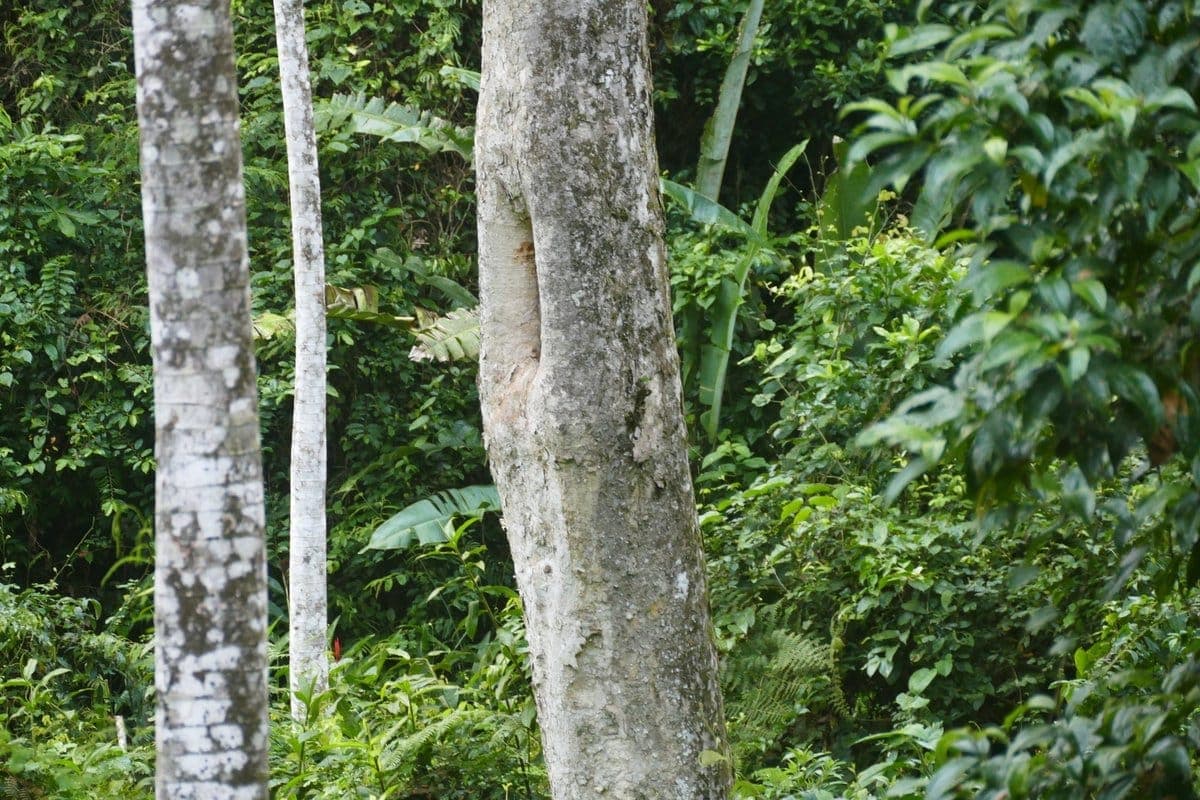
Whole tree
📷 (c) wherenextnyc, some rights reserved (CC BY-NC)(CC BY-NC)
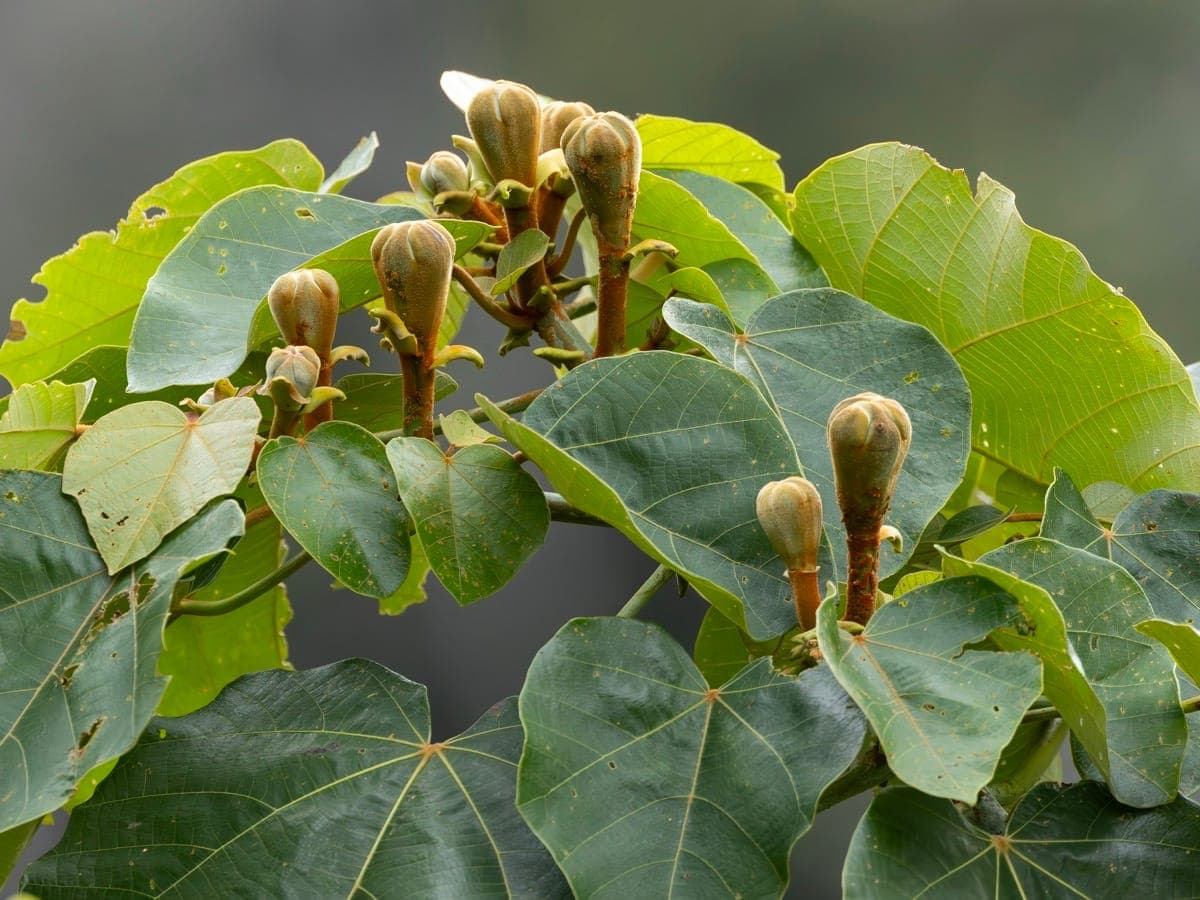
View source ↗Leaves
📷 (c) wherenextnyc, some rights reserved (CC BY-NC)(CC BY-NC)
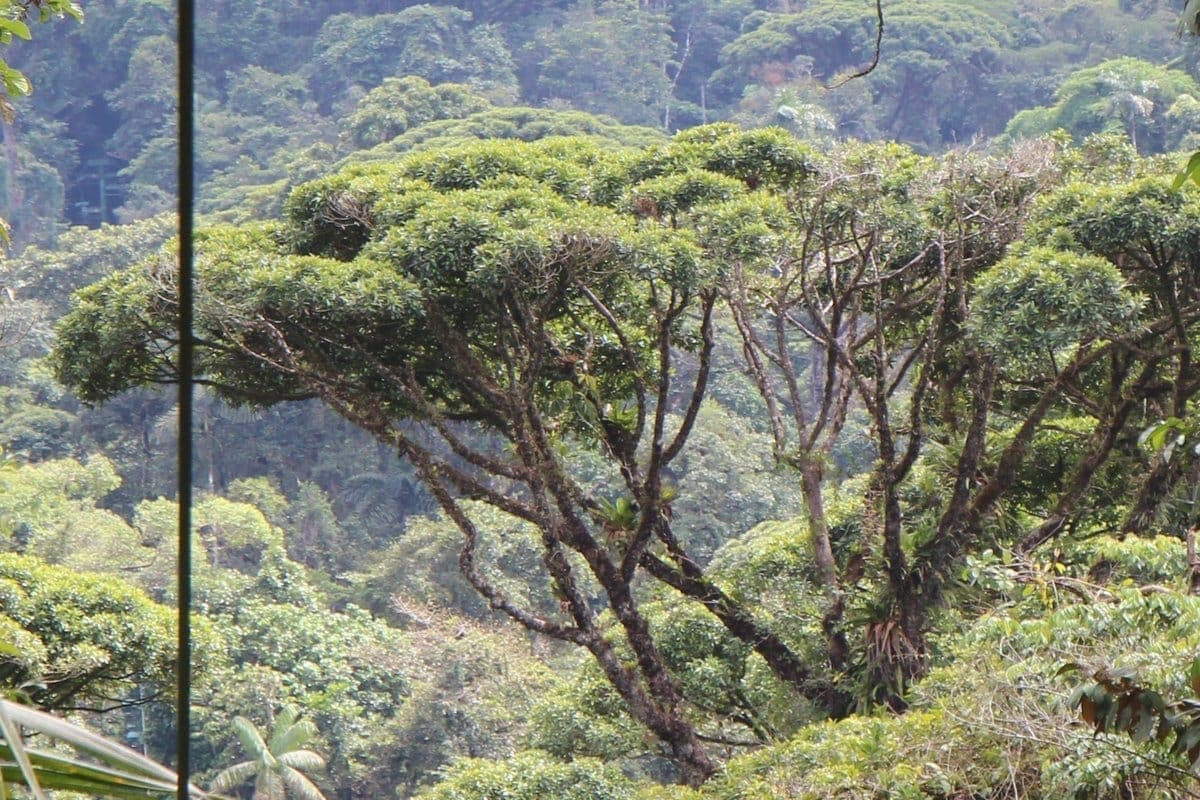
View source ↗Whole tree
📷 (c) Seymore Gulls, some rights reserved (CC BY-NC)(CC BY-NC)
View source ↗Leaves
📷 (c) wherenextnyc, some rights reserved (CC BY-NC)(CC BY-NC)
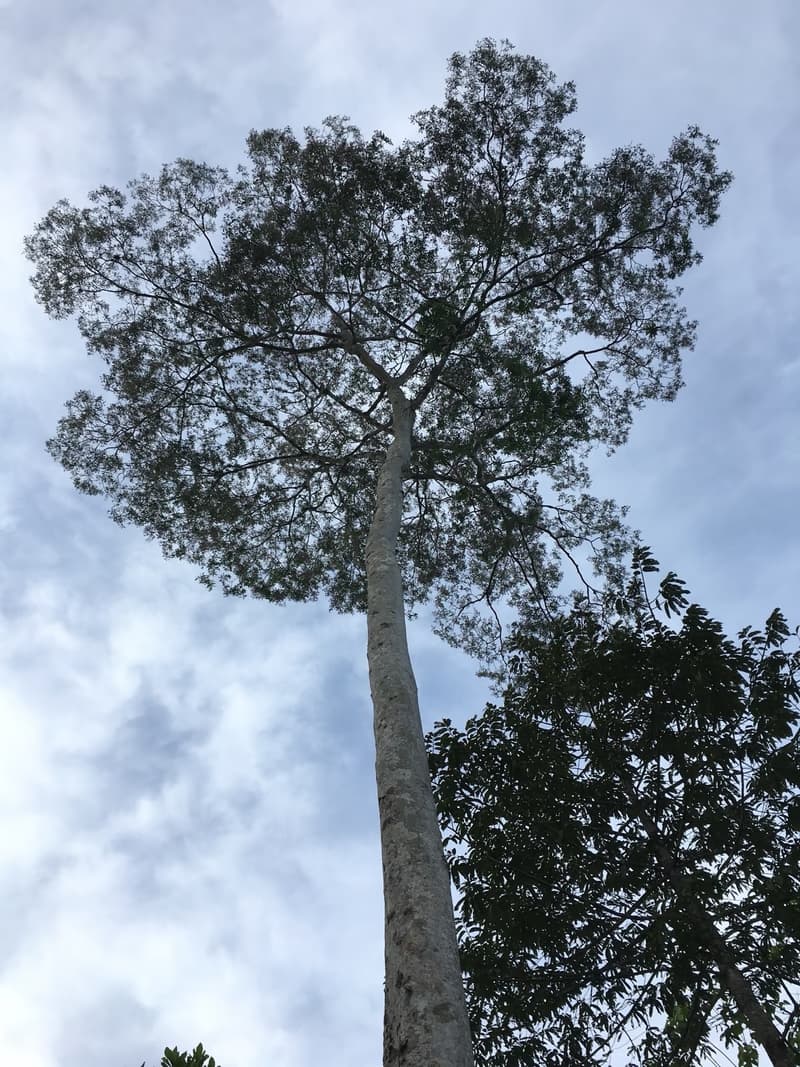
View source ↗Whole tree
📷 (c) Maynor Carranza, some rights reserved (CC BY-NC)(CC BY-NC)
View source ↗Photos sourced from iNaturalist's community science database. Browse all observations →↗
Taxonomy & Classification
Common Names by Region
Taxonomic Notes
The species was described by Thomas Archibald Sprague in the early 20th century. The genus Vochysia contains approximately 130 species distributed throughout tropical America and is one of the most economically important genera in the Vochysiaceae family, with several species valued as timber trees.
Vochysia hondurensis is often treated as synonymous with Vochysia guatemalensis in taxonomic literature, with some authorities considering them the same species with regional variation. Both names refer to the same or very closely related timber trees found across Central America. The taxonomy within this species complex continues to be refined by botanists.
The genus is distinctive within the Vochysiaceae for its zygomorphic (bilaterally symmetrical) flowers with a single enlarged, spurred calyx lobe—a characteristic flower structure in the family.
Etymology
- Vochysia: From "Vochy," a vernacular name for these trees in the Guianas, where early botanical collections were made
- hondurensis: Latin for "of Honduras," referring to the country where type specimens were collected, though the species ranges throughout Central America
Physical/Botanical Description
Tree Form
Mayo is a large emergent canopy tree reaching 30-45 meters in height, occasionally taller in optimal conditions. The trunk is remarkably straight and cylindrical, typically 60-120 cm in diameter at breast height, free of branches for much of its length. Young branches are distinctly angular (not rounded) and typically glabrous (smooth, without hairs).
The crown is relatively small in proportion to the trunk height, positioned in the emergent layer above the main canopy. The overall form is columnar—a straight pole-like trunk topped with a small crown—making it ideal for timber production. The tree is evergreen, maintaining foliage year-round in humid tropical conditions.
Bark
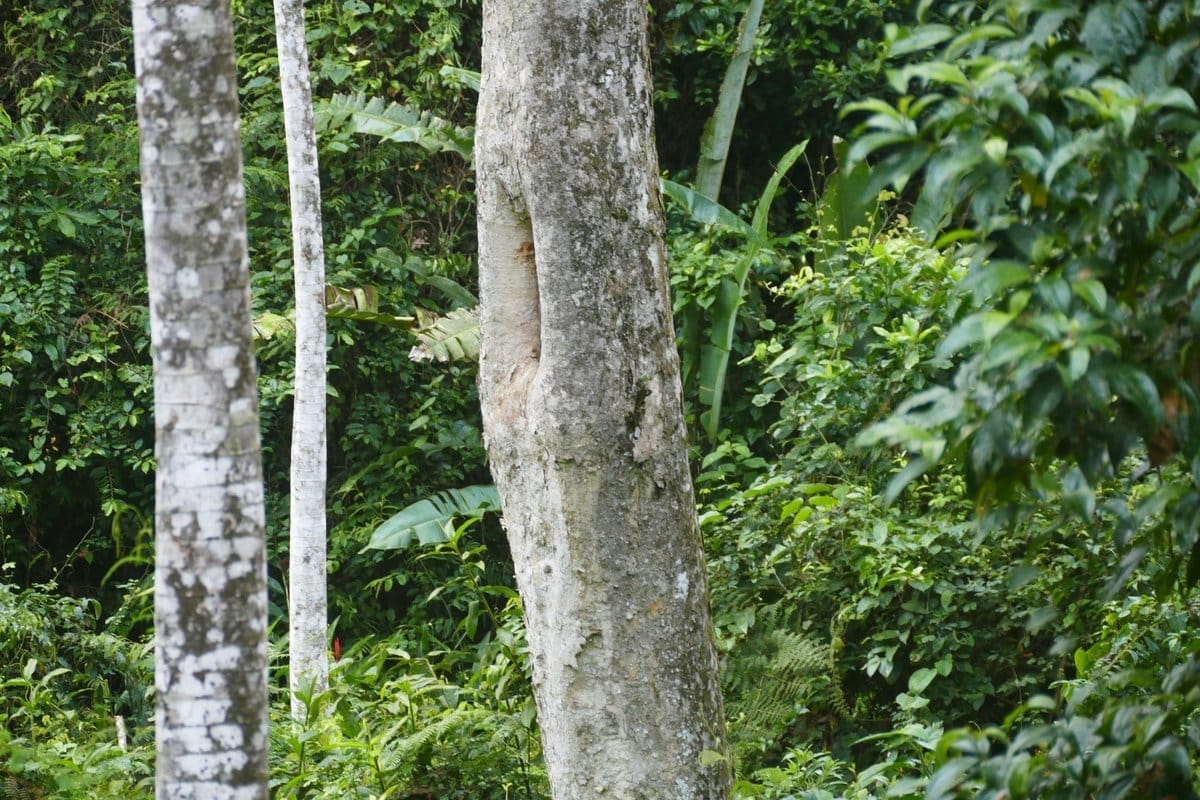
The bark is relatively smooth on young trees, becoming slightly fissured and scaly with age. It is gray-brown to dark brown in color, with vertical furrows developing on mature specimens. The outer bark is moderately thick. When cut, the inner bark may show pale yellowish to cream coloring.
The bark does not have distinctive coloration like some related species but can be identified by its relatively smooth texture and the overall tree form—tall, straight trunk with angular young branches.
Leaves
The leaves are simple and arranged in distinctive whorls of 3-4 (sometimes appearing opposite) at each node—a characteristic feature of the genus. Individual leaves are 6-15 cm long and 2-5 cm wide, narrowly obovate-oblong to narrowly obovate-elliptic in shape. The leaf base is attenuate-cuneate (tapering to a wedge shape) and decurrent (running down the petiole), while the apex is rounded to obtuse, often with a slight notch.
The upper leaf surface is shiny and glabrous (smooth) with the midvein slightly impressed, dark green in color. The lower surface is duller, paler, and also mainly glabrous. The leaf texture is somewhat coriaceous (leathery) but not as thick as in some tropical trees. Leaves are attached by slender petioles 1-3 cm long.
The leaves have small stipules (1-2 mm) that persist for a time before falling. The whorled leaf arrangement is immediately distinctive and helps identify the genus even from a distance.
Flowers
The flowers are distinctive and attractive, appearing in elongate-cylindrical terminal and axillary panicles (branched clusters) that can be quite showy when the tree is in full bloom. Individual flowers are small, about 1-1.5 cm across, and bright yellow in color—a striking sight in the forest canopy.
Flowers are strongly zygomorphic (bilaterally symmetrical), a key characteristic of the Vochysiaceae. The calyx has a single enlarged, fleshy, spurred lobe (9-12 mm long) that gives the flower an asymmetric appearance. There are three yellow petals, 4-5 mm long, which are obovate and ciliate (fringed with fine hairs) at the apex.
The flower has one fertile stamen and two to four staminodes (sterile stamens). The floral structure is specialized for pollination by bees and other insects attracted to the bright yellow color and nectar.
Flowering occurs primarily from March through June, with occasional flowering in October and November. Trees typically begin flowering at 12-13 years of age. The yellow flower clusters in the emergent crowns are visible from a distance and are a distinctive identification feature during the flowering season.
Fruit & Seeds
The fruit is a capsule, 3-4.5 cm long, acute to subacute at the apex, with a distinctive warty or verruculose (covered with small wart-like projections) surface. Immature capsules are green, turning brown as they mature and dry.
The capsules are loculicidal, meaning they split along the locules (chambers) to release the seeds. Each capsule contains several seeds. The seeds are winged—a critical adaptation for wind dispersal (anemochory). The wings allow seeds to be carried considerable distances from the parent tree, facilitating colonization of forest gaps and disturbed areas.
Fruiting occurs primarily from July through October, following the main flowering season. The mature capsules split open while still on the tree, releasing the winged seeds that spiral down through the air. This wind dispersal strategy is effective for a tall emergent species that produces seeds above the main forest canopy where wind currents are stronger.
After initial wind dispersal, seeds may be secondarily dispersed by ground-dwelling animals such as rodents, though this is less important than wind dispersal.
Geographic Distribution
Global Distribution
Mayo has a Central American distribution, ranging from southern Mexico (Chiapas, Veracruz) through Belize, Guatemala, El Salvador, Honduras, Nicaragua, Costa Rica, to Panama. The species is most common in the Caribbean lowlands and wet regions, forming an important component of lowland rainforest ecosystems throughout its range.
Distribution in Costa Rica
In Costa Rica, Mayo is found primarily in wet lowland and premontane rainforests, with strongest presence on the Caribbean slope:
- Limón: Caribbean lowland rainforests, very common (0-600 m)
- Heredia: Sarapiquí region, La Selva, Braulio Carrillo lower elevations (100-1000 m)
- Alajuela: Northern lowlands, San Carlos region (50-800 m)
- Puntarenas: Southern Pacific wet forests, Osa Peninsula (0-800 m)
- San José: Premontane forests on Caribbean slope (400-1200 m)
- Cartago: Eastern premontane forests (600-1200 m)
The species is most abundant in primary forests but also colonizes secondary forests and abandoned pastures in areas with adequate rainfall. It is particularly common along riversides and in areas with permanent moisture. Mayo is less common or absent from the dry Pacific northwest (Guanacaste), which receives insufficient rainfall.
Where to See Mayo
- La Selva Biological Station - Very common in lowland rainforest; excellent specimens
- Braulio Carrillo National Park - Common in lowland and premontane zones, Caribbean slope
- Tortuguero National Park - Caribbean lowland forests and riparian zones
- Corcovado National Park - Present in Osa Peninsula rainforests
- Hitoy Cerere Biological Reserve - Caribbean slope wet forests
- Sarapiquí region - Common in both protected forests and secondary growth
- Caribbean lowlands generally - Frequently seen in remaining forest patches
Habitat & Ecology
Ecological Role
Mayo plays several important ecological roles in tropical rainforest ecosystems:
- Emergent Canopy Structure: Provides emergent layer structure above main canopy, important for forest vertical complexity and microclimate
- Pioneer Species: Rapidly colonizes forest gaps, abandoned fields, and degraded areas; important in forest succession
- Seed Production: Abundant wind-dispersed seeds facilitate forest regeneration across disturbed landscapes
- Wildlife Habitat: Tall emergent crowns provide nesting sites for canopy birds and raptors; flowering trees attract insect pollinators
- Forest Recovery: One of the fastest-growing native timber species, creating forest structure that allows establishment of slower-growing species beneath
Forest Associations
Mayo typically grows in association with diverse lowland and premontane rainforest species:
Common Associates:
- Pentaclethra macroloba (Gavilán) - dominant in many Caribbean lowland forests
- Carapa guianensis (Crabwood) - wet forest species
- Dipteryx panamensis (Almendro) - emergent canopy tree
- Vochysia ferruginea (Botarrama) - closely related species, often co-occurring
- Lecythis ampla (Monkey Pot) - large-seeded canopy tree
- Cecropia species - pioneer trees in disturbed areas
- Various palm species (Welfia, Iriartea, Socratea)
- Dense epiphyte communities in crowns
In secondary forests and regenerating areas, Mayo often forms dense, nearly mono-specific stands, particularly in abandoned pastures with adequate moisture. These stands can dominate for several decades before being joined by slower-growing hardwood species.
Climate & Soil Requirements
Mayo is adapted to humid, warm tropical conditions with abundant year-round rainfall:
- Temperature: Warm tropical temperatures (23-31°C average), not frost-tolerant, requires consistently warm conditions
- Rainfall: Requires very high rainfall (3000-5000+ mm annually); thrives in perhumid zones with no significant dry season
- Humidity: High humidity essential; not tolerant of seasonal drought
- Soils: Prefers deep, well-drained but constantly moist clay or loam soils; adapted to acidic soils (pH 4.5-6.5); thrives on fertile alluvial soils along rivers
The species is not drought-tolerant and will not thrive in areas with extended dry seasons. Its distribution is limited by moisture requirements—it is a true wet forest specialist.
Phenology
- Flowering: March-June (main season), sometimes October-November (secondary)
- Fruiting: July-October, following flowering
- Leaf retention: Evergreen, maintains foliage year-round
- Growth: Rapid vertical growth during rainy season; slowed growth during any drier periods
Trees typically begin flowering and fruiting at 12-13 years of age under good conditions.
Wood Properties & Uses
Wood Characteristics
The wood of Mayo is among the most valuable of Costa Rican fast-growing native species:
- Color: Heartwood pale pink to reddish-brown; sapwood lighter, cream to pale yellow
- Texture: Medium to coarse texture with high natural luster
- Grain: Typically straight, occasionally interlocked
- Density: Light to medium density (specific gravity 0.40-0.55)
- Mechanical properties: Moderately strong and stiff; good strength-to-weight ratio
- Workability: Generally good; easy to saw, plane, and work with both hand and machine tools; glues well
- Durability: Moderately durable; heartwood somewhat resistant to decay but susceptible to termites and fungi in ground contact
- Drying: Seasons reasonably well with minimal degrade if carefully dried
- Finishing: Takes finishes well; attractive appearance when finished
Traditional and Commercial Uses
Primary Timber Applications:
- General construction: Beams, joists, rafters, framing lumber
- Furniture: Tables, chairs, cabinets, and general furniture construction
- Carpentry and joinery: Interior trim, door and window frames, moldings
- Plywood: Core stock and face veneer for plywood production—important commercial use
- Veneer: Decorative and utility veneer for furniture and paneling
- Boxes and crates: Light construction for shipping containers
- Railroad ties: Treated wood used for railroad construction
- Boat building: Interior boat components (not for exterior due to moderate durability)
- Particle board and fiberboard: Wood fiber for composite wood products
The wood is particularly valued for its combination of light weight, workability, and adequate strength. While not as durable as some hardwoods, it is excellent for interior applications and situations where weight is a consideration.
Limitations:
- Not suitable for outdoor use or ground contact without treatment (susceptible to decay)
- Lower durability compared to true hardwoods like mahogany or teak
- Requires protection from termites in vulnerable situations
Timber Production & Forestry
Commercial Importance:
Mayo is one of Costa Rica's most important native timber species for several reasons:
- Fast growth: Reaches timber size (40-50 cm diameter) in 15-25 years—much faster than traditional hardwoods
- Straight form: Natural tendency to grow straight with minimal branching makes for excellent saw logs
- Easy silviculture: Adapts well to plantation management; relatively few pest problems
- Natural regeneration: Wind-dispersed seeds colonize nearby areas readily
- Good wood quality: Produces commercially acceptable timber for multiple applications
Plantation Forestry:
- Widely planted in reforestation projects in Caribbean lowlands
- Used in mixed-species plantations combining timber and conservation
- Suitable for enrichment planting in secondary forests
- Can be grown in pure stands, though mixed planting improves biodiversity
- Rotation age: 20-30 years for timber harvest
Modern Applications
Reforestation & Restoration:
Mayo is increasingly recognized as valuable for:
- Degraded land restoration: Rapidly establishes forest cover on abandoned pastures and degraded sites
- Watershed protection: Fast-growing canopy reduces erosion and protects water sources
- Wildlife corridors: Creates forest structure for wildlife movement between forest fragments
- Carbon sequestration: Fast growth rate results in significant carbon storage
- Nurse tree function: Provides shade and structure for establishment of more demanding native species
Sustainable Forestry:
Incorporated into sustainable forestry systems:
- Community forestry projects in indigenous and rural areas
- Payment for Environmental Services (PES) programs in Costa Rica
- Certified sustainable timber operations
- Agroforestry systems (though typically too tall for most applications)
Cultural & Historical Significance
Indigenous and Traditional Knowledge
Indigenous peoples and rural communities throughout Mayo's range have long recognized it as a valuable timber tree. The straight trunks were traditionally used for construction beams and posts in rural dwellings. The wood's workability made it useful for crafting various tools and implements.
The common name "Mayo" is used widely in Costa Rica and Central America, though its exact origin is unclear. "Palo de agua" (water wood) reflects the species' preference for wet habitats and riverine environments.
Regional Timber Industry
In the 20th century, Mayo became an important commercial timber species in Costa Rica:
- Harvested from natural forests in Caribbean lowlands during logging boom (1960s-1990s)
- Wood exported regionally and internationally for plywood and construction
- Recognized as valuable substitute for increasingly scarce true mahogany
- Promoted in reforestation incentive programs beginning in 1980s
As natural forest logging declined due to conservation policies, Mayo transitioned from being primarily wild-harvested to being actively planted in timber plantations and restoration projects.
Modern Conservation Forestry
Mayo represents a success story in Costa Rican forestry:
- Plantation Alternative: Plantations reduce pressure on natural forests by providing timber from managed stands
- Reforestation Pioneer: Among the most successful native species for restoring degraded lands
- Economic Incentive: Provides income for rural communities through sustainable timber while maintaining native species
- Model Species: Demonstrates that fast-growing native trees can compete economically with exotic plantations (teak, melina)
Mayo is frequently cited in literature on tropical reforestation as an example of a native species that successfully combines rapid growth, timber value, and ecological benefits.
Sources: GBIF species profile↗, Plants of the World Online↗, IUCN Red List search↗, iNaturalist observations↗
Conservation Status
Vochysia hondurensis is currently Not Evaluated (NE) by the IUCN Red List. While there is no official global conservation assessment, the species appears to be relatively common throughout much of its Central American range and is not considered immediately threatened.
Current Status
The species does not have a formal IUCN conservation assessment. Based on available information, it appears to be widespread and relatively common in suitable wet forest habitats across Central America, including Costa Rica. The species' ability to colonize disturbed areas and its successful use in reforestation suggests healthy populations.
Threats
Despite its apparent stability, Mayo faces some conservation challenges:
- Habitat Loss: Continued conversion of Caribbean lowland forests to banana plantations, oil palm, and cattle pasture reduces available habitat
- Selective Logging: As a valuable timber species, Mayo has been heavily harvested from natural forests, potentially affecting genetic diversity
- Climate Change: Changes in rainfall patterns could affect distribution, particularly if dry seasons become more prolonged
- Fragmentation: Isolated forest fragments may not support long-term viable populations for wind-dispersed species
Protection Measures
Mayo benefits from various conservation efforts:
- Protected in numerous national parks and reserves: Braulio Carrillo, Tortuguero, Corcovado, La Amistad, and many others
- Promoted in national reforestation programs (FONAFIFO, PES programs)
- Included in sustainable forestry certification schemes
- Seeds and germplasm maintained in tropical forestry institutions
- Research on propagation and silviculture improves cultivation success
- Growing recognition as native alternative to exotic plantation species
Conservation Outlook
The species' conservation outlook is relatively positive due to several factors:
- Wide geographic distribution reduces overall extinction risk
- Successfully established in plantations, reducing pressure on wild populations
- Fast growth and adaptability make it resilient to some disturbances
- Active promotion in reforestation creates new populations
- Protected in multiple reserves throughout range
The primary conservation need is maintaining overall wet forest ecosystem integrity rather than the species itself. Protecting large expanses of Caribbean lowland rainforest will ensure continued survival of Mayo and associated species.
Sources: IUCN Red List search↗, GBIF species profile↗, Plants of the World Online↗, World Flora Online↗
Growing Mayo
Propagation
From Seed:
Seeds should be collected from mature capsules that have dried and begun to split open (July-October). This is the only practical propagation method for Mayo.
- Collection: Gather seeds directly from trees or collect fallen capsules beneath parent trees; select trees with good form (straight trunk, healthy crown)
- Seed characteristics: Seeds are small, flattened, and winged; wings should be intact for best germination
- Viability: Seeds have relatively short viability and should be planted soon after collection; store dry and cool if delay necessary (viable for 2-4 months under good storage)
- Pre-treatment: Generally not necessary, though some sources suggest soaking in water for 24 hours may improve germination
- Sowing: Plant seeds in nursery beds or individual containers; cover lightly with fine soil (0.5-1 cm depth) or place on surface and press in lightly
- Germination: Germination begins in 2-4 weeks; germination is somewhat irregular, continuing over several weeks; germination rates typically 50-70% with fresh seed
- Seedling care: Provide 50-70% shade initially; gradually increase light exposure; maintain consistent moisture but ensure good drainage
Nursery Management
Seedling Care:
- Containers: Use bags or pots at least 20-25 cm deep to accommodate vigorous root system
- Soil mix: Well-drained mix of forest soil, compost, and sand (3:1:1 ratio)
- Watering: Keep soil moist but not waterlogged; water daily during dry weather
- Light: Provide 50-70% shade for first 2-3 months, then gradually increase to 50% or full sun
- Fertilization: Light application of balanced fertilizer (NPK 10-10-10) or organic compost monthly can boost growth
- Pest control: Generally few pest problems; monitor for leaf-cutting ants and damping-off disease
- Transplanting: Seedlings ready to outplant when 30-60 cm tall (typically 4-8 months from sowing)
- Hardening: Expose seedlings to full sun for 2-3 weeks before outplanting to reduce transplant shock
Site Selection
Choose appropriate sites that match Mayo's ecological requirements:
- Climate: Lowland tropical zones with high year-round rainfall
- Elevation: Optimal below 600 m; suitable up to 1000-1200 m
- Rainfall: Areas receiving 3000+ mm annual rainfall with no significant dry season
- Soil: Deep, well-drained but moist fertile soils; performs best on clays and loams
- Drainage: Good drainage essential despite high moisture requirements; avoid waterlogged sites
- Light: Full sun essential for good growth; not suitable for underplanting in closed canopy
- Proximity to water: Excellent for riparian reforestation, streambank stabilization
Mayo is not suitable for:
- Seasonally dry areas (Guanacaste dry forests)
- Highland areas above 1200-1500 m (too cool)
- Areas with less than 2500 mm annual rainfall
- Rocky or shallow soils with poor moisture retention
Planting
- Timing: Plant at beginning of rainy season (May-June) for best establishment
- Site Preparation: Clear competing vegetation in 1-1.5 m radius around planting spot; retain some nurse vegetation if soil erosion is a concern
- Hole Preparation: Dig planting hole 40 x 40 x 40 cm, larger than container
- Planting: Remove container carefully to preserve root system; plant at same depth as in nursery; center in hole
- Backfilling: Fill hole with topsoil mixed with organic matter; firm gently to eliminate air pockets
- Watering: Water thoroughly after planting even if soil is moist
- Mulching: Apply 5-10 cm layer of organic mulch around base (not touching trunk) to retain moisture and suppress weeds
- Staking: Generally not necessary due to straight growth habit
Spacing
Spacing depends on objectives:
- Timber production (pure stands): 3-4 m spacing (625-1100 trees/hectare)—intensive plantation
- Timber production (wider spacing): 6-10 m spacing (100-278 trees/hectare)—less competition, larger individual tree growth
- Mixed reforestation: 6-12 m spacing with diverse native species interspersed
- Enrichment planting: Variable spacing (8-15 m) to fill gaps in secondary forest
- Riparian restoration: 5-8 m along waterways
Closer spacing produces more total timber volume but smaller individual trees; wider spacing produces larger individual trees suitable for veneer and quality lumber.
Care Requirements
Watering:
- First year: Ensure soil remains moist; supplement rainfall if dry periods occur (though rare in suitable habitat)
- Established trees: No supplemental watering needed in appropriate climate; tree thrives on natural rainfall
Fertilizing:
Not typically necessary in fertile forest soils. On degraded sites:
- Year 1-3: Light application of balanced fertilizer (NPK 10-10-10) or organic compost annually during rainy season may boost growth
- After establishment: Fertilization generally unnecessary
Weeding:
Critical in early years:
- Year 1-2: Maintain weed-free circle 1-1.5 m radius around young trees; weed every 2-3 months
- Year 3-4: Reduce weeding frequency as tree outcompetes most vegetation; weed 2-3 times per year
- Year 5+: Generally no weeding needed; tree canopy shades out competition
Pruning:
For timber production:
- Formative pruning: Remove competing leaders to maintain single straight trunk
- Lower branch pruning: Progressively remove lower branches as tree grows to produce clear trunk (first 6-8 m); prune when branches are small (< 5 cm diameter) to minimize wounds
- Timing: Prune during dry periods (if any) to reduce disease risk; avoid heavy pruning during active growth
- Goal: Produce 8-12 m clear bole (trunk section without branches) for high-quality timber
Thinning (for plantations):
- Initial density: 625-1100 trees/ha in intensive plantations
- First thinning: Year 5-7, remove 30-40% of trees (poorest form, damaged, suppressed)
- Second thinning: Year 10-12, remove another 30-40%, leaving best 150-300 trees/ha
- Final harvest: Year 20-30, depending on target diameter
Common Growing Problems
-
Poor growth in dry sites:
- Solution: Mayo is not suitable for areas with dry seasons; plant only in perhumid zones with 3000+ mm rainfall
-
Competition from aggressive weeds:
- Solution: Maintain consistent weed control during first 2-3 years; consider mechanical or manual weeding rather than herbicides in sensitive areas
-
Formation of dense mono-specific stands:
- Solution: Intentional problem—can be managed by mixed-species planting if biodiversity is objective; pure stands acceptable for timber production
-
Slow seedling growth in first year:
- Solution: Normal; growth accelerates significantly in years 2-3; ensure adequate light and moisture during establishment
-
Stem forking (multiple leaders):
- Solution: Prune to maintain single leader early in development; select seedlings with good apical dominance
Growth Expectations
Mayo is noted for rapid growth:
- Year 1: 0.5-1.5 m height; slow establishment, root system development
- Years 2-5: 1.5-3 m/year vertical growth; rapid height increment
- Years 5-10: 1-2 m/year; continued rapid vertical growth; trunk diameter increase
- Years 10-15: 0.8-1.5 m/year; tree reaches 15-25 m height; crown development
- Years 15-25: 0.5-1 m/year; approaches mature height (30-40 m); trunk diameter continues increasing
- Timber size: 20-30 years to reach harvestable size (40-60 cm diameter)
Growth rates vary significantly with site quality, rainfall, soil fertility, and management. Trees on optimal sites (fertile alluvial soils, 4000+ mm rainfall) grow faster than those on marginal sites.
Mayo is one of the fastest-growing native timber species in Costa Rica, comparable in growth rate to exotic species like teak and melina, but with the ecological benefits of being native.
Similar Species
Mayo can be confused with related Vochysia species and other fast-growing rainforest trees:
Vochysia ferruginea (Botarrama, Mayo)
Key similarities: Same genus, similar growth habit, also called "Mayo" in some regions
Key differences:
- V. ferruginea has rust-colored (ferruginous) hairs on young stems and leaf undersides—this is the key distinguishing feature
- V. ferruginea flowers are orange-yellow to golden, while V. hondurensis flowers are bright yellow
- V. ferruginea is more widely distributed across elevations (0-1500 m vs. 0-1200 m)
- V. ferruginea is more common in slightly drier conditions and is the more familiar "Botarrama" in reforestation
- Both are valuable timber species with similar wood properties
- Both are fast-growing pioneers used extensively in reforestation
In Costa Rica, V. ferruginea (Botarrama) is more commonly encountered in reforestation projects and is better documented. V. hondurensis is somewhat less common and more restricted to the wettest lowland forests.
Vochysia guatemalensis
Relationship: Many taxonomic authorities consider V. guatemalensis and V. hondurensis to be synonyms (same species). The taxonomy is not fully resolved, and regional variations exist. For practical purposes in Costa Rica, they may represent the same or extremely closely related species.
Other Vochysia Species
Several other Vochysia species occur in Costa Rica, all sharing the characteristic whorled leaves and zygomorphic flowers:
- Vochysia allenii - Different flower structure and leaf characteristics
- Vochysia megalophylla - Larger leaves, different habitat preferences
Identification features for V. hondurensis:
- Whorled leaves (3-4 per node), glabrous
- Young stems angular and glabrous (not ferruginous/hairy)
- Bright yellow flowers in terminal panicles
- Warty seed capsules 3-4.5 cm long
- Lowland wet forest habitat (0-1200 m)
- Very tall straight trunk (30-45 m)
Other Fast-Growing Pioneers
Other rapid-growth rainforest pioneers that might be confused:
- Cecropia species (Guarumo) - Palmately lobed leaves, hollow stems, much smaller stature
- Ochroma pyramidale (Balsa) - Fastest growing, but much lighter wood, large palmate leaves
- Jacaranda copaia (Gallinazo) - Bipinnately compound leaves, different flower structure
The whorled leaf arrangement of Mayo is distinctive among fast-growing pioneers and allows field identification even in vegetative state.
Identification Guide
Field Identification Key
- Habitat: Lowland wet forest (0-1200 m) with high rainfall → consistent with V. hondurensis
- Tree form: Very tall (30-45 m), straight trunk, small emergent crown → consistent
- Leaves: Simple, whorled (3-4 per node), shiny above → diagnostic for Vochysia genus
- Young stems: Angular, glabrous (smooth, not hairy) → distinguishes from V. ferruginea
- Flowers (if present): Bright yellow, in terminal panicles, zygomorphic → confirms Vochysia
- Fruits (if present): Warty capsules 3-4.5 cm long → confirms genus
Seasonal Identification
- March-June: Flowering season; yellow flower clusters visible in emergent crowns
- July-October: Fruiting; brown capsules opening to release winged seeds
- Year-round: Evergreen foliage; whorled leaf arrangement visible
- Any season: Characteristic tall straight trunk form; angular glabrous young branches
Key Distinguishing Features
From Vochysia ferruginea (the most commonly confused species):
- V. hondurensis: Young stems and leaves glabrous (smooth, no rust-colored hairs)
- V. ferruginea: Young stems and leaf undersides with ferruginous (rust-colored) hairs
This single characteristic is the most reliable field distinction between these two important timber species.
External Resources
Community observations (note: few observations; check V. guatemalensis for similar species)
Comprehensive botanical database entry
Taxonomic information and global distribution
Global specimen records and distribution data
Detailed wood properties and technical specifications
Uses and cultivation information
Conservation status and species assessment
References
-
Sprague, T.A. (1908). Vochysia hondurensis. In: Bulletin of Miscellaneous Information, Royal Botanic Gardens, Kew.
-
Hammel, B.E., Grayum, M.H., Herrera, C., & Zamora, N. (eds.) (2003-2015). Manual de Plantas de Costa Rica (Vols. I-VIII). Missouri Botanical Garden Press, St. Louis.
-
Jiménez, Q. (1999). Árboles maderables de Costa Rica: ecología y silvicultura. Instituto Nacional de Biodiversidad (INBio), Santo Domingo de Heredia, Costa Rica.
-
Stauffer, F.W. (1999). Die Gattung Vochysia Aubl. (Vochysiaceae) in Costa Rica. Candollea 54: 211-249.
-
Cusack, D. & Montagnini, F. (2004). The role of native species plantations in recovery of understory woody diversity in degraded pasturelands of Costa Rica. Forest Ecology and Management 188: 1-15.
-
Piotto, D., et al. (2004). Performance of forest plantations in small and medium-sized farms in the Atlantic lowlands of Costa Rica. Forest Ecology and Management 175: 195-204.
-
Redondo-Brenes, A. & Montagnini, F. (2006). Growth, productivity, aboveground biomass, and carbon sequestration of pure and mixed native tree plantations in the Caribbean lowlands of Costa Rica. Forest Ecology and Management 232: 168-178.
-
Condit, R., et al. (1999). Dynamics of the forest communities at six sites in Latin America and their relation to climate. In: Forest Biodiversity Research, Monitoring and Modeling. UNESCO/Parthenon Publishing.
-
Marcelo-Peña, J.L., et al. (2010). Wood density and survival of tropical tree seedlings: patterns across species and sites. Journal of Ecology 98: 1320-1329.
-
Powers, J.S., et al. (2009). Decomposition in tropical forests: a pan-tropical study of the effects of litter type, litter placement and mesofaunal exclusion across a precipitation gradient. Journal of Ecology 97: 801-811.
Safety Information Disclaimer
Safety information is provided for educational purposes only. Individual reactions may vary significantly based on age, health status, amount of exposure, and individual sensitivity. Always supervise children around plants. Consult a medical professional or certified arborist for specific concerns. The Costa Rica Tree Atlas is not liable for injuries or damages resulting from interaction with trees described in this guide.
• Always supervise children around plants
• Consult medical professional if unsure
• Seek immediate medical attention if poisoning occurs
Information compiled from authoritative toxicology sources, scientific literature, and medical case reports.
Help improve this page
Know something about this tree? Share local knowledge, suggest a correction, or submit a photo to improve this guide for everyone.