Mastate
Brosimum utile
Quick facts
Native Region
Costa Rica south through Panama into northern South America (Colombia, Venezuela, Brazil, Peru, Guianas)
Max Height
30-50 meters (100-165 feet)
Family
Moraceae
Conservation
NE — Not Evaluated
Uses
Safety Information
Toxicity Details
Mastate is non-toxic and safe. The latex is edible and nutritious, traditionally consumed as a milk substitute. The fruits are edible when cooked. Both latex and fruit have been consumed safely by indigenous peoples for centuries.
Skin Contact Risks
Safe for skin contact. The milky latex can be sticky but is not irritating. Safe to handle all parts of the tree. Some individuals may experience mild skin sensitivity to the latex - test on small area if concerned.
Allergenic Properties
Low allergen risk. Pollen during flowering season may cause mild respiratory irritation in sensitive individuals. The latex is not a significant allergen unlike rubber tree latex. Wood dust when cutting may irritate respiratory passages - use dust protection when working with timber.
Structural Hazards
PRIMARY HAZARD: As a tall emergent tree (30-50 m), falling branches pose a risk during storms. The fleshy fruits can be heavy and may fall from great heights. Avoid standing under the tree during high winds or fruiting season. The tree's large size makes it unsuitable for planting near buildings or infrastructure.
Wildlife & Pet Risks
Completely safe for wildlife. Important food source for monkeys, birds, and other rainforest animals. The tree is a keystone species supporting diverse fauna. Fruits are eagerly consumed by wildlife.
Season
Flowering
Mar-May
Fruiting
May-Sep
How to identify
Mastate (Cow Tree)
Mastate (Brosimum utile), known as the Cow Tree or Milk Tree, is one of the most remarkable trees in the rainforest. When tapped, it produces a white, milk-like latex that is both nutritious and safe to drink - earning it the name "vegetable cow." This massive emergent canopy tree reaches 30-50 meters tall and is a keystone species providing food for countless rainforest animals.
Quick Reference
iNaturalist Observations
Community-powered species data
📸 Photo Gallery
Whole tree
📷 (c) Ashley M Bradford, some rights reserved (CC BY-NC)(CC BY-NC)
View source ↗Leaves
📷 (c) Ashley M Bradford, some rights reserved (CC BY-NC)(CC BY-NC)
View source ↗Whole tree
📷 no rights reserved(CC0)
View source ↗Leaves
📷 (c) Ashley M Bradford, some rights reserved (CC BY-NC)(CC BY-NC)
View source ↗Whole tree
📷 (c) Siddarth Machado, some rights reserved (CC BY)(CC BY)
View source ↗Taxonomy & Classification
Common Names by Region
Etymology
- Brosimum: From Greek "brosimos" meaning "edible," referring to the edible fruits and latex
- utile: Latin for "useful," highlighting the tree's many practical applications
- Mastate/Vaco: From indigenous Central American languages
- Sande: Trade name for the timber in international markets
The Moraceae (fig family) includes many important tropical trees producing edible fruits and latex, including figs, breadfruit, and mulberries.
Physical Description
Tree Form
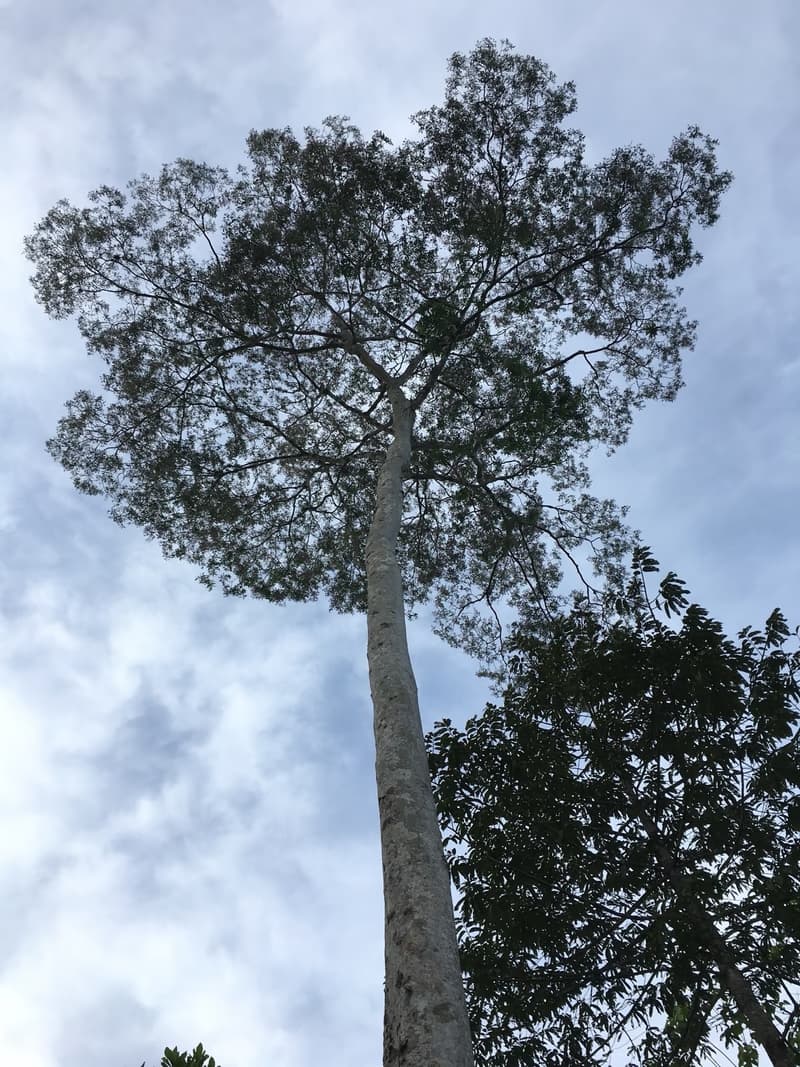
Mastate is an impressive emergent canopy tree reaching 30-50 meters in primary rainforest. The trunk is straight and cylindrical, often exceeding 1 meter in diameter, with the first branches typically 15-25 meters above ground. Unlike many emergent species, Mastate usually lacks prominent buttresses, instead having a relatively straight trunk with spreading roots.
The crown is large and spreading, emerging above or within the upper canopy layer. As an evergreen species, the tree maintains its foliage year-round, providing consistent shade and food resources for wildlife.
Bark Characteristics
- Color: Light gray to grayish-brown
- Texture: Smooth to slightly rough
- Features: May have shallow furrows on old trees
- Lenticels: Small, scattered
- Inner Bark: Fibrous, produces abundant white latex when cut
- Latex: Abundant milky-white sap that flows freely when bark is wounded
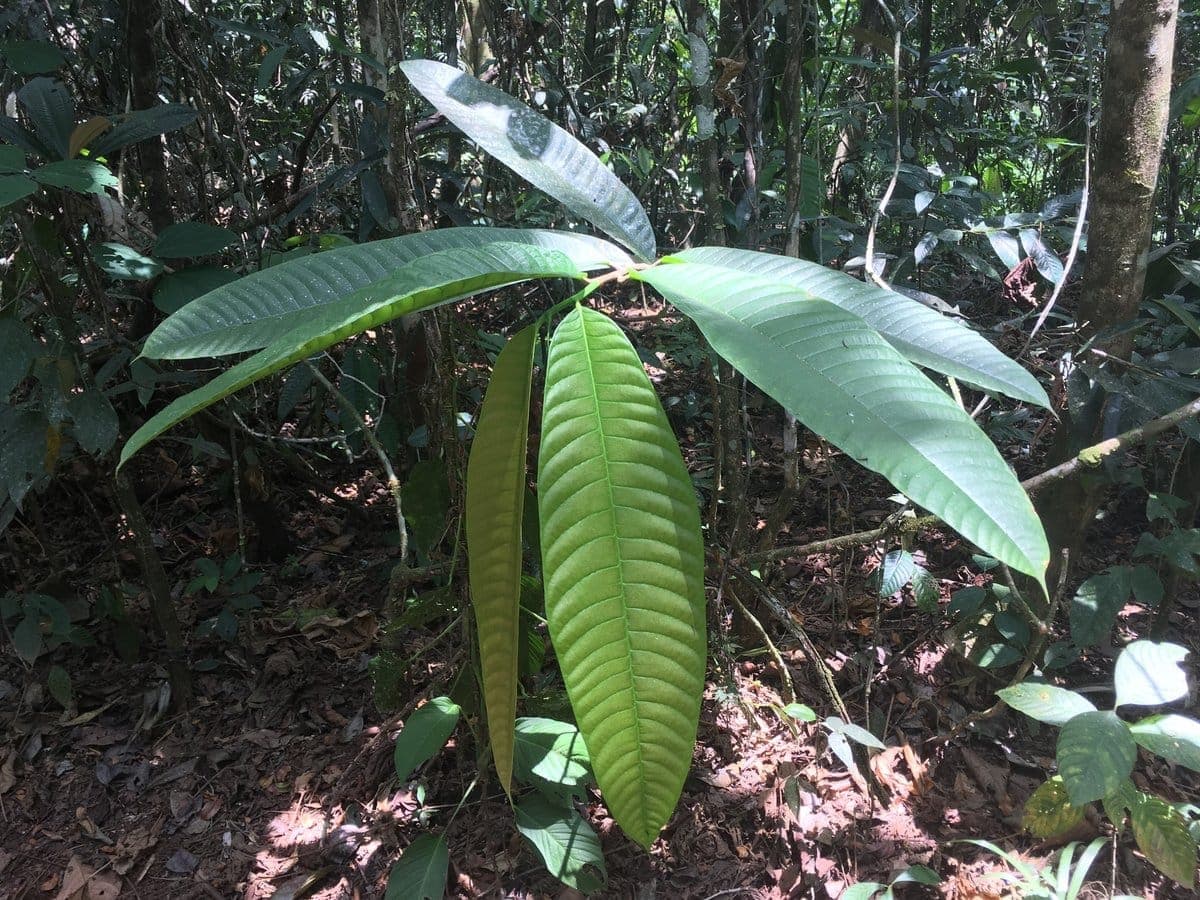
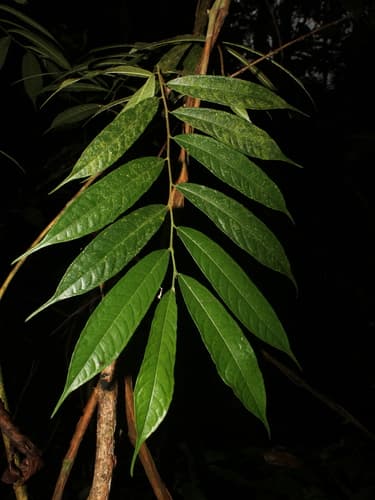
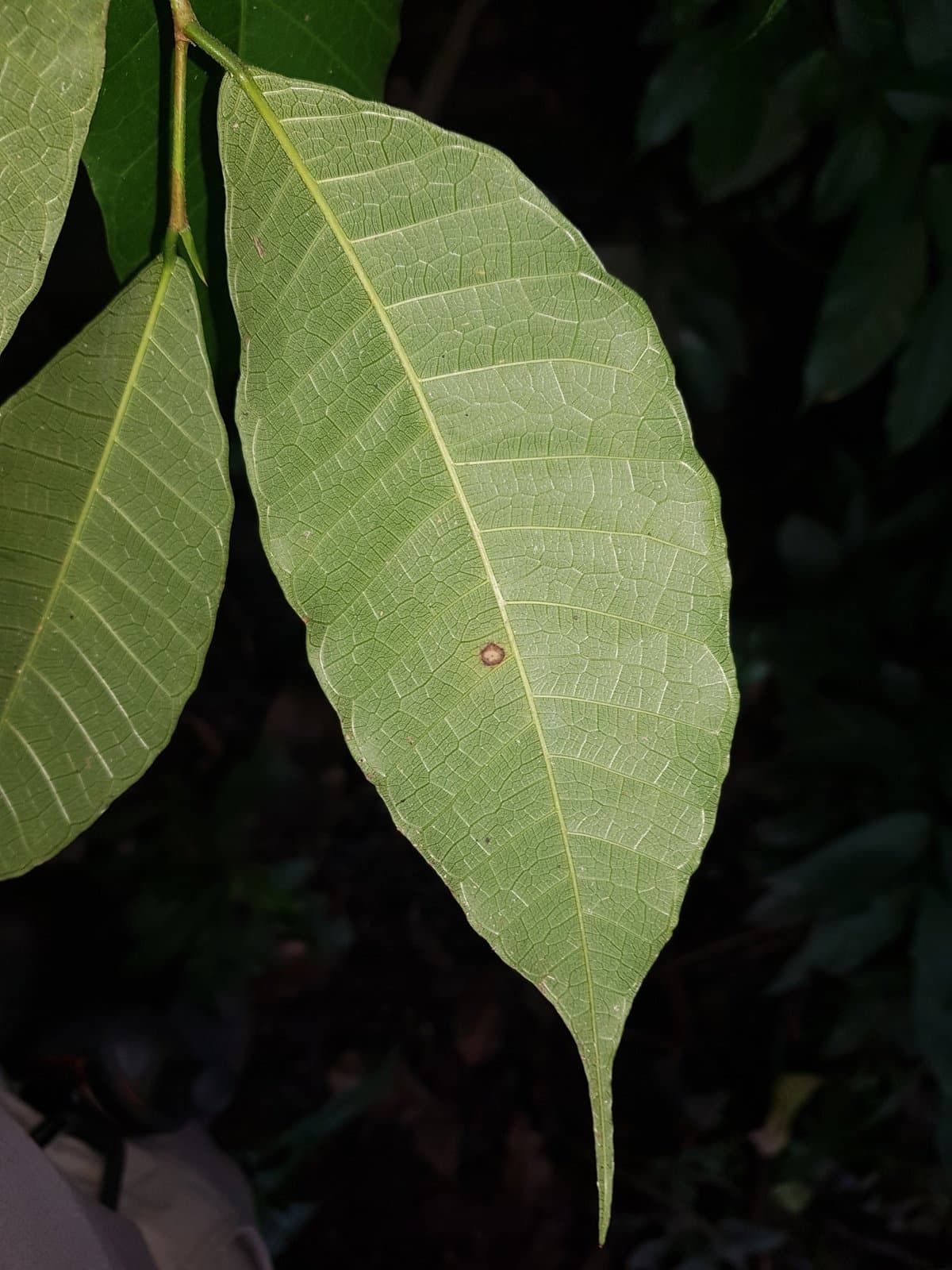
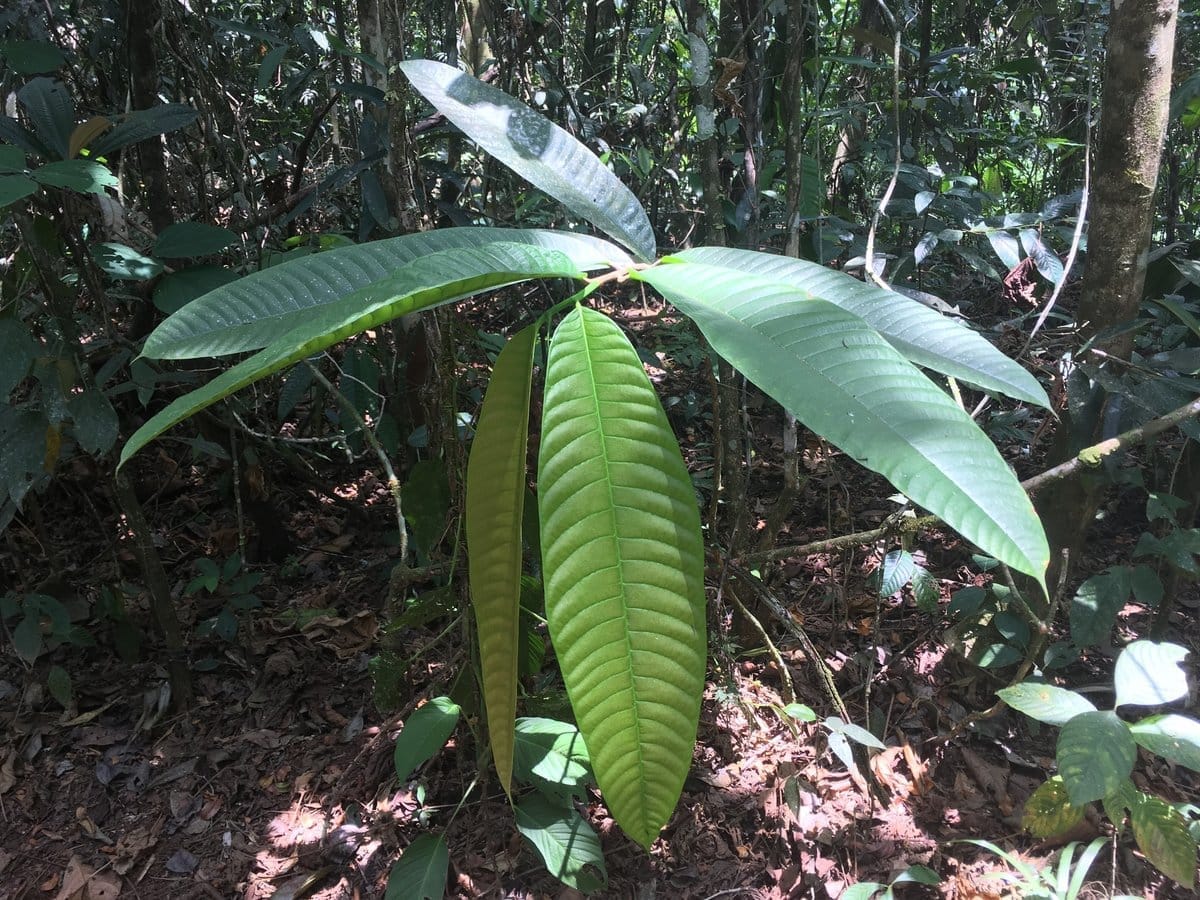
Leaves
- Type: Simple, alternate
- Shape: Elliptical to oblong
- Size: 15-25 cm long, 5-10 cm wide
- Texture: Leathery, somewhat thick
- Upper Surface: Dark green, shiny, glabrous (smooth)
- Lower Surface: Paler green, may have fine hairs
- Margins: Entire (smooth) to slightly wavy
- Petiole: 1-2 cm long
- Arrangement: Spirally arranged along branches
- Evergreen: Retains leaves year-round
Flowers
- Type: Small, inconspicuous
- Structure: Unisexual (dioecious - separate male and female trees)
- Arrangement: Clustered in globose heads
- Color: Greenish-yellow
- Pollination: Wind and insects
- Timing: March-May
Fruit & Seeds
- Type: Multiple fruit (syncarp) - formed from many flowers
- Shape: Globose to irregular
- Size: 2-4 cm diameter
- Color: Green maturing to yellowish or orange-red
- Texture: Fleshy, slightly sticky
- Seeds: 1-2 per fruit segment
- Dispersal: Primarily by monkeys, birds, and other arboreal mammals
- Edibility: Edible when cooked; eaten boiled or roasted
- Timing: May-September (prolonged fruiting season)
The Famous "Milk"
Latex Production
Mastate's most famous feature is its abundant white latex, which earned it the name "Cow Tree." When the bark is cut or tapped, copious amounts of thick, white sap flow out resembling cow's milk in appearance.
Characteristics:
- Thick, creamy consistency similar to dairy milk
- Slightly sweet taste
- Nutritious - contains proteins, sugars, and minerals
- Can be consumed fresh or allowed to coagulate
- Safe for direct consumption (unlike many tree latexes)
Traditional Uses of Latex
As Food:
- Drunk fresh as a milk substitute
- Used in coffee like dairy creamer
- Made into a cheese-like product when coagulated
- Used in traditional cooking and beverages
Other Uses:
- Chewing gum base (similar to chicle)
- Candle wax when processed
- Traditional medicine for stomach ailments
- Adhesive for various purposes
Historical Significance: European explorers were amazed by the "vegetable cow" and reported on it extensively. Indigenous peoples have relied on Mastate latex as a protein source for millennia, especially during seasons when other foods are scarce.
Geographic Distribution
Costa Rica Distribution
Mastate occurs primarily in wet lowland and foothill forests on both Caribbean and Pacific slopes:
- Caribbean Lowlands: Common in Limón Province, Tortuguero, Sarapiquí
- Pacific South: Osa Peninsula, Golfito region, southern Puntarenas
- Central Pacific: Scattered in remaining wet forest patches
- Northern Zone: San Carlos lowlands, Los Chiles region
Elevation Range
- Primary Range: 0-500 m (lowland rainforest)
- Extended Range: Up to 900 m in favorable sites
- Optimal: Lowland to lower premontane wet forest below 600 m
Habitat Preferences
- Forest Type: Primary and mature secondary wet forest
- Position: Emergent to upper canopy layer
- Topography: Well-drained slopes, ridges, and alluvial terraces
- Soil: Tolerates various soil types but prefers deep, moist soils
Habitat & Ecology
Ecological Role
Keystone Species: Mastate is considered a keystone species due to its prolific fruit production and year-round availability of food resources. The extended fruiting season (May-September) provides critical food when other trees are not fruiting.
Wildlife Food Source: The fleshy fruits are consumed by:
- Primates: Howler monkeys, spider monkeys, capuchins
- Birds: Toucans, parrots, guans, tanagers
- Bats: Fruit bats disperse seeds at night
- Other Mammals: Kinkajous, coatis, peccaries feed on fallen fruits
Canopy Structure: As an emergent tree, Mastate contributes to vertical forest structure, providing nesting and foraging habitat in the upper canopy and emergent layer.
Soil Improvement: Like other Moraceae, Mastate contributes to soil fertility through leaf litter decomposition.
Wildlife Associations
- Seed Dispersers: Primates are primary seed dispersers, carrying fruits long distances
- Nesting Birds: Large crown provides nesting sites for hornbills, raptors, and other canopy birds
- Epiphytes: Branches support diverse orchids, bromeliads, ferns, and mosses
- Insect Pollinators: Various beetles and flies pollinate the small flowers
Special Adaptations
Copious Latex Production: The abundant latex may serve as defense against herbivores and pathogens, while also providing an emergency water and nutrient source for the tree.
Prolonged Fruiting: Extended fruit production (4-5 months) ensures year-round food availability and improves seed dispersal success.
Shade Tolerance: Seedlings can survive in understory shade for years, growing rapidly when gaps form - a strategy allowing establishment in mature forest.
Uses & Applications
Timber & Wood Products
Wood Properties:
- Color: Pale yellow to light brown heartwood and sapwood (indistinguishable)
- Grain: Straight to shallowly interlocked
- Texture: Medium to coarse, uniform
- Density: Light to medium weight (specific gravity 0.35-0.45)
- Durability: Low to moderate - not durable in ground contact
- Workability: Excellent - easy to saw, plane, nail, glue, and finish
Applications:
- Furniture: Tables, chairs, cabinets, interior furniture
- Plywood: High-quality face and core veneer
- General Construction: Interior framing, moldings, trim
- Molds and Patterns: Model-making, foundry patterns
- Pulpwood: Paper production
- Crates and Boxes: Lightweight packing
Trade Name: Marketed internationally as "Sande," the wood is valued for its workability and light color.
Limitations: Poor resistance to decay and insect attack limits outdoor use. Best for interior applications and protected structures.
Food Uses
Latex ("Milk"):
- Fresh consumption as beverage
- Coffee additive
- Cheese-like product when coagulated
- Traditional ceremonial uses
Fruit:
- Boiled or roasted for consumption
- Not typically eaten raw (somewhat sticky)
- Wildlife food source
- Emergency food in forest
Fiber & Traditional Crafts
Bark Fiber:
- Processed to make cloth (bark cloth)
- Traditional blankets and wraps
- Historically used for sail-making in some regions
- Cordage and rope
Traditional Medicine
- Latex: Stomach ailments, digestive issues
- Bark Decoctions: Various traditional remedies
- Modern Use: Limited scientific research on medicinal properties
Cultural Significance
Indigenous Knowledge
Mastate holds a special place in indigenous forest cultures as the "Cow Tree" - a source of vegetable milk in the forest. Indigenous peoples have long known where Mastate trees grow and visit them seasonally to collect latex as a protein supplement, especially during lean times between harvests.
The discovery of safe, drinkable tree latex amazed European explorers in the 1700s and 1800s. Accounts describe indigenous people tapping trees early in the morning and collecting the "milk" in gourds to drink fresh or use in cooking.
Traditional Bark Cloth
In some regions, the fibrous inner bark was processed to make cloth. The bark would be carefully stripped, soaked, and beaten to separate fibers, then woven or felted into fabric for clothing, blankets, and ceremonial items. This practice dates back centuries and demonstrates the tree's versatility.
Modern Agroforestry
Today, Mastate is increasingly recognized for agroforestry systems. Its moderate growth rate, valuable timber, wildlife benefits, and edible latex make it attractive for sustainable forestry. Some projects are exploring commercial latex production as a non-timber forest product.
Conservation Status
IUCN Assessment
Status: Not Evaluated (NE) — no current global IUCN assessment for Brosimum utile
(). GBIF: Brosimum utile
Population Trend: Locally declining in accessible primary forest; stable in protected reserves
(). SINAC — Sistema Nacional de Áreas de Conservación
Assessment: GBIF reflects no formal Red List entry; regional pressure is documented through national forestry records and SINAC management plans rather than an IUCN dossier
(). IUCN Red List search — Brosimum utile
Current Situation
While not globally threatened, Mastate faces localized pressure:
- Selective Logging: Valuable timber leads to harvesting in accessible areas
- Habitat Loss: Deforestation of primary forest reduces populations
- Localized Depletion: Some areas have few remaining large trees
Advantages:
- Occurs in protected areas throughout range
- Regenerates well in secondary forest
- Not listed in CITES
- Used in reforestation projects
Protection Measures
- Protected in Costa Rican national parks and reserves
- Included in sustainable forestry programs
- Used in agroforestry and forest restoration
- Seed banks maintain genetic diversity
Cultivation & Care
Growing Requirements
Climate: Tropical humid to wet climates. Requires year-round warmth (minimum 18°C), high humidity (70%+), and abundant rainfall (2000-4000mm annually). Brief dry periods tolerated once established, but not suitable for seasonal dry climates.
Site Selection: Best for:
- Tropical reforestation projects
- Agroforestry systems
- Large rural properties
- Forest enrichment planting
- Riparian buffer zones
Not Suitable For:
- Urban or suburban yards (too large)
- Areas with infrastructure (power lines, buildings)
- Truly dry regions
- Frost-prone locations
Soil: Adaptable to various soils:
- Tolerates acidic to slightly acidic (pH 4.5-6.5)
- Requires good drainage
- Performs best in deep, fertile, moist soils
- Can grow in moderately poor soils
- Avoid waterlogged sites
Propagation
Seed Collection:
- Collect ripe fruits (yellowish/orange color)
- Extract seeds from fleshy pulp
- Seeds viable for only 2-4 weeks - plant immediately
- Store in moist conditions if brief storage needed
Germination:
- Sow fresh seeds in well-draining potting mix
- Keep in shade or filtered light
- Maintain consistently moist
- Germination typically 2-6 weeks
- Germination rate 60-80% with fresh seeds
Vegetative Propagation:
- Cuttings can be rooted with moderate success
- Use semi-hardwood cuttings with rooting hormone
- Maintain high humidity during rooting
Nursery Care:
- Grow in partial shade for first 6-12 months
- Gradually acclimate to brighter light before outplanting
- Transplant to larger containers as needed
- Outplant when 40-60 cm tall (12-18 months)
Planting
Timing: Beginning of rainy season for best establishment
Site Preparation:
- Clear competing vegetation in 2-meter radius
- Dig hole 2x root ball size
- Add organic matter only if soil severely degraded
- Minimal fertilization - tree adapted to low-nutrient soils
Spacing:
- Timber production: 10-12 m spacing
- Agroforestry: 15-20 m from other large trees
- Isolation: 20+ m from buildings/infrastructure
Establishment Care:
- Water weekly during dry periods in first year
- Mulch around base (not touching trunk)
- Protect from grazing animals
- Monitor competing vegetation
Maintenance
Years 1-2:
- Clear competing vegetation 2-3 times annually
- Water during extended dry periods
- Protect from browsing damage
- No fertilization needed typically
Years 3-5:
- Reduce weeding to once per year
- Tree becomes self-sufficient
- Monitor health and growth
- Allow natural crown development
Mature Trees:
- No maintenance required in natural or agroforestry settings
- Do not prune - let grow naturally
- Monitor for safety hazards near infrastructure
- Harvest sustainably if grown for timber
Identification Tips
Key Identification Features
- Abundant White Latex: Cut bark produces copious milky-white sap - diagnostic
- Large Dark Green Leaves: Leathery, shiny, elliptical leaves 15-25 cm long
- Smooth Gray Bark: Relatively smooth bark without deep furrows
- Globose Fleshy Fruits: Orange-red multiple fruits 2-4 cm diameter
- Emergent Stature: Tall tree rising above canopy in mature forest
Similar Species
Brosimum alicastrum (Breadnut/Ramón):
- Also produces white latex
- Smaller leaves (8-15 cm)
- Different fruit structure (single-seeded drupes)
- More common in dry to moist forest
Castilla elastica (Rubber Tree):
- Produces white latex
- Latex is more elastic (rubber-like)
- Leaves have more prominent veins
- Different fruit structure
Other Brosimum species:
- Several similar species in genus
- Requires careful examination of flowers, fruits, and leaves
- Distribution and habitat can help distinguish
Where to See It
Protected Areas in Costa Rica
Caribbean Lowlands:
- La Selva Biological Station: Accessible trails with identified specimens
- Tortuguero National Park: Abundant in primary forest
- Braulio Carrillo National Park: Lower elevations
Southern Pacific:
- Corcovado National Park: Excellent populations
- Piedras Blancas National Park: Mature specimens near Golfito
- Osa Peninsula Private Reserves: Various reserves with mature trees
Northern Zone:
- Maquenque National Park: Lowland wet forest
- Caño Negro area: Riparian forests
Viewing Tips
- Look for large emergent trees with smooth bark
- If accessible, cut small twig to see diagnostic white latex
- During fruiting season (May-Sept), watch for monkeys feeding in crown
- Local guides can point out "milk trees" known to indigenous communities
- Some eco-lodges have marked specimens on nature trails
External Resources
Global biodiversity occurrence data and distribution maps
Conservation status and species assessment
Community observations and photos
References
- Useful Tropical Plants Database - Brosimum utile
- The Wood Database - Sande (Brosimum utile)
- Organization for Tropical Studies - Species Accounts
- Tropical Restoration Library - Brosimum utile
- Flora Mesoamericana - Moraceae
- Plants of the World Online - Kew Science
- Local observations and indigenous knowledge
Mastate is a keystone species in rainforest ecosystems, providing critical food resources for countless animals through its extended fruiting season and nutritious latex. Its conservation supports biodiversity across the food web.
Last updated: January 14, 2026
Safety Information Disclaimer
Safety information is provided for educational purposes only. Individual reactions may vary significantly based on age, health status, amount of exposure, and individual sensitivity. Always supervise children around plants. Consult a medical professional or certified arborist for specific concerns. The Costa Rica Tree Atlas is not liable for injuries or damages resulting from interaction with trees described in this guide.
• Always supervise children around plants
• Consult medical professional if unsure
• Seek immediate medical attention if poisoning occurs
Information compiled from authoritative toxicology sources, scientific literature, and medical case reports.
Help improve this page
Know something about this tree? Share local knowledge, suggest a correction, or submit a photo to improve this guide for everyone.