Madero Negro
Gliricidia sepium
Quick facts
Native Region
Mexico to South America
Max Height
10-15 meters
Family
Fabaceae
Conservation
NE — Not Evaluated
Uses
Safety Information
CAUTION
Despite its toxicity to rodents, this tree is considered relatively safe around humans and livestock when used appropriately. It has been safely used for centuries in agroforestry systems. The leaves are protein-rich cattle fodder (20-30% crude protein). However, supervise children and do not allow them to eat the seeds. Keep horses, pigs, and chickens away from fresh leaves. Widely planted as living fences throughout Costa Rica with minimal incident when handled responsibly.
Toxicity Details
Seeds and bark contain rotenone and coumarin compounds that are toxic to rodents (hence the name 'Mata Ratón' = rat killer). Seeds are moderately toxic to humans if consumed in quantity. Historically used as rodenticide—ground seeds were mixed with bait to poison rats and mice. NOT highly toxic to humans at normal exposure levels, but children should not eat seeds. Leaves are safe and nutritious for cattle, goats, and sheep but may cause toxicity in horses, pigs, and chickens.
Skin Contact Risks
Generally safe for skin contact. Some individuals may experience mild irritation from sap or leaf handling. No significant dermatitis risk for most people.
Wildlife & Pet Risks
Toxic to rodents (rats, mice) and possibly other small mammals. Seeds and bark traditionally used as rodenticide. Generally safe for cattle and goats but may be toxic to horses, pigs, and chickens, especially fresh leaves. Birds can safely consume seeds.
First Aid & Emergency Response
• If ingested, seek immediate medical attention. Do not induce vomiting unless directed by medical professional.
• If sap contacts skin, wash immediately with soap and water. Seek medical attention if blistering or severe irritation occurs.
• If sap enters eyes, flush immediately with clean water for 15 minutes and seek emergency medical care.
Costa Rica Emergency: 911
Costa Rica Poison Control: 2223-1028
Season
Flowering
Jan-Mar, Dec
Fruiting
May-Jun
How to identify
Madero Negro (Madre de Cacao)
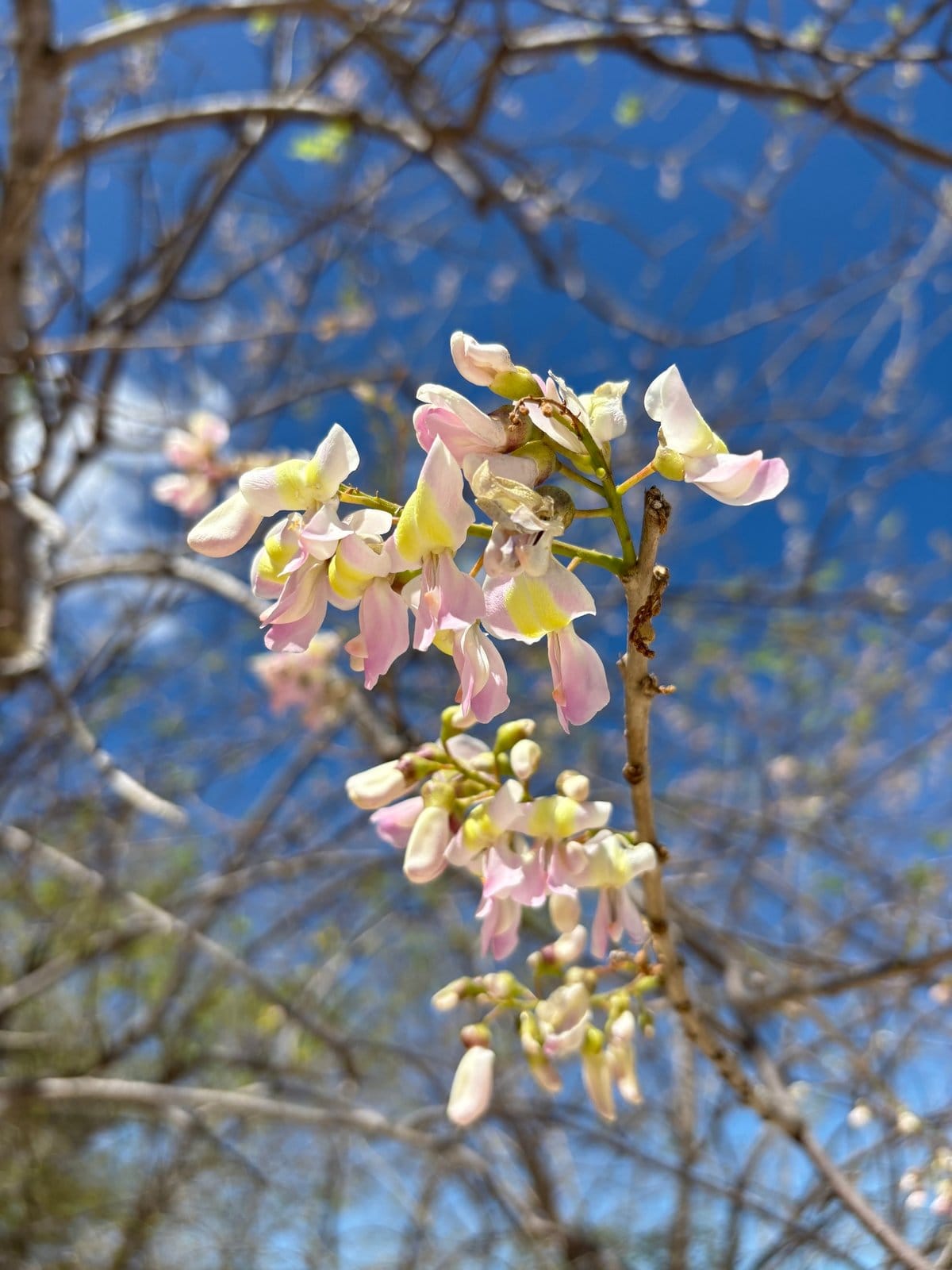
Madero Negro (Gliricidia sepium), also known as Madre de Cacao or Quick Stick, is perhaps the most useful tree in Central American agroforestry. Fast-growing, easily propagated from large cuttings, nitrogen-fixing, and producing excellent fodder, shade, and fuel—it has been cultivated alongside agriculture for thousands of years. During dry season, its spectacular pink-magenta flower display transforms the countryside, making it one of the most beautiful as well as practical trees in Costa Rica.
Quick Reference
iNaturalist Observations
Community-powered species data
📸 Photo Gallery
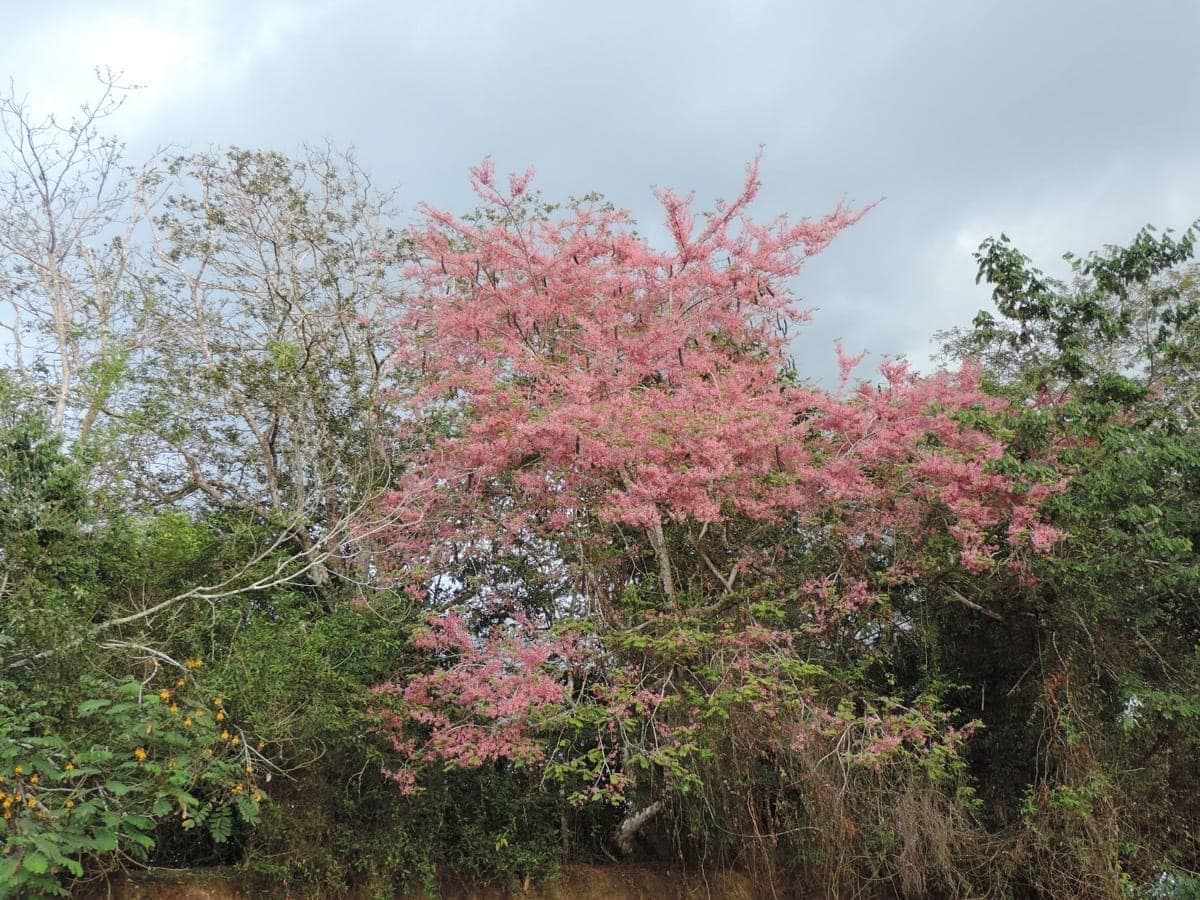
Whole tree
📷 (c) Carles Cardona, some rights reserved (CC BY-NC-SA)(CC BY-NC-SA)
View source ↗Leaves
📷 (c) Nick Helme, some rights reserved (CC BY-NC)(CC BY-NC)
View source ↗Whole tree
📷 (c) Nick Helme, some rights reserved (CC BY-NC)(CC BY-NC)
View source ↗Leaves
📷 (c) junassm, some rights reserved (CC BY-NC)(CC BY-NC)
View source ↗Whole tree
📷 (c) Colin Barrows, some rights reserved (CC BY-NC)(CC BY-NC)
View source ↗Photos sourced from iNaturalist's community science database. View all observations →↗
Taxonomy and Classification
The scientific name tells the story: - Gliricidia: From Latin glis (dormouse) + caedere (to kill)—the bark and seeds are toxic to rodents - sepium: Latin for "of hedges"—referencing its living fence use The tree has been used for centuries to poison rats while being safe for cattle.
Common Names
Physical Description
General Form
Madero Negro is a small to medium deciduous tree with an open, spreading crown. Multiple trunks often arise from the base, creating a bushy habit. The tree is deciduous, losing its leaves in dry season and blooming spectacularly before new leaves emerge.
Distinctive Features
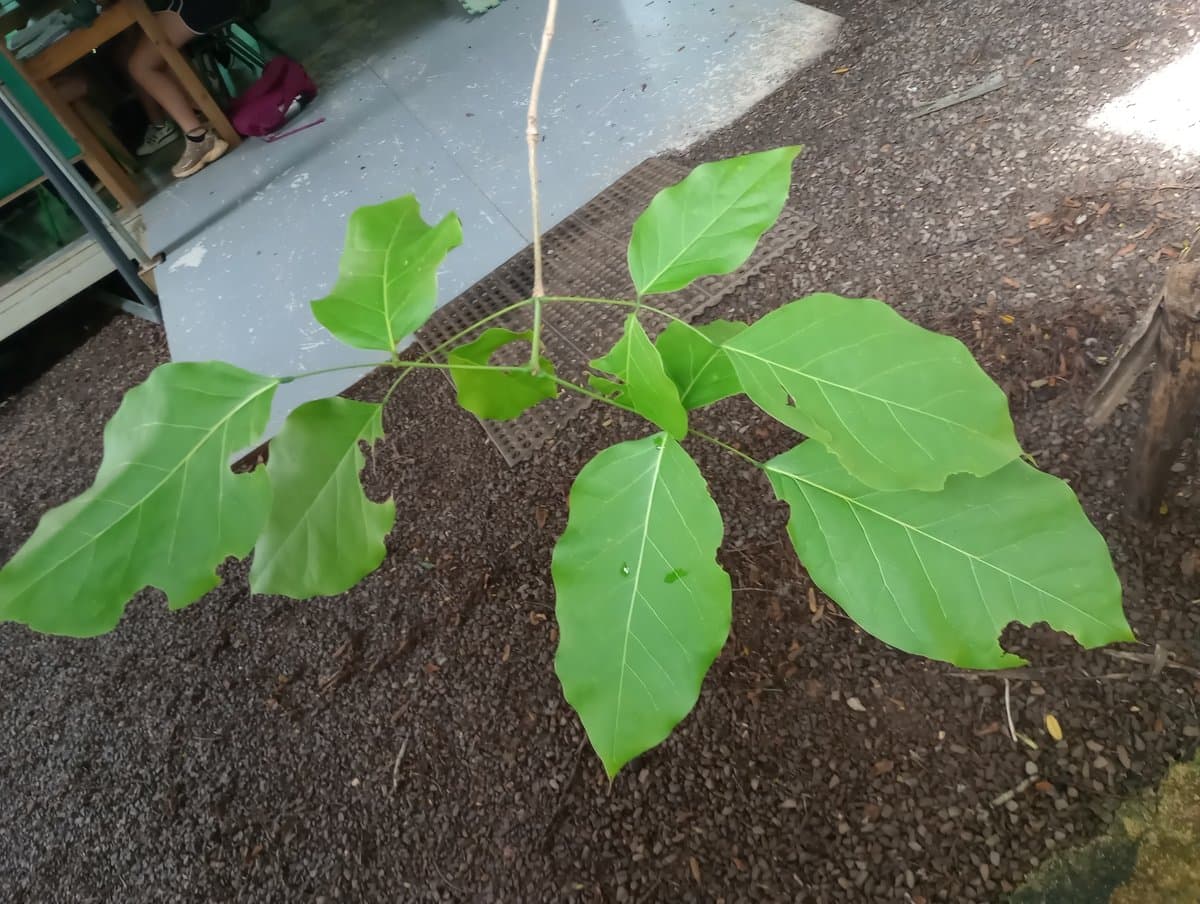
Leaves
- Type: Pinnately compound
- Leaflets: 7-17, opposite
- Leaflet Size: 3-8 cm long
- Shape: Elliptic to ovate
- Color: Bright green
- Deciduous: Drops leaves in dry season
Bark & Wood
- Bark: Smooth, grayish-brown
- Inner Bark: Cream to yellowish
- Heartwood: Dark brown to black (hence "madero negro")
- Density: Medium-hard
Flowers
- Color: Pink to magenta, stunning
- Shape: Typical pea-flower (papilionaceous)
- Size: 2-3 cm long
- Arrangement: Dense racemes
- Timing: Dry season on leafless branches
- Pollination: Bees, primarily
- Duration: Mass bloom for 2-3 weeks
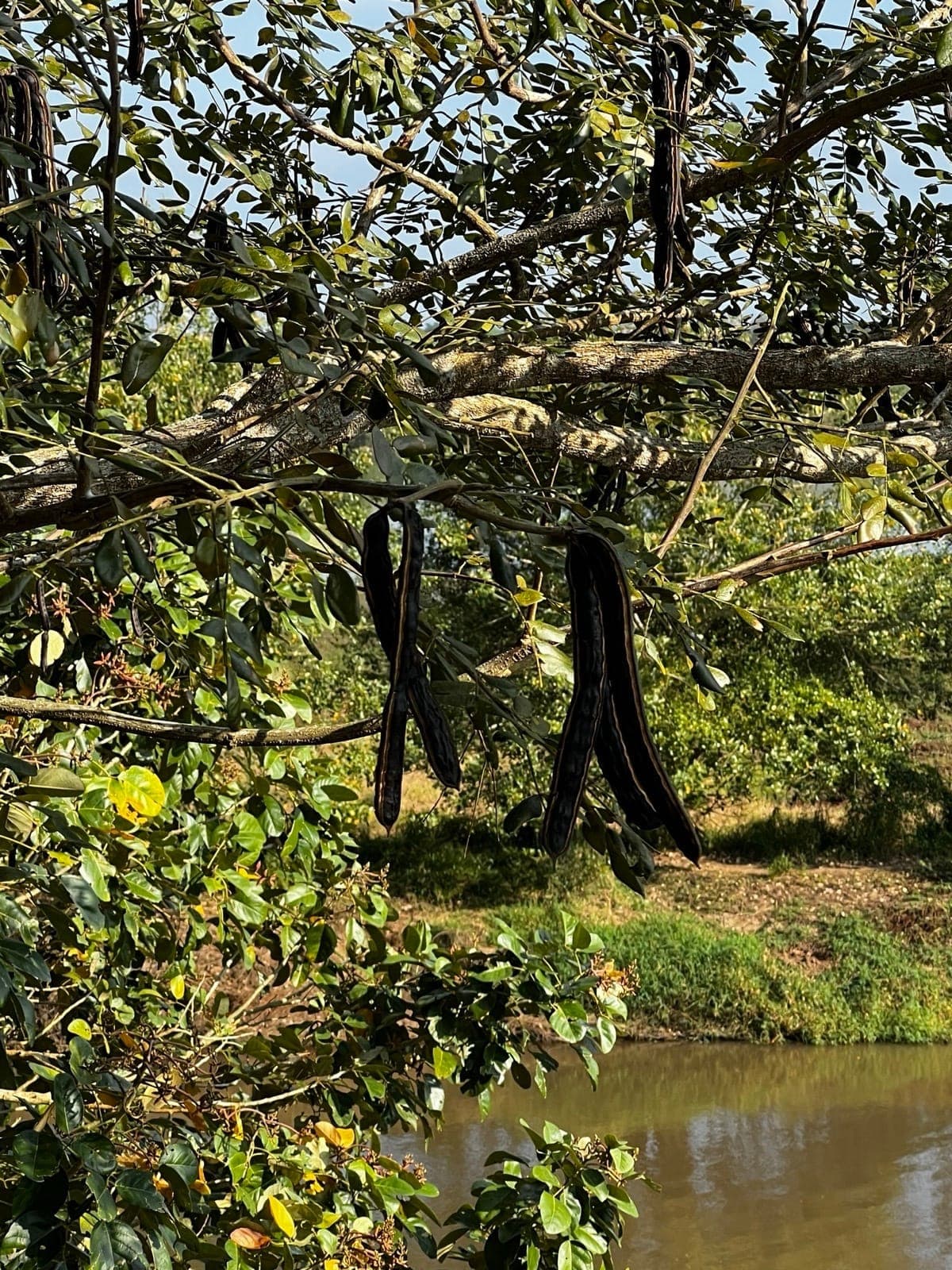
Fruits & Seeds
- Type: Pods (legumes)
- Size: 10-15 cm long
- Seeds: 4-10 per pod
- Dispersal: Pod dehiscence, gravity
During dry season (typically February-April in Costa Rica), Madero Negro bursts into bloom before the leaves emerge. Entire trees become covered in brilliant pink-magenta flowers, creating one of the most beautiful displays in the Costa Rican countryside. Living fence lines of Madero Negro create ribbons of pink across the landscape.
Distribution and Habitat
Native Range
Geographic Distribution
Global Distribution
Now pantropical—one of the most widely cultivated tropical trees worldwide, grown throughout:
- Caribbean
- Africa (major introduction for agroforestry)
- South and Southeast Asia
- Pacific Islands
- Australia (northern)
Distribution in Costa Rica
Found throughout the country in agricultural areas, from sea level to moderate elevations. Especially common in:
- Guanacaste (living fences everywhere)
- Central Valley (coffee shade)
- Pacific coast (cacao agroforestry)
- Caribbean lowlands (planted widely)
Habitat Preferences
Ecological Importance
Nitrogen Fixation
As a legume, Madero Negro hosts nitrogen-fixing bacteria in its root nodules:
- Fixes: 100-250+ kg N/ha/year in good conditions - Mechanism: Symbiotic Rhizobium bacteria - Benefit: Enriches soil, reduces fertilizer needs - Leaf Litter: Decomposes rapidly, releasing nutrients - Prunings: Can be used as green manure This makes it invaluable in sustainable agricultural systems.
Wildlife Interactions
Pollinators
- Bees: Primary pollinators—Africanized bees, stingless bees
- Butterflies: Visit flowers
- Other Insects: Various visitors
- Honey Production: Important bee forage
Seed Dispersal
- Mechanism: Pods dehisce (split open)
- Gravity: Seeds fall near parent
- Human: Widely planted, propagated
Ecosystem Services
- Shade: Reduces temperatures under canopy
- Windbreak: Protects crops
- Erosion Control: Root system stabilizes soil
- Soil Improvement: N-fixation + organic matter
- Carbon Sequestration: Fast growth captures carbon
Wildlife Habitat
- Nesting: Birds use for nest sites
- Perching: Raptors, parrots use bare branches
- Cover: General wildlife shelter
Agroforestry Uses
Living Fences
The Perfect Living Fence
Madero Negro is probably the world's most-used living fence species: - Propagation: Large cuttings (estacas) 1.5-2.5 m long - Establishment: Plant directly in ground during rainy season - Root Strike: 80-100% success rate - Wire Attachment: Barbed wire stapled directly to trunk - Lifespan: 30+ years with proper management - Benefits: Fence posts that grow, don't rot, produce fodder In Guanacaste, living fences of Madero Negro define virtually every pasture and property boundary.
Shade for Crops
Fodder Production
The leaves of Madero Negro are highly nutritious: - Crude Protein: 20-30% in leaves - Palatability: Excellent for cattle, goats - Availability: Year-round with irrigation; leaf drop in dry season - Management: Pollarding/coppicing produces abundant regrowth - Caution: Fresh leaves may be toxic to horses, pigs, chickens It's a key fodder bank species in cut-and-carry systems.
Fuel and Timber
Traditional and Medicinal Uses
Ethnobotany
Medicinal Applications
- Bark: Fever treatment (bathing)
- Leaves: Skin conditions, rashes
- Flowers: Traditional remedies
- Root: Various preparations
Rodenticide
- Seeds & Bark: Toxic to rats, mice
- Traditional: Ground seeds in bait
- Name Origin: "Mata Ratón" (rat killer)
- Safe: Not toxic to cattle, humans (at normal exposure)
Insecticide
- Leaves: Used against insect pests
- Extract: Natural pesticide compounds
- Application: Organic farming interest
Other Uses
- Soap: Saponins in bark
- Fish Poison: Traditional fishing (controlled)
- Dye: Bark produces color
- Spiritual: Various cultural uses
While generally safe around cattle and humans: - Horses: Fresh leaves can be toxic—avoid grazing horses on Madero Negro - Pigs: May be sensitive - Poultry: Avoid feeding fresh leaves - Humans: Seeds toxic if consumed in quantity Traditional knowledge distinguishes safe from toxic applications.
Cultivation and Propagation
Growing Madero Negro
Propagation Methods
Cuttings (Preferred)
- Cut stakes 1.5-2.5 m long, 5-15 cm diameter
- Use straight, healthy branches
- Cut at start of rainy season
- Plant immediately or store briefly in shade
- Plant 30-50 cm deep
- Success rate: 80-100%
Seeds
- Collect mature pods
- Extract seeds
- Soak 24 hours in water
- Plant in nursery
- Transplant at 30-50 cm height
- Used for plantations more than fences
Growing Conditions
Management
- Prune for fodder 2-4 times/year
- Coppice for fuel on 3-5 year rotation
- Thin living fences as needed
- Remove competing weeds when young
Identification Guide
How to Identify Madero Negro
Where to See Madero Negro in Costa Rica
Visit Guanacaste in February-March during peak flowering. Drive any rural road and you'll see the landscape transformed by ribbons of pink—living fences of Madero Negro in full bloom. The effect is magical, especially against the brown dry-season backdrop.
Global Significance
International Agroforestry
A Pantropical Champion
Madero Negro has become one of the most important agroforestry trees globally:
- Africa: Major nitrogen-fixing tree for smallholders - Asia: Cultivated in India, Philippines, Indonesia - Caribbean: Traditional and modern agroforestry - Research: Subject of extensive scientific study - Development: Promoted by ICRAF, FAO, many NGOs Its combination of traits—easy propagation, nitrogen fixation, fodder quality, drought tolerance—make it invaluable for tropical agriculture.
External Resources
Community observations and photos
Technical agroforestry information
Fodder production details
Global biodiversity occurrence data and distribution maps
Conservation status and species assessment
References
📚 Scientific References & Further Reading
Simons, A.J. & Stewart, J.L. (1994). Gliricidia sepium: A Multipurpose Forage Tree Legume. Forage Tree Legumes in Tropical Agriculture, CAB International
Janzen, D.H. (1983). Costa Rican Natural History. University of Chicago Press
Kass, D. (ed.) (1994). Gliricidia: Production and Use. Nitrogen Fixing Tree Research Reports Special Issue
Madero Negro represents the perfect integration of trees into tropical farming. It asks little—stick a cutting in the ground—and gives much: fence posts that don't rot, shade that fertilizes your crops, fodder for your cattle, firewood for your kitchen. For millennia, Central American farmers have known this, and now the rest of the tropics benefits too. Next time you see a pink-blooming fence line in Guanacaste, appreciate this remarkable tree that makes sustainable agriculture possible.
Safety Information Disclaimer
Safety information is provided for educational purposes only. Individual reactions may vary significantly based on age, health status, amount of exposure, and individual sensitivity. Always supervise children around plants. Consult a medical professional or certified arborist for specific concerns. The Costa Rica Tree Atlas is not liable for injuries or damages resulting from interaction with trees described in this guide.
• Always supervise children around plants
• Consult medical professional if unsure
• Seek immediate medical attention if poisoning occurs
Information compiled from authoritative toxicology sources, scientific literature, and medical case reports.
Help improve this page
Know something about this tree? Share local knowledge, suggest a correction, or submit a photo to improve this guide for everyone.