Lorito
Oreopanax xalapensis
Quick facts
Native Region
Mexico to Panama
Max Height
8-15 meters (26-50 feet)
Family
Araliaceae
Conservation
LC — Least Concern
Uses
Safety Information
Toxicity Details
Lorito has LOW TOXICITY. Members of the Araliaceae family can contain compounds that may cause mild gastrointestinal upset if consumed in quantity. Leaves and berries should not be eaten. Not highly toxic, but caution advised. Indigenous peoples have used the plant medicinally in controlled doses, but consumption of plant parts is not recommended for the general public.
Skin Contact Risks
LOW RISK of skin irritation. Some individuals may experience mild skin irritation from contact with sap or crushed leaves, but this is uncommon. Generally safe to handle.
Allergenic Properties
Low allergen risk. Not known to be a significant allergen. Some individuals with sensitivity to plants in Araliaceae family may experience minor reactions.
Wildlife & Pet Risks
Birds safely consume the berries and help disperse seeds. The fruits are an important food source for montane birds. Plant is safe for wildlife that naturally consume it.
Season
Flowering
Mar-May
Fruiting
Jun-Aug
How to identify
Lorito
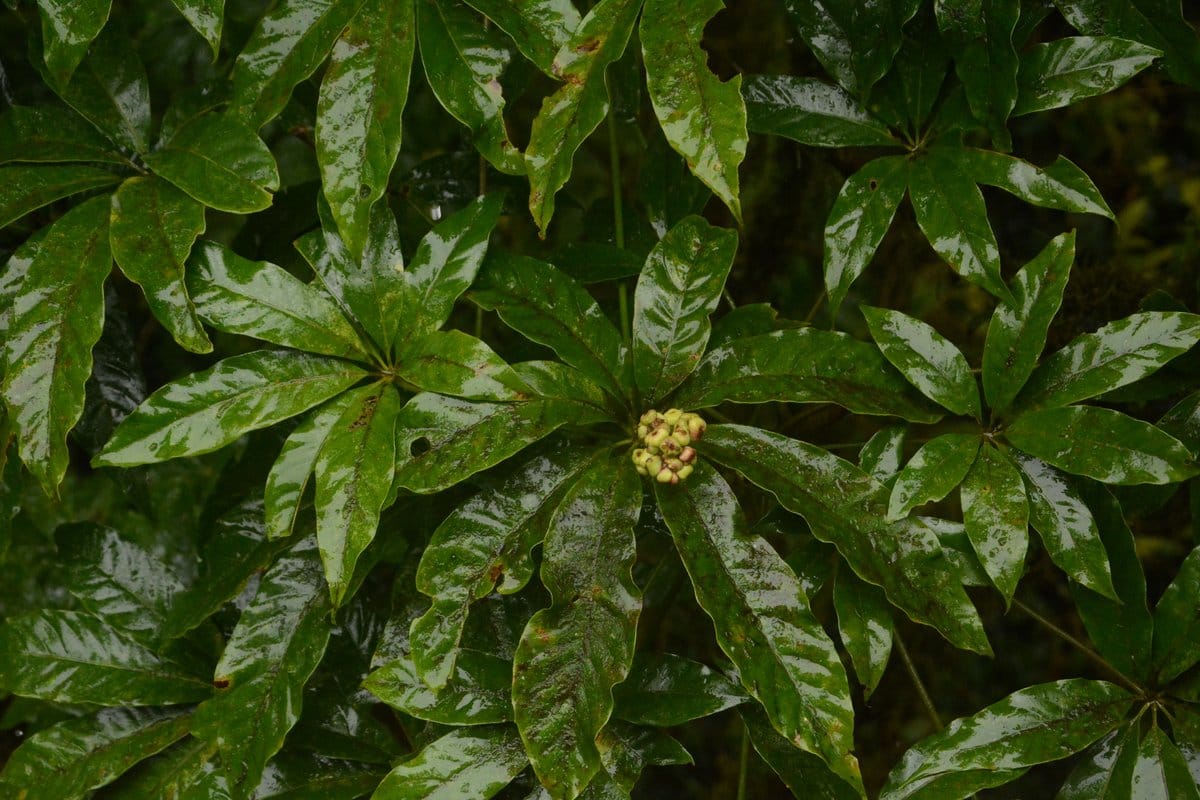
Lorito (Oreopanax xalapensis), whose name means "little parrot" in Spanish, is a distinctive highland tree easily recognized by its large, deeply-lobed leaves that resemble parrot feet. Found in cloud forests and upper montane zones throughout Central America, this member of the Araliaceae family (related to ivy and ginseng) is an important component of Costa Rica's high-elevation ecosystems.
Quick Reference
iNaturalist Observations
Community-powered species data
📸 Photo Gallery
→ View more photos on iNaturalist↗
Taxonomy & Classification
Common Names by Region
Etymology
The genus name Oreopanax comes from Greek oros (mountain) + Panax (the ginseng genus), referring to the mountain-dwelling nature of these trees and their relationship to ginseng in the same family (Araliaceae). The species epithet xalapensis refers to Xalapa (also spelled Jalapa), a city in Veracruz, Mexico, near where the species was first scientifically described.
The common name "Lorito" (little parrot) refers to the leaf shape, which resembles a parrot's foot. Alternative names like "Mano de León" (lion's hand) and "Mano de Tigre" (tiger's hand) similarly refer to the distinctive palmate leaves.
Family Relationships
The Araliaceae (ginseng family) includes about 1,500 species worldwide, many of tropical and montane distribution. Notable relatives include:
- Panax ginseng - Asian ginseng, medicinal plant
- Hedera helix - English ivy
- Schefflera species - Umbrella trees, popular houseplants
- Aralia species - North American aralias
Physical Description
Tree Form
Lorito is a small to medium evergreen tree or large shrub typically reaching 8-15 meters in height with a trunk diameter of 15-30 cm. The growth form is characteristic:
- Trunk: Usually single-stemmed but can be multi-trunked; relatively slender
- Bark: Smooth, gray to gray-brown, with light lenticels
- Crown: Rounded to irregular, relatively open; branches spreading
- Growth Pattern: Evergreen; maintains foliage year-round
- Form: Often somewhat irregular or asymmetric, lending it a distinctive character
Leaves
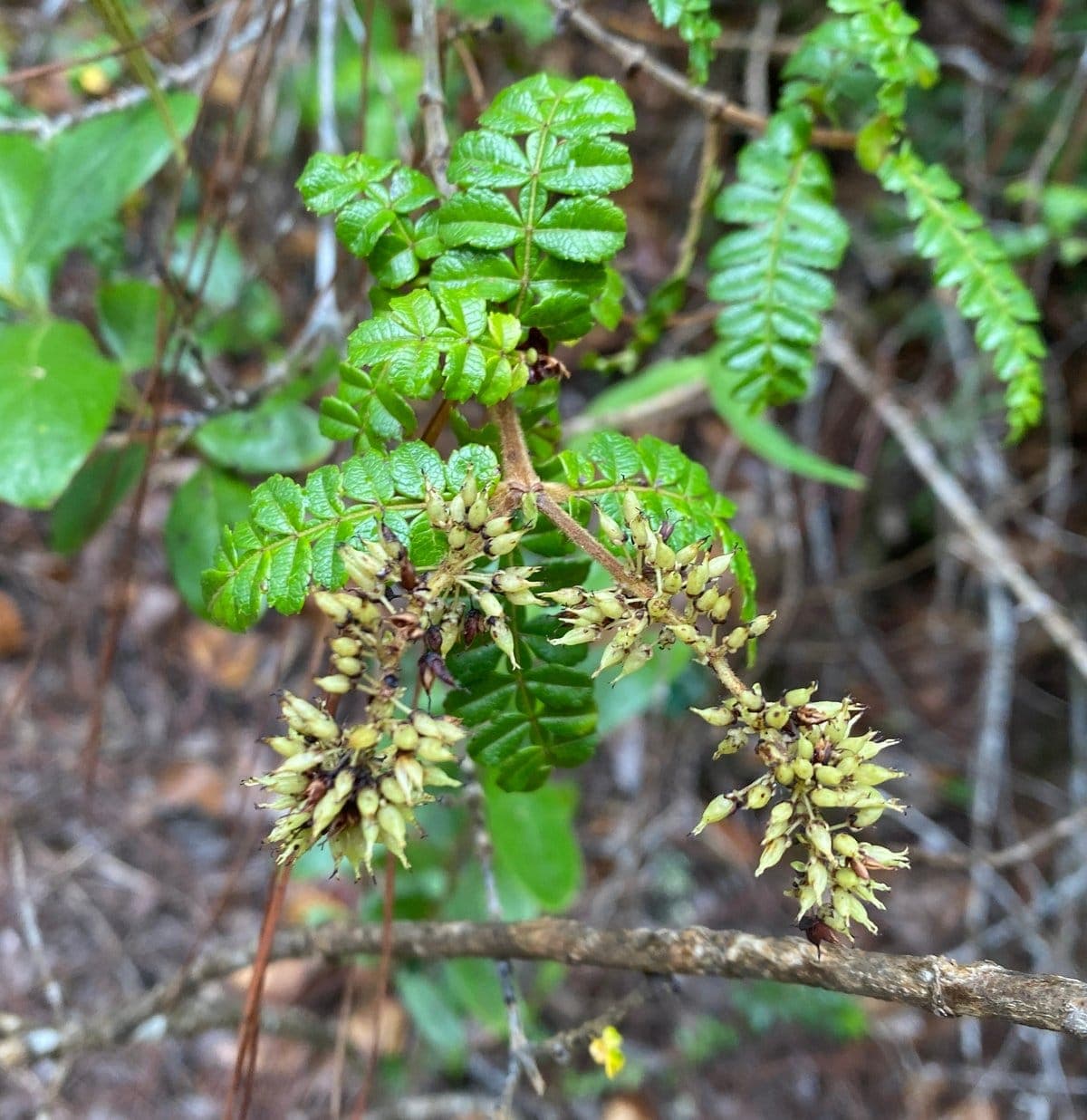
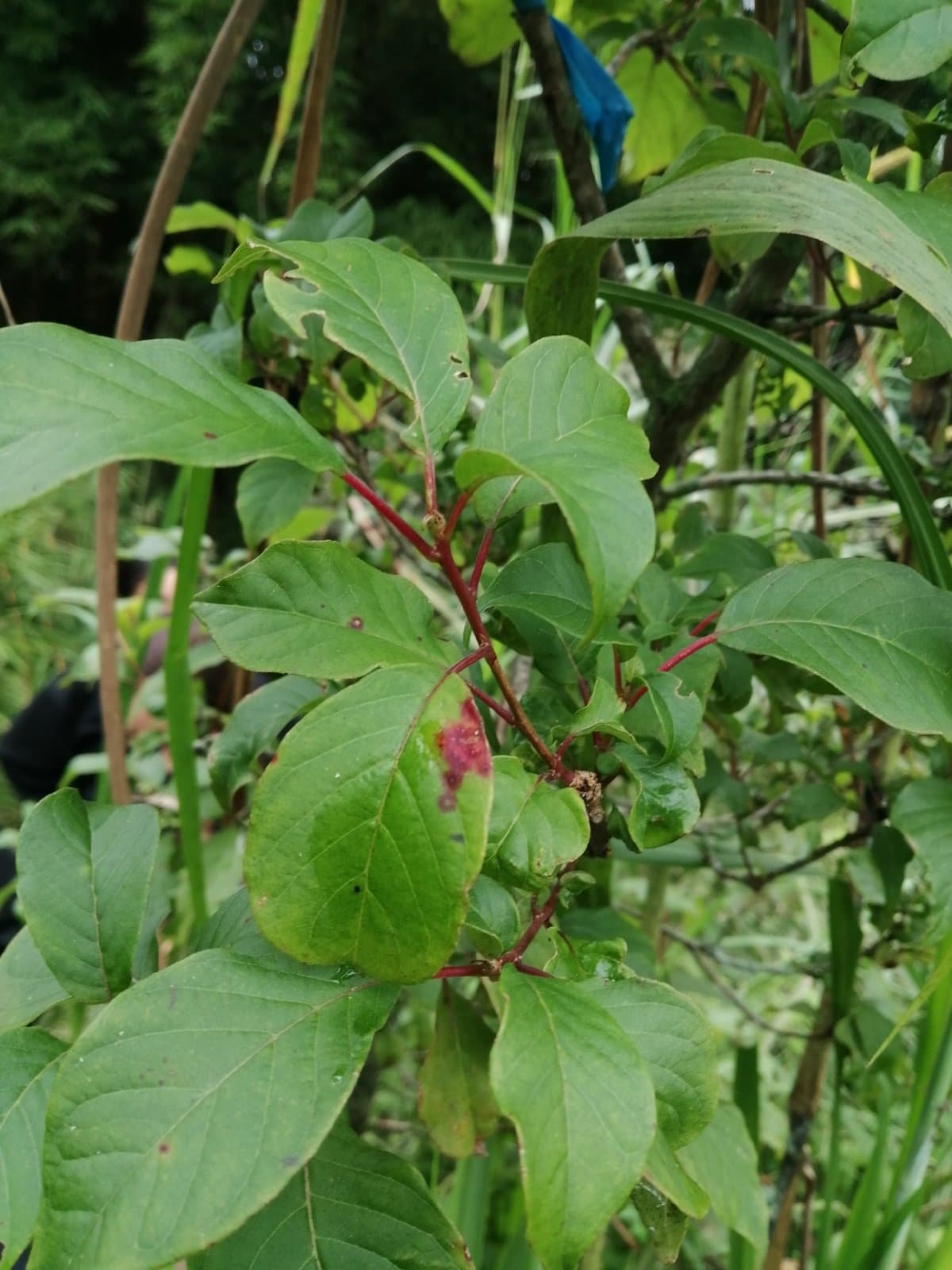
Detail: The leaves are the tree's most distinctive feature. Large and deeply palmately lobed (5-9 lobes), they resemble an outstretched hand or parrot's foot—hence the common names. Each lobe is 8-15 cm long, elliptic to lanceolate, with toothed margins. The upper surface is dark green and somewhat glossy, while the lower surface is paler and may have a slightly fuzzy texture when young. Leaves are borne on long petioles (leaf stalks) 10-20 cm long, allowing them to move gracefully in the wind. The leaves tend to cluster at the tips of branches, creating an attractive layered appearance.
Juvenile leaves may have fewer lobes and a different shape than mature leaves, a phenomenon common in the Araliaceae family.
Flowers
Description: Flowers are small and inconspicuous individually but produced in compound terminal inflorescences (umbels or panicles) 10-20 cm across at the ends of branches. Each flower is small (3-5 mm), greenish-white to cream in color, with 5 petals and 5 stamens. The flowers have a subtle, slightly sweet fragrance and attract various insects. While not showy, the flowering period adds interest with the clusters of pale flowers contrasting against the dark green foliage.
Fruit & Seeds
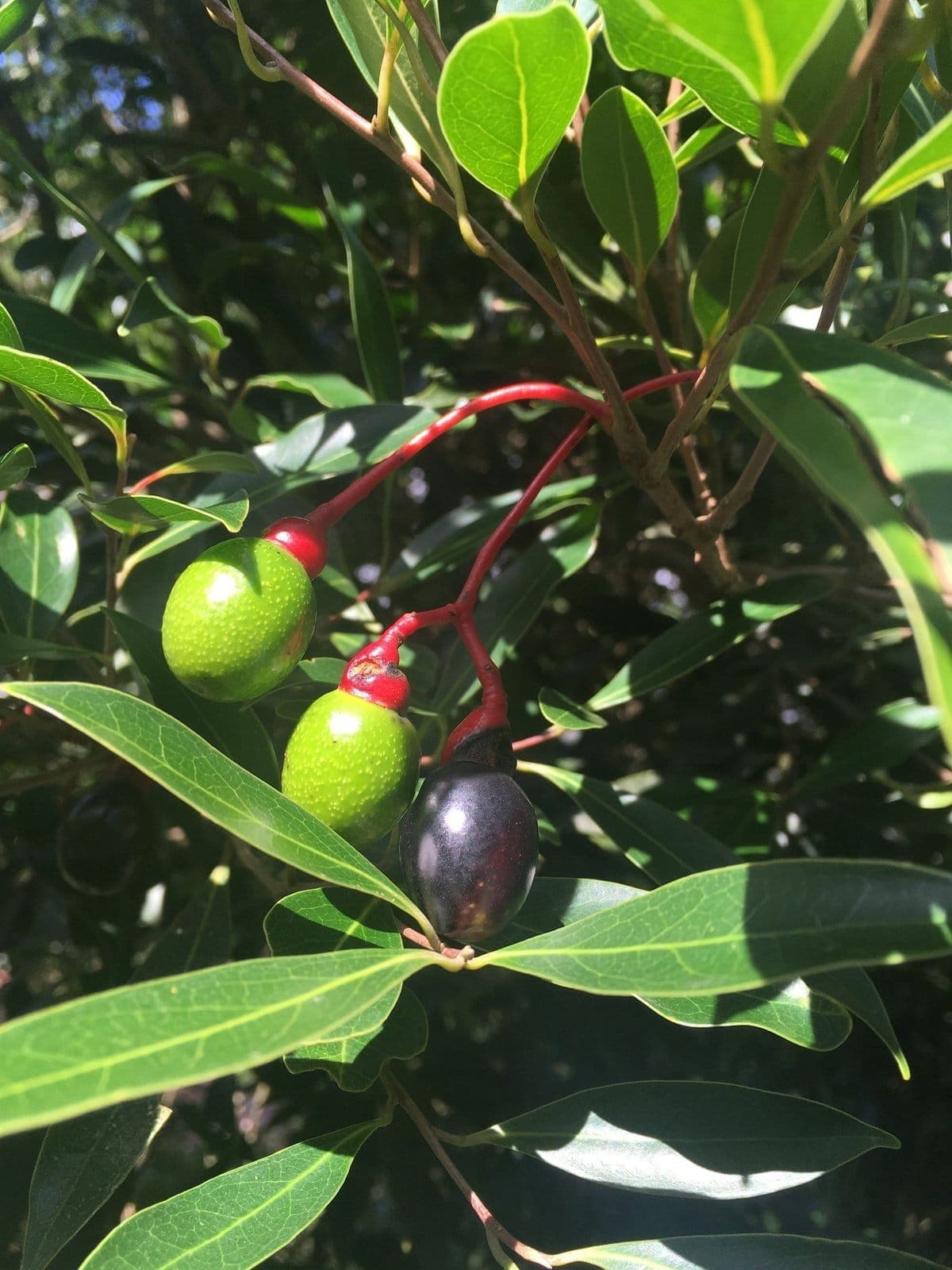
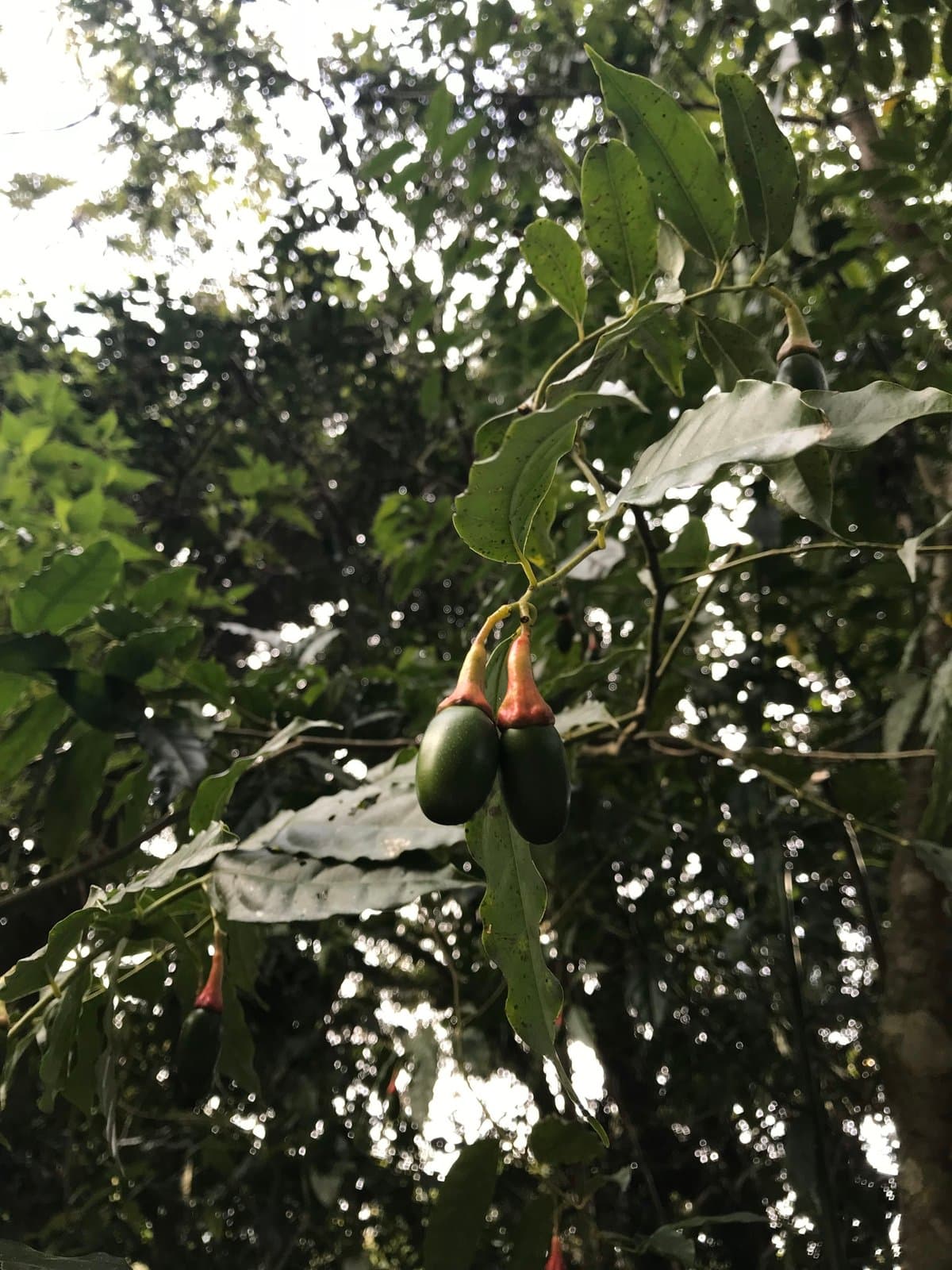
- Type: Small berry (drupe)
- Size: 4-6 mm diameter
- Color: Green when young, ripening to purple-black
- Form: Spherical, clustered in groups
- Seeds: 2-5 small seeds per fruit
- Season: June-August
- Wildlife: Important food for montane birds
Geographic Distribution
Native Range
Oreopanax xalapensis has a wide distribution through the Central American highlands, from Mexico (southern states) through Guatemala, El Salvador, Honduras, Nicaragua, Costa Rica, to Panama. It is characteristic of montane and cloud forest zones throughout this range.
Distribution in Costa Rica
In Costa Rica, Lorito occurs throughout the mountain ranges:
- Central Volcanic Range: Poás, Barva, Irazú, Turrialba volcanoes
- Talamanca Range: Cerro de la Muerte, Chirripó, La Amistad
- Tilarán Range: Monteverde, Arenal area
- Guanacaste Volcanic Range: Higher slopes of Rincón de la Vieja, Tenorio
Habitat & Ecology
Ecological Role
Lorito plays several important roles in cloud forest ecosystems:
- Mid-Canopy Layer: Forms part of the understory to mid-canopy in mature forests
- Wildlife Food: Berries are important food source for montane birds
- Pioneer Species: Can colonize disturbed areas, helping in forest regeneration
- Erosion Control: Root system helps stabilize slopes in steep terrain
- Biodiversity Support: Provides habitat and food for various insects and birds
Wildlife Associations
Forest Dynamics
- Succession: Can establish in disturbed areas and forest gaps; grows faster than some other cloud forest species
- Shade Tolerance: Moderately shade-tolerant when young; needs more light as it grows
- Longevity: Moderate; individuals typically live 50-80 years
- Fire Sensitivity: Susceptible to fire like most cloud forest species
Uses & Applications
Ornamental Horticulture
Lorito has potential as an ornamental in appropriate climates:
Landscape Uses:
- Highland Gardens: Attractive tree for cool montane gardens
- Distinctive Foliage: Large, uniquely-shaped leaves create architectural interest
- Small Size: Manageable size suitable for smaller properties
- Native Plant Landscaping: Excellent for native highland gardens
- Wildlife Gardens: Attracts birds with berries
Horticultural Characteristics:
- Unique and attractive foliage year-round
- Relatively easy to grow in suitable climate
- Low maintenance once established
- Not overly large or invasive
- Provides food for wildlife
Traditional & Indigenous Uses
Conservation & Restoration Value
- Cloud Forest Restoration: Good species for restoration projects; establishes fairly quickly
- Erosion Control: Useful for stabilizing slopes in degraded montane areas
- Biodiversity: Supports montane wildlife through fruit and habitat provision
- Native Species: Helps restore native plant diversity in highland regions
Sources: iNaturalist observations↗, GBIF species profile↗, Tropicos↗, Plants of the World Online↗
Cultural & Historical Significance
In Costa Rican Highland Culture
Lorito is well-known to people living in Costa Rica's highlands:
- Recognized by farmers and rural communities in montane zones
- Used as an indicator of cloud forest conditions
- Appreciated for its distinctive, memorable leaf shape
- Part of the characteristic flora of areas like Monteverde and Cerro de la Muerte
Botanical Interest
The genus Oreopanax is of particular interest to botanists:
- About 50 species distributed in montane forests from Mexico to South America
- Exhibit interesting adaptations to high-elevation environments
- Show variation in leaf shape (heterophylly) between juvenile and adult forms
- Represent the tropical montane radiation of the Araliaceae family
Conservation Status
Least Concern
IUCN Red List Status
IUCN Assessment
Oreopanax xalapensis is assessed as Least Concern (LC) due to:
- Wide distribution from Mexico to Panama
- Occurrence in numerous protected areas
- Relatively adaptable to disturbed habitats
- Ability to colonize forest gaps
Threats & Challenges
Despite its Least Concern status, the species faces pressures:
- Habitat Loss: Conversion of cloud forests to agriculture and pasture
- Fragmentation: Isolation affects gene flow and seed dispersal by birds
- Climate Change:
- Shifting cloud patterns threaten moisture availability
- Rising temperatures may reduce suitable habitat
- Development: Roads and urban expansion in highland areas
Protection Status
- Costa Rica: Occurs in many national parks and reserves (Poás, Barva, Chirripó, Monteverde, La Amistad, others)
- Regional: Protected in reserves throughout Central America
- Habitat Protection: Conservation of cloud forest ecosystems benefits the species
Sources: IUCN Red List search↗, GBIF species profile↗, Kappelle (2006)↗, SINAC↗
Growing Lorito
Propagation
From Seed:
- Collect ripe purple-black berries (June-August)
- Remove seeds from flesh by mashing and washing
- Seeds should be planted fresh—viability decreases with storage
- Plant in well-draining potting mix, lightly covered
- Keep moist and cool (15-20°C)
- Germination is variable, can take 4-8 weeks or longer
- Seedlings grow slowly initially; be patient
From Cuttings:
- Semi-hardwood cuttings can be attempted
- Use young, healthy shoots
- Treat with rooting hormone
- Place in moist medium under humidity
- Success rate moderate; requires patience
Site Requirements
Critical: Lorito is a highland species and will not thrive in hot lowland conditions.
Where to Plant:
- ✅ Cool highland properties above 1500m
- ✅ Cloud forest restoration sites
- ✅ Native plant gardens in montane zones
- ✅ Erosion control on slopes
- ❌ Lowland areas (will not thrive)
- ❌ Very exposed, windy sites (needs some shelter when young)
Planting & Establishment
- Timing: Plant at start of rainy season (May) or during periods of consistent rain
- Spacing:
- Landscape: 5-8 m spacing for full development
- Restoration: 3-4 m spacing for forest regeneration
- Soil Preparation: Amend with organic matter; ensure good drainage
- Planting Depth: Plant at same depth as in container
- Initial Care:
- Keep consistently moist first 2 years
- Mulch to retain moisture
- Protect from livestock browsing
Growth & Maintenance
- Growth Rate: Slow to moderate; 1-2 feet per year in suitable conditions
- Young Trees: May benefit from partial shade; protect from browsing
- Pruning: Minimal needed; let develop natural form
- Fertilization: Generally unnecessary in natural settings
- Pests/Diseases: Few significant problems
Time to Maturity
- Begins producing flowers and fruits at 5-8 years
- Reaches attractive size at 15-20 years
- Full maturity at 30-40 years
Where to See Lorito in Costa Rica
National Parks & Protected Areas
Identification Tips
When looking for Lorito in the field:
- Look for large, deeply-lobed palmate leaves that are unmistakable
- Leaf shape resembles an outstretched hand or parrot foot
- Leaves often clustered at branch tips
- Small tree or large shrub in cloud forest understory to mid-canopy
- Look for small purple-black berries in season (June-August)
- Often found in disturbed areas and forest edges as well as mature forest
External Resources
Community observations, photos, and distribution maps
Botanical database with nomenclature and specimens
Global occurrence data and biodiversity information
Kew Gardens botanical database
Conservation status and species assessment
References
📚 Scientific References & Further Reading
Fiaschi, P. and Plunkett, G.M. (2010). The genus Oreopanax (Araliaceae) in Brazil. Brittonia 62(3): 277-293[Link ↗]
Haber, W.A. (2000). Plants and Vegetation of Monteverde, Costa Rica. Monteverde: Ecology and Conservation of a Tropical Cloud Forest
Standley, P.C. and Steyermark, J.A. (1949). Flora of Guatemala - Araliaceae. Fieldiana: Botany 24(6): 433-457
Kappelle, M. (2006). Ecology and Conservation of Neotropical Montane Oak Forests. Springer
The Lorito (Oreopanax xalapensis) may not be as famous as some of Costa Rica's other highland trees, but its distinctive parrot-foot leaves make it one of the most recognizable species in cloud forests. This small tree plays important roles in montane ecosystems—providing food for birds, stabilizing slopes, and pioneering disturbed areas. For visitors to Costa Rica's highlands, spotting a Lorito with its unmistakable leaves is a memorable part of experiencing the country's spectacular cloud forest biodiversity.
Safety Information Disclaimer
Safety information is provided for educational purposes only. Individual reactions may vary significantly based on age, health status, amount of exposure, and individual sensitivity. Always supervise children around plants. Consult a medical professional or certified arborist for specific concerns. The Costa Rica Tree Atlas is not liable for injuries or damages resulting from interaction with trees described in this guide.
• Always supervise children around plants
• Consult medical professional if unsure
• Seek immediate medical attention if poisoning occurs
Information compiled from authoritative toxicology sources, scientific literature, and medical case reports.
Help improve this page
Know something about this tree? Share local knowledge, suggest a correction, or submit a photo to improve this guide for everyone.