Lengua de Vaca
Miconia argentea
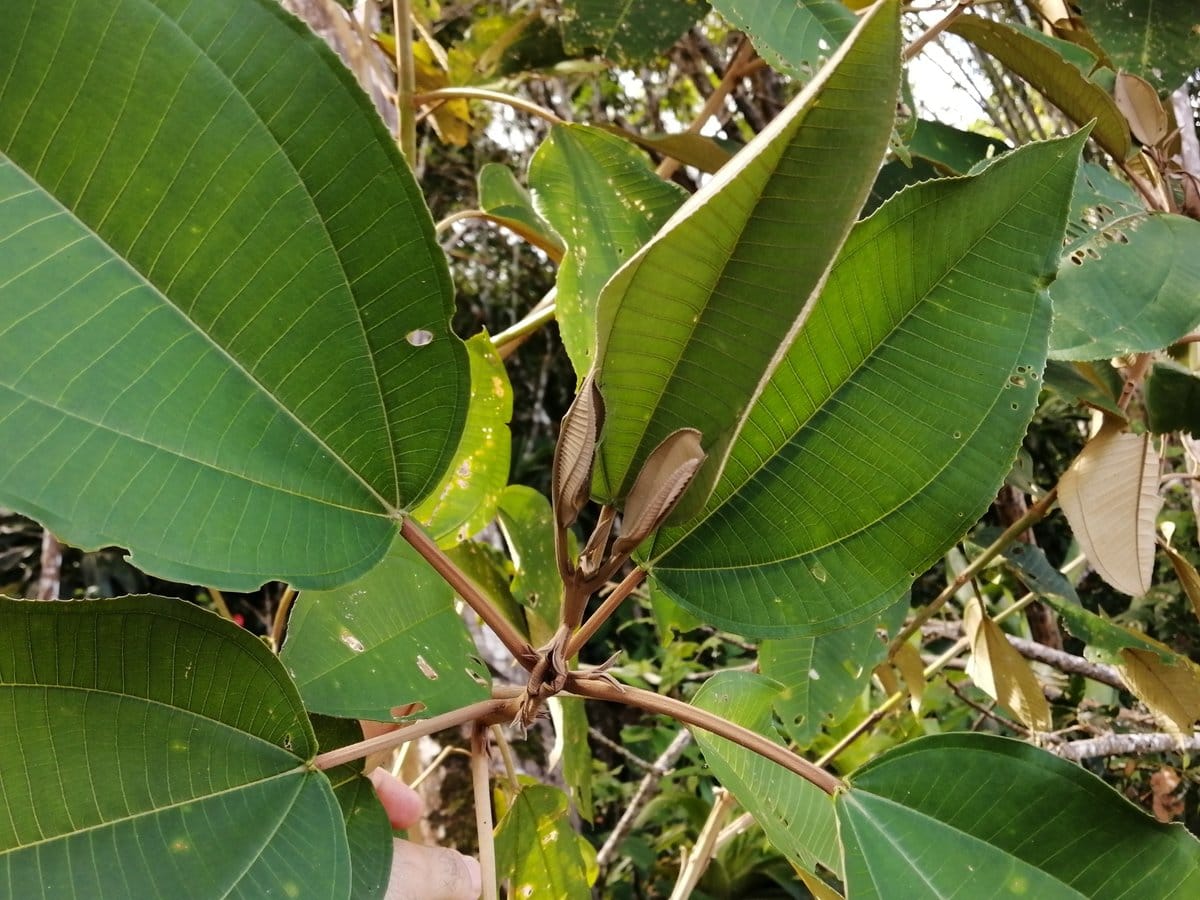
Quick facts
Native Region
Mexico to Bolivia
Max Height
10-20 meters (33-65 feet)
Family
Melastomataceae
Conservation
LC — Least Concern
Uses
Safety Information
Toxicity Details
Miconia argentea is non-toxic. The small berries are consumed by birds and bats and are not harmful to humans, though they are not typically eaten due to their small size and bland taste. Leaves, bark, and wood contain no known toxic compounds. Some Melastomataceae species have traditional medicinal uses — the leaves of M. argentea are used in folk medicine for minor ailments. No poisoning incidents have been reported.
Skin Contact Risks
Low skin contact risk. The leaf undersides are densely covered with silvery-white stellate hairs (trichomes) that may cause mild mechanical irritation if rubbed against sensitive skin. The trunk has smooth to slightly rough bark with no spines or irritants. The fruit may stain skin and clothing purple. No chemical dermatitis has been reported.
Allergenic Properties
Low allergen risk. Flowers are primarily insect- and bird-pollinated, producing moderate amounts of pollen but most of it is not wind-dispersed. The stellate leaf hairs are not a significant allergen source. Not known to cross-react with common plant allergens.
Structural Hazards
Moderate structural concern due to brittle wood. As a fast-growing pioneer species, Miconia argentea produces relatively soft, light wood that is prone to breakage in strong winds. Branches may snap during storms. The root system is relatively shallow. Do not rely on this tree for wind protection. Avoid planting near structures where falling branches could cause damage. Generally a small to medium tree, so risk is limited compared to larger species.
Wildlife & Pet Risks
Completely safe and highly beneficial for wildlife. The abundant small berries are a critical food source for dozens of bird species (tanagers, thrushes, manakins, toucans) and fruit bats. The flowers attract pollinating insects and hummingbirds. One of the most important wildlife food trees in disturbed and regenerating forest habitats.
Season
Flowering
Mar-Jun
Fruiting
Jun-Oct
How to identify
Lengua de Vaca (Silvery Miconia)
Lengua de Vaca (Miconia argentea) is one of the most recognizable trees in Costa Rica's cloud forests and highland landscapes — a fast-growing pioneer species whose distinctive silvery-white leaf undersides flash in the wind like signal flags, instantly identifying it from a distance. This "cow's tongue tree" (named for the shape and texture of its large leaves) is nature's first responder to forest disturbance: it rapidly colonizes gaps, landslides, and cleared areas, creating shade and shelter that enables slower-growing forest species to establish beneath its canopy. Its abundant small berries feed an astonishing diversity of birds and bats, making it one of the most ecologically important pioneer trees in the neotropics.
Quick Reference
Key Information
Overview
Miconia argentea belongs to one of the most species-rich genera in the entire plant kingdom. The genus Miconia contains approximately 1,800 species — all restricted to the Americas — making it the largest genus of woody plants in the neotropics. This extraordinary diversity reflects the family Melastomataceae's success in colonizing virtually every tropical American habitat, from sea-level mangroves to the highest tree line in the Andes.
Within this vast genus, M. argentea stands out for its size (one of the larger Miconia species), its striking silvery leaf pubescence, and its ecological importance as a pioneer in wet forest and cloud forest ecosystems. The common name "Lengua de Vaca" (cow's tongue) refers to the large, oval, slightly rough-textured leaves that resemble a cow's tongue in shape and feel.
In Costa Rica, M. argentea is abundant in cloud forests, premontane forests, and wet highlands from about 500 to 2,500 meters elevation. It is one of the most conspicuous trees along roadsides, forest edges, and in regenerating areas — its silvery leaf undersides make it unmistakable, especially when the wind turns the leaves to reveal their pale glittering surface. The tree colonizes disturbed areas with remarkable speed, often appearing as the first tree-sized plant in cleared gaps within 1-2 years.
The ecological importance of M. argentea cannot be overstated. Its abundant small berries ripen over an extended season and attract dozens of bird species — tanagers, thrushes, toucans, manakins, and many others — as well as fruit bats. In disturbed landscapes, the tree acts as a critical "stepping stone" for wildlife moving between forest fragments, providing food and shelter in otherwise inhospitable cleared areas. This makes it one of the most valuable trees for ecological restoration.
📸 Photo Gallery
Whole tree
📷 (c) Krzysztof Kasprzyk, some rights reserved (CC BY-NC)(CC BY-NC)
View source ↗Leaves
📷 (c) veroalpizar, some rights reserved (CC BY-NC)(CC BY-NC)
View source ↗Whole tree
📷 (c) Danatwork McKenney, some rights reserved (CC BY-NC)(CC BY-NC)
View source ↗Leaves
📷 (c) veroalpizar, some rights reserved (CC BY-NC)(CC BY-NC)
View source ↗Whole tree
📷 (c) veroalpizar, some rights reserved (CC BY-NC)(CC BY-NC)
View source ↗Photos sourced from iNaturalist's community science database. Browse all observations →↗
Taxonomy and Classification
Common Names by Region
Taxonomic Notes
Miconia argentea was described by Augustin Pyramus de Candolle in 1828. The genus Miconia has recently undergone major taxonomic revision — many species formerly placed in Clidemia, Ossaea, Leandra, and other segregate genera have been merged into Miconia based on molecular phylogenetics, making it even larger than previously recognized. M. argentea has remained stable within Miconia throughout these revisions. The species shows some morphological variation across its wide range, particularly in leaf size and pubescence density, but no subspecies are currently recognized.
Physical Description
Growth Form
The Lengua de Vaca is a small to medium-sized, fast-growing, evergreen tree with a spreading, rounded to irregular crown. It typically reaches 10-20 meters in height, with a single trunk or multiple stems from the base. The branching pattern is sympodial and often irregular, creating an open, somewhat untidy crown — characteristic of pioneer species that allocate energy to rapid growth rather than architectural elegance.
Trunk
The trunk is straight to slightly crooked, 20-40 cm in diameter, with smooth to slightly fissured bark that is grayish to brownish. The bark peels in thin flakes on older trees, revealing lighter inner bark. There are no spines, thorns, or buttresses. The wood is soft, light, and pale-colored — typical of fast-growing pioneer species.
Leaves
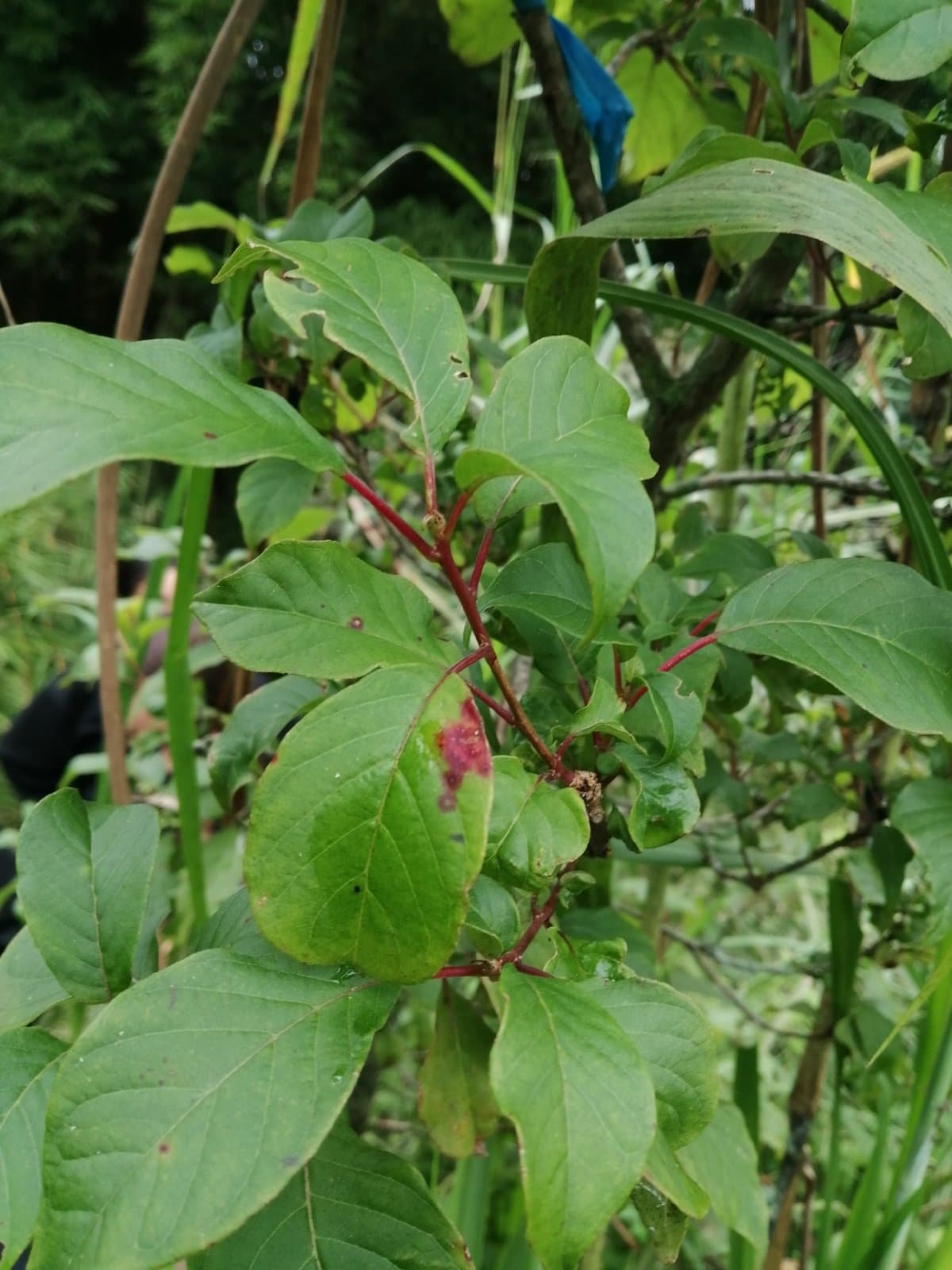
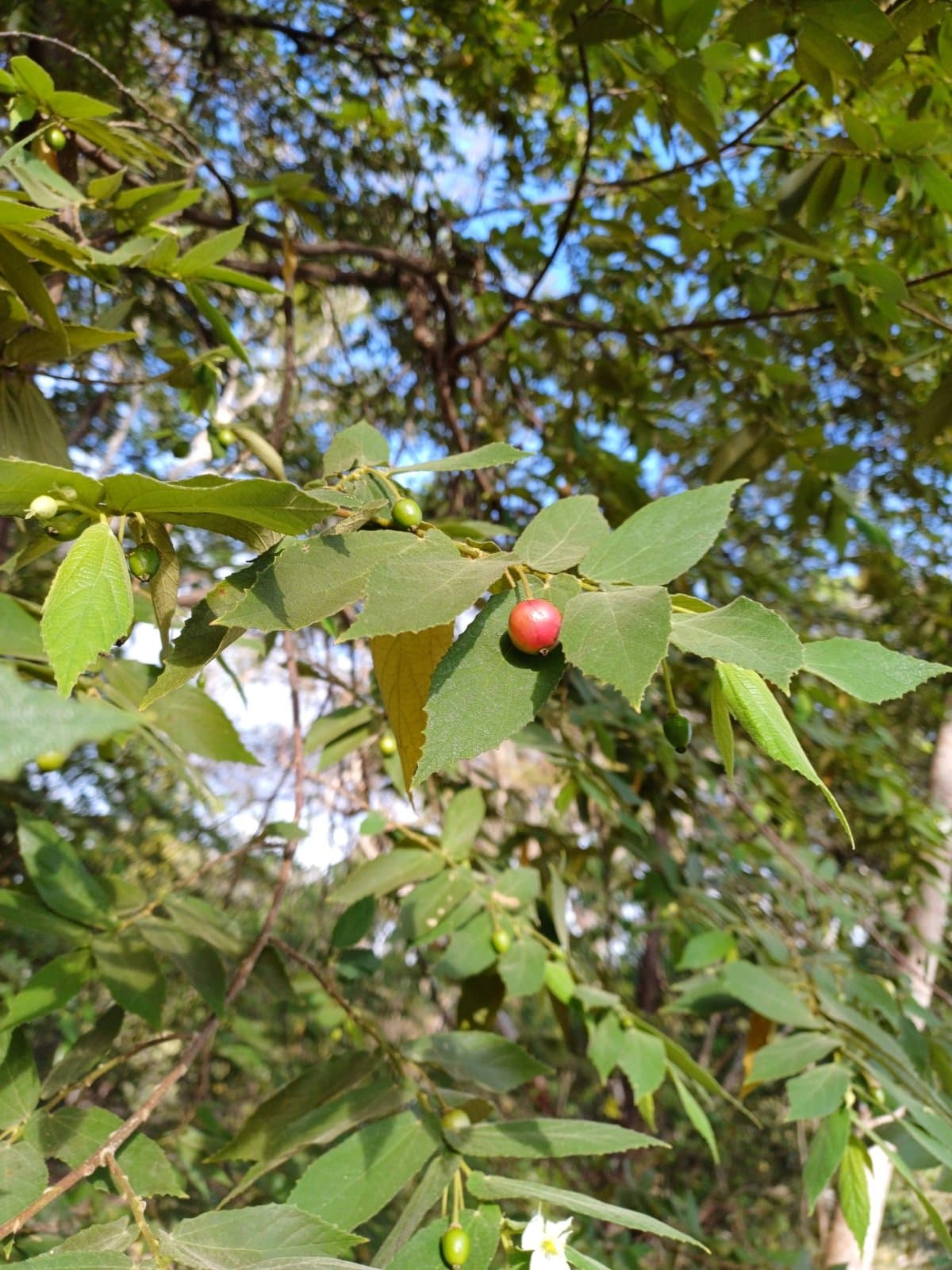
The leaves are the most striking feature — they are large (15-30 cm long, 8-15 cm wide), opposite, simple, elliptic to ovate, with prominent parallel secondary veins (3-5 pairs) running from base to tip, characteristic of the Melastomataceae family. The upper surface is dark green and slightly rough. The lower surface is densely covered with a layer of silvery-white stellate (star-shaped) trichomes (hairs) that give the leaf its distinctive metallic sheen. When wind flips the leaves, the tree appears to shimmer silver. The leaf texture inspired the common name "Lengua de Vaca" — the leaves feel rough and slightly "furry" like a cow's tongue.
Flowers
The flowers are small (5-8 mm), white to pale pink, arranged in large, many-flowered terminal panicles (15-25 cm long). Individual flowers have 5 petals, 10 stamens, and a single pistil. The stamens have characteristic geniculate (bent-knee) anthers — a hallmark of the Melastomataceae — which dispense pollen through terminal pores when vibrated by visiting bees (buzz pollination). Flowering peaks from March to June but can occur sporadically throughout the year.
Fruit and Seeds
The fruits are small berries (3-5 mm diameter), turning from green through pink to deep purple-black when ripe. Each berry contains numerous tiny seeds (100+). The berries are borne in large clusters, and a single tree can produce enormous quantities of fruit — tens of thousands of berries per season. The fruits ripen gradually over several months, providing an extended food resource. Fruiting peaks from June to October.
Geographic Distribution
Range in Costa Rica
The Lengua de Vaca is one of the most widespread trees in Costa Rica's highlands:
- Central Valley slopes: Abundant along roadsides and in secondary forest (800-1,500 m)
- Talamanca Range: Common in cloud forest gaps and edges up to ~2,500 m
- Monteverde area: Conspicuous along roads and forest margins
- Caribbean highlands: Turrialba-CATIE corridor and Caribbean slope premontane forests
- Pacific slope: Highland areas of Puntarenas and San José provinces
- Cerro de la Muerte corridor: One of the most visible trees along the highway
Broader Distribution
Miconia argentea ranges from southern Mexico through all of Central America, along the Andes of Colombia, Ecuador, and Peru to Bolivia. It is continuously distributed in wet montane and premontane habitats throughout this range. The species is most abundant and conspicuous in disturbed habitats and forest edges — anywhere light penetrates to stimulate pioneer colonization.
Habitat and Ecology
Ecological Role
Miconia argentea is a keystone pioneer species in neotropical wet forests:
- Primary colonizer: First tree to establish in canopy gaps, landslide scars, road cuts, and cleared areas
- Nurse tree: Provides shade and shelter that enables establishment of slower-growing climax species
- Wildlife food: Fruits are among the most important wild food for highland birds and bats
- Soil stabilization: Rapid root growth stabilizes steep slopes and prevents erosion on landslide scars
- Nutrient cycling: Fast leaf turnover contributes rapidly to soil organic matter
- Pollination hub: Flowers attract diverse pollinators including native bees specialized in buzz pollination
- Ecological connectivity: Provides food and cover in cleared landscapes, connecting forest fragments for wildlife movement
Wildlife Associations
Uses and Applications
Ecological Restoration
The Lengua de Vaca is one of the most valuable trees for ecological restoration in tropical highlands:
- Rapid canopy closure: Fast growth provides shade in 2-3 years, suppressing aggressive grasses and enabling forest regeneration
- Nurse tree effect: Creates microclimate suitable for shade-tolerant species to establish underneath
- Seed rain catalyst: Attracts fruit-eating birds and bats that deposit seeds of other forest species beneath the canopy
- Slope stabilization: Rapid root establishment on landslide scars and road cuts prevents further erosion
- Low-cost restoration: Self-seeds prolifically; minimal planting effort needed
Traditional Medicine
Various parts of M. argentea are used in folk medicine across its range:
- Leaf poultice: Applied to minor wounds and skin irritations
- Bark tea: Used traditionally for digestive complaints and minor fevers
- Root decoction: Some communities use root preparations for urinary complaints
- Traditional uses have not been validated by clinical research
Other Uses
- Shade: Quick-growing shade tree for highland gardens and agricultural areas
- Firewood: Soft wood burns quickly; used as kindling
- Live fences: Can be established as living fence posts (though not the strongest option)
- Ornamental: The striking silvery foliage makes it attractive for naturalistic landscaping
Cultural and Historical Significance
The Lengua de Vaca is so common in disturbed landscapes that it has become deeply embedded in rural Costa Rican culture as a symbol of forest regrowth and resilience. The name "Lengua de Vaca" is used throughout Latin America and is one of the most widely recognized plant common names in the region.
In Costa Rica's highlands, the presence of M. argentea in a landscape tells a story of disturbance and recovery — farmers and naturalists alike recognize it as the first tree to appear after land clearing, and its progressive replacement by other species marks the passage of forest succession. This ecological narrative is part of local ecological knowledge, passed between generations of highland farmers.
The Melastomataceae family, to which the Lengua de Vaca belongs, is known informally as the "princess flower" or "glory bush" family in horticulture. While M. argentea itself is rarely cultivated as an ornamental outside its range, many of its close relatives are popular garden plants worldwide, particularly species of Tibouchina and other formerly separate genera now merged into Miconia.
The genus name Miconia honors Dominico Miconi, an 18th-century Italian botanist. The species name argentea means "silvery" in Latin, referring to the stunning metallic sheen of the leaf undersides — the tree's most memorable feature.
Conservation Status
Sources: IUCN Red List (search: Miconia argentea)↗, Manual de Plantas de Costa Rica (Hammel et al., 2007)↗, Chazdon 2014 — Second Growth↗
Miconia argentea is classified as Least Concern (LC) by the IUCN. As a pioneer species that thrives in disturbed habitats, it actually benefits from moderate levels of forest disturbance. It is one of the most abundant trees in Costa Rica's highland landscapes and is in no danger of population decline. On the contrary, habitat disturbance tends to increase its abundance.
Notes on Conservation Context
While M. argentea itself needs no conservation intervention, its ecological role is critically important:
- It is the primary mechanism for natural forest regeneration in disturbed cloud forest areas
- Its fruits sustain wildlife populations that are essential for seed dispersal of other, rarer forest species
- In highly fragmented landscapes, stands of M. argentea serve as "wildlife bridges" between forest fragments
- Ironically, the species' abundance in disturbed areas is an indicator of healthy pioneer dynamics; its absence from disturbed sites would signal a more serious ecological problem
A Cautionary Tale: Miconia on Islands
A closely related species, Miconia calvescens, has become one of the world's worst invasive plants on tropical Pacific islands (Hawaii, Tahiti). However, M. argentea has not shown invasive behavior outside its native range, and within its native Central and South American range it is an ecologically beneficial component of natural forest dynamics. The invasive potential of some Miconia species on islands does not apply to M. argentea in its native continental habitats.
Growing the Lengua de Vaca
Site Selection
The Lengua de Vaca is one of the easiest native trees to establish:
- Highland climate — best at 500-2,500 m elevation; temperatures 15-28°C
- Full sun to partial shade — requires good light; performs best in open conditions
- Any soil type — remarkably tolerant of poor, acidic, clay, or compacted soils
- Moist conditions — prefers consistent moisture but more drought-tolerant than most cloud forest trees
- Disturbed sites welcome — thrives on road cuts, landslide scars, and degraded pasture
Ideal for: restoration plantings, gap filling in degraded forest, slope stabilization, quick shade establishment, wildlife gardens, buffer zones around forest reserves.
Propagation
From Seed: Collect ripe purple-black berries from June to October. Mash berries in water to separate tiny seeds from pulp. Spread seeds thinly on moist, well-drained surface — they need light to germinate (do not cover deeply). Keep at 20-25°C in bright indirect light. Germination occurs in 2-4 weeks. Seedlings grow rapidly. Natural regeneration is prolific — the tree self-seeds enthusiastically in any open, moist area.
Planting and Care
- Plant bare-root or container seedlings at 4-8 m spacing for reforestation
- Water during establishment only — once roots are established, rainfall is sufficient
- No fertilization needed — the tree is adapted to nutrient-poor soils
- No pruning required unless near structures
- May need crown thinning if used to shade gardens (to avoid excessive shading)
- Self-seeds readily — weed out unwanted seedlings if spread is undesirable
- The tree is relatively short-lived (30-50 years) by design — it is naturally replaced by climax forest species in mature succession
Where to See the Lengua de Vaca
In Costa Rica
- Pan-American Highway (Cerro de la Muerte): One of the most visible trees along the entire highway through the highlands — look for silver-leaved trees lining road cuts
- Monteverde area: Abundant along roadsides and in secondary forest
- Tapantí National Park (Cartago): Common in gaps and along the Orosi River trail
- Braulio Carrillo National Park: Visible from the highway in forest gaps on the Caribbean slope
- CATIE (Turrialba): Common in secondary growth and research areas
- San Gerardo de Dota: Abundant in the Savegre Valley along forest edges
- Central Valley roadsides: Look along any highland road above 1,000 m
Best Viewing Tips
This is one of the easiest trees to spot in Costa Rica's highlands. Look for medium-sized trees along roadsides, forest edges, and in any recently disturbed area above 500 m. The silvery-white leaf undersides are unmistakable — when the wind blows, the entire crown shimmers silver, making the tree visible from hundreds of meters away. During fruiting season (June-October), watch for large flocks of birds feeding on the purple berries. The large panicles of small white flowers are visible from March to June.
Advanced Care Guidance
Site Design and Planting
- Plant in full sun to light partial shade in disturbed edges, secondary growth, and restoration corridors.
- Use 4-5 m spacing in mixed reforestation strips to allow crown spread and wildlife access.
- Adapts to low-fertility soils, but establishment improves with compost-enriched planting holes.
Watering Program
- Establishment (0-6 months): Water 1-2 times per week during rainfall gaps.
- Young stands (6-24 months): Deep irrigation every 10-14 days in prolonged dry periods.
- Mature trees: Generally low-input once established, with occasional support in severe drought.
Fertilization Schedule
- Apply compost at planting plus a moderate balanced fertilizer once at early rainy season.
- Repeat light feeding mid-rainy season only where growth is visibly weak.
- Avoid excessive fertilization that drives soft growth and pest susceptibility.
Pruning and Structure
- Formatively prune to maintain a stable trunk and remove low competing stems.
- Keep interior canopy open for airflow and rapid drying after rain.
- Conduct sanitation pruning at end of rainy season.
Pest and Disease Management
- Monitor leaf-chewing insects and occasional fungal spots in dense humid plantings.
- Encourage beneficial insects by preserving nearby flowering understory plants.
- Prioritize integrated management with habitat balance and minimal chemical dependence.
Companion Planting
- Recommended companions: Balsa, Chirraca, Guaba Bejuco, and nectar-rich pioneer shrubs.
- Restoration role: Excellent bird-support tree through fruit production and fast early canopy.
- Avoid nearby: Monoculture grass strips with repeated herbicide drift.
Seasonal Care Calendar (Costa Rican Conditions)
- Dry season (Dec-Apr): Spot irrigation for juveniles and mulch maintenance.
- Early rains (May-Jul): Planting, light fertilization, and shape correction.
- Peak rains (Aug-Oct): Disease scouting and selective sanitation.
- Transition (Nov): Weed management and planning for enrichment planting.
Growth Timeline and Ecological Notes
- Fast pioneer establishment, often providing early shade within 18-24 months.
- Fruiting attracts birds and supports seed-dispersal dynamics in recovering landscapes.
- Best managed as part of mixed-species succession rather than isolated ornamental planting.
Similar Species and Common Confusions
Key Distinction
The silvery-white leaf underside of M. argentea is virtually unique among cloud forest trees and is visible from long distances when the wind flips the leaves. No other Miconia in Costa Rica displays this dramatic contrast at the same tree scale. If the leaf underside shimmers silver in the wind and the tree is 10+ meters tall in a cloud forest setting, it is almost certainly M. argentea.
Field Identification Checklist
Use the following rapid-check features to confirm identity in the field:
- Location and elevation: Premontane or montane zone, 500-2,500 m; forest edge, roadside, or gap
- Leaf underside: Turn a leaf — dense silvery-white stellate (star-shaped) hairs covering the entire surface
- Leaf venation: 3-5 pairs of prominent veins arching from the leaf base toward the tip (acrodromous venation), typical of Melastomataceae
- Leaf arrangement: Opposite leaves on the stem (not alternate)
- Bark: Smooth to slightly fissured, grayish, no spines or latex
- Flowers (if present): Small white to pale pink in large terminal panicles; stamens with "bent-knee" anthers
- Fruit (if present): Tiny purple-black berries in large clusters, staining fingers and clothing purple
- Growth context: Pioneer — typically the first tree in gaps, landslides, road cuts, and clearings
- Crown: Rounded to irregular, open canopy; often appears "messy" compared to mature forest trees
- Wind test: When wind blows, the entire crown flashes silver — diagnostic at distance
Restoration Planning Guide
Deployment Scenarios
Monitoring Indicators
- Canopy closure rate: Measure overhead cover annually; target 60% within 3 years
- Bird species richness: Track frugivore visits using point counts; target ≥10 species within 2 fruiting seasons
- Seed rain diversity: Place seed traps under canopy to measure incoming seeds from other species dispersed by birds
- Soil erosion: Monitor surface runoff and sediment movement; target reduction ≥70% within 2 years of canopy closure
- Natural recruitment: Count seedlings of other species establishing under M. argentea canopy; indicate successional trajectory
Seed Supply and Nursery Protocol
Seed Collection
- Timing: Collect ripe purple-black berries from June through October; peak availability July-August
- Source trees: Select fruiting individuals from at least 5 separate populations across elevations (800, 1,200, 1,600, 2,000 m) to capture genetic breadth
- Quantity: Each berry cluster yields thousands of tiny seeds; a single collection visit can provide material for hundreds of seedlings
- Processing: Mash berries in water, decant pulp, spread seeds on paper to dry for 24-48 hours; seeds are photoblastic (require light for germination)
Nursery Production
Quality Control
- Germination rate target: ≥70% from fresh, well-processed seed
- Minimum 3 source populations per nursery batch to maintain genetic diversity
- Discard seedlings with persistent leaf deformities or stunted root development
- Label all nursery stock with collection site, elevation, and date for traceability
Research Priorities in Costa Rica
- Seed dispersal network mapping: Quantify which bird and bat species are the most effective seed dispersers for M. argentea and the reciprocal species they deposit beneath its canopy
- Succession dynamics: Model the timeline and species sequence of forest succession initiated by M. argentea colonization across different elevation zones
- Climate change vulnerability: Assess whether warming temperatures and rising cloud base elevations are shifting the species' optimal range upslope
- Genetic diversity: Compare genetic variation across geographically isolated populations on different mountain ranges
- Restoration efficacy: Quantify the cost-effectiveness of M. argentea nurse-tree plantings versus passive regeneration in degraded highland sites
- Trichome function: Investigate the role of the dense silvery stellate trichomes — are they primarily for UV protection, water regulation, herbivore defense, or a combination?
- Phenology shifts: Monitor whether flowering and fruiting timing is changing in response to altered precipitation patterns
Rapid Assessment Template
For field workers and restoration practitioners monitoring M. argentea populations:
External Resources
References
- Goldenberg, R., Penneys, D. S., Almeda, F., Judd, W. S., & Michelangeli, F. A. (2008). Phylogeny of Miconia (Melastomataceae): Patterns of stamen diversification. International Journal of Plant Sciences, 169(7), 963-979.
- Hammel, B. E., Grayum, M. H., Herrera, C., & Zamora, N. (2007). Manual de Plantas de Costa Rica, Vol. VI. Missouri Botanical Garden.
- Loiselle, B. A., & Blake, J. G. (1999). Dispersal of melastome seeds by fruit-eating birds of tropical forest understory. Ecology, 80(1), 330-336.
- Stiles, F. G., & Skutch, A. F. (1989). A Guide to the Birds of Costa Rica. Cornell University Press.
- Wurdack, J. J. (1973). Melastomataceae. In: Flora of Panama, Part VII. Annals of the Missouri Botanical Garden, 60(1), 1-95.
- Chazdon, R. L. (2014). Second Growth: The Promise of Tropical Forest Regeneration in an Age of Deforestation. University of Chicago Press.
Safety Information Disclaimer
Safety information is provided for educational purposes only. Individual reactions may vary significantly based on age, health status, amount of exposure, and individual sensitivity. Always supervise children around plants. Consult a medical professional or certified arborist for specific concerns. The Costa Rica Tree Atlas is not liable for injuries or damages resulting from interaction with trees described in this guide.
• Always supervise children around plants
• Consult medical professional if unsure
• Seek immediate medical attention if poisoning occurs
Information compiled from authoritative toxicology sources, scientific literature, and medical case reports.
Help improve this page
Know something about this tree? Share local knowledge, suggest a correction, or submit a photo to improve this guide for everyone.