Guarumo
Cecropia obtusifolia
Quick facts
Native Region
Tropical Americas
Max Height
15-25 meters
Family
Urticaceae
Conservation
LC — Least Concern
Indigenous Names
Names used by the indigenous peoples of Costa Rica, preserving traditional ecological knowledge.
Bribri
- Kö́tsi— Trumpet tree, used in traditional medicine(Source: García-Serrano & Del Monte, 2004)
Cabécar
- Kë́tsi— Medicine tree(Source: Constenla Umaña, 1998)
Uses
Safety Information
Toxicity Details
Guarumo is essentially non-toxic, though not typically consumed by humans. The small fig-like fruits are eaten by wildlife (sloths, birds, bats) with no ill effects. Indigenous peoples have used leaves medicinally for centuries (treating diabetes, hypertension, inflammation). No significant toxicity documented in humans or animals.
Skin Contact Risks
Minimal skin irritation risk. The leaves may cause very mild irritation in sensitive individuals due to tiny hairs on leaf surfaces, but this is uncommon and minor. Generally safe to handle. The hollow stems house Azteca ants which can sting if the tree is disturbed - this is a defensive symbiosis but the stings are not dangerous (similar to fire ants).
Allergenic Properties
Low allergen risk. Some individuals may experience mild respiratory sensitivity to pollen or leaf particles.
Structural Hazards
Guarumo has relatively weak, brittle wood that breaks easily in storms. Branches can fall without warning, particularly on older trees. The tree naturally sheds lower branches as it grows. Plant away from structures, power lines, and high-traffic areas. Fast growth means structural weakness.
Wildlife & Pet Risks
Safe for pets and livestock. Dogs and cats typically avoid the tree due to the resident ants. The tree is critical wildlife habitat for sloths (primary food source), birds, and bats.
Season
Flowering
All
Fruiting
All
How to identify
Guarumo (Trumpet Tree)
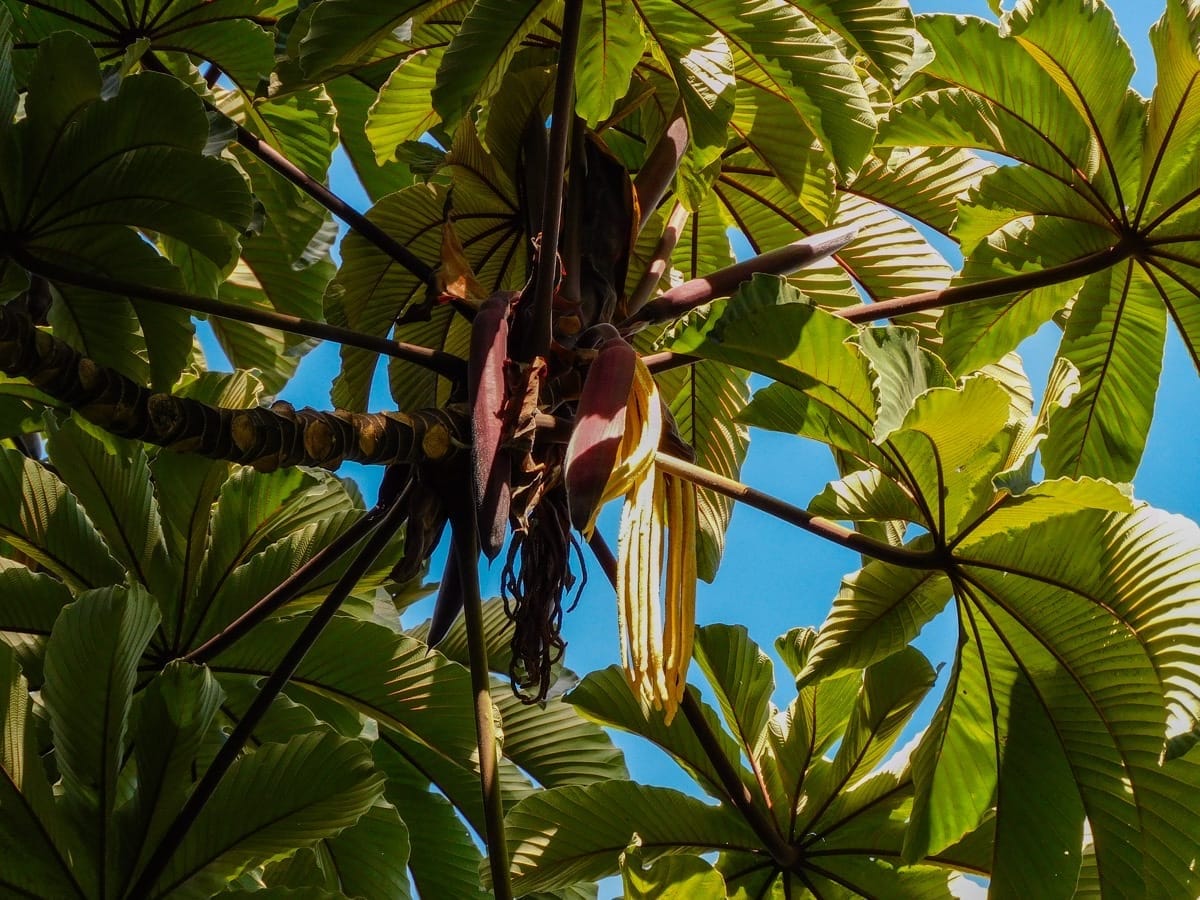
The Guarumo (Cecropia obtusifolia), also called Trumpet Tree or Cecropia, is the quintessential pioneer tree of Neotropical forests. When a forest is cleared, a landslide occurs, or a large tree falls, Guarumo is among the first trees to colonize the opening. Its giant palmate leaves, hollow stems housing ant armies, and silver-white leaf undersides make it instantly recognizable. Where you see Guarumo, you see a forest healing itself.
Quick Reference
iNaturalist Observations
Community-powered species data
📸 Photo Gallery
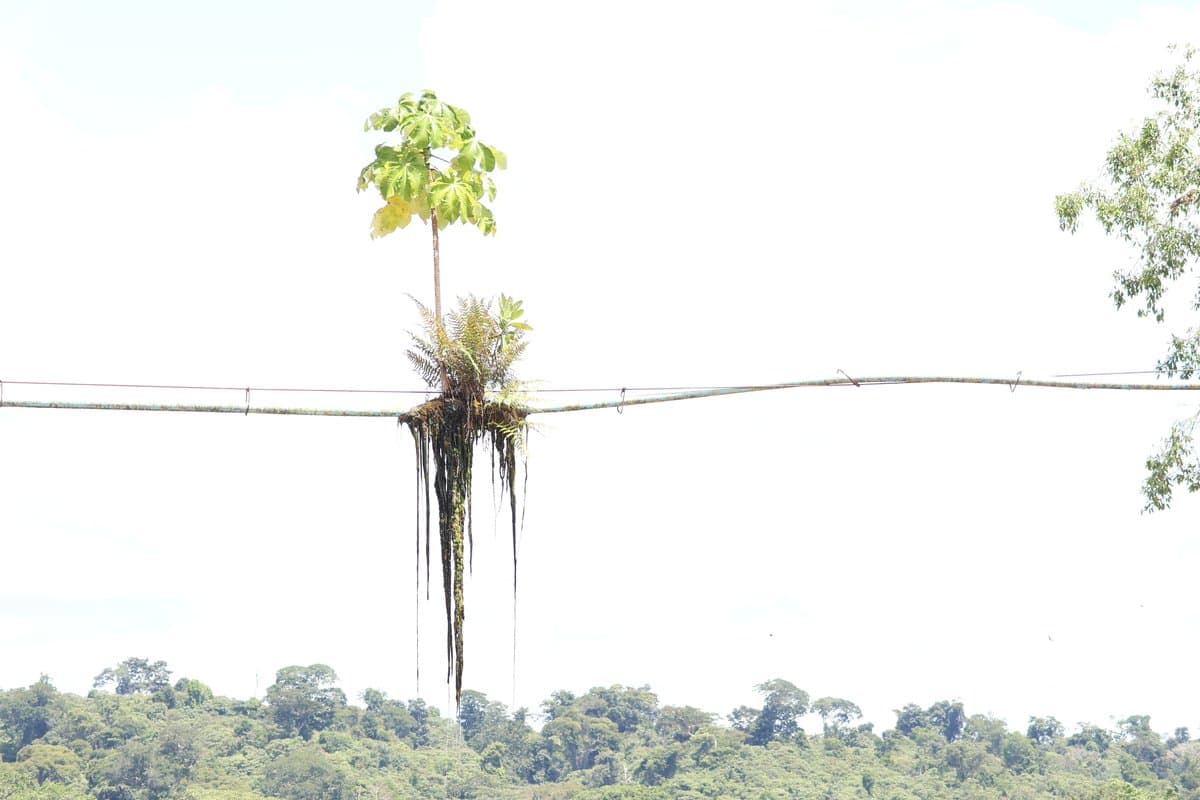
Whole tree
📷 (c) Carlos Venegas-Elizondo, some rights reserved (CC BY-NC)(CC BY-NC)
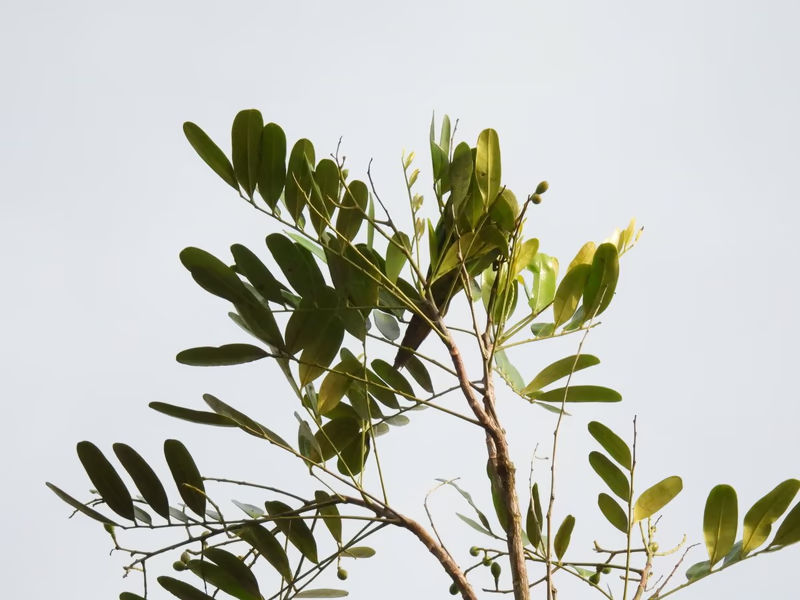
View source ↗Leaves
📷 (c) Andy Jones, some rights reserved (CC BY-NC)(CC BY-NC)
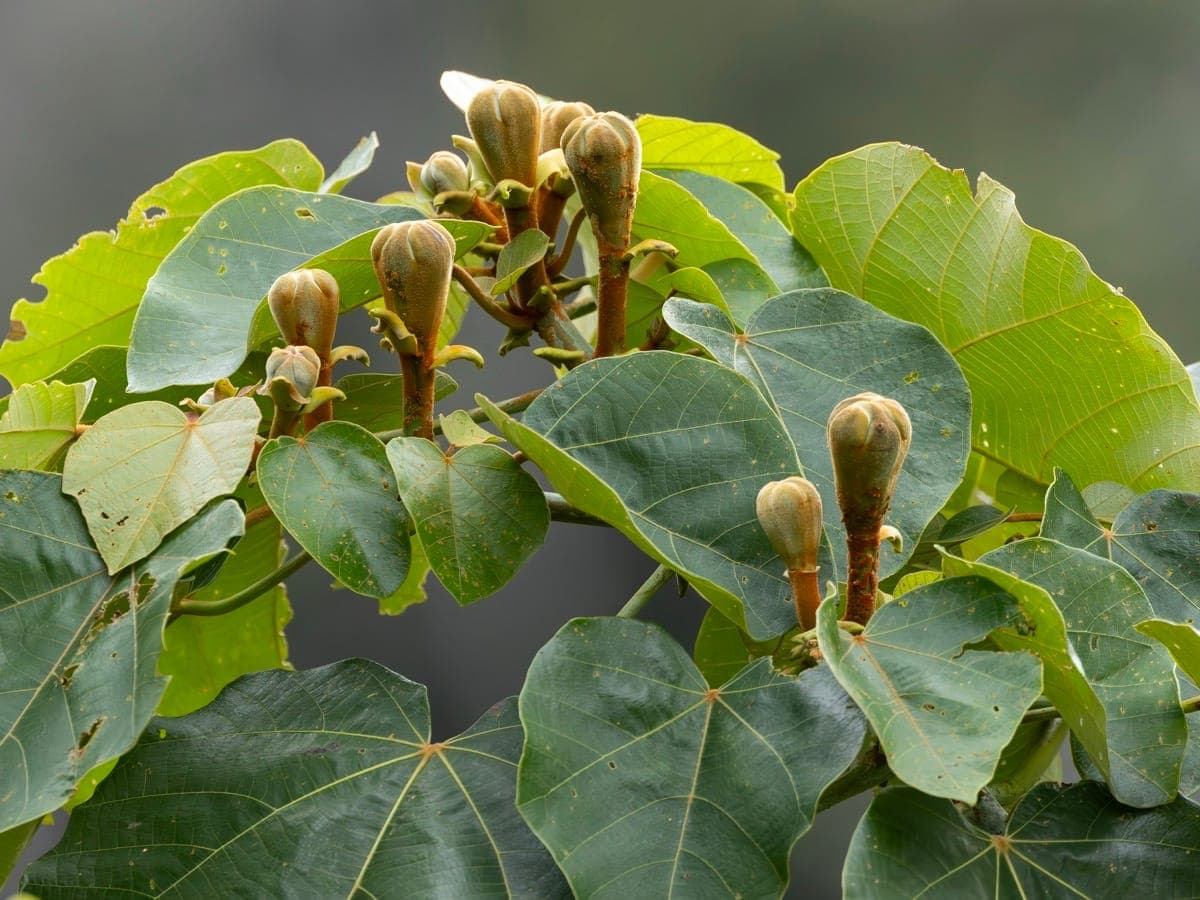
View source ↗Fruit
📷 (c) Catbird, some rights reserved (CC BY-NC)(CC BY-NC)
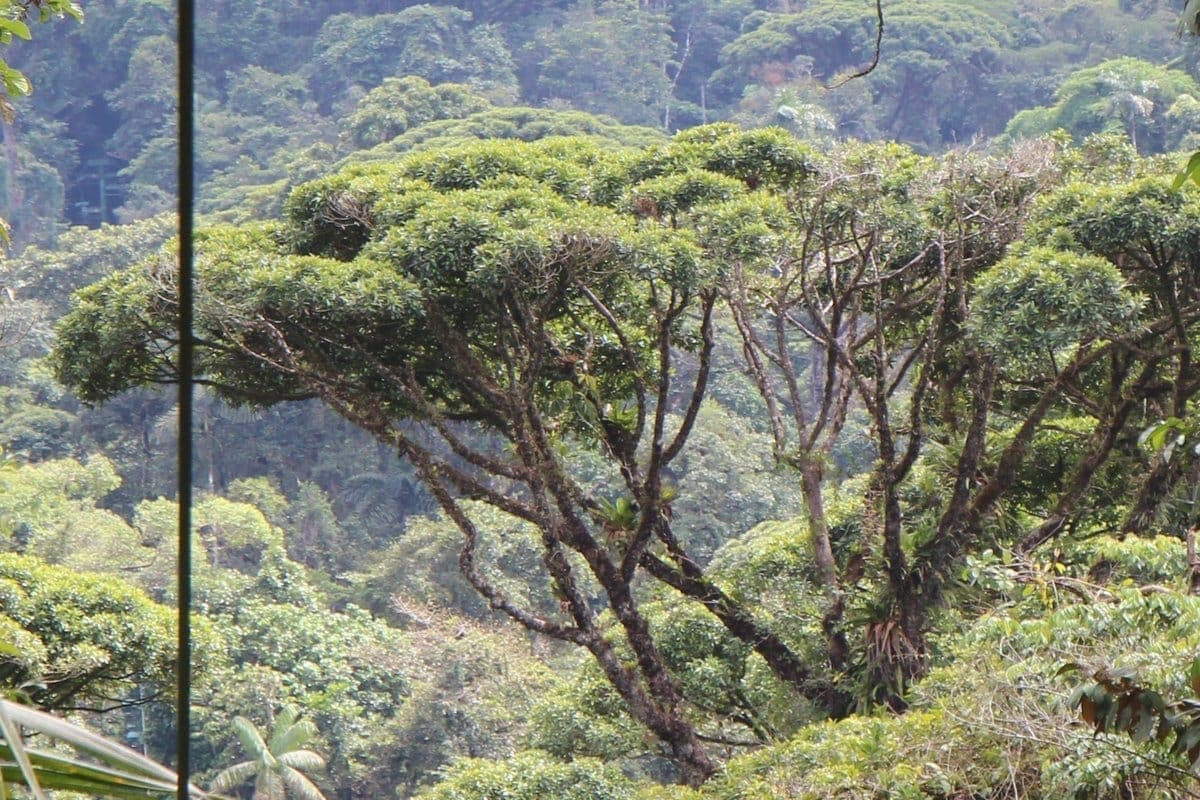
View source ↗Whole tree
📷 (c) Andy Jones, some rights reserved (CC BY-NC)(CC BY-NC)
View source ↗Leaves
📷 (c) Andy Jones, some rights reserved (CC BY-NC)(CC BY-NC)
View source ↗Photos sourced from iNaturalist's community science database. View all observations →↗
Taxonomy and Classification
- Cecropia: Named after Cecrops, mythical first king of Athens - obtusifolia: Latin for "blunt-leaved" - Guarumo: From indigenous Caribbean languages - Trumpet Tree: Hollow stems were used as trumpets - Yarumo: Colombian name
Common Names
Cecropia Species in Costa Rica
Costa Rica has several Cecropia species:
Physical Description
General Form
The Guarumo is a fast-growing, short-lived tree with a distinctive open crown of large palmate leaves. The trunk is typically unbranched or sparingly branched, straight, and pale gray with prominent leaf scars. The hollow internodes are often home to fierce ant colonies. Everything about this tree is designed for rapid growth and quick colonization.
Distinctive Features
The Famous Leaves
- Type: Palmate (like a hand)
- Lobes: 7-11 deep lobes
- Size: 30-50 cm diameter
- Petiole: Very long (30-50 cm)
- Upper Surface: Dark green
- Lower Surface: Silvery-white (diagnostic!)
- Effect: Flash white when wind blows
Trunk and Stems
- Color: Pale gray to whitish
- Texture: Smooth with ring scars
- Structure: Hollow internodes
- Inhabitants: Azteca ants (usually)
- Branching: Sparse, often unbranched
Flowers and Fruit
- Type: Dioecious (separate male/female trees)
- Male Flowers: Catkin-like spikes
- Female Flowers: Finger-like clusters
- Fruit: Elongated, fleshy, many-seeded
- Color: Green to brownish when ripe
- Size: 5-10 cm long clusters
Roots and Growth
- Roots: Shallow, spreading
- Growth Rate: Extremely fast (2-3 m/year!)
- Light Need: Full sun required
- Strategy: Pioneer colonizer
- Lifespan: Short (20-40 years)
Guarumo trees are easy to spot even from far away: - Canopy Shape: Umbrella-like, open crown - Leaf Flash: Silvery undersides flash in wind - Position: Often at forest edges, roadsides - Companions: Look for sloths hanging in branches! On cloudy or windy days, the "flashing" of the silver leaf undersides makes Guarumo trees visible from kilometers away.
The Ant Mutualism
Azteca Ants: Live-In Bodyguards
An Ancient Partnership
The Guarumo-Azteca ant mutualism is one of the most famous plant-animal partnerships in tropical ecology: What the Tree Provides: - Housing: Hollow stems with pre-formed entrances - Food: Glycogen-rich "Müllerian bodies" at leaf bases - Security: Protected cavities for ant brood What the Ants Provide: - Defense: Fierce attacks on herbivores, vines, epiphytes - Pruning: Remove competing vegetation - Fertilizer: Ant waste nourishes the tree This partnership has evolved over millions of years and benefits both species enormously.
The Azteca Ant Defense
If you grab a Guarumo trunk without checking first: 1. Instant Alert: Vibrations alert ant colony 2. Mass Response: Hundreds of ants pour from holes 3. Painful Bites: Azteca ants bite aggressively 4. Chemical Weapons: Some spray formic acid The ants are especially active during the day. They attack anything that touches the tree—herbivorous insects, climbing vines, even people! Pro Tip: Before touching any Cecropia, look for the small holes near branch bases and petioles where ants enter and exit.
Myrmecophyte Adaptations
Distribution and Habitat
Native Range
Geographic Distribution
Distribution in Costa Rica
Found throughout lowland and mid-elevation areas:
Habitat Preferences
Ecological Importance
The Pioneer's Role
Guarumo plays a critical role in tropical forest dynamics: Colonization: - First tree to establish in clearings - Seeds germinate in full sun - Grows 2-3 meters per year! - Creates shade for later successional trees Facilitation: - Shades out grasses and ferns - Improves soil conditions - Attracts seed dispersers - Creates perches for birds Transition: - Lives 20-40 years - Eventually shaded out by taller trees - Death creates light gaps for new growth Guarumo is the "nurse tree" that makes forest recovery possible.
Wildlife Relationships
The Sloth Connection
- Two-Toed Sloths: Primary food source
- Three-Toed Sloths: Major food tree
- Why: Leaves nutritious, easy to digest
- Behavior: Sloths sleep in Guarumo crowns
- Saying: "Find a Cecropia, find a sloth"
Bird Interactions
- Toucans: Eat ripe fruits
- Tanagers: Major fruit consumers
- Parrots: Eat fruits and seeds
- Seed Rain: Birds perch and "deliver" seeds
Mammal Visitors
- Bats: Major seed dispersers
- Monkeys: Eat fruits, disperse seeds
- Coatis: Climb for fruit
- Kinkajous: Nocturnal fruit eating
Insect Community
- Azteca Ants: Mutualist partners
- Caterpillars: Some specialists
- Flies: Visit flowers
- Beetles: Various associations
The Sloth's Best Friend
Three-toed sloths have a special relationship with Guarumo: - Diet: Cecropia leaves are preferred food - Digestion: Sloths' slow metabolism handles the leaves - Rest: Open crown is perfect for sunning - Camouflage: Gray fur blends with branches - Range: Sloths follow Cecropia distribution If you want to see sloths in Costa Rica, look for Guarumo trees first!
Human Uses
Traditional Uses
Medicine
- Leaves: Diabetes treatment (traditional)
- Bark: Respiratory conditions
- Sap: Wound healing
- Roots: Various preparations
- Modern Research: Antioxidant compounds
Materials
- Hollow Stems: Trumpets, flutes, blowguns
- Wood: Soft, light, matches, paper pulp
- Fiber: Rope and cordage
- Flotation: Rafts and floats
Conservation and Restoration
Identification Guide
How to Identify Guarumo
Where to See Guarumo in Costa Rica
To find sloths in Guarumo trees: - Time: Dawn or late afternoon (active periods) - Weather: After rain, sloths may be visible - Shape: Look for gray "lumps" in the crown - Movement: Watch for slow motion in leaves
- Guides: Local guides know the individual trees The open crown of Guarumo makes sloths more visible than in dense canopy trees!
Cultivation & Ecological Management
Guarumo is not typically "cultivated" in a traditional sense — it is a pioneer species that colonises disturbed land naturally. However, it is increasingly used in restoration ecology, living fences, and agroforestry buffers.
Propagation
- Seed collection: Gather ripe catkin-like fruit clusters (finger-shaped, turning grey-brown) year-round; each infructescence contains thousands of tiny seeds
- Seed treatment: No pre-treatment needed; seeds germinate readily in light
- Direct seeding: Scatter seeds on bare, sun-exposed soil; germination occurs within 7–14 days
- Nursery method: Sow on surface of moist potting mix under full sun; do not cover seeds (light-dependent germination); transplant at 20–30 cm height (6–8 weeks)
- Vegetative: Stem cuttings of young wood (20–30 cm) can root under mist, though seeds are more reliable
Site Requirements
Management in Restoration Projects
- Nurse tree role: Plant Guarumo as a fast-growing canopy to shade out grasses and facilitate establishment of slower-growing native species beneath
- Succession planning: Expect Guarumo to dominate for 5–10 years, then decline as shade-tolerant species overtake it — this is normal and desirable
- Watering: Only during severe dry-season drought in the first year; otherwise rainfall is sufficient
- Fertilization: Generally unnecessary; the tree establishes on nutrient-poor soils. If growth is very slow, apply 25 g urea per tree once in the wet season
- Pruning: Not recommended — the tree's open, umbrella-shaped crown is structurally sound and provides habitat for sloths and birds
- Ant management: The Azteca ant colonies living in hollow stems are mutualistic partners; do not treat with insecticide
Companion Planting for Restoration
Seasonal Management Calendar
Growth Timeline
- Month 1–3: Rapid seedling emergence; 30–50 cm in first 3 months
- Year 1: 2–4 m height; stem begins to hollow
- Year 2–3: 6–10 m; ant colonies establish; first fruiting possible
- Year 5: 12–15 m; full canopy development; sloth habitat established
- Year 8–15: Natural decline as shade-tolerant species outcompete; logs decompose and enrich soil
Guarumo is the most important pioneer tree in Neotropical forest succession. Rather than managing it for production, manage it as a tool — it builds the conditions for the forest that follows. Every Guarumo you plant is a down payment on a future forest.
External Resources
Community observations and photos
Sloth research and conservation
La Selva research station
Global biodiversity occurrence data and distribution maps
Conservation status and species assessment
References
📚 Scientific References & Further Reading
Janzen, D.H. (1969). Allelopathy by myrmecophytes: The ant Azteca as an allelopathic agent of Cecropia. Ecology 50: 147-153
Longino, J.T. (1991). Azteca ants in Cecropia trees: Taxonomy, colony structure, and behaviour. Ecological Monographs 61(1): 1-33
Montgomery, G.G. (ed.) (1985). The Evolution and Ecology of Armadillos, Sloths, and Vermilinguas. Smithsonian Institution Press
Where others see disturbance, the Guarumo sees opportunity. This remarkable tree is the living embodiment of ecological resilience—first to arrive when disaster strikes, first to offer shade and food, first to begin the long process of forest healing. Its partnership with fierce Azteca ants shows that cooperation can be fierce, and its role as sloth cafeteria reminds us that even "weedy" trees can be ecological keystones. Next time you see a Guarumo at a forest edge, don't see a common pioneer—see hope in action, the beginning of a forest's return.
Safety Information Disclaimer
Safety information is provided for educational purposes only. Individual reactions may vary significantly based on age, health status, amount of exposure, and individual sensitivity. Always supervise children around plants. Consult a medical professional or certified arborist for specific concerns. The Costa Rica Tree Atlas is not liable for injuries or damages resulting from interaction with trees described in this guide.
• Always supervise children around plants
• Consult medical professional if unsure
• Seek immediate medical attention if poisoning occurs
Information compiled from authoritative toxicology sources, scientific literature, and medical case reports.
Help improve this page
Know something about this tree? Share local knowledge, suggest a correction, or submit a photo to improve this guide for everyone.