Capulín
Muntingia calabura
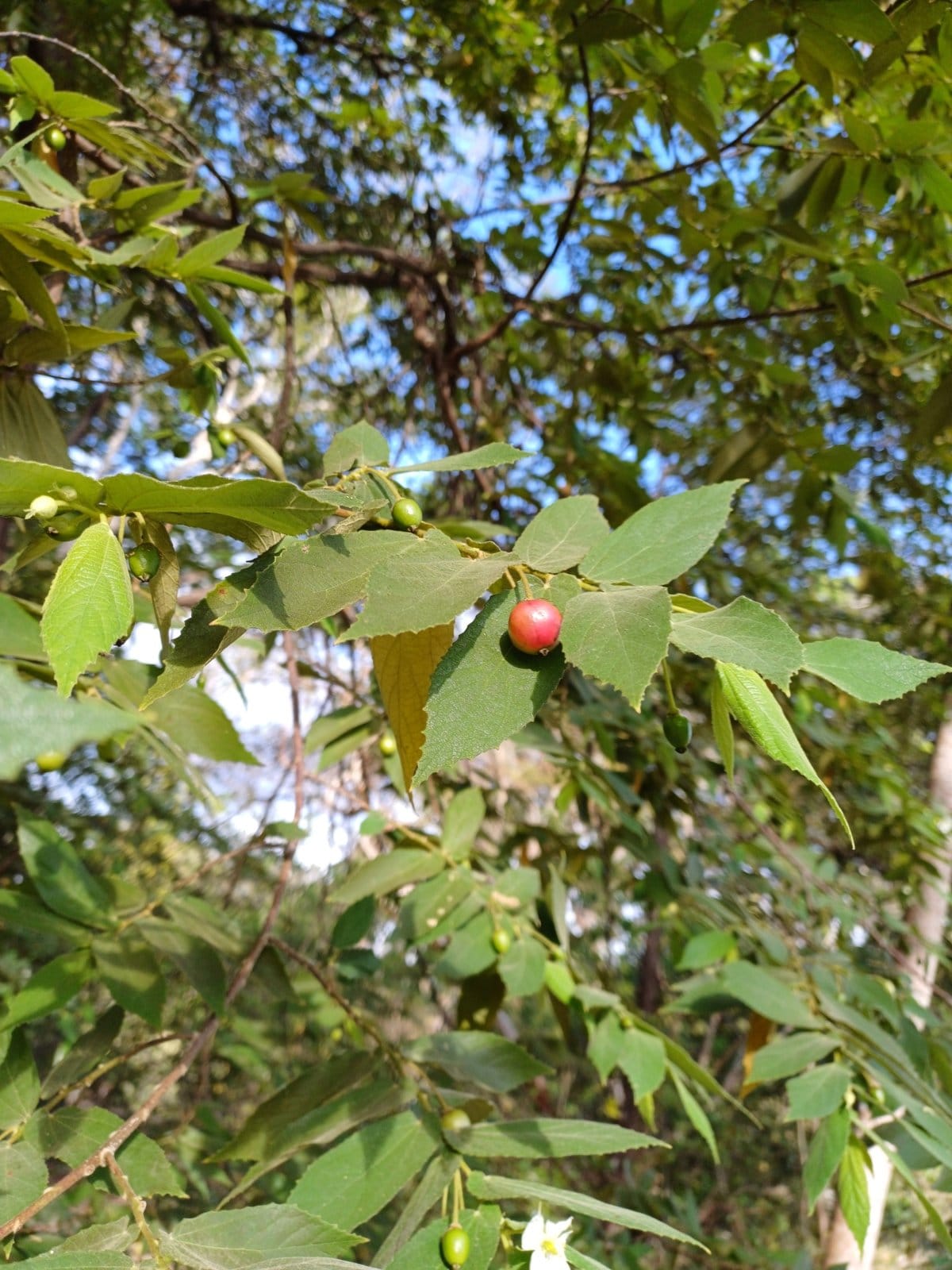
Quick facts
Native Region
Mexico to South America, Caribbean
Max Height
8-12 meters (25-40 feet)
Family
Muntingiaceae
Conservation
LC — Least Concern
Uses
Safety Information
Toxicity Details
Capulín (Jamaica Cherry) is COMPLETELY NON-TOXIC and SAFE. The fruit, leaves, and flowers are not known to be toxic to humans or animals. The fruit is beloved by children and commonly called 'candy tree' or 'cotton candy berry' - specifically safe for kids. CHILDREN can safely eat the abundant sweet red berries fresh, in jams, or drinks without concern. PETS: Birds, squirrels, and wildlife frequently eat the fruit. No documented toxic effects for domesticated pets (dogs, cats) from the fruit, though moderation is advised as with any new food. The tree is unarmed (no spines/thorns/burrs) and poses no mechanical risks. EDIBILITY: Small red or yellow berries are sweet, musky, soft - eaten raw or processed. EXCEPTIONAL SAFETY PROFILE for both humans and animals.
Skin Contact Risks
No skin irritation risk from contact with any part of the tree. Leaves, flowers, fruit, and bark do not cause dermatitis or allergic reactions. Completely safe to touch and handle without protective equipment.
Allergenic Properties
NO allergen risk documented. No evidence of allergies or irritations from consuming fruit or handling plant parts. The fruit is widely consumed without allergic reactions. Overall allergen risk: NONE.
Season
Flowering
Jan-Dec
Fruiting
Jan-Dec
How to identify
Capulín (Jamaica Cherry / Panama Berry)
The Capulín (Muntingia calabura), known throughout the Americas as Jamaica Cherry, Panama Berry, or Strawberry Tree, is perhaps the most successful pioneer fruit tree in the tropical world. This small but prolific tree seems to grow anywhere—from vacant lots and roadsides to cracks in concrete—and produces thousands of small, sweet red berries year-round. For generations of Costa Rican children, the Capulín has been a source of free snacks, its low-hanging branches laden with ripe fruit just waiting to be picked.
Quick Reference
iNaturalist Observations
Community-powered species data
📸 Photo Gallery
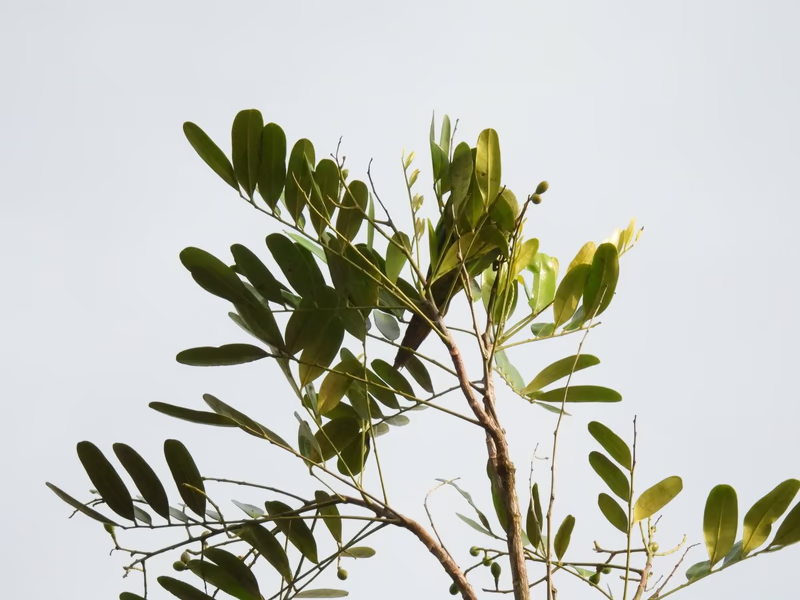
Whole tree
📷 (c) Carlos Venegas-Elizondo, some rights reserved (CC BY-NC)(CC BY-NC)
View source ↗Leaves
📷 (c) Carlos Venegas-Elizondo, some rights reserved (CC BY-NC)(CC BY-NC)
View source ↗Whole tree
📷 no rights reserved(CC0)
View source ↗Leaves
📷 (c) Carlos Venegas-Elizondo, some rights reserved (CC BY-NC)(CC BY-NC)
View source ↗Whole tree
📷 (c) Eduardo A. Bolaños Vargas, some rights reserved (CC BY)(CC BY)
View source ↗Photos sourced from iNaturalist's community science database. Browse all observations →↗
Taxonomy & Classification
Muntingia calabura is the only species in its genus and one of only three species in the entire family Muntingiaceae. This makes it taxonomically unique—a single, highly successful species that has colonized tropical regions worldwide.
The Ultimate Pioneer
The Capulín is arguably the most successful pioneer tree in tropical America. Its success comes from several remarkable adaptations:
Names Around the World
The Capulín is so distinctive that it's the only member of its genus (Muntingia) and one of very few species in its family (Muntingiaceae). This taxonomic isolation makes it a truly unique tree in the plant kingdom.
Physical Description
Tree Form
The Capulín is a small to medium tree with distinctive horizontal branching that creates a layered, spreading crown perfect for shade. The branches often droop gracefully, bringing fruit within easy reach.
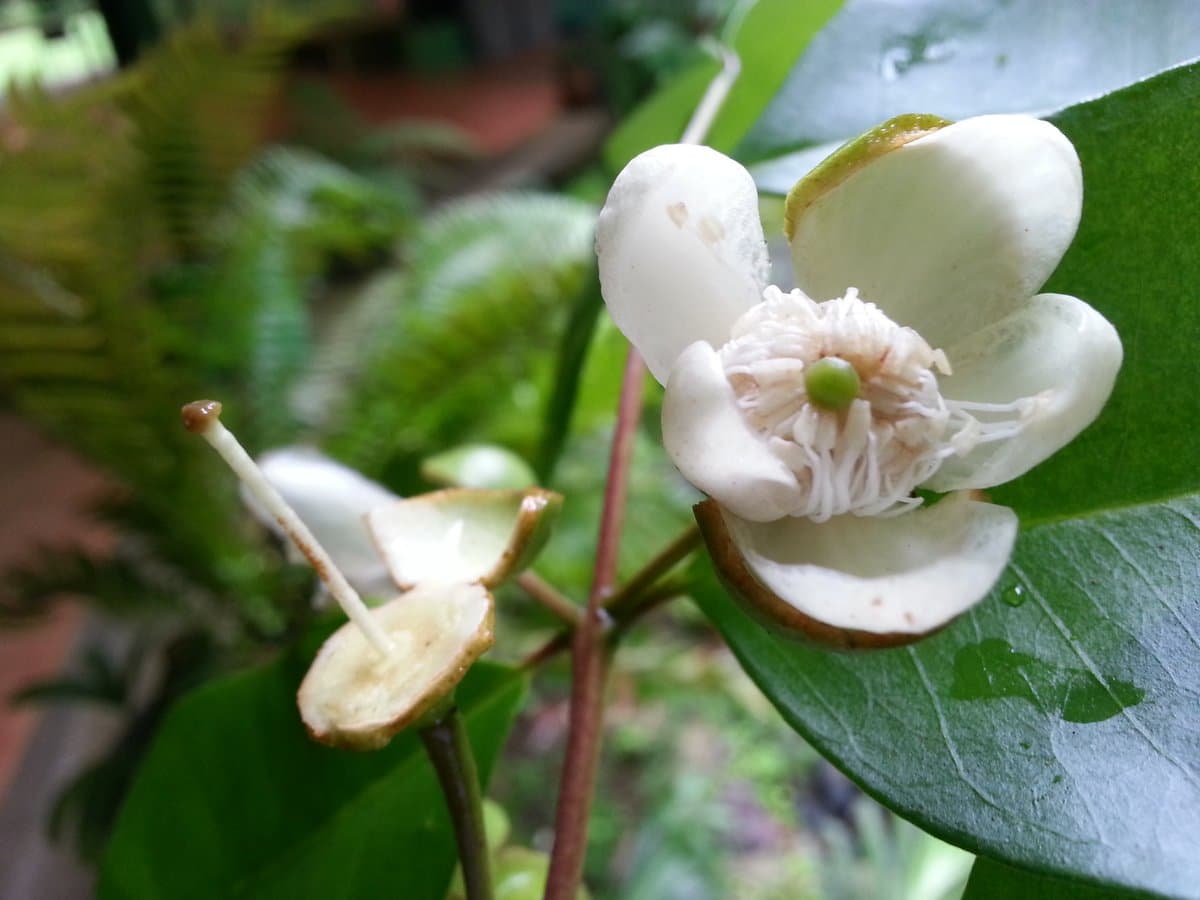
Identifying Features
The Fruit
Characteristics
Capulín Berries
Appearance:
- Tiny round berries, 1-1.5 cm
- Green when immature
- Yellow transitioning to bright red when ripe
- Soft, easily squashed when fully ripe
Flavor Profile:
- Sweet with slight musky undertone
- Often compared to cotton candy or fig
- Many tiny, gritty seeds (edible)
- Best eaten fresh off the tree
Nutrition (per 100g):
- Calories: ~80 kcal
- Vitamin C: Good source
- Antioxidants: Present
- Fiber: Moderate
How to Enjoy
Ripeness: Pick when deep red and slightly soft to touch. If it falls off easily into your hand, it's perfect!
Best Practice:
- Eat immediately—they don't store well
- Can be made into jam (lots needed!)
- Birds love them, so you may have competition
- Avoid stained clothing—the juice is persistent
Ecological Role
Wildlife Value
The Capulín is a keystone species for urban wildlife, providing food for:
Pioneer Ecology
Ecological Pioneer
The Capulín plays a crucial role in forest succession:
- Colonizer: First to establish in disturbed areas
- Soil Builder: Adds organic matter through leaf litter
- Shade Provider: Creates conditions for other species
- Wildlife Attractor: Birds spread seeds of forest trees
- Nurse Tree: Protects seedlings of later-succession species
Distribution in Costa Rica
The Capulín is found throughout Costa Rica, from sea level to mid-elevation areas:
Uses
Traditional & Modern Uses
Cultivation
Growing Conditions
Propagation
Growing Capulín
From Seed (most common):
- Seeds need no treatment
- Germination: 2-4 weeks
- Often self-seeds prolifically
- Can become "weedy" in ideal conditions
From Cuttings:
- Semi-hardwood cuttings work
- Root in 4-6 weeks
- Faster to fruit than seedlings
Care:
- Minimal care needed once established
- Tolerates poor soil
- Pruning optional but helps shape
- First fruit: 1-2 years from seed
Cultural Significance
Throughout Latin America, the Capulín holds a special place in childhood memories. Its low branches, accessible fruit, and year-round production make it the quintessential "kid's fruit tree." Many Costa Ricans can recall climbing Capulín trees as children, hands and faces stained red with berry juice—a universal tropical childhood experience.
Related Species
Conservation Status
Sources: IUCN Red List — Muntingia calabura search↗, CABI Invasive Species Compendium↗, GBIF — Muntingia calabura↗
IUCN Status: Least Concern (LC)
The Capulín faces no conservation threats. In fact, it's so successful that it's considered invasive in some Pacific islands and parts of Asia where it was introduced. Its prolific seeding, fast growth, and bird-dispersed seeds make it an aggressive colonizer.
In Costa Rica: The Capulín is a welcome native pioneer, valued for its role in urban ecology and forest restoration. No protection measures are needed.
Where to See Capulín
Where to Find Capulín in Costa Rica
Urban Areas (most common):
Natural Settings:
Unlike most fruit trees, Capulín fruits continuously throughout the year. Any time you visit Costa Rica, you're likely to find trees with ripe red berries ready to eat.
Urban Management Notes
External Resources
Community observations and photos
Nomenclature, type specimens, and taxonomic references
Global occurrence records and distribution mapping
Kew Gardens taxonomic information
Distribution and invasive status
Comprehensive uses database
Conservation status and species assessment
References
📚 Scientific References & Further Reading
Bayer, C. et al. (1999). Support for an expanded family concept of Malvaceae within a recircumscribed order Malvales. Botanical Journal of the Linnean Society
Morton, J.F. (1987). Jamaica Cherry (Muntingia calabura). Fruits of Warm Climates
Standley, P.C. (1937). Flora of Costa Rica, Part III. Field Museum of Natural History, Botanical Series
Zamora, N., Jiménez, Q., & Poveda, L. (2004). Árboles de Costa Rica Vol. III. INBio, Santo Domingo de Heredia
Preethi, S., Mary Saral, A., et al. (2021). A comprehensive review on Muntingia calabura: Phytochemistry and pharmacological properties. Journal of Ethnopharmacology
The Capulín (Muntingia calabura) embodies the spirit of tropical resilience—a tree that asks for nothing but gives abundantly. Whether growing from a crack in a city sidewalk or colonizing a cleared pasture, it provides shade, food, and habitat for wildlife. This humble tree reminds us that nature finds a way, even in the most challenging environments.
Safety Information Disclaimer
Safety information is provided for educational purposes only. Individual reactions may vary significantly based on age, health status, amount of exposure, and individual sensitivity. Always supervise children around plants. Consult a medical professional or certified arborist for specific concerns. The Costa Rica Tree Atlas is not liable for injuries or damages resulting from interaction with trees described in this guide.
• Always supervise children around plants
• Consult medical professional if unsure
• Seek immediate medical attention if poisoning occurs
Information compiled from authoritative toxicology sources, scientific literature, and medical case reports.
Help improve this page
Know something about this tree? Share local knowledge, suggest a correction, or submit a photo to improve this guide for everyone.