Wild Tobacco Tree
Acnistus arborescens
Quick facts
Native Region
Mexico through Central America and the Caribbean to South America; native to Costa Rica
Max Height
6-12 meters
Family
Solanaceae
Conservation
LC — Least Concern
Uses
Safety Information
Toxicity Details
As a member of the Solanaceae, Acnistus contains alkaloids in leaves and roots, but at low concentrations. The ripe fruits are consumed by birds and are not known to be toxic to humans, though they are not typically eaten. Unripe berries should not be ingested. Overall toxicity risk is low.
Skin Contact Risks
No significant skin irritation from casual contact with leaves, bark, or fruit. The plant is not known to cause dermatitis. Safe for handling during pruning and maintenance.
Allergenic Properties
Pollen production is moderate but not a major allergen. No significant cross-reactivity with common allergens. Low risk for general public.
Structural Hazards
Small tree with no significant structural risks. Branches are flexible and rarely pose falling hazards. No aggressive roots. Safe for planting near structures and walkways.
Wildlife & Pet Risks
No wildlife toxicity concerns. This tree is a keystone species for avian biodiversity, with over 50 bird species documented feeding on its fruits. It is one of the most wildlife-friendly trees in Costa Rica.
Season
Flowering
Jan-Mar, Dec
Fruiting
Feb-May
How to identify
Wild Tobacco Tree (Güítite)
Güítite (Acnistus arborescens), known internationally as the Wild Tobacco Tree, is arguably the single most important bird-habitat tree in Central America. During its fruiting season, a single Güítite can attract over 50 species of birds to feast on its abundant small orange berries — from brilliant tanagers and trogons to migrating warblers. This fast-growing, easy-to-cultivate small tree is the ultimate "bird garden" plant for Costa Rican landscapes.
Quick Reference
iNaturalist Observations
Community-powered species data
📸 Photo Gallery
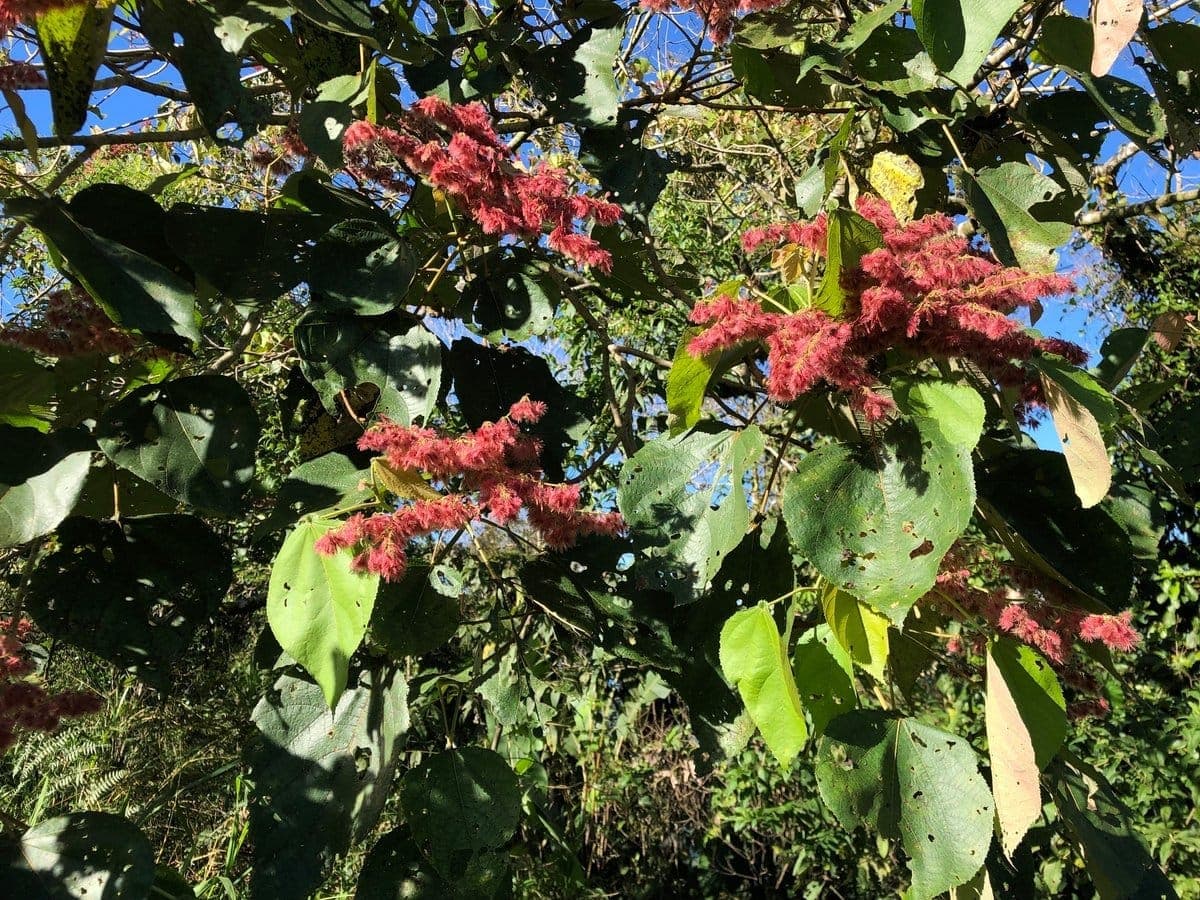
Whole tree
📷 (c) Diego Lobo Montoya, some rights reserved (CC BY-NC)(CC BY-NC)
View source ↗Leaves
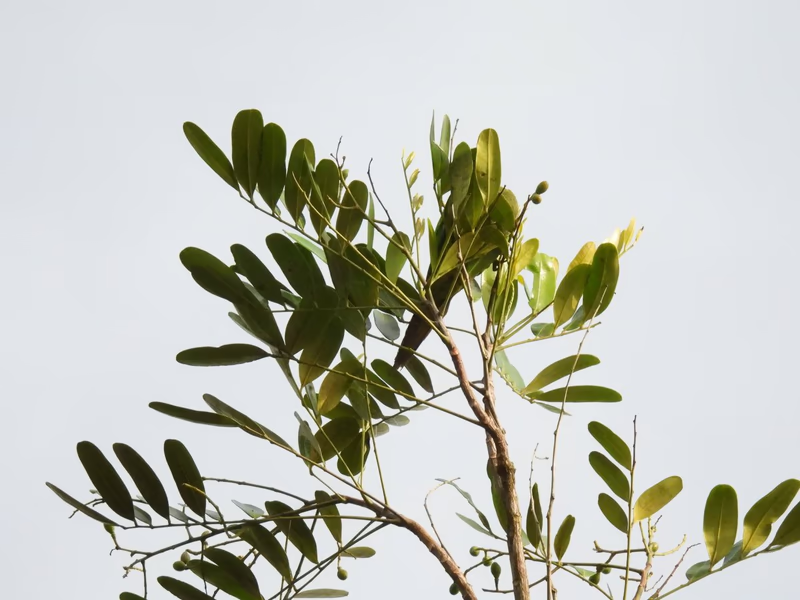
📷 (c) Diego Lobo Montoya, some rights reserved (CC BY-NC)(CC BY-NC)
View source ↗Whole tree
📷 (c) mimian, some rights reserved (CC BY-NC)(CC BY-NC)
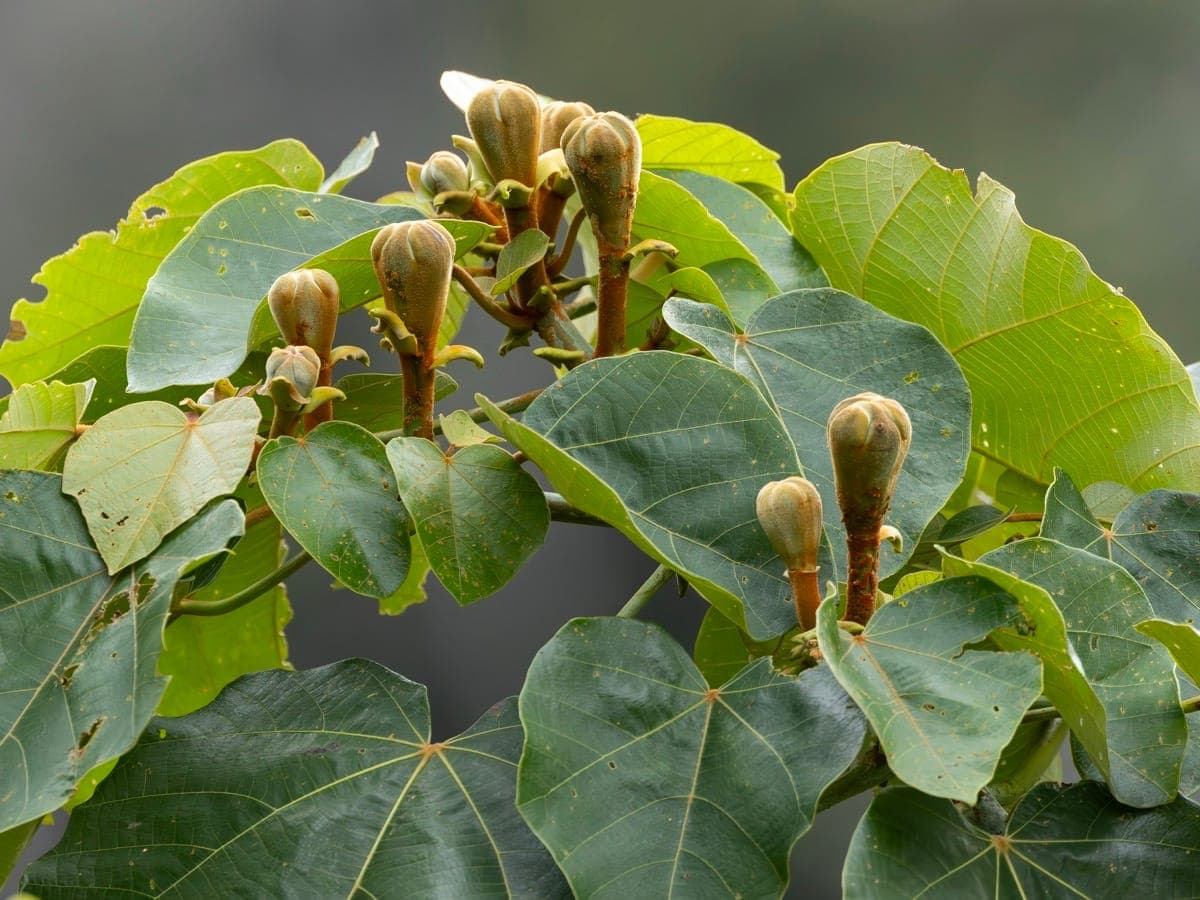
View source ↗Leaves
📷 (c) Jo Jiménez, some rights reserved (CC BY-NC)(CC BY-NC)
View source ↗Whole tree
📷 (c) maickelbj, some rights reserved (CC BY-NC)(CC BY-NC)
View source ↗Taxonomy & Classification
Common Names by Region
Taxonomic Notes
Acnistus arborescens was described by Ludwig Diels and later reclassified by various taxonomists. The genus Acnistus is monotypic or contains very few species, depending on the taxonomic authority. Some authors place it within Dunalia or treat it as a synonym of other genera within the Solanaceae tribe Physalideae.
The genus name Acnistus derives from the Greek aknistos meaning "nettle-like" (though the plant has no stinging hairs). The specific epithet arborescens means "tree-like" or "becoming tree-sized," distinguishing this species from its predominantly herbaceous family relatives. In the Solanaceae, few species become true trees — making Güítite notable within its family.
The plant is sometimes listed under synonyms including Dunalia arborescens and Acnistus ellipticus.
Physical Description
Tree Form
Güítite is a small to medium-sized tree, typically 6–12 m tall, with a short trunk (often branching near the base) and a broad, rounded, spreading crown. The branch architecture tends to be irregular and somewhat sprawling, which increases fruit accessibility for birds. Multiple stems from the base are common, giving the tree a shrubby appearance in open settings. The canopy casts moderate shade.
Bark
The bark is smooth to slightly rough, grayish-brown, with small lenticels. It remains relatively thin throughout the tree's life. The inner bark is pale green and slightly mucilaginous. The wood is soft, pale, and lightweight — hollow in older sections (hence "hollowheart").
Leaves
Leaves are simple, alternate, ovate to elliptic, 10–25 cm long and 4–10 cm wide, with entire (smooth) margins. They are softly pubescent (fuzzy) on both surfaces when young, becoming smoother above with age. The leaves are dark green above and paler yellow-green below. They emit a mild, characteristic odor when crushed, reminiscent of other Solanaceae. Leaves may be semi-deciduous during severe dry seasons.
Flowers
Flowers are small (8–12 mm), tubular to bell-shaped, greenish-white to pale yellow, produced in dense fascicles (clusters) directly from older wood (cauliflory) and in leaf axils along branches. Each flower has a 5-lobed corolla with reflexed tips and 5 stamens with yellow anthers. Flowers open at night and are slightly fragrant, attracting nocturnal pollinators. Flowering is massive and synchronized, with the entire tree covered in small blooms during peak period. The calyx persists and partially encloses the developing fruit. A mature tree may produce several thousand flowers during a single flowering event, though only a fraction set fruit.
Fruit and Seeds
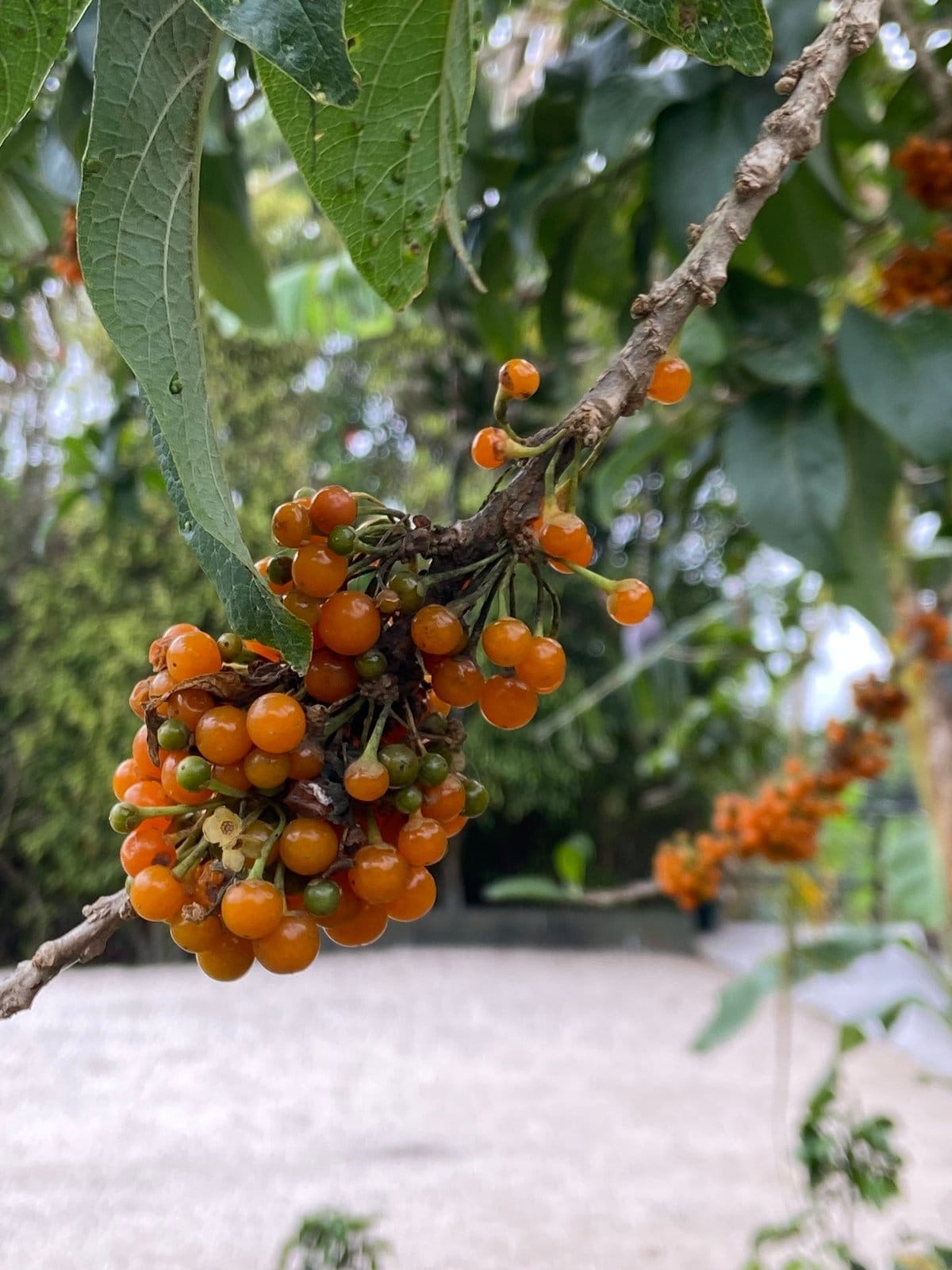
The fruit is a small berry, 5–8 mm in diameter, spherical, turning from green to bright orange when ripe. Fruits are produced in remarkable abundance — hundreds to thousands per branch — in dense clusters along the stems. Each berry contains numerous tiny seeds (20–50) embedded in a thin pulpy flesh. The massive fruit production, small fruit size, and accessible presentation make this tree extraordinarily attractive to fruit-eating birds. A single tree in full fruit can support flocks of dozens of birds simultaneously. Ripe fruit falls readily when branches are shaken, and ground-scattered berries are consumed by ground-feeding birds and small mammals.
Root System and Wood Anatomy
Güítite develops a shallow but extensive lateral root system, spreading well beyond the canopy edge. This root architecture allows rapid water uptake from surface soil layers, explaining the tree's success in seasonally dry environments. Adventitious roots form readily from stem contact with moist soil, enabling vegetative propagation. The wood has a very low specific gravity (0.25–0.35), is white to pale cream, and becomes pithy or hollow in older stems. Growth rings are indistinct due to the continuous or semi-continuous growth habit. The wood's softness and tendency to hollow make it a poor timber species but create valuable nesting cavities for small birds and roosting sites for bats.
Leaf Chemistry
As a member of the Solanaceae, Güítite leaves contain withanolides — steroidal lactone compounds characteristic of the nightshade family. While present in lower concentrations than in many related genera, these compounds contribute to the plant's pest resistance and give crushed leaves their distinctive odor. The leaves also contain significant quantities of calcium and nitrogen, making the litter a valuable soil amendment when it decomposes. The alkaloid profile is mild enough that the fruits are safe for avian consumption, though mammals typically avoid the leaves.
Geographic Distribution
Global Range
Acnistus arborescens ranges from southern Mexico through Central America, the Caribbean islands, and South America south to Bolivia and northern Argentina. It occurs from sea level to approximately 2,000 m elevation in a wide variety of habitats.
Distribution in Costa Rica
In Costa Rica, Güítite is one of the most common and widespread small trees, found in nearly all provinces and life zones:
- Central Valley (San José, Heredia, Alajuela, Cartago): Very common in gardens, pasture edges, and secondary growth
- Guanacaste: Found in moist areas, riparian corridors, and semi-deciduous forests
- Puntarenas: Pacific lowlands and premontane forests
- Limón: Caribbean lowlands and foothills
- Highland areas: Extends into premontane and lower montane zones up to 2,000 m
This is a ubiquitous species in Costa Rica, found in practically every rural and suburban landscape where suitable conditions exist.
Elevation Range
Sea level to 2,000 m, with peak abundance at 500–1,500 m in premontane and lower montane zones.
Biogeographic Notes
Acnistus arborescens has one of the broadest distributions in its family, spanning from Mexico to Argentina and the Caribbean islands. Some taxonomists treat it as the sole species of Acnistus, though populations across this vast range show considerable morphological variation. In Costa Rica, the species occurs from the coastal lowlands to cloud forest margins, an unusually wide elevational range that reflects its ecological plasticity. Its abundance in human-modified landscapes — coffee farms, hedgerows, pasture edges — means it has likely expanded its range in Costa Rica since pre-Columbian deforestation and agricultural intensification. The species serves as a "biological bridge" between forest fragments, providing critical fruit resources and perch sites for seed-dispersing birds that maintain genetic connectivity across fragmented landscapes.
Habitat & Ecology
Ecological Role
Güítite is considered a keystone species for avian biodiversity in Neotropical landscapes. Its ecological importance far exceeds what its modest size would suggest:
- Bird feeding station: Over 50 bird species have been documented feeding on Güítite fruits, making it one of the most important food plants for Neotropical frugivorous birds
- Fruiting phenology: Fruits during the dry season (February–May), when many other food sources are scarce, providing critical nutrition during a resource-poor period
- Connectivity: Acts as a "stepping stone" for birds moving between forest fragments in agricultural landscapes
- Pioneer function: Rapidly colonizes disturbed sites, beginning the succession process and providing food and perch sites for seed-dispersing birds that bring seeds of larger forest species
The species has been the subject of multiple ornithological studies documenting its role as a year-round fruit resource. In shade-coffee plantations, Güítite trees have been shown to increase bird species richness by 25–40% compared to coffee plots lacking this species.
Wildlife Interactions
Güítite's bird list reads like a who's who of Neotropical avifauna:
- Tanagers: Scarlet Tanager, Summer Tanager, Silver-throated Tanager, Bay-headed Tanager, Blue-gray Tanager, Palm Tanager, and many more
- Euphonias: Yellow-crowned Euphonia, Olive-backed Euphonia, Spot-crowned Euphonia
- Trogons: Violaceous Trogon, Collared Trogon
- Toucans: Keel-billed Toucan, Collared Aracari
- Manakins: Long-tailed Manakin, White-ruffed Manakin
- Flycatchers: Various species supplement their insect diet with Güítite fruits
- Migrants: North American migratory warblers, vireos, and thrushes use fruiting Güítite trees as critical refueling stations
- Mammals: Bats consume fruits at night; arboreal mammals occasionally feed on fruit
Over 50 bird species have been documented feeding at Acnistus arborescens trees in Neotropical studies, making it arguably the most important small-tree fruit resource for avian diversity in human-modified Central American landscapes.
Associated Species
Güítite commonly grows in association with:
- Erythrina spp. (Poró) — living fence companions
- Bursera simaruba (Indio Desnudo) — fellow pioneer
- Cecropia spp. (Guarumo) — secondary forest associates
- Inga spp. (Guabas) — shade tree combinations
- Coffee and banana plantations (common shade edge tree)
- Solanum spp. — other Solanaceae sharing similar ecological strategies in disturbed habitats
- Piper spp. — understory companions attracted to similar light conditions and bird-dispersal networks
Pollination Biology
The greenish-white flowers open primarily at dusk and remain receptive through the night, producing a subtle sweet fragrance that attracts nocturnal pollinators:
- Moths: Several hawkmoth species (Sphingidae) are important pollinators, drawn by the tubular flower form and nighttime fragrance
- Bats: Nectar-feeding bats (Glossophaginae) visit flowers, contributing to cross-pollination between distant trees
- Daytime visitors: Bees and syrphid flies visit flowers that remain open into the morning, providing secondary pollination
- Self-compatibility: The species is self-compatible but produces more viable seed through cross-pollination — the nocturnal pollinator guild ensures genetic mixing across populations
Fruit Nutritional Ecology
The tiny orange berries, though individually small, are packed with sugars and carotenoid pigments that provide high-energy nutrition for frugivorous birds:
- Sugar content: 15–22% total sugars in ripe fruit pulp — higher than many competing fruit species
- Carotenoids: The orange pigmentation indicates high beta-carotene content, which birds convert to vitamin A for feather coloration and immune function
- Lipid content: Low fat compared to laurel-family fruits, but the sugar-rich profile attracts a broader range of bird species including those that don't specialize in fatty fruits
- Seed passage: Seeds pass through avian digestive tracts in 15–45 minutes and germinate better after gut treatment — a classic mutualism ensuring efficient seed dispersal
Uses & Applications
Bird Conservation and Ecotourism
Güítite's primary modern value lies in its extraordinary capacity to attract birds:
- Bird gardens: Planted specifically to create bird-watching stations in lodges, eco-resorts, and private gardens
- Biological corridors: Used in corridor plantings connecting forest fragments for avian movement
- Research plots: Studied extensively as a model system for understanding fruit-bird interactions
- Photography: Fruiting trees provide predictable locations for bird photography
- Citizen science: iNaturalist and eBird reports from Güítite trees contribute valuable biodiversity data
Agroforestry and Living Fences
- Living fence posts: Cuttings root easily and grow rapidly into functional fence posts
- Shade component: Provides partial shade for coffee and other understory crops
- Erosion control: Fast root establishment helps stabilize slopes and stream banks
- Pollinator support: Flowers attract nocturnal pollinators that benefit nearby crops
Traditional Medicine
In Costa Rican folk medicine, Güítite has been used for:
- Anti-inflammatory: Leaf decoctions applied to swellings and bruises
- Respiratory: Leaf infusions for coughs and bronchial irritation
- Wound healing: Crushed leaves applied to minor cuts
- General tonic: Bark tea taken as a general health tonic
Note: These traditional uses are documented ethnobotanically but have not been clinically validated.
Wood Properties
The wood has minimal commercial value:
- Very soft, lightweight, and not durable
- Tends to be hollow in the center (hence "hollowheart")
- Used only for temporary stakes, light fuel, and non-structural purposes
- Not suitable for construction or furniture
Environmental Services
Güítite provides disproportionately valuable ecosystem services relative to its small size:
- Keystone fruiting resource: Produces fruit during lean periods when few other species are fruiting, sustaining migratory and resident bird populations through critical nutritional bottlenecks
- Living fence functionality: As a hedgerow species, it provides windbreak, erosion control, and shade while maintaining agricultural productivity
- Pollinator support: Flowers attract diverse insect pollinators that also service adjacent crops, enhancing coffee and fruit production
- Soil improvement: Leaf litter decomposes rapidly, returning nutrients to topsoil and improving microbial community diversity
- Habitat connectivity: Individual trees in pastures and along roads act as stepping stones for forest-dependent wildlife crossing agricultural landscapes
Cultural Significance
Name Origins
The name "Güítite" is of indigenous Central American origin, used widely in Costa Rica and neighboring countries. The name appears in place names, farm names, and rural vocabulary throughout the country.
Bird Culture Connection
In Costa Rica's growing birding and ecotourism culture, Güítite is legendary among birdwatchers:
- Experienced birders seek out fruiting Güítite trees as guaranteed bird-watching hotspots
- Eco-lodges deliberately plant Güítite near viewing areas
- The tree features in birding field guides as a key habitat plant
- It represents the accessible intersection of agriculture, conservation, and ecotourism
Conservation Awareness
Güítite demonstrates that small, common, "unglamorous" trees can be ecologically critical. It has become a poster species for:
- Shade-grown coffee certification programs
- Biological corridor initiatives
- Small-scale farmer conservation incentives
- School environmental education programs
Ethnobotanical History
Across Central America, indigenous and rural communities have long recognized Güítite's value as a bird-attracting tree. Traditional farming practices often preserved Güítite trees in pasture edges and farm boundaries specifically because they attracted insectivorous birds that provided pest control for nearby crops. This farmer-naturalist knowledge — developed independently across many cultures — anticipated modern agroecological research by centuries. In the Turrialba region, older farmers still refer to the tree as a "pajarero" (bird tree) and consider it bad luck to cut one down.
Shade Coffee Connection
Güítite plays a documented role in shade-grown coffee systems, where its presence is correlated with higher bird diversity in plantation landscapes. Certification programs like Rainforest Alliance and Bird Friendly® coffee specifically recognize the habitat value of native fruiting trees in and around coffee plantations — and Güítite is among the most frequently recommended species for planting. The tree's small stature ensures it does not overshade the coffee canopy, while its fruit production draws pest-eating birds into the system.
Conservation Status
IUCN Assessment
Acnistus arborescens is listed as Least Concern (LC) by the IUCN. It is abundant, widespread, and has excellent regeneration capacity.
Population Status
Populations are stable to increasing throughout Costa Rica. The species benefits from human land use patterns:
- Thrives in secondary growth, pasture edges, and disturbed landscapes
- Readily establishes from bird-deposited seeds
- Tolerates a wide range of conditions
- Increasingly planted for bird conservation
Role in Conservation
While not threatened itself, Güítite plays a critical role in the conservation of many other species:
- Provides food for threatened and declining migratory bird species
- Serves as a stepping stone species for forest connectivity
- Supports pollinator communities
- Contributes to ecosystem restoration through its role in succession
Research and Monitoring Priorities
Key research needs for Acnistus arborescens in Costa Rica include:
- Fruiting phenology networks: Quantifying the species' contribution to year-round fruit availability for migratory and resident frugivores in coffee-growing landscapes
- Shade-coffee biodiversity: Measuring how Güítite density in coffee farms affects bird diversity, pest control, and pollination services
- Solanine content variation: Documenting alkaloid variation across populations, with implications for wildlife toxicology and potential pharmaceutical applications
- Regeneration dynamics: Understanding seed bank persistence and germination triggers for use in restoration projects
- Climate resilience: Monitoring how the species responds to changing precipitation patterns across its elevational range, particularly at its upper and lower distributional limits
Growing & Cultivation
Site Selection
- Climate: Extremely adaptable; tropical dry to very wet conditions
- Elevation: Sea level to 2,000 m
- Light: Full sun produces best fruiting; tolerates partial shade
- Soil: Very adaptable to most soils; pH 5.0–7.5
- Location: Ideal near bird-watching areas, garden edges, along property boundaries
Propagation
Extremely easy to propagate:
- Seeds: Collect ripe orange fruits; mash in water and separate seeds; sow in nursery beds or directly outdoors; germination in 10–20 days; high germination rate
- Stem cuttings: Hardwood cuttings (2–3 cm diameter, 30–50 cm long) root readily — one of the best trees for living fence propagation
- Natural recruitment: Seedlings appear abundantly beneath fruiting trees wherever birds perch; transplant young seedlings easily
Care Guidelines
Watering:
- Water regularly for first 3–6 months during establishment
- Established trees need no supplemental irrigation in areas with >1,200 mm/year rainfall
- Drought-tolerant once established, though fruiting decreases with severe water stress
Fertilization:
- Apply organic compost at planting
- Generally needs no ongoing fertilization in fertile soils
- Light application of balanced fertilizer (10-10-10) annually increases fruit production
Pruning:
- Can be pruned heavily; responds vigorously with new growth
- Coppices readily — can be cut to ground level and will regrow
- For living fence: prune annually to maintain desired height (2–4 m)
- For maximum bird attraction: allow natural growth form (6–10 m)
- Remove dead wood annually
Companion Planting
- Bird garden combinations: Plant with Poró (Erythrina), Banano, Heliconia, Pitahaya for a diverse bird habitat garden
- Living fence: Alternate with Poró, Madero Negro, or other nitrogen-fixing fence species
- Agroforestry: Compatible with coffee, cacao, fruit trees as a shade edge and bird attractor
- Restoration: Plant at 3–5 m intervals along forest edges, stream banks, and corridor plantings
Seasonal Care Calendar
Where to See This Tree in Costa Rica
Güítite is extremely common and can be found almost anywhere:
- Central Valley (San José, Heredia, Alajuela) — Very common in suburban gardens and farm edges
- Monteverde Cloud Forest area — Abundant; birding lodges use it as a key attraction plant
- Sarapiquí lowlands — Common along roadside hedgerows and farm boundaries
- Arenal/La Fortuna area — Eco-lodges plant it near viewing platforms
- Turrialba / CATIE — Common in agroforestry demonstration plots
- Wilson Botanical Garden (Las Cruces) — Labeled specimens
- Any rural roadside — One of the most commonly encountered small trees in the country
- Rancho Naturalista (Turrialba) — Famous birding lodge where Güítite trees are bird magnets
- Esquinas Rainforest Lodge (Golfo Dulce) — Planted near dining areas for bird observation
Best Time to Visit for Birds
The optimal time to see birds feeding on Güítite is during the dry season (February–May), when the trees produce their heaviest fruit crops. Early morning (6:00–8:00 AM) is the peak feeding period, with tanagers, euphonias, and other frugivores arriving in mixed-species flocks. During March–April, North American migratory birds (warblers, vireos, thrushes) join the resident species, creating the year's best bird diversity at fruiting trees.
Identification Tips
Güítite is easiest to identify when fruiting: look for dense clusters of tiny bright orange berries along the branches, with flocks of colorful birds moving through the canopy. The soft, medium-green, slightly fuzzy leaves and multi-stemmed, bushy growth habit are distinctive among similar-sized trees. Crushed leaves have a mild nightshade-family odor.
External Resources
References
- Holdridge, L.R. & Poveda, L.J. (1975). Árboles de Costa Rica. Centro Científico Tropical.
- Stiles, F.G. & Skutch, A.F. (1989). A Guide to the Birds of Costa Rica. Cornell University Press.
- CATIE (2003). Árboles de Centroamérica: un manual para extensionistas. CATIE, Turrialba.
- Loiselle, B.A. & Blake, J.G. (1999). "Dispersal of melastome seeds by fruit-eating birds of tropical forest understory." Ecology 80(1): 330–336.
- Garrigues, R. & Dean, R. (2014). The Birds of Costa Rica: A Field Guide. 2nd ed. Cornell University Press.
- Fleming, T.H. & Kress, W.J. (2013). The Ornaments of Life: Coevolution and Conservation in the Tropics. University of Chicago Press.
Safety Information Disclaimer
Safety information is provided for educational purposes only. Individual reactions may vary significantly based on age, health status, amount of exposure, and individual sensitivity. Always supervise children around plants. Consult a medical professional or certified arborist for specific concerns. The Costa Rica Tree Atlas is not liable for injuries or damages resulting from interaction with trees described in this guide.
• Always supervise children around plants
• Consult medical professional if unsure
• Seek immediate medical attention if poisoning occurs
Information compiled from authoritative toxicology sources, scientific literature, and medical case reports.
Help improve this page
Know something about this tree? Share local knowledge, suggest a correction, or submit a photo to improve this guide for everyone.