Guayaba Chilena
Acca sellowiana
Quick facts
Native Region
Southern Brazil, Uruguay, Paraguay, Argentina
Max Height
3-7 meters (10-23 feet)
Family
Myrtaceae
Conservation
LC — Least Concern
Uses
Safety Information
Toxicity Details
Acca sellowiana is completely non-toxic. All parts of the plant that are commonly consumed — the fruit and the flower petals — are safe for ingestion. The fruit is eaten fresh, in jams, juices, and desserts worldwide. The fleshy flower petals have a sweet, aromatic flavor and are consumed as edible garnishes. Leaves are used in traditional herbal teas in South America without reported adverse effects. No toxic compounds have been identified in any part of the plant.
Skin Contact Risks
No skin contact risk. The leaves have a smooth upper surface and slightly fuzzy underside but cause no irritation. The fruit skin is slightly rough but non-irritating. The plant contains no latex, sap irritants, or dermatitis-causing compounds. Safe to handle without protective equipment.
Allergenic Properties
Low allergen risk. Feijoa pollen is primarily entomophilous (insect-dispersed), particularly by birds that consume the edible petals. Minimal airborne pollen production reduces inhalation allergy risk. Rare cases of oral allergy syndrome have been reported in individuals with birch pollen allergies due to cross-reactive proteins, but this is uncommon. Fruit allergy is extremely rare.
Wildlife & Pet Risks
Non-toxic to all wildlife. Fruit is consumed by birds and small mammals. In its native range, flowers are pollinated by birds that eat the fleshy petals — a mutualistically beneficial relationship. No toxicity concerns for domestic animals of any kind.
Season
Flowering
Mar-May
Fruiting
Jun-Sep
How to identify
Guayaba Chilena (Pineapple Guava)
Guayaba Chilena (Acca sellowiana), known internationally as Feijoa or Pineapple Guava, is a remarkable South American fruit tree that has found a perfect home in Costa Rica's cool highlands. Its aromatic green fruit offers a unique flavor — a complex blend of pineapple, guava, strawberry, and mint — unlike anything else in the tropical fruit world. As a bonus, its showy crimson-and-white flowers produce edible petals with a sweet, cinnamon-spice flavor.
Quick Reference
Key Information
Overview
Acca sellowiana, commonly known as Feijoa, Pineapple Guava, or Guayaba Chilena in Costa Rica, is an evergreen shrub or small tree from the Myrtaceae family — the same family as eucalyptus, guava, and cloves. Native to the highlands of southern Brazil, Uruguay, Paraguay, and northern Argentina, this species thrives in subtropical and temperate climates with cool nights and moderate temperatures.
In Costa Rica, the Guayaba Chilena is cultivated primarily in the Central Valley highlands and the Chirripó foothills at elevations above 1,200 meters, where conditions approximate its native subtropical habitat. The cool nights and seasonal dryness of the Central Valley provide the chilling hours and Mediterranean-like conditions that the Feijoa requires for optimal fruit production. It is found in home gardens in Cartago, the upper reaches of the Central Valley around San José, and increasingly in Heredia and Alajuela at higher elevations.
The fruit is extraordinary: a green, egg-shaped berry (3-8 cm) with a granular, jelly-like interior that tastes like a complex fusion of pineapple, guava, strawberry, and mint, combined with a floral, almost perfume-like aroma. The unique flavor profile has made Feijoa a prized fruit in New Zealand (where it is a major crop), Colombia, and increasingly in boutique markets worldwide. The flavor is difficult to describe to anyone who has not tasted it — a singular fruit experience.
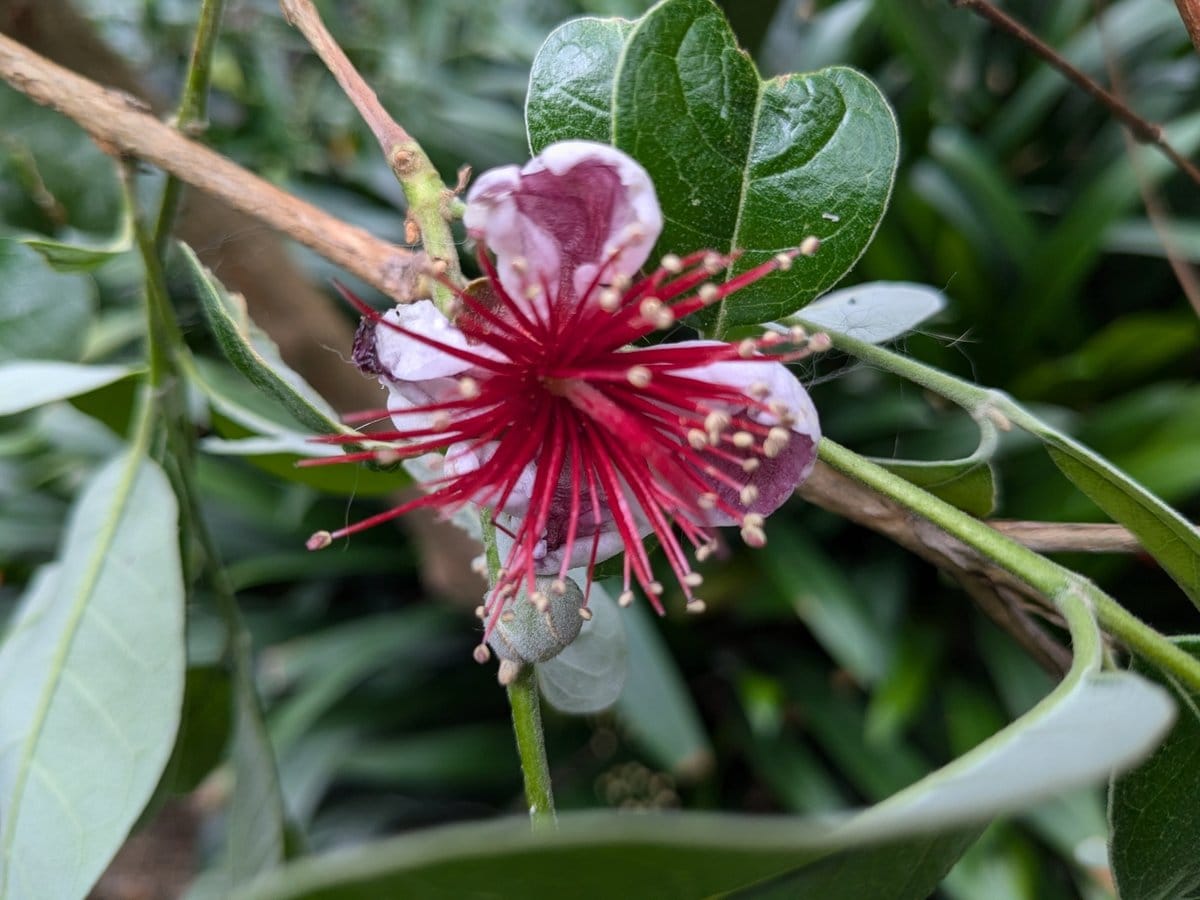
Beyond the fruit, the flowers are themselves a culinary delight. The four fleshy petals are white on the outside and crimson-purple on the inside, with a sweet, spicy flavor reminiscent of cinnamon and marshmallow. They can be eaten fresh as garnishes, added to salads, or used to decorate desserts. Birds that visit the flowers eat the petals, pollinating the flower in the process — one of the few examples of petal-eating pollination (technically called petalopetalophagy) in the plant kingdom.
The Guayaba Chilena is also an attractive ornamental, with its silvery-green foliage, showy red-and-white flowers, and compact growth habit making it suitable for hedges, container gardening, and small garden spaces in the Costa Rican highlands.
📸 Photo Gallery
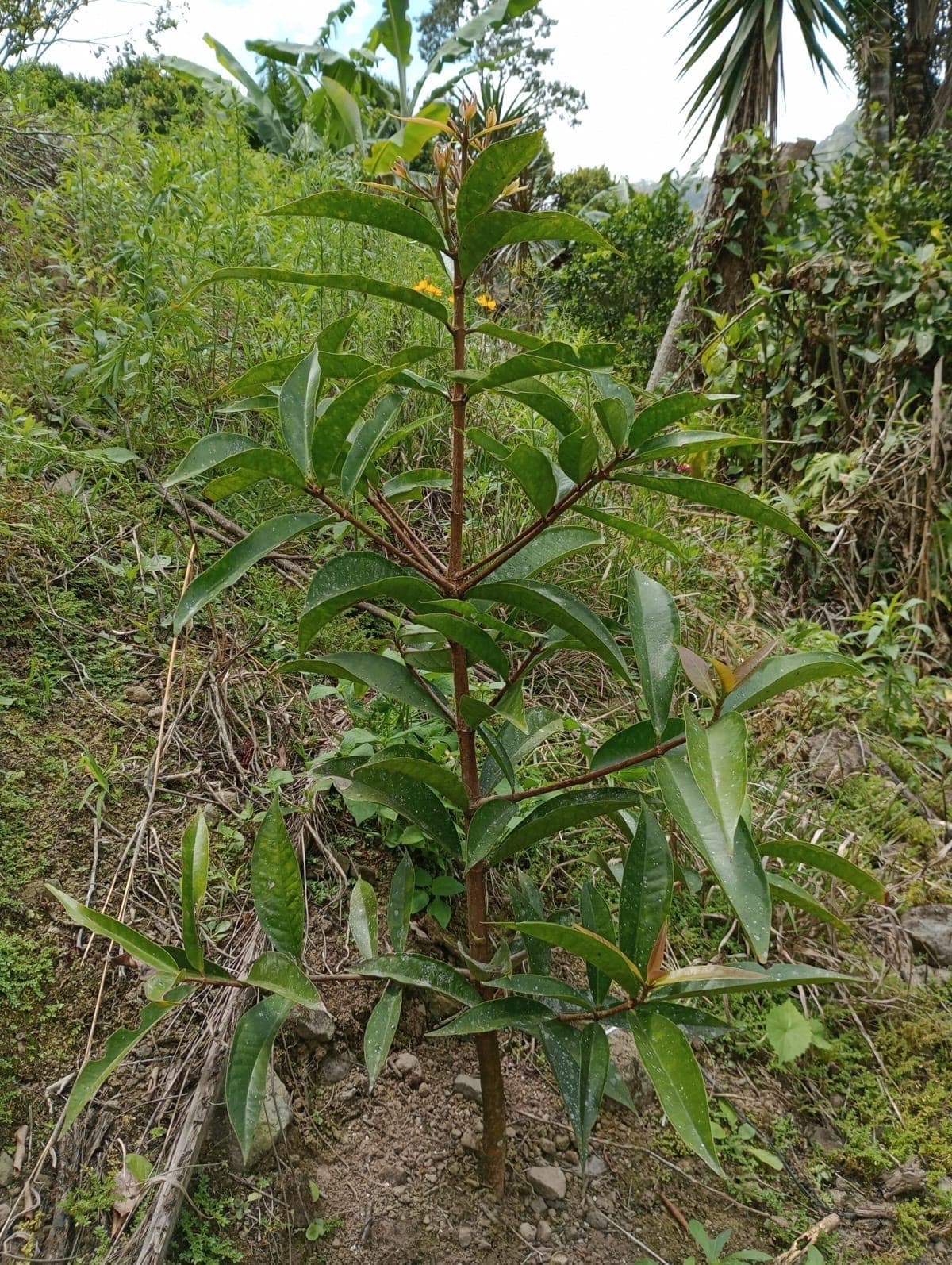
Whole tree
📷 (c) Denis Zabin, some rights reserved (CC BY)(CC BY)
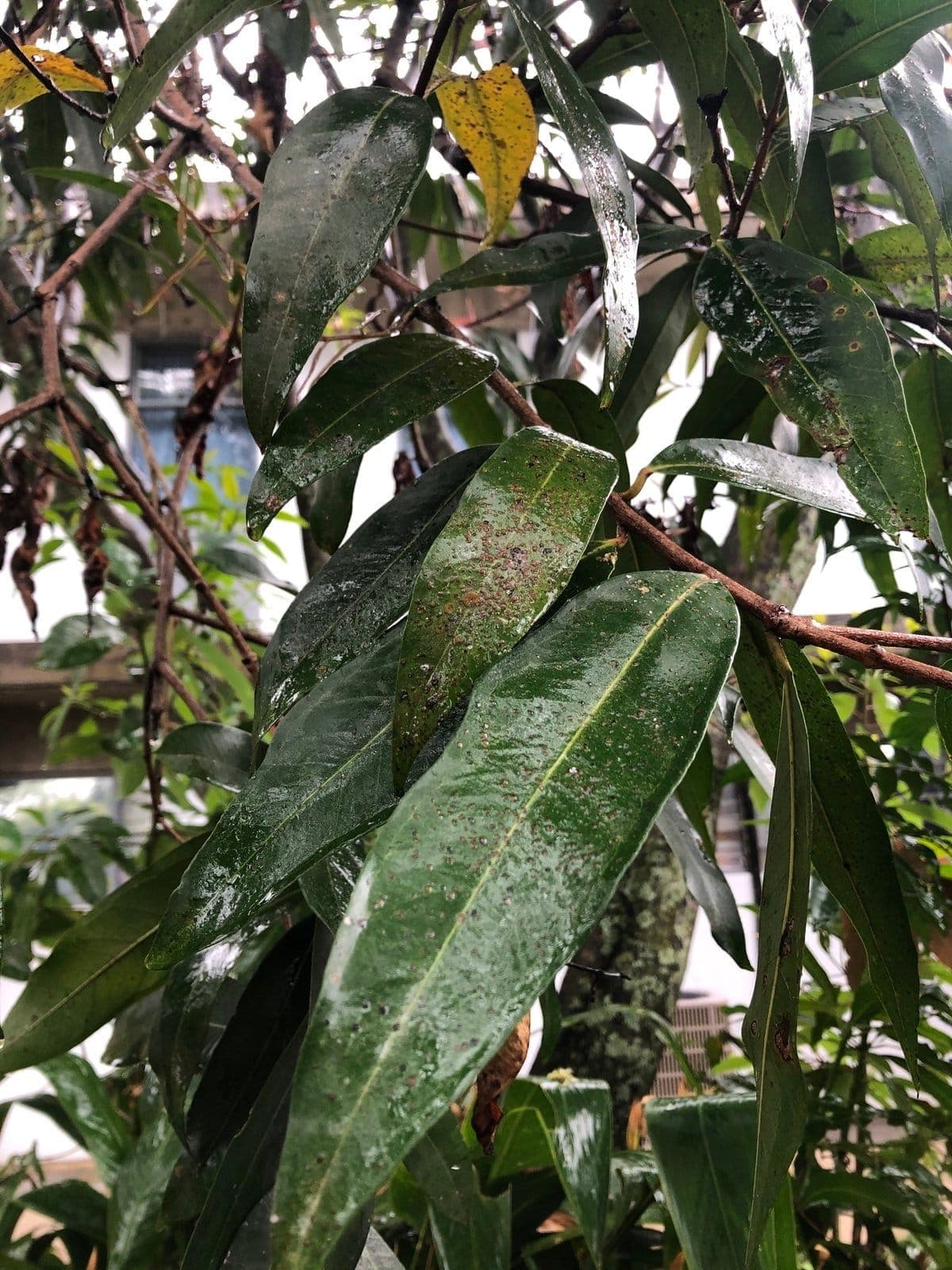
View source ↗Leaves
📷 (c) Denis Zabin, some rights reserved (CC BY)(CC BY)
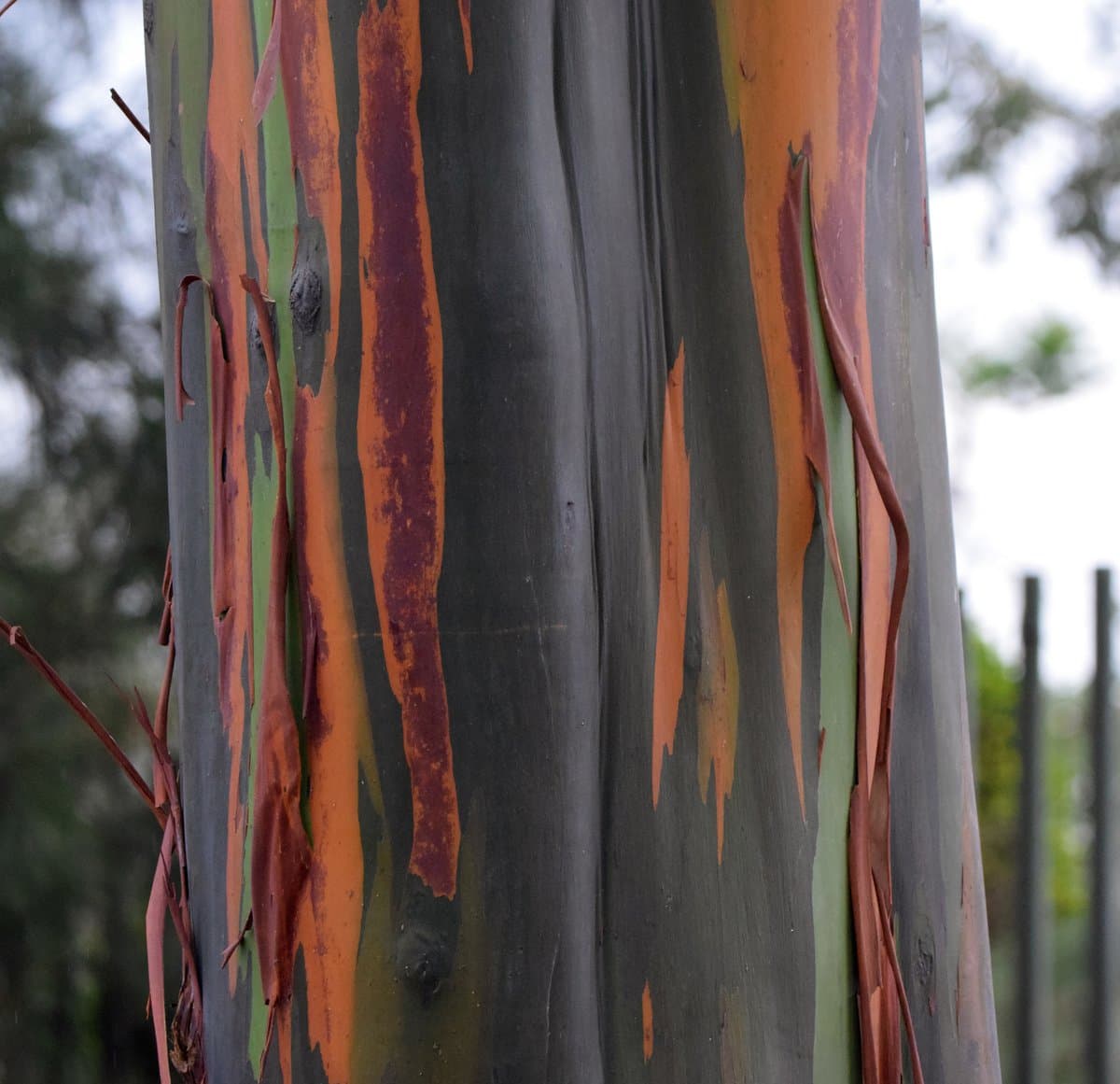
View source ↗Whole tree
📷 (c) biggsy, some rights reserved (CC BY-NC)(CC BY-NC)
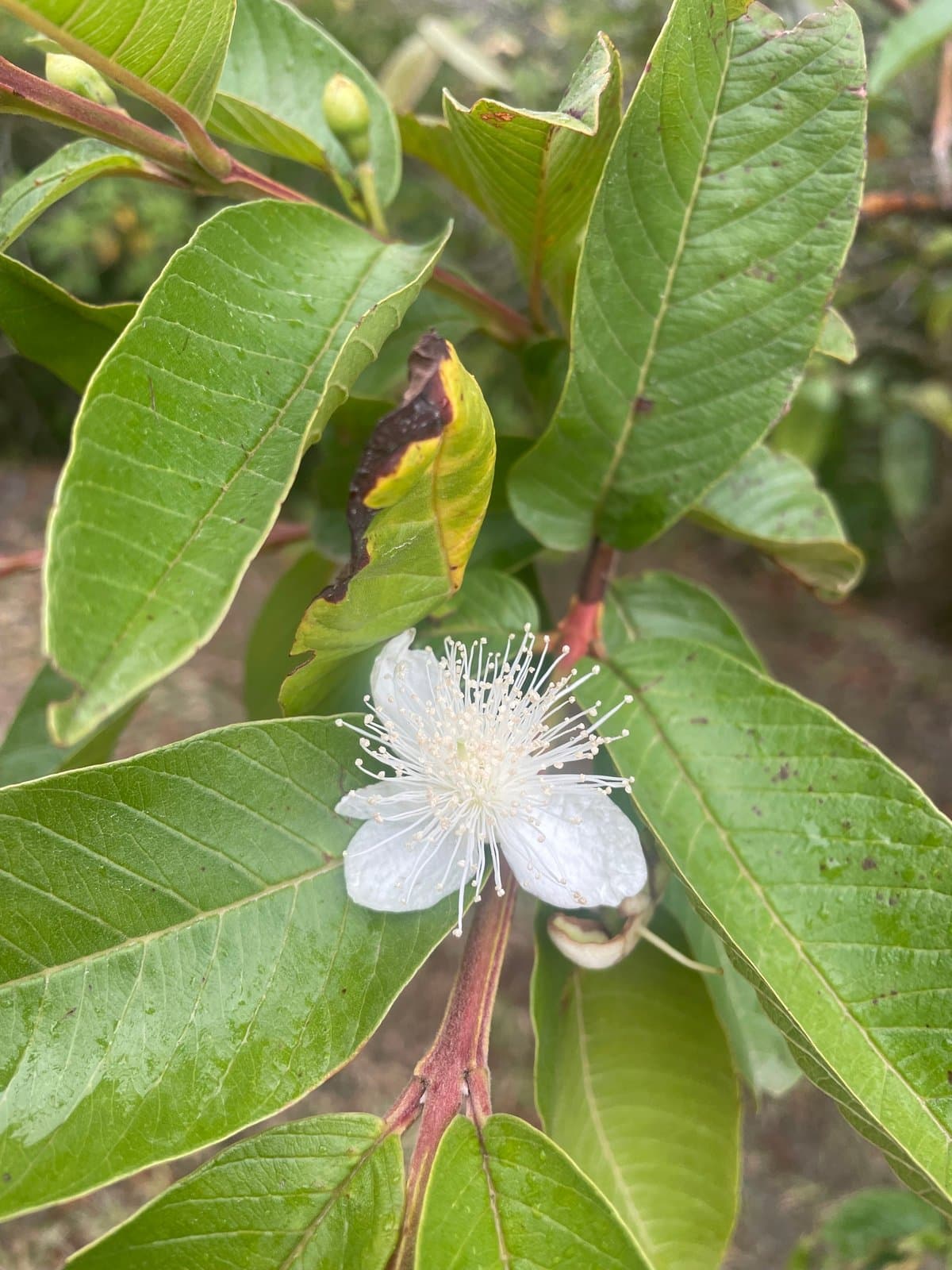
View source ↗Leaves
📷 (c) Denis Zabin, some rights reserved (CC BY)(CC BY)
View source ↗Whole tree
📷 (c) Christian Gilli, some rights reserved (CC BY-NC)(CC BY-NC)
View source ↗Photos sourced from iNaturalist's community science database. Browse all observations →↗
Taxonomy and Classification
Common Names by Region
Taxonomic Notes
Acca sellowiana was formerly classified as Feijoa sellowiana, and the genus name Feijoa persists as a common name worldwide. The species was named in honor of Friedrich Sellow (1789–1831), a German naturalist who collected extensively in southern Brazil. The genus Acca was separated from Feijoa based on morphological and molecular evidence, and is currently monotypic — A. sellowiana is its only species. The species belongs to the subtribe Myrtinae within the diverse Myrtaceae family, closely related to guava (Psidium), Eugenia, and other berry-producing myrtles.
Physical Description
Growth Form
The Guayaba Chilena grows as a dense, multi-stemmed evergreen shrub or small tree. In its natural state, it develops a rounded, bushy form that can reach 3–7 meters in height and 3–5 meters in spread. It can be trained as a single-trunk small tree for garden settings or maintained as a compact hedge with regular pruning. The dense branching and evergreen foliage make it an excellent screening plant.
Bark and Branches
The bark is smooth and pale gray on young branches, becoming slightly rough and flaky with age on the main stems. The branches are opposite, slightly pendulous on mature specimens, and covered with fine hairs when young. The wood is dense and hard but brittle — the small size of the tree makes it unsuitable for timber.
Leaves
The leaves are opposite, simple, oval to elliptic, 3–7 cm long and 2–4 cm wide. They are thick and leathery, with a distinctive coloration: dark green and slightly glossy above, silvery-white and densely felted (tomentose) below with fine hairs. This two-toned appearance gives the foliage an attractive silvery sheen when the wind turns the leaves, similar to olive trees. Leaves are aromatic when crushed, with a eucalyptus-like scent from essential oils.
Flowers
The flowers are spectacular and unique. They appear singly or in small clusters in the leaf axils, with 4 fleshy, waxy petals that are white or pale pink on the outside and vivid crimson-red on the inside. A prominent brush of 30-40 long, erect crimson stamens extends beyond the petals, giving the flower a striking firework-like appearance. Individual flowers are 2–3 cm across and last about a week. The fleshy petals are edible with a sweet, spicy flavor — birds eat them while visiting, incidentally pollinating the flowers.
Fruit and Seeds
The fruit is a berry, oval to egg-shaped, 3–8 cm long and 3–5 cm in diameter, with a waxy, dark green skin that remains green even when ripe. The skin may develop a slight blush or roughening when mature. The interior consists of a clear, jelly-like, translucent pulp surrounding the seeds in the center, surrounded by a firmer, granular, white to cream-colored flesh near the skin. The flavor is complex and aromatic — combining elements of pineapple, guava, strawberry, and mint with floral undertones. Seeds are tiny, numerous, and edible. Ripe fruit detaches from the tree and falls — fruit is best picked up from the ground or caught just as it falls.
Geographic Distribution
Range in Costa Rica
The Guayaba Chilena is not native to Costa Rica but has been cultivated in the cooler highlands since the mid-20th century. It is most commonly found in:
- Cartago highlands: The cool valley around Cartago, Paraíso, and Tierra Blanca provides ideal conditions. Some of the most productive trees in the country grow here.
- San José upper elevations: Escazú hills, Santa Ana highlands, and Desamparados upper reaches.
- Heredia: San Rafael, San Isidro, and Barva at elevations above 1,400 m.
- Alajuela: Upper Central Valley around Grecia and Sarchí at elevations above 1,300 m.
- Chirripó foothills: Scattered plantings in the San Isidro de El General area at appropriate elevations.
The tree is not found in the Caribbean or Pacific lowlands — it cannot tolerate the year-round heat and humidity below about 1,000 meters elevation.
Broader Distribution
Acca sellowiana is native to southern Brazil (Paraná, Santa Catarina, Rio Grande do Sul), Uruguay, Paraguay, and northeastern Argentina (Misiones, Corrientes). It was introduced to southern France in 1890, and subsequently spread to California, Florida (limited success), New Zealand (now a major commercial crop), Australia, and throughout South America's highland regions. New Zealand and Colombia are the world's leading commercial producers.
Habitat and Ecology
Ecological Role in Costa Rica
As an introduced species in Costa Rica, the Guayaba Chilena's ecological interactions are limited compared to native species, but it provides several ecosystem services in highland gardens:
- Pollinator support: Flowers attract hummingbirds, especially the Volcano Hummingbird (Selasphorus flammula) and the Scintillant Hummingbird (Selasphorus scintilla), which visit for nectar and consume petals
- Bird food: Ripe fruit is consumed by tanagers, thrushes (yigüirros), and other highland birds
- Bee forage: Flowers provide nectar and pollen for honeybees and native stingless bees (Meliponini)
- Windbreak: Dense foliage and compact form provide wind shelter in exposed highland gardens
Pollination Biology
The Feijoa employs a fascinating and unusual pollination strategy. The fleshy petals serve as a reward for pollinating birds — primarily hummingbirds in the Americas while consuming the petals, birds brush against the long, erect stamens, picking up and depositing pollen. This "petal reward" system is relatively rare in the plant kingdom. In addition to bird pollination, bees also visit the flowers for nectar and pollen, contributing to pollination.
Most Feijoa cultivars are self-incompatible — they require cross-pollination from a genetically different variety to set fruit. This is an important consideration for growers in Costa Rica: planting at least two different varieties (or seedling trees with genetic variation) is essential for reliable fruit production.
Uses and Applications
Fresh Fruit
The Feijoa fruit is eaten fresh by cutting it in half and scooping out the flesh with a spoon — the skin is generally too tannic and gritty to eat comfortably, though some varieties have thinner, more palatable skin. The best fruit has a strong, perfume-like aroma, a translucent jelly center, and a balanced sweet-tart flavor.
Culinary Uses
Ornamental Value
The Guayaba Chilena is an attractive ornamental plant for highland gardens:
- Evergreen foliage: Silvery-green leaves provide year-round interest
- Showy flowers: Crimson-and-white flowers are highly decorative
- Hedging: Dense growth makes excellent formal or informal hedges
- Container growing: Adapts well to large pots for terraces and patios
- Topiary: Responds well to shaping and training
Traditional Medicine
In its native range, the leaves and fruit of Acca sellowiana are used in traditional medicine:
- Leaves: Infused as tea for digestive ailments, diarrhea, and inflammation
- Fruit: Consumed for vitamin C supplementation and general health
- Essential oils: Leaf extracts contain antimicrobial compounds (flavonoids, terpenes)
- Modern research: Studies have demonstrated antioxidant, anti-inflammatory, and antimicrobial properties of Feijoa extracts
Cultural and Historical Significance
Sources: IUCN Red List — Acca sellowiana↗, Plants of the World Online (Kew) — Acca sellowiana↗, GBIF — Acca sellowiana↗
The Feijoa holds particular cultural importance in several countries. In New Zealand, where it was introduced in the early 20th century, it has become an iconic backyard fruit deeply embedded in the national food culture — "Feijoa season" is anticipated like apple or citrus season in other countries. New Zealand bakeries, cafés, and home kitchens produce feijoa muffins, chutneys, wines, and liqueurs during the autumn harvest.
In Colombia, the Feijoa is cultivated commercially in the highlands around Bogotá and Boyacá, and feijoa juice and yogurt are popular products. The fruit is associated with highland cuisine and cooler mountain climates.
In Costa Rica, the Guayaba Chilena is a relatively recent introduction but is gaining popularity among specialty fruit growers and home gardeners in the Central Valley highlands. Its association with European and New Zealand gardening traditions has made it a somewhat "gourmet" fruit, sometimes found at specialty farmers' markets (ferias) in Cartago and San José.
The species was first described scientifically from collections made by Friedrich Sellow during his extensive botanical explorations of southern Brazil in the 1820s. Sellow was one of the most prolific plant collectors in South American history, having documented thousands of species before his untimely death by drowning in 1831. The genus Feijoa (now a synonym) was named in honor of João da Silva Feijó (1760–1824), a Portuguese-Brazilian naturalist, by Otto Karl Berg in 1859.
Conservation Status
Acca sellowiana is classified as Least Concern (LC) by the IUCN. While wild populations in southern Brazil face habitat pressure from agricultural expansion and urbanization, the species is widely cultivated globally, ensuring its long-term survival. In Costa Rica, it has no conservation concerns as a cultivated species.
Threats to Wild Populations
In its native range in southern Brazil, the Feijoa faces habitat loss due to:
- Conversion of Atlantic Forest remnants to agriculture (especially soybeans and cattle)
- Urbanization around cities in Paraná, Santa Catarina, and Rio Grande do Sul
- Limited genetic diversity in some fragmented populations
- Climate change potentially disrupting the chilling requirements in warmer years
Conservation Actions
- In-situ: Wild populations are protected in several reserves in southern Brazil, including Aparados da Serra National Park
- Ex-situ: Extensive germplasm collections exist in New Zealand, Australia, Colombia, and Brazil
- Breeding programs: Active cultivar development programs in New Zealand and Colombia have captured significant genetic diversity
- Citizen conservation: Backyard cultivation worldwide serves as a distributed ex-situ conservation strategy
Growing the Guayaba Chilena in Costa Rica
Site Selection
Choose a location in the Costa Rican highlands above 1,200 meters elevation with:
- Full sun (6+ hours daily)
- Good air circulation (helps prevent fungal diseases)
- Well-drained soil (the species does not tolerate waterlogging)
- Protection from strong winds (though the dense foliage is fairly wind-resistant)
- Cool night temperatures (essential for fruit quality and chilling requirement)
The Central Valley around Cartago, Heredia's upper reaches, and the Chirripó foothills are ideal locations.
Propagation
From Seed: Seeds are extracted from ripe fruit and sown fresh in well-drained seedling mix. Germination takes 3-4 weeks. Seedlings are slow-growing and may take 3-5 years to fruit. Seedlings will not be true to the parent variety.
From Cuttings: Semi-hardwood cuttings taken in late summer root in 8-12 weeks with the application of rooting hormone. This method produces clones of the parent plant.
Grafting: The preferred method for named varieties. Whip-and-tongue or cleft grafts onto seedling rootstocks produce trees that fruit in 2-3 years with known fruit characteristics.
Air Layering: Effective on established branches; produces larger, faster-fruiting plants than cuttings.
Planting and Care
- Plant in a hole twice the root ball width, enriched with compost
- Water deeply twice weekly during establishment (first year)
- Mulch heavily to conserve moisture and suppress weeds
- Apply balanced fertilizer (10-10-10) in March and September
- Prune after harvest to maintain shape and encourage new fruiting wood
- Thin excess fruit clusters if heavy set occurs
- Protect young trees from frost in exposed highlands above 2,000 m
Cross-Pollination
Important: Plant at least 2 different seedling trees or named varieties for reliable fruit production. Most Feijoa cultivars are self-infertile and require cross-pollination. Space trees 3-5 meters apart for adequate cross-pollination while allowing room for growth.
Care Calendar
Companion Planting
The Guayaba Chilena pairs well with other highland plants:
- Beneficial companions: Lavender, rosemary, marigolds (pest deterrent); coffee (shade complement at lower elevations); blueberries (similar soil preferences)
- Compatible trees: Avocado (at overlapping elevations), citrus (lemon, mandarin), granadilla (passionfruit)
- Plants to avoid: Heavy feeders that compete for nutrients; tall trees that shade out the Feijoa
Orchard Monitoring and Productivity Tracking
Because Guayaba Chilena is often grown in small mixed orchards, standardized records help stabilize fruit quality across years.
Suggested annual indicators
- Flower-to-fruit set ratio by tree.
- Pollination success where two or more genotypes are present.
- Fruit size distribution and cracking incidence.
- Pest pressure trend (fruit fly, scale, fungal spots).
- Pruning response and next-season flowering intensity.
Monitoring rhythm
- Pre-flowering: assess canopy balance and nutrient readiness.
- Flowering window: monitor pollinators and weather effects.
- Fruit development: track irrigation and thinning outcomes.
- Post-harvest: evaluate pruning effects and renewal strategy.
Similar Species and Consumer Confusions
| Common confusion | Why it happens | Quick discriminator | | -------------------------------- | ---------------------------------------------------- | ------------------------------------------------------------------------------ | | Common guava (Psidium guajava) | Similar local common name and edible fruit context. | Feijoa has thick petals, distinctive aroma, and different fruit shape/texture. | | Mountain guava-like ornamentals | Overlap in highland gardens. | Leaf underside color and flower morphology are clearer in Feijoa. | | Immature citrus in mixed gardens | Small green fruits can appear superficially similar. | Feijoa fruit skin, scent, and calyx form differ strongly from citrus. |
Identification reminder
Confirm with flower and leaf traits whenever possible; fruit alone can mislead early in development.
Field and Orchard Identification Checklist
- Confirm opposite leaf arrangement and silvery underside.
- Note flower structure with edible fleshy petals.
- Record fruit shape and aroma at maturity.
- Photograph branch architecture and foliage color contrast.
- Verify nearby compatible pollination partners.
- Document elevation and nighttime temperature profile.
Minimum documentation set
- Whole tree profile.
- Flower close-up (if in season).
- Fruit at mature stage.
- Upper and lower leaf surface comparison.
Highland Resilience and Adaptation Strategy
In Costa Rica, Guayaba Chilena performs best with climate-aware orchard design.
Resilience actions
- Maintain mulch depth to buffer dry-season root stress.
- Use windbreak strips in exposed upper-valley sites.
- Diversify cultivars or seedling lines to spread climatic risk.
- Protect pollinator habitat to stabilize fruit set under weather variability.
Trigger-based adjustments
- Reduced flower set after warm nights: reduce nitrogen and improve canopy airflow.
- Persistent fruit cracking: rebalance irrigation frequency and calcium inputs.
- Rising pest pressure: strengthen sanitation and biological control timing.
Operational Risk Matrix
| Risk | Likelihood | Impact | Management response | | ----------------------------------------- | ---------- | ----------- | --------------------------------------------------------- | | Insufficient cross-pollination | Medium | High | Plant compatible partners and support pollinator habitat. | | Fruit fly pressure during peak ripening | Medium | Medium-High | Daily fruit sanitation and targeted trapping program. | | Over-shading in mixed gardens | Medium | Medium | Structural pruning and spacing correction. | | Drought stress in prolonged dry spells | Medium | High | Deep irrigation intervals and mulch reinforcement. | | Nutrient imbalance reducing fruit quality | Medium | Medium | Seasonal tissue/soil-informed fertilization adjustments. |
Rapid Assessment Template
Use this annual template to evaluate Guayaba Chilena orchard performance.
| Indicator | Field score (1-5) | Notes to record | | ------------------------------------ | ----------------- | ---------------------------------------------- | | Flowering intensity | | Record climatic conditions during bloom. | | Fruit set and retention | | Include pollinator activity observations. | | Fruit quality profile | | Capture size, aroma, cracking, and pest marks. | | Cross-pollination effectiveness | | Confirm compatible trees and spacing. | | Irrigation consistency in dry season | | Note intervals and soil moisture response. | | Pest and disease pressure | | Link to sanitation and canopy airflow. | | Canopy structure and light access | | Identify over-shading conflicts early. | | Record completeness | | Verify tree ID, date, and intervention log. |
Scoring interpretation
- 4-5: Performance is robust; continue refinement.
- 3: Stable but requires targeted management fixes.
- 1-2: High operational risk; apply immediate corrective measures.
Priority Actions for the Next 12 Months
- Improve pollination reliability through companion planning.
- Standardize fruit-quality sampling at harvest windows.
- Recalibrate dry-season irrigation by canopy and soil response.
- Reduce over-shading in mixed gardens with structural pruning.
- Consolidate annual orchard notes into one decision register.
Minimum Data Log Fields
For Guayaba Chilena orchards, include these fields in every annual record:
- Orchard block and tree ID.
- Elevation and microclimate note.
- Flowering intensity class.
- Fruit set and retained-fruit count.
- Pollinator activity observation.
- Irrigation interval and response.
- Pest/disease observation code.
- Linked photo and sampling reference.
Where to See the Guayaba Chilena
In Costa Rica
- Cartago highlands: Home gardens and small orchards around Tierra Blanca, Cot, and Pacayas
- Lankester Botanical Garden (Paraíso, Cartago): May have specimens in their tropical collection
- Specialty nurseries: Ask at nurseries in the Cartago and Heredia highlands
- Farmers' markets: During fruiting season (June-September), look for fruit at ferias in Cartago and San José
Best Viewing Season
Visit during March–May for the spectacular flowers (crimson-and-white blossoms), or June–September for the fruiting season. The tree is attractive year-round thanks to its evergreen silvery-green foliage.
External Resources
References
- Sharpe, R. H., Sherman, W. B., & Miller, E. P. (1993). Feijoa history and improvement. Proceedings of the Florida State Horticultural Society, 106, 134–139.
- Thorp, G., & Bieleski, R. (2002). Feijoas: Origins, Cultivation and Uses. David Bateman Ltd.
- Weston, R. J. (2010). Bioactive products from fruit of the feijoa (Feijoa sellowiana, Myrtaceae): A review. Food Chemistry, 121(4), 923–926.
- Romero-Rodriguez, M. A., et al. (1994). Physical and chemical characteristics of the feijoa (Feijoa sellowiana Berg.) fruit. Journal of Food Quality, 17, 467–475.
- Ducroquet, J. P. H. J., Hickel, E. R., & Nodari, R. O. (2000). Goiabeira-serrana (Feijoa sellowiana). EPAGRI/Embrapa. Series Frutas Nativas.
- Hardy, P., & Michael, P. (2015). Feijoa cultivation in New Zealand. New Zealand Tree Crops Association Journal, 44, 12–18.
Safety Information Disclaimer
Safety information is provided for educational purposes only. Individual reactions may vary significantly based on age, health status, amount of exposure, and individual sensitivity. Always supervise children around plants. Consult a medical professional or certified arborist for specific concerns. The Costa Rica Tree Atlas is not liable for injuries or damages resulting from interaction with trees described in this guide.
• Always supervise children around plants
• Consult medical professional if unsure
• Seek immediate medical attention if poisoning occurs
Information compiled from authoritative toxicology sources, scientific literature, and medical case reports.
Help improve this page
Know something about this tree? Share local knowledge, suggest a correction, or submit a photo to improve this guide for everyone.