Guarumbo Hembra
Cecropia peltata
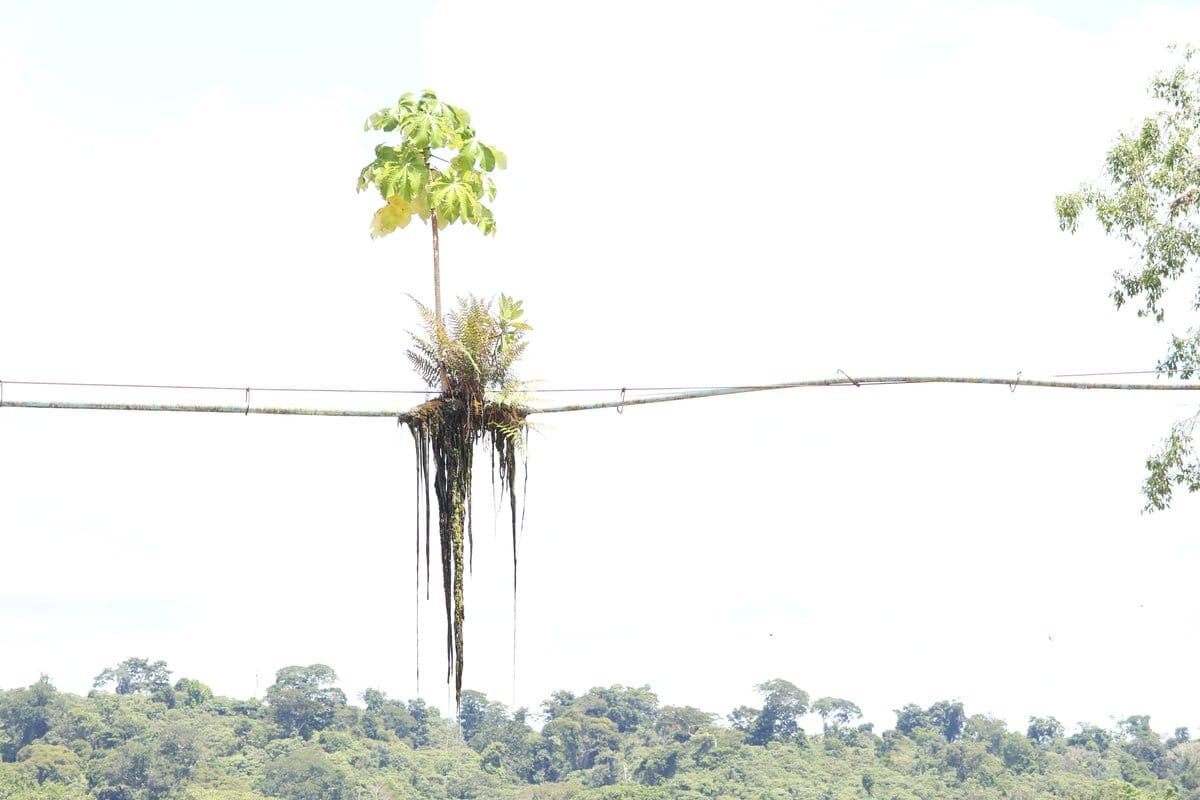
Quick facts
Native Region
Tropical America and the Caribbean
Max Height
20 m (66 ft)
Family
Urticaceae
Conservation
LC — Least Concern
Uses
Safety Information
Toxicity Details
No major toxicity is reported for incidental contact with leaves, bark, or fruits.
Skin Contact Risks
Leaf and bark handling is generally low risk; wash hands after heavy pruning due to sap and debris.
Allergenic Properties
Low allergen risk overall. Pollen may affect sensitive individuals during heavy flowering periods.
Structural Hazards
Cecropia wood is light and can be brittle. Older trees or storm-exposed branches may fail, especially in open windy areas.
Wildlife & Pet Risks
Fruits support birds and bats. No significant poisoning risk is commonly documented for wildlife.
Season
Flowering
Mar-Jun
Fruiting
Jun-Sep
How to identify
Guarumbo Hembra (Trumpet Tree)
Guarumbo Hembra (Cecropia peltata) is one of the most important natural pioneers in tropical succession. It rapidly shades disturbed soils, feeds wildlife, and prepares sites for slower long-lived canopy species.
Quick Reference
iNaturalist Observations
Community-powered species data
📸 Photo Gallery
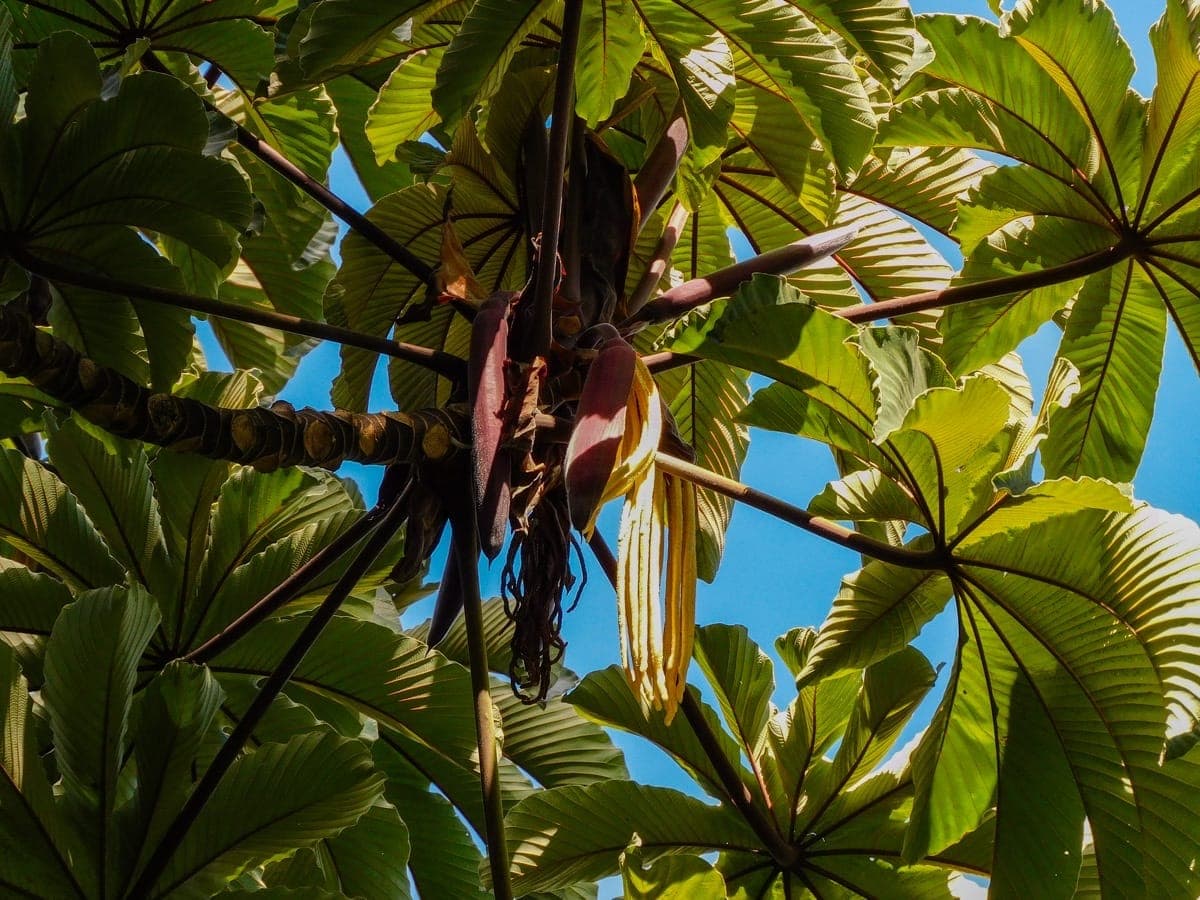
Whole tree
📷 (c) Millie Basden, some rights reserved (CC BY)(CC BY)
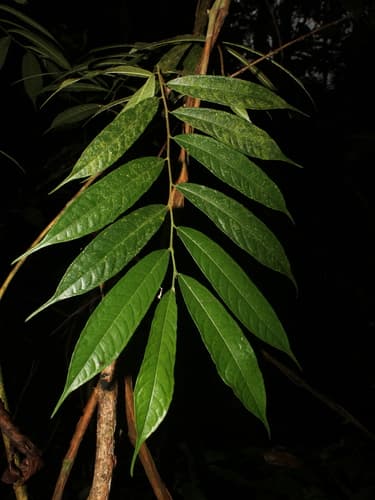
View source ↗Leaves
📷 (c) Millie Basden, some rights reserved (CC BY)(CC BY)
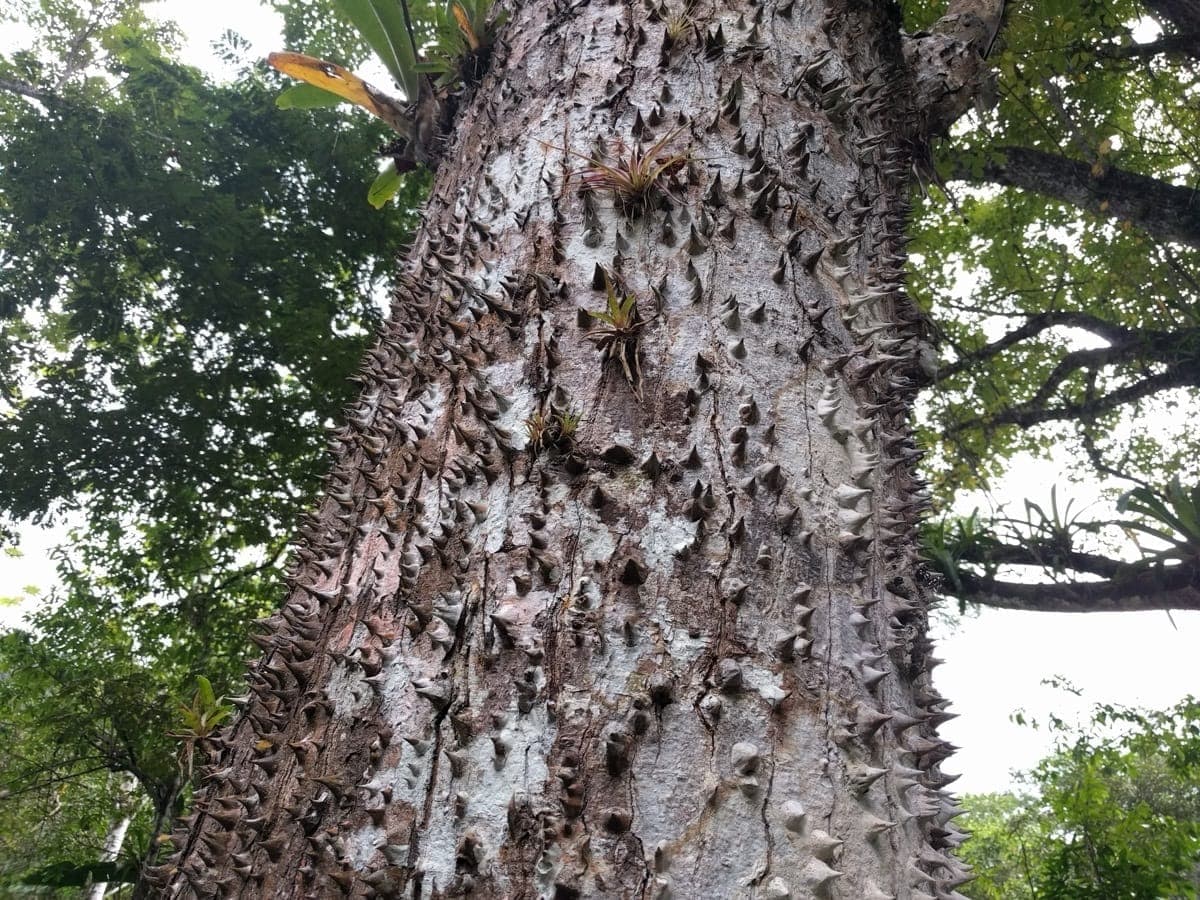
View source ↗Whole tree
📷 (c) Bernardo Boscoso, some rights reserved (CC BY-NC)(CC BY-NC)
View source ↗Leaves
📷 (c) Miguel A. Casado, some rights reserved (CC BY-NC)(CC BY-NC)
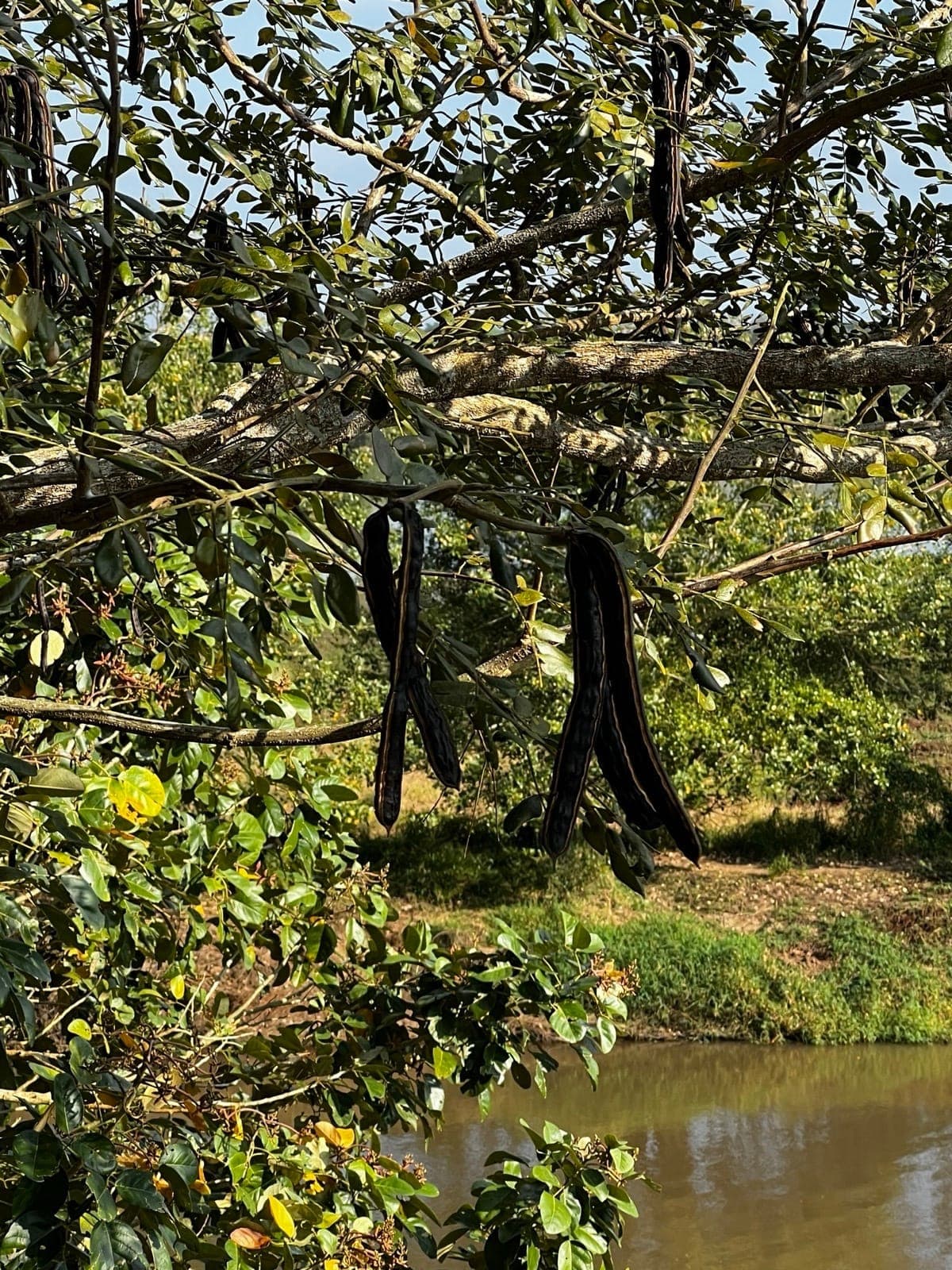
View source ↗Whole tree
📷 (c) jimmyandtony, some rights reserved (CC BY-NC)(CC BY-NC)
View source ↗Images are sourced via GBIF occurrence media and iNaturalist observation records under listed licenses.
Taxonomy & Classification
Physical & Botanical Description
- Fast-growing tree with hollow stems and candelabra branching pattern.
- Large palmate leaves with pale undersides, highly visible from distance.
- Inflorescences are spike-like and often associated with ant and insect interactions.
- Wood is lightweight and comparatively soft.
- Fruiting structures are important food resources for birds and bats.
Geographic Distribution
Geographic Distribution
Elevation: 0-1600 m
In Costa Rica it is common in disturbed lowland and premontane landscapes, including roadsides, abandoned fields, and secondary forest edges.
Habitat & Ecology
- Characteristic of early succession after clearing or storm disturbance.
- Rapid crown expansion helps reduce soil temperature and weed pressure.
- Provides fruit resources for birds and bats, supporting seed-dispersal webs.
- Often forms short-lived cohorts that facilitate recruitment of later species.
Uses & Applications
Sources: IUCN Red List — Cecropia peltata↗, GBIF — Cecropia peltata↗, Plants of the World Online (Kew) — Cecropia peltata↗
Ecological restoration
- Excellent nurse tree in reforestation and assisted natural regeneration.
- Useful for quickly creating shade over degraded soils.
- Supports biodiversity during early recovery phases.
Traditional and local uses
- Leaves and bark are referenced in local medicinal traditions.
- Sometimes used for lightweight rural wood applications.
Conservation Status
IUCN Red List: Least Concern (LC).
As a widespread pioneer, its main conservation relevance is maintaining natural successional processes and mixed native regeneration.
Growing Guarumbo Hembra
- Prioritize full-sun disturbed sites with moderate moisture.
- Encourage natural regeneration where seed rain is present.
- Thin dense cohorts if overtopping desired slower native hardwoods.
- Inspect branches periodically in public spaces for safety.
- Integrate with longer-lived species for stable canopy succession.
This species is highly effective in restoration but should be managed as a transitional, structurally lighter tree.
Advanced Care Guidance
Site Design and Planting
- Plant in full-sun disturbed soils where rapid cover is needed within restoration timelines.
- Use 4-6 m spacing when establishing pioneer corridors and nurse stands.
- Keep clear of narrow sidewalks and overhead utilities because crown expansion is rapid and wood is relatively light.
Watering Program
- Establishment (0-6 months): Water weekly in dry periods until roots anchor deeply.
- Juvenile phase (6-24 months): Irrigate every 10-14 days only during severe drought episodes.
- Established trees: Usually rainfed; irrigation is rarely needed outside extreme dry events.
Fertilization Schedule
- Apply compost at planting and maintain organic mulch to improve soil biology.
- Use low-to-moderate balanced fertilizer in year 1 if growth stalls in degraded soils.
- Avoid high nitrogen regimes that can produce overly soft, breakage-prone shoots.
Pruning and Structure
- Conduct formative pruning in years 1-2 to maintain clear trunk direction where public access exists.
- Remove hazardous deadwood and weak codominant branches before peak rainy storms.
- Gradually thin pioneer cohorts as longer-lived hardwoods gain canopy position.
Pest and Disease Management
- Monitor for opportunistic stem borers and fungal leaf spots in dense humid stands.
- Maintain airflow and avoid excessive shade crowding that weakens stems.
- Prioritize structural-risk pruning in public zones over purely cosmetic cuts.
Companion Planting
- Recommended companions: Laurel, Cedro Amargo, Cristobal, and Guaba species for staged canopy succession.
- Agroforestry role: Fast nurse tree that moderates heat and supports early wildlife return.
- Avoid nearby: Small ornamental patios, narrow powerline corridors, and unmanaged monoculture blocks.
Seasonal Care Calendar (Costa Rican Conditions)
- Dry season (Dec-Apr): Survival checks of recent plantings and targeted irrigation where mortality risk rises.
- Early rains (May-Jul): Main regeneration window, enrichment planting, and first structural pruning.
- Peak rains (Aug-Oct): Branch-risk inspection and selective thinning in crowded cohorts.
- Transition (Nov): Succession review and planning of hardwood release cuts.
Growth Timeline and Management Notes
- Very fast early growth with meaningful shade contribution often within 1-2 years.
- Peak pioneer function occurs in years 2-6 as wildlife and understory recovery increase.
- Treat as a transition species and replace canopy dominance progressively with longer-lived natives.
Field Identification and Similar Species
Quick recognition features
- Large palmate leaves with pale undersides are usually visible from long distance in open disturbed terrain.
- Branching architecture is candelabra-like, especially in fast-growing secondary stands.
- Hollow stems and lightweight wood are typical of this pioneer strategy.
- Fruiting spikes attract frugivorous birds and bats in active successional mosaics.
- Juveniles can appear similar to other Cecropia species; reproductive traits improve confidence.
Distinguishing from other guarumo/yarumo types
Identification workflow for restoration teams
- Record habitat stage (recent clearing, early secondary, mixed recovering corridor).
- Confirm leaf morphology from both canopy-facing and underside views.
- Capture reproductive structures whenever present before labeling inventory plots.
- Track common-name usage in local communities but archive scientific name for all formal records.
- Re-verify uncertain individuals during next phenology window.
Seasonal Phenology and Succession Windows
Guarumbo hembra is strongly tied to disturbance and moisture patterns. This calendar helps align restoration tasks with ecological timing.
Succession Management Playbook
Phase 1: Site capture (0-2 years)
- Encourage rapid canopy closure in highly degraded open sites.
- Protect naturally recruited seedlings where species ID is confirmed.
- Keep invasive grasses suppressed around establishing stems.
- Avoid over-thinning during this phase unless immediate safety hazards exist.
Phase 2: Ecological acceleration (2-6 years)
- Use guarumbo shade to create cooler microsites for late-successional planting.
- Introduce hardwood companions in staggered waves under partial canopy.
- Retain fruiting individuals that support fauna-mediated seed dispersal.
- Monitor crowding and remove structurally weak stems before storm seasons.
Phase 3: Transition to mixed canopy (6-12 years)
- Gradually reduce guarumbo dominance where long-lived natives are ready to rise.
- Convert monocohort patches into mixed-age, mixed-species structure.
- Prioritize selective removal near public paths and infrastructure.
- Preserve some mature guarumbo for ongoing wildlife function in corridor nodes.
Public-space risk protocol
- Inspect codominant unions before peak rains and after major storms.
- Remove hanging deadwood immediately in schools, parks, and roadside corridors.
- Document all structural interventions with date and location.
- Train field crews to distinguish ecological thinning from hazard pruning.
Monitoring Checklist (First Ten Years)
Common Mistakes and Corrective Actions
Where to See Guarumbo Hembra in Costa Rica
- Secondary forests in Sarapiqui and Caribbean foothills.
- Disturbed edges around Tortuguero lowlands.
- Early-successional areas in Osa Peninsula restoration mosaics.
- Roadside regeneration corridors in warm humid regions.
External Resources
Field Workbook Appendix
This appendix is a practical planning tool for teams managing this species in real field conditions. Use it as a repeatable operations reference for maintenance, reporting, and adaptive decisions.
Detailed Monthly Checklist
January
- Confirm dry-season access routes for maintenance and monitoring.
- Review irrigation backup plans for recently established individuals.
February
- Recheck mulch depth and root-zone moisture retention.
- Log any early stress indicators before peak dry pressure.
March
- Inspect structural form and remove urgent hazard defects only.
- Prepare materials and crew plans for rainy-season intervention.
April
- Finalize nursery or replacement stock lists for next planting pulse.
- Validate field labels, plot IDs, and baseline photo points.
May
- Execute primary planting and replacement operations.
- Record weather windows and establishment conditions by microzone.
June
- Perform first rainy-season survival audit.
- Apply targeted nutrition only where growth response is weak.
July
- Update canopy and competition notes for each management unit.
- Correct minor structural issues while tissue recovery is strong.
August
- Intensify disease scouting during high humidity periods.
- Prioritize drainage checks in compacted or flood-prone microsites.
September
- Reassess stand density and airflow in crowded sectors.
- Schedule selective thinning where suppression risk is increasing.
October
- Evaluate reproductive output and wildlife interaction indicators.
- Flag priority plots for late-season corrective actions.
November
- Conduct pre-dry-season infrastructure and safety checks.
- Update next-year workplan based on observed bottlenecks.
December
- Complete end-of-year data consolidation and photo comparison sets.
- Confirm staffing, tools, and resource readiness for dry-season operations.
Site Decision Matrix
Annual Technical Audit Template
- Verify survival percentage by plot, zone, and planting cohort.
- Compare annual growth indicators against prior-year baseline.
- Review branch architecture and structural safety trends.
- Confirm canopy competition status relative to target companion species.
- Check root-zone condition and drainage functionality.
- Audit irrigation consistency during critical dry windows.
- Evaluate mulch quality and decomposition cycles.
- Verify nutrient applications and response outcomes.
- Review pest and disease records for trend acceleration.
- Confirm sanitation protocol compliance in all teams.
- Reassess access routes and emergency movement pathways.
- Validate all signage, species IDs, and plot coding systems.
- Confirm photo-monitoring points and archive completeness.
- Review phenology records for flowering and fruiting reliability.
- Check wildlife interaction notes where relevant.
- Evaluate erosion control performance in sensitive microsites.
- Reconcile field logs with digital records for data integrity.
- Identify repeated failure points and unresolved action items.
- Document successful interventions worth standardizing.
- Prioritize next-year investment areas by risk and impact.
- Update crew assignments for skill-critical operations.
- Confirm tool maintenance and replacement needs.
- Publish a short annual summary for project stakeholders.
- Carry unresolved high-risk items into the first quarter action plan.
Training Priorities for New Crew Members
- Species-safe handling protocols and PPE use expectations.
- Accurate field identification and uncertainty escalation steps.
- Proper planting depth and root preparation techniques.
- Early-stage pruning limits and timing windows.
- Weed-release standards for juvenile establishment.
- Mulch placement rules to prevent collar rot.
- Moisture-monitoring methods and irrigation documentation.
- Drainage troubleshooting in difficult microsites.
- Disease scouting basics and sanitation sequence.
- Pest threshold recognition for targeted response.
- Correct use of plot tags and label replacement workflow.
- Photo documentation standards for before/after comparison.
- Safe movement in muddy or unstable terrain.
- Storm response checklists and post-event hazard scans.
- Criteria for selective thinning versus no intervention.
- Data logging discipline and same-day record closure.
- Communication protocol for urgent field findings.
- Respectful coordination with local communities and landowners.
- Waste handling and residue management procedures.
- End-of-day quality review before leaving the site.
References
- GBIF Backbone Taxonomy: Cecropia peltata.
- IUCN Red List species account for Cecropia peltata.
- iNaturalist and GBIF observation media datasets.
- Plants of the World Online, Royal Botanic Gardens, Kew.
Safety Information Disclaimer
Safety information is provided for educational purposes only. Individual reactions may vary significantly based on age, health status, amount of exposure, and individual sensitivity. Always supervise children around plants. Consult a medical professional or certified arborist for specific concerns. The Costa Rica Tree Atlas is not liable for injuries or damages resulting from interaction with trees described in this guide.
• Always supervise children around plants
• Consult medical professional if unsure
• Seek immediate medical attention if poisoning occurs
Information compiled from authoritative toxicology sources, scientific literature, and medical case reports.
Help improve this page
Know something about this tree? Share local knowledge, suggest a correction, or submit a photo to improve this guide for everyone.