White Linden
Luehea candida
Quick facts
Native Region
Mexico to Panama; native to Costa Rica
Max Height
15-25 meters
Family
Malvaceae
Conservation
LC — Least Concern
Uses
Safety Information
Toxicity Details
Luehea candida is not considered toxic. The bark and leaves have been used in traditional medicine without adverse effects. The inner bark is handled extensively for fiber extraction without toxicity concerns. No poisoning cases reported.
Skin Contact Risks
No skin irritation from contact with any part of the tree. The fibrous inner bark is handled bare-handed in traditional cordage making. The sap is non-irritating.
Allergenic Properties
Low allergen risk. The large showy flowers produce moderate pollen quantities. Pollen is primarily insect-dispersed. Some individuals may experience mild seasonal allergies during flowering. Wood dust is non-irritating.
Structural Hazards
The wood is moderately soft and can be somewhat brittle. Branch breakage is possible during strong winds, especially in older specimens. Not recommended as a primary shade tree near structures without maintenance pruning.
Wildlife & Pet Risks
Non-toxic to wildlife. Flowers are an important nectar source for bees, butterflies, and hummingbirds. The wind-dispersed winged seeds are consumed by small birds. The foliage is browsed by deer and cattle.
Season
Flowering
Aug-Nov
Fruiting
Jan-Mar, Dec
How to identify
White Linden (Guácimo Molenillo)
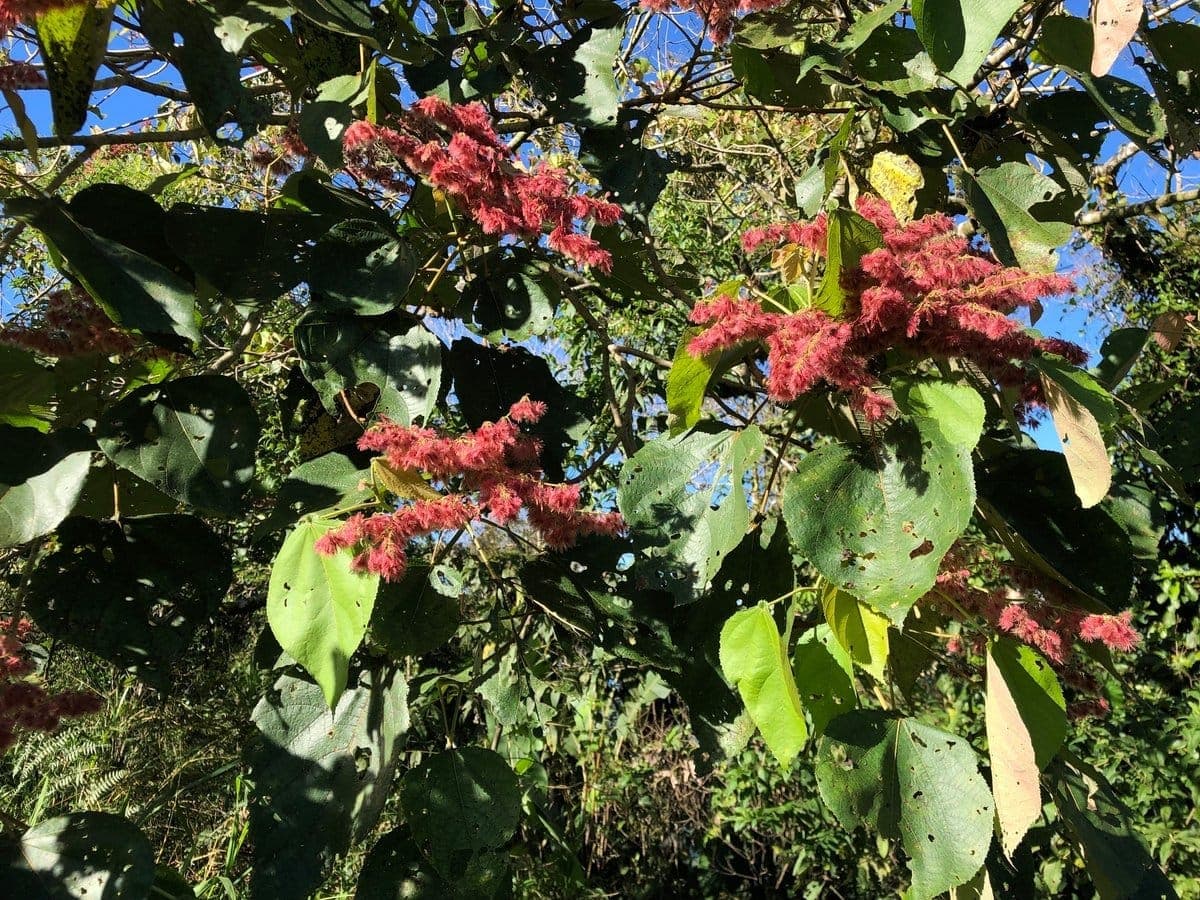
Guácimo Molenillo (Luehea candida), known as White Linden or Molenillo, is a fast-growing pioneer tree that lights up Costa Rica's dry forests with its pale, whitish trunk and burst of large white flowers during the rainy season. Distinguished from its relatives Guácimo (Guazuma ulmifolia) and Guácimo Colorado (Luehea seemannii), this tree is renowned for its incredibly tough, fibrous inner bark — traditionally stripped and twisted into rope, cordage, and sacks by rural communities. A champion colonizer of disturbed sites, Guácimo Molenillo plays a vital role in forest succession and dry forest restoration.
Quick Reference
iNaturalist Observations
Community-powered species data
📸 Photo Gallery
Whole tree
📷 (c) lautica, some rights reserved (CC BY-NC)(CC BY-NC)
View source ↗Leaves
📷 (c) Tanya Sulikowski, some rights reserved (CC BY-NC)(CC BY-NC)
View source ↗Whole tree
📷 (c) Hans Holbrook, some rights reserved (CC BY-NC)(CC BY-NC)
View source ↗Leaves
📷 (c) Tanya Sulikowski, some rights reserved (CC BY-NC)(CC BY-NC)
View source ↗Whole tree
📷 (c) Tanya Sulikowski, some rights reserved (CC BY-NC)(CC BY-NC)
View source ↗Taxonomy & Classification
Common Names by Region
Taxonomic Notes
Luehea candida belongs to the genus Luehea (about 25 species) in the subfamily Grewioideae of the Malvaceae. The genus was traditionally placed in the Tiliaceae (linden family), which is now merged into Malvaceae under modern APG classification. In Costa Rica, two Luehea species are commonly encountered: L. candida (Guácimo Molenillo) and L. seemannii (Guácimo Colorado). They are distinguished by:
- L. candida: Whitish bark, white flowers, drier habitat, smaller leaves with dense white tomentum beneath
- L. seemannii: Reddish bark, pinkish flowers, wetter habitat, larger leaves with rusty tomentum
Both are distinct from the true Guácimo (Guazuma ulmifolia), which belongs to a different genus. The specific epithet candida means "shining white" in Latin, referring to the pale bark and white floral display.
Physical Description
Tree Form
Guácimo Molenillo is a medium-sized deciduous tree reaching 15–25 m in height, with a trunk diameter of 30–60 cm. The trunk is straight to slightly crooked, branching freely to form a broad, spreading, somewhat irregular crown. The overall form is open and airy, especially during the dry season when the tree is leafless. In pastures and open areas, it develops a characteristically wide, low-branching crown that provides excellent shade.
Bark
The bark is highly distinctive — smooth to lightly furrowed, pale whitish-gray to silvery-white on younger trunks, becoming gray-brownish and flaky on older trees. The white bark color gives the tree its specific name and makes it easily identifiable in the forest. The inner bark is exceptionally fibrous, consisting of long, tough bast fibers that can be peeled off in strips up to several meters long. These fibers are the source of traditional cordage and are among the strongest natural fibers found in Costa Rican trees.
Leaves
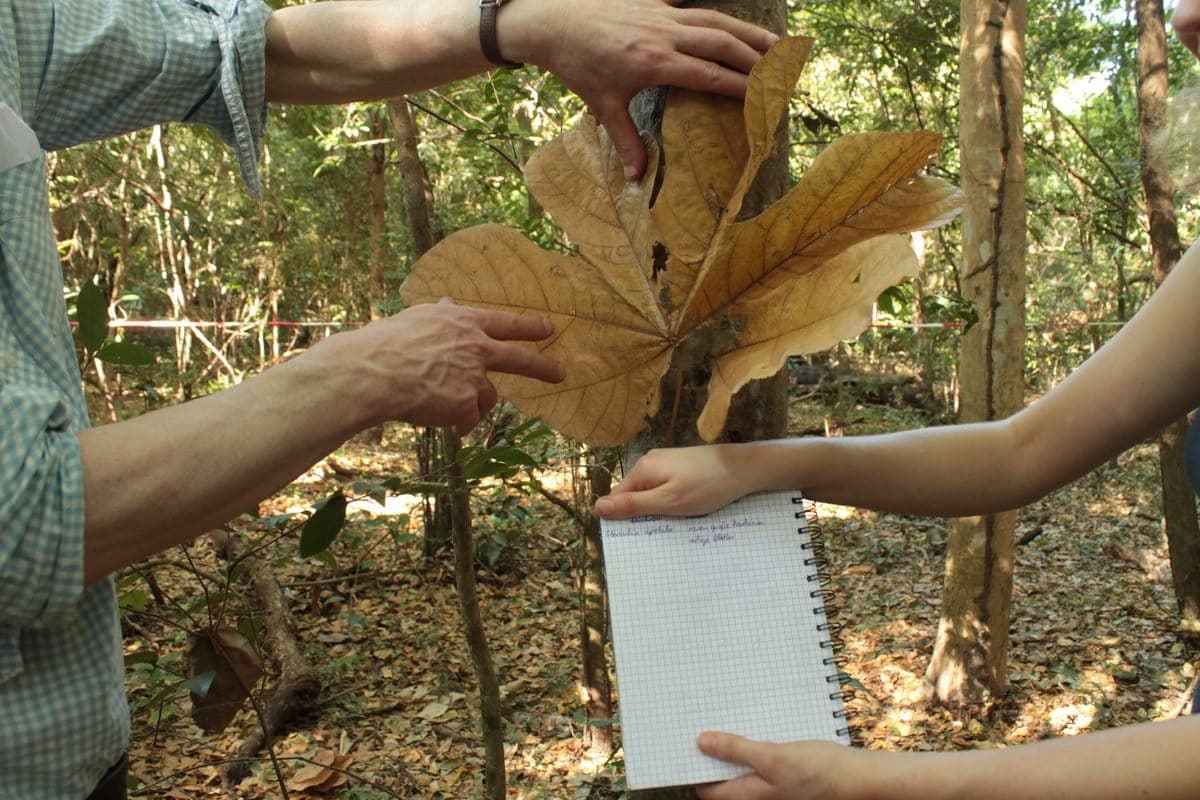
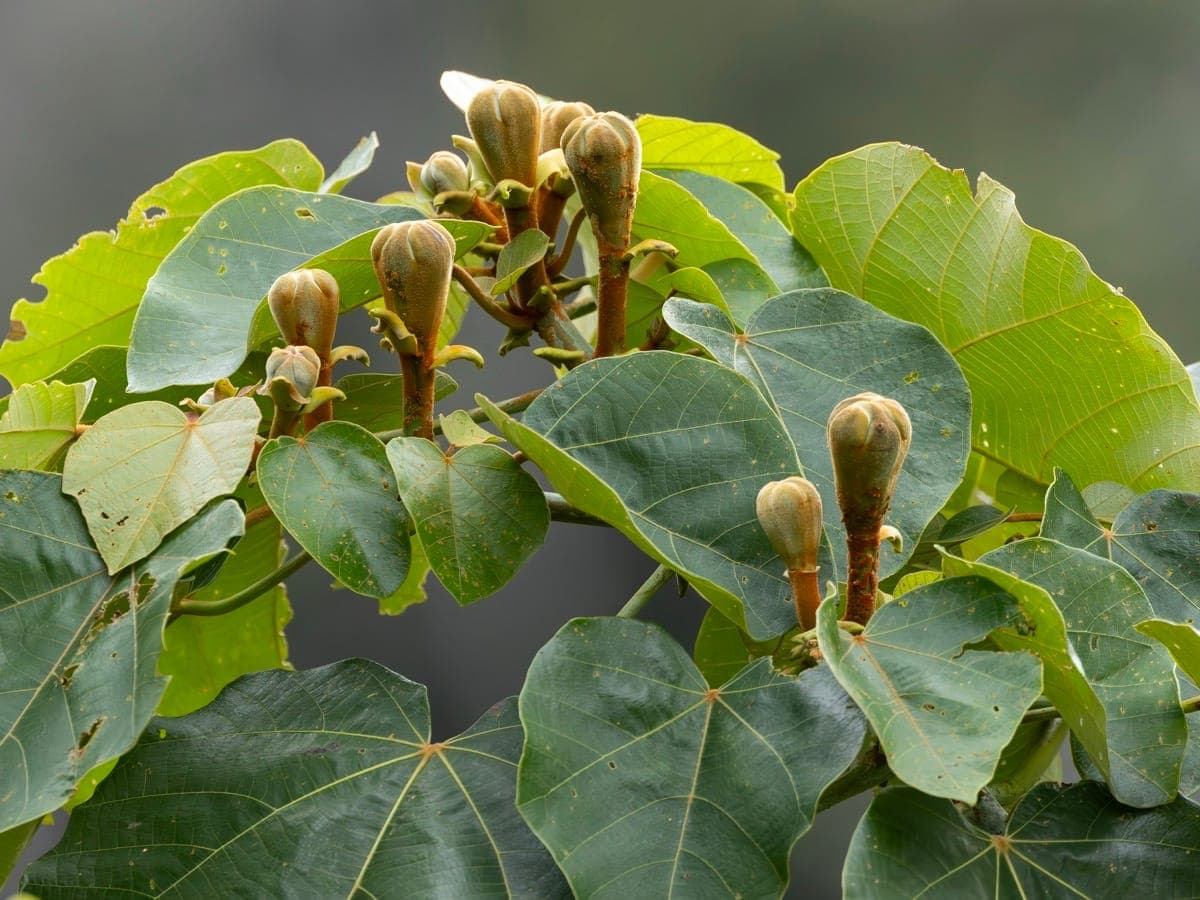
Leaves are alternate, simple, ovate to oblong, 8–18 cm long and 5–10 cm wide, with serrated (toothed) margins. The upper surface is dark green and slightly rough (due to short stellate hairs), while the lower surface is densely covered with white to silver stellate tomentum (felt-like hair), giving the underside a strikingly pale appearance. The leaves are deciduous, dropping during the dry season (December–April) and re-emerging with the rains. Stipules are small and caducous.
Flowers
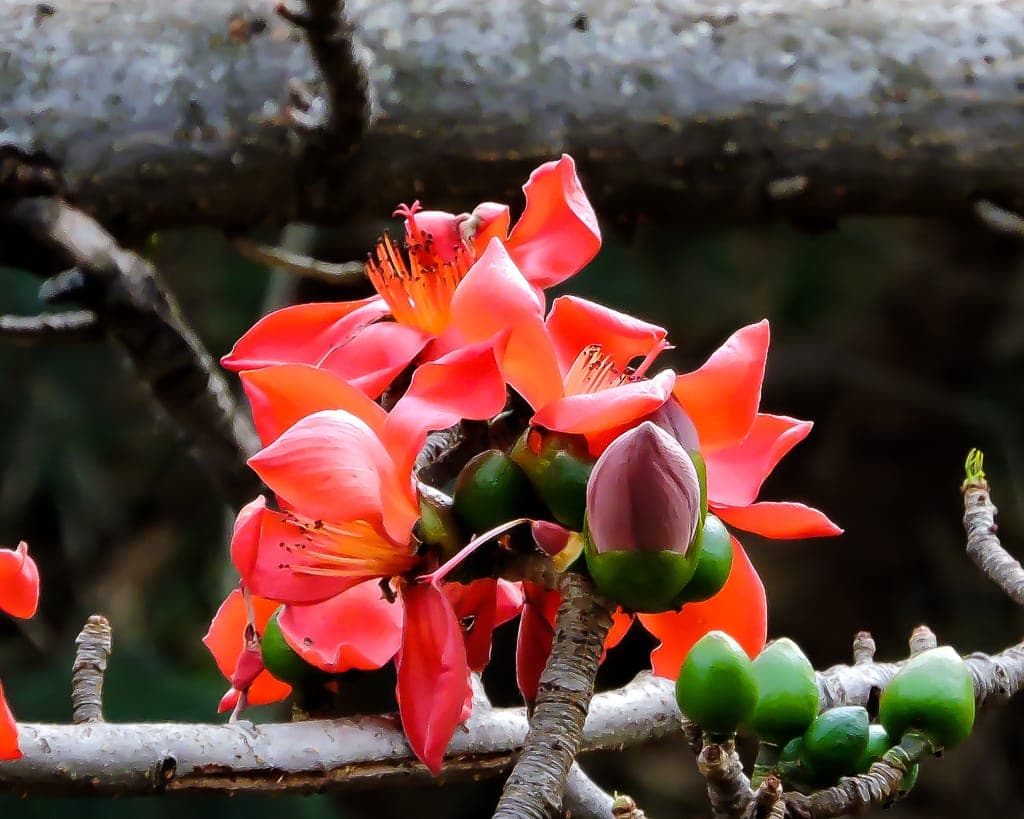
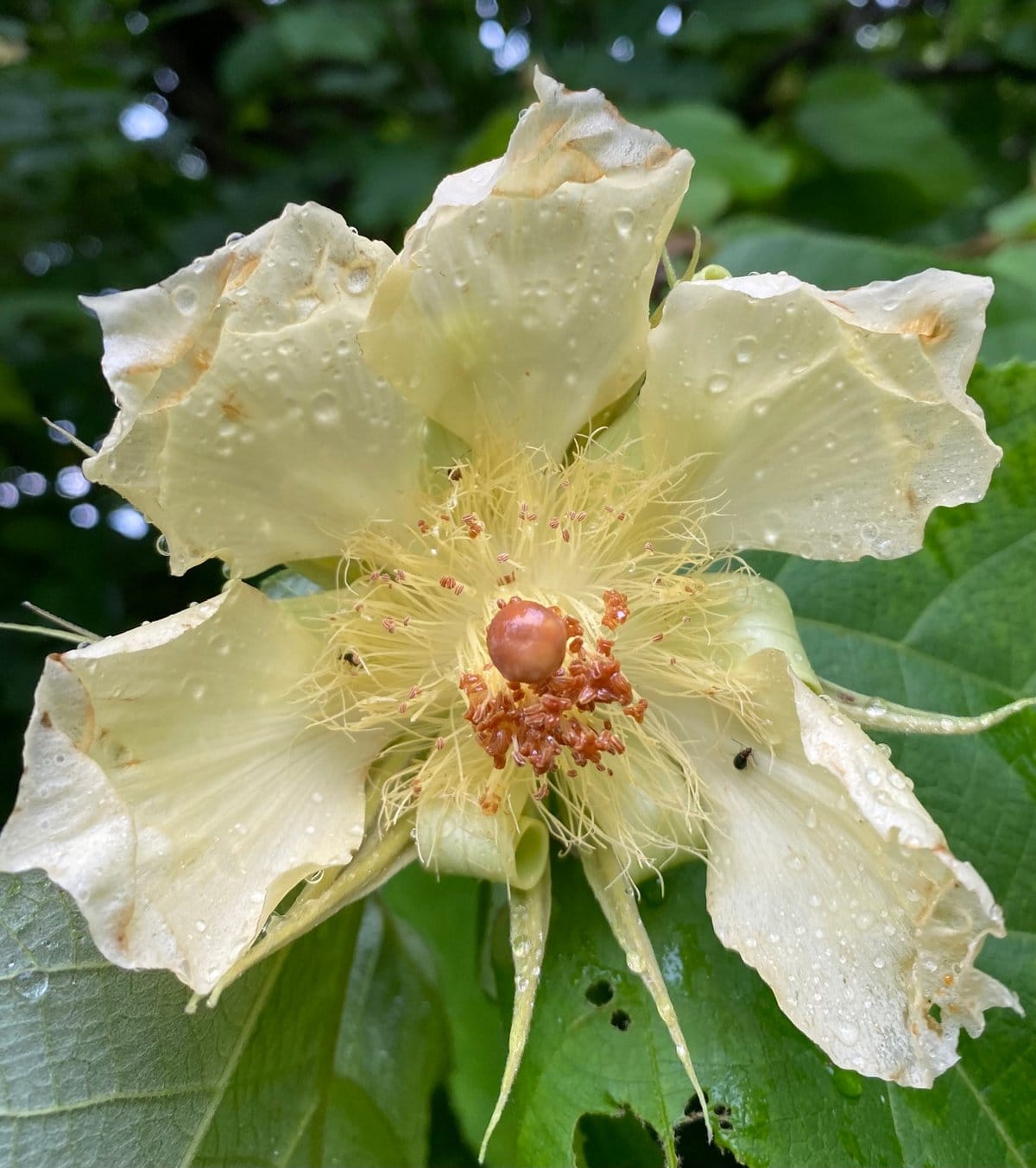
Flowers are large (5–8 cm across), showy, white to cream-white, with 5 broad petals and numerous stamens arranged in a brush-like mass. Flowers are borne in few-flowered axillary or terminal cymes. The flowering display occurs during the late rainy season (August–November), when the tree is fully leafed. Individual flowers are fragrant and last 1–3 days. Pollination is primarily by large bees (Xylocopa, Eulaema) and other Hymenoptera attracted to the copious pollen and nectar.
Fruit and Seeds
The fruit is a woody, oblong capsule, 2–4 cm long, with 5 valves. When ripe (December–March), the capsules split open to release numerous small, winged seeds that are dispersed by wind. The light, papery wings allow the seeds to travel considerable distances, enabling the species to colonize forest gaps and clearings rapidly. Each tree can produce thousands of seeds per season.
Root System
The root system is moderately deep with spreading lateral roots. No significant buttresses develop. The roots are non-aggressive and do not tend to disrupt pavement or foundations, making the tree suitable for urban and peri-urban planting.
Geographic Distribution
Luehea candida ranges from southern Mexico through Central America to Panama. In Costa Rica, it is most common in the dry and transitional forests of the Pacific slope, particularly in Guanacaste and the Central Valley, at elevations from sea level to approximately 1,200 m.
Costa Rican Distribution
Habitat & Ecology
Ecological Role
Guácimo Molenillo is an important pioneer and early-successional species in dry and transitional forest ecosystems. It rapidly colonizes canopy gaps, forest edges, abandoned pastures, and degraded lands, creating shade and initiating the process of forest recovery. Its fast growth and prolific wind-dispersed seeds make it one of the first native trees to establish after disturbance. The canopy provides shelter for shade-tolerant seedlings of later-successional species, facilitating forest succession.
The flowers are an important late-season nectar and pollen source for pollinators when many other trees have finished flowering. The deciduous habit contributes leaf litter to the soil during the dry season, enriching the nutrient cycle in seasonally dry forests.
Wildlife Interactions
The large white flowers attract a diversity of pollinators, especially carpenter bees (Xylocopa), orchid bees (Eulaema), honeybees, and various beetles. Hummingbirds occasionally visit the flowers. The wind-dispersed seeds are consumed by small finches and other seed-eating birds. The foliage is browsed by white-tailed deer, cattle, and goats. The tree provides nesting sites for small birds and perches for flycatchers and other insectivorous birds.
Uses & Applications
Fiber and Cordage
The fibrous inner bark is the tree's most celebrated product. Rural communities throughout Central America have stripped the bark to produce:
- Rope and cordage: The long bast fibers are twisted or braided into strong, flexible rope used for tying, hauling, and construction
- Sacks and bags: Woven from the fiber for carrying agricultural products
- Saddle pads: Traditional equestrian padding material
- Hammocks: In some regions, the fiber is woven into hammocks
The common name "Molenillo" derives from the traditional use of the bark fiber to make the spinning tool (molinillo) used to froth chocolate — a cultural artifact connecting the tree to Mesoamerican culinary heritage.
Timber
The wood is moderately soft, light (specific gravity 0.35–0.50), pale brown, and easy to work. It is used for:
- Interior construction and light carpentry
- Boxes, crates, and packaging
- Carved utilitarian objects (bowls, utensils)
- Firewood (burns well and is readily available from pruning)
Medicinal
In traditional Costa Rican medicine, the inner bark and leaves are used as an anti-inflammatory, for treating respiratory ailments (tea from bark decoction), and as a wound wash. The mucilaginous bark extract has emollient properties used for skin conditions.
Reforestation
Guácimo Molenillo is a priority species for dry forest restoration in Costa Rica due to its:
- Fast growth and rapid site coverage
- Tolerance of degraded soils and drought
- Easy propagation from seeds and cuttings
- Native status in dry forest ecosystems
- Nurse tree function for later-successional species
Sources: CATIE↗, GBIF species profile↗, Useful Tropical Plants - Luehea candida↗
Cultural Significance
Rural Heritage
In Guanacaste and the Central Valley, the Molenillo has deep roots in rural culture. Older generations remember using the bark fiber for everyday tasks — tying bundles of firewood, securing fences, making impromptu repairs. The art of molenillo-making (the chocolate whisk) connects the tree to the tradition of drinking pinolillo and hot chocolate. The tree often grows in and around farmyards and along fence lines, serving as both a shade tree and a ready source of fiber.
Craft Revival
Artisans in Guanacaste have revived interest in Molenillo bark fiber as a natural craft material. Workshops teaching traditional fiber extraction and weaving techniques help preserve both the cultural knowledge and the ecological awareness associated with this tree.
Conservation Status
Luehea candida is assessed as Least Concern (LC) due to its wide distribution, common occurrence, and tolerance of disturbance. It is not considered threatened. However, mature dry forest ecosystems where it is a natural component continue to decline through conversion to agriculture and urban development. The species persists readily in secondary habitats, pastures, and along roadsides.
Cultivation & Care
Planting
Plant at the onset of the wet season (May–June) in full sun. Seeds germinate readily without pretreatment. Live stakes (large cuttings 1–2 m long, 5–8 cm diameter) can be planted directly into the ground and root quickly. Space 8–12 m apart for shade; 3–5 m for windbreaks and live fences.
Watering
Minimal watering needed once established. During the first dry season after planting, water weekly. The tree is naturally drought-deciduous and enters dormancy during dry months.
Fertilization
Generally not needed. The tree thrives in poor soils. On extremely degraded sites, a light application of organic fertilizer at planting can help initial establishment.
Pruning
Responds well to pruning. Can be pollarded or coppiced for fiber and firewood production. Shape young trees by removing competing leaders. Remove dead branches accumulated during the dry season.
Companion Planting
- Beneficial companions: Guazuma ulmifolia (Guácimo), Enterolobium cyclocarpum (Guanacaste), Gliricidia sepium (Madero Negro), Bursera simaruba (Indio Desnudo)
- Use in agroforestry: Excellent shade tree for pastures and silvopastoral systems
- Avoid: Dense tropical wet forest settings where it cannot compete for light
Year-Round Care Calendar
Propagation
Seeds: Collect mature capsules from December to March. Extract winged seeds and sow on the surface of moist nursery mix, pressing lightly (seeds need light to germinate). Cover thinly with fine sand. Germination in 10–20 days at 25–30°C. Transplant seedlings at 20–30 cm height.
Cuttings/Live Stakes: Cut branches 1–2 m long and 5–8 cm diameter from healthy mature trees. Plant directly into moist soil to 30 cm depth. Roots develop within 4–6 weeks during the wet season. This method is preferred for live fences and rapid establishment.
Where to See This Tree
External Resources
References
- Zamora, N. et al. (2004). Árboles de Costa Rica, Vol. II. INBio/OET.
- Janzen, D. H. & Liesner, R. (1980). "Annotated check-list of plants of lowland Guanacaste Province." Brenesia, 18: 15–90.
- Holdridge, L. R. & Poveda, L. J. (1975). Árboles de Costa Rica, Vol. I. Centro Científico Tropical.
- Quesada, F. J. et al. (1997). Árboles de la Península de Nicoya. INBio.
- Kalacska, M. et al. (2004). "Species composition, similarity and diversity in three successional stages of tropical dry forest." Forest Ecology and Management, 200: 227–247.
Safety Information Disclaimer
Safety information is provided for educational purposes only. Individual reactions may vary significantly based on age, health status, amount of exposure, and individual sensitivity. Always supervise children around plants. Consult a medical professional or certified arborist for specific concerns. The Costa Rica Tree Atlas is not liable for injuries or damages resulting from interaction with trees described in this guide.
• Always supervise children around plants
• Consult medical professional if unsure
• Seek immediate medical attention if poisoning occurs
Information compiled from authoritative toxicology sources, scientific literature, and medical case reports.
Help improve this page
Know something about this tree? Share local knowledge, suggest a correction, or submit a photo to improve this guide for everyone.