Guácimo
Guazuma ulmifolia
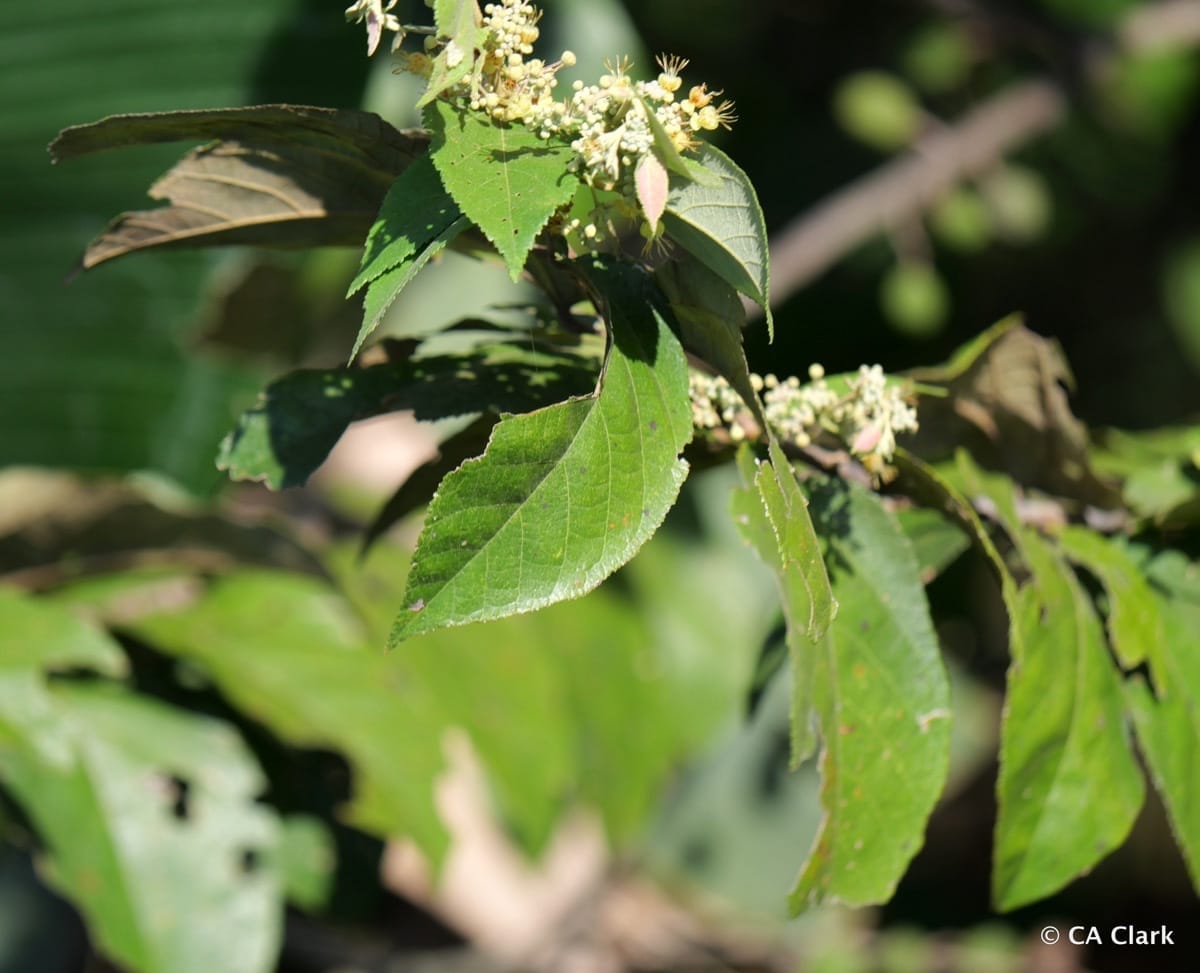
Quick facts
Native Region
Mexico to South America, Caribbean
Max Height
15-25 meters
Family
Malvaceae
Conservation
LC — Least Concern
Uses
Safety Information
Toxicity Details
Guácimo is completely safe and non-toxic. The warty fruits are edible - sweet and mucilaginous, though not commonly eaten by humans due to texture. Widely used as livestock fodder (cattle, horses love the fruits). Bark has been used medicinally for centuries to treat various ailments with no toxicity issues. The tree is in the Malvaceae family (hibiscus/cotton family) which is generally safe.
Skin Contact Risks
No skin irritation. Bark is fibrous and has been used to make cordage (ropes). Safe to handle all parts.
Wildlife & Pet Risks
Completely safe and beneficial. The fruits are eaten by cattle, horses, pigs, and wildlife (monkeys, birds, bats, coatis). Excellent fodder tree for livestock operations.
Season
Flowering
Feb-Apr
Fruiting
Apr-Jun
How to identify
Guácimo
Guácimo (Guazuma ulmifolia), known as Bay Cedar or West Indian Elm, is one of the most useful and adaptable trees in Costa Rica's tropical lowlands. This fast-growing species is recognized by its distinctive warty, sweet-tasting fruits that are relished by cattle, horses, and wildlife alike. Found along roadsides, in pastures, and at forest edges from sea level to over 1,200 meters, Guácimo is a true generalist that thrives where other trees struggle. Its importance in traditional farming systems, folk medicine, and as wildlife habitat makes it one of the most ecologically and culturally significant trees in rural Costa Rica.
Quick Reference
iNaturalist Observations
Community-powered species data
📸 Photo Gallery
Whole tree
📷 (c) Franklin Charles Graham IV, some rights reserved (CC BY-NC)(CC BY-NC)
View source ↗Leaves
📷 (c) Franklin Charles Graham IV, some rights reserved (CC BY-NC)(CC BY-NC)
View source ↗Whole tree
📷 (c) nbraker, some rights reserved (CC BY-NC)(CC BY-NC)
View source ↗Leaves
📷 (c) nbraker, some rights reserved (CC BY-NC)(CC BY-NC)
View source ↗Whole tree
📷 (c) Andreas Berger, some rights reserved (CC BY-NC)(CC BY-NC)
View source ↗Photos sourced from the iNaturalist citizen science database. View all observations →↗
Taxonomy and Classification
- Guazuma: From the indigenous Nahuatl name "cuauhzuma" - ulmifolia: Latin "ulmus" (elm) + "folia" (leaves) - elm-like leaves - Family Malvaceae includes hibiscus, cacao, balsa - Only species in its genus commonly found in Costa Rica
Common Names
Related Species in Costa Rica
Physical Description
Overall Form
Guácimo is a medium-sized tree with a short trunk and a broad, spreading crown. It often branches low, creating an umbrella-like shape ideal for shade. The tree is semi-deciduous, losing leaves briefly in the dry season in drier areas but remaining evergreen in wetter zones.
Identifying Features
The Distinctive Fruits
- Shape: Oval to round
- Size: 2-3.5 cm
- Surface: Covered in warty bumps!
- Color: Green → Black when ripe
- Interior: Honeycombed, with mucilaginous pulp
- Taste: Sweet, pleasant
- Timing: Dry season mainly
Bark
- Color: Gray-brown
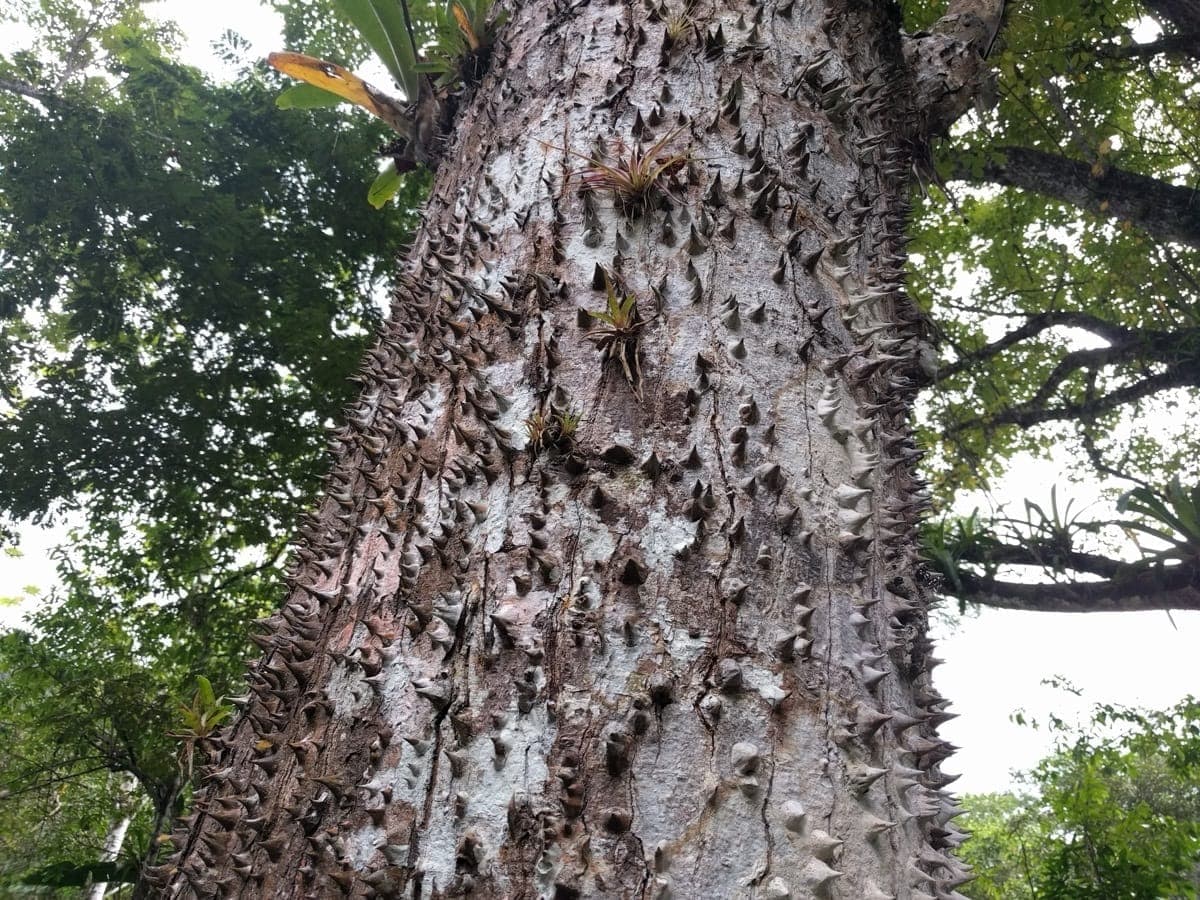
- Texture: Fissured, fibrous
- Inner bark: Very fibrous, can be stripped
- Use: Traditional cordage
Leaves
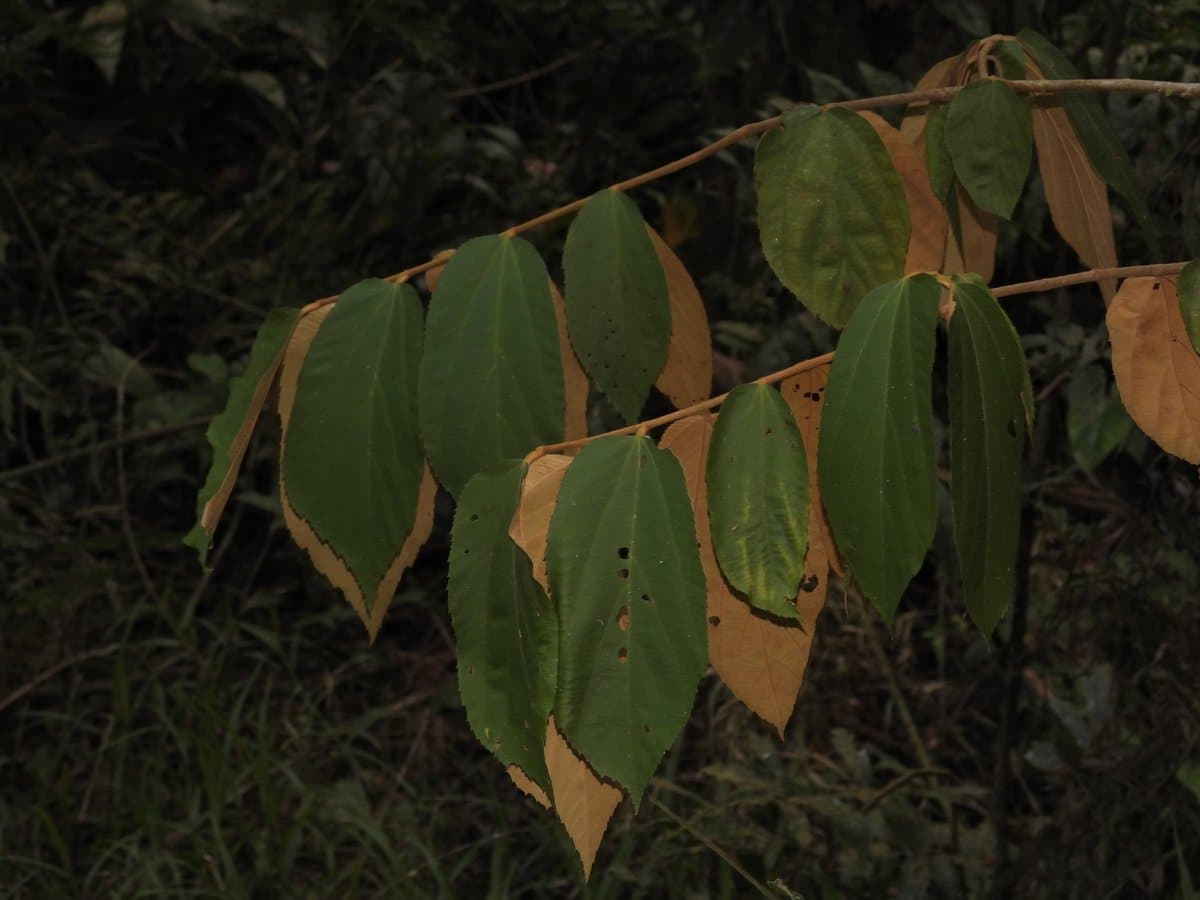
- Arrangement: Alternate, simple
- Shape: Ovate, elm-like
- Size: 6-15 cm long
- Margin: Serrated (toothed)
- Base: Often asymmetric
- Texture: Slightly rough above
- Note: Resemble elm leaves closely
Flowers
- Size: Small (5-7 mm)
- Color: Yellow to cream
- Arrangement: Clusters (cymes)
- Fragrance: Sweetly scented
- Timing: Throughout year, peak rainy season
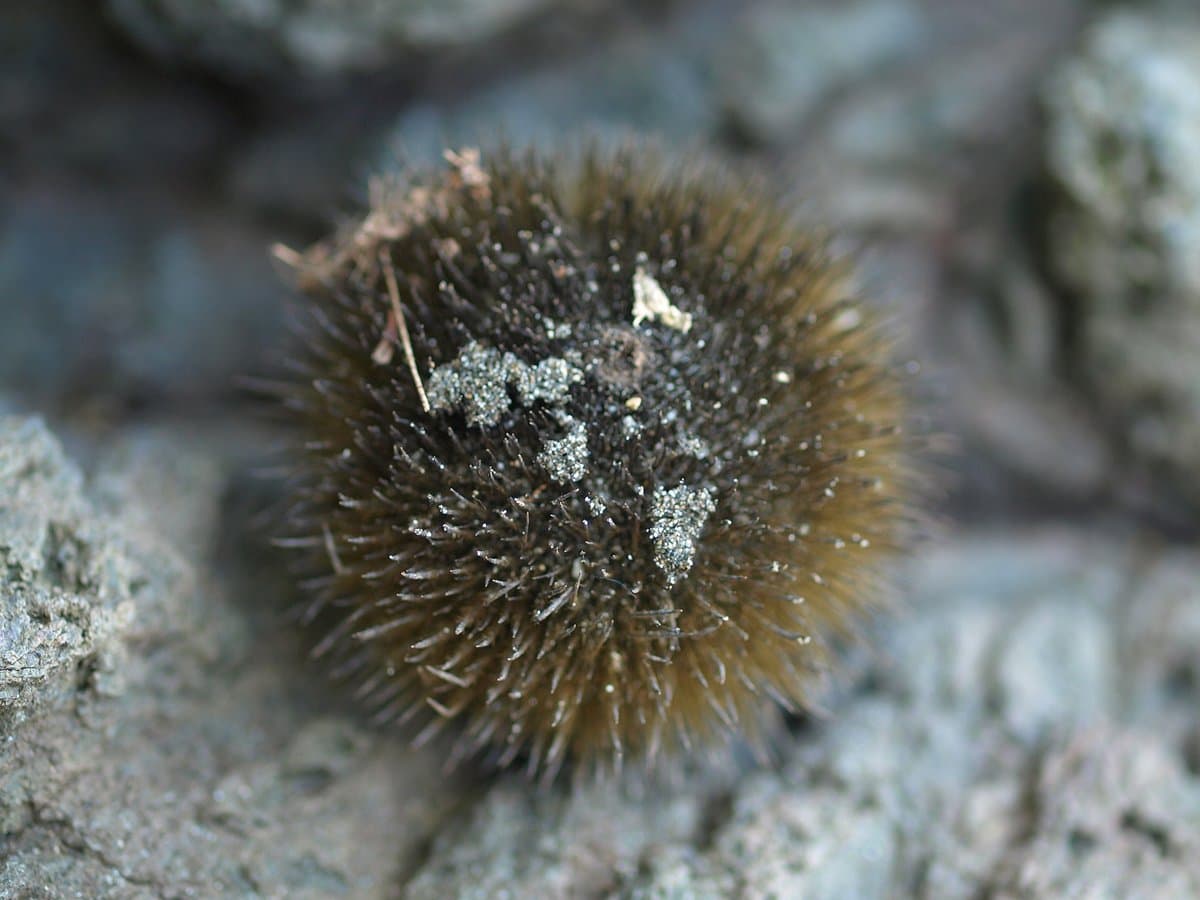
The fruits of Guácimo are unmistakable: Appearance: - Covered in rough, warty protuberances - Like a small, bumpy ball - Unique texture in Costa Rican flora When Ripe: - Turn from green to dark brown/black - Become slightly soft - Sweet smell attracts animals Interior: - Divided into chambers (honeycombed) - Sweet, mucilaginous pulp - Many small seeds If you see these distinctive warty balls on or under a tree, you've found a Guácimo!
Distribution and Habitat
Global Distribution
Geographic Distribution
Distribution in Costa Rica
Habitat Preferences
Ecological Role
Wildlife Magnet
Fruit Consumers
- Cattle and horses: Love the sweet fruits
- White-tailed deer: Major consumer
- Peccaries: Eat fallen fruit
- Agoutis and pacas: Cache and eat
- Parrots: Consume fruit and seeds
- Monkeys: Feed on fruits
- Bats: Disperse seeds
Other Ecological Functions
- Shade provider: Critical in pastures
- Nitrogen-fixing ally: Associates with N-fixing trees
- Pioneer species: Colonizes degraded land
- Honey production: Important bee forage
- Habitat structure: Low branches for wildlife
Guácimo is one of the most important trees in silvopasture— the practice of combining trees with livestock grazing: Benefits for Livestock: - Shade: Reduces heat stress dramatically - Fodder: Fruits are excellent feed supplement - Leaves: Also eaten by cattle when low - Improved weight gain: Shaded cattle gain faster Benefits for Farmers: - Free feed: Fruit production valuable - Low management: Tree largely self-sufficient - Soil improvement: Leaf litter adds nutrients - Biodiversity: Supports other beneficial species Why Guácimo Works: - Fast-growing - Tolerates browsing - Deep roots don't compete heavily with grass - Deciduous period minimizes shade when cool This is why Guácimo is deliberately kept in pastures throughout Costa Rica—it's a win-win for farmers and environment!
Uses and Products
Agricultural Applications
Traditional Medicine
Folk Remedies
Guácimo has a long history of medicinal use in Costa Rica and throughout its range: Traditional Applications: - Bark decoction: Diarrhea, dysentery
- Leaf infusion: Fever, liver problems - Fruit: Digestive issues, diabetes - Root bark: Skin conditions Preparation Methods: - Bark boiled in water - Leaves as tea - Fruit eaten directly Scientific Interest: - Antimicrobial compounds identified - Anti-inflammatory activity studied - Potential anti-diabetic properties Caution: Traditional use doesn't guarantee safety or efficacy. Consult healthcare providers for medical treatment.
Fiber and Crafts
Guácimo bark is remarkably fibrous: Traditional Uses: - Rope and cordage - Strapping and ties - Basket weaving (framework) - Emergency repairs Harvesting: - Strip bark in long sections - Best from young branches - Dry before use - Very strong when processed This made Guácimo valuable before synthetic materials— and still useful for sustainable alternatives today.
Cultivation
Growing Guácimo
Identification Guide
How to Identify Guácimo
Where to See Guácimo in Costa Rica
Guácimo is one of the easiest trees to find: Where to Look: - Almost any pasture in lowlands - Roadsides throughout country - Village plazas and parks
- Forest edges Identification Tips: - Look for the distinctive warty fruits - Check the elm-like serrated leaves - Note the spreading, shade-providing crown Best Time: - Dry season: Fruits abundant (great ID)
- Rainy season: Flowers present This tree is SO common that finding it is less about where to look and more about noticing what's already all around you!
The Malvaceae: A Family of Surprises
Guácimo belongs to the Malvaceae (Mallow Family), which includes some surprising relatives: Costa Rican Family Members: - Hibiscus: The ornamental flower - Cacao (Theobroma): Source of chocolate - Balsa (Ochroma): Lightest commercial wood - Ceiba: The giant kapok tree - Cotton (Gossypium): Fiber crop Common Traits: - Often have mucilaginous (slimy) sap - Flowers typically with 5 petals - Many species with fibrous bark - Frequently have star-shaped hairs Guácimo's Place: - Not as famous as cacao or ceiba - But possibly more useful day-to-day - Perfect example of "humble but valuable"
Pasture Integration Checklist
External Resources
Community observations and photos
Uses and cultivation information
Research on silvopastoral systems
Global biodiversity occurrence data and distribution maps
Conservation status and species assessment
References
📚 Scientific References & Further Reading
Janzen, D.H. (1991). Historia Natural de Costa Rica. Editorial Universidad de Costa Rica
CATIE (2003). Árboles de Centroamérica. CATIE/OFI
Ibrahim, M. et al. (2007). Silvopastoral systems for climate change mitigation. Advances in Agroforestry
In the heat of a Guanacaste afternoon, as cattle cluster beneath the spreading branches of a Guácimo, you're witnessing one of tropical agriculture's most elegant solutions. This tree asks for nothing—no irrigation, no fertilizer, no special care—and gives so much in return: shade that improves livestock health and productivity, sweet fruits that fatten cattle for free, flowers that support bees, and habitat for countless other species. The Guácimo won't win any beauty contests; its warty fruits look strange, its branches are often gnarled, and it's so common that people barely notice it. But try to imagine Costa Rica's rural landscape without it: hotter pastures, hungrier cattle, less wildlife, fewer bees. This humble tree, descended from the same family that gave us chocolate and balsa wood, is a quiet ecological hero—a reminder that the most valuable species aren't always the rarest or most beautiful, but sometimes the most common and giving. Next time you see cattle resting in the shade of a Guácimo, munching on fallen fruits while birds call from its branches, take a moment to appreciate this unsung champion of sustainable tropical land use.
Safety Information Disclaimer
Safety information is provided for educational purposes only. Individual reactions may vary significantly based on age, health status, amount of exposure, and individual sensitivity. Always supervise children around plants. Consult a medical professional or certified arborist for specific concerns. The Costa Rica Tree Atlas is not liable for injuries or damages resulting from interaction with trees described in this guide.
• Always supervise children around plants
• Consult medical professional if unsure
• Seek immediate medical attention if poisoning occurs
Information compiled from authoritative toxicology sources, scientific literature, and medical case reports.
Help improve this page
Know something about this tree? Share local knowledge, suggest a correction, or submit a photo to improve this guide for everyone.