Provision Tree
Pachira aquatica
Quick facts
Native Region
Mexico to northern South America; native to Costa Rica
Max Height
18-20 meters
Family
Malvaceae
Conservation
LC — Least Concern
Uses
Safety Information
Toxicity Details
Pachira aquatica is considered non-toxic to humans. The seeds (Malabar chestnuts) are edible when roasted or boiled. Raw seeds may cause mild gastrointestinal discomfort in some individuals. All other parts are considered safe.
Skin Contact Risks
No known skin irritation from contact with any part of the tree. The bark and leaves are handled safely without protective equipment.
Allergenic Properties
Pollen is a minor allergen. The large, showy flowers attract insects for pollination and produce moderate amounts of pollen, but wind dispersal is limited due to pollen size. Rarely reported as an allergy trigger.
Structural Hazards
Wood is soft and somewhat brittle. Large branches can break during strong winds or storms. Not recommended as a shade tree near structures without regular pruning. The trunk swells with water storage in wet conditions, which can lead to splitting in extreme cold (not a concern in Costa Rica).
Wildlife & Pet Risks
No toxicity to wildlife. Flowers are an important nectar source for bats, moths, and hummingbirds. Seeds are consumed by parrots, macaws, and rodents.
Season
Flowering
Mar-Jun
Fruiting
Jul-Oct
How to identify
Provision Tree (Pochote de Agua)
Pochote de Agua (Pachira aquatica), known worldwide as the Money Tree and locally as Zapotón or Apompo, is a spectacular flowering wetland tree native to Costa Rica's lowland riverbanks and swamps. With its dramatic cream-and-crimson stamens, edible chestnut-like seeds, and characteristically swollen trunk, this tree bridges the gap between ornamental beauty and practical utility. Globally famous as a braided houseplant, in its natural habitat it is a towering canopy tree vital to riparian ecosystems.
Quick Reference
iNaturalist Observations
Community-powered species data
📸 Photo Gallery
Whole tree
📷 (c) larsonek, some rights reserved (CC BY-NC)(CC BY-NC)
View source ↗Leaves
📷 (c) Victoria Ho, some rights reserved (CC BY-NC)(CC BY-NC)
View source ↗Fruit
📷 no rights reserved(CC0)
View source ↗Whole tree
📷 (c) Victoria Ho, some rights reserved (CC BY-NC)(CC BY-NC)
View source ↗Leaves
📷 (c) Victoria Ho, some rights reserved (CC BY-NC)(CC BY-NC)
View source ↗Taxonomy & Classification
Common Names by Region
Taxonomic Notes
Pachira aquatica was formerly classified in the family Bombacaceae, which is now merged into the broader family Malvaceae (subfamily Bombacoideae). The genus Pachira contains approximately 24 species distributed across tropical America. In Costa Rica, P. aquatica is distinguished from the related Pachira quinata (Pochote) by its preference for wet habitats, smooth greenish bark, and larger flowers with longer stamens.
The genus name Pachira derives from a Guyanese indigenous name for the tree. The specific epithet aquatica refers to its strong association with water and riparian habitats. The common name "Money Tree" originated in 1980s Taiwan, where a taxi driver braided the trunks of five seedlings and marketed them as a Feng Shui symbol of prosperity — launching a global houseplant phenomenon.
Physical Description
Tree Form
Pochote de Agua is a medium-sized tree reaching 15–20 m in the wild, though typically shorter in cultivation (5–10 m). The trunk is distinctive: smooth, green to grayish-green, and notably swollen at the base, especially in seasonally flooded habitats where it stores water. In forest settings, the trunk grows straight with a clear bole of 5–8 m. The crown is spreading, rounded, and moderately dense. In cultivation, multiple trunks are often braided together for ornamental appeal.
Bark
The bark is smooth, thin, and predominantly green on young trees, aging to grayish-green with fine vertical striations. Unlike its relative Pochote (P. quinata), there are no spines. The green bark contains chlorophyll, allowing the trunk to photosynthesize — a useful adaptation in the dim understory of riparian forests. When cut, the bark exudes a clear, watery sap that is not irritating.
Leaves
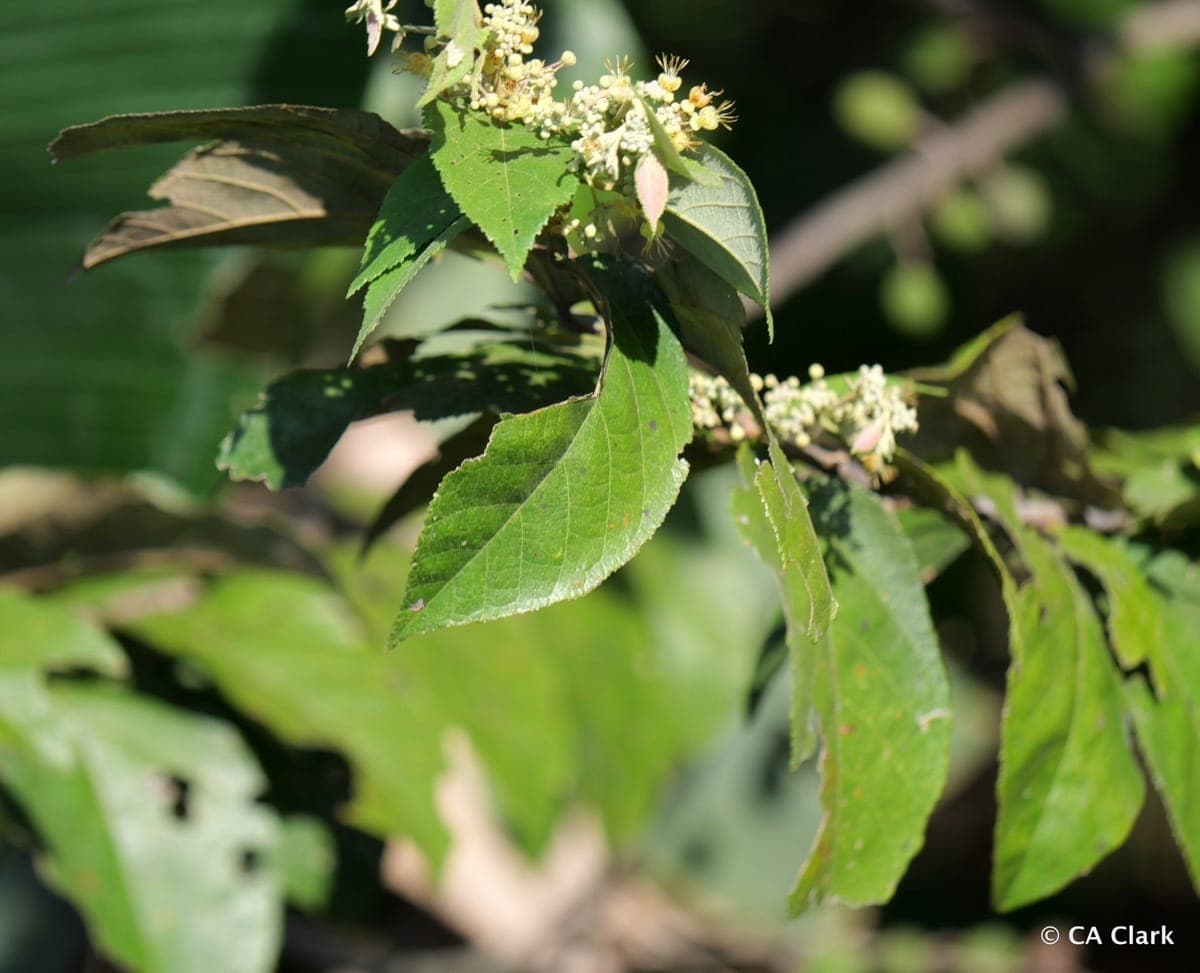
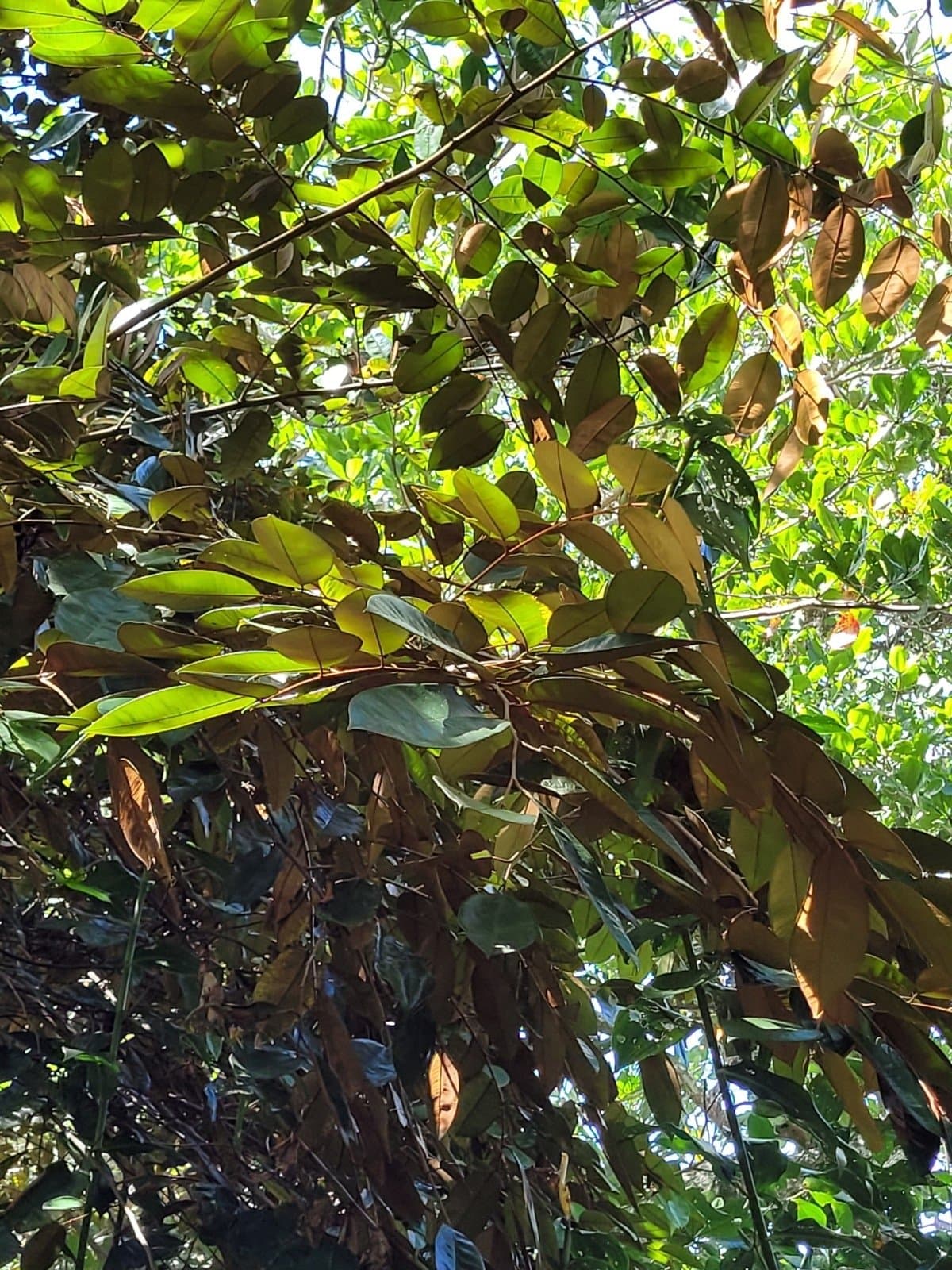
Leaves are palmately compound with 5–9 leaflets arranged like fingers on a hand, each leaflet oblong-lanceolate, 10–25 cm long and 4–10 cm wide. The leaflets are glossy dark green above, paler below, with prominent midribs and smooth margins. Leaves are alternate, borne on long petioles 10–30 cm in length. The crown remains evergreen throughout the year in Costa Rica, though minor leaf drop may occur during the driest periods.
Flowers
The flowers are among the most spectacular of any Costa Rican tree. Each flower is large (20–30 cm across the staminal column), with 5 narrow, recurved petals that are pale green to cream-colored on the outside and reddish inside. The true spectacle is the mass of 200+ stamens, which are creamy-white at the base, fading to deep crimson at the tips, creating a dramatic pom-pom effect 12–15 cm in diameter. Flowers open at dusk and last one night, producing a musky, sweet fragrance that attracts bat pollinators. Flowering occurs mainly during the transition from dry to wet season (March–June).
Fruit and Seeds
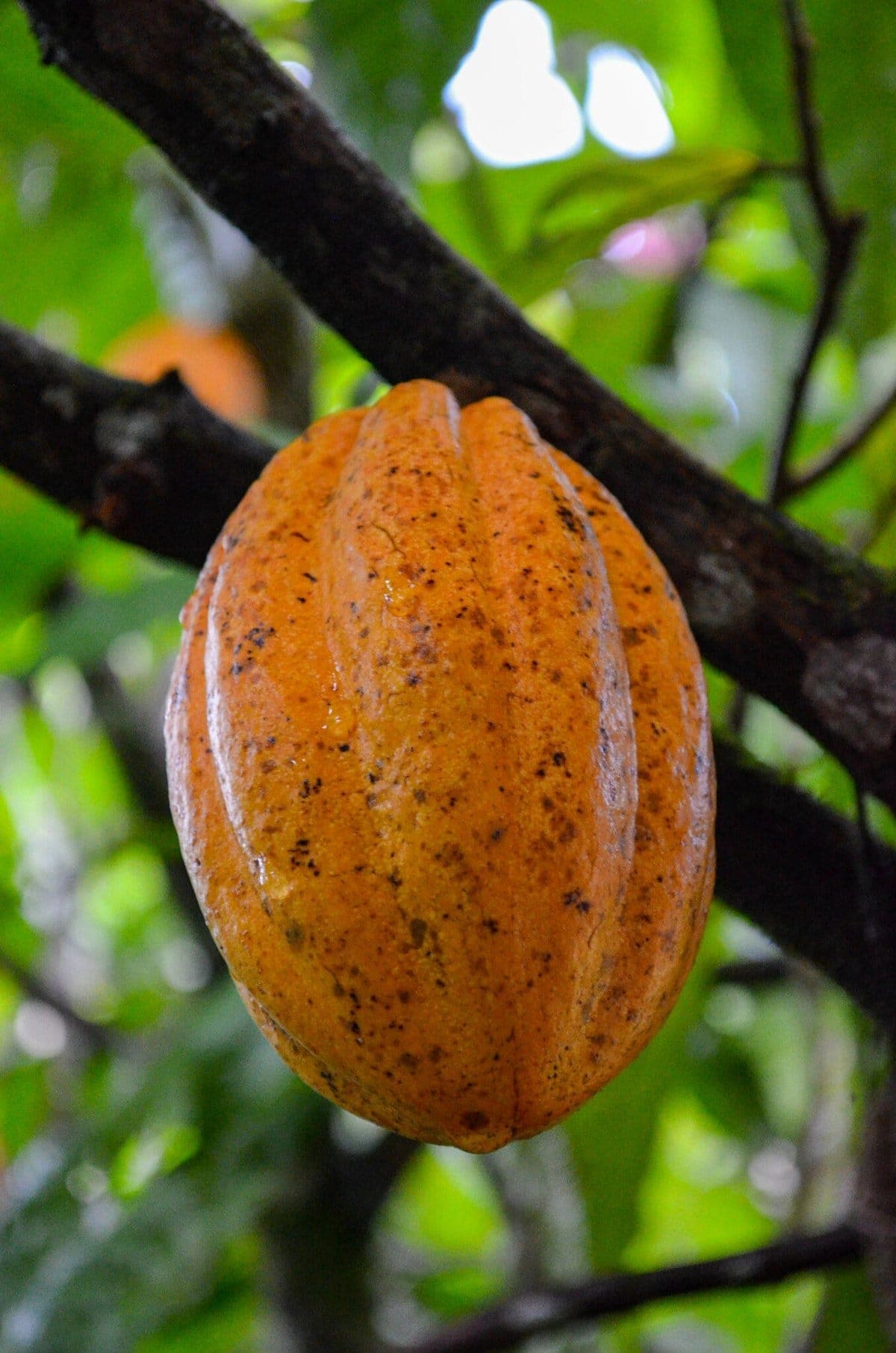
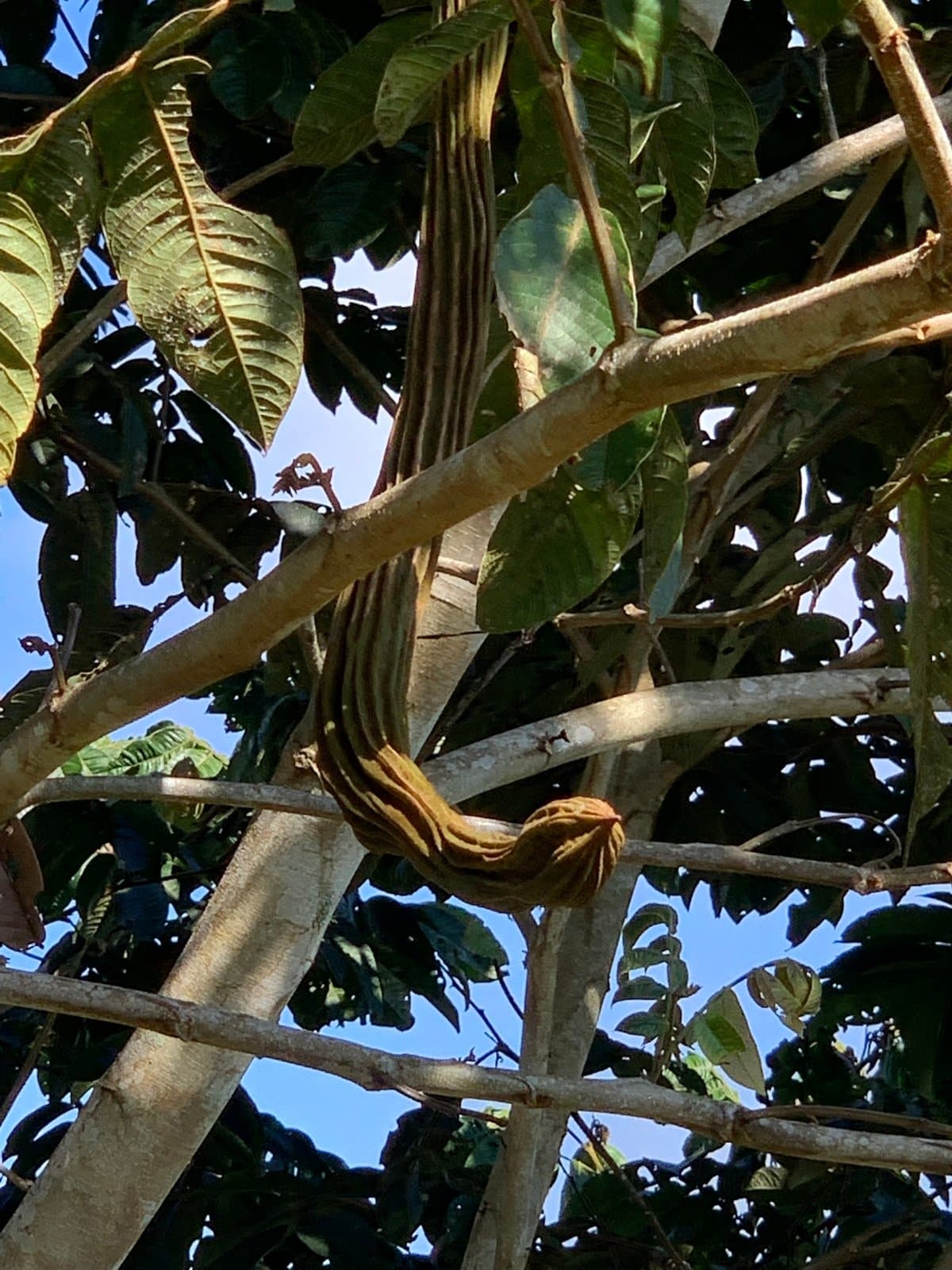
The fruit is a large, woody, oblong capsule 15–30 cm long and 8–12 cm in diameter, somewhat resembling a football. It starts green, matures to brown, and splits open along 5 valves to release 10–25 large seeds. The seeds are irregular, rounded, 2–3 cm in diameter, embedded in whitish pulp. They are the "Malabar chestnuts" — edible when roasted or boiled, with a flavor compared to peanuts or chestnuts. Seeds lose viability quickly (within 1–2 weeks) if not planted or stored properly.
Root System
The root system is extensive and adapted to waterlogged conditions. Buttress roots are modest compared to other Malvaceae, but the basal trunk swelling serves a similar function for stability in soft, flooded soils. The roots are not aggressive and do not typically damage infrastructure, making the tree suitable for urban planting in areas with adequate space and moisture.
Geographic Distribution
In Costa Rica, Pochote de Agua is found naturally along riverbanks, stream edges, swamps, and seasonally flooded lowlands primarily on the Caribbean slope (Limón Province) and the Pacific lowlands (Puntarenas, Osa Peninsula). It grows from sea level to approximately 800 m elevation. The species extends from southern Mexico through all Central American countries to Ecuador, Colombia, Venezuela, and northern Brazil.
Costa Rican Distribution
Habitat & Ecology
Ecological Role
Pochote de Agua is an important component of riparian forest ecosystems, where it stabilizes riverbanks, provides shade that regulates water temperature for aquatic organisms, and contributes leaf litter to the detrital food web. Its roots filter sediments and nutrients from runoff, improving water quality in streams and rivers.
Wildlife Interactions
The nocturnal flowers are primarily pollinated by bats, especially Glossophaga soricina (Pallas's long-tongued bat), which visit for the copious nectar produced at the base of the staminal column. Moths and occasional hummingbirds also visit. The large seeds are dispersed by water (hydrochory) — they float and are carried downstream — and by animals including agoutis, pacas, and parrots. Howler monkeys and spider monkeys consume the young fruit pulp. The tree supports a community of epiphytes (orchids, bromeliads, ferns) in its spreading crown.
Uses & Applications
Edible Seeds
The seeds, known as Malabar chestnuts or castañas de agua, are the most valuable product. They are rich in protein (12–16%), fat (40–50%, predominantly oleic and linoleic acids), and carbohydrates. Seeds are prepared by:
- Roasting at 180°C for 15–20 minutes until the shell cracks
- Boiling for 20–30 minutes, then peeling
- Ground into flour for tortillas, tamales, or baked goods
- Pressed for oil — clear, mild-flavored culinary oil
The flavor is often compared to peanuts with a slightly sweet, chestnut-like character. In rural Costa Rica, the seeds are traditionally roasted as a snack or used to stretch maize flour.
Ornamental
Globally, Pachira aquatica is one of the world's most popular houseplants under the name "Money Tree." In Costa Rica, it is planted as a shade and ornamental tree in parks, gardens, and along waterways. The dramatic flowers make it a conversation piece in any landscape. The braided-trunk form (multiple seedlings trained into a spiral) is a major export commodity from tropical nurseries.
Timber and Wood
The wood is soft, lightweight (specific gravity 0.30–0.40), and pale cream to white. It is not durable and has limited use as structural timber. In rural areas, it is used for non-structural purposes: crates, lightweight boxes, canoes (traditional dugouts), and temporary construction. The soft wood carves easily and was historically used for masks and small carvings.
Traditional Medicine
In traditional Central American medicine, the bark tea is used as a febrifuge (fever reducer) and for treating stomach complaints. The leaf infusion is applied externally for skin conditions. In Brazilian folk medicine (where the tree is known as munguba), the seeds and bark are used for hepatitis, diabetes, and kidney ailments. These uses remain traditional and have not been extensively validated by modern clinical research.
Riparian Restoration
The species is increasingly valued in ecological restoration projects for riparian zones, wetland buffers, and water-treatment wetlands. Its tolerance of flooding, fast growth, and bank-stabilizing root system make it ideal for stream-bank rehabilitation. In Costa Rica, SINAC and conservation organizations recommend it for river margin replanting programs.
Sources: IUCN Red List↗, GBIF↗, USDA Silvics (Pachira aquatica)↗, SINAC↗
Cultural Significance
Indigenous Heritage
Pre-Columbian peoples of coastal Central America roasted Pochote de Agua seeds as a dietary supplement, especially during the wet season when maize stores were low. The tree's association with water made it symbolically important in agricultural rituals tied to rainfall and fertility. Archaeological evidence from Pacific Costa Rica includes charred Pachira seeds at habitation sites dating to 1000–1500 CE.
The Money Tree Phenomenon
In 1986, a Taiwanese truck driver is credited with braiding five Pachira aquatica seedlings and marketing the result as a Feng Shui "money tree" (招財樹). The concept exploded across East Asian markets and eventually worldwide. Today, braided money trees are among the top-10 most sold houseplants globally, generating hundreds of millions of dollars in annual revenue. This remarkable cultural transformation took a little-known Central American swamp tree and turned it into an icon of indoor gardening.
Costa Rican Traditions
In rural Caribbean Costa Rica, the seeds were traditionally shared as a community food during harvest season. The tree is associated with abundance and water — families planted it near homes to ensure proximity to productive riversides. The Bribri people recognize the tree as tsuru and value its role in maintaining stream health and fish habitat.
Sources: Pennington & Sarukhán (2005)↗, Lorenzi (2002)↗, INaturalist observations in Costa Rica↗, GBIF↗
Conservation Status
Pachira aquatica is classified as Least Concern (LC) by the IUCN, thanks to its wide natural distribution and adaptability. However, in Costa Rica, natural populations have declined due to:
- Clearing of riparian forests for agriculture and cattle ranching
- Channelization and damming of rivers that destroys riverside habitats
- Drainage of wetlands for development
The species is not CITES-listed and is not considered threatened at the national level, though conservation of its riparian habitat benefits many co-occurring species. Costa Rica's forestry laws protect riparian buffer zones, which indirectly protects Pachira aquatica populations along major waterways.
Sources: IUCN Red List↗, GBIF↗, CITES checklist↗, FAOLEX (Costa Rica forestry framework)↗
Cultivation & Care
Planting
Plant during the onset of the rainy season (May–June) for best establishment. Select a site with full sun to partial shade and access to consistent moisture. Space trees 8–10 m apart for canopy development. Dig planting holes 50 × 50 × 50 cm and amend with organic compost. Water deeply at planting and mulch generously.
Watering
In the establishment phase (first 2 years), water weekly during dry spells. Established trees in moist sites need no supplemental irrigation. In drier urban settings, deep watering every 2 weeks during the dry season maintains vigor and prevents leaf stress.
Fertilization
Pochote de Agua has modest nutrient needs. Apply balanced organic fertilizer (10-10-10) twice per year — at the onset and midpoint of the rainy season. In rich alluvial soils, fertilization is unnecessary. Excess nitrogen promotes soft, wind-vulnerable growth.
Pruning
Prune to establish a central leader in the first 3 years. Remove crossing or inward-growing branches annually. The tree tolerates heavy pruning and resprouts vigorously from cut stumps (useful for coppice management in restoration). Best pruned during the dry season when growth is slower.
Companion Planting
- Beneficial companions: Heliconia spp., Calathea spp., Montrichardia spp., Mangle rojo (Rhizophora mangle)
- Compatible trees: Guaba (Inga edulis), Cedro María (Calophyllum brasiliense), Ojoche (Brosimum alicastrum)
- Avoid planting with: Species requiring well-drained dry soils; aggressive root competitors
Year-Round Care Calendar
Propagation
Seeds germinate readily (80–95% germination rate) but must be planted fresh, within 2 weeks of harvest, as they are recalcitrant (cannot be dried for storage). Sow 2–3 cm deep in moist potting mix at 25–30°C. Germination occurs in 5–10 days. Stem cuttings (30–50 cm semi-hardwood) root easily in moist sand or perlite under high humidity. Air layering is also successful.
Where to See This Tree
External Resources
References
- Alverson, W. S., et al. (1999). "Phylogeny of the core Malvales: evidence from ndhF sequence data." American Journal of Botany, 86(10): 1474–1486.
- Francis, J. K. (1990). "Pachira aquatica Aubl." In: Silvics of North America. USDA Forest Service.
- Lorenzi, H. (2002). Árvores Brasileiras: Manual de Identificação e Cultivo. Nova Odessa: Instituto Plantarum.
- Pennington, T. D. & Sarukhán, J. (2005). Árboles Tropicales de México. Mexico City: UNAM/FCE.
- Woodson, R. E. & Schery, R. W. (1958). "Bombacaceae." In: Flora of Panama. Annals of the Missouri Botanical Garden, 45: 111–127.
Safety Information Disclaimer
Safety information is provided for educational purposes only. Individual reactions may vary significantly based on age, health status, amount of exposure, and individual sensitivity. Always supervise children around plants. Consult a medical professional or certified arborist for specific concerns. The Costa Rica Tree Atlas is not liable for injuries or damages resulting from interaction with trees described in this guide.
• Always supervise children around plants
• Consult medical professional if unsure
• Seek immediate medical attention if poisoning occurs
Information compiled from authoritative toxicology sources, scientific literature, and medical case reports.
Help improve this page
Know something about this tree? Share local knowledge, suggest a correction, or submit a photo to improve this guide for everyone.