Flamboyán
Delonix regia
Quick facts
Native Region
Madagascar (introduced to Costa Rica)
Max Height
10-18 meters (33-60 feet)
Family
Fabaceae
Conservation
LC — Least Concern
Uses
Safety Information
Toxicity Details
No known toxicity. The seeds are nutritious and have been researched as a potential food source. Bark and leaves have medicinal uses in traditional medicine.
Skin Contact Risks
No skin irritation reported from contact with any part of the tree. The large seed pods and seeds are commonly handled for crafts.
Allergenic Properties
Low allergen risk. The abundant pollen during flowering may affect sensitive individuals, but the tree is not considered a significant allergen source.
Season
Flowering
Mar-Jun
Fruiting
Jul-Oct
How to identify
Flamboyán
The Flamboyán (Delonix regia), also known as Royal Poinciana or Flame Tree, is arguably one of the most spectacular flowering trees on Earth. When in full bloom, the entire crown transforms into a blazing canopy of scarlet-orange flowers, creating a sight so dramatic that it has inspired artists, poets, and gardeners across the tropics for centuries. Though native to Madagascar where it is now endangered in the wild, the Flamboyán has become one of the most widely cultivated ornamental trees in the world, gracing parks, streets, and gardens throughout Costa Rica and beyond.
Quick Reference
iNaturalist Observations
Community-powered species data
📸 Photo Gallery
Whole tree
📷 (c) Rob Foster, some rights reserved (CC BY)(CC BY)
View source ↗Leaves
📷 (c) Rob Foster, some rights reserved (CC BY)(CC BY)
View source ↗Flowers
📷 (c) JBNaturePhotography5 LLC, some rights reserved (CC BY-NC)(CC BY-NC)
View source ↗Whole tree
📷 (c) sillysanborn_5, some rights reserved (CC BY-NC)(CC BY-NC)
View source ↗Leaves
📷 (c) Rob Foster, some rights reserved (CC BY)(CC BY)
View source ↗Photos sourced from iNaturalist citizen science database. View all observations →↗
Taxonomy and Classification
Delonix regia was first described by Wenceslas Bojer, a Czech-born botanist who worked in Mauritius. The species was later formally published by William Jackson Hooker and subsequently transferred to the genus Delonix by Constantine Samuel Rafinesque. The genus name comes from Greek delos (conspicuous) and onyx (claw), referring to the showy, claw-like petals. Synonyms include Poinciana regia, named after Philippe de Longvilliers de Poincy, a French governor of the Caribbean island of Saint Kitts who introduced the tree to the New World.
Common Names
Physical Description
General Form
The Flamboyán is a medium-sized deciduous tree famous for its spectacular umbrella-shaped crown that typically spreads wider than the tree is tall. The spreading, nearly horizontal branches create a magnificent canopy that provides excellent shade for most of the year and transforms into a fiery display during the flowering season.
Distinctive Features
Trunk and Bark
- Trunk: Often buttressed at base
- Bark: Light brown to grayish
- Texture: Smooth with prominent lenticels
- Branches: Long, spreading, nearly horizontal
- Structure: Umbrella-shaped crown
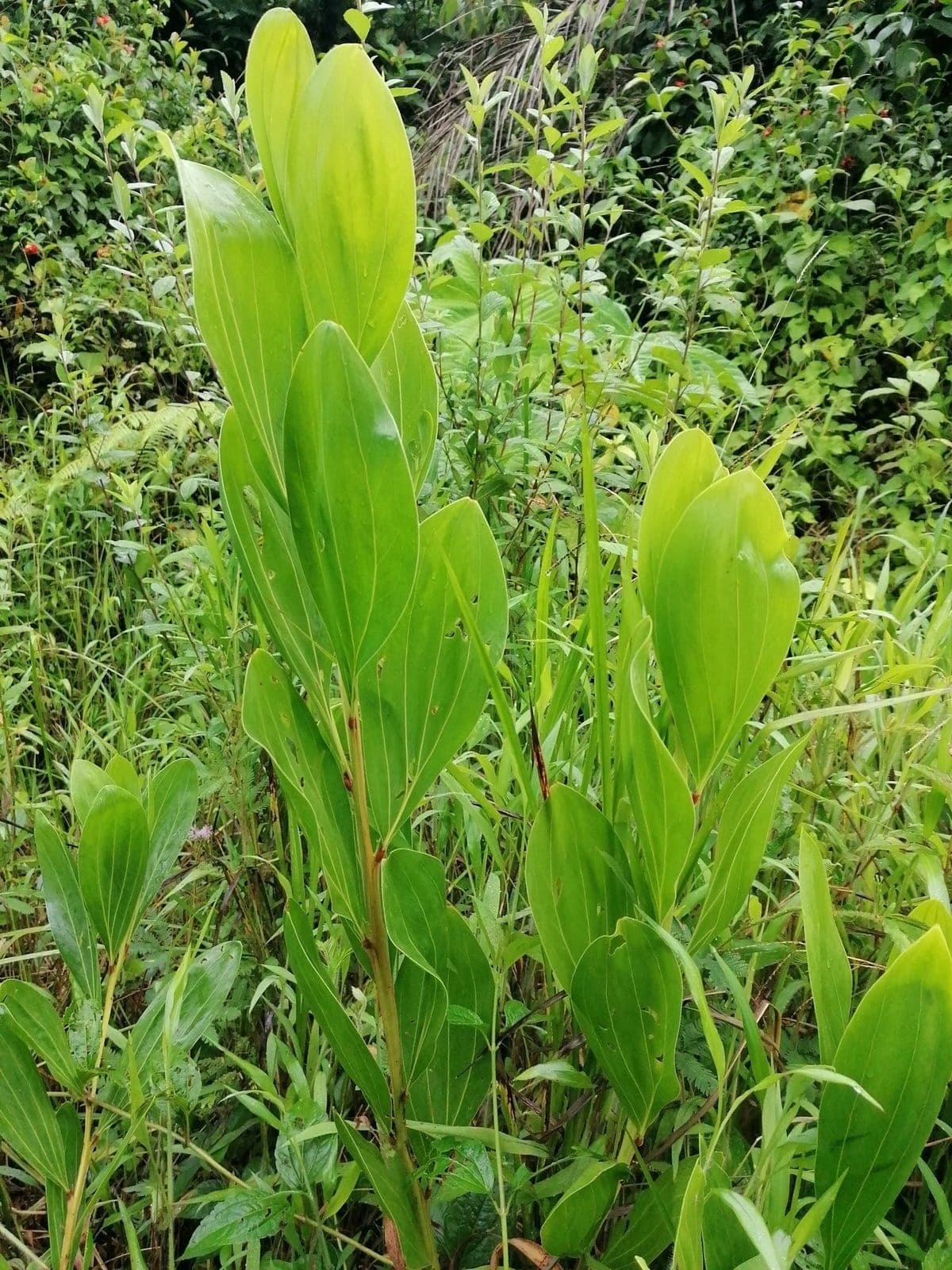
Leaves
- Type: Bipinnate (doubly compound)
- Length: 30-50 cm total
- Pinnae: 20-40 pairs per leaf
- Leaflets: 10-20 pairs per pinna
- Size: 4-12 mm each leaflet
- Color: Bright green, feathery appearance
- Behavior: Deciduous in dry season
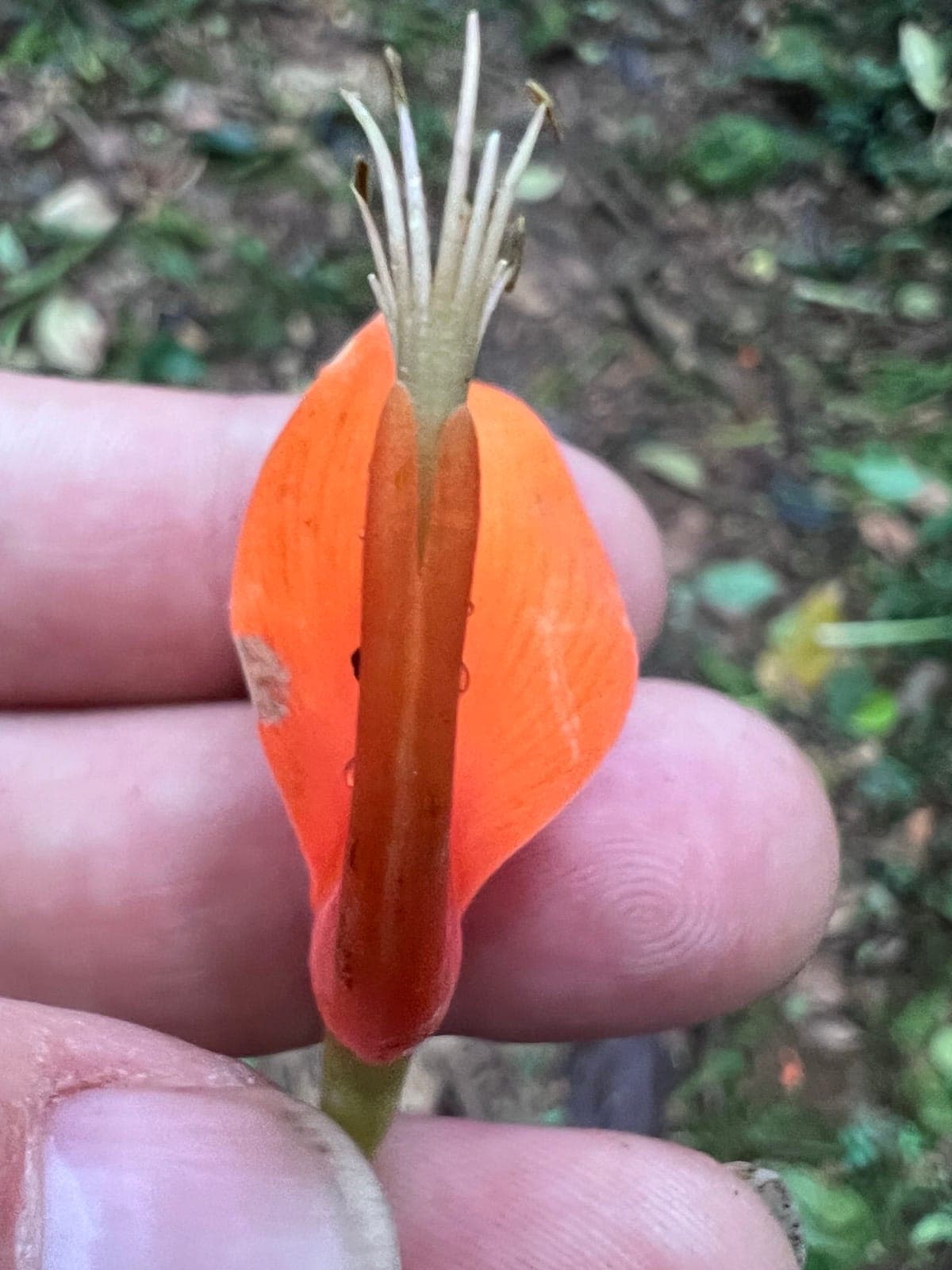
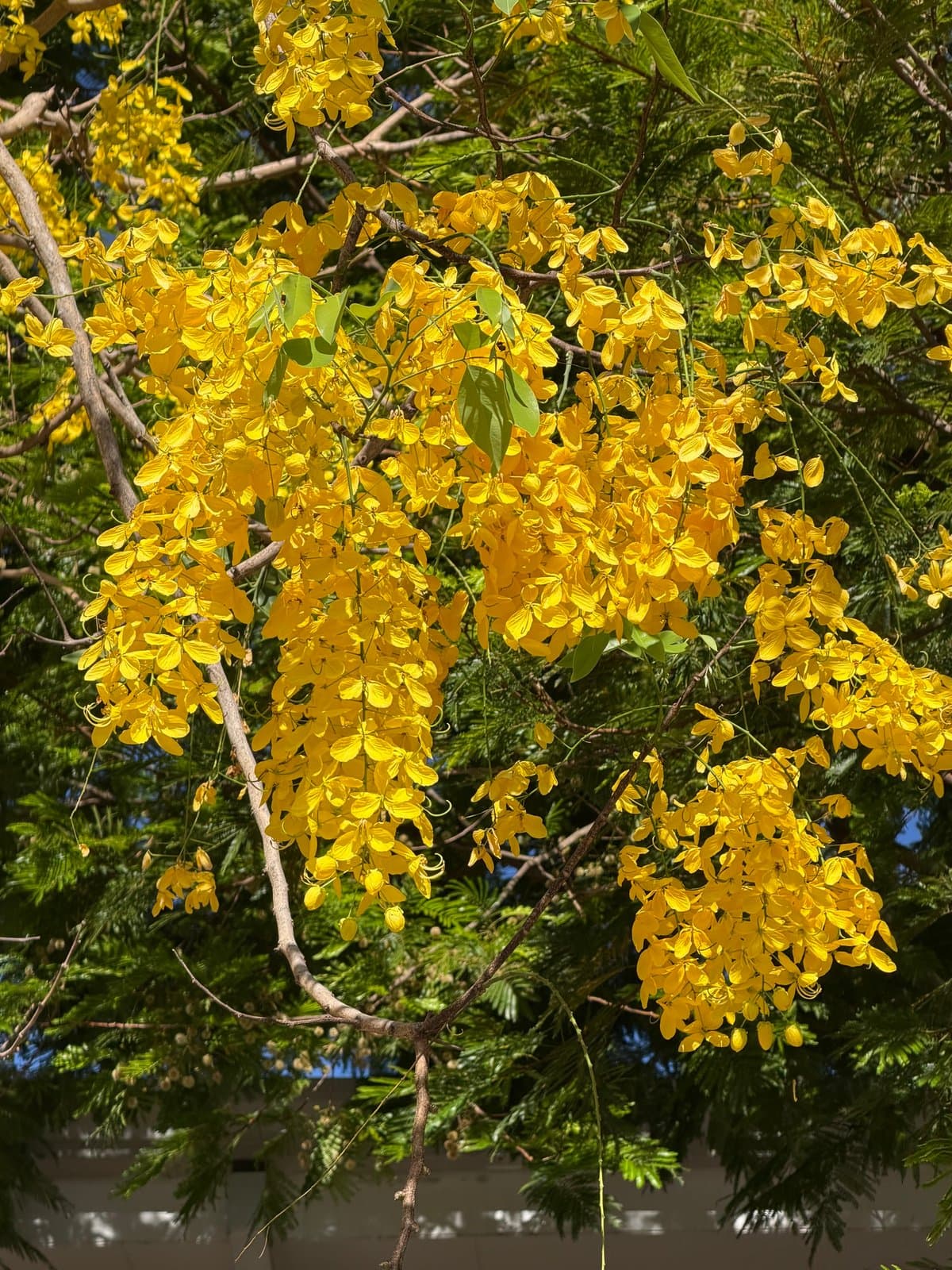
Flowers
- Color: Scarlet to orange-red (rarely yellow)
- Size: 8-11 cm diameter
- Petals: 4 spreading + 1 upright (standard)
- Standard petal: Larger, spotted yellow/white
- Arrangement: Corymbs at branch ends
- Season: Dry to early wet season (Mar-Jun in CR)
- Display: Covers entire crown simultaneously
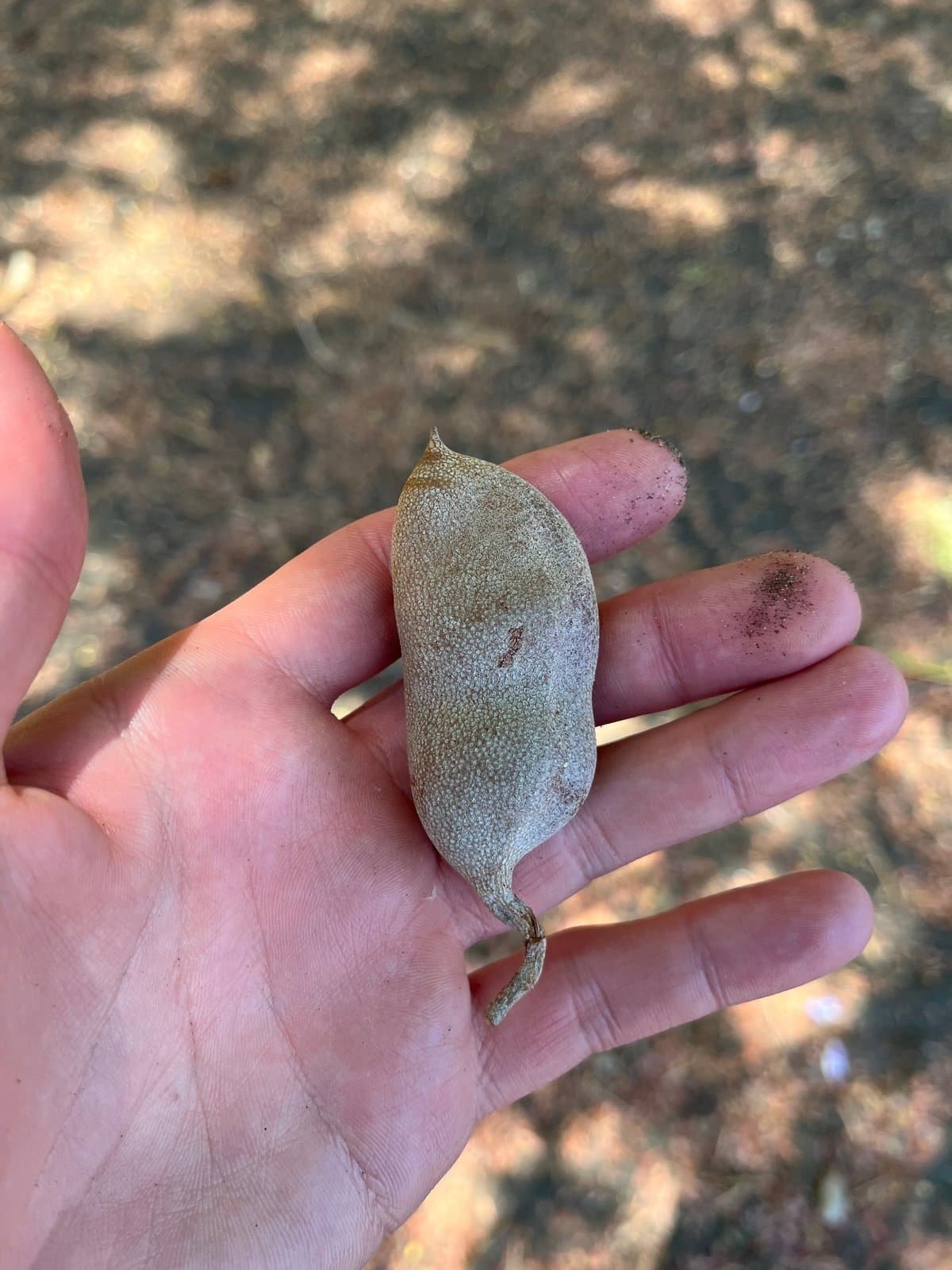
Fruits and Seeds
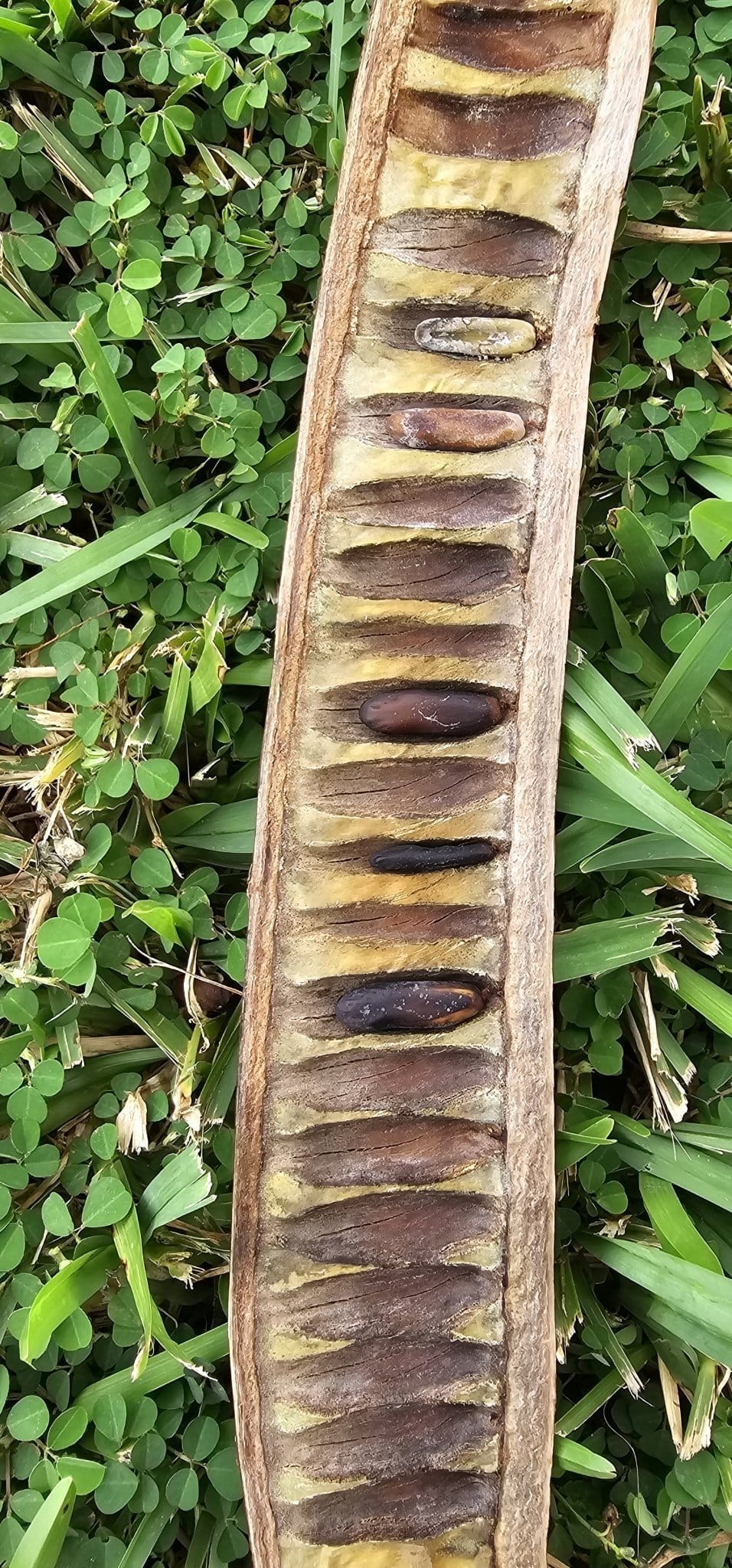
- Type: Large woody legume pod
- Size: Up to 60 cm long, 5 cm wide
- Color: Green when young, dark brown when mature
- Seeds: Small, hard, 0.4 g each
- Persistence: Pods hang on tree for months
The Flamboyán is unmistakable when in flower—look for the spectacular umbrella crown covered in brilliant red-orange blooms. Out of flowering season, identify by the feathery bipinnate leaves (fern-like appearance), spreading horizontal branches, and large woody seed pods that often persist on the tree. The distinctive umbrella shape with a crown wider than the tree is tall is characteristic even from a distance.
Distribution and Habitat
Native Range
Geographic Distribution
The Flamboyán is endemic to Madagascar's dry deciduous forests on the western coast. The 2014 IUCN assessment classified the wild population as Vulnerable due to habitat loss from charcoal production; a 2020 reassessment downgraded the species to Least Concern globally after additional wild populations were documented, though those Malagasy populations remain locally threatened. Ironically, while still at risk in parts of Madagascar, it is one of the most widely cultivated ornamental trees in the tropical world.
Distribution in Costa Rica
As an introduced ornamental, the Flamboyán is cultivated throughout Costa Rica's lowland and mid-elevation areas. It thrives particularly well in the drier Pacific slope regions where the distinct dry season promotes prolific flowering.
Preferred Habitat
Ecological Significance
Pollinator Relationships
Pollinators
- Bees: Primary pollinators
- Butterflies: Attracted to nectar
- Hummingbirds: Visit flowers
- Other insects: Various nectar feeders
Flowering Ecology
- Timing: Flowers at end of dry season
- Display: Mass flowering attracts pollinators
- Duration: 2-3 months of peak bloom
- Spectacle: Creates wildlife feeding stations
Seed Dispersal
- Mechanism: Gravity and wind
- Pods: Large, woody, open on tree
- Seeds: Small, hard, long-lived
- Germination: Requires scarification
- Naturalization: Can become invasive in some areas
Wildlife Value
- Shade: Provides important urban shade
- Nectar: Food source during dry season
- Nesting: Dense crown provides bird habitat
- Insects: Hosts various invertebrates
In some regions outside its native range, the Flamboyán has shown invasive tendencies, naturalizing and spreading into native ecosystems. In Costa Rica, it is primarily confined to cultivated settings, but care should be taken not to plant near natural forests. Always remove seedlings that appear in inappropriate locations.
Cultural and Economic Importance
Cultural Significance
Global Symbolism
The Flamboyán holds deep cultural significance across many countries:
- National flower of St. Kitts and Nevis
- Official tree of Key West, Florida
- City flower of Sepang, Malaysia
- State tree of Delhi, India
- Symbol of Vietnam school year ending
In Costa Rica
The Flamboyán has become an iconic ornamental in Costa Rica, gracing:
- University campuses (especially UNA and UCR)
- Central parks in towns across the country
- Colonial-era churches and government buildings
- Major avenues in San José and provincial capitals
Artistic Inspiration
The tree's spectacular flowering has inspired countless artistic works:
- Featured in Caribbean and Latin American paintings
- Subject of the famous song "Poinciana" (1943)
- Photographed as symbol of tropical beauty
- Used in films set in tropical locations
- Featured in stamps from numerous countries
Kerala Legend
In the Indian state of Kerala, the tree is called "Kaalvarippoo" (Calvary flower). According to local Christian tradition, a small Flamboyán grew near the Cross at Calvary, and its flowers turned red from the blood of Christ.
Traditional Uses
Conservation Status
Sources: IUCN Red List — Delonix regia↗, Plants of the World Online (Kew) — Delonix regia↗, GBIF — Delonix regia↗
Current Assessment
Conservation Status
Conservation Paradox
The Flamboyán presents a fascinating conservation paradox. In its native Madagascar, wild populations are locally threatened by deforestation for charcoal production — though a 2020 IUCN reassessment downgraded the global status from Vulnerable to Least Concern after additional populations were documented. The species was so rare in the wild that its natural origin remained unknown until 1932, when a natural colony was finally discovered on Madagascar's west coast.
Yet worldwide, the Flamboyán is one of the most commonly planted ornamental trees in tropical and subtropical regions. This cultivation success means the species is in no danger of extinction, even as wild populations decline. Conservation efforts focus on protecting remaining native populations in Madagascar's dry deciduous forests.
Cultivation and Propagation
Growing Flamboyán
Site Requirements
Climate Needs
- Full tropical to near-tropical climate
- Distinct dry season promotes best flowering
- Temperature range 14-26°C mean annual
- Tolerates drought once established
- Sensitive to frost
Soil and Light
- Prefers sandy, well-drained soils
- Tolerates various soil types except waterlogged
- pH 5.5-6.5 optimal (tolerates 4.5-7.5)
- Requires FULL SUN for abundant flowering
- Flowers poorly in shade or very wet climates
Propagation
From Seeds (Primary Method)
- Collect mature pods (dark brown)
- Scarify seeds (nick or file seed coat)
- OR soak in hot water, let cool, then 24 hours warm water
- Sow in well-draining nursery mix
- Germination in 5-10 days (up to 90% rate)
- Seedlings grow rapidly
- Transplant at 20-25 cm height (3-5 months)
- First flowers in 4-5 years
From Cuttings
- Semi-hardwood cuttings possible
- Slower than seeds (months to root)
- Used for yellow variety to ensure true form
Maintenance Requirements
Common Issues
Identification Guide
How to Identify Flamboyán
Where to See Flamboyán in Costa Rica
External Resources
Observations and photos from around the world
Conservation status details
Detailed botanical and usage information
Kew botanical database entry
Global biodiversity occurrence data and distribution maps
References
📚 Scientific References & Further Reading
Rivers, M. (2014). Delonix regia. The IUCN Red List of Threatened Species
Du Puy, D.J., Phillipson, P.B. & Rabevohitra, R. (1995). The Genus Delonix (Leguminosae: Caesalpinioideae: Caesalpinieae) in Madagascar
Krishen, P. (2006). Trees of Delhi: A Field Guide
Useful Tropical Plants Database (2024). Delonix regia
Few trees can match the Flamboyán's ability to transform a landscape into a spectacle of color. When these trees burst into bloom at the end of the dry season, they create what can only be described as a fire in the sky—a living flame that marks the transition from dry to wet season across Costa Rica's lowlands. Whether planted as a single specimen in a garden or lining an avenue in a small town, the Flamboyán never fails to stop passersby in their tracks. It reminds us that trees can be more than just plants—they can be living art, marking the seasons and generations with their unforgettable displays.
Safety Information Disclaimer
Safety information is provided for educational purposes only. Individual reactions may vary significantly based on age, health status, amount of exposure, and individual sensitivity. Always supervise children around plants. Consult a medical professional or certified arborist for specific concerns. The Costa Rica Tree Atlas is not liable for injuries or damages resulting from interaction with trees described in this guide.
• Always supervise children around plants
• Consult medical professional if unsure
• Seek immediate medical attention if poisoning occurs
Information compiled from authoritative toxicology sources, scientific literature, and medical case reports.
Help improve this page
Know something about this tree? Share local knowledge, suggest a correction, or submit a photo to improve this guide for everyone.