Copey
Clusia rosea
Quick facts
Native Region
Caribbean and Central America
Max Height
10-20 meters (33-65 feet)
Family
Clusiaceae
Conservation
LC — Least Concern
Uses
Safety Information
Toxicity Details
Copey contains sticky latex in all parts. The latex and fruits are mildly toxic if ingested in quantity - they contain compounds that can cause stomach upset, nausea, and diarrhea. However, toxicity is generally mild and self-limiting. The tree is not considered dangerous. Fruits are pink capsules that split to reveal seeds in red arils - birds eat these safely but they're not for human consumption. Indigenous peoples used the latex medicinally in small amounts.
Skin Contact Risks
The sticky latex/resin can cause mild skin irritation in sensitive individuals. The latex is very sticky and difficult to remove from skin and clothing (similar to rubber). Most people tolerate brief contact without issue. Wash with soap if exposed.
Wildlife & Pet Risks
Safe for most pets in normal circumstances. Dogs and cats won't typically eat the fruits. Birds eat the seed arils safely. The latex may cause mild stomach upset if pets chew on branches, but serious toxicity is rare.
Season
Flowering
Apr-Aug
Fruiting
Jul-Nov
How to identify
Copey (Autograph Tree)
The Copey or Autograph Tree (Clusia rosea) earns its English name from an unusual property: you can scratch messages into its thick, waxy leaves that remain visible as the leaf grows. But this versatile tree is far more than a natural curiosity—it's an ecological powerhouse that can begin life as an epiphyte, survive on beaches and in cloud forests, and provide crucial resources for wildlife.
Quick Reference
iNaturalist Observations
Community-powered species data
📸 Photo Gallery
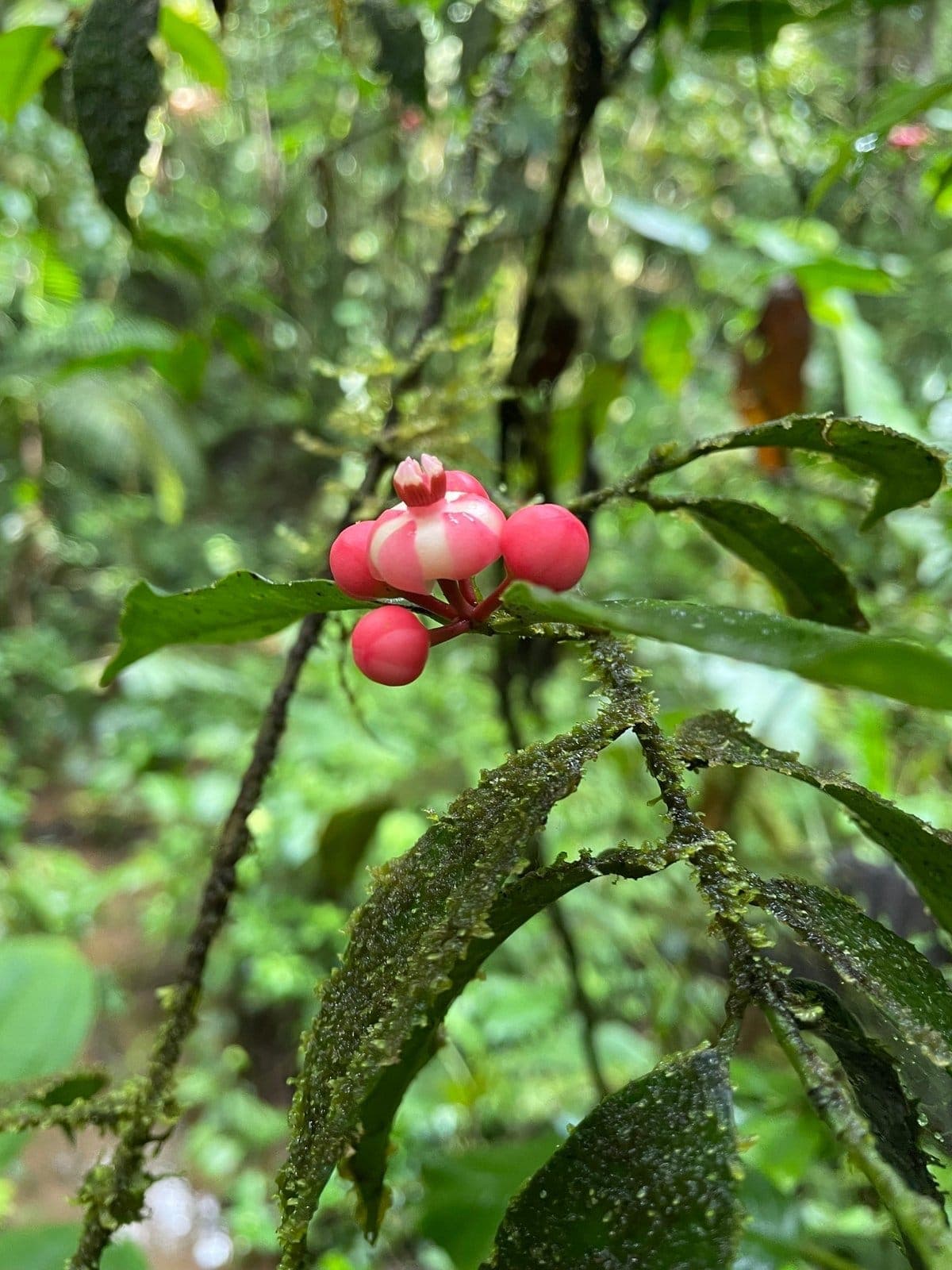
Whole tree
📷 (c) The Leach, some rights reserved (CC BY-NC)(CC BY-NC)
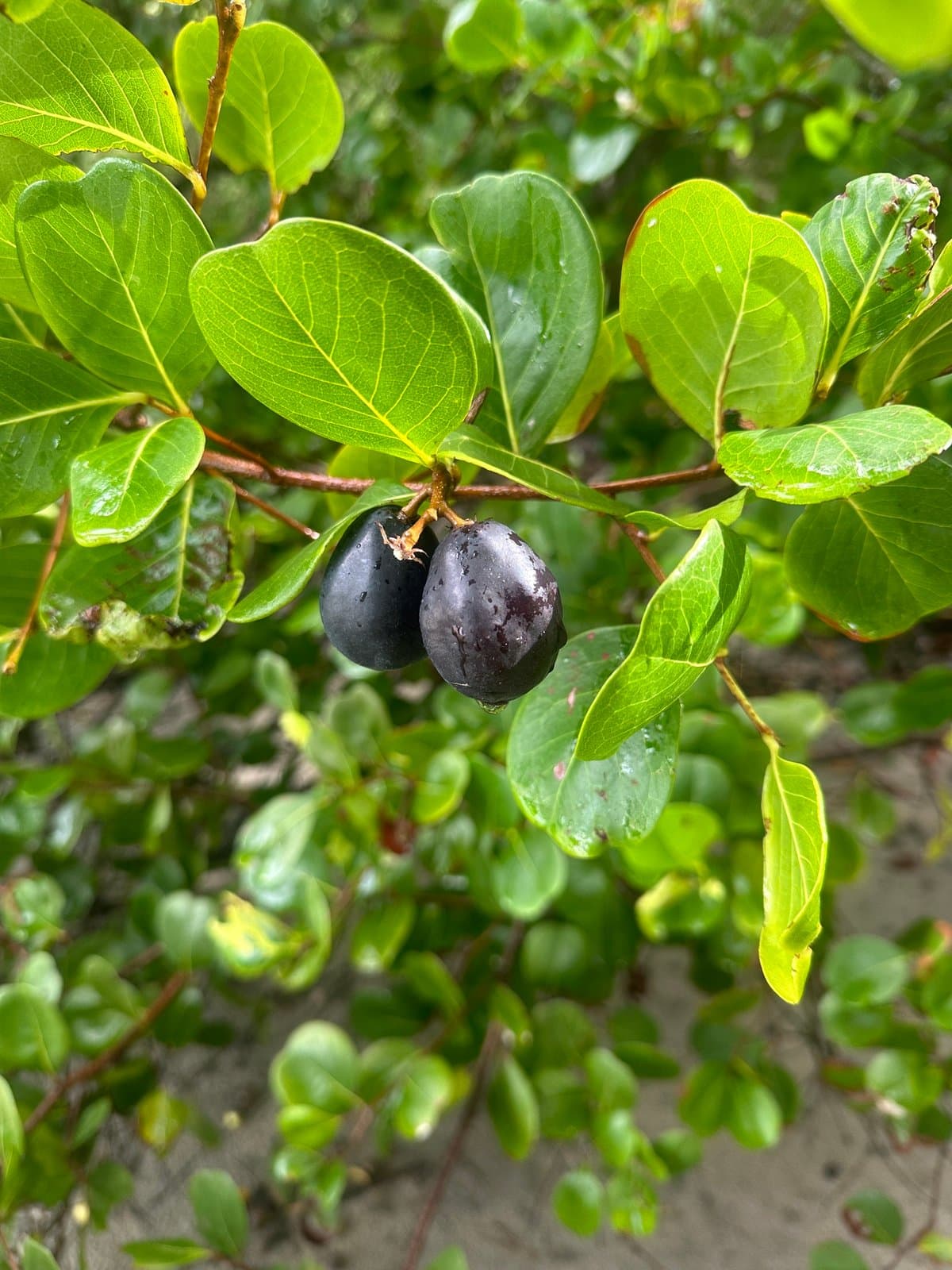
View source ↗Leaves
📷 (c) The Leach, some rights reserved (CC BY-NC)(CC BY-NC)
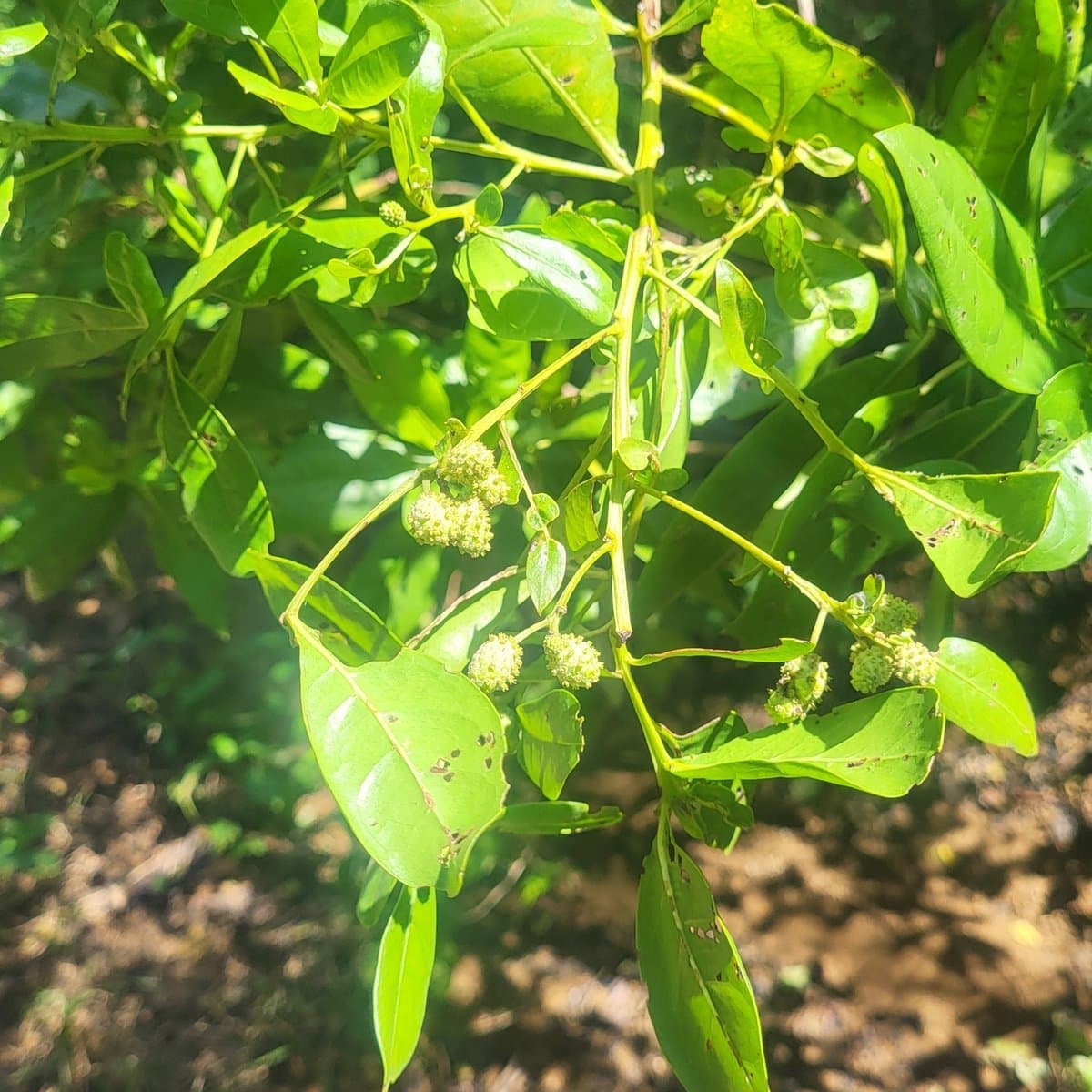
View source ↗Flowers
📷 (c) M. Whitson, some rights reserved (CC BY)(CC BY-NC)
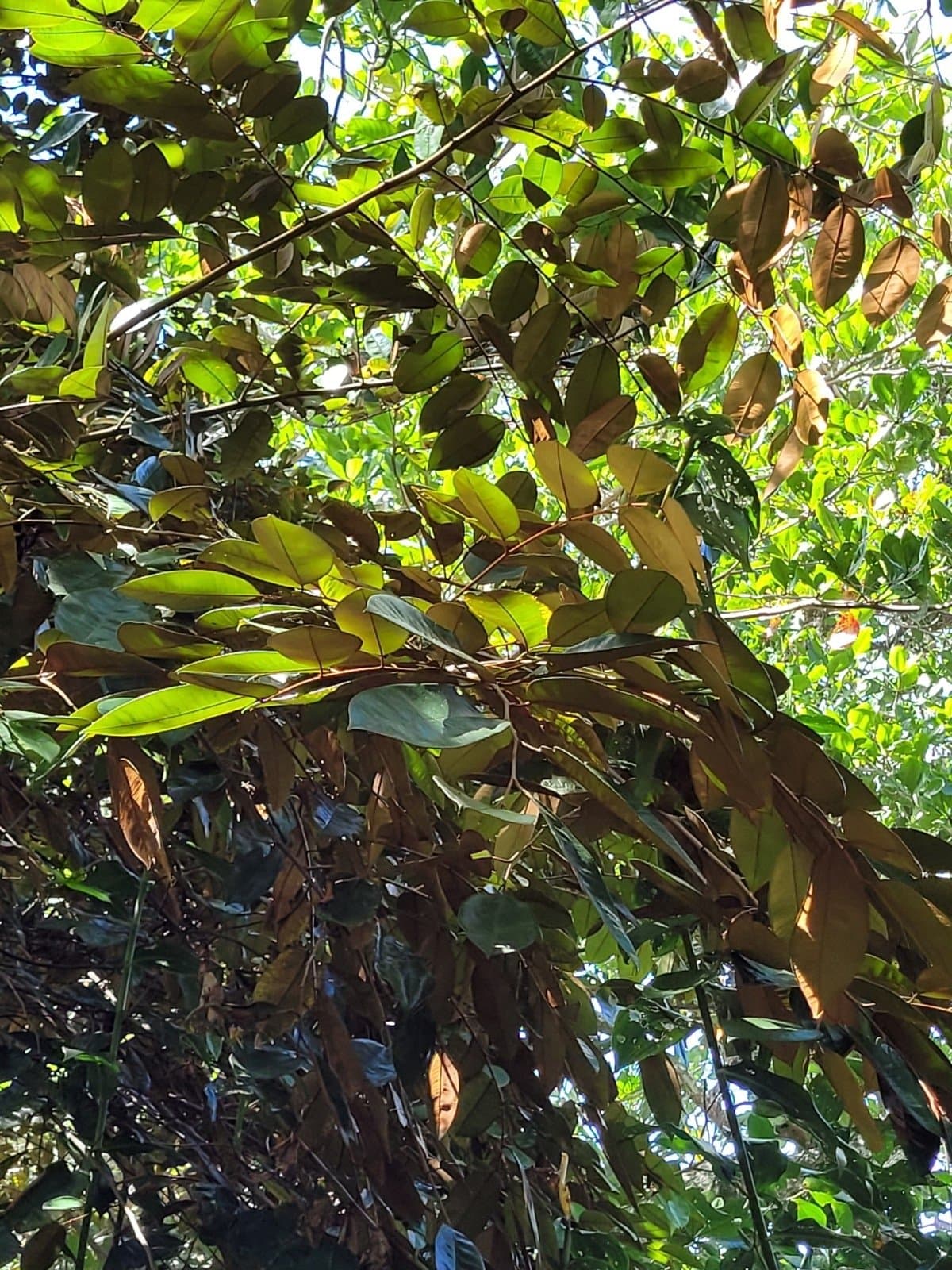
View source ↗Whole tree
📷 (c) samantha_calderon, some rights reserved (CC BY-NC)(CC BY-NC)
View source ↗Leaves
📷 (c) izpillow, some rights reserved (CC BY-NC)(CC BY-NC)
View source ↗Photos sourced from iNaturalist community science database. View all observations →↗
Taxonomy and Classification
- Clusia: Honors Carolus Clusius (Charles de l'Écluse), Flemish botanist - rosea: Latin for "rose-colored," referring to the flowers - Copey: Costa Rican name of indigenous origin - Autograph Tree: From the inscribable leaves
Common Names
Physical Description
Overall Form
Copey is a highly adaptable tree that can grow as an independent tree, a strangler (hemi-epiphyte), or even on rocks. It has a dense, rounded crown with distinctive thick, leathery leaves. The branches often produce aerial roots, and the trunk can become massive and irregular when the tree starts as an epiphyte and eventually strangles its host.
Distinctive Features
Leaves
- Type: Simple, opposite
- Size: 10-20 cm long
- Shape: Obovate (wider toward tip)
- Texture: Very thick, leathery, waxy
- Color: Dark glossy green
- Feature: Can be inscribed ("autographed")
Bark
- Color: Gray to brown
- Texture: Smooth to slightly rough
- Latex: Produces yellow-green sticky sap
- Aerial roots: Common from branches
Flowers
- Size: 6-8 cm diameter
- Color: White with pink tinge
- Petals: 6-8, thick and waxy
- Sexes: Dioecious (separate male/female trees)
- Fragrance: Light, pleasant
- Resin: Flowers produce sticky resin
Fruits
- Type: Capsule
- Size: 5-8 cm diameter
- Color: Green turning brown/black
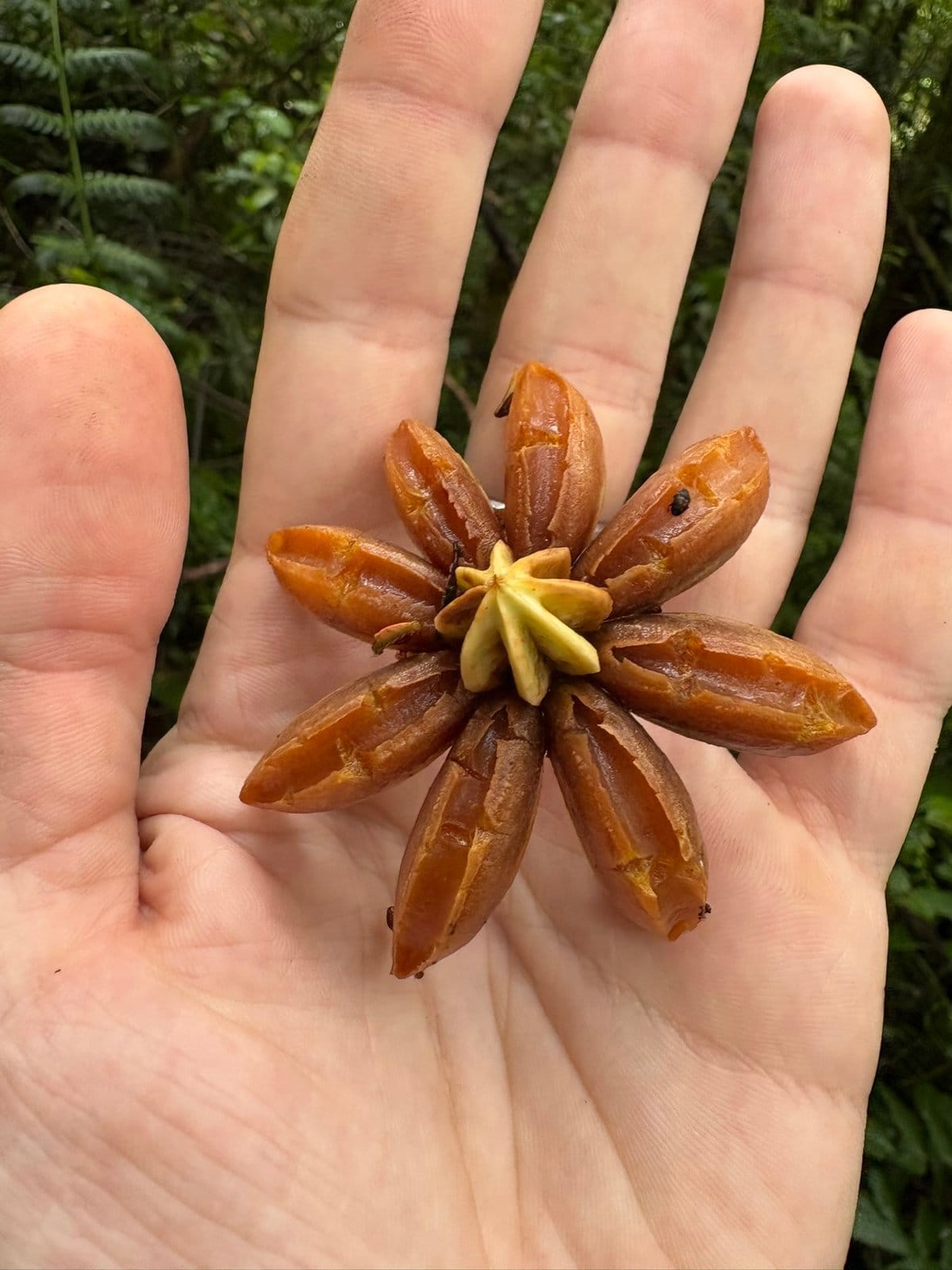
- Segments: Opens like a star (6-9 segments)
- Seeds: Covered in red-orange aril
- Wildlife: Important food source
The Autograph Feature
Nature's Notepad
The thick, waxy cuticle of Copey leaves allows them to be "inscribed" with a fingernail or pointed object. The scratched area turns brown and remains visible as the leaf grows, persisting for months or even years. This led to its common name "Autograph Tree" and has been used for everything from love messages to botanical labels.
How It Works
- Thick waxy cuticle on leaf surface
- Scratching damages outer cell layers
- Damaged cells die and turn brown
- Marks expand slightly as leaf grows
- Messages persist until leaf falls
- Works best on younger leaves
Historical Uses
- Sailors' messages in Caribbean
- Love letters between couples
- Botanical specimen labels
- Natural curiosity and games
- Educational demonstrations
- Tourist attraction feature
Hemi-Epiphytic Lifestyle
Starting Life in the Canopy
Copey exemplifies ecological flexibility. It can grow as a normal tree from the ground, OR start life as an epiphyte when birds deposit seeds in tree branches. In the epiphytic form, it sends roots down to the ground and can eventually strangle and replace its host tree—similar to strangler figs.
Epiphytic Start
- Bird deposits seed in tree branch
- Seedling establishes on host
- Roots grow down toward ground
- Plant becomes more independent
- May eventually strangle host
- Stands alone when host dies
Why This Strategy?
- Access to light above forest floor
- Escape ground-level competition
- Birds disperse seeds widely
- Can colonize diverse habitats
- Resilient to disturbance
- Opportunistic establishment
Distribution in Costa Rica
Copey is remarkably versatile in Costa Rica, found from beach dunes to cloud forests. It's common in both Caribbean and Pacific lowlands, abundant in middle elevations, and reaches into premontane forests. You'll see it as an ornamental tree in gardens, wild in forests, and naturalized along roadsides.
Regional Distribution
Ecological Role
Wildlife Value
Animals Attracted
- Birds: Eat fruit arils, disperse seeds
- Bats: Feed on fruits at night
- Bees: Visit male flowers for resin
- Monkeys: Eat fruits
- Insects: Many species associated
- Epiphytes: Host orchids, bromeliads
Ecosystem Services
- Coastal erosion control
- Windbreak protection
- Food source for wildlife
- Nesting sites in branches
- Microhabitat for epiphytes
- Carbon storage
Resin-Collecting Bees
Copey flowers are unusual in offering resin rather than nectar as a reward. Stingless bees (Meliponini) and other specialized bees collect this resin to build their nests. This creates a unique pollination relationship where bees visit for construction materials rather than food.
Coastal Adaptations
Beach Survivor
Salt Tolerance
- Thick waxy leaf coating
- Efficient water storage
- Salt-excluding roots
- Wind-resistant form
- Sandy soil tolerance
- Full sun capability
Uses in Coastal Areas
- Beach windbreaks
- Erosion control
- Ornamental hedge
- Coastal restoration
- Hurricane resilience
- Dune stabilization
Uses & Applications
Traditional Medicine
Indigenous Caribbean and Central American communities used various parts of the Copey for medicinal purposes:
- Latex/Resin: Applied to wounds as a natural antiseptic bandage; the sticky latex seals cuts and prevents infection. Used to treat skin ulcers and dermatitis
- Leaf poultices: Heated leaves placed on swollen joints and muscles for pain relief
- Fruit resin: Taken in small quantities as a purgative and to treat intestinal parasites
- Bark tea: Brewed as a remedy for fevers and rheumatic pain in some Caribbean islands
- Seed oil: The oily seed coating was used in some preparations for skin conditions
The medicinal information above is provided for educational purposes only. Copey latex and fruit contain bioactive compounds that can cause digestive upset in larger quantities. Do not self-medicate with this plant. Consult qualified healthcare professionals.
Resin & Industrial Uses
The copious sticky resin produced by Copey has practical applications:
- Boat caulking: Indigenous Caribs and early European settlers used the resin ("pitch") to waterproof canoes and small boats, leading to the name "Pitch Apple"
- Torches: Resin-soaked bark or wood burns steadily and was used for torches
- Adhesive: Natural glue for binding tools and sealing containers
- Modern research: Clusia resin compounds are being studied for antimicrobial and anti-inflammatory properties, including xanthones and benzophenones with potential pharmaceutical applications
Ornamental & Landscape Value
Copey is widely planted as an ornamental throughout the tropics and subtropics:
- Coastal landscaping: One of the best trees for beachfront properties, surviving salt spray, wind, and sandy soils
- Hedges and screens: Dense foliage makes excellent privacy screens and windbreaks
- Container growing: Slow indoor growth makes it suitable for large containers (patios, atriums)
- Street tree: Used in urban areas in Caribbean islands for shade and aesthetics
- Educational gardens: The autograph feature makes it popular in botanical gardens and school grounds
Erosion Control & Environmental Services
- Dune stabilization: Extensive root systems bind sandy coastal soils
- Windbreaks: Dense evergreen crown protects inland areas from coastal winds
- Carbon sequestration: Thick, long-lived leaves store significant carbon
- Microhabitat creation: Branches host epiphytic orchids, bromeliads, ferns, and mosses
Sources: IUCN Red List↗, GBIF species profile↗, Kew POWO↗, Tropicos↗
Cultural & Historical Significance
Indigenous Heritage
Caribbean indigenous peoples, particularly the Taíno and Carib (Kalinago), had deep knowledge of the Copey. The Taíno name "cupey" is the origin of the Spanish "copey." They valued the tree for:
- Practical purposes: Resin for waterproofing, adhesive, and medicine
- Communication: Leaves served as natural writing surfaces for messages and records
- Spiritual significance: In some traditions, the tree's ability to grow from seemingly nothing (as an epiphyte) gave it symbolic meaning related to resilience and adaptability
- Food provision: While fruits aren't edible to humans, the tree's role in feeding birds and wildlife was recognized
Colonial and Maritime History
During the Age of Exploration (15th-18th centuries), Copey became well-known to European naturalists and sailors:
- Botanical documentation: The genus Clusia was named by Linnaeus in honor of Carolus Clusius (1526-1609), the Flemish botanist who was one of the founders of modern botany. Clusius documented many New World plants, though Clusia was formally described later
- Sailors' message boards: Caribbean sailors and pirates reportedly used Copey leaves to leave messages at known stops, creating rudimentary communication networks between ships
- Patrick Browne: The Irish physician and botanist documented Copey extensively in his 1756 work The Civil and Natural History of Jamaica, noting the resin and leaf properties
Costa Rican Significance
In Costa Rica, the Copey holds ecological and cultural importance:
- Cloud forest icon: In Monteverde and other highland areas, epiphytic Copey trees draped in mosses and orchids are iconic images of Costa Rican cloud forests
- Ecological education: Used in environmental education programs to teach about epiphytism, plant strategies, and tropical ecology
- Place names: "Copey" appears in Costa Rican geography — the town of Copey in Dota canton (San José province) at ~1,800 m elevation is named after the tree
- Garden tradition: Commonly planted in Costa Rican gardens for shade and curiosity value
Conservation Status
Clusia rosea is assessed as Least Concern (LC) by the IUCN. The species has a wide geographic distribution across the Caribbean Basin and Central America, and its populations are generally stable. It is adaptable to disturbed habitats and is commonly planted as an ornamental.
Current Status
Globally, Copey is not threatened. Its ability to colonize diverse habitats — from coastal rocks to cloud forest canopies — gives it natural resilience. The species is common throughout its range and is widely cultivated, ensuring robust populations.
Threats
Despite the favorable conservation status, some pressures exist:
- Coastal development: Beach and dune habitat destruction removes natural Copey populations along coastlines, particularly in heavily developed tourist areas
- Cloud forest fragmentation: In highland areas where Copey grows as an epiphyte, forest fragmentation reduces available habitat and disrupts seed dispersal by birds
- Invasive species: In some regions outside its native range (notably Hawaii and parts of tropical Asia), Clusia rosea itself has become invasive, outcompeting native vegetation — this is a conservation concern in those areas, not in Costa Rica
- Climate change: Shifts in cloud formation patterns could affect epiphytic populations in cloud forests where Copey depends on moisture from fog and mist
Protection Measures
- Present in numerous Costa Rican protected areas including Monteverde Cloud Forest Reserve, Cahuita National Park, Manuel Antonio, and Corcovado
- Commonly planted in reforestation and coastal restoration projects
- Widely cultivated, ensuring genetic diversity is maintained in cultivation
- No harvest restrictions needed due to abundance
Sources: IUCN Red List↗, GBIF species profile↗, Kew POWO↗, iNaturalist observations↗
Where to See Copey in Costa Rica
Copey is one of the easiest native trees to find in Costa Rica, from sea level beaches to 2,000 m cloud forests. Look for its distinctive thick, glossy leaves and — in epiphytic form — its aerial roots cascading down from host trees.
Top Viewing Locations
Identification Tips in the Field
- Year-round: Thick, glossy, obovate leaves in opposite pairs — try inscribing a leaf with your fingernail
- April-August: Look for large white-pink waxy flowers (6-8 cm)
- July-November: Star-shaped capsule fruits that split open to reveal red-orange seed arils
- Cloud forests: Look UP — epiphytic individuals grow high in host trees with cascading aerial roots
- Beaches: Look for sturdy, wind-sculpted trees on dunes and rocky shores
Growing Copey
Cultivation Requirements
Propagation Methods
From Seed:
- Collect ripe capsules when they begin to split open (July-November)
- Remove seeds from sticky red arils by washing
- Sow immediately — seeds lose viability quickly (1-2 months)
- Plant 1 cm deep in well-draining potting mix
- Keep warm (25-30°C) and moist; germination in 3-6 weeks
- Germination rate: 40-60%
From Cuttings (recommended):
- Take semi-hardwood tip cuttings 15-20 cm long
- Remove lower leaves, keep 2-4 leaves at tip
- Apply rooting hormone (IBA 1000-3000 ppm)
- Plant in perlite/peat mix or coarse sand under high humidity
- Roots form in 4-8 weeks; success rate 60-80%
- Cuttings produce flowering trees faster than seedlings
Air Layering (most reliable):
- Select healthy branch 2-3 cm diameter
- Make ring cut removing 2 cm band of bark
- Apply rooting hormone to exposed cambium
- Wrap with moist sphagnum and plastic
- Roots develop in 6-12 weeks; success rate 80-90%
- Produces large transplantable tree quickly
Planting & Care
- Site preparation: Choose location with good drainage; amend heavy clay with sand/compost
- Spacing: 5-8 m apart for shade trees; 2-3 m for hedges
- Planting: Plant at same depth as nursery container; water deeply at planting
- Watering: Regular watering first year; drought tolerant once established (2+ years)
- Fertilization: Light application of balanced fertilizer (10-10-10) twice yearly during growing season
- Pruning: Responds well to pruning; trim to desired shape. Prune after flowering for best results
- Mulching: Apply 5-10 cm organic mulch around base to retain moisture
Common Cultivation Issues
- Slow initial growth: Normal — Copey grows slowly in the first 1-2 years while establishing roots. Growth accelerates after establishment
- Sticky latex: Resin stains clothing and is difficult to remove. Use gloves when pruning
- Root damage to structures: When planted as epiphyte on other trees or too close to buildings, aerial roots can cause damage. Plant at least 5 m from structures
- Scale insects: Occasional infestations of scale on leaves; treat with horticultural oil spray
- Cold damage: Leaves brown and drop below 4°C; the tree recovers if cold is not prolonged
Growth Expectations
- Year 1-3: 30-50 cm/year; developing root system
- Years 3-10: 50-80 cm/year; canopy development
- Years 10-20: Slowing growth; reaching mature size of 10-15 m (up to 20 m in optimal conditions)
- Lifespan: Can live 50-100+ years
Ornamental Use
Copey makes an excellent ornamental tree due to its attractive form, glossy leaves, beautiful flowers, and tolerance of challenging conditions. It's particularly valuable for coastal landscapes where few other ornamentals survive. The "autograph" feature makes it a conversation piece in gardens.
Interesting Facts
Similar Species
How to Distinguish Copey
Unique combination of features that separate Clusia rosea from all look-alikes:
- Inscribable leaves: No other tree species in Costa Rica has leaves thick enough to scratch permanent messages into
- Yellow-green sticky latex: Different from the white milky latex of Ficus species
- Star-shaped fruit capsules: Split open into 6-9 segments revealing red-orange arils
- Opposite, thick leaves: Combined thickness and opposite arrangement is distinctive
- Both terrestrial and epiphytic: Few trees show both growth strategies as regularly as Copey
External Resources
Community observations and photos from throughout its range
Global distribution records and occurrence data
Authoritative taxonomic information and accepted names
Comprehensive information on uses and cultivation
Taxonomic information and global botanical database
Missouri Botanical Garden herbarium specimens and botanical data
References
-
Hammel, B.E., Grayum, M.H., Herrera, C., & Zamora, N. (eds.) (2004). Manual de Plantas de Costa Rica, Vol. V: Dicotyledoneae (Clusiaceae–Gunneraceae). Missouri Botanical Garden Press, St. Louis.
-
Lüttge, U. (2007). Clusia: A woody neotropical genus of remarkable plasticity and diversity. Ecological Studies, Vol. 194. Springer-Verlag, Berlin.
-
Browne, P. (1756). The Civil and Natural History of Jamaica. London. [Original description of Copey properties]
-
Janzen, D.H. (ed.) (1983). Costa Rican Natural History. University of Chicago Press.
-
González, J., & Poveda, L.J. (1986). Árboles de Costa Rica. Centro Científico Tropical, San José.
-
Holdridge, L.R., Poveda, L.J., & Jiménez, Q. (1997). Árboles de Costa Rica, Vol. I. Centro Científico Tropical, San José.
-
Gustafsson, M.H.G., Winter, K., & Bittrich, V. (2007). Diversity, phylogeny and classification of Clusia. In: Lüttge, U. (ed.), Clusia: A Woody Neotropical Genus of Remarkable Plasticity and Diversity. Ecological Studies 194: 95-116.
-
Lüttge, U. (2006). Photosynthetic flexibility and ecophysiological plasticity: questions and lessons from Clusia, the only CAM tree, in the neotropics. New Phytologist 171(1): 7-25.
-
Zotz, G. & Winter, K. (1994). Photosynthesis and carbon gain of the lichen, Leptogium azureum, in a lowland tropical forest. Flora 189: 179-186.
-
Fournier, L.A. & García, J. (1998). Nombres vernáculos y científicos de árboles de Costa Rica. Editorial Guayacán, San José, Costa Rica.
-
Nadkarni, N.M. (1984). Epiphyte biomass and nutrient capital of a neotropical elfin forest. Biotropica 16(4): 249-256.
-
The IUCN Red List of Threatened Species. (2024). Clusia rosea. Version 2024.1. https://www.iucnredlist.org
Safety Information Disclaimer
Safety information is provided for educational purposes only. Individual reactions may vary significantly based on age, health status, amount of exposure, and individual sensitivity. Always supervise children around plants. Consult a medical professional or certified arborist for specific concerns. The Costa Rica Tree Atlas is not liable for injuries or damages resulting from interaction with trees described in this guide.
• Always supervise children around plants
• Consult medical professional if unsure
• Seek immediate medical attention if poisoning occurs
Information compiled from authoritative toxicology sources, scientific literature, and medical case reports.
Help improve this page
Know something about this tree? Share local knowledge, suggest a correction, or submit a photo to improve this guide for everyone.