Contra
Rauvolfia tetraphylla
Quick facts
Native Region
Tropical America and the Caribbean; naturalized in additional tropical regions
Max Height
6 m (20 ft)
Family
Apocynaceae
Conservation
LC — Least Concern
Uses
Safety Information
HIGH RISK
Do not use roots, bark, or leaves for self-medication. Keep this species away from unsupervised children and domestic animals.
Toxicity Details
Rauvolfia species contain pharmacologically active indole alkaloids (including reserpine-type compounds). Ingestion of plant material can cause serious cardiovascular and neurological effects.
Skin Contact Risks
Routine contact with bark or leaves is usually low risk, but wash hands after handling plant tissue or latex.
Allergenic Properties
Allergen risk is generally low, though sensitive individuals may react to pollen or fresh plant sap.
Structural Hazards
No unusual branch-failure profile is documented for mature plants under normal management.
Wildlife & Pet Risks
Birds can consume ripe fruits with limited impact, but domestic herbivores should not browse foliage extensively.
First Aid & Emergency Response
• If ingested, seek immediate medical attention. Do not induce vomiting unless directed by medical professional.
• If sap contacts skin, wash immediately with soap and water. Seek medical attention if blistering or severe irritation occurs.
• If sap enters eyes, flush immediately with clean water for 15 minutes and seek emergency medical care.
Costa Rica Emergency: 911
Costa Rica Poison Control: 2223-1028
Season
Flowering
Mar-Jul
Fruiting
Jun-Oct
How to identify
Contra (Devil Pepper)
Contra (Rauvolfia tetraphylla) has a long ethnobotanical history, but it contains strong bioactive compounds. This is a species for informed, controlled use and not for unsupervised home remedies.
Quick Reference
iNaturalist Observations
Community-powered species data
📸 Photo Gallery
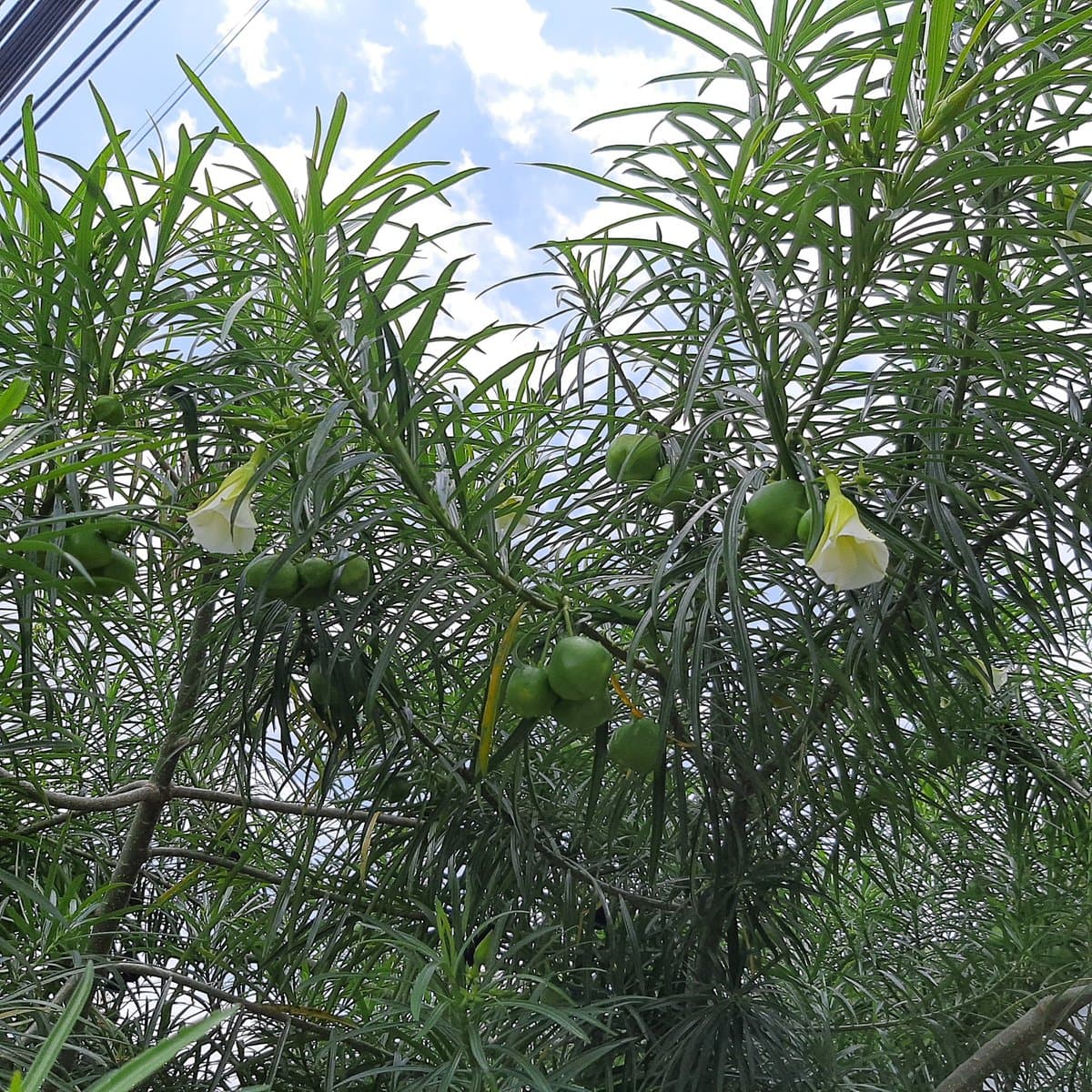
Whole tree
📷 (c) prestonb1217, some rights reserved (CC BY-NC)(CC BY-NC)
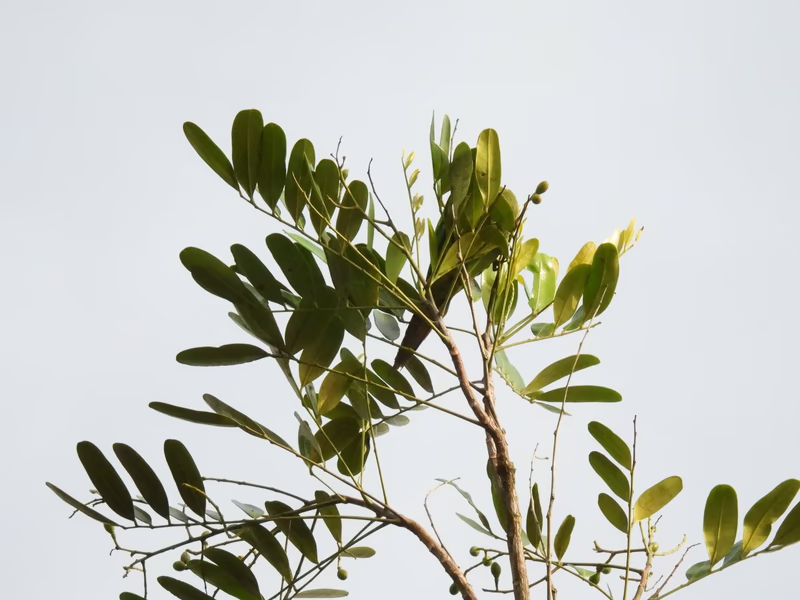
View source ↗Leaves
📷 (c) Marina, some rights reserved (CC BY-NC)(CC BY-NC)
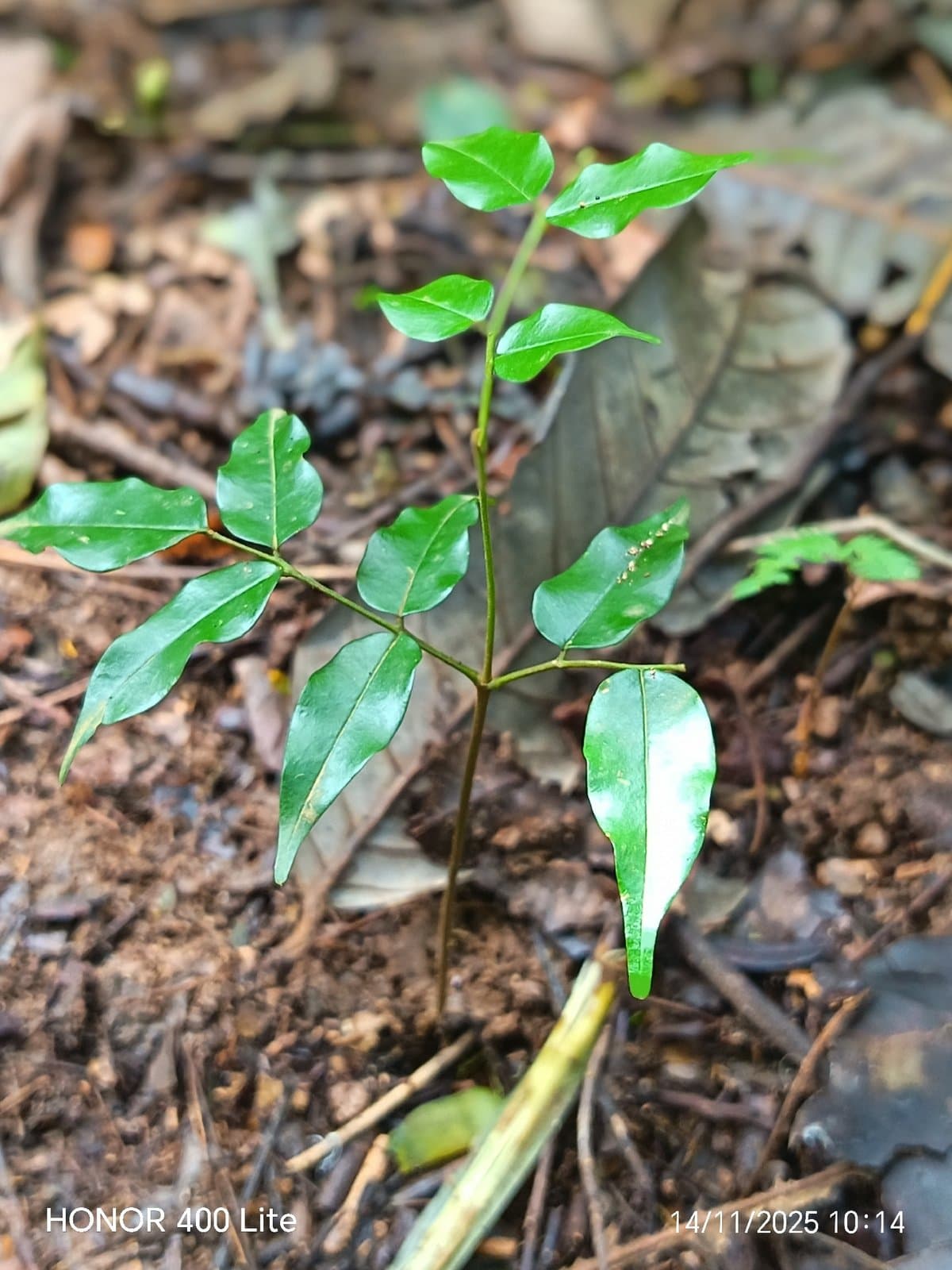
View source ↗Whole tree
📷 (c) Marina, some rights reserved (CC BY-NC)(CC BY-NC)
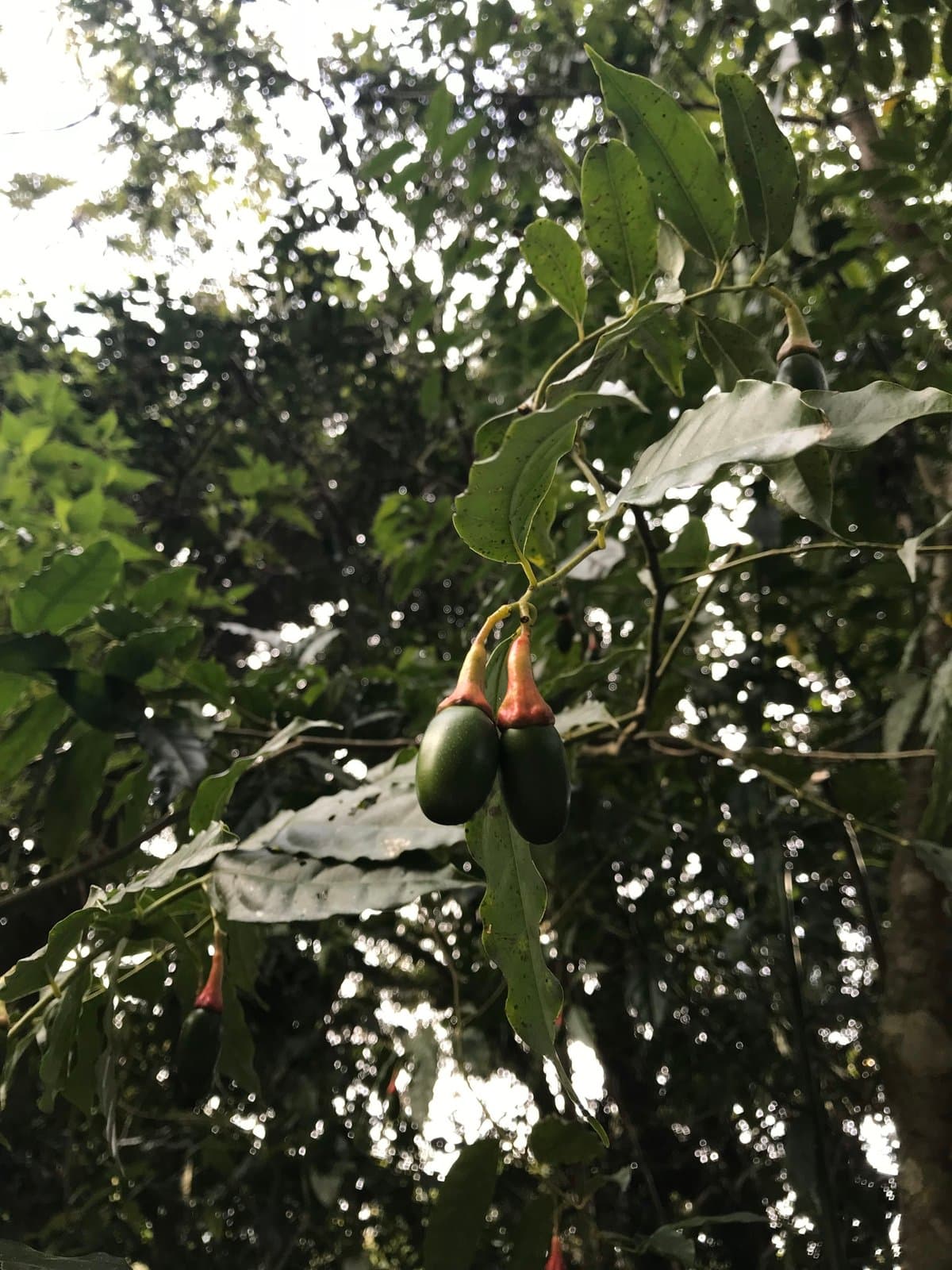
View source ↗Leaves
📷 (c) Marina, some rights reserved (CC BY-NC)(CC BY-NC)
View source ↗Whole tree
📷 (c) Eduardo Quintero 🌵, some rights reserved (CC BY-NC)(CC BY-NC)
View source ↗Images are sourced via GBIF occurrence media and iNaturalist observation records under listed licenses.
Taxonomy & Classification
Physical & Botanical Description
- Evergreen shrub to small tree, usually 3-6 m tall.
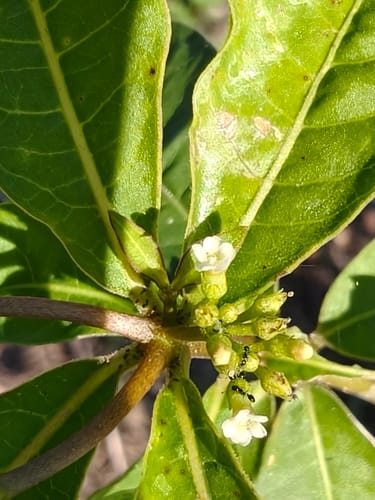
- Opposite to whorled leaves, glossy dark green, elliptic to obovate.
- Small white to greenish flowers in compact clusters.
- Fruits mature from green to red-purple and eventually dark.
- Root and bark tissues are chemically active and require safe handling.
Geographic Distribution
Geographic Distribution
Elevation: 0-1400 m
In Costa Rica, contra appears in warm lowlands and foothills, especially in secondary growth, fence lines, and mixed rural vegetation.
Habitat & Ecology
- Occurs in disturbed forest edges, shrublands, and seasonally dry tropical zones.
- Flowers attract insects; fruits are consumed and dispersed by birds.
- Tolerates pruning and can regenerate from basal shoots after cutting.
- Useful as a hardy shrub in biodiversity strips when safely managed.
Uses & Applications
Sources: IUCN Red List — Rauvolfia tetraphylla↗, Plants of the World Online (Kew) — Rauvolfia tetraphylla↗, GBIF — Rauvolfia tetraphylla↗
Ethnobotanical relevance
- Historically referenced in traditional medicine for cardiovascular and nervous system indications.
- Included in educational medicinal gardens and pharmacognosy collections.
- Used as a hedge plant in some tropical regions.
Safety and ethics
Given its alkaloid profile, medicinal use should remain under qualified clinical supervision.
Conservation Status
IUCN Red List: Least Concern (LC).
Conservation concerns are mainly local and linked to habitat simplification and loss of native shrublands, rather than global extinction risk.
Growing Contra
- Plant in well-drained sites with morning sun or partial shade.
- Irrigate during the first two dry seasons for stronger root development.
- Prune annually to maintain a stable multi-stem structure.
- Use gloves during heavy pruning or root work.
- Keep labels and safety notes in educational plantings.
Contra can be grown successfully in botanical collections, but should always be managed as a toxic medicinal species.
Advanced Care Guidance
Site Design and Planting
- Plant in well-drained loam with full morning light and afternoon shade in hot lowland sites.
- Keep 2-3 m spacing for hedgerows and educational medicinal gardens.
- Place away from school play zones, pet runs, and edible-only garden beds due toxic alkaloids.
Watering Program
- Establishment (0-6 months): Deep irrigation 1-2 times weekly in dry periods.
- Juvenile phase (6-24 months): Water every 10-14 days during drought if foliage wilts.
- Established shrubs/trees: Irrigate only during prolonged dry-season stress to maintain flowering and fruit set.
Fertilization Schedule
- Add compost at planting and refresh organic mulch twice per year.
- Apply a moderate balanced fertilizer (for example 15-15-15) at early rainy season and once again mid season.
- Avoid excessive nitrogen that causes weak, overly succulent shoots.
Pruning and Structure
- Maintain a controlled multi-stem form with annual thinning after fruiting.
- Remove inward or crossing branches to improve airflow and reduce pathogen pressure.
- Use gloves, long sleeves, and sanitation tools when handling roots, bark, and sap.
Pest and Disease Management
- Watch for scale insects, mealybugs, and ant activity on young stems.
- Prevent root disease by avoiding standing water and compacted soils.
- Combine sanitation pruning, biological controls, and spot treatment only when pressure exceeds tolerance.
Companion Planting
- Recommended companions: Native hedgerow shrubs, pollinator herbs, and clearly labeled medicinal species collections.
- Agroforestry role: Biodiversity strip component and medicinal education plant where risk is managed.
- Avoid nearby: High-traffic children areas, unmarked edible gardens, and forage zones for pets or livestock.
Seasonal Care Calendar (Costa Rican Conditions)
- Dry season (Dec-Apr): Safety inspections, targeted irrigation, and light canopy cleanup.
- Early rains (May-Jul): Main fertilization window, replanting, and structural pruning.
- Peak rains (Aug-Oct): Drainage checks, fungal scouting, and minimal heavy cuts.
- Transition (Nov): Label maintenance, sanitation cycle, and preparation for dry-season monitoring.
Growth Timeline and Management Notes
- Establishes as a functional hedge in year 1 and develops stronger woody form by years 2-3.
- Fruiting and medicinal-collection maturity typically improve from years 2-4.
- Long-term success depends on consistent safety labeling and controlled access.
Field Identification and Similar Species
High-confidence visual cues
- Leaves are opposite to whorled and usually glossy, with a compact evergreen appearance in warm sites.
- Flower clusters are small and pale (white to greenish), less showy than many ornamental shrubs.
- Fruits transition from green to red-purple and then dark when fully mature.
- Multi-stem habit is common in managed hedges and disturbed-edge populations.
- Root-zone tissues and bark are not visually diagnostic on their own; combine vegetative and reproductive features for reliable identification.
Frequent look-alikes in medicinal discussions
Risk-aware identification protocol
- Confirm scientific identity before any medicinal interpretation or collection discussion.
- Document leaves, flowers, and fruit stage in the same specimen whenever possible.
- Keep location and habitat notes because disturbance context helps narrow likely species.
- Avoid root disturbance during uncertain identification because roots are among the highest-risk tissues.
- Escalate uncertain records to botanists or herbarium-supported references.
Seasonal Phenology and Safety Operations
Contra management should combine ecological care with a strict safety routine. Use this annual matrix as a baseline for Costa Rican lowland and foothill conditions.
Controlled Cultivation Playbook
Educational medicinal gardens
- Maintain clear species labeling that includes toxicity warning language.
- Separate contra physically from culinary and child-interaction zones.
- Use lockable tool protocols for root and bark handling tasks.
- Keep documented maintenance logs for pruning, waste disposal, and visitor incidents.
Living hedge applications
- Train as a managed multistem hedge with annual structural cycles.
- Keep lower canopy transparent enough for visual monitoring and signage visibility.
- Avoid placement along school entrances or high-contact recreation corridors.
- Remove volunteer seedlings outside designated hedge boundaries.
Biodiversity strip integration
- Combine with non-toxic pollinator shrubs to diversify flowering resources.
- Use contra in clearly designated zones where controlled educational value is relevant.
- Keep maintenance staff trained on plant-specific PPE and first-response protocols.
- Retain moderate height profiles to reduce branch-contact risk near pathways.
Waste handling and sanitation
- Bag and remove pruning residues from public-access areas the same day.
- Avoid composting roots and bark in community-access compost piles.
- Sanitize tools after each maintenance cycle to reduce disease carryover.
- Record disposal routes for institutional gardens with compliance requirements.
Monitoring Checklist (First Five Years)
Common Mistakes and Corrective Actions
Where to See Contra in Costa Rica
- Rural hedgerows and secondary vegetation in Guanacaste.
- Lowland mixed-use landscapes of the Central Pacific.
- Caribbean foothill mosaics in Sarapiqui and nearby zones.
- Botanical and ethnobotanical educational gardens.
External Resources
Field Workbook Appendix
This appendix is a practical planning tool for teams managing this species in real field conditions. Use it as a repeatable operations reference for maintenance, reporting, and adaptive decisions.
Detailed Monthly Checklist
January
- Confirm dry-season access routes for maintenance and monitoring.
- Review irrigation backup plans for recently established individuals.
February
- Recheck mulch depth and root-zone moisture retention.
- Log any early stress indicators before peak dry pressure.
March
- Inspect structural form and remove urgent hazard defects only.
- Prepare materials and crew plans for rainy-season intervention.
April
- Finalize nursery or replacement stock lists for next planting pulse.
- Validate field labels, plot IDs, and baseline photo points.
May
- Execute primary planting and replacement operations.
- Record weather windows and establishment conditions by microzone.
June
- Perform first rainy-season survival audit.
- Apply targeted nutrition only where growth response is weak.
July
- Update canopy and competition notes for each management unit.
- Correct minor structural issues while tissue recovery is strong.
August
- Intensify disease scouting during high humidity periods.
- Prioritize drainage checks in compacted or flood-prone microsites.
September
- Reassess stand density and airflow in crowded sectors.
- Schedule selective thinning where suppression risk is increasing.
October
- Evaluate reproductive output and wildlife interaction indicators.
- Flag priority plots for late-season corrective actions.
November
- Conduct pre-dry-season infrastructure and safety checks.
- Update next-year workplan based on observed bottlenecks.
December
- Complete end-of-year data consolidation and photo comparison sets.
- Confirm staffing, tools, and resource readiness for dry-season operations.
Site Decision Matrix
Annual Technical Audit Template
- Verify survival percentage by plot, zone, and planting cohort.
- Compare annual growth indicators against prior-year baseline.
- Review branch architecture and structural safety trends.
- Confirm canopy competition status relative to target companion species.
- Check root-zone condition and drainage functionality.
- Audit irrigation consistency during critical dry windows.
- Evaluate mulch quality and decomposition cycles.
- Verify nutrient applications and response outcomes.
- Review pest and disease records for trend acceleration.
- Confirm sanitation protocol compliance in all teams.
- Reassess access routes and emergency movement pathways.
- Validate all signage, species IDs, and plot coding systems.
- Confirm photo-monitoring points and archive completeness.
- Review phenology records for flowering and fruiting reliability.
- Check wildlife interaction notes where relevant.
- Evaluate erosion control performance in sensitive microsites.
- Reconcile field logs with digital records for data integrity.
- Identify repeated failure points and unresolved action items.
- Document successful interventions worth standardizing.
- Prioritize next-year investment areas by risk and impact.
- Update crew assignments for skill-critical operations.
- Confirm tool maintenance and replacement needs.
- Publish a short annual summary for project stakeholders.
- Carry unresolved high-risk items into the first quarter action plan.
Training Priorities for New Crew Members
- Species-safe handling protocols and PPE use expectations.
- Accurate field identification and uncertainty escalation steps.
- Proper planting depth and root preparation techniques.
- Early-stage pruning limits and timing windows.
- Weed-release standards for juvenile establishment.
- Mulch placement rules to prevent collar rot.
- Moisture-monitoring methods and irrigation documentation.
- Drainage troubleshooting in difficult microsites.
- Disease scouting basics and sanitation sequence.
- Pest threshold recognition for targeted response.
- Correct use of plot tags and label replacement workflow.
- Photo documentation standards for before/after comparison.
- Safe movement in muddy or unstable terrain.
- Storm response checklists and post-event hazard scans.
- Criteria for selective thinning versus no intervention.
- Data logging discipline and same-day record closure.
- Communication protocol for urgent field findings.
- Respectful coordination with local communities and landowners.
- Waste handling and residue management procedures.
- End-of-day quality review before leaving the site.
References
- GBIF Backbone Taxonomy: Rauvolfia tetraphylla.
- IUCN Red List species account for Rauvolfia tetraphylla.
- iNaturalist and GBIF occurrence records for image and distribution context.
- Plants of the World Online, Royal Botanic Gardens, Kew.
Safety Information Disclaimer
Safety information is provided for educational purposes only. Individual reactions may vary significantly based on age, health status, amount of exposure, and individual sensitivity. Always supervise children around plants. Consult a medical professional or certified arborist for specific concerns. The Costa Rica Tree Atlas is not liable for injuries or damages resulting from interaction with trees described in this guide.
• Always supervise children around plants
• Consult medical professional if unsure
• Seek immediate medical attention if poisoning occurs
Information compiled from authoritative toxicology sources, scientific literature, and medical case reports.
Help improve this page
Know something about this tree? Share local knowledge, suggest a correction, or submit a photo to improve this guide for everyone.