Wild Cinnamon
Ocotea tenera
Quick facts
Native Region
Costa Rica and Panama; cloud forest endemic
Max Height
20-30 meters
Family
Lauraceae
Conservation
LC — Least Concern
Uses
Safety Information
Toxicity Details
Ocotea tenera is not considered toxic. The bark, leaves, and fruit contain aromatic essential oils (primarily cinnamaldehyde derivatives) that are generally safe. No cases of poisoning from this species have been reported. The bark has been used traditionally as a cinnamon substitute without adverse effects.
Skin Contact Risks
No significant skin irritation risk. The bark and leaves may be handled freely. Some individuals with extreme sensitivity to Lauraceae essential oils may experience very mild irritation upon prolonged contact with crushed leaves or fresh bark sap, but this is rare.
Allergenic Properties
Low allergen risk. Pollen is dispersed by insects and wind in small quantities and is not a significant allergen. The aromatic compounds in the bark (cinnamaldehyde) may cause mild sensitivity in individuals with known cinnamon allergies, but exposure from the living tree is minimal.
Structural Hazards
Mature trees in cloud forest conditions may develop epiphyte-laden branches that can become heavy and brittle. Occasional branch drop is possible during storms or periods of high wind. Standard safety distances should be maintained beneath large canopy specimens.
Wildlife & Pet Risks
No wildlife toxicity. Fruits are an important food source for the Resplendent Quetzal and other birds. Flowers attract diverse pollinators. The tree supports rich epiphyte communities including orchids, bromeliads, mosses, and ferns.
Season
Flowering
Feb-Apr
Fruiting
Jun-Sep
How to identify
Wild Cinnamon (Canelo)
Canelo (Ocotea tenera), known as Wild Cinnamon or Quizarrá Canelo, is one of the most ecologically significant trees in Costa Rica's cloud forests. Its aromatic bark, which carries the warm scent of true cinnamon, has been used by indigenous peoples for centuries as a spice and medicine. This evergreen Lauraceae is critically important as a food source for the Resplendent Quetzal (Pharomachrus mocinno), one of the most iconic birds of the Neotropics, making Canelo a keystone species in cloud forest ecosystems.
Quick Reference
iNaturalist Observations
Community-powered species data
📸 Photo Gallery
Whole tree
📷 (c) achipps, some rights reserved (CC BY-NC)(CC BY-NC)
View source ↗Leaves
📷 (c) Ken Rosenthal, some rights reserved (CC BY-NC)(CC BY-NC)
View source ↗Whole tree
📷 (c) teagalli, some rights reserved (CC BY-NC)(CC BY-NC)
View source ↗Whole tree
📷 (c) nahpets, some rights reserved (CC BY-NC)(CC BY-NC)
View source ↗Whole tree
📷 (c) Ken Rosenthal, some rights reserved (CC BY-NC)(CC BY-NC)
View source ↗Taxonomy & Classification
Common Names by Region
Taxonomic Notes
Ocotea tenera belongs to the large genus Ocotea, which contains over 350 species distributed primarily in the Neotropics and is one of the most species-rich genera in the Lauraceae. The species was described by Carl Christian Mez and John Donnell Smith based on specimens collected in Costa Rica's central highlands.
The genus Ocotea is closely related to Nectandra and Persea (avocado), and these genera can be challenging to distinguish morphologically. Ocotea tenera is differentiated by its slender flower structure (reflected in the specific epithet tenera, meaning "tender" or "delicate"), its relatively small leaves, and its restricted cloud forest distribution.
Within Costa Rica, several Ocotea species share the common name "quizarrá," which can lead to confusion. True O. tenera is best identified by the combination of its aromatic bark (cinnamon scent), its highland cloud forest habitat (above 1,200 m), and its relatively small, elliptic leaves with fine venation. Other commonly confused species include O. whitei, O. austinii, and O. meziana, all cloud forest Lauraceae.
The family Lauraceae is one of the most important tree families in Neotropical cloud forests, often comprising 15–25% of canopy tree individuals. The evolutionary radiation of Ocotea in the Central American highlands is thought to have occurred during the Miocene and Pliocene, coinciding with the uplift of the Cordillera de Talamanca.
Physical Description
Tree Form
Canelo is a medium to large evergreen canopy tree, typically reaching 20–30 m in height in mature cloud forest, with a straight to slightly sinuous trunk 30–80 cm in diameter at breast height (DBH). The crown is dense, rounded to irregular, and in cloud forest settings is often heavily laden with epiphytes — mosses, ferns, orchids, and bromeliads that drape the branches in characteristic cloud forest fashion. In open conditions, trees tend to be shorter (10–18 m) with a broader, more symmetrical crown. Buttresses are absent or very weakly developed.
Bark
The bark is the tree's most distinctive feature. It is smooth to slightly fissured, grayish-brown to reddish-brown on the exterior, and when scratched or cut, reveals a reddish-brown inner bark that releases a strong, warm cinnamon fragrance. This aromatic quality is due to the presence of cinnamaldehyde and related essential oil compounds, chemically similar to those found in true cinnamon (Cinnamomum verum). The fragrance persists in dried bark samples for months. Bark thickness is moderate (1–2 cm on mature trees), with fine lenticels visible on younger sections.
Leaves
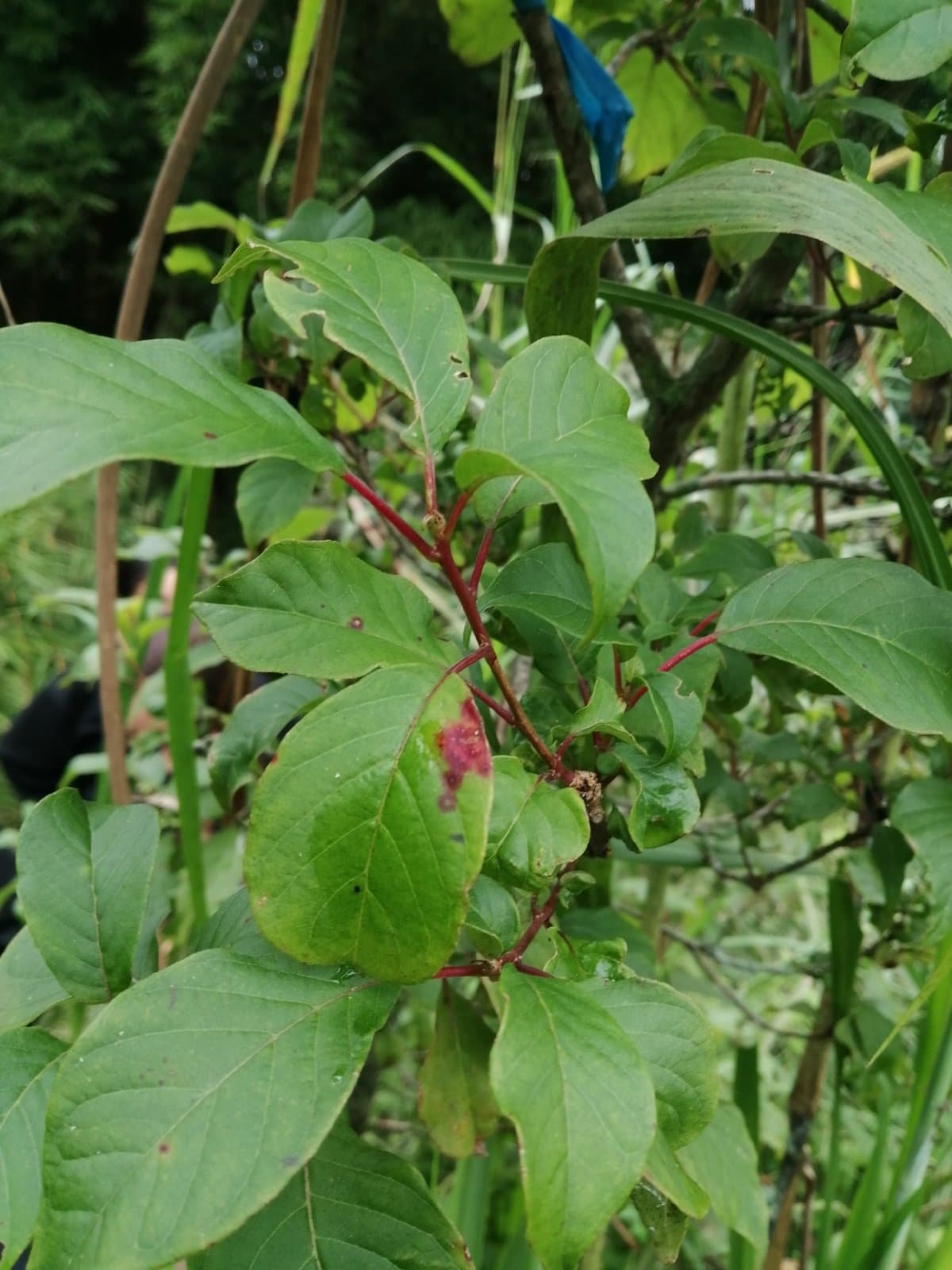
Leaves are simple, alternate, elliptic to lanceolate, 6–14 cm long and 2–5 cm wide, with an acuminate (pointed) tip and a cuneate (wedge-shaped) base. The upper surface is dark glossy green, glabrous (smooth), while the lower surface is slightly paler with fine, appressed hairs, especially along the midrib. The venation is pinnate with 6–10 pairs of secondary veins that are prominent beneath. Leaf margins are entire (smooth). When crushed, the leaves release a mild aromatic scent, less intense than the bark but distinctly aromatic. Leaves have tiny domifolia (mite shelters) in the axils of secondary veins — a feature common in Lauraceae that facilitates mutualistic relationships with predatory mites that protect the leaf from herbivorous mites.
Flowers
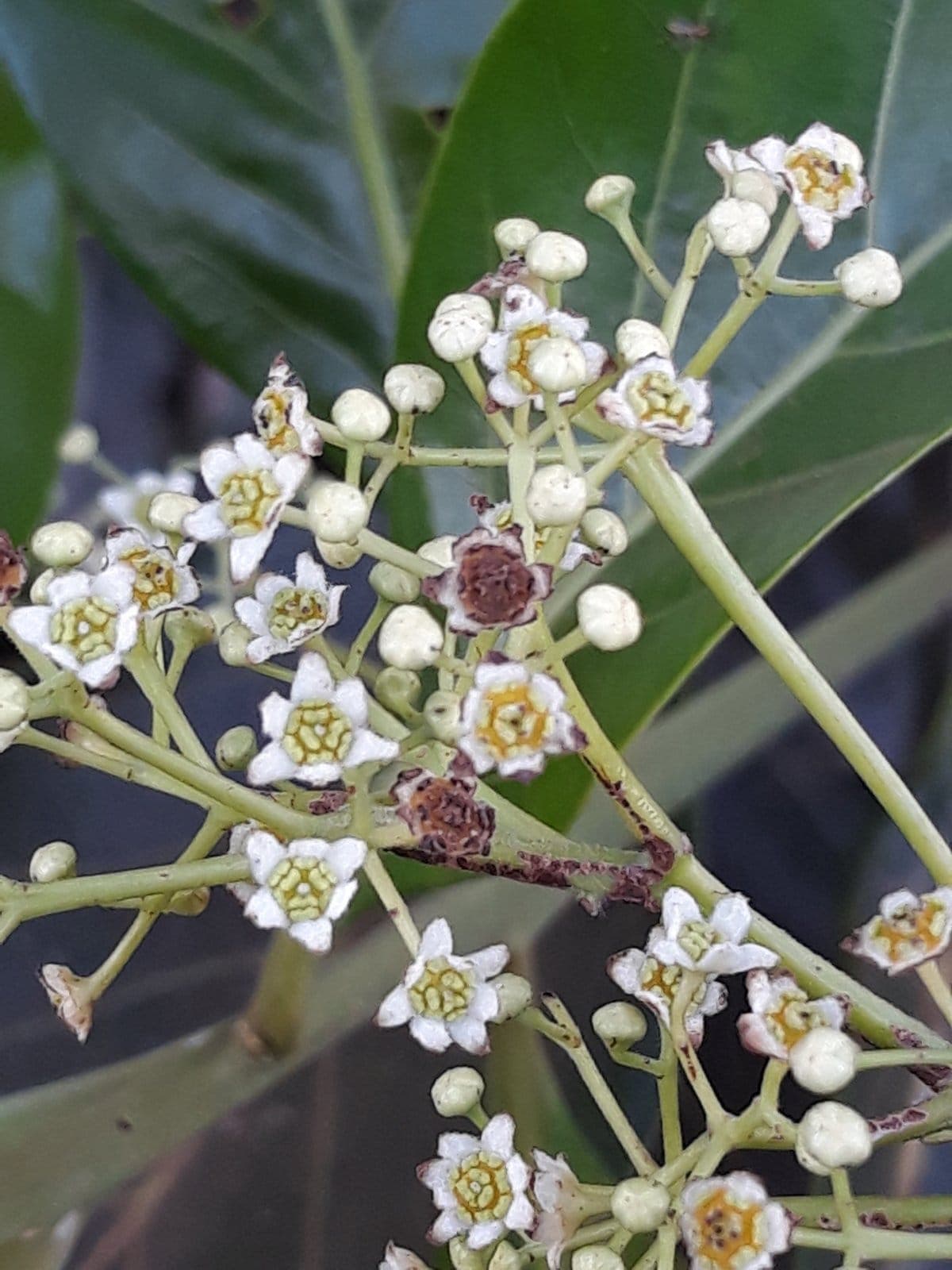
Flowers are small (3–5 mm), yellowish-green to cream, and arranged in axillary panicles 4–8 cm long. Each flower has six tepals (three outer and three inner, characteristic of Lauraceae), nine fertile stamens arranged in three whorls with a fourth whorl of staminodes, and a single ovary. The anthers open by flap-like valves rather than longitudinal slits — a distinctive feature of the laurel family. Flowers are produced from February to April, coinciding with the late dry season and transition to the wet season in the highlands. The flowers are weakly fragrant and attract small bees, flies, and beetles as pollinators.
Fruit and Seeds
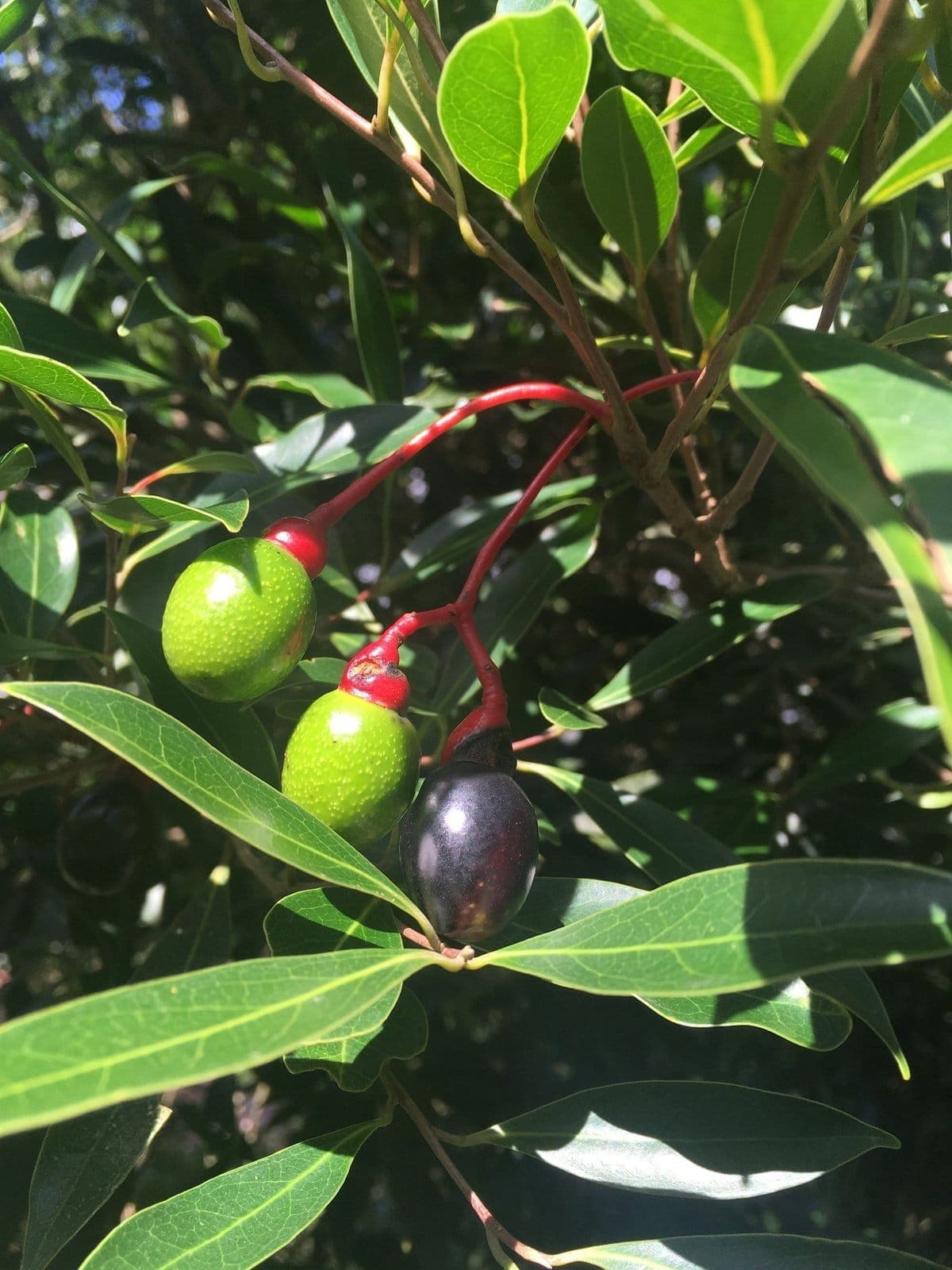
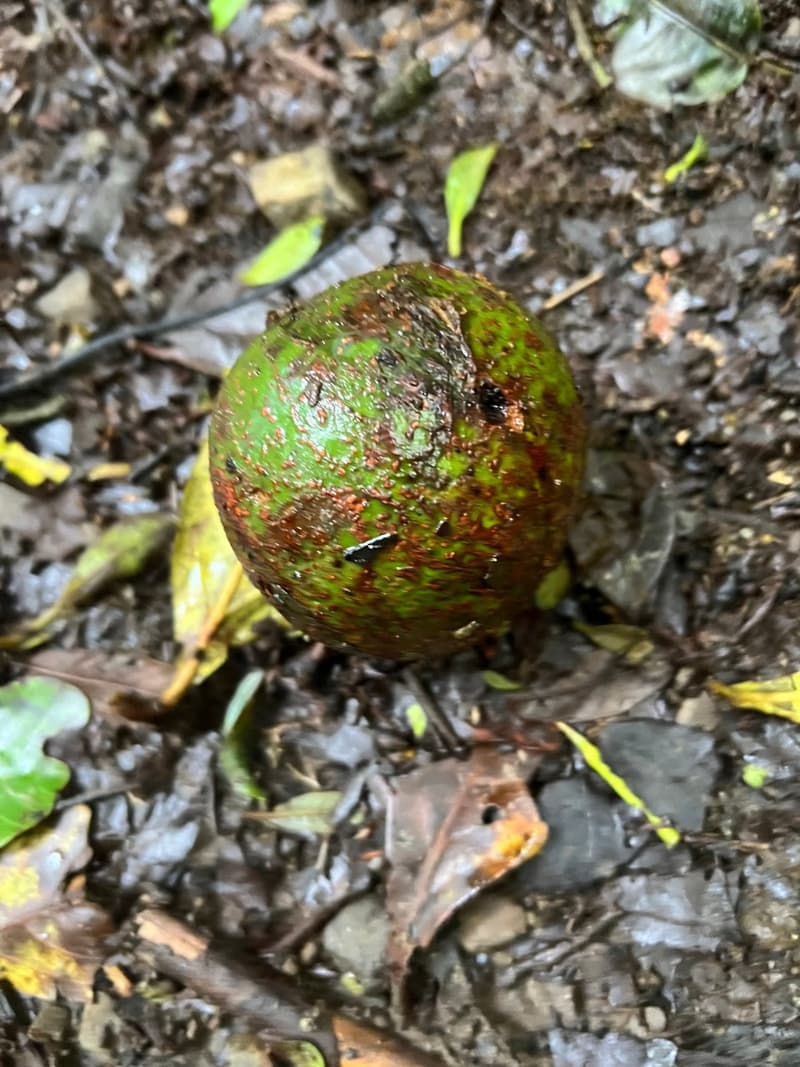
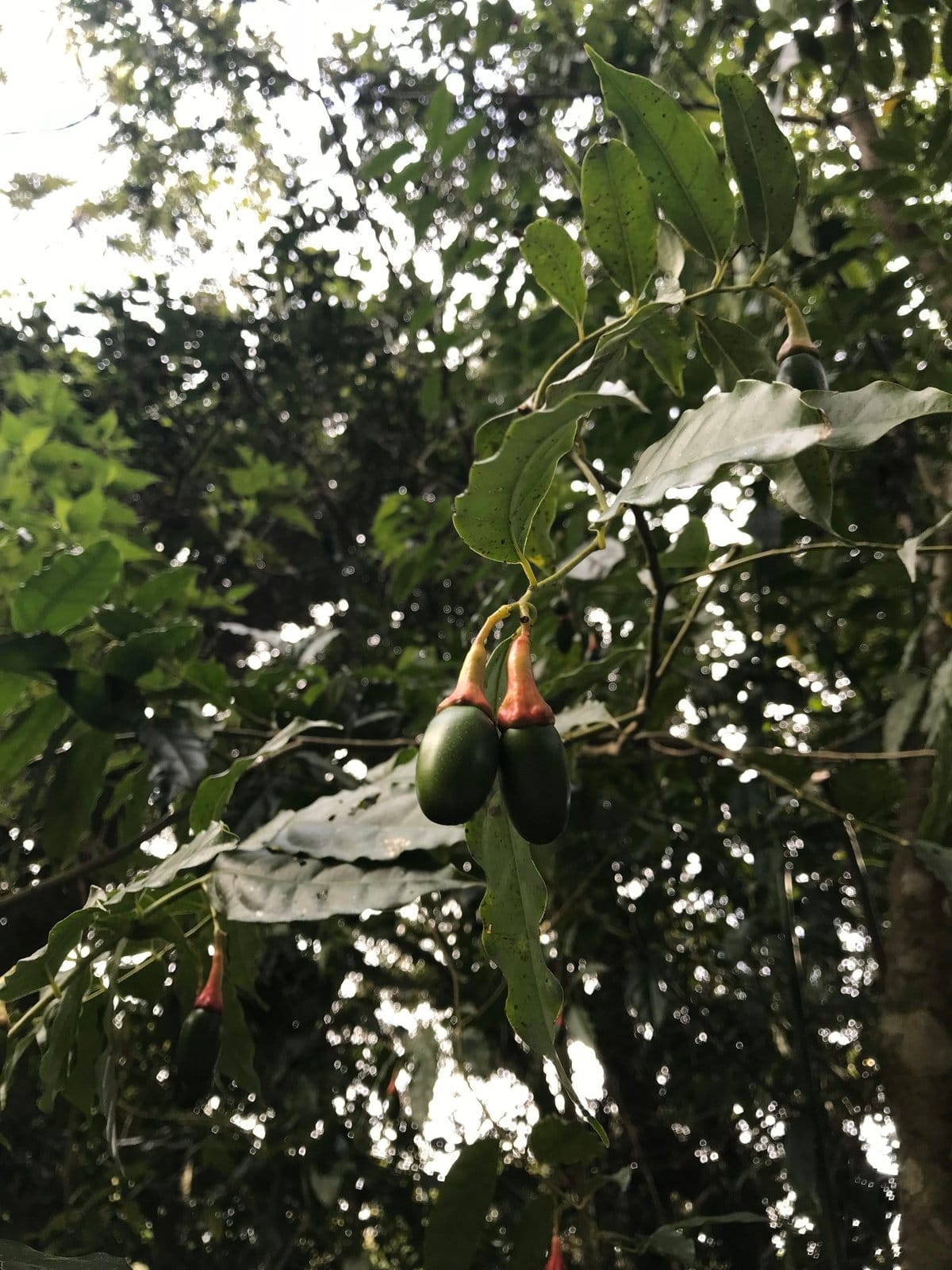
The fruit is a single-seeded drupe, ovoid to ellipsoid, 10–18 mm long, dark purple to black when mature, seated on a shallow, cupular receptacle (cupule) that is reddish and slightly warty. The cupule is a characteristic feature of Ocotea and distinguishes it from related genera. The thin, oily flesh surrounding the seed is rich in lipids and is highly nutritious for frugivorous birds — particularly the Resplendent Quetzal, which swallows the fruit whole and later regurgitates the seed, serving as the primary seed disperser. Fruits ripen from June to September, with peak availability in July and August. Each tree produces hundreds to thousands of drupes in a productive year.
Root System
Canelo develops a moderately deep root system with a central taproot and extensive lateral roots that spread broadly through the organic-rich upper soil layers of cloud forest. The root system is densely associated with ectomycorrhizal and arbuscular mycorrhizal fungi, forming networks that facilitate nutrient uptake in the nutrient-poor, acidic soils typical of high-elevation cloud forests. The dense root mat helps stabilize steep slopes and contributes to the sponge-like water absorption capacity of cloud forest soils — a critical ecosystem service for watershed protection.
Wood Characteristics
The wood is moderately hard and dense (specific gravity 0.45–0.55), with a fine, even texture and straight to slightly interlocked grain. The heartwood is yellowish-brown to light brown, sometimes with a faint reddish tint, and is not strongly differentiated from the sapwood. The wood has a characteristic aromatic scent that persists after drying, though it is less intense than the bark. It is moderately durable and resistant to some wood-boring insects due to its essential oil content, though it is not as resistant as the hardest tropical timbers.
Seasonal Appearance
Canelo is evergreen, maintaining its foliage throughout the year — an important trait in the cloud forest, where many canopy trees are also evergreen. New leaf flush occurs primarily from March to May, when young leaves appear as lighter green or slightly bronze-tinted among the mature foliage. Flowering occurs from February through April, adding subtle yellowish-green panicles to the canopy. The most visually notable period is the fruiting season (June–September), when the dark purple drupes on reddish cupules create a distinctive display and attract flocks of feeding birds, including quetzals.
Geographic Distribution
Global Range
Ocotea tenera is a restricted-range endemic of the highlands of Costa Rica and western Panama. It occurs exclusively in cloud forest and upper montane forest ecosystems between approximately 1,200 and 2,800 m elevation. Unlike many widespread Ocotea species, O. tenera has a narrow distributional range confined to the Cordillera Central, Cordillera de Talamanca, and associated mountain ranges.
Distribution in Costa Rica
In Costa Rica, Canelo is found in the highland areas of four provinces:
- San José: Los Santos area (Cerro de la Muerte, Copey), southern flanks of the Central Valley highlands
- Cartago: Tapantí-Macizo de la Muerte National Park, Irazú and Turrialba volcano foothills, Orosi Valley upper slopes
- Heredia: Braulio Carrillo National Park (high-elevation zones), Barva Volcano cloud forests
- Alajuela: Poás Volcano National Park, Juan Castro Blanco National Park, Monteverde cloud forest complex (upper elevations)
The species is most abundant on the Pacific slope of the Cordillera de Talamanca and the southern portion of the Cordillera Central, where extensive cloud forest persists at 1,500–2,500 m elevation.
Elevation Range
1,200 to 2,800 m, with peak abundance at 1,600–2,400 m in mature cloud forest. The lower elevational limit corresponds roughly to the cloud base, where persistent fog and mist begin to shape forest structure.
Biogeographic Notes
Ocotea tenera is part of a rich radiation of Lauraceae in the Central American cloud forests. The uplift of the Cordillera de Talamanca during the late Miocene and Pliocene created extensive highland habitats that facilitated speciation among montane tree lineages. The genus Ocotea is particularly diverse in these highland forests, with Costa Rica hosting approximately 50 species.
The restricted range of O. tenera makes it vulnerable to habitat fragmentation and climate change. As temperatures rise, the cloud base is expected to shift upward, potentially reducing the available habitat for cloud-dependent species. Studies in the Monteverde region have already documented upward shifts in bird and plant species ranges, and O. tenera populations at lower elevational limits may face increasing desiccation stress.
The close evolutionary and ecological relationship between Ocotea fruits and the Resplendent Quetzal represents a classic example of co-evolved mutualism in Neotropical cloud forests. The quetzal's seasonal movements through the mountains track the fruiting phenology of different Ocotea species, making the genus a critical component of the quetzal's annual resource base.
Habitat & Ecology
Ecological Role
Canelo is a key canopy species in Costa Rican cloud forests, fulfilling multiple ecological functions. As a medium to large canopy tree, it contributes to the structural complexity of the forest, supporting dense epiphyte communities on its branches and trunk. The horizontal branches and rough bark provide ideal substrate for mosses, liverworts, orchids, bromeliads, and ferns that characterize cloud forest ecosystems.
The tree's fruit production makes it a keystone species for frugivorous bird communities. The lipid-rich drupes are a critical food resource during the highland wet season, when other food sources may be limited.
Wildlife Interactions
- Resplendent Quetzal (Pharomachrus mocinno): The most important ecological interaction. Quetzals are the primary seed disperser of O. tenera, swallowing the drupe whole, digesting the oily pulp, and regurgitating the intact seed at a new location. Quetzals may consume 40–70 fruits per day during peak fruiting season, making Ocotea species their single most important food source
- Other frugivores: Emerald toucanets (Aulacorhynchus prasinus), mountain robins (Turdus plebejus), black guans (Chamaepetes unicolor), and other highland birds also consume the fruits
- Pollinators: Small bees (Halictidae, Apidae), syrphid flies, and small beetles visit the inconspicuous flowers
- Epiphyte communities: Mature canelo trees support 50–100+ species of epiphytes, contributing to the extraordinary biodiversity of cloud forests
- Insects: Specialized bark beetles, leaf miners, and gall-forming insects inhabit the tree, forming complex food webs
Associated Species
Canelo commonly occurs alongside other characteristic cloud forest trees:
- Quercus copeyensis (Roble Blanco — Costa Rican Oak)
- Quercus costaricensis (Roble Negro)
- Magnolia poasana (Magnolia)
- Weinmannia pinnata (Lorito)
- Drimys granadensis (Muñeco)
- Clusia spp. (Copey)
- Hedyosmum mexicanum (Limoncillo)
- Other Ocotea species (O. whitei, O. meziana, O. austinii)
Mycorrhizal and Soil Interactions
Like many cloud forest Lauraceae, Ocotea tenera forms important mycorrhizal associations. The acidic, organic-rich soils of cloud forests are often nutrient-limited despite their high organic content, because low temperatures and high moisture slow decomposition. Mycorrhizal fungi (both ectomycorrhizal and arbuscular types) extend the tree's effective root network, accessing phosphorus and nitrogen from decomposing organic matter that roots alone could not reach. The dense root mats formed by canelo and other cloud forest trees create a "sponge effect" that absorbs and gradually releases water — a critical ecosystem service for downstream water supply in Costa Rica's Central Valley.
Cloud Forest Hydrology
Canelo plays an important role in cloud forest hydrology beyond its root contributions. The canopy intercepts fog and mist (horizontal precipitation or "fog drip"), channeling water down branches and trunk to the soil. Studies in Monteverde and other cloud forests have shown that fog drip can contribute 10–40% of total water input to the forest floor. The dense epiphyte loads on canelo branches act as additional fog-collecting surfaces and water reservoirs, releasing moisture slowly during brief dry periods. This hydrological function makes canelo and similar cloud forest trees critical for maintaining dry-season water flows in rivers that supply domestic and agricultural water to lowland communities.
Uses & Applications
Timber
The wood of Ocotea tenera is used locally and regionally:
- Color: Yellowish-brown to light brown heartwood
- Density: Moderate (specific gravity 0.45–0.55)
- Durability: Moderate natural resistance to decay; aromatic oils provide some insect deterrence
- Workability: Easy to work with hand and machine tools; finishes well
- Uses: General construction, furniture, interior woodwork, carved items, tool handles
- Note: Although IUCN-assessed as Least Concern globally, commercial timber harvest is regulated under Costa Rican forestry law (SINAC permits) and the cloud-forest habitat itself is heavily protected; volumes reaching market are small.
Aromatic and Medicinal Uses
The aromatic bark of Canelo is its most culturally significant product:
- Cinnamon substitute: The bark is dried and ground as a local substitute for commercial cinnamon (Cinnamomum verum), used in teas, baked goods, and beverages. The flavor is slightly different from true cinnamon — more peppery and complex — but recognizably cinnamon-like
- Medicinal tea: Bark infusions are used traditionally for stomach ailments, indigestion, diarrhea, and intestinal cramps
- Respiratory: Hot bark tea with honey is used as a home remedy for coughs, colds, and sore throats
- Anti-inflammatory: The bark is traditionally applied as a poultice for localized pain and swelling
- Essential oils: The bark and leaves contain aromatic essential oils with demonstrated antimicrobial and antifungal properties in laboratory studies
Traditional Indigenous Uses
The Cabécar and Bribri peoples of the Cordillera de Talamanca have used Canelo for generations:
- Digestive medicine: Bark tea for stomach pain, nausea, and parasites
- Seasoning: Ground bark as a culinary spice, historically traded between highland and lowland communities
- Spiritual: The aromatic bark is burned in some ceremonies, valued for its cleansing scent
- Dye: Inner bark produces a reddish-brown dye used for textiles and basket materials
Reforestation and Ecosystem Services
Canelo is increasingly planted in cloud forest conservation and restoration projects:
- Cloud forest corridor restoration between fragmented patches
- Watershed protection reforestation above highland communities
- Quetzal habitat improvement and ecotourism enhancement
- Carbon sequestration in montane reforestation programs
- Shade component in high-altitude agroforestry (shade-grown coffee at upper limits, 1,200–1,500 m)
Cultural Significance
Indigenous Heritage
Canelo holds deep cultural significance for the Cabécar and Bribri peoples, who have inhabited the Talamancan highlands for thousands of years. The tree's aromatic bark was one of the most valued plant products traded between highland and lowland indigenous communities in pre-Columbian times. It served as a spice, medicine, and ceremonial material, and its trade paralleled the later global trade in true cinnamon from Asia.
The indigenous name for the tree is incorporated into place names and oral traditions throughout the Cordillera de Talamanca. Elders maintain detailed knowledge of the tree's seasonal cycles, its relationship with the quetzal, and its medicinal preparation methods — knowledge that is increasingly documented as part of ethnobotanical research partnerships between indigenous communities and Costa Rican universities.
Quetzal Connection
The Resplendent Quetzal is Costa Rica's most iconic bird and a symbol of Central American natural heritage. The quetzal's deep ecological dependence on Ocotea fruiting trees, including O. tenera, has elevated the canelo to a position of cultural importance beyond its direct human uses. Ecotourism centered on quetzal watching in cloud forests — particularly in the Los Quetzales National Park, Savegre Valley, and Monteverde — generates significant economic activity for highland communities. Protecting canelo trees and their cloud forest habitat is thus linked directly to the economic livelihoods of rural communities that depend on nature tourism.
Conservation Awareness
In recent decades, Canelo has become a symbol of cloud forest conservation in Costa Rica. Environmental education programs use the tree-quetzal relationship to illustrate ecological interdependence and the importance of habitat protection. Community-based reforestation efforts in the Los Santos region and Savegre Valley specifically include canelo planting as part of cloud forest corridor restoration.
Conservation Status
IUCN Assessment
Ocotea tenera is currently assessed as Least Concern (LC) on the IUCN Red List
(). IUCN Red List — Ocotea tenera
(). SINAC — Sistema Nacional de Áreas de Conservación
Threats
- Climate change: Rising temperatures are causing the cloud base to shift upward, reducing cloud forest area. Models predict a 50–90% reduction in suitable cloud forest habitat in Central America by 2080 under moderate warming scenarios
- Habitat fragmentation: Cloud forest has been cleared for pasture and agriculture in many highland areas, isolating populations and reducing gene flow
- Selective logging: Despite legal protections, selective extraction for the aromatic bark and timber continues in some areas
- Invasive species: Climate change may facilitate upward expansion of lowland tree species into cloud forest zones, potentially competing with cloud-adapted species like canelo
- Reduced pollinator and disperser populations: Decline in quetzal populations due to habitat loss may reduce seed dispersal effectiveness
Conservation Measures
- Protected areas: Occurs in multiple national parks and reserves, including Tapantí-Macizo de la Muerte, Los Quetzales, Braulio Carrillo, Poás Volcano, and Monteverde Cloud Forest Reserve
- Biological corridors: Included in the Mesoamerican Biological Corridor planning for highland connectivity
- Reforestation programs: Actively planted in cloud forest restoration efforts, particularly in the Savegre Valley and Los Santos region
- Community conservation: Local communities in the Cerro de la Muerte area participate in canelo protection and planting programs, often linked to quetzal ecotourism
- Research: Ongoing studies at the Tropical Science Center (Monteverde), Organization for Tropical Studies (OTS), and Costa Rican universities monitor populations and phenology
- Payment for ecosystem services (PES): Cloud forest landowners receive payments under Costa Rica's PES program for maintaining forest cover that protects watershed functions
Population Trends
Cloud forest canelo populations have declined significantly in areas where highland deforestation has occurred, particularly on the Pacific slope of the Cordillera Central. However, populations within protected areas remain relatively stable. Active reforestation and natural regeneration in abandoned pastures at cloud forest elevations provide some hope for recovery. The species reproduces successfully in secondary growth and forest edges where seed sources are available.
Growing & Cultivation
Site Selection
- Climate: Cool tropical highland, with consistent humidity and cloud/fog exposure
- Elevation: 1,200–2,800 m (optimal 1,500–2,200 m for cultivation)
- Light: Partial shade to filtered sunlight; avoid full, exposed sun at establishment
- Soil: Acidic (pH 4.5–6.5), deep, organic-rich, well-drained; volcanic soils ideal
- Humidity: High (>80% relative humidity); cloud forest or similar microclimates preferred
- Avoid: Dry, exposed sites; lowland heat; waterlogged or compacted clay soils
Propagation
Seeds are the primary propagation method, though semi-hardwood cuttings are occasionally used:
- Seed collection: Collect ripe, dark purple drupes directly from the tree or shortly after fall (June–September). Remove pulp promptly, as it inhibits germination
- Seed preparation: Clean seeds thoroughly, removing all fruit flesh. Soak in water for 12–24 hours. Seeds have very short viability (2–4 weeks) and cannot be dried or stored long-term (recalcitrant seeds)
- Germination: Sow immediately in shaded nursery beds with a mix of cloud forest soil and composted organic matter. Keep consistently moist but not waterlogged. Germination takes 20–45 days
- Nursery care: Grow seedlings under 50–70% shade for 6–12 months until 25–40 cm tall. Maintain high humidity with regular misting
- Hardening off: Gradually reduce shade over 3–4 weeks while maintaining moisture
- Transplanting: Plant at the onset of the wettest period (May–July) in prepared holes enriched with organic matter
Care Guidelines
Watering:
- Young trees: Maintain consistently moist soil; water daily if not in cloud-bathed conditions
- Established trees: Cloud forest conditions typically provide adequate moisture; supplemental irrigation only during unusual dry spells
- Critical: This species cannot tolerate drought — desiccation is the primary cause of planting failure
Fertilization:
- Apply low-concentration organic fertilizer (composted leaf litter, well-rotted manure) at planting
- Annual top-dressing with forest compost recommended for first 5 years
- Avoid high-nitrogen synthetic fertilizers, which can damage the mycorrhizal associations
- Cloud forest soils are naturally acidic; do not add lime or alkalizing amendments
Pruning:
- Minimal pruning required; allow natural form to develop
- Remove dead or damaged branches only
- Do not strip bark for aromatic harvest from young trees; allow at least 15 years of growth before any bark sampling
- In reforestation plantings, light formative pruning may be used to encourage a single straight leader
Companion Planting
- Compatible: Quercus copeyensis (Roble), Weinmannia pinnata (Lorito), Clusia spp., highland ferns and palms, shade-grown high-altitude coffee (1,200–1,500 m)
- Beneficial: Epiphytic orchids, bromeliads, and mosses naturally colonize and indicate healthy conditions
- Avoid: Fast-growing, light-demanding species that may outcompete young canelo; herbicide-treated adjacent areas
Seasonal Care Calendar
Where to See This Tree in Costa Rica
Canelo can be found in several cloud forest protected areas and accessible locations:
Best Time to Visit
Canelo — and the quetzals that depend on it — are most rewarding to observe during two key periods:
- February–April (flowering and early quetzal nesting season): Canelo flowers attract pollinators, and quetzals begin nesting nearby in preparation for the fruiting season
- June–September (fruiting season): The dark purple drupes attract flocks of quetzals and other frugivorous birds. This is the prime period for quetzal watching in the Los Quetzales area and Savegre Valley
Identification Tips
In the cloud forest, Canelo is identified by: (1) scratching the bark to release the distinctive warm cinnamon fragrance — this is the most reliable field identification method, (2) the simple, alternate, elliptic leaves with prominent pinnate venation, (3) dark purple drupes seated on reddish cupules during fruiting season, (4) the presence of quetzals feeding in the canopy (a strong indicator of Ocotea), and (5) the epiphyte-laden branches typical of cloud forest canopy trees.
External Resources
References
- Burger, W. & van der Werff, H. (1990). Lauraceae. In: Flora Costaricensis. Fieldiana Botany, New Series 23: 1–138.
- Wheelwright, N.T. (1983). "Fruits and the ecology of Resplendent Quetzals." The Auk 100(2): 286–301.
- Wheelwright, N.T. (1986). "A seven-year study of individual variation in fruit production in tropical bird-dispersed tree species in the family Lauraceae." In: Frugivores and Seed Dispersal (eds. Estrada & Fleming). Springer.
- Haber, W.A. (2000). "Plants and Vegetation." In: Monteverde: Ecology and Conservation of a Tropical Cloud Forest (eds. Nadkarni & Wheelwright). Oxford University Press.
- Pounds, J.A., Fogden, M.P.L. & Campbell, J.H. (1999). "Biological response to climate change on a tropical mountain." Nature 398: 611–615.
- CATIE (2003). Árboles de Centroamérica: un manual para extensionistas. CATIE, Turrialba.
- Lorea-Hernández, F. (2002). "La familia Lauraceae en el sur de México: diversidad, distribución y estado de conservación." Boletín de la Sociedad Botánica de México 71: 59–70.
- Jiménez, Q. & Poveda, L.J. (1991). Árboles maderables nativos de Costa Rica. CCT/CATIE.
Safety Information Disclaimer
Safety information is provided for educational purposes only. Individual reactions may vary significantly based on age, health status, amount of exposure, and individual sensitivity. Always supervise children around plants. Consult a medical professional or certified arborist for specific concerns. The Costa Rica Tree Atlas is not liable for injuries or damages resulting from interaction with trees described in this guide.
• Always supervise children around plants
• Consult medical professional if unsure
• Seek immediate medical attention if poisoning occurs
Information compiled from authoritative toxicology sources, scientific literature, and medical case reports.
Help improve this page
Know something about this tree? Share local knowledge, suggest a correction, or submit a photo to improve this guide for everyone.