Balsam Tree
Myroxylon balsamum
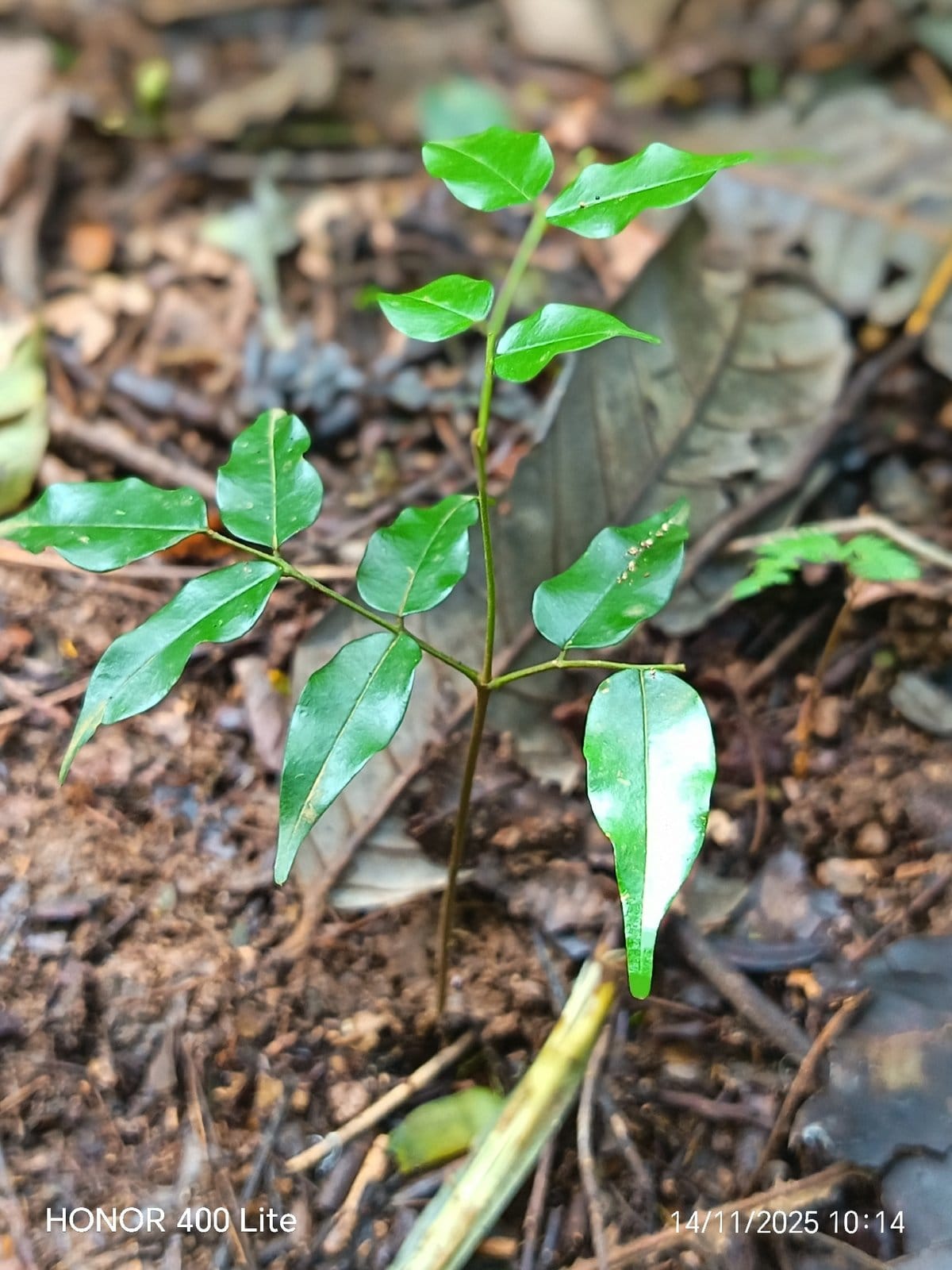
Quick facts
Native Region
Southern Mexico to northern South America; native to Costa Rica
Max Height
30-45 meters
Family
Fabaceae
Conservation
LC — Least Concern
Uses
Safety Information
Toxicity Details
The resin (Balsam of Peru) is generally non-toxic when used in small quantities, but can cause contact dermatitis in sensitized individuals. Ingestion of large amounts of resin may cause gastrointestinal upset. The wood dust can be irritating to respiratory passages.
Skin Contact Risks
Balsam of Peru is one of the most common causes of contact allergy to natural substances. The oleoresin can cause allergic contact dermatitis, especially in individuals with fragrance sensitivities. Direct contact with the trunk where resin exudes should be avoided by sensitive individuals. Wood dust from milling can irritate skin.
Allergenic Properties
Balsam of Peru is a recognized allergen in dermatological testing (included in the standard patch test series). Individuals allergic to fragrances, cinnamon, vanilla, or benzoic acid compounds may cross-react. Pollen is a minor allergen. Wood dust is a moderate occupational irritant.
Structural Hazards
Large mature specimens can develop heavy branches that may drop during storms. The dense wood generally resists breakage, but old limbs with decay can fail. Standard clearance pruning is recommended for trees near structures.
Wildlife & Pet Risks
No significant wildlife toxicity. Flowers attract numerous pollinators including bees and butterflies. Fruit consumed by bats and birds. The tree supports a healthy insect community.
Season
Flowering
Jan-Apr
Fruiting
May-Aug
How to identify
Balsam Tree (Bálsamo)
Bálsamo (Myroxylon balsamum), known internationally as the source of Balsam of Peru, is one of the most valuable and aromatic trees in Central American forests. Its fragrant oleoresin has been prized since pre-Columbian times for medicine, perfumery, and sacred rituals. In Costa Rica, this majestic legume graces the Pacific lowland and premontane forests with its towering canopy and sweetly scented wood.
Quick Reference
iNaturalist Observations
Community-powered species data
📸 Photo Gallery
Whole tree
📷 (c) Cristopher Vega, some rights reserved (CC BY-NC)(CC BY-NC)
View source ↗Leaves
📷 (c) Cristopher Vega, some rights reserved (CC BY-NC)(CC BY-NC)
View source ↗Whole tree
📷 (c) Leonardo Álvarez-Alcázar, some rights reserved (CC BY-NC)(CC BY-NC)
View source ↗Leaves
📷 (c) Luis Buelvas Arias, some rights reserved (CC BY-NC)(CC BY-NC)
View source ↗Whole tree
📷 (c) aribasto, some rights reserved (CC BY-NC)(CC BY-NC)
View source ↗Taxonomy & Classification
Common Names by Region
Taxonomic Notes
Myroxylon balsamum belongs to the small genus Myroxylon, which contains only two widely accepted species. The species was first described scientifically by Carl Linnaeus and later refined by Adolphe-Théodore Brongniart and others. Two principal varieties are recognized:
- var. balsamum — the typical form producing Balsam of Tolú (from northern South America)
- var. pereirae — the Central American form producing Balsam of Peru (despite the misleading name, this variety is native to Central America, not Peru)
The "Peru" in the commercial name "Balsam of Peru" is a historical misnomer from the colonial era when all Central American exports were shipped through Peruvian ports. Costa Rican populations are primarily var. pereirae.
The genus name Myroxylon derives from the Greek myron (balsam, perfume) and xylon (wood), referring to the fragrant wood. The specific epithet balsamum refers to the balsamic resin.
Physical Description
Tree Form
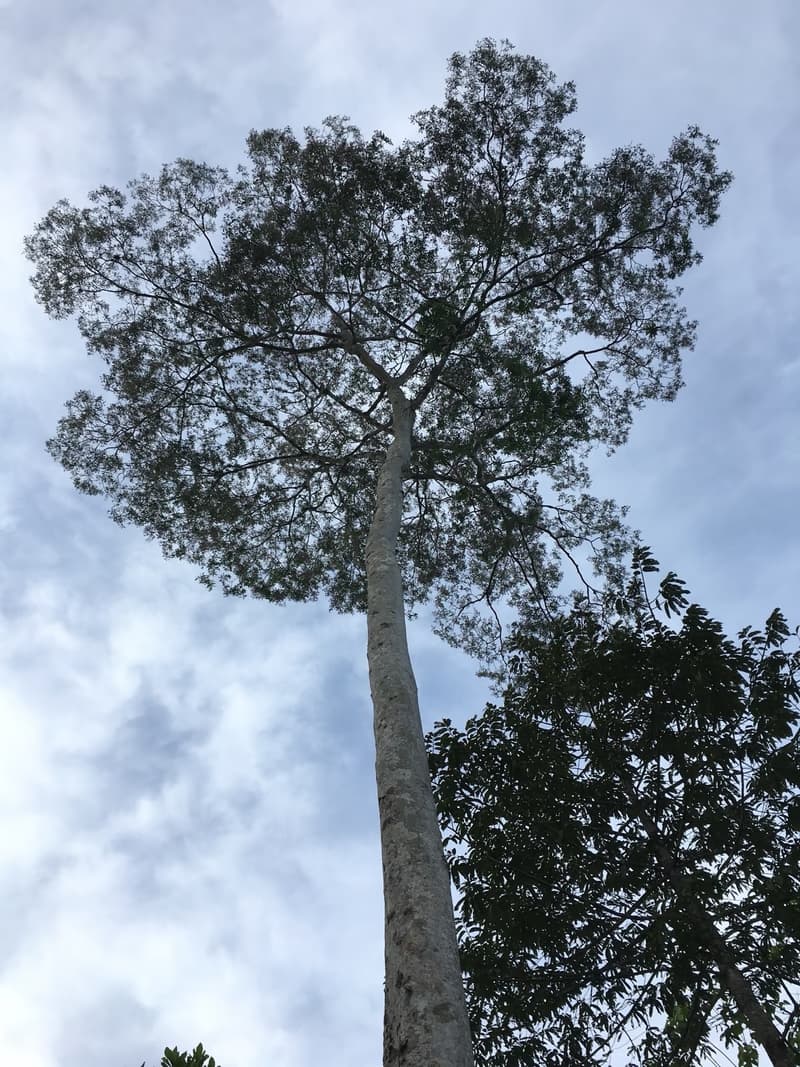
Bálsamo is a large, imposing canopy tree reaching 30–45 m in height in mature forest, with a straight cylindrical bole that can exceed 1 m in diameter. The crown is broad, rounded, and dense, providing excellent shade. In open settings, trees tend to be shorter (15–25 m) with a wider-spreading crown. The trunk is typically clear of branches for the lower 10–20 m in forest conditions. Buttresses are small or absent.
Bark
The bark is smooth to slightly fissured on young trees, becoming moderately rough and furrowed with age. It is grayish-brown to dark brown, often with lighter lenticels. When wounded, the bark exudes a thick, dark brown, fragrant oleoresin — the famous Balsam of Peru. This resin has a warm, vanilla-cinnamon aroma that is unmistakable in the forest. Bark thickness increases significantly with age, providing some fire resistance.
Leaves
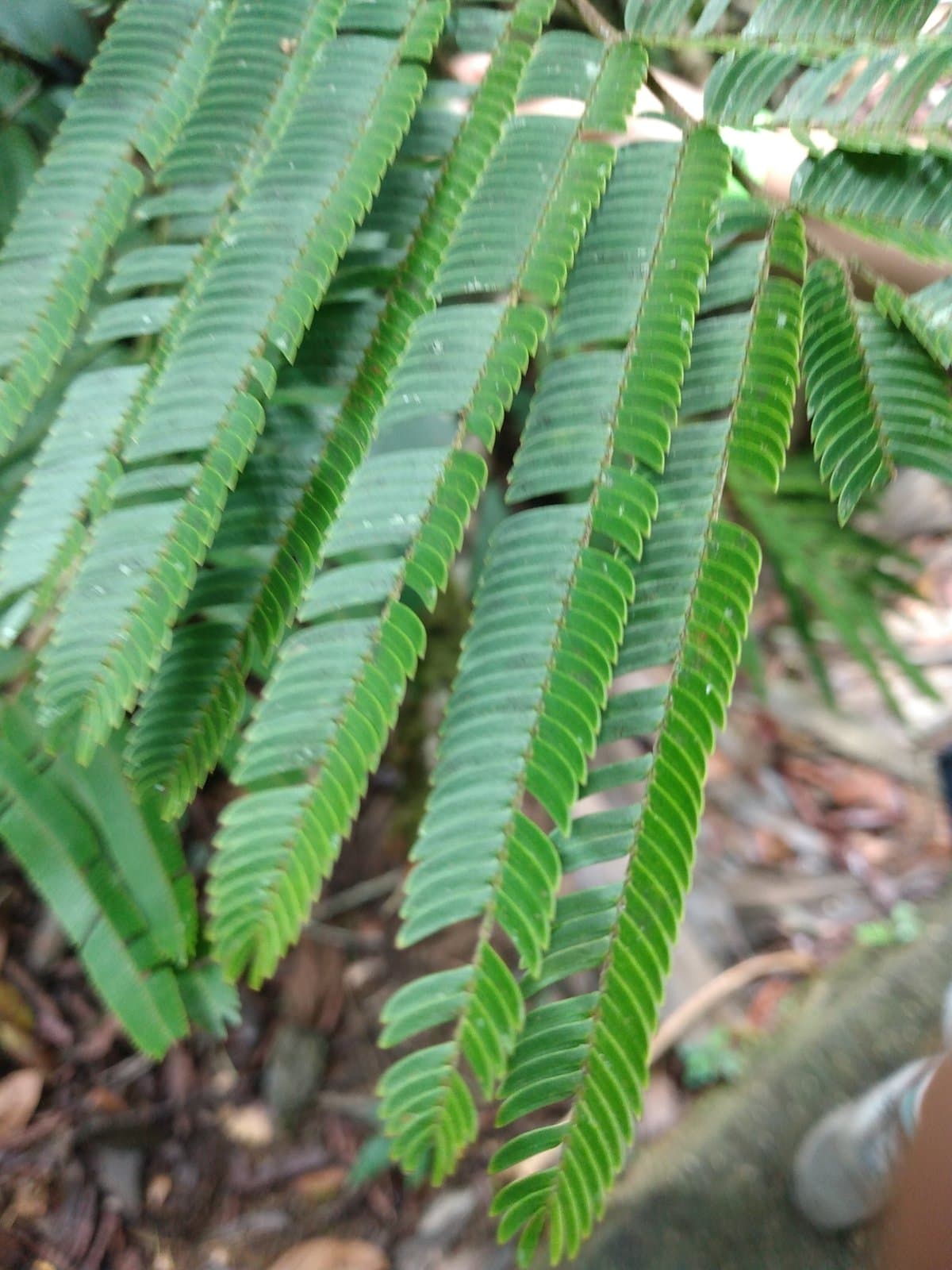
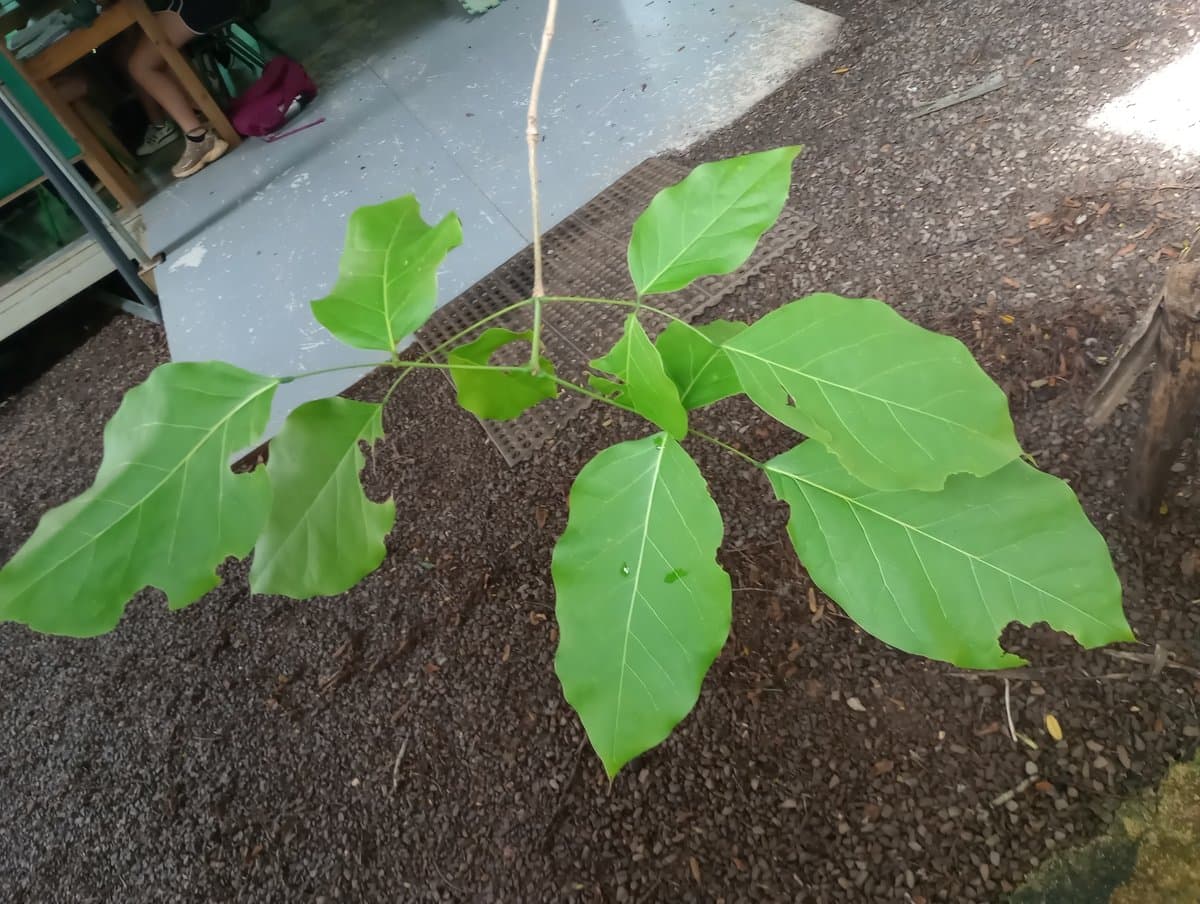
Leaves are alternate, odd-pinnately compound, 10–20 cm long, with 5–13 leaflets. Leaflets are ovate to elliptic, 3–7 cm long, with translucent oil glands visible when held to light (appearing as tiny, light dots). The leaflet margins are entire (smooth). Young leaves often have a reddish or bronze tint before maturing to dark glossy green above and paler below. The alternating leaflet arrangement along the rachis is somewhat irregular.
Flowers
Flowers are small (8–12 mm), white, fragrant, and papilionaceous (butterfly-shaped, typical of legumes). They are produced in axillary or terminal racemes 10–20 cm long. Each flower has five petals: a conspicuous standard petal and reduced wing and keel petals. Stamens are ten, mostly free. Flowering typically occurs during the dry season (January–April in Costa Rica), and the sweet scent attracts numerous pollinators, particularly bees.
Fruit and Seeds
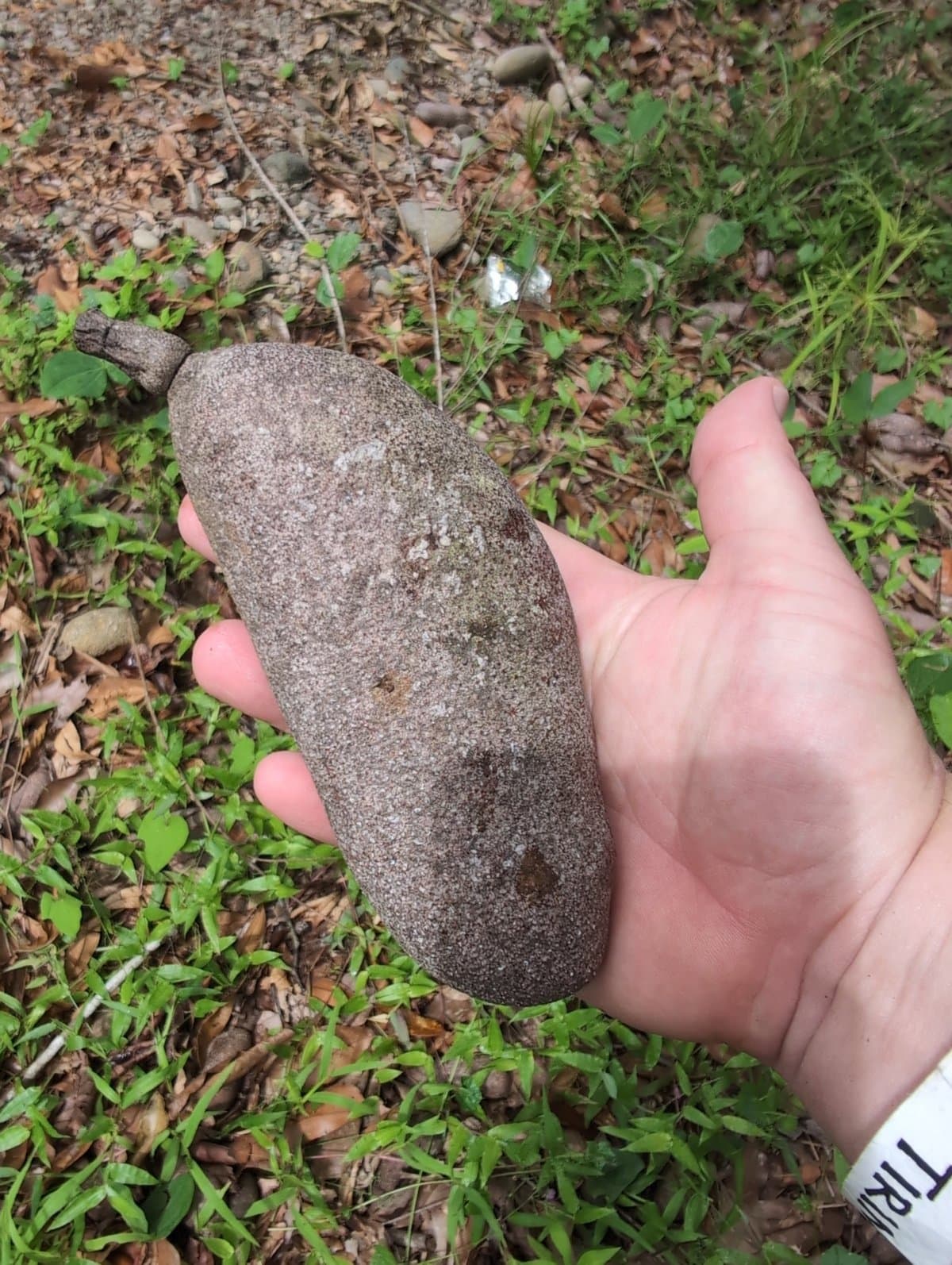
The fruit is a distinctive samara (winged pod), 7–11 cm long, with a thickened seed-bearing tip and a flattened, papery wing that aids wind dispersal. Each fruit contains a single seed embedded in resinous tissue. The fruit is indehiscent (does not split open) and the wing gives it a graceful, gliding dispersal pattern. Fruits mature 3–5 months after flowering and can persist on the tree for several weeks before dispersal. The resinous seed coat helps deter insect predation.
Root System
Bálsamo develops a robust taproot system that can penetrate 3–5 m into deep soils, supplemented by extensive lateral roots. The root system is associated with nitrogen-fixing rhizobial bacteria (Bradyrhizobium spp.), which form nodules on the fine roots and convert atmospheric nitrogen to plant-available forms. This symbiosis enriches the soil within the root zone, benefiting neighboring trees and contributing to overall forest nitrogen cycling. The deep root system also allows Bálsamo to access groundwater during the prolonged dry season, maintaining partial canopy during periods when surrounding trees may be fully deciduous.
Wood and Resin Anatomy
The heartwood exhibits a striking figure: interlocked and occasionally wavy grain produces a ribbon-like pattern on quarter-sawn surfaces. Microscopic examination reveals abundant resin canals distributed throughout the wood, producing the characteristic balsamic fragrance that persists even in dried lumber decades old. The wood contains high concentrations of extractives (10–15% by weight), including cinnamic acid derivatives, which account for its extraordinary natural durability. The contrast between pale, narrow sapwood (3–5 cm) and rich reddish-brown heartwood makes freshly cut cross-sections visually striking.
Seasonal Appearance
Bálsamo is semi-deciduous to briefly deciduous during the peak dry season, losing 50–80% of its leaves for 2–6 weeks. New leaf flush coincides with flowering in January–March, when the crown takes on a distinctive bronzy-red hue from the young foliage. By mid-wet season, the canopy is dense and darkly green, creating deep shade beneath. The winged fruits become visible as they mature during the late wet season, hanging in loose clusters that catch the wind.
Geographic Distribution
Global Range
Myroxylon balsamum ranges from southern Mexico through Central America to northern South America (Venezuela, Colombia, Peru, Bolivia, and Brazil). It occurs naturally in tropical dry, moist, and premontane forests from sea level to approximately 1,200 m elevation.
Distribution in Costa Rica
In Costa Rica, Bálsamo is found primarily on the Pacific slope, from Guanacaste Province south to the Osa Peninsula. It occurs in:
- Guanacaste: Dry-moist transition forests, particularly in the foothills of the Cordillera de Guanacaste
- Puntarenas: Nicoya Peninsula, Pacific lowlands, and the Osa Peninsula
- San José: Central Valley premontane forests (scattered)
- Alajuela: Northern lowlands and foothills (less common)
The species is most abundant in the seasonal forests of the Pacific lowlands and premontane belt, where it experiences a pronounced dry season of 3–5 months. It is uncommon on the Caribbean slope.
Elevation Range
Sea level to 1,200 m, with peak abundance at 200–800 m in Pacific slope forests.
Biogeographic Notes
Myroxylon is a small genus of only two species: M. balsamum (widespread) and M. peruiferum (primarily South American). The genus belongs to the papilionoid legumes (Fabaceae: Papilionoideae) and is distinctive for its aromatic resin, a trait rare among leguminous trees. The genus likely originated in South America and dispersed northward through the Isthmus of Panama during the Pliocene. In Costa Rica, Bálsamo populations are concentrated on the Pacific slope, where seasonal dry-to-moist forest transitions provide optimal conditions. The species' wind-dispersed samaras allow effective colonization across open landscapes, and isolated individuals in pastures and along roads serve as genetic stepping stones between larger forest populations.
Habitat & Ecology
Ecological Role
As a member of the Fabaceae (legume family), Bálsamo is capable of nitrogen fixation through association with rhizobial bacteria, enriching the soil around its root zone. This makes it an important contributor to forest nutrient cycling. Its large canopy provides structural habitat and shade for understory species.
The aromatic resin has antimicrobial properties that help protect the tree from fungal and bacterial pathogens. This same chemistry influences the leaf litter decomposition dynamics, as the compound-rich leaves decompose slowly and release aromatic compounds into the soil.
Wildlife Interactions
- Pollinators: Flowers attract a diverse assemblage of bees (including Apis mellifera, stingless bees Trigona spp., and Eulaema orchid bees), butterflies, and other insects
- Seed dispersers: The winged fruits are primarily wind-dispersed, but bats and some birds may carry fruits short distances
- Herbivores: Leaf-cutter ants (Atta spp.) generally avoid Myroxylon due to its aromatic compounds, making it relatively resistant to defoliation
- Epiphytes: Large specimens support diverse communities of orchids, bromeliads, and ferns
- Insects: Various wood-boring beetles attack dead wood, contributing to decomposition
Associated Species
Bálsamo commonly occurs alongside other Pacific lowland and premontane forest trees such as:
- Enterolobium cyclocarpum (Guanacaste)
- Hymenaea courbaril (Guapinol)
- Astronium graveolens (Ron Ron)
- Cedrela odorata (Cedro Amargo)
- Calycophyllum candidissimum (Madroño)
- Anacardium excelsum (Espavel)
Mycorrhizal and Soil Interactions
Beyond nitrogen fixation, Bálsamo roots form associations with arbuscular mycorrhizal fungi (AMF), particularly species of Glomus and Acaulospora. These fungal networks extend the effective root system far beyond the physical root tips, enhancing phosphorus and micronutrient acquisition. The resin-rich leaf litter decomposes slowly (taking 6–12 months for 50% mass loss), creating an acidic, aromatic humus layer that selectively favors certain decomposer communities. This slow decomposition represents a nutrient-conservation strategy common in long-lived tropical trees, recycling nutrients gradually rather than losing them to rapid leaching.
Chemical Ecology
The aromatic compounds in Bálsamo’s bark, wood, and leaves serve multiple ecological functions:
- Herbivore deterrence: Cinnamein and related compounds make leaves and bark unpalatable to most insects, including leaf-cutter ants
- Antimicrobial defense: The oleoresin has broad-spectrum activity against fungi and bacteria, protecting wounds in the bark from infection
- Allelopathy: Some studies suggest that fallen leaves and resin leachates may inhibit germination of competing species near the base of the tree
- Pollinator attraction: The sweet-scented flowers use aromatic esters to attract bees from considerable distances in the dry-season forest
Uses & Applications
Medicinal Uses
Balsam of Peru has been used medicinally for centuries and remains pharmacologically relevant:
- Wound healing: The oleoresin is applied topically to wounds, burns, and ulcers for its antimicrobial and cicatrizing (wound-closing) properties
- Respiratory: Used in traditional inhalations for bronchitis, asthma, and coughs
- Anti-parasitic: Folk medicine employs the resin against intestinal parasites and as a topical treatment for scabies and skin infections
- Dental: Historically used in dentistry as a component of temporary fillings and antiseptic preparations
- Dermatological: Used in ointments for eczema, diaper rash, and hemorrhoids (though its allergenicity limits modern use)
Timber
The heartwood of Myroxylon balsamum is among the finest in Central America:
- Color: Rich reddish-brown to dark brown, darkening with age
- Density: Very heavy (specific gravity 0.75–0.95), one of the densest New World woods
- Durability: Extremely resistant to decay, insects (including termites), and marine borers
- Workability: Difficult to work due to hardness and interlocked grain, but takes a superb polish
- Uses: Fine furniture, flooring (parquet), cabinetry, shipbuilding, heavy construction, turnery, and tool handles
- Trade name: Often marketed as "Santos Mahogany" or "Cabreuva" in the international timber trade
Resin Production
Balsam of Peru is obtained by wounding the bark and collecting the dark, viscous resin that exudes. Traditional harvesting involves:
- Making V-shaped incisions in the bark
- Applying heated rags to stimulate resin flow
- Collecting the saturated rags and pressing out the balsam
- Filtering and storing the pure oleoresin
The resin contains ~60–65% cinnamein (a mixture of benzyl benzoate and benzyl cinnamate), 20–30% resin, and volatile oils. It is used in:
- Perfumery: Base note in fine fragrances
- Flavoring: Vanilla-like flavoring in foods, beverages, and tobacco
- Pharmaceuticals: Antiseptic preparations, cough syrups
- Cosmetics: Lotions, lip balms, hair products
Agroforestry
Bálsamo is increasingly planted in agroforestry systems in Costa Rica:
- Shade tree for coffee and cacao plantations
- Boundary and living fence tree
- Erosion control on slopes
- Nitrogen fixation for soil enrichment
- Timber component of mixed plantations
Sources: IUCN Red List↗, GBIF species profile↗, Tropicos↗, Useful Tropical Plants↗
Cultural Significance
Pre-Columbian Heritage
Balsam of Peru was one of the most prized trade goods in pre-Columbian Mesoamerica. Indigenous peoples of Central America, including groups in Costa Rica, used the resin in:
- Religious ceremonies: Burned as incense for its sweet fragrance during rituals and offerings
- Medicine: Applied to wounds and used in steam baths for respiratory ailments
- Body decoration: Mixed with pigments for ceremonial body painting
- Trade: Served as a form of currency; widely traded along commerce routes from Mexico to South America
The Spanish conquistadors recognized the commercial potential of the resin, and by the 16th century, Balsam of Peru became one of the most valuable exports from Central America — hence its enduring (if geographically misleading) commercial name.
Colonial and Modern History
During the colonial period, El Salvador became the primary commercial source of Balsam of Peru, with extensive plantations established in the "Balsam Coast" (La Costa del Bálsamo) near Sonsonate. Costa Rican populations were also tapped, though on a smaller scale.
In modern Costa Rica, Bálsamo is valued both as a reforestation species and as a heritage tree. It appears in several protected areas and is increasingly included in national reforestation programs. The Forestry Law of Costa Rica prohibits harvesting of Bálsamo without permits, reflecting its conservation value and historical over-exploitation.
Symbolism
The tree is associated with healing, protection, and fragrance in Costa Rican rural culture. Its resin is still used in traditional medicine by rural communities, and the wood is prized by artisans for musical instruments and decorative carvings.
Artisan and Musical Traditions
In Costa Rica and across Central America, Bálsamo wood has been prized by artisans and luthiers for its exceptional hardness and beautiful figure:
- Marimbas: The dense heartwood produces rich, resonant tones, making it a traditional material for marimba keys in Guatemala and Costa Rica
- Carving: The fine grain and hardness allow intricate detail work; small carvings and turned objects are popular craft items
- Tool handles: The combination of density and shock resistance makes Bálsamo ideal for axe handles, machete grips, and other tools
- Flooring: "Santos Mahogany" parquet flooring from Bálsamo is highly valued internationally for its beauty and wear resistance
Perfumery and Modern Industry
Balsam of Peru remains an important ingredient in the modern fragrance industry, used as a fixative and base note in perfumes since the 19th century. It contributes warm, sweet, vanilla-like undertones to classic and contemporary fragrances. The same resin compounds are used in pharmaceutical preparations (wound care, cough remedies), food flavorings, and natural cosmetics. However, Balsam of Peru is also one of the most common contact allergens, and its use in skincare products has become more regulated in recent decades.
Sources: Calvo & Sánchez (2007)↗, IUCN Red List↗, CITES listing lookup↗, GBIF species profile↗
Conservation Status
IUCN Assessment
Myroxylon balsamum is currently listed as Least Concern (LC) by the IUCN Red List, reflecting its wide geographic range. However, populations have declined significantly due to selective logging for its valuable timber and resin.
Threats
- Selective logging: The extremely durable, valuable wood makes Bálsamo a target for illegal logging throughout its range
- Habitat loss: Deforestation for agriculture and cattle ranching in Pacific lowland forests
- Over-tapping: Unsustainable resin extraction can kill trees over time
- Slow regeneration: Slow growth rate and shade-intolerant seedlings limit natural recovery
Conservation Measures
- CITES: Listed on Appendix III (from Colombia), regulating international trade
- Costa Rican law: Protected under forestry legislation; harvesting requires government permits
- Protected areas: Occurs in several national parks and biological reserves including Santa Rosa, Rincón de la Vieja, and Carara
- Reforestation: Included in national reforestation programs and payment for ecosystem services (PES) schemes
- Seed banks: Seeds collected and stored by CATIE (Tropical Agricultural Research and Higher Education Center) and national forestry programs
Population Trends
Costa Rican populations have been reduced by historical logging, but recovery is possible with effective protection. The species persists in secondary forests and regenerates well in forest gaps and abandoned pastures with available seed sources. Active planting in agroforestry and reforestation projects is helping to stabilize populations.
Research and Monitoring Priorities
Key research needs for Myroxylon balsamum in Costa Rica include:
- Sustainable resin harvest protocols: Developing and testing non-destructive tapping methods that allow balsam collection without compromising tree health
- Genetic diversity assessment: Measuring genetic variation across scattered populations to identify priority conservation stands
- Resin chemistry variation: Documenting how balsam composition varies across populations and environmental gradients
Growing & Cultivation
Site Selection
- Climate: Tropical dry to moist, with seasonal rainfall and 3–5 months dry season
- Elevation: Sea level to 1,200 m (best below 800 m)
- Light: Full sun for optimal growth; tolerates partial shade as sapling
- Soil: Deep, well-drained, fertile soils; pH 5.5–7.0
- Avoid: Waterlogged soils, exposed windy ridges, very shallow or rocky soils
Propagation
Seeds are the primary propagation method:
- Seed collection: Collect mature samaras when they begin to turn brown and fall naturally (May–August)
- Seed preparation: Remove the wing; soak seeds in water for 24-48 hours to soften the resinous coat
- Germination: Sow in shaded nursery beds with well-drained substrate; germination takes 15–30 days
- Nursery care: Grow seedlings in partial shade for 3–6 months until 20–30 cm tall
- Hardening off: Gradually expose to full sun over 2–3 weeks before field planting
- Transplanting: Plant at onset of rainy season with root ball intact
Care Guidelines
Watering:
- Young trees: Water regularly during first 2–3 dry seasons
- Established trees: Drought-tolerant once root system is developed (3+ years)
- Avoid overwatering; the species is adapted to seasonal drought
Fertilization:
- Apply balanced slow-release fertilizer (10-10-10) at planting and annually for first 3 years
- Organic mulch (leaf litter, compost) around base improves soil fertility
- As a nitrogen-fixer, Bálsamo partially self-fertilizes through root nodule bacteria
Pruning:
- Formative pruning in years 1–5 to develop a straight trunk (timber production)
- Remove competing leaders early
- For resin production, maintain clear bole of 6–8 m
- Crown thinning rarely needed due to naturally open branching
Companion Planting
- Compatible: Cacao, coffee (shade component), fruit trees (mango, citrus), timber species (cedro, pochote)
- Nitrogen benefit: Interplant with nutrient-demanding crops that benefit from nitrogen fixation
- Avoid: Allelopathic species; give adequate spacing from buildings and infrastructure
Seasonal Care Calendar
Where to See This Tree in Costa Rica
Bálsamo can be found in several protected areas and accessible locations:
- Santa Rosa National Park (Guanacaste) — Dry-moist transition forest with mature specimens
- Carara National Park (Puntarenas) — Transition zone between dry and wet forest
- Rincón de la Vieja National Park (Guanacaste) — Premontane forests
- Hacienda Barú National Wildlife Refuge (Puntarenas) — Lowland Pacific forests
- CATIE Botanical Garden (Turrialba) — Planted specimens with labels
- University of Costa Rica campus (San José) — Specimen trees in arboretum
- Nicoya Peninsula — Rural roadsides and pasture edges
- Palo Verde National Park (Guanacaste) — Dry forest with scattered large specimens along elevated trails
- Cabo Blanco Absolute Natural Reserve (Nicoya) — Mature individuals in semi-deciduous forest
Best Time to Visit
Bálsamo is most impressive during two periods:
- January–March (flowering season): Fragrant white flowers attract swarms of bees — the sweet, vanilla-cinnamon scent of the blossoms fills the air beneath the canopy
- Late dry season (March–April): The bronze-red new leaf flush creates a distinctive canopy color visible from overlooks and elevated trails
Identification Tips
In the forest, Bálsamo is most easily identified by: (1) scratching the bark to release the characteristic warm, vanilla-cinnamon fragrance, (2) the pinnate compound leaves with translucent oil dots visible when held against light, (3) the distinctive winged samara fruit, and (4) the tall, straight, clean bole typical of a canopy-emergent tree.
External Resources
References
- Jiménez, Q. (1999). Árboles maderables en peligro de extinción en Costa Rica. SINAC/INBIO.
- Holdridge, L.R. & Poveda, L.J. (1975). Árboles de Costa Rica. Centro Científico Tropical.
- Fournier, L.A. (1983). Myroxylon balsamum. In: Flora Costaricensis. Fieldiana Botany.
- CATIE (2003). Árboles de Centroamérica: un manual para extensionistas. CATIE, Turrialba.
- Calvo, J.C. & Sánchez, A. (2007). "Balsam of Peru: Ethnobotany, chemistry, and allergenicity." Contact Dermatitis 57(3): 151–160.
- Pennington, T.D. & Sarukhán, J. (2005). Árboles tropicales de México. 3rd ed. UNAM/FCE.
Safety Information Disclaimer
Safety information is provided for educational purposes only. Individual reactions may vary significantly based on age, health status, amount of exposure, and individual sensitivity. Always supervise children around plants. Consult a medical professional or certified arborist for specific concerns. The Costa Rica Tree Atlas is not liable for injuries or damages resulting from interaction with trees described in this guide.
• Always supervise children around plants
• Consult medical professional if unsure
• Seek immediate medical attention if poisoning occurs
Information compiled from authoritative toxicology sources, scientific literature, and medical case reports.
Help improve this page
Know something about this tree? Share local knowledge, suggest a correction, or submit a photo to improve this guide for everyone.