Crabwood
Carapa guianensis
Quick facts
Native Region
Central America to tropical South America and West Africa; native to Costa Rica
Max Height
30-40 meters
Family
Meliaceae
Conservation
LC — Least Concern
Uses
Safety Information
Toxicity Details
Seeds and bark contain limonoids (including gedunin and andirobin), intensely bitter compounds that are mildly toxic if consumed in large quantities. The seed oil (andiroba oil) is used medicinally in appropriate doses. The bitterness of the raw seeds naturally deters consumption. No serious poisoning cases have been reported.
Skin Contact Risks
No skin irritation from contact with bark, leaves, or sap. Andiroba oil is widely applied topically as a natural insect repellent and anti-inflammatory without adverse reactions.
Allergenic Properties
Low allergen risk. Pollen is insect-dispersed and not a significant airborne allergen. Wood dust from milling may cause mild respiratory irritation in sensitized woodworkers, similar to other Meliaceae timbers.
Structural Hazards
Large mature trees may drop heavy branches, especially during storms. The woody fruit capsules (8-12 cm diameter, weighing up to 400 g) fall when ripe and can cause injury. Avoid standing or parking vehicles directly beneath fruiting trees.
Wildlife & Pet Risks
The bitter limonoids in seeds deter most mammalian consumers. Seeds are dispersed by water (hydrochory) and by agoutis and other rodents that cache them. Bats and insects pollinate the flowers. The tree supports epiphytic communities.
Season
Flowering
Feb-Apr
Fruiting
Jun-Oct
How to identify
Crabwood (Cedro Macho)
Cedro Macho (Carapa guianensis), known internationally as Crabwood or Andiroba, is a towering rainforest tree of the mahogany family (Meliaceae) that provides both premium timber and a remarkable medicinal seed oil. Growing to 40 meters in Costa Rica's lowland wet forests, this buttressed giant has sustained indigenous communities for centuries with its durable wood, insect-repellent oil, and anti-inflammatory medicines. As a close relative of the celebrated Cedro Amargo (Cedrela odorata), Cedro Macho offers similar wood quality without the same level of overexploitation.
Quick Reference
iNaturalist Observations
Community-powered species data
📸 Photo Gallery
Whole tree
📷 (c) Pedro Blanco, some rights reserved (CC BY-NC)(CC BY-NC)
View source ↗Leaves
📷 (c) Finca Dinámica, some rights reserved (CC BY-NC-ND)(CC BY-NC-ND)
View source ↗Whole tree
📷 (c) danielschaber, some rights reserved (CC BY-NC)(CC BY-NC)
View source ↗Leaves
📷 (c) Finca Dinámica, some rights reserved (CC BY-NC-ND)(CC BY-NC-ND)
View source ↗Whole tree
📷 (c) Finca Dinámica, some rights reserved (CC BY-NC-ND)(CC BY-NC-ND)
View source ↗Taxonomy & Classification
Common Names by Region
Taxonomic Notes
Carapa guianensis is placed in the Meliaceae (mahogany family), which includes many of the world's most valued timber trees: true mahogany (Swietenia), cedar (Cedrela), and African mahoganies (Khaya, Entandrophragma). The genus Carapa contains approximately 10 species distributed across the Neotropics and tropical Africa, reflecting an ancient Gondwanan distribution. The common name "Cedro Macho" (Male Cedar) in Costa Rica distinguishes it from Cedrela odorata (Cedro Amargo) — both are Meliaceae, but Carapa lacks the distinctive aromatic wood scent of true cedar.
The genus name Carapa derives from the Carib indigenous name for the tree. The specific epithet guianensis refers to the Guianas (Guyana, Suriname, French Guiana), where the species was first described scientifically.
Physical Description
Tree Form
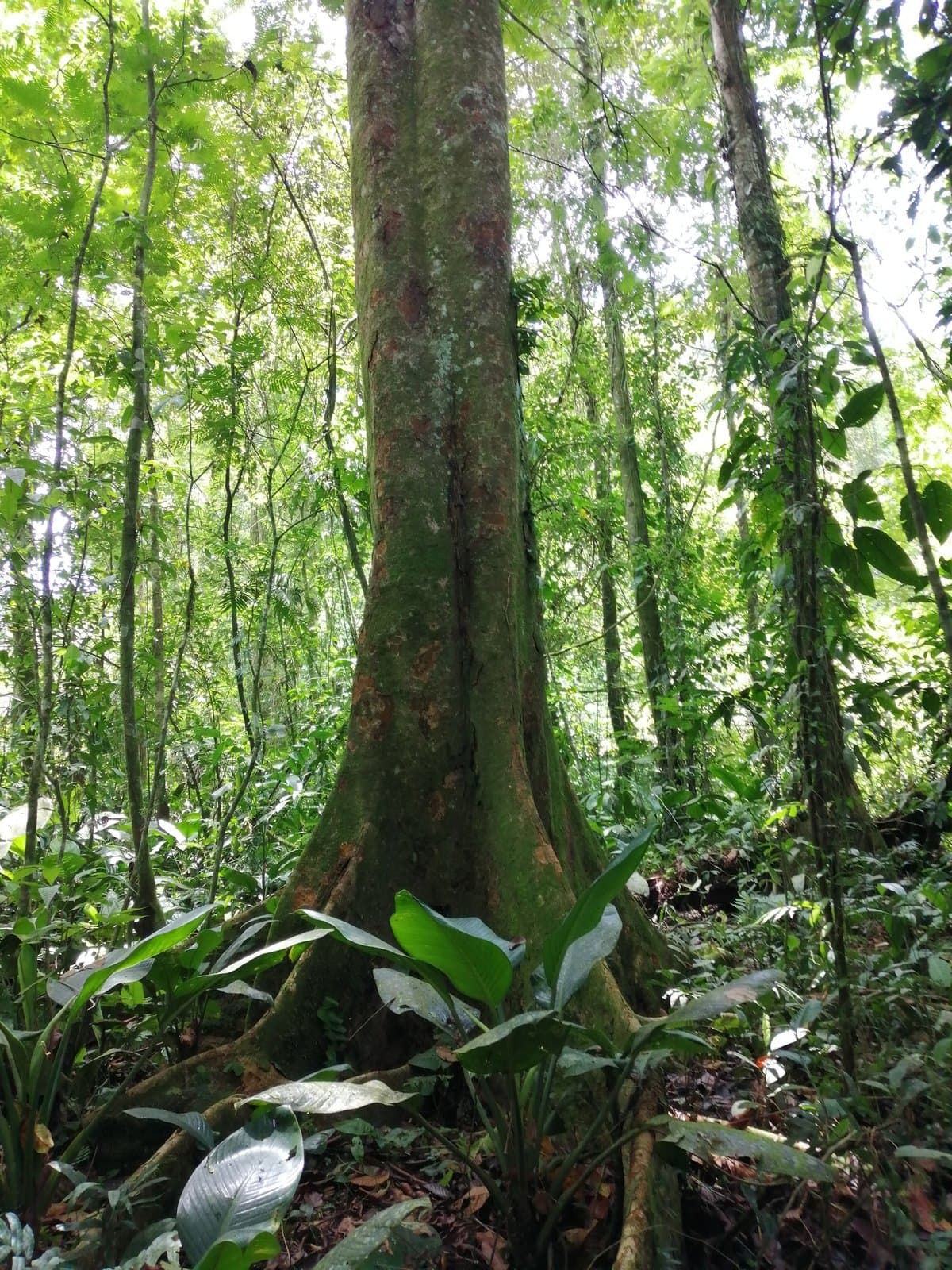
Cedro Macho is a large canopy to emergent tree reaching 30–40 m in height in mature forest. The trunk is straight and cylindrical, 60–120 cm in diameter above the buttresses, with well-developed plank buttresses that can extend 1–2 m from the trunk and reach 2–3 m in height. The crown is dense, rounded, and dark green, creating deep shade beneath. The overall form is impressive and monumental, forming a dominant presence in the forest canopy.
Bark
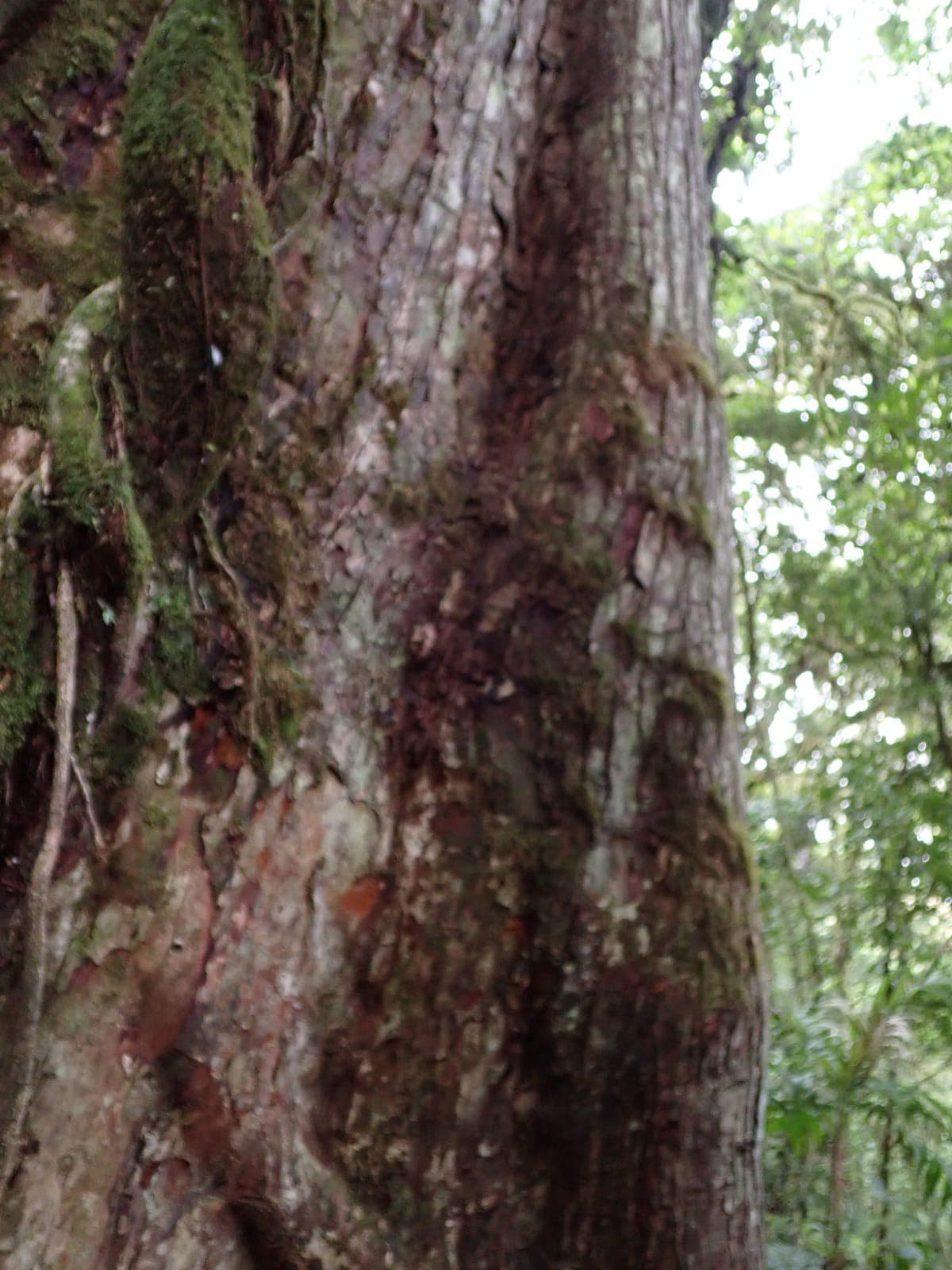
The outer bark is grayish-brown, rough, and vertically fissured with rectangular plates that flake off with age. The inner bark is pinkish to reddish-brown, with a bitter taste (due to limonoid compounds). The bark is thick (1–2 cm) and provides fire resistance to a degree, though lowland wet forest fires are rare.
Leaves
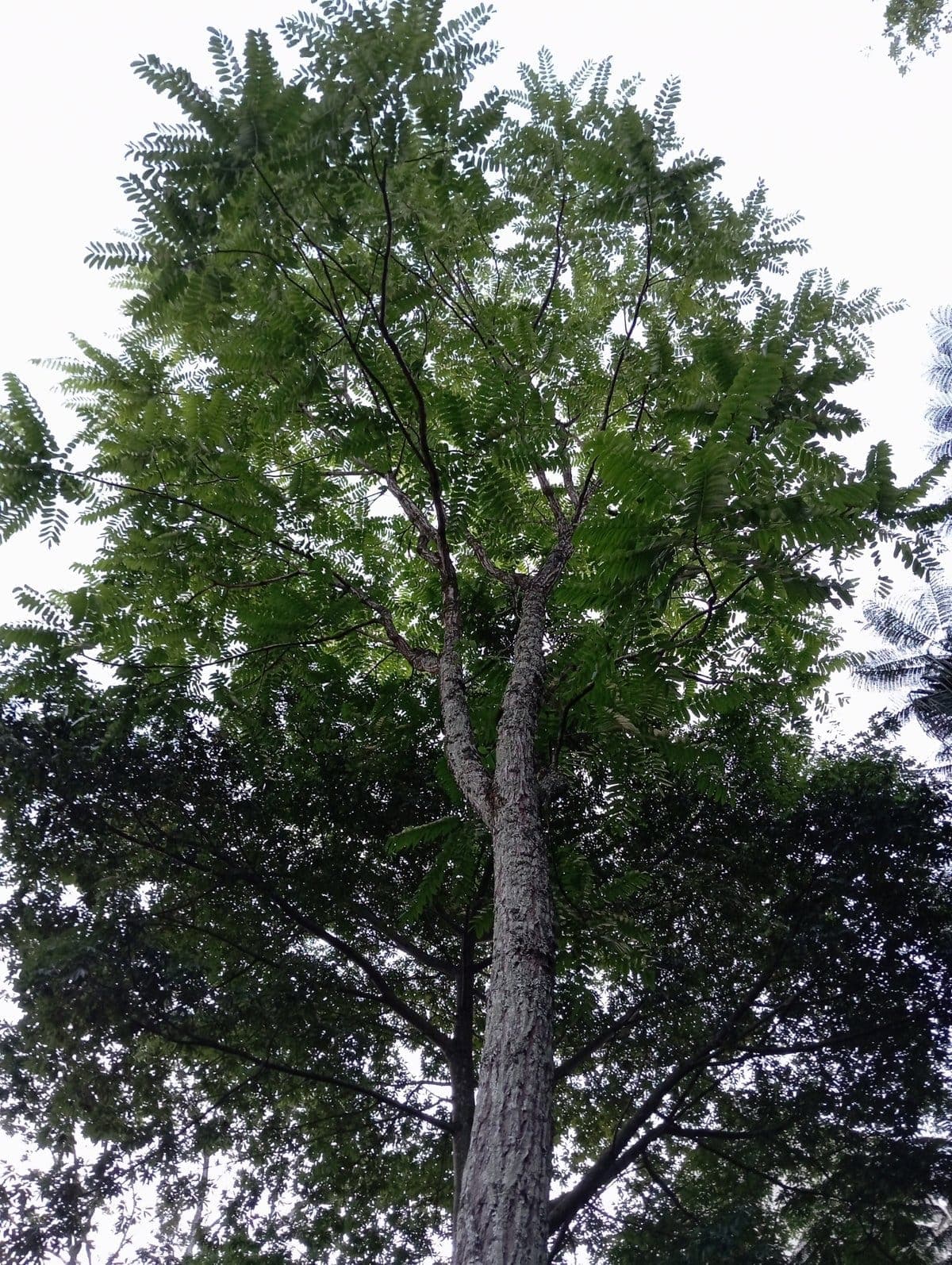
Leaves are alternate, pinnately compound, 30–60 cm long, with 4–10 pairs of leaflets plus a terminal leaflet (paripinnate to imparipinnate). Leaflets are oblong to elliptic, 10–20 cm long and 4–7 cm wide, glossy dark green above and paler below, with entire margins and accuminate tips. Young foliage flushes are tinged pink or bronze. The leaf rachis is stout and slightly swollen at the base.
Flowers
Flowers are small (5–8 mm), cream to yellowish-white, arranged in axillary or sub-terminal panicles 15–30 cm long. Each flower has 4 petals, 8 stamens fused into a staminal tube (characteristic of Meliaceae), and a superior ovary. Flowers are fragrant and primarily pollinated by moths and bees, with flowering occurring in the late dry season (February–April).
Fruit and Seeds
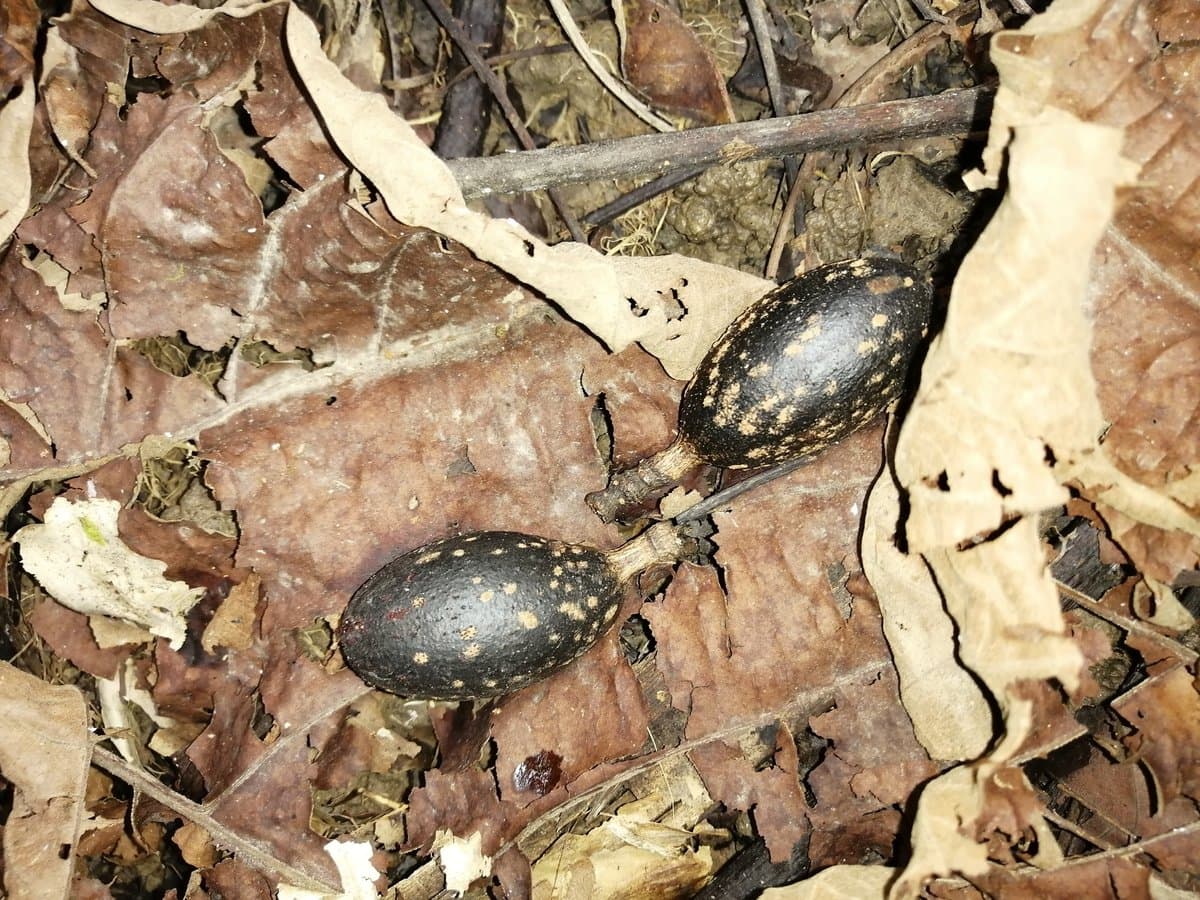
The fruit is a large, woody, globose capsule, 8–12 cm in diameter, weighing 200–400 g, with 4 valves that split open when ripe on the ground. Each capsule contains 4–16 large, angular, brown seeds, each 3–5 cm across, resembling Brazil nuts in appearance. The seeds are rich in oil (50–60% by weight), which is extracted as the commercially important andiroba oil. Seeds are dispersed by water (they float) and by large rodents (agoutis, pacas) that cache them.
Root System
The root system features spectacular plank buttresses that provide structural support for the tall trunk in shallow forest soils. Lateral roots extend widely, and the tree forms associations with arbuscular mycorrhizal fungi. The buttress roots create microhabitats for amphibians, invertebrates, and small mammals.
Geographic Distribution
Carapa guianensis has one of the largest natural distributions of any Neotropical timber tree, ranging from southern Mexico through Central America to the Amazon Basin and the Guianas, and disjunctly in tropical West Africa. In Costa Rica, it occurs in the Caribbean lowlands and the southern Pacific wet lowlands.
Costa Rican Distribution
Habitat & Ecology
Ecological Role
Cedro Macho is a canopy-dominant species that shapes forest structure in lowland wet forests. Its dense crown provides shade and creates a humid microclimate beneath. Dead and fallen branches contribute to coarse woody debris essential for decomposition cycles. The massive buttress roots create physical structures that influence water flow patterns and provide refugia for forest-floor organisms. The species is an important component of successional forests and riparian corridors.
Wildlife Interactions
The flowers are visited by moths, bees, and other insects. Seeds are an important food for agoutis (Dasyprocta punctata), which also serve as seed dispersers by caching seeds that they fail to retrieve. Pacas, squirrels, and peccaries also consume the seeds. The trees are used as nesting sites by parrots and raptors. The extensive buttress spaces are used by small mammals, amphibians, and reptiles as shelters.
Uses & Applications
Timber
Cedro Macho produces a medium-weight, moderately hard timber with a warm reddish-brown heartwood and a straight to slightly interlocked grain. The wood works well with both hand and machine tools, takes a good polish, and is naturally durable with moderate resistance to decay and insects. It is used for furniture, cabinetry, interior construction, boat building, plywood, and general carpentry. While not as aromatic or as valued as Cedrela odorata timber, it is a reliable and versatile construction wood.
Andiroba Oil
The seed oil of Carapa guianensis (andiroba oil or oil of carapa) is one of the most important non-timber forest products (NTFPs) in the Neotropics. The oil is extracted from the fat-rich seeds by pressing or boiling. It has documented anti-inflammatory, analgesic, insect-repellent, and wound-healing properties. In Costa Rica and throughout the Amazon, andiroba oil is applied topically to repel mosquitoes and sandflies, to soothe insect bites and stings, to reduce inflammation from arthritis and sprains, and to treat skin conditions. Modern research has confirmed the bioactivity of the key limonoid compound gedunin.
Reforestation
Cedro Macho is an increasingly important species for reforestation and agroforestry in Costa Rica's wet lowlands. Its relatively fast establishment, straight trunk form, tolerance of periodic flooding, and valuable timber make it suitable for timber plantations and riparian restoration. Unlike Cedrela odorata and Swietenia, Carapa is somewhat less susceptible to the devastating shootborer Hypsipyla grandella (though still affected), making it a more practical choice for plantation forestry.
Cultural Significance
Sources: IUCN Red List — Carapa guianensis↗, Tropicos — Carapa guianensis↗, Useful Tropical Plants — Carapa guianensis↗
Indigenous and Traditional Use
Indigenous peoples throughout the Neotropics have used andiroba oil for millennia. The Bribri and Cabécar of Costa Rica's Caribbean coast use the oil as an insect repellent and anti-inflammatory medicine. In the Amazon, andiroba oil is a household staple, used in candle-making, soap production, and as fuel for lamps. The bitter bark is steeped in alcohol to produce a febrifuge (fever-reducing remedy) used in traditional pharmacopeias across Latin America.
Economic Importance
Andiroba oil has entered international markets as a natural cosmetic ingredient, appearing in soaps, moisturizers, and massage oils marketed as sustainable Amazonian products. In Costa Rica, small-scale forest-based enterprises collect seeds from natural populations for oil extraction, providing income to rural communities while incentivizing forest conservation. The timber continues to be commercially important, though sustainable harvesting practices are essential.
Conservation Status
Carapa guianensis is assessed as Least Concern (LC) on the IUCN Red List due to its wide distribution and relatively large remaining populations. However, local population declines have occurred due to selective logging of the largest trees, deforestation for agriculture, and overexploitation of seed sources for oil production. In Costa Rica, populations in the Osa Peninsula and Caribbean lowlands remain healthy within protected areas, but unprotected forests continue to face pressure.
Cultivation & Care
Planting
Plant during the onset of the wet season (May–June). Select sites with deep, fertile soils and adequate moisture. Space 12–15 m apart for timber plantations. Young trees tolerate shade and can be interplanted with fast-growing pioneers in enrichment planting schemes. Plant fresh seed directly in the ground or in large nursery bags. No seed pretreatment is needed.
Watering
Young trees require consistent moisture during the establishment phase (first 2 years). Once established, the deep root system and buttresses provide excellent moisture access. In exceptionally dry years, supplemental irrigation may benefit young plantations.
Fertilization
Apply balanced organic fertilizer at planting. Annual applications of compost or slow-release fertilizer benefit plantation trees during the first 5 years. Natural forest populations require no fertilization.
Pruning
For timber production, prune lower branches during the first 10 years to promote a clear, straight trunk of 6–8 m. In natural forest or shade-tree settings, allow natural crown development.
Companion Planting
- Beneficial companions: Pentaclethra macroloba (Gavilán), Virola koschnyi (Fruta Dorada), Dipteryx panamensis (Almendro), palms
- Compatible understory: Heliconia spp., Piper spp., shade-tolerant shrubs
- Avoid: Aggressive grasses that compete for moisture; do not plant in dry or strongly seasonal climates
Year-Round Care Calendar
Propagation
Seeds are recalcitrant (they cannot be dried or stored long-term). Collect fallen capsules from the ground, extract seeds, and plant within 1–2 weeks. Sow seeds 2–3 cm deep in moist, well-drained nursery mix or directly in the field. No pretreatment is necessary. Germination occurs in 15–30 days. Transplant nursery seedlings at 30–50 cm height. Seedlings are slow-growing initially but accelerate in the second year.
Where to See This Tree
External Resources
References
- Zamora, N. et al. (2004). Árboles de Costa Rica, Vol. III. INBio/OET.
- Pennington, T. D. & Styles, B. T. (1975). "A generic monograph of the Meliaceae." Blumea, 22: 419–540.
- Forget, P.-M. (1996). "Removal of seeds of Carapa procera by rodents and their fate in a tropical forest of French Guiana." Journal of Tropical Ecology, 12: 751–761.
- Desmarchelier, C. et al. (1996). "Anti-inflammatory activity of Brazilian Meliaceae plants and isolated compounds." Phytomedicine, 3: 231–240.
- McHargue, L. A. & Hartshorn, G. S. (1983). "Seed and seedling ecology of Carapa guianensis." Turrialba, 33: 399–404.
Safety Information Disclaimer
Safety information is provided for educational purposes only. Individual reactions may vary significantly based on age, health status, amount of exposure, and individual sensitivity. Always supervise children around plants. Consult a medical professional or certified arborist for specific concerns. The Costa Rica Tree Atlas is not liable for injuries or damages resulting from interaction with trees described in this guide.
• Always supervise children around plants
• Consult medical professional if unsure
• Seek immediate medical attention if poisoning occurs
Information compiled from authoritative toxicology sources, scientific literature, and medical case reports.
Help improve this page
Know something about this tree? Share local knowledge, suggest a correction, or submit a photo to improve this guide for everyone.