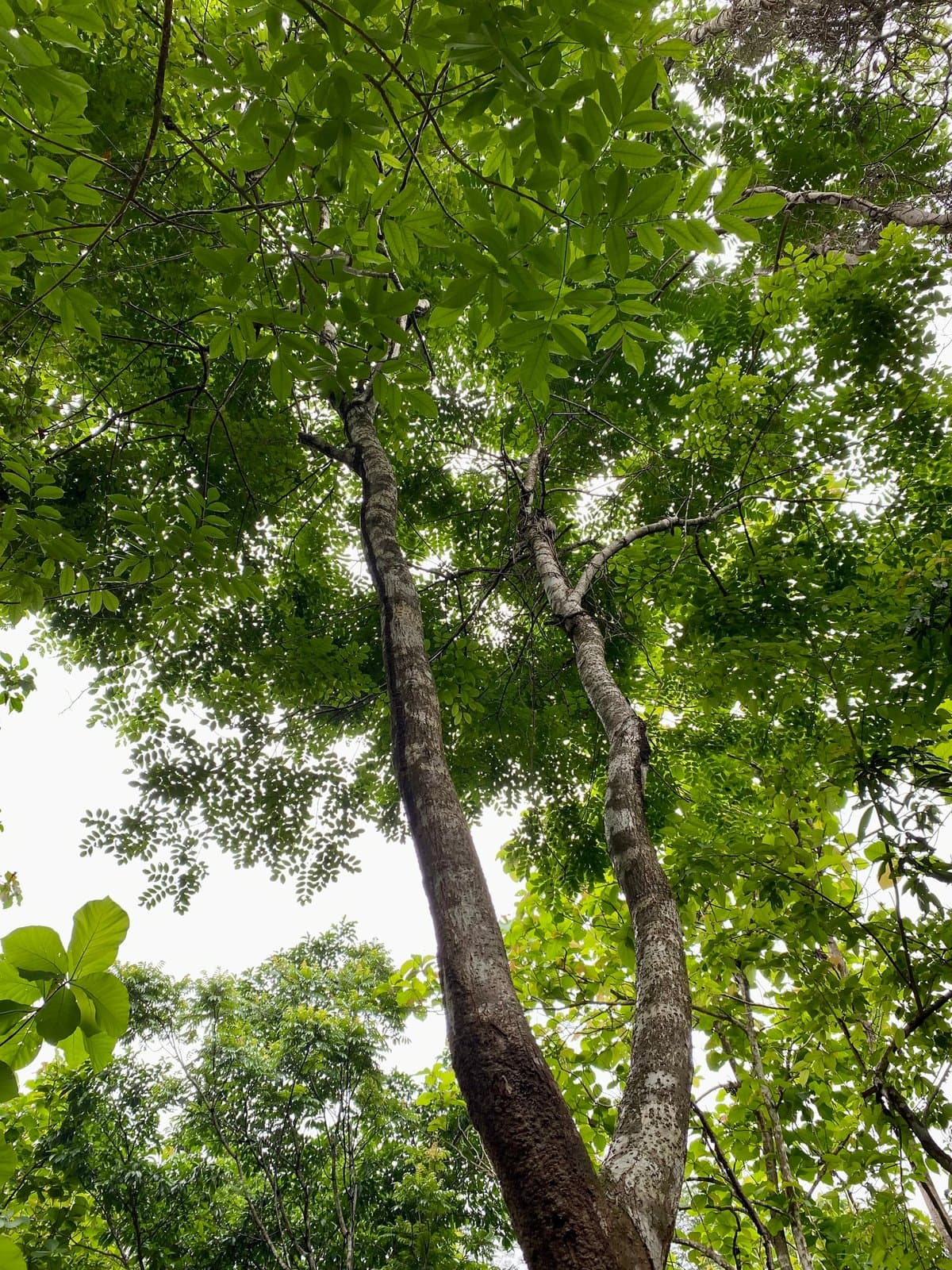
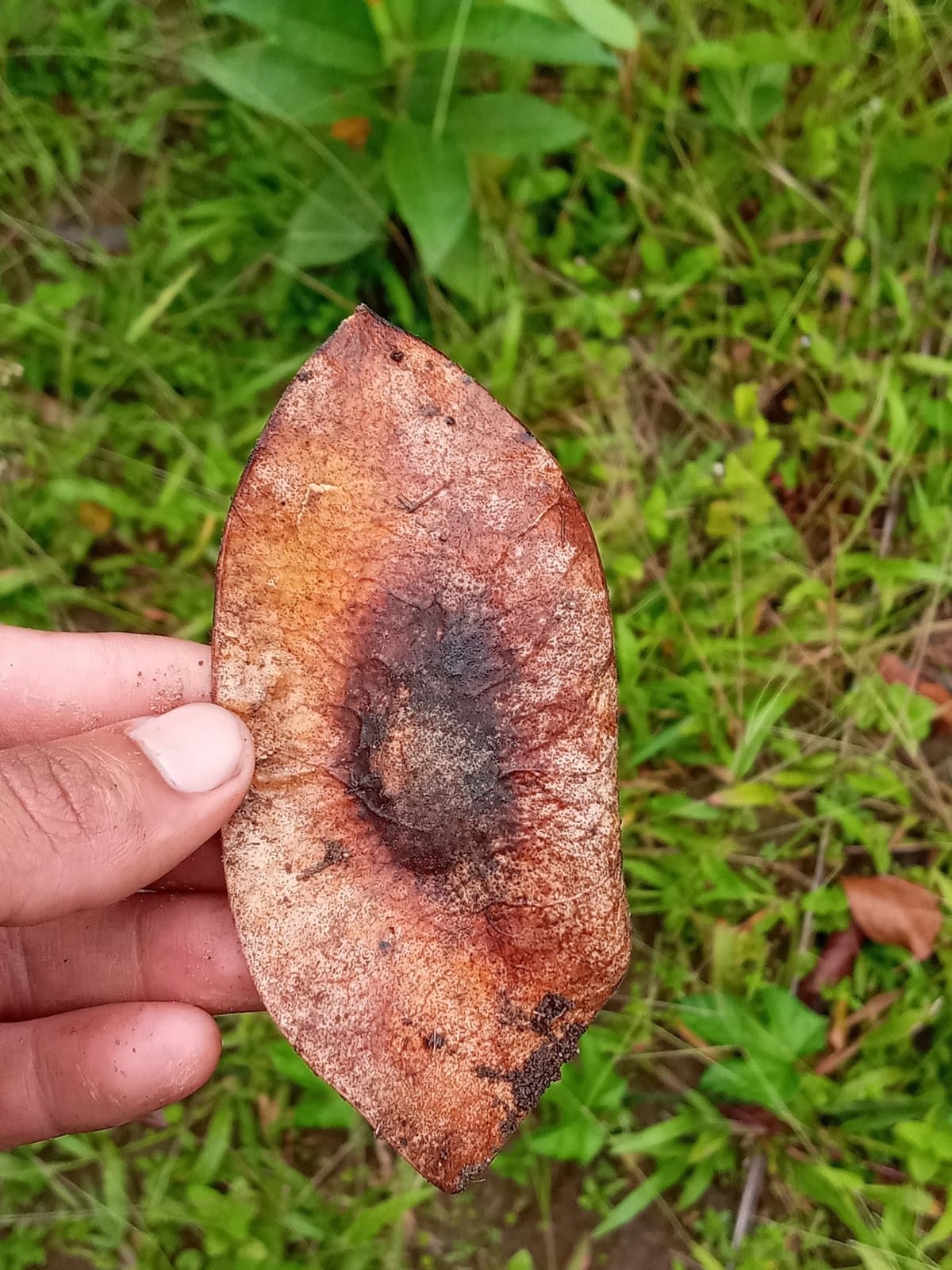
Cocobolo
Dalbergia retusa
Cristóbal
Platymiscium pinnatum
Cocobolo vs. Cristóbal: Premium Rosewood Distinction
Key Difference
Cocobolo is a globally Vulnerable (IUCN), severely depleted small tree (15-25 m) with orange-red heartwood and CITES protection, while Cristóbal is near-threatened canopy tree (25-40 m) with purple heartwood and wider distribution—both valuable but fundamentally different conservation and size profiles.
Cocobolo vs. Cristóbal: Distinguished Premium Rosewoods
Costa Rica's dry forests host two of Central America's most valuable timber species: Cocobolo (Dalbergia retusa) and Cristóbal (Platymiscium pinnatum). Both produce stunning decorative wood prized by fine woodworkers worldwide, both are in the legume family (Fabaceae), and both face conservation threats—but they're surprisingly easy to distinguish once you know what to look for.
Cocobolo = Critically Endangered (IUCN CR) + CITES Appendix II (trade restricted) + Small tree (15-25 m) Cristóbal = Near Threatened (IUCN NT) + No CITES listing + Large canopy tree (25-40 m) Cocobolo is vastly more threatened and faces international trade restrictions. Never harvest without proper permits.
🔍Quick Identification Guide
Side-by-Side Comparison
Key Identification Features
Quick Visual Distinctions
| Feature | Cocobolo (Dalbergia retusa) | Cristóbal (Platymiscium pinnatum) | | --------------- | ---------------------------------------------- | ----------------------------------------- | | Tree Height | Small: 15-25 m (50-80 ft) | Large: 25-40 m (82-130 ft) | | Trunk | Short, irregular, often multi-stemmed | Tall, straight, single-stemmed | | Leaves | Odd-pinnate, 5-9 leaflets, alternate | Odd-pinnate, 7-13 leaflets, alternate | | Leaflets | Small (3-7 cm), elliptic, rounded tip | Larger (8-12 cm), lanceolate, pointed | | Flowers | Small yellow-white, fragrant (Mar-May) | Small white to cream (Mar-May) | | Fruit Pods | Flat, thin samaras (winged seeds), indehiscent | Flat, wide samaras, indehiscent | | Bark | Gray-brown, rough, deeply fissured | Gray, smooth when young, shallow fissures | | Sap/Latex | None | None | | Heartwood | Orange-red to deep red with black marbling | Purple-brown to dark reddish-brown | | Sapwood | Pale yellow, sharply demarcated | Pale yellow, distinct from heartwood | | Wood Luster | High natural luster, very oily | Moderate luster, less oily | | Wood Scent | Strong spicy-sweet aroma (distinctive!) | Mild pleasant scent |
The Single Best Differentiator
In the forest: Cristóbal trees tower 40 m tall with straight trunks—cocobolo is a small, gnarly tree rarely exceeding 25 m. In the workshop: Cocobolo heartwood is unmistakable orange-red with black streaks and VERY oily—Cristóbal is purple-brown and less oily. If the tree is huge, it's not cocobolo. If the wood smells spicy-sweet and your hands are oily, it's cocobolo.
Detailed Botanical Comparison
Leaf Characteristics
Cocobolo (Dalbergia retusa):
- Arrangement: Alternate, odd-pinnate compound leaves
- Leaflet Count: 5-9 leaflets per leaf (usually 7)
- Leaflet Shape: Small (3-7 cm long), elliptic to oblong, with rounded to slightly notched apex
- Leaf Surface: Glabrous (smooth) on top, slightly pubescent beneath
- Venation: Pinnate, reticulate (netted)
- Color: Dark green above, paler beneath
- Notable: Leaflets are notably small for a tropical legume tree
Cristóbal (Platymiscium pinnatum):
- Arrangement: Alternate, odd-pinnate compound leaves
- Leaflet Count: 7-13 leaflets per leaf (usually 9-11)
- Leaflet Shape: Larger (8-12 cm long), lanceolate to oblong-lanceolate, with acuminate (pointed) tip
- Leaf Surface: Glabrous on both surfaces when mature
- Venation: Prominent pinnate veins
- Color: Shiny dark green above, paler beneath
- Notable: The acuminate (drip-tip) leaf apex is distinctive—cocobolo has rounded tips
Flowering and Fruiting
Cocobolo:
- Flowering Season: March-May (early-mid dry season)
- Flowers: Small (5-7 mm), yellow-white, papilionaceous (butterfly-shaped pea flowers), fragrant
- Inflorescence: Dense axillary and terminal racemes or panicles
- Fruit: Flat indehiscent samaras (winged pods), 4-8 cm long, containing 1-2 seeds
- Fruit Season: June-August
- Seed Dispersal: Wind (the papery wing catches breezes)
Cristóbal:
- Flowering Season: March-May (dry season)
- Flowers: Small (8-10 mm), white to cream, papilionaceous
- Inflorescence: Terminal panicles
- Fruit: Flat indehiscent samaras, 7-12 cm long (larger than cocobolo), single seed
- Fruit Season: July-October
- Seed Dispersal: Wind and gravity
Bark and Trunk
Cocobolo:
- Bark Texture: Rough, deeply fissured with irregular vertical plates
- Bark Color: Gray-brown to dark brown, becoming nearly black with age
- Exfoliation: Does not exfoliate cleanly; thick corky bark
- Trunk Form: Often short and irregular; frequently multi-stemmed or branching low
- Buttresses: Absent or very minor
- Maximum Diameter: 40-60 cm DBH (diameter at breast height)
- Notable: The small, gnarled trunks rarely yield large lumber—most cocobolo is cut for turning blanks and small specialty items
Cristóbal:
- Bark Texture: Smooth when young, developing shallow vertical fissures with age
- Bark Color: Pale gray to light brown
- Exfoliation: Slight flaking in older trees
- Trunk Form: Tall, straight, single-stemmed—classic timber tree form
- Buttresses: Small buttresses at base in mature trees
- Maximum Diameter: 60-120 cm DBH
- Notable: The tall, straight bole (trunk) produces high-quality lumber boards—commercial harvesting yields furniture-grade planks
Wood Characteristics: The Ultimate Test
Cocobolo Wood
Appearance:
- Heartwood Color: Orange-red to deep brick-red with dramatic black streaks and marbling
- Sapwood: Creamy yellow, sharply demarcated from heartwood
- Figure: Wild grain patterns with interlocked grain; burls and crotch wood are spectacular
- Luster: Very high natural luster—polishes to mirror shine
- Texture: Fine, uniform texture
Physical Properties:
- Density: 1.1-1.2 g/cm³ (very heavy—doesn't float)
- Janka Hardness: ~2,960 lbf (extremely hard)
- Durability: Exceptionally durable; highly resistant to decay, insects, and moisture
- Oiliness: EXTREMELY oily—the wood exudes natural oils that make gluing and finishing challenging
- Scent: Strong, distinctive spicy-sweet aroma (like rosewater + cinnamon)
Working Properties:
- Sawing: Difficult—high density and interlocked grain dull tools rapidly
- Turning: Excellent—the high oil content lubricates tools, producing a smooth finish
- Finishing: Challenging—natural oils inhibit adhesion of finishes; oils must be removed with acetone before gluing
- Toxicity: Moderate—wood dust can cause skin irritation and respiratory sensitization in some individuals
- Notable: The oiliness is both a blessing (beautiful finish) and a curse (difficult finishing)
Uses:
- Musical instruments (guitars, marimbas, clarinets, oboes—resonance + beauty)
- Custom knife handles and gun grips (durability + aesthetics)
- High-end turnings (bowls, pens, chess pieces)
- Inlay and marquetry (striking color contrast)
- Small decorative objects
Cristóbal Wood
Appearance:
- Heartwood Color: Purple-brown to dark reddish-brown (not orange like cocobolo)
- Sapwood: Pale yellow to cream, distinct from heartwood
- Figure: Straight to interlocked grain; less dramatic than cocobolo but attractive
- Luster: Moderate natural luster
- Texture: Medium to fine, uniform
Physical Properties:
- Density: 0.85-0.95 g/cm³ (heavy but lighter than cocobolo)
- Janka Hardness: ~2,200 lbf (hard, but not as extreme as cocobolo)
- Durability: Very durable; excellent resistance to decay and insects
- Oiliness: Moderate—contains some natural oils but far less than cocobolo
- Scent: Mild, pleasant aroma (much subtler than cocobolo)
Working Properties:
- Sawing: Moderate difficulty—interlocked grain requires sharp tools
- Planing: Good—achieves smooth surface with sharp blades
- Turning: Good
- Finishing: Good—accepts finishes well (unlike cocobolo)
- Toxicity: Low—occasional sensitization reported but much less problematic than cocobolo
- Notable: Much easier to work than cocobolo; suitable for furniture-scale projects
Uses:
- Fine furniture (tables, chairs, cabinets)
- Flooring (durable and attractive)
- Decorative veneer
- Musical instruments (marimbas, guitars)
- Interior trim and millwork
- Tool handles
Geographic Distribution in Costa Rica
Cocobolo Range
Primary Habitat:
- Regions: Pacific dry forests of Guanacaste and northern Puntarenas
- Key Locations: Guanacaste Conservation Area, Santa Rosa National Park, Palo Verde, Tempisque Basin
- Elevation: 0-600 m (sea level to low hills)
- Climate: Distinct dry season (5-6 months), 1000-2000 mm annual rainfall
- Forest Type: Tropical dry deciduous forest
- Soil: Well-drained soils; tolerates rocky, poor soils
Current Status:
- Wild Populations: Critically depleted due to decades of over-harvesting
- Regeneration: Poor natural regeneration—seedlings struggle in degraded habitats
- Protection: Protected in national parks, but illegal logging continues
- Plantation Efforts: Small-scale reforestation projects underway
Cristóbal Range
Primary Habitat:
- Regions: More widespread—Pacific slope, Central Valley, northern Caribbean lowlands
- Key Locations: Guanacaste, Alajuela, Heredia, San José, Limón provinces
- Elevation: 0-1200 m (sea level to premontane forests)
- Climate: 1500-3000 mm annual rainfall; tolerates both dry and wet regions
- Forest Type: Tropical dry, moist, and wet forests (more adaptable than cocobolo)
- Soil: Prefers deep, well-drained soils but relatively adaptable
Current Status:
- Wild Populations: Declining but not critically endangered
- Regeneration: Moderate natural regeneration in protected forests
- Protection: Protected in national parks; some managed forestry allowed
- Plantation Efforts: Occasionally planted in mixed reforestation projects
Cocobolo is highly localized to Pacific dry forests (Guanacaste) and critically endangered. Cristóbal has much wider distribution across multiple forest types and provinces, though still facing pressure. If you're outside Guanacaste's dry forests, any "rosewood" tree is more likely Cristóbal.
Conservation Context
Cocobolo: On the Brink
IUCN Status: Critically Endangered (CR)
Threats:
- Illegal Logging: Relentless demand for high-value wood drives poaching in protected areas
- Habitat Loss: Conversion of dry forests to cattle pasture and agriculture
- Poor Regeneration: Slow growth, low seed viability, browsing by cattle
- International Trade: Despite CITES Appendix II listing, illegal smuggling continues
Legal Protections:
- CITES Appendix II (2013): International trade requires export permits
- Costa Rican Law: Harvest prohibited except from legal plantations with permits
- National Parks: Protected in Santa Rosa, Palo Verde, Guanacaste Conservation Area
Conservation Actions Needed:
- Enforcement of anti-logging laws
- Seed collection and nursery propagation
- Community-based reforestation projects
- Sustainable harvest from plantations (after 40-60 years)
- Market education to reduce demand for wild-harvested wood
Cristóbal: Threatened but Recoverable
IUCN Status: Near Threatened (NT)
Threats:
- Selective Logging: Targeted removal of large trees for timber
- Habitat Degradation: Fragmentation of forest habitats
- Slow Growth: Long rotation times (50-70 years) limit recovery
Legal Protections:
- Protected in national parks and biological reserves
- Harvest requires permits from SINAC (Sistema Nacional de Áreas de Conservación)
- No CITES listing (not yet internationally threatened)
Conservation Advantages:
- Wider distribution across multiple provinces and forest types
- Better natural regeneration than cocobolo
- Tolerates a wider range of climates and soils
- Can be sustainably managed in well-regulated forestry operations
Cultural and Economic Significance
Cocobolo: The Rosewood Standard
Historical Use:
- Pre-Columbian Indigenous peoples used cocobolo for tools and ceremonial objects
- Spanish colonial era: Exported to Europe for fine furniture and musical instruments
- 19th-20th century: Became synonymous with "Central American rosewood"
Modern Market:
- Global Demand: Luthiers (musical instrument makers) prize cocobolo for guitars, oboes, clarinets, and marimbas
- Knifemakers: The ultimate handle material—durability + beauty + ergonomics
- Turners: High-end artisan turners pay premium prices for cocobolo blanks
- Price Range: $50-150 per board foot (retail); $200+ for figured/burled pieces
Cultural Value:
- Symbol of Costa Rica's dry forest heritage
- Featured in traditional marimba construction (national instrument)
- Object of conservation education campaigns
Cristóbal: The Sustainable Alternative
Historical Use:
- Indigenous use for construction and tool handles
- Colonial era: Furniture and flooring in wealthy homes
- Modern forestry: Planted in mixed-species reforestation projects
Modern Market:
- Furniture Industry: High-quality hardwood for tables, chairs, cabinetry
- Flooring: Durable and attractive wood flooring
- Export Market: Moderate demand in North America and Europe
- Price Range: $15-40 per board foot (much more affordable than cocobolo)
Cultural Value:
- Represents viable sustainable forestry option
- Part of Costa Rica's furniture-making tradition
- Increasingly promoted as cocobolo alternative
For Woodworkers: Practical Considerations
When to Choose Cocobolo
Best For:
- Small decorative objects where maximum visual impact is desired
- Musical instruments requiring acoustic resonance + aesthetics
- Knife handles and gun grips (durability + grip texture)
- High-end turnings (bowls, pens, bottle stoppers)
- Inlay and marquetry (color contrast)
Challenges:
- Extremely expensive—budget 3-5x more than Cristóbal
- Difficult to work—requires carbide tools and frequent sharpening
- Finishing problems—natural oils resist glue and finish adhesion
- Availability—limited supply, mostly from old stockpiles or small plantation harvests
- Ethics—ensure wood is legally sourced (CITES-compliant)
Tips:
- Remove oils with acetone before gluing or finishing
- Use sharp carbide-tipped tools to minimize tear-out
- Wear dust mask—sensitization risk
- Consider pre-finished oils (Danish oil, tung oil) rather than film finishes
- Verify legal sourcing documentation
When to Choose Cristóbal
Best For:
- Furniture projects requiring larger boards
- Flooring (durability + attractive color)
- Cabinetry and millwork
- Musical instruments (marimbas, guitars) where cocobolo is prohibitively expensive
- Any project where workability and finishing matter
Advantages:
- More affordable—significant cost savings
- Easier to work—better machining and finishing
- Better availability—wider geographic range
- Fewer ethical concerns—not CITES-listed (but still verify legal sourcing)
Tips:
- Sharp tools still necessary for clean cuts
- Sands to smooth finish with standard techniques
- Accepts stains and finishes well
- Pre-bore for screws and nails to avoid splitting
- Beautiful natural finish with clear coats
Summary: At a Glance
| Aspect | Cocobolo (Dalbergia retusa) | Cristóbal (Platymiscium pinnatum) | | ---------------------- | ------------------------------------------ | -------------------------------------- | | Tree Size | Small (15-25 m) | Large (25-40 m) | | Trunk Form | Short, irregular, often multi-stemmed | Tall, straight, single-stemmed | | Heartwood Color | Orange-red with black streaks | Purple-brown to reddish | | Wood Oiliness | EXTREMELY oily | Moderately oily | | Conservation | Critically Endangered (CR) + CITES App. II | Near Threatened (NT) | | Distribution | Narrow (Guanacaste dry forests) | Wide (multiple provinces) | | Price | $50-150/board foot | $15-40/board foot | | Best For | Small high-value objects, instruments | Furniture, flooring, large projects | | Workability | Difficult (oily, hard) | Moderate | | Legal Status | CITES trade restrictions | No CITES restrictions | | Ethical Sourcing | Critical—verify legal plantation source | Important—verify sustainable harvest | | Sustainability | Critically depleted, avoid wild-harvested | Declining but recoverable | | The Single Best ID | Small gnarled tree + orange-red oily wood | Tall straight tree + purple-brown wood |
Conservation Call to Action
Both cocobolo and Cristóbal are treasures of Costa Rica's forests, but cocobolo stands on the edge of extinction. If you're in the market for rosewood:
- Verify Legal Sourcing: Demand documentation proving legal harvest (CITES permits for cocobolo)
- Consider Alternatives: Cristóbal provides similar beauty with better sustainability
- Support Reforestation: Buy from certified plantation sources when available
- Reduce Demand: Do you truly need cocobolo, or would Cristóbal serve your purpose?
- Educate Others: Share knowledge about these trees' conservation status
For Landowners:
- Plant cocobolo from certified nursery stock—a 60-year investment for your grandchildren
- Cristóbal grows faster (50-70 years) and may be more economically viable
- Mixed-species reforestation benefits ecosystems more than monocultures
- Register trees with SINAC to protect them from illegal harvest
Related Resources
- Cocobolo Tree Profile - Full natural history and care
- Cristóbal Tree Profile - Complete species guide
- Teak vs. Melina Comparison - Plantation timber options
- Conservation Dashboard - Track endangered species
- CITES Database↗ - Verify legal trade status
- IUCN Red List↗ - Conservation status updates
Last Updated: January 12, 2026
Contributors: Costa Rica Tree Atlas Team
Photo Credits: Cocobolo and Cristóbal comparison images needed (community contributions welcome)
Want to explore more?
Use our interactive tool to compare these species side by side.
Compare in interactive tool