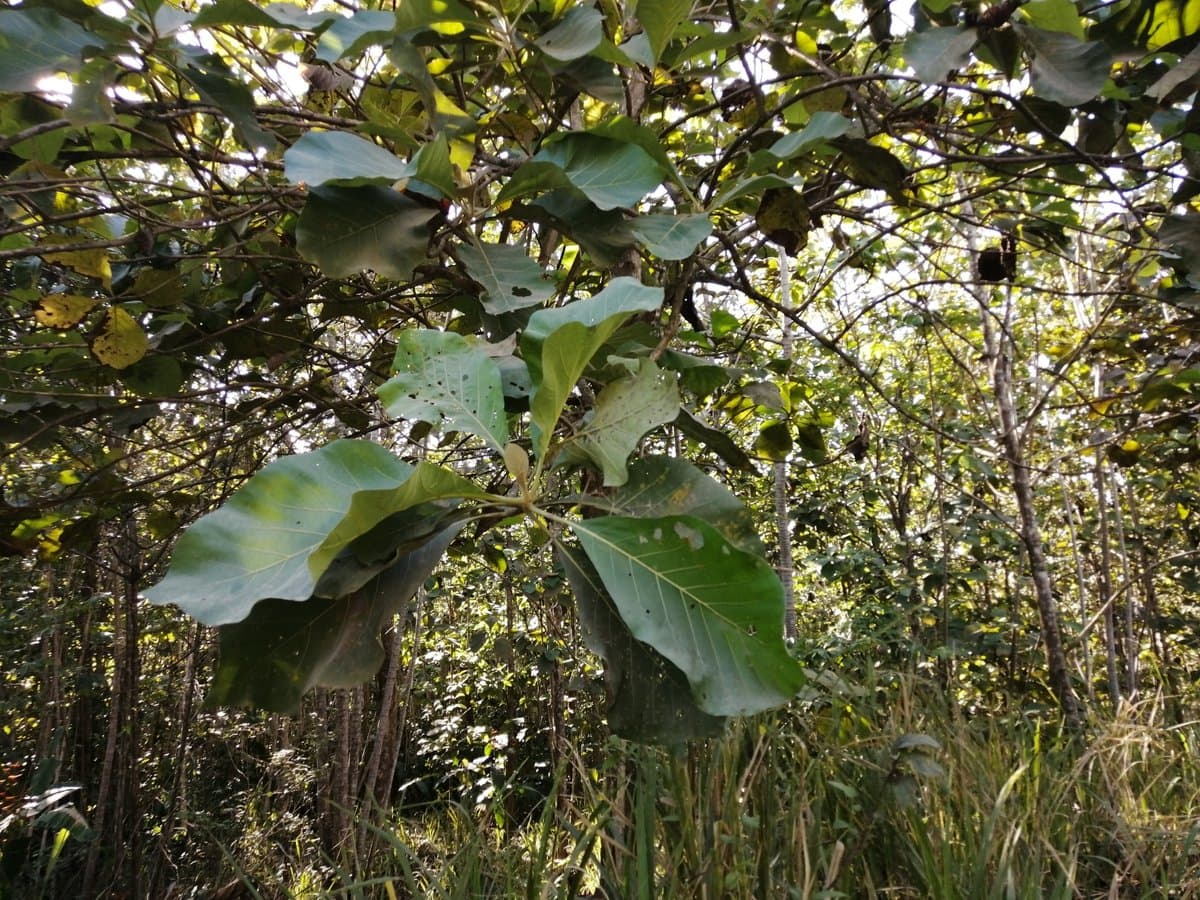
Teak
Tectona grandis
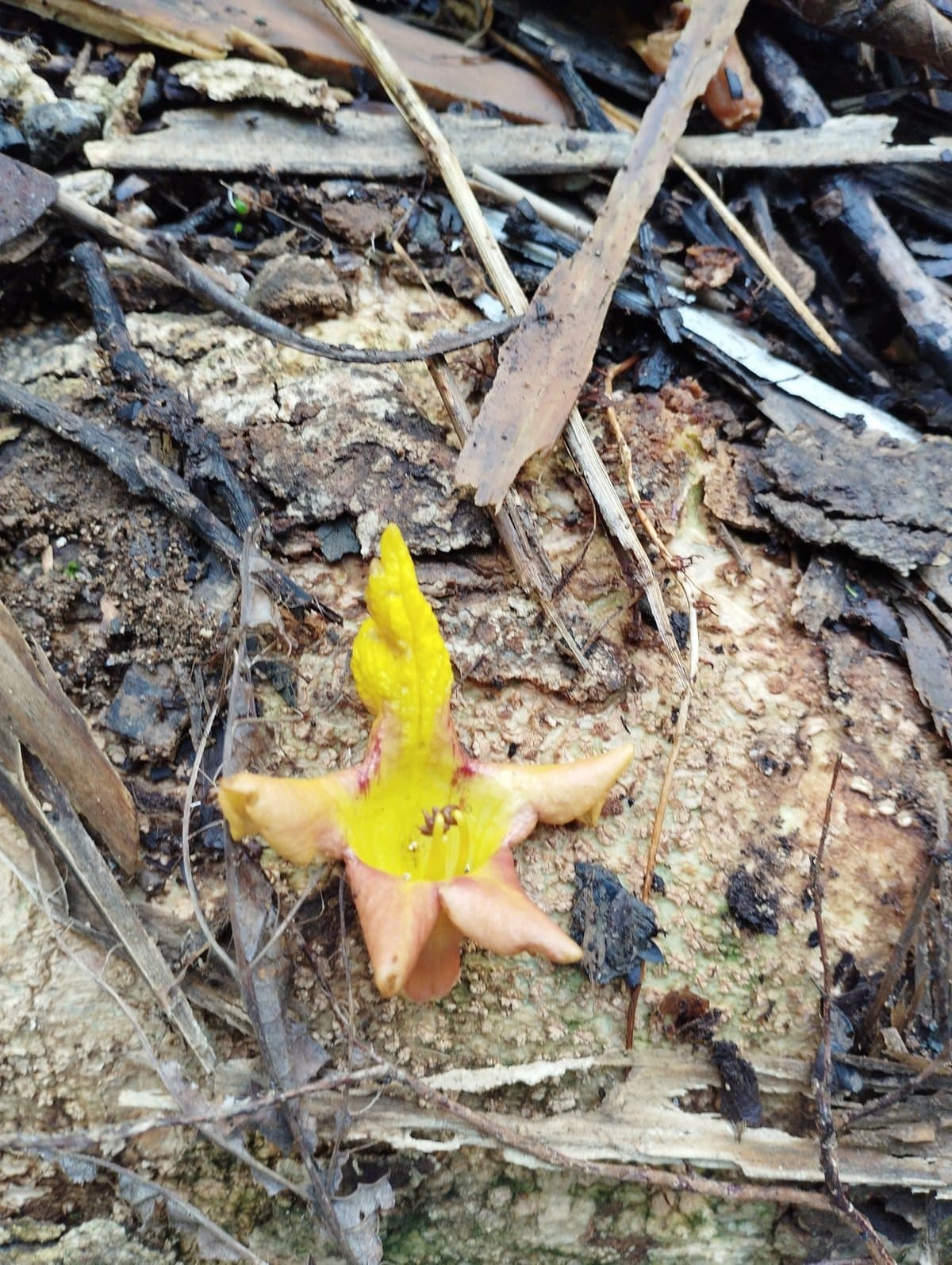
Gmelina
Gmelina arborea
Teak vs. Gmelina: Choosing Your Plantation Timber
Key Difference
Teak is slow-growing (20-25 years) premium hardwood for high-value products, while Gmelina is ultra-fast (5-8 years) softwood for pulp and light construction—fundamentally different timber investment strategies.
Teak vs. Gmelina: The Plantation Timber Decision
Costa Rica's commercial forestry sector revolves around two dominant introduced species: Teak (Tectona grandis) and Gmelina (Gmelina arborea), known locally as Teca and Melina. Both are from Southeast Asia, both thrive in Costa Rica's climate, and both are widely planted—but they represent opposite ends of the timber investment spectrum.
Teak = Slow growth (20-25 years) + Premium wood + High value + Low maintenance Gmelina = Ultra-fast growth (5-8 years) + Soft wood + Lower value + Higher maintenance The choice depends entirely on your timeline, capital, labor availability, and market access.
🔍Quick Identification Guide
Side-by-Side Comparison
Key Identification Features
Quick Visual Distinctions
| Feature | Teak (Tectona grandis) | Gmelina (Gmelina arborea) | | ------------- | ----------------------------------------------- | ---------------------------------------- | | Leaves | Large (20-50 cm), rough, sandpaper texture | Heart-shaped, soft, velvety underneath | | Leaf Base | Squared to heart-shaped | Distinctly heart-shaped (cordate) | | Flowers | Small white, in large panicles (June-Aug) | Small yellow-orange, tubular (Feb-Apr) | | Fruit | Round papery capsules in clusters | Fleshy yellow-orange drupes | | Bark | Gray-brown, fibrous, furrowed vertically | Pale gray, smooth when young, flaking | | Trunk | Straight, thick (60-150 cm diameter at harvest) | Straight but thinner (30-50 cm diameter) | | Branching | Self-pruning, few lower branches | Branchy, requires pruning |
Seasonal Behavior
Teak:
- Dry Season (Dec-April): Completely deciduous—drops ALL leaves in peak dry season (Feb-March), stands completely bare 1-2 months
- Leaf Flush: Dramatic bright green new leaf flush at start of rains (April-May)
- Flowering: June-August during rainy season
- Distinctive: The bare-branch silhouette is unmistakable—nothing else looks like a teak plantation in March
Gmelina:
- Dry Season: Semi-deciduous—loses some leaves but never completely bare
- Leaf Flush: Less dramatic, more continuous
- Flowering: February-April (dry season flowering)
- Distinctive: Retains green canopy year-round even in Guanacaste
The Investment Economics
Teak Economics (20-25 Year Rotation)
Initial Investment (per hectare):
- Seedlings: $500-800
- Site prep: $400-600
- Planting: $300-500
- Total first year: $1,200-2,000
Maintenance (20 years):
- Pruning (3 rounds): $600-900
- Thinning (2 rounds): $800-1,200
- Weed control (years 1-3): $400-600
- Total maintenance: $2,000-3,000
Harvest Revenue (year 20-25):
- Volume: 150-250 m³/ha
- Price: $800-2,000/m³
- Gross revenue: $120,000-500,000/ha
- Net profit: $115,000-495,000/ha over 20-25 years
- Annual return: 12-18%
Gmelina Economics (5-8 Year Rotation)
Initial Investment (per hectare):
- Seedlings: $300-500
- Site prep: $400-600
- Planting: $200-400
- Total first year: $900-1,500
Maintenance (5-8 years):
- Fertilization: $800-1,200 (essential!)
- Pruning: $400-600
- Thinning: $300-500
- Weed control: $600-900
- Total maintenance: $2,100-3,200
Harvest Revenue (year 5-8):
- Volume: 150-300 m³/ha (high volume!)
- Price: $100-300/m³
- Gross revenue: $15,000-90,000/ha
- Net profit: $12,000-85,000/ha over 5-8 years
- Annual return: 25-40% (if markets hold)
The Critical Difference
Teak: Long-term, lower risk, premium product, predictable markets, minimal labor, patient capital
Gmelina: Short-term, higher risk, commodity product, volatile markets, intensive labor, quick returns (or losses)
Growing Requirements
Climate Suitability
Teak REQUIRES:
- Distinct dry season of 3-6 months (moisture stress triggers quality wood formation)
- Annual rainfall: 1,200-2,500 mm
- Temperature: 25-35°C average
- Best zones: Guanacaste, northern Puntarenas, Pacific slope
- Poor performance: Caribbean slope (too wet), high elevations (too cool)
Gmelina TOLERATES:
- Year-round rainfall OR distinct dry season (very adaptable)
- Annual rainfall: 1,500-4,500 mm (wide range!)
- Temperature: 20-35°C average
- Best zones: Everywhere in Costa Rica below 1,000 m elevation
- Advantage: Can grow where teak cannot (Caribbean, wet zones)
Soil Requirements
Teak:
- Prefers deep, well-drained soils
- pH 6.5-7.5 (neutral to slightly alkaline)
- Tolerates clay but performs best in loams
- WILL NOT tolerate waterlogging
- Performs excellently on volcanic soils
Gmelina:
- Less soil-sensitive (more forgiving)
- pH 5.5-7.5 (wider range)
- Grows on poorer soils than teak
- Tolerates brief waterlogging
- REQUIRES FERTILIZATION on poor soils
Management Requirements
Teak: "Plant and Wait"
Year 1-2: Weed control critical (mow or herbicide around seedlings)
Year 3-5: First pruning—remove lower branches to 2-3 m height
Year 8-10: Second pruning—clear bole to 6-8 m; first thinning (remove 30-40% of trees)
Year 12-15: Final pruning; second thinning
Year 20-25: Harvest—select cutting of best trees or clear-fell
Total labor input: LOW (maybe 20-30 days/ha over 20 years)
Gmelina: "Intensive Plantation Management"
Year 1: Weed control (critical!), fertilization (NPK), pest monitoring
Year 2: Fertilization, pruning (remove lower branches), thin to 800-1,000 stems/ha
Year 3: Fertilization, second thinning to 600-700 stems/ha
Year 4: Final thinning to 400-500 stems/ha, pruning
Year 5-8: Harvest—clear-fell entire plantation
Total labor input: HIGH (60-80+ days/ha over 8 years)
Critical: Gmelina REQUIRES fertilization and intensive weed control or growth slows dramatically
Wood Quality & Uses
Teak: The Gold Standard
Properties:
- Janka hardness: 1,000-1,155 lbf (very hard)
- Density: 630-720 kg/m³
- Color: Golden-brown to dark brown, ages to silver-gray
- Grain: Straight, coarse texture
- Natural oils: HIGH (tectoquinone protects against rot/termites)
- Durability: Class 1 (most durable)—outdoor lifespan 40+ years untreated
Primary Uses:
- Outdoor furniture (THE premium choice)
- Boat building (teak decks are standard on luxury vessels)
- Decking and exterior applications
- Flooring
- Window frames and doors
Market: Global demand, export quality, luxury end-users
Gmelina: The Workhorse
Properties:
- Janka hardness: 350-560 lbf (soft)
- Density: 400-540 kg/m³
- Color: Pale yellow to light brown
- Grain: Straight, fine to medium texture
- Natural oils: LOW (must be treated for outdoor use)
- Durability: Class 4-5 (low durability)—rots quickly outdoors
Primary Uses:
- Pulp and paper production
- Plywood and veneers
- Packing crates and boxes
- Light construction (interior only)
- Particleboard and MDF
- Firewood (burns hot, minimal smoke)
Market: Industrial/commodity, local markets, volume buyers
Pros and Cons
Teak Advantages
✅ Premium prices ($800-2,000/m³)
✅ Global market demand
✅ Low maintenance (nearly maintenance-free after year 5)
✅ Predictable growth and quality
✅ Self-pruning reduces labor
✅ Doesn't require fertilization
✅ Extremely durable wood
✅ Long-term investment security
Teak Disadvantages
❌ LONG wait (20-25 years to harvest)
❌ Requires substantial upfront capital tied up
❌ Must have distinct dry season (limits growing zones)
❌ Initial seedlings more expensive
❌ Generational investment (most planters don't harvest their own trees)
❌ Endangered in wild (ethics of growing introduced species)
Gmelina Advantages
✅ ULTRA-FAST growth (harvest in 5-8 years!)
✅ Quick returns on investment
✅ Grows almost anywhere (very adaptable)
✅ High volume production per hectare
✅ Lower initial investment
✅ Suitable for small farmers (shorter commitment)
✅ Multiple rotation cycles in one lifetime
✅ Easy propagation
Gmelina Disadvantages
❌ LOW timber prices ($100-300/m³)
❌ Commodity market—prices fluctuate wildly
❌ HIGH maintenance (fertilizer, pruning, thinning essential)
❌ Soft wood with limited uses
❌ No outdoor durability (must be treated)
❌ Requires fertilization (ongoing cost)
❌ Market dependent on pulp mill access
❌ Can become invasive in some areas
❌ Higher financial risk (rapid growth = rapid loss if markets collapse)
Which Should You Plant?
Choose TEAK if you:
- Have 20-25 years before you need returns
- Own land in Guanacaste or Pacific dry forest zones
- Want a "set it and forget it" plantation
- Have capital to tie up long-term
- Seek premium product for export markets
- Value low labor/management input
- Want generational wealth investment
- Have deep, well-drained soils
Choose GMELINA if you:
- Need returns within 5-8 years
- Have land in wet zones (Caribbean, southern Pacific)
- Can invest in intensive management
- Have access to pulp mills or plywood factories
- Want multiple rotation cycles in your lifetime
- Have labor available for maintenance
- Seek higher (but riskier) annual returns
- Need quick cash flow from land
Consider MIXED STRATEGY if you:
- Want both long-term security and short-term income
- Have diverse land (some wet, some dry)
- Can manage two different plantation systems
- Want to hedge market risks
- Have sufficient hectares (e.g., plant 10 ha Gmelina, 30 ha Teak)
Common Mistakes to Avoid
For Teak Plantations
❌ Planting in areas without distinct dry season → Poor wood quality, slow growth, disease
❌ Neglecting weed control in years 1-3 → Seedlings get outcompeted, growth stunted
❌ Over-thinning or under-thinning → Affects trunk diameter and final volume
❌ Harvesting too early (before year 20) → Significantly reduces value per cubic meter
❌ Planting on shallow soils → Trees blow over, roots hit rock, poor growth
For Gmelina Plantations
❌ Skipping fertilization → Growth rates collapse, harvest delayed, poor returns
❌ Inadequate pruning → Knots reduce wood quality, lower prices
❌ Planting without market access secured → Plantation ready but no buyer = financial disaster
❌ Ignoring weed control → Gmelina is fast but weeds are faster in wet zones
❌ Harvesting too late (after year 10) → Wood quality declines, rot begins, returns drop
Costa Rica Plantation Statistics
Current Plantation Areas (approximate):
- Teak: 60,000+ hectares
- Gmelina: 30,000+ hectares
Growing Regions:
- Teak concentrated: Guanacaste (70%), northern Puntarenas (20%), scattered elsewhere (10%)
- Gmelina widespread: Caribbean (40%), southern Pacific (30%), Guanacaste (20%), other (10%)
Reforestation Incentives:
- FONAFIFO (National Forest Financing Fund) provides payments for reforestation
- Teak and Gmelina both qualify for PSA (Payment for Environmental Services)
- Check current rates and requirements with FONAFIFO
Expert Recommendations
"Teak is for those who can afford to wait. The economics are excellent if you have patient capital. It's essentially a retirement account that grows in your backyard." — Costa Rican Forestry Consultant
"Gmelina is a cash crop, not a retirement plan. Markets can shift dramatically in 8 years. Plant it only if you know who will buy your timber before you plant." — Timber Buyer, Zona Norte
"The big plantations do teak. Small farmers do Gmelina. But the most successful forestry operations I've seen do BOTH—using Gmelina profits to fund teak expansion." — CATIE Forestry Researcher
Final Thoughts: The Patience Premium
The choice between Teak and Gmelina is ultimately a choice between patience and speed, between luxury and utility, between minimal labor and intensive management.
Teak rewards those who can wait with premium prices and low effort. It's forestry for the long view.
Gmelina rewards those who work hard with quick returns but demands constant attention and market awareness.
Neither is "better"—they serve entirely different financial strategies, timelines, and risk tolerances. The best Costa Rican timber operations often include both, balancing quick Gmelina cash flow with long-term Teak wealth accumulation.
The real question isn't "Which should I plant?" but rather "What is my timeline, and what is my risk tolerance?"
Gmelina markets can shift dramatically. Before planting, secure buyer agreements or verify pulp mill proximity. Teak markets are more stable but also more competitive. Research current market conditions before committing capital to either species.
Related Content
Want to explore more?
Use our interactive tool to compare these species side by side.
Compare in interactive tool