Palmera Real
Roystonea regia
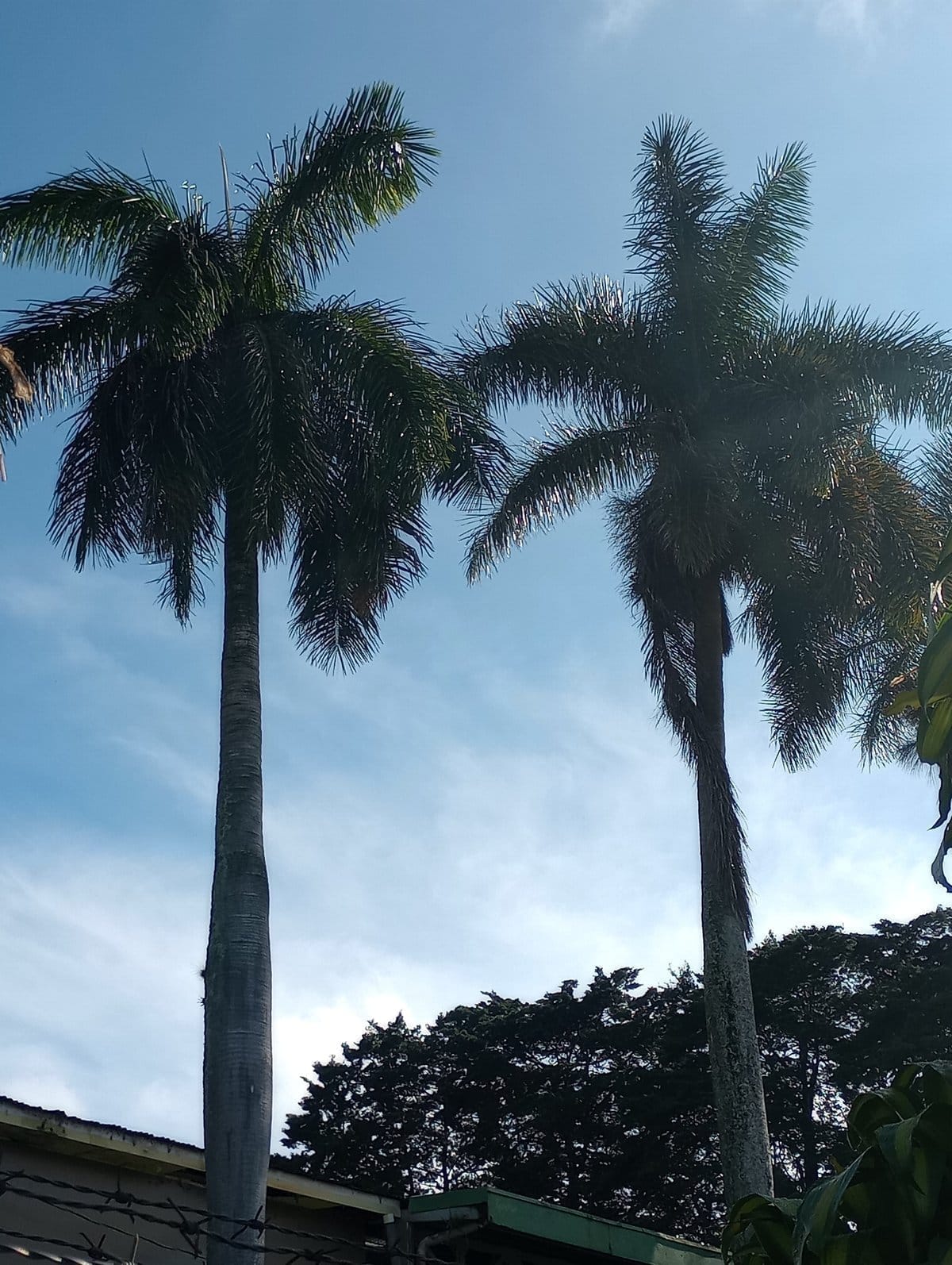
Quick facts
Native Region
Cuba, Florida, Mexico, Central America
Max Height
20-30 meters (65-100 feet)
Family
Arecaceae
Conservation
LC — Least Concern
Uses
Safety Information
Toxicity Details
The palm itself is non-toxic. The fruits are eaten by birds and used as livestock feed, but are not consumed by humans. No systemic toxicity from ingestion. The main concern is calcium oxalate crystals in the fruit pulp which cause skin irritation, not internal poisoning.
Skin Contact Risks
MODERATE risk from fruit handling. The fleshy fruit pulp contains calcium oxalate crystals which cause significant skin irritation and dermatitis. ALWAYS wear rubber gloves when handling fruits or removing them for seed preparation. The palm trunk, fronds, and other parts are safe to touch.
Allergenic Properties
No significant allergen risk from the palm itself. Not a pollen or contact allergen.
Season
Flowering
Mar-Jun
Fruiting
Jun-Sep
How to identify
Palmera Real (Royal Palm)
The Royal Palm (Roystonea regia) lives up to its regal name. With its perfectly smooth cement-gray trunk, bright green crownshaft, and crown of gracefully arching fronds, it is considered one of the world's most beautiful palms. Adopted as the national tree of Cuba and planted across every tropical latitude, this iconic species has become synonymous with grandeur — lining presidential boulevards, luxury resorts, and village plazas alike.
Quick Reference
iNaturalist Observations
Community-powered species data
📸 Photo Gallery
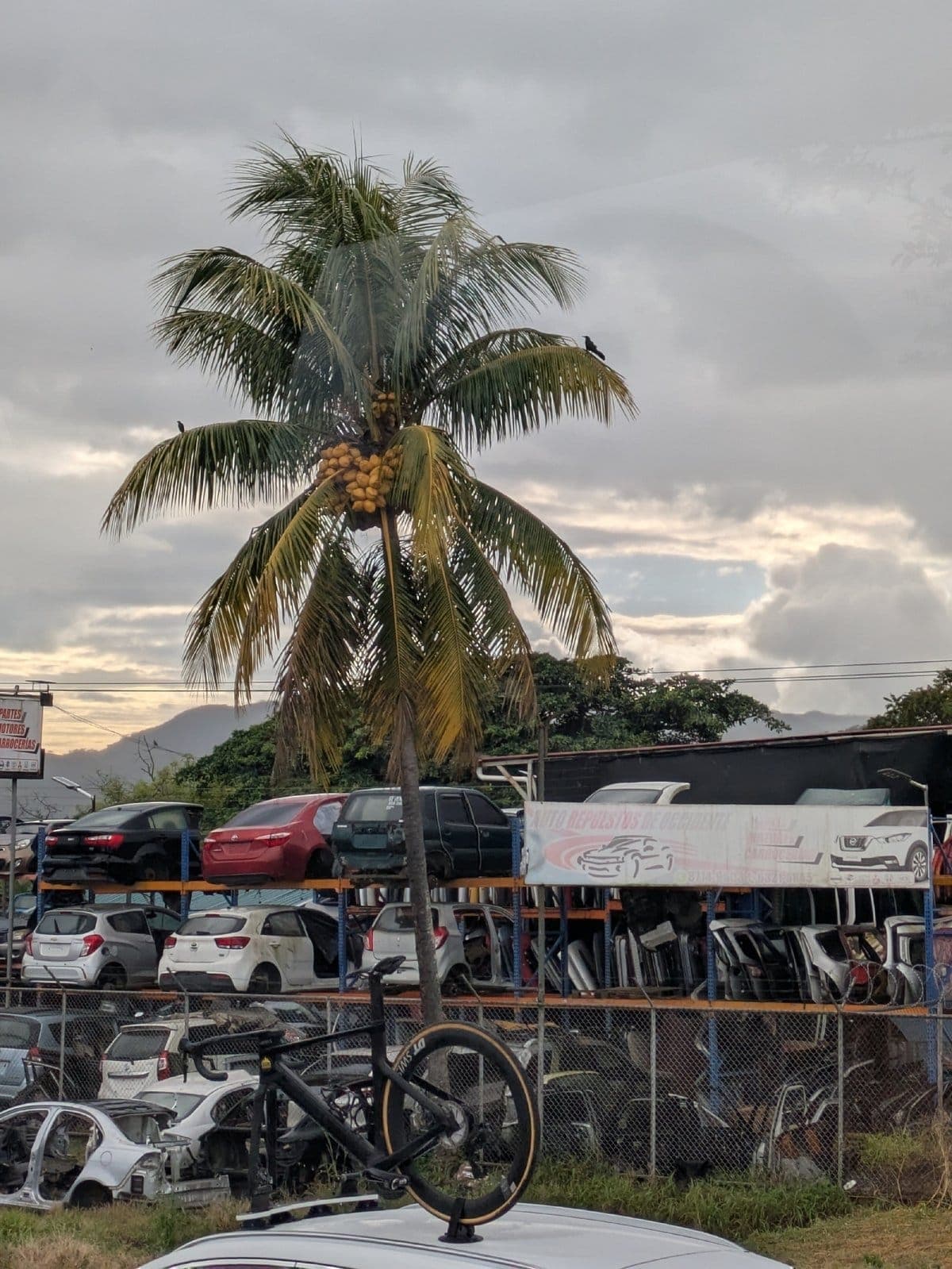
Whole tree
📷 (c) Miguel David Artavia Solís, some rights reserved (CC BY-NC)(CC BY-NC)
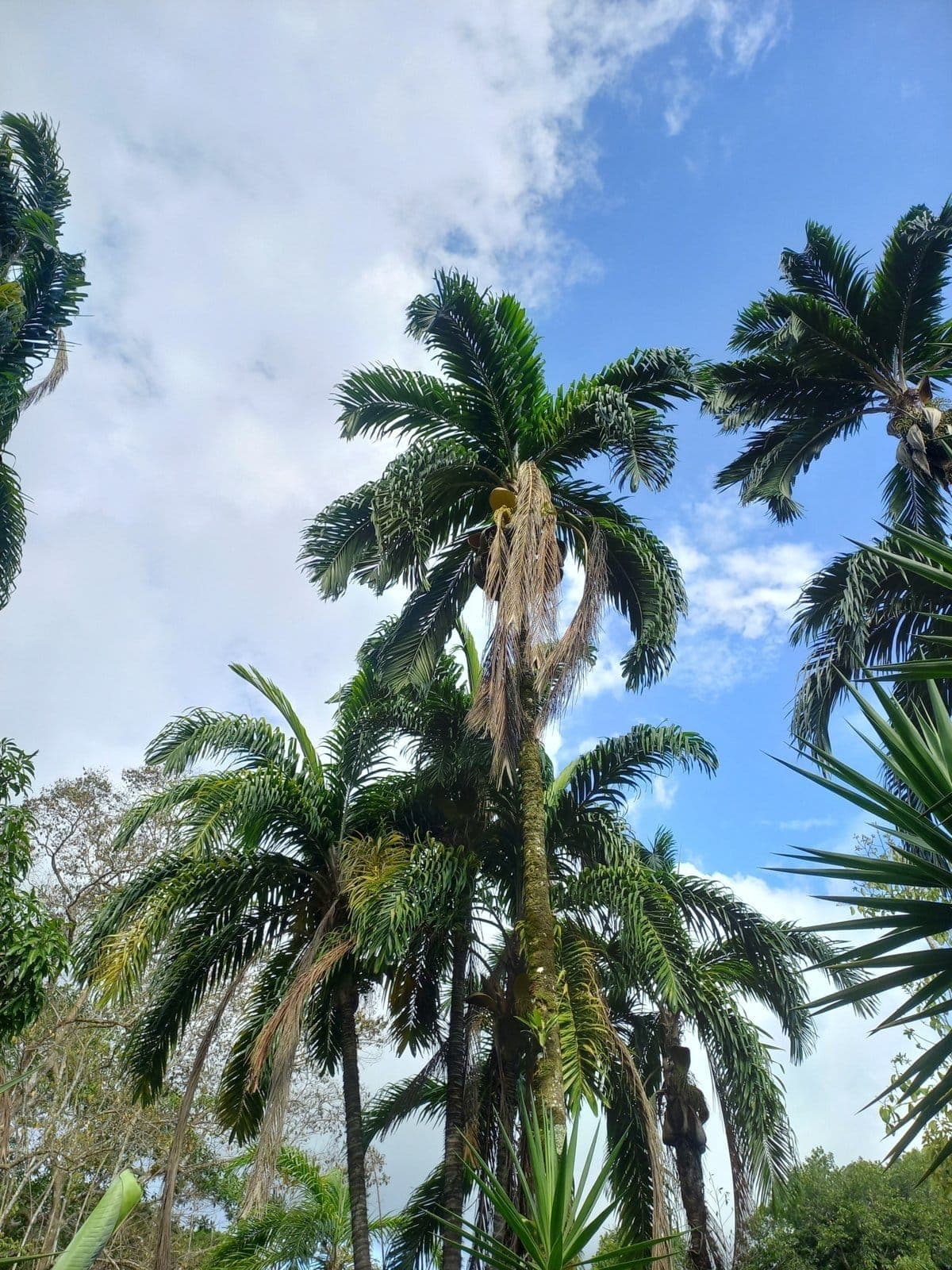
View source ↗Leaves
📷 (c) Miguel David Artavia Solís, some rights reserved (CC BY-NC)(CC BY-NC)
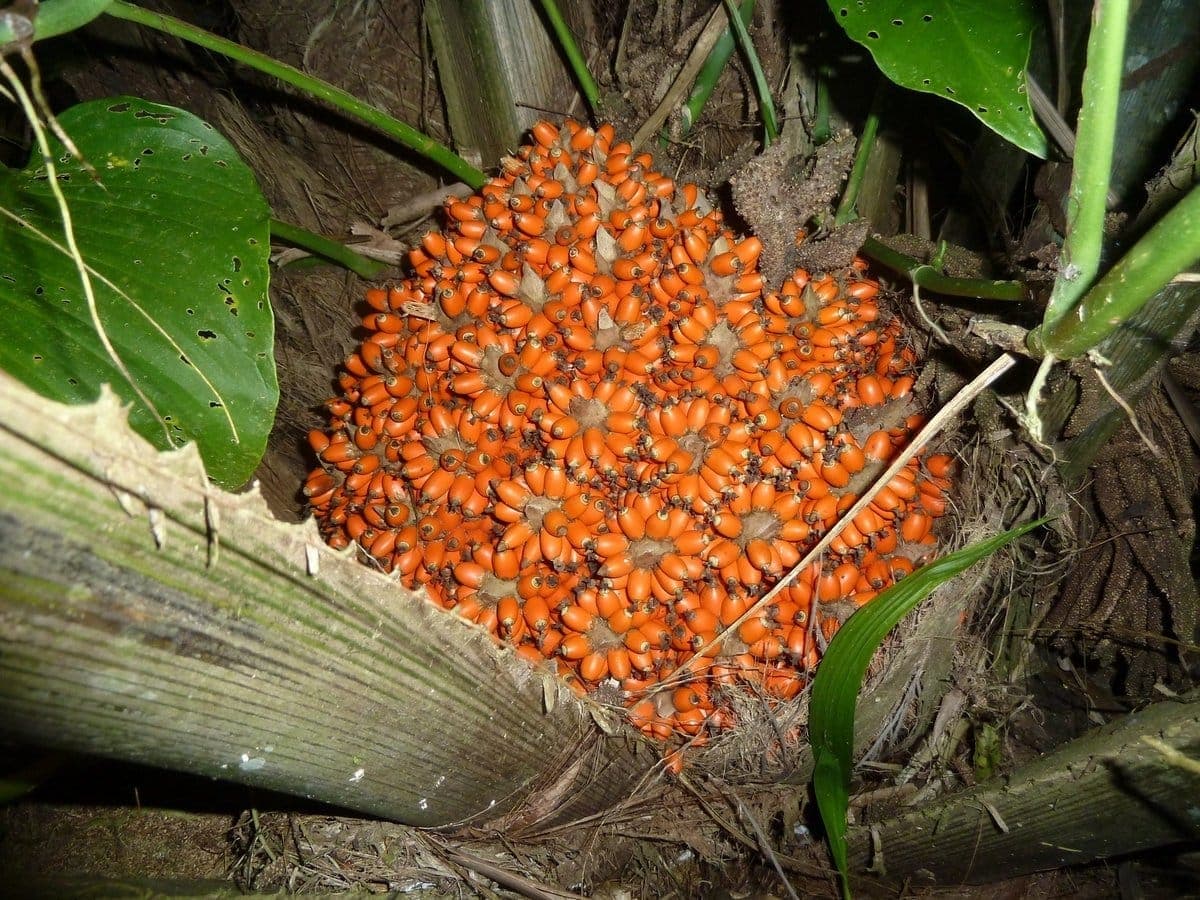
View source ↗Flowers
📷 (c) michelcournoyer, some rights reserved (CC BY-NC)(CC BY-NC)
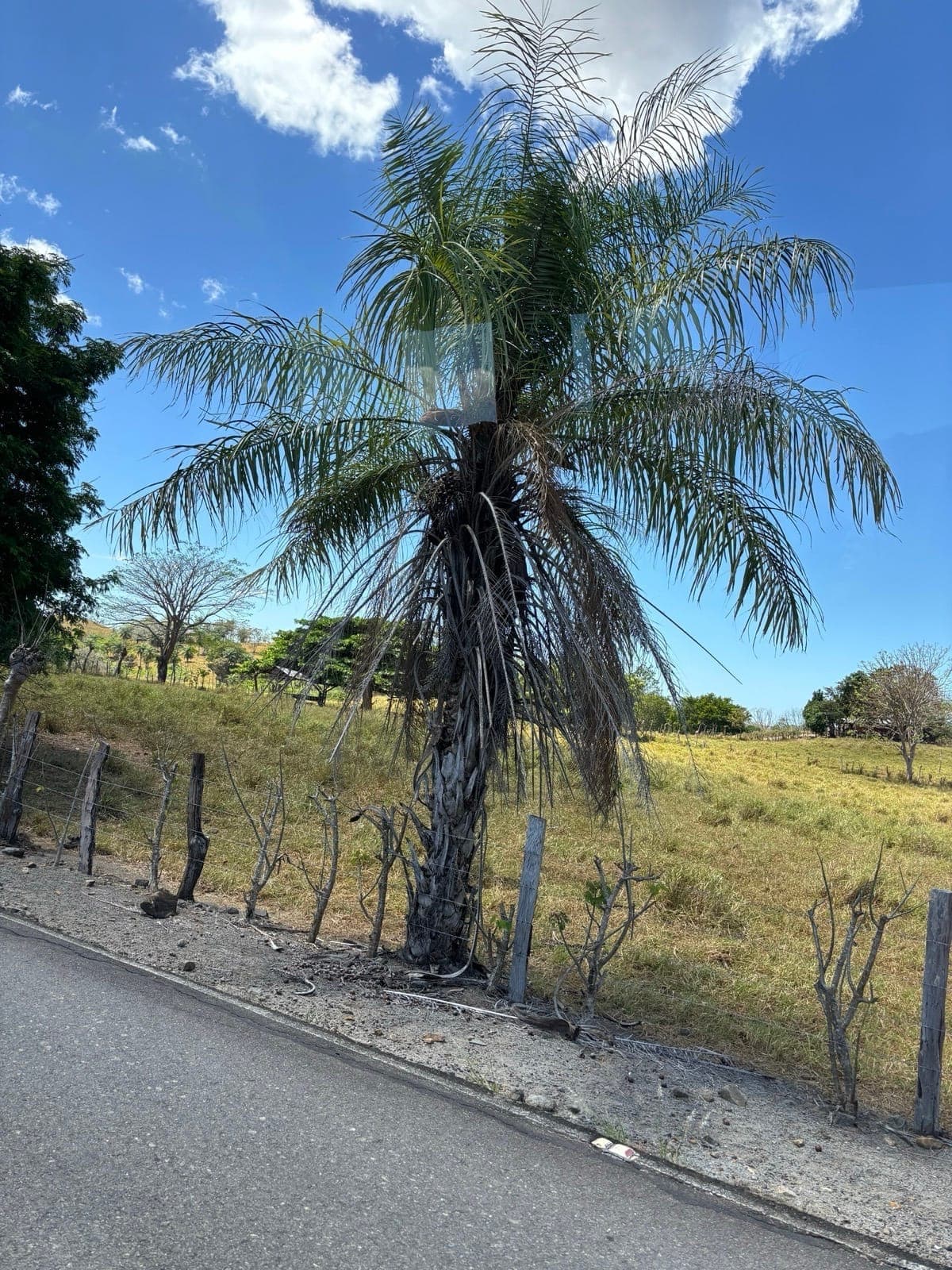
View source ↗Whole tree
📷 (c) figshack, some rights reserved (CC BY-NC)(CC BY-NC)
View source ↗Leaves
📷 (c) Miguel David Artavia Solís, some rights reserved (CC BY-NC)(CC BY-NC)
View source ↗Photos sourced from iNaturalist community science database. View all observations →↗
Taxonomy and Classification
The Arecaceae Family
The palm family Arecaceae is one of the most iconic plant families in the tropics, comprising approximately 2,600 species in 181 genera. Palms are monocots — their seeds germinate with a single embryonic leaf, they lack true wood (having no vascular cambium), and they grow from a single apical meristem. If the growing tip is destroyed, the entire palm dies — a biological constraint that makes each palm's crown literally its lifeline [1].
The genus Roystonea contains roughly 10 species of tall, solitary, unarmed palms native to the Caribbean basin. Named after American general Roy Stone (1836–1905) who oversaw road construction in Puerto Rico, the genus is distinguished by its prominent crownshaft — the smooth green cylinder formed by tightly overlapping leaf bases. The species epithet regia (Latin: "royal") was well chosen: this palm has become the universal symbol of tropical grandeur.
Unlike dicot trees that grow wider each year adding wood rings, Royal Palms achieve their full trunk diameter early in life through a phase called "establishment growth." The trunk consists of thousands of fibrovascular bundles embedded in parenchyma tissue — essentially a bundle of drinking straws rather than layered rings. This structure gives the trunk remarkable flexibility in high winds but means a damaged trunk cannot heal by growing new wood over the wound [2].
Common Names
Physical Description
Overall Form
The Royal Palm is a tall, single-trunked palm with an unmistakable silhouette. Its smooth, cement-gray trunk is often slightly swollen in the middle (a feature called "ventricose"), although this varies among individuals and populations. The bright green crownshaft — a smooth cylinder of tightly wrapped leaf bases — sits atop the trunk, crowned by 15–20 graceful pinnate fronds that arch elegantly outward, creating the classic "fountain" canopy silhouette.
Distinctive Features
Trunk
- Color: Cement gray, smooth
- Texture: Completely smooth (no persistent leaf scars)
- Shape: Columnar, sometimes ventricose (swollen middle)
- Base: May have slight swelling
- Surface: Polished, almost concrete-like appearance
- Growth marks: Faint ring scars barely visible
Crownshaft
- Color: Bright glossy green
- Length: 1–2 meters
- Function: Encases emerging fronds
- Texture: Smooth, waxy cuticle
- Shape: Cylindrical column
- Self-cleaning: Old fronds detach cleanly from crownshaft base
Fronds (Leaves)
- Type: Pinnately compound (feather-like)
- Length: 4–6 meters
- Leaflets: 200+ per frond, arranged in multiple planes
- Arrangement: Arching elegantly in all directions
- Color: Dark green above, lighter below
- Rachis: Strong, slightly twisted, creating 3D frond shape
Flowers and Fruit
- Inflorescence: Large branched panicle, emerges below crownshaft
- Flowers: Small, cream-white, with 6–9 stamens; monoecious (male and female on same inflorescence)
- Fruit: Round drupes, 8–12 mm diameter
- Fruit color: Dark purple to black when ripe
- Season: Flowering March–June, fruiting June–September
- Wildlife value: Major food source for birds and bats
Crownshaft Biology
The Green Cylinder — A Botanical Marvel
The crownshaft is the defining feature of Roystonea and a handful of related genera. This bright green cylinder is formed by the tightly overlapping tubular bases (sheaths) of the newest leaves. As each leaf matures, its sheath eventually splits and the entire leaf — sheath, petiole, and blade — detaches cleanly as a single unit, leaving the trunk smooth. This "self-cleaning" mechanism eliminates the persistent leaf bases and fiber seen on many other palms, giving Royal Palms their characteristic polished appearance.
The crownshaft serves multiple biological functions. It protects the apical meristem — the single growing point of the palm — from mechanical damage, desiccation, and insect attack. Because monocots lack lateral meristems, the apical meristem is irreplaceable: its loss means death for the entire palm. The crownshaft also channels rainwater efficiently down the trunk, and its waxy surface may discourage climbing animals from reaching the crown [3].
Frond Mechanics
Each mature frond weighs 20–25 kg and can reach 6 meters in length. The leaflets are arranged in multiple planes along the rachis rather than flat in a single plane, creating the characteristic "plume" effect that distinguishes Royal Palms from many fan palms. When fronds detach, they can fall from heights of 25+ meters — the primary safety concern with this species. A single dropped frond can weigh up to 25 kg (55 lbs), posing a significant impact hazard in public spaces.
The Perfect Palm Silhouette
Landscape Architecture
Royal Palms are the gold standard for formal tropical landscape design. Their perfectly uniform growth habit, clean trunks, and matching crowns make them ideal for creating dramatic palm-lined avenues, entrance drives, and ceremonial spaces. A row of Royal Palms announces arrival at somewhere important — a biological red carpet.
Design Advantages
- Uniform, predictable growth habit
- Self-cleaning — drops fronds cleanly
- Tall, slender profile minimizes shade issues
- Minimal leaf debris compared to broad-leaved trees
- Long-lived (75–100+ years)
- Hurricane resistant when established
- No invasive root problems
Classic Applications
- Grand entrance avenues
- Boulevard and median plantings
- Hotel and resort grounds
- Government buildings and embassies
- Memorial gardens and cemeteries
- Estate driveways and plazas
- Golf course boundaries
Planting Geometry
The visual impact of Royal Palms depends heavily on spacing and alignment. Landscape architects typically plant them 8–10 meters apart for avenue plantings, allowing crowns to develop without overlap while maintaining a continuous canopy line. For maximum formal effect, palms of uniform age and provenance should be used — genetic variation in trunk shape (straight vs. ventricose) can disrupt the visual rhythm of a formal planting. The most successful avenue plantings source nursery stock grown from seed of a single population [4].
Cultural Significance
National Symbol of Cuba
The Royal Palm is the national tree of Cuba, appearing on the country's coat of arms since 1906. It symbolizes the independence, resilience, and upright character of the Cuban people. According to tradition, the palm's tall, straight trunk reaching toward the sky represents liberty and aspiration, while its ability to withstand hurricanes symbolizes the endurance of the nation. Cubans call it simply "La Palma Real."
In Cuban culture, the Royal Palm extends far beyond mere symbolism. Santería (Regla de Ocha), the Afro-Cuban religious tradition, associates the palm with Changó (Shangó), the orisha of thunder, fire, and justice. Palm fronds are used in ceremonial purification, and palm-derived products appear in various ritual preparations. The integration of the palm into both civil and spiritual life reflects its deep cultural embedding on the island [5].
Historical Uses
Sources: IUCN Red List (Roystonea regia)↗, GBIF species profile↗, iNaturalist observations↗, Esquivel & Hammer (1992)↗
Distribution in Costa Rica
Geographic Distribution
While not native to Costa Rica, the Royal Palm has been widely planted throughout the country since at least the late 19th century. It graces the capital's parks and boulevards, adorns hotels and estates, and has semi-naturalized in some lowland areas where bird-dispersed seeds germinate spontaneously. The closely related Roystonea oleracea (Caribbean Royal Palm) also appears in Costa Rican cultivation but is less common.
Native Range and Biogeography
Roystonea regia is native to Cuba, southern Florida (inclusive of the Everglades), the Bahamas, parts of Mexico (Campeche, Quintana Roo), Belize, Honduras, and the Cayman Islands. Its natural habitat includes seasonally flooded savannas, riverbanks, and limestone karst landscapes below 800 meters elevation. The species thrives in climates with a pronounced dry season — an adaptation reflected in its tolerance of periodic drought once established [6].
In Costa Rica, the Royal Palm encounters conditions somewhat different from its native range — specifically the absence of a strong subtropical dry season in much of the country. However, in Guanacaste province, where the dry season (December–April) closely mirrors Caribbean seasonality, Royal Palms perform exceptionally well. The species has proven adaptable across Costa Rica's Pacific, Central Valley, and Caribbean lowlands.
Where to See Royal Palms
Growing Requirements
Cultivation
Planting Tips
- Plant in full sun with open sky above
- Ensure good drainage — avoid waterlogged sites
- Water deeply twice weekly when young (first 2 years)
- Fertilize quarterly with palm-specific fertilizer (8-2-12 + Mg + micronutrients)
- Protect from frost when young (wrap trunk)
- Allow minimum 8 m spacing for avenue plantings
- Plant at same depth as nursery container
Care Requirements
- Generally low maintenance once established
- Never "hurricane cut" (removing green fronds reduces food production and accelerates decline)
- Only remove fully brown, dead fronds
- Watch for lethal yellowing disease (phytoplasma)
- Apply manganese and potassium if deficiency symptoms appear
- Protect trunk from mechanical damage (mowers, weed-eaters)
- Self-cleaning: fallen fronds should be collected for safety
Lethal Yellowing Disease
Lethal yellowing (LY) is a phytoplasma disease transmitted by the planthopper Myndus crudus that has devastated Royal Palm populations across the Caribbean and Central America. Symptoms begin with premature fruit drop, followed by blackening of inflorescences, progressive yellowing of fronds from lower to upper, and eventual collapse of the crownshaft. The disease is fatal — no cure exists. Trees can be protected temporarily with quarterly trunk injections of oxytetracycline, but this requires ongoing treatment. Resistant Roystonea species and hybrids are being developed but are not yet widely available [7].
Ecological Role
Wildlife Value
Food Source
- Fruits: Consumed by parrots, toucans, tanagers, thrushes, and fruit-eating bats
- Seeds: Dispersed primarily by birds (ornithochory)
- Flowers: Nectar source for honeybees and native stingless bees (Melipona, Trigona)
- Fruit oil: High caloric value makes fruits a preferred food in lean seasons
- Pollen: Collected by bees; wind also important for pollination
Habitat Function
- Cavity nesting: Woodpeckers excavate cavities in older trunks; secondary cavity nesters (parakeets, owls) follow
- Roosting perches: Tall palms serve as communal evening roosts for parakeets and swallows
- Epiphyte substrate: Trunk bases and crown area support orchids, ferns, and bromeliads in humid climates
- Urban corridors: Street-planted palms create wildlife movement corridors through built environments
- Bat roosts: Artibeus and Carollia fruit bats roost under fronds
Pollination Ecology
Royal Palm inflorescences are protandrous — male flowers open and shed pollen before female flowers on the same inflorescence become receptive. This temporal separation promotes outcrossing. Pollination is primarily by wind (anemophily) but is supplemented by beetle visitors (cantharophily), particularly nitidulid beetles that feed on pollen and visit multiple inflorescences. The combination of wind and insect pollination gives the species reproductive flexibility across different environmental conditions [8].
Comparative Palm Identification
Hurricane Resistance
Built to Bend
Despite their tall, slender appearance, Royal Palms are among the most wind-resistant trees in the tropics. Their survival strategy relies on flexibility rather than rigidity: the trunk bends with the wind, and the streamlined crown sheds leaflets progressively under increasing wind speed — a form of natural aerodynamic load reduction.
After Hurricane Andrew devastated South Florida in 1992 (Category 5, sustained winds 265 km/h), Royal Palms were among the few trees left standing — battered but alive. Studies of palm biomechanics explain this resilience. The trunk's fibrovascular bundle structure is analogous to a fiber-reinforced composite: the dense peripheral bundles provide tensile strength while the softer interior parenchyma provides compression resistance. This combination allows the trunk to flex up to 40° from vertical without fracturing. Additionally, the reduced leaf area from progressive leaflet shedding decreases the wind load on the crown at precisely the velocities that would otherwise cause structural failure [9].
This hurricane resistance has practical implications for urban forestry in Costa Rica's Caribbean coast, where tropical storms are a recurring threat. Royal Palms suffer far less storm damage than large-crowned dicot trees, making them a safer choice for street and park plantings in wind-prone areas.
Interesting Facts
Safety Information
The primary safety concern with Royal Palms is falling fronds. Each detached frond weighs 20–25 kg (44–55 lbs) and falls from heights of 15–25+ meters. In public spaces, this represents a significant impact hazard. Landscape managers should plant Royal Palms at least 5 meters from walkways, seating areas, and building entrances. Regular inspection of the crown for loose fronds — especially before storms — is recommended. Never stand directly beneath a Royal Palm during high winds.
Fruit Handling
- Fruit pulp contains calcium oxalate crystals (raphides)
- Causes contact dermatitis — itching, redness, irritation
- Always wear rubber gloves when handling fruits
- Wash skin immediately if contact occurs
- Not a systemic toxin — external irritation only
- Fruits are NOT edible for humans
Structural Safety
- Self-cleaning: fronds drop without warning
- Weight per frond: up to 25 kg
- Fall zone: 5+ meters from trunk base
- Plant away from walkways and parking areas
- Avoid "hurricane pruning" — removing green fronds destabilizes the crown
- Lightning attraction: tallest structure in landscape
Sources: Harrison et al. (2008)↗, IUCN Red List (Roystonea regia)↗, GBIF species profile↗, iNaturalist observations↗
Related Species in Costa Rica
References and Resources
Comprehensive palm taxonomy and identification guide; Roystonea genus treatment
Definitive text on palm anatomy; fibrovascular bundle structure and monocot growth mechanics
Monographic revision of genus Roystonea; crownshaft morphology and species delimitation
University of Florida IFAS Extension; palm propagation and nursery practices
Cultural and economic significance of Royal Palm in Cuba; ethnobotanical survey
Conservation status assessment; native range and population information
Phytoplasma disease review; symptoms, transmission by Myndus crudus, and management strategies
Wind and beetle pollination dynamics; protandry in Roystonea inflorescences
Palm trunk flexibility under wind loading; fibrovascular composite mechanics
Molecular phylogenetics of Arecaceae; resolution of Roystonea species boundaries
Community science observations and distribution data
Global occurrence records and distribution mapping
Safety Information Disclaimer
Safety information is provided for educational purposes only. Individual reactions may vary significantly based on age, health status, amount of exposure, and individual sensitivity. Always supervise children around plants. Consult a medical professional or certified arborist for specific concerns. The Costa Rica Tree Atlas is not liable for injuries or damages resulting from interaction with trees described in this guide.
• Always supervise children around plants
• Consult medical professional if unsure
• Seek immediate medical attention if poisoning occurs
Information compiled from authoritative toxicology sources, scientific literature, and medical case reports.
Help improve this page
Know something about this tree? Share local knowledge, suggest a correction, or submit a photo to improve this guide for everyone.