Guaba Machete
Inga spectabilis
Quick facts
Native Region
Central America, northern South America
Max Height
20-30 meters
Family
Fabaceae
Conservation
LC — Least Concern
Uses
Safety Information
Toxicity Details
Guaba Machete is completely safe and non-toxic. The sweet cotton-like pulp surrounding the seeds is edible and enjoyed by people of all ages. Like other Inga species, the hard seeds are typically not consumed but pose no toxicity risk if accidentally swallowed.
Skin Contact Risks
No skin irritation. All parts of the tree including the enormous pods can be handled safely without dermatitis or allergic reactions.
Structural Hazards
The extremely large and heavy pods (up to 1+ meter long, weighing 1-2 kg each) can fall from the tree unexpectedly. While not dangerous, falling pods could startle people below or cause minor impact injuries. Avoid parking vehicles or placing fragile items directly beneath mature fruiting trees. The pods themselves are not hard and pose minimal risk, but their size makes them notable when falling.
Wildlife & Pet Risks
Completely safe for all domestic animals including dogs, cats, horses, and livestock. The fruit is consumed avidly by monkeys, parrots, and other wildlife. Large mammals like tapirs and peccaries feed on fallen pods.
Season
Flowering
Jan-Apr
Fruiting
Apr-Aug
How to identify
Guaba Machete (Giant Ice Cream Bean)
Guaba Machete (Inga spectabilis) is the undisputed champion of pod length in the entire Inga genus—and perhaps among all legumes. This magnificent tree produces the longest edible seed pods in the world, with mature pods regularly reaching 80-100 cm (2.5-3 feet) and exceptional specimens exceeding 120 cm (nearly 4 feet)! The name "machete" refers to the pod's resemblance to a long machete blade. Native to wet tropical forests of Central and northern South America, this forest giant combines spectacular visual interest with practical benefits: nitrogen fixation for soil enrichment, valuable shade for agroforestry, and of course, abundant sweet edible pulp. In Costa Rica, encountering a Guaba Machete laden with its enormous dangling pods is an unforgettable botanical spectacle.
Quick Reference
iNaturalist Observations
Community-powered species data
📸 Photo Gallery
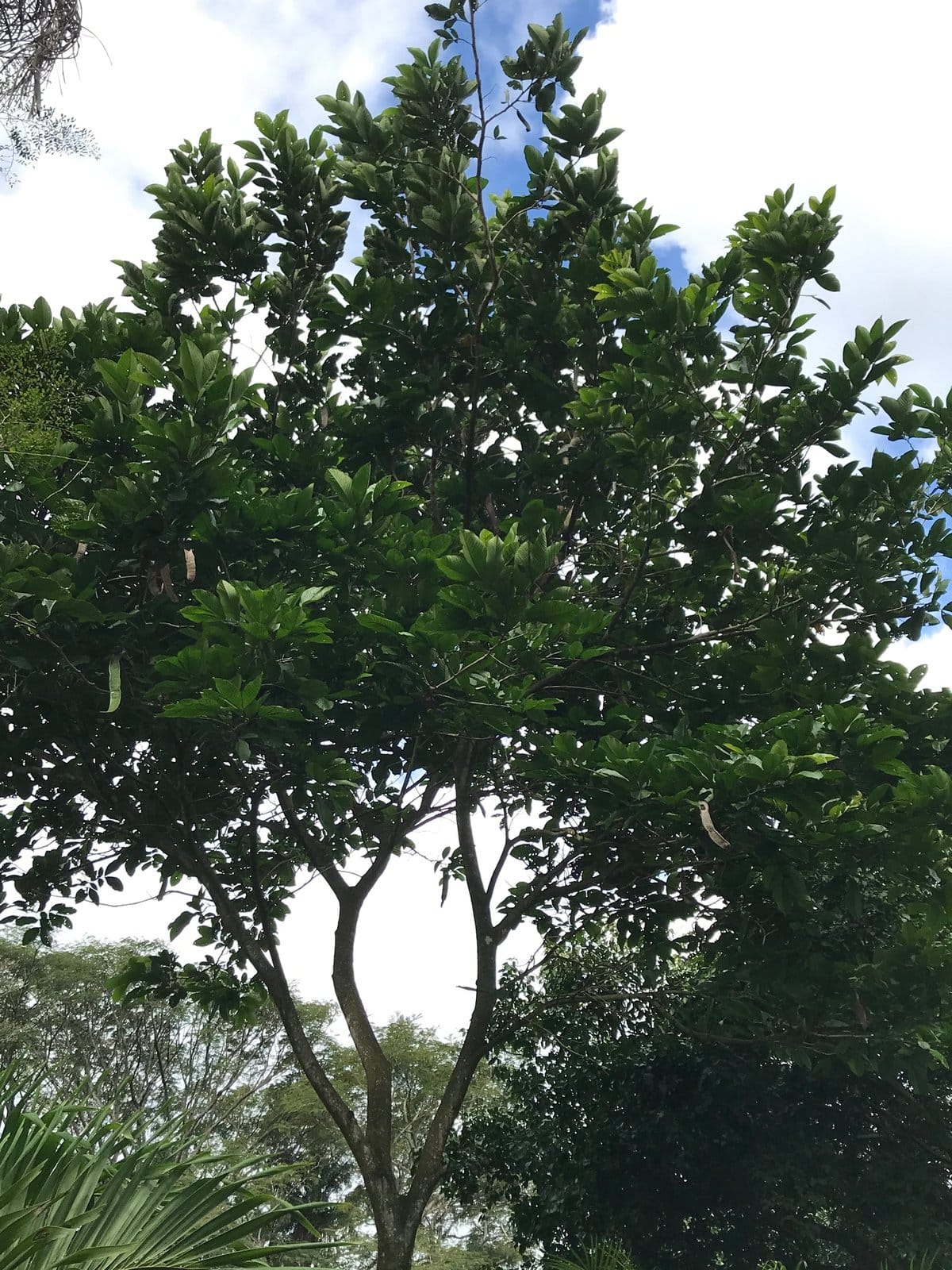
Whole tree
📷 (c) ldgc, some rights reserved (CC BY-SA)(CC BY-SA)
View source ↗Leaves
📷 (c) ldgc, some rights reserved (CC BY-SA)(CC BY-SA)
View source ↗Whole tree
📷 (c) Jair Granados Chacón, some rights reserved (CC BY-NC)(CC BY-NC)
View source ↗Leaves
📷 (c) ldgc, some rights reserved (CC BY-SA)(CC BY-SA)
View source ↗Whole tree
📷 (c) Gerrit Öhm, some rights reserved (CC BY-NC)(CC BY-NC)
View source ↗Photos sourced from iNaturalist community science database. View all observations →↗
Taxonomy and Classification
- Inga: From the Tupi indigenous name for these trees - spectabilis: Latin for "spectacular" or "showy"—perfectly describing the extraordinary pods
- Machete: Spanish common name referring to the pod's resemblance to a long machete blade - Guaba: Indigenous Mesoamerican name for the genus
Common Names
The Remarkable Pods: A Botanical Record
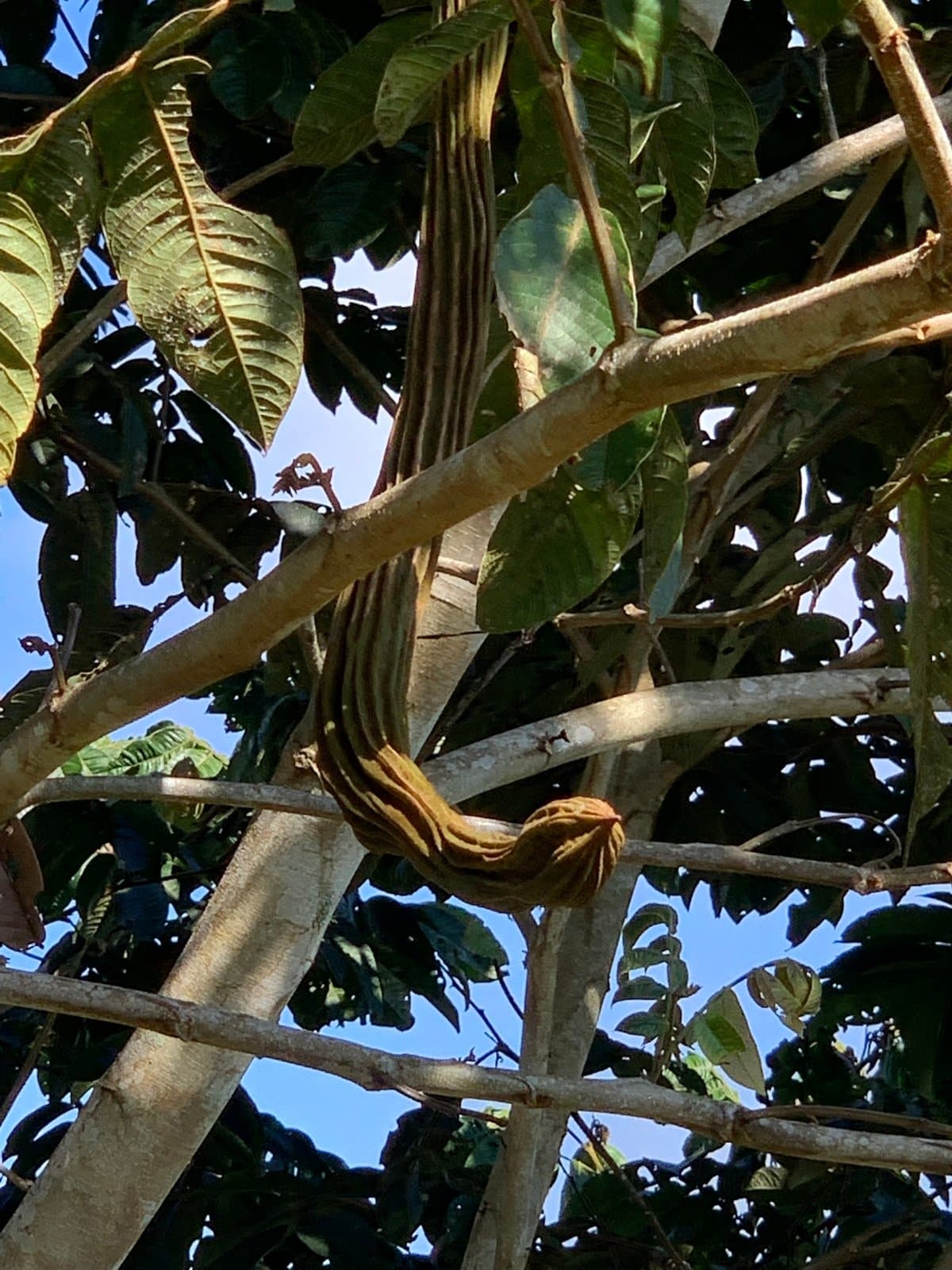
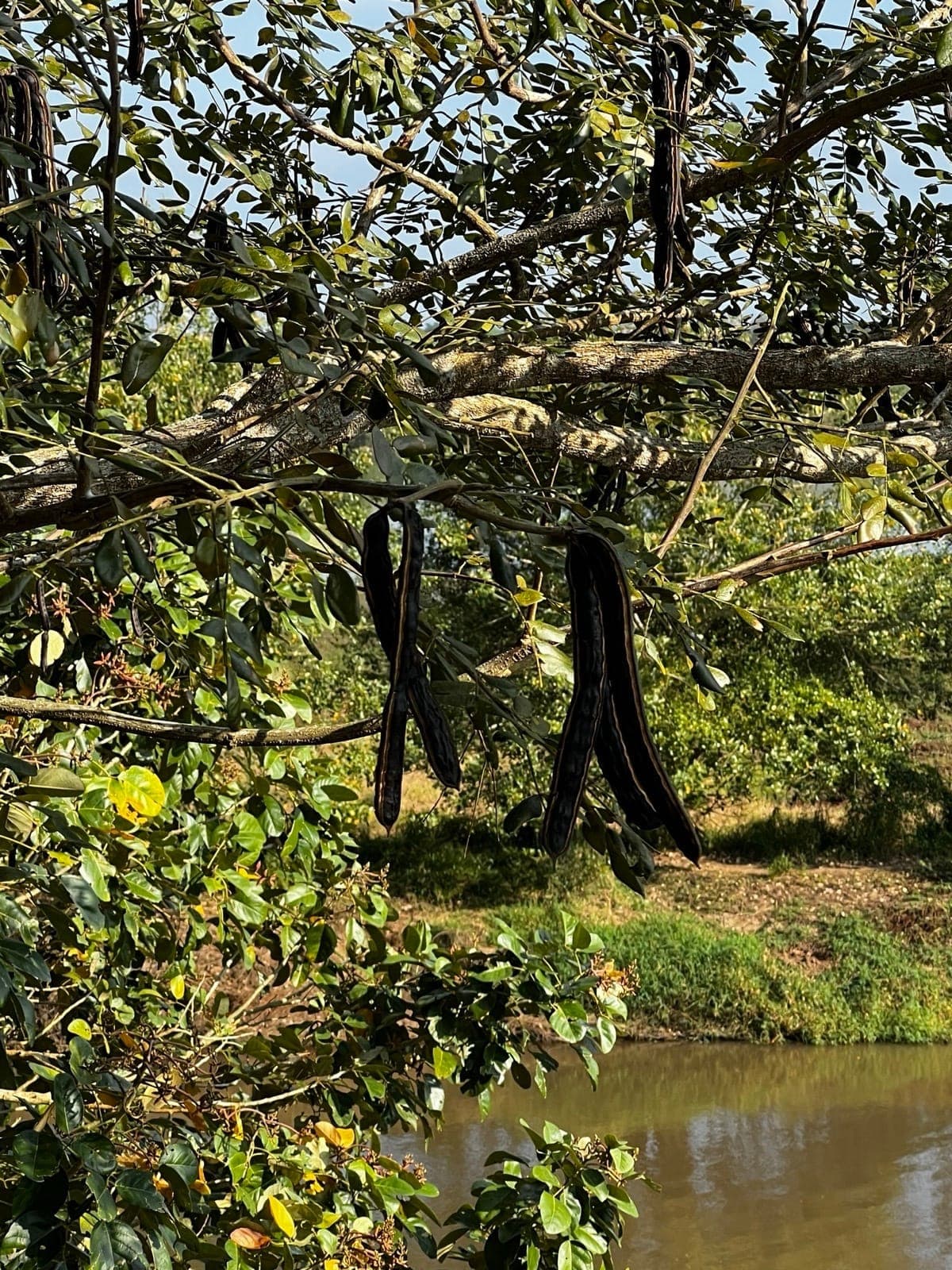
Inga spectabilis holds the botanical record for the longest edible legume pods on Earth. Typical pods measure 60-100 cm (2-3.3 feet) long, with record specimens exceeding 120-150 cm (4-5 feet). Each pod weighs 1-2 kg when fully mature. This is 2-6 times longer than other Inga species like I. edulis (30-60 cm) and I. vera (10-20 cm). Botanists believe this extreme length evolved to facilitate seed dispersal by large mammals (tapirs, peccaries), attract monkeys who spread seeds widely, reduce seed predation through sheer numbers, and allow pods to dangle down through the forest canopy for visibility to dispersers.
Physical Description
Tree Form
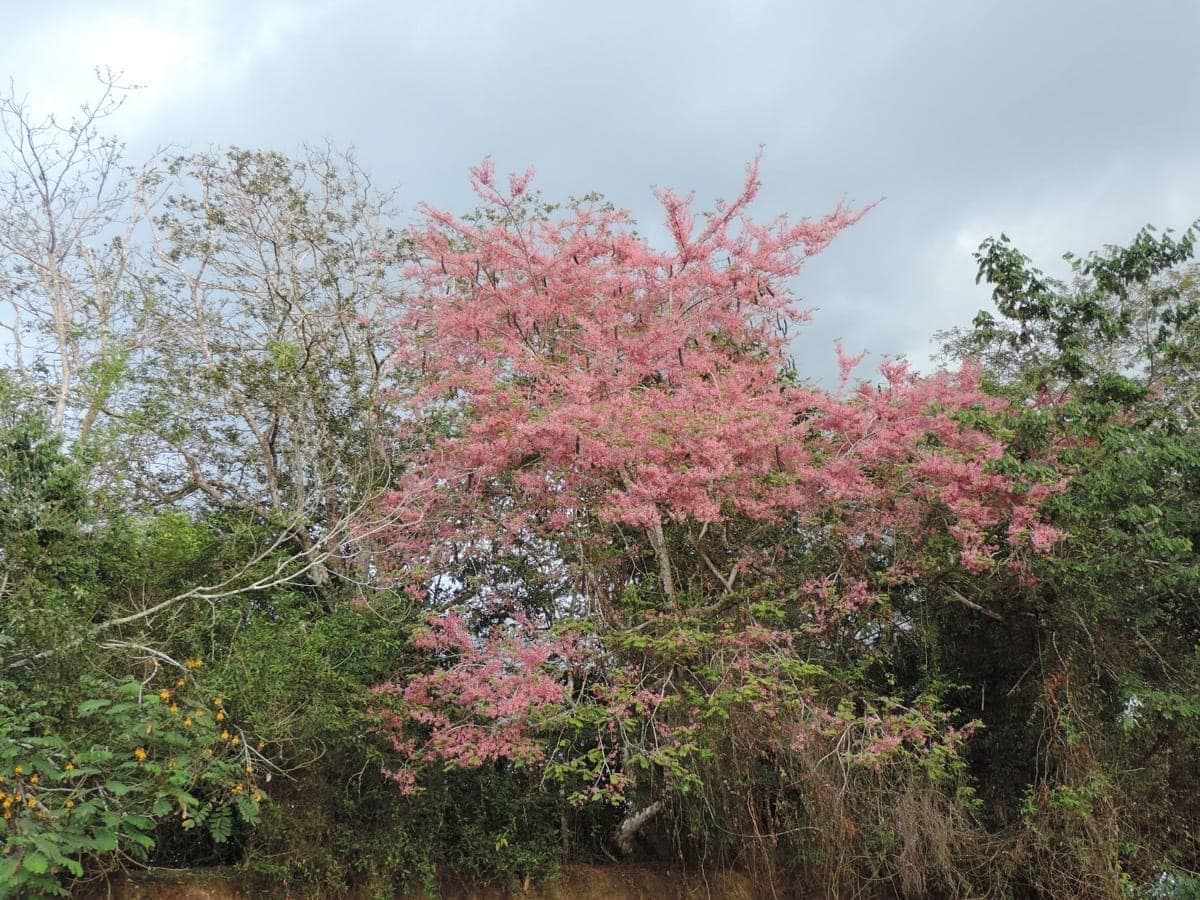
General Habit: Large, stately tree with spreading, somewhat dome-shaped crown. Trunk is typically straight and cylindrical in forest settings, becoming more massive and buttressed in open-grown specimens. The overall form is elegant and architecturally impressive, befitting the species epithet "spectabilis."
Size: Typically 20-30 meters tall in natural forest settings. Open-grown trees may be shorter (15-20 m) but develop massive, spreading crowns up to 18 meters wide.
Crown: Broad, spreading, and moderately dense. The crown density increases with age, providing substantial shade—an important characteristic for agroforestry applications.
Bark and Trunk
Bark: Smooth to slightly rough, gray to gray-brown in color. Young branches are greenish, becoming gray with age. Mature bark may develop shallow vertical fissures. The bark is relatively thin and can be damaged by fire or mechanical injury.
Trunk: Substantial—mature trees commonly have trunks 40-80 cm in diameter. In forest settings, trunks are straight and cylindrical with little taper. Open-grown or heavily fruiting trees may develop low buttresses or spreading root flanges for stability.
Branching: Main branches emerge at moderate angles, creating strong crotches. The branching pattern is relatively regular, creating a symmetrical crown shape.
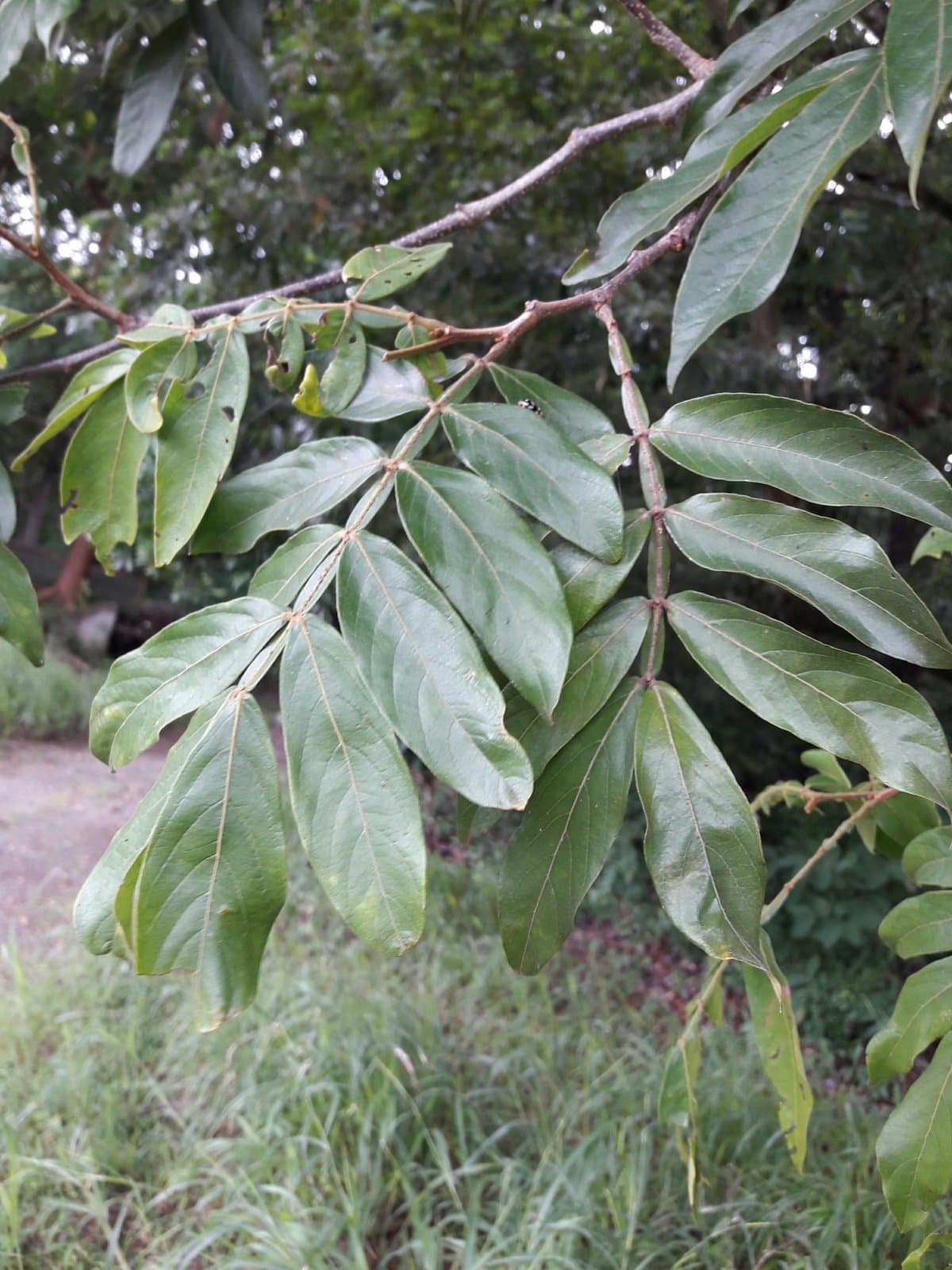
Leaves
Type: Alternate, pinnately compound (feather-like arrangement)
Leaflets: Typically 5-7 pairs of leaflets per leaf—fewer than many Inga species. Each leaflet is 10-18 cm long by 4-8 cm wide—quite large for Inga. Leaflets are elliptic to oblong, with smooth margins and gently pointed tips. Upper surface is dark green and glossy; lower surface is paler and may have fine pubescence along veins.
Rachis: The central leaf stem (rachis) between leaflets has prominent, flat wings—a very characteristic feature of most Inga species. A large gland is present between each pair of leaflets.
Arrangement: Leaves are clustered near branch tips, creating zones of dense green foliage with more open spaces along the interior branches.
Flowers
Appearance: Classic Inga flowers—white to greenish-white, brush-like or pom-pom shaped with numerous long, delicate stamens (75-150 per flower). Individual flowers are 4-6 cm across—larger than most Inga species.
Arrangement: Produced in dense elongated spikes or cylindrical heads, 10-15 cm long, emerging from leaf axils or at branch tips.
Timing: Primary flowering January-April in Costa Rica (dry to early wet season). Flowering may be triggered by the onset of rains after the dry season.
Fragrance: Mildly to moderately sweet-scented, especially noticeable at night. The fragrance attracts nocturnal pollinators.
Pollinators: Primarily pollinated by bees (honeybees and large native bees), hawkmoths, and nectar-feeding bats. The flowers produce copious nectar.
Fruit
Type: Legume pod (typical of Fabaceae), but of truly exceptional dimensions.
Dimensions:
- Length: 60-120+ cm (commonly 80-100 cm)
- Width: 3-5 cm
- Thickness: 2-3 cm
- Weight: 1-2 kg per mature pod
Appearance: Very long, sword-like or machete-like pods, slightly flattened, with prominent longitudinal ridges or slight spiral twisting. Color changes from green when immature to yellowish-green or brownish-yellow at maturity.
Seeds: 15-30+ seeds per pod, each surrounded by abundant white, fluffy, sweet pulp (aril). The seeds are arranged in a single row along the length of the pod.
Maturation: Pods mature April-August (approximately 3-4 months after flowering). Mature pods begin to soften and may develop slight yellowish coloration. They do not dehisce (split open) on the tree; instead, they must be manually opened to access the edible pulp.
Geographic Distribution and Habitat
Native Range
Inga spectabilis is native to wet tropical forests of Central America (southern Mexico through Panama) and northwestern South America (Colombia, Ecuador, Peru, Venezuela). It is most common in the Caribbean slope forests of Central America and the northwestern Amazon region.
Costa Rican Distribution
Provinces: Most common on the Caribbean slope; less frequent but present on moist Pacific slopes:
- Limón: Common in lowland and foothill rainforests
- Heredia and Alajuela: Caribbean slope pre-montane wet forests
- Puntarenas: Present in South Pacific rainforest regions (Osa Peninsula, Golfito)
- San José and Cartago: Occasional in moist valleys
Elevation: 50-1500 meters; most abundant 200-1000 m
Habitats:
- Lowland and pre-montane tropical wet forests
- Riverbanks and flood-prone areas
- Forest edges and gaps
- Secondary forests
- Shade tree in cacao and coffee plantations (especially Caribbean slope)
- Rural home gardens and small farms
Habitat Characteristics
Ecology and Natural History
Ecological Role
Nitrogen Fixation: Like all legumes, Inga spectabilis forms symbiotic relationships with Rhizobium bacteria in root nodules. These bacteria fix atmospheric nitrogen, enriching the soil. As a large tree:
Estimated Nitrogen Input: 80-150 kg N/ha/year—higher than smaller Inga species due to larger biomass and leaf area.
Soil Improvement: The abundant leaf litter (hundreds of kilograms per tree annually) decomposes rapidly, adding organic matter and nutrients to the soil. This makes I. spectabilis particularly valuable in agroforestry.
Wildlife Associations
Seed Dispersers:
- Primates: Howler monkeys, white-faced capuchins, and spider monkeys readily consume the pods—they are among the primary dispersers
- Large mammals: Tapirs, white-lipped peccaries, collared peccaries, and agoutis feed on fallen pods
- Large birds: Toucans, parrots, and other large frugivorous birds may peck at accessible pods
Pollinators:
- Large bees (carpenter bees, bumble bees, native orchid bees)
- Honeybees
- Hawkmoths (Sphingidae) - important night pollinators
- Nectar-feeding bats (primarily Glossophaga spp.)
Foliage Consumers:
- Leaf-cutter ants harvest leaves occasionally
- Various caterpillars (lepidopteran larvae)
- Sloths may feed on tender foliage
Habitat Provider: The large crown provides shelter and nesting sites for numerous bird species. Epiphytes (orchids, bromeliads, ferns) commonly colonize the branches, further increasing habitat diversity.
Forest Dynamics
Successional Role: Early to mid-successional species. I. spectabilis colonizes forest gaps, riverbanks, and disturbed areas, but is not a strict pioneer. It requires some canopy opening or light gap but is more shade-tolerant than true pioneers. Seedlings can survive in moderate shade but require increased light for vigorous growth and pod production.
Canopy Position: Emergent to canopy tree, often extending above the main canopy layer when mature.
Uses and Applications
Edible Fruit
Pulp Consumption: The white, fluffy pulp (aril) surrounding the seeds is sweet, mildly flavored, and consumed fresh—identical in flavor and texture to other Inga species. What makes I. spectabilis special is the sheer quantity: a single pod may contain 20-30 seed arils, providing far more edible pulp than short-podded species.
Nutritional Content: Primarily carbohydrates (natural sugars) with small amounts of protein, fiber, and vitamins (especially vitamin C). A quick, refreshing snack.
Harvest: Pods are harvested by hand (often requiring ladders or hooked poles for high pods). Harvest when pods turn yellowish and feel slightly soft. Fresh pods are best consumed within 1-2 days; refrigeration extends shelf life to 3-5 days.
Yield: A mature tree can produce 50-100 kg of pods per season—far more edible pulp than smaller-podded Inga species.
Sources: Pennington (1997), The Genus Inga: Botany↗, CATIE tree resources↗, GBIF species profile↗
Agroforestry Applications
Shade Tree for Coffee and Cacao: I. spectabilis is highly valued as a shade tree, particularly for cacao (chocolate) plantations:
- Shade Provision: The broad crown provides 50-70% shade—ideal for shade-grown cacao
- Nitrogen Enrichment: Leaves and pruned branches add nitrogen to the soil, reducing fertilizer needs
- Quick Growth: Establishes shade canopy relatively quickly (5-8 years to functional shade)
- Edible Pods: Provide supplementary income or food for farm families
Historically used more commonly for cacao than coffee (where lighter shade is preferred), but still utilized in traditional coffee agroforestry.
Alley Cropping and Silvopasture: Planted in rows or as scattered trees in pastures or crop fields:
- Shade for livestock
- Nitrogen input from leaf fall and prunings
- Pods supplement livestock feed (cattle, goats, pigs eat the pulp)
Soil Restoration: Planted on degraded lands to improve soil fertility through nitrogen fixation and organic matter addition. Fast growth and large leaf area accelerate the restoration process.
Timber and Construction
Wood Properties: The wood is light, soft, and not durable—not suitable for quality lumber or outdoor use. However:
- Light Construction: Used locally for temporary structures, interior partitions, fruit crates
- Firewood: Burns readily, though the tree is more valuable alive for nitrogen and fruit
- Pulp: Potentially suitable for paper pulp production, though not currently exploited commercially
Ornamental and Landscape Use
Specimen Tree: The combination of large size, attractive foliage, impressive flowers, and spectacular pods makes I. spectabilis a conversation piece in large parks, botanical gardens, estates, and public spaces. The pods dangling from the crown are unforgettable.
Requirements: Needs ample space (8-12 m clearance) and consistent water. Not suitable for small residential properties.
Cultural and Historical Significance
Indigenous and Local Use
Indigenous peoples throughout Central and South America have used Inga spectabilis for generations:
- Food Source: The enormous pods provided significant nutrition and were especially valued for travel or long forest excursions.
- Indicator Species: Traditional farmers recognized I. spectabilis as an indicator of fertile, well-watered soils—where it grows naturally, agricultural crops tend to thrive.
- Children's Wonder: The extraordinarily long pods have delighted children for generations—it's impossible to forget your first encounter with a meter-long fruit!
Rural Costa Rica
In rural Costa Rican communities, Guaba Machete is recognized and admired:
- Marvel Tree: Even people who don't eat the fruit stop to marvel at the huge pods—it's a botanical curiosity
- Farm Tree: Valued in traditional agroforestry for nitrogen fixation and shade
- Shared Pride: Families with a mature Guaba Machete on their property often show it off to visitors—it's a point of pride
While not deeply embedded in folklore like some species, Guaba Machete earns respect and wonder wherever it grows.
Conservation Status
Not Evaluated
IUCN Red List Status
IUCN Red List: Least Concern (LC)
Population Trend: Stable
Threats: Not significantly threatened. Like most Inga species, I. spectabilis is adaptable and commonly cultivated. However, habitat loss (deforestation) reduces wild populations. As a species of wet forests, it's more habitat-specific than I. edulis and less commonly planted outside its native range.
Protection: Not requiring special conservation action, but maintaining wild populations in protected forests preserves genetic diversity for future use.
Growing Guaba Machete
Ideal Growing Conditions
Climate: Tropical lowlands to mid-elevations with high rainfall. Prefers:
- Warm year-round temperatures (22-28°C / 72-82°F)
- High humidity
- Consistent, abundant rainfall (2500+ mm annually) or supplemental irrigation
- Protection from frost
Soil: Performs best in deep, fertile, well-drained soils:
- Deep alluvial soils along rivers—ideal
- Clay loams with good organic matter
- pH range 5.5-7.0
- Can tolerate poorer soils (nitrogen-fixing) but pod size and quantity may be reduced
Light: Requires full sun for vigorous growth and optimal fruiting. Seedlings tolerate light shade but grow faster in bright light.
Propagation
From Seed (Standard method):
- Seed Collection: Collect mature pods (yellowish, slightly soft). Extract seeds from pulp. Seeds must be planted fresh—Inga seeds lose viability within days to 1-2 weeks.
- Planting: Plant fresh seeds 1-2 cm deep in moist soil or potting mix. Germination occurs in 1-3 weeks.
- Seedling Care: Keep soil consistently moist. Provide light shade for first 2-3 weeks, then full sun. Seedlings grow rapidly.
- Transplanting: Transplant when seedlings reach 40-60 cm tall (4-8 months). Use care to preserve root system.
From Grafting:
- I. spectabilis can be grafted onto I. edulis rootstock for earlier fruiting and dwarfing (smaller tree size)
- Grafted trees may fruit in 2-3 years vs 4-5 years from seed
- Grafting also allows propagation of superior selections (extra-long pods, high yield)
Planting
Timing: Plant at the start of the rainy season (May in Costa Rica) to minimize irrigation needs.
Spacing:
- Agroforestry plantations: 8-12 m spacing between trees
- Landscape/ornamental: 8-10 m from buildings and other large trees
- Living shade for cacao: 12-15 m spacing (approx. 70-100 trees/ha)
Planting Steps:
- Dig hole 60 cm deep × 60 cm wide
- Mix excavated soil with compost or aged manure
- Place seedling at same depth it was growing in nursery
- Backfill and firm soil gently
- Water deeply (20-30 liters)
- Mulch around base with organic material (leaves, wood chips)
- Stake if in windy area
Care and Maintenance
Watering: Critical during establishment (first 1-2 years). Water weekly during dry periods—each tree needs 30-50 liters per week when young. Mature trees are more drought-tolerant but fruit better with consistent moisture.
Fertilization: Generally not required due to nitrogen-fixing ability. However, on very poor soils or for maximum pod production:
- Apply compost or aged manure annually (10-20 kg per tree)
- Balanced organic fertilizer (low nitrogen, medium phosphorus and potassium) can improve flowering and pod set
Pruning: Minimal pruning required. Remove dead or diseased branches. In agroforestry settings:
- Prune to raise crown and allow light to understory crops
- Remove low branches for easy access beneath tree
- Prunings can be used as nitrogen-rich mulch or green manure
Mulching: Maintain mulch ring around tree base to conserve moisture, suppress weeds, and add organic matter.
Fruiting and Harvest
Time to First Fruit:
- Seed-grown: 4-5 years; sometimes 3 years in ideal conditions
- Grafted: 2-3 years
Fruiting Season: April-August in Costa Rica (peak May-July)
Harvest Timing: Pods ready when they turn yellowish-green and feel slightly soft. Fully green pods are immature; fully brown pods are overripe. Harvest at the yellow-green stage for best flavor.
Harvest Method:
- Low pods: Hand-pick or use short hooked pole
- High pods: Long hooked pole or "fruit picker" tool
- Pods do not fall naturally when ripe; must be harvested
Yield: Variable. A mature tree in good conditions can produce 50-150 pods per season (50-100 kg total). Pod size and number depend on tree age, water availability, and soil fertility.
Common Problems
Space Requirements: Too large for small properties. Ensure adequate space before planting.
Pod Drop Hazards: While not dangerous, falling 1-2 kg pods can be startling. Avoid planting directly over seating areas, walkways, or parking.
Pod Borers: Caterpillars (moth larvae) occasionally bore into developing pods, causing premature drop or reduced pulp quality. Generally not serious enough to warrant treatment.
Branch Breakage: Branches heavily laden with pods may break in storms. Proper tree structure and pruning when young helps prevent this.
Scale Insects: Occasionally affected; rarely requires treatment. Prune affected branches or apply horticultural oil if severe.
Where to See Guaba Machete in Costa Rica
National Parks and Protected Areas
- La Selva Biological Station (Sarapiquí, Heredia): Common in secondary forests and along trails; excellent place to observe pods
- Braulio Carrillo National Park (Caribbean slope): Found in lower to mid-elevation zones
- Tortuguero National Park (Limón): Present in riverside and forest edge habitats
- Corcovado National Park (Osa Peninsula, Puntarenas): Present in wet forest areas (less common than Caribbean slope)
Research Stations and Botanical Gardens
- CATIE (Centro Agronómico Tropical de Investigación y Enseñanza) (Turrialba): Planted as shade tree in various agroforestry trials
- Finca La Isla Botanical Garden (Puerto Viejo de Talamanca, Limón): Likely present (inquire locally)
Rural Areas
The best way to see Guaba Machete is to visit cacao-growing regions of the Caribbean lowlands:
- Small cacao farms around Guápiles, Siquirres, Limón, and Talamanca often have these trees as shade
- Ask local farmers for "guaba machete" or "guaba de metro"—they'll know it immediately
Comparison with Related Inga Species
Key Differences in Common Costa Rican Inga Species
All three species fix nitrogen, produce edible pods, are safe and non-toxic, are easy to grow from seed, and are valuable in agroforestry systems.
References and Further Reading
-
Pennington, T. D. (1997). The Genus Inga: Botany. Royal Botanic Gardens, Kew. [The authoritative monograph on all Inga species, including detailed I. spectabilis description]
-
León, J. (2000). Botánica de los cultivos tropicales. San José, Costa Rica: IICA. [Central American agricultural botany reference]
-
Somarriba, E. & Beer, J. (2011). "Productivity of Inga edulis and Erythrina spp. in Agroforestry Systems." Agroforestry Systems 81(1): 67-78. [Research on Inga in agroforestry; principles applicable to I. spectabilis]
-
Beer, J. et al. (1998). "Shade Management in Coffee and Cacao Plantations." Agroforestry Systems 38(1-3): 139-164. [Classic reference on Inga as shade tree]
-
Cordero, J. & Boshier, D. (Eds.) (2003). Árboles de Centroamérica: Un manual para extensionistas. Turrialba, Costa Rica: CATIE. [Practical silvicultural guide to Central American trees including I. spectabilis]
Advanced Care Guidance
Site Design and Planting
- Plant with 8-10 m spacing due to large canopy potential and long pod-bearing branches.
- Use humid, fertile soils with strong drainage; avoid compacted sites that limit root expansion.
- Integrate into mixed agroforestry blocks where periodic pruning is feasible.
Watering Program
- Establishment (0-10 months): Water deeply 1-2 times weekly in dry periods.
- Juvenile trees (10-36 months): Irrigate every 7-10 days during dry season.
- Mature trees: Supplemental watering before flowering and pod fill improves yield consistency.
Fertilization Schedule
- Favor low-to-moderate nitrogen with strong potassium and phosphorus support.
- Apply one dose at rainy-season start and one pre-flowering support application.
- Incorporate composted organic matter yearly to sustain biological fertility.
Pruning and Structure
- Build a wide, accessible scaffold for safer pod harvest and reduced branch breakage.
- Prune after harvest cycles to manage vigor and maintain light penetration.
- Remove vertical water shoots that compete with productive lateral branches.
Pest and Disease Management
- Monitor pod borers, mealybugs, and fungal pod lesions in prolonged humid conditions.
- Keep orchard floor clean of fallen pods and prune diseased branch tips promptly.
- Combine sanitation with biological controls and habitat for beneficial insects.
Companion Planting
- Recommended companions: Cacao, coffee in partial-shade systems, Musa spp. in controlled density, and native flowering strips.
- Agroforestry role: Productive nitrogen-fixing canopy species with high litter contribution.
- Avoid nearby: Small high-light crops that cannot tolerate periodic shade shifts.
Seasonal Care Calendar (Costa Rican Conditions)
- Dry season (Dec-Apr): Irrigation support, mulch renewal, and branch safety checks.
- Early rains (May-Jul): Main fertilization, canopy training, and replanting.
- Peak rains (Aug-Oct): Disease monitoring and selective thinning.
- Transition (Nov): Harvest planning and structural pruning adjustments.
Growth Timeline and Harvest Notes
- Strong vegetative development in first 2 years under good moisture management.
- Consistent pod production generally improves from years 3-5 onward.
- Harvest mature pods with clean cuts to avoid tearing branches and opening disease entry points.
External Resources
- 🌍 IUCN Red List - Inga spectabilis↗ - Conservation status (not individually assessed; genus-level)
- 🦋 iNaturalist - Inga spectabilis↗ - Photos and observations worldwide
- 🌿 GBIF - Inga spectabilis↗ - Global occurrence records
- 📚 Tropicos - Inga spectabilis↗ - Botanical nomenclature and synonyms
- 🌱 World Agroforestry (ICRAF) - Inga species database↗ - Agroforestry uses
Inga spectabilis is more than just an agroforestry workhorse—it's a living botanical marvel. Few trees on Earth produce edible fruits so spectacularly oversized. While it requires more space and water than I. edulis, the payoff is dramatic: dangling meter-long pods that astonish children and adults alike, abundant nitrogen for soil enrichment, and valuable shade for understory crops. If you have the space and rainfall to accommodate this magnificent tree, it will reward you with decades of wonder, utility, and ecological service. Plant Guaba Machete and watch jaws drop when visitors see your "machete pods"!
Safety Information Disclaimer
Safety information is provided for educational purposes only. Individual reactions may vary significantly based on age, health status, amount of exposure, and individual sensitivity. Always supervise children around plants. Consult a medical professional or certified arborist for specific concerns. The Costa Rica Tree Atlas is not liable for injuries or damages resulting from interaction with trees described in this guide.
• Always supervise children around plants
• Consult medical professional if unsure
• Seek immediate medical attention if poisoning occurs
Information compiled from authoritative toxicology sources, scientific literature, and medical case reports.
Help improve this page
Know something about this tree? Share local knowledge, suggest a correction, or submit a photo to improve this guide for everyone.