Cornizuelo
Vachellia collinsii
Quick facts
Native Region
Mexico to Colombia
Max Height
10-20 meters
Family
Fabaceae
Conservation
LC — Least Concern
Uses
Safety Information
Toxicity Details
The tree itself is not toxic, but the large, sharp thorns can cause puncture wounds and the resident ants deliver painful stings when disturbed. The thorns can be 3-10 cm (1-4 inches) long and very sharp. Not poisonous if consumed in small amounts, but not recommended for consumption.
Skin Contact Risks
Sharp thorns can cause puncture wounds. The ants living in the thorns are highly aggressive and will swarm and sting anyone who touches or disturbs the tree. Ant stings are painful but not dangerous to most people unless allergic reactions occur.
Wildlife & Pet Risks
The resident ants will aggressively defend the tree against all animals, including livestock and pets. Keep pets away from these trees. The thorns can injure animals that browse or rub against the tree.
Season
Flowering
Feb-May
Fruiting
May-Aug
How to identify
Cornizuelo (Bull-horn Acacia)
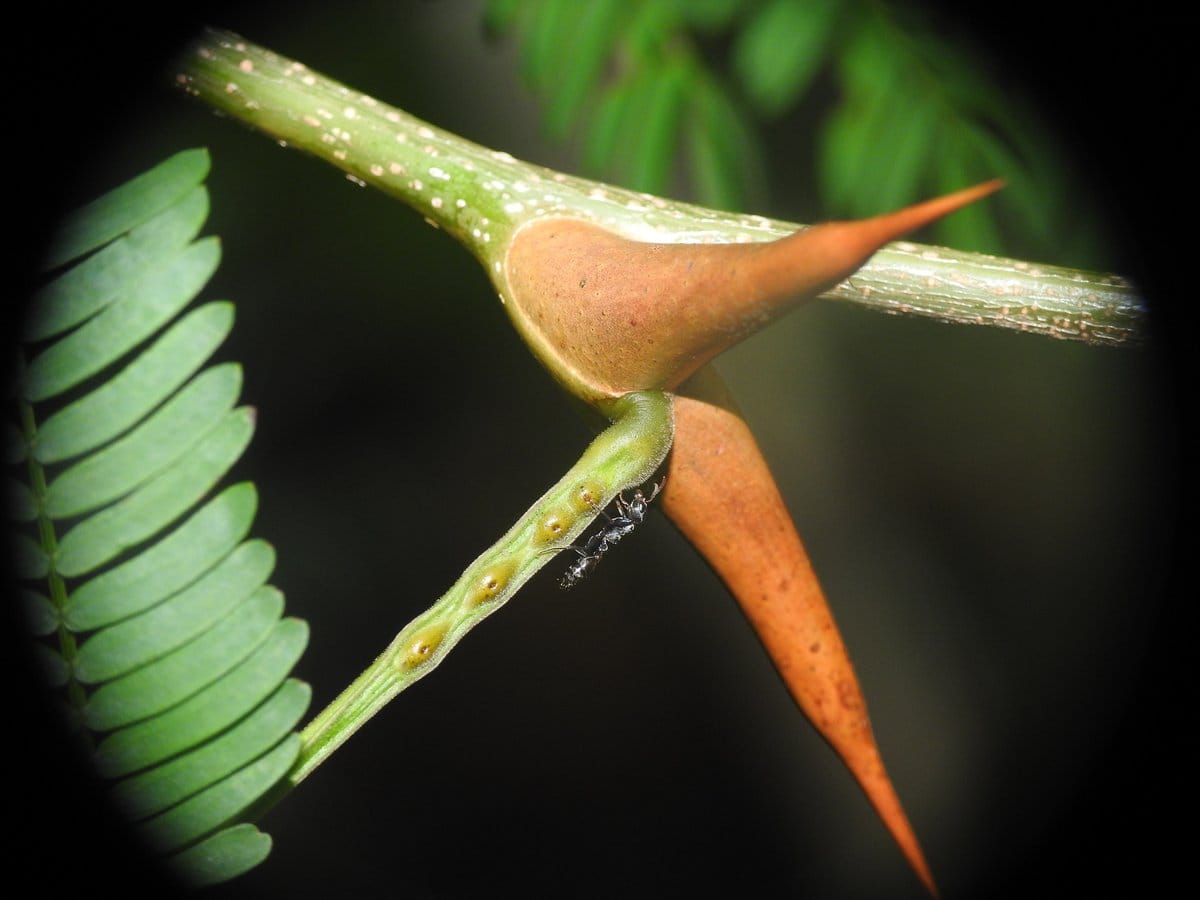
The Cornizuelo (Vachellia collinsii) harbors one of the most celebrated mutualisms in all of biology. Fierce Pseudomyrmex ants take up permanent residence inside the tree's swollen hollow thorns, receiving food and shelter in exchange for 24-hour armed defense against herbivores, competing plants, and even fungal pathogens. This ant-acacia system, famously studied by Daniel Janzen in Costa Rica's Santa Rosa National Park in the 1960s, became a textbook example of coevolution and helped launch the modern field of tropical ecology.
Quick Reference
iNaturalist Observations
Community-powered species data
📸 Photo Gallery
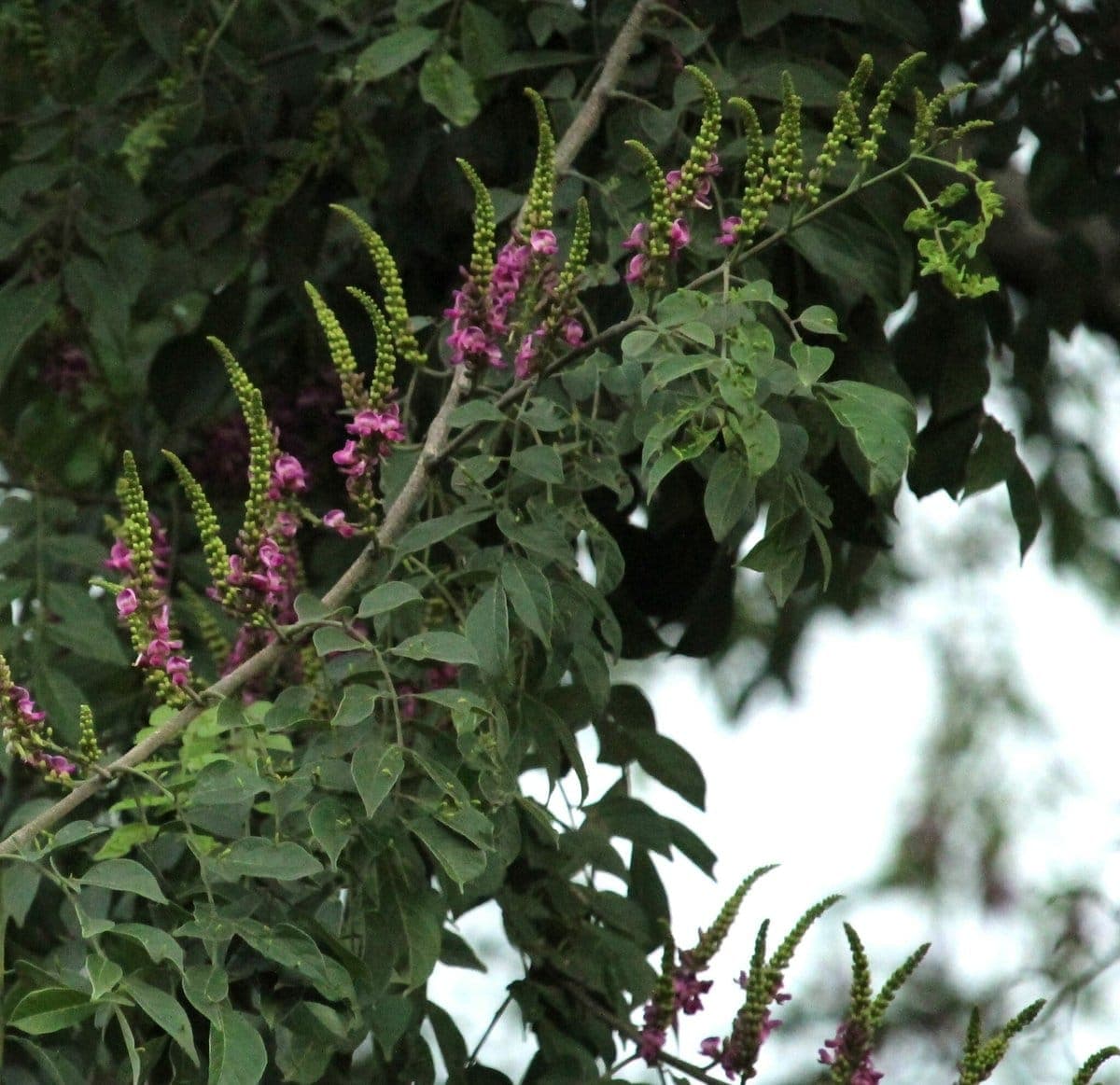
Whole tree
📷 (c) JeffreyGammon, some rights reserved (CC BY-NC)(CC BY-NC)
View source ↗Leaves
📷 (c) Dan Johnson, some rights reserved (CC BY-NC)(CC BY-NC)
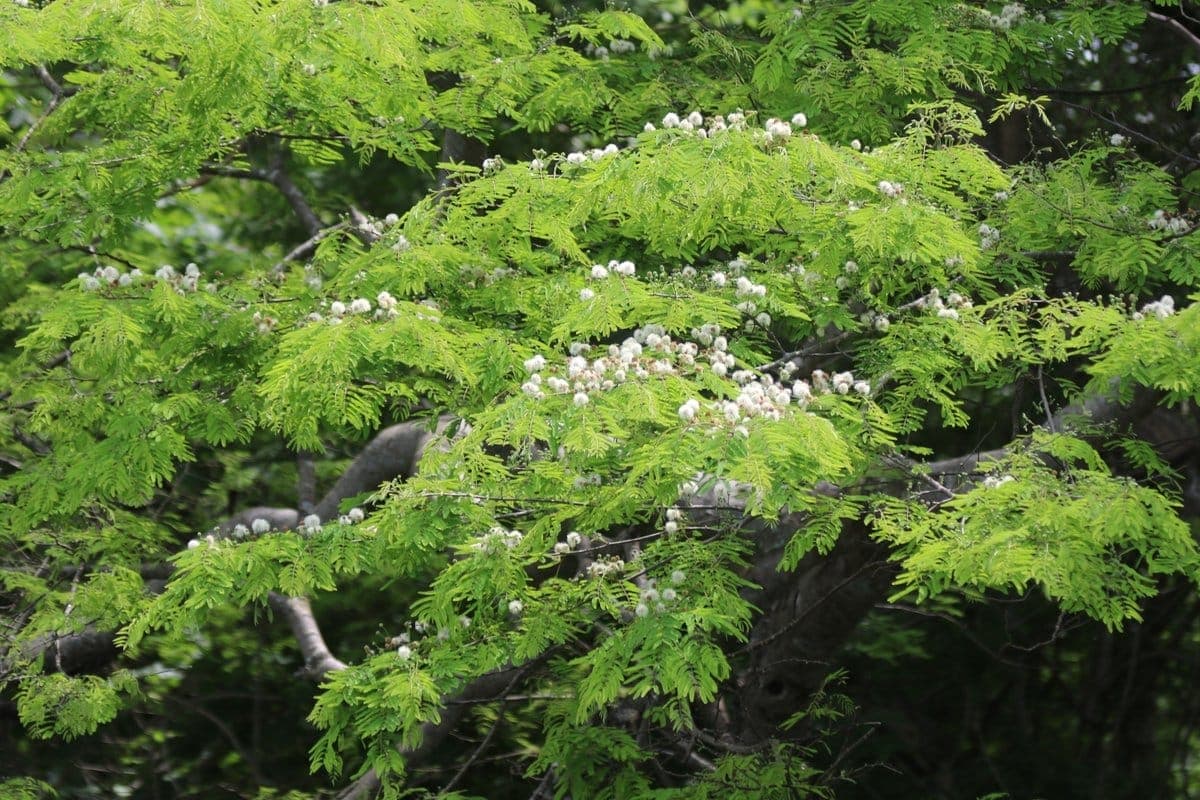
View source ↗Whole tree
📷 (c) Dan Johnson, some rights reserved (CC BY-NC)(CC BY-NC)
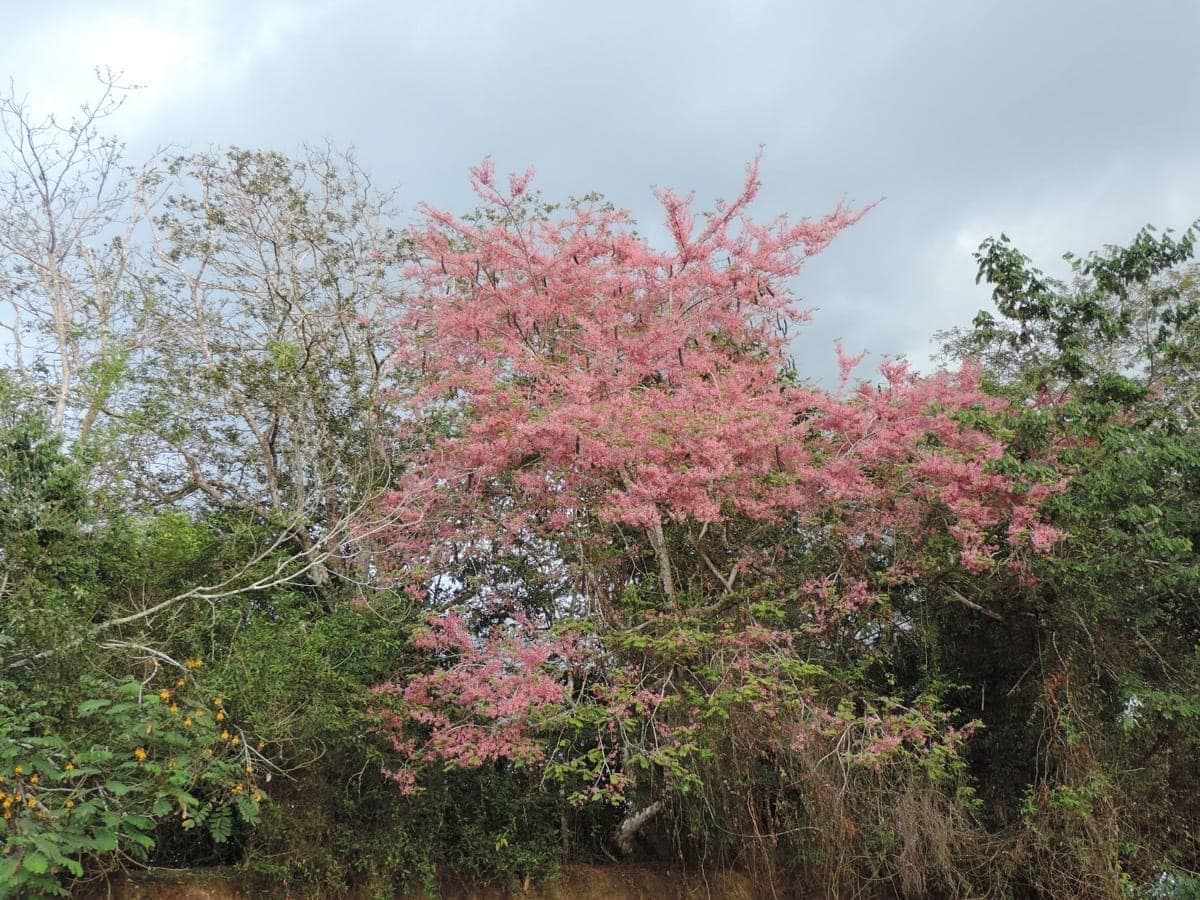
View source ↗Leaves
📷 (c) laragartler, some rights reserved (CC BY-NC)(CC BY-NC)
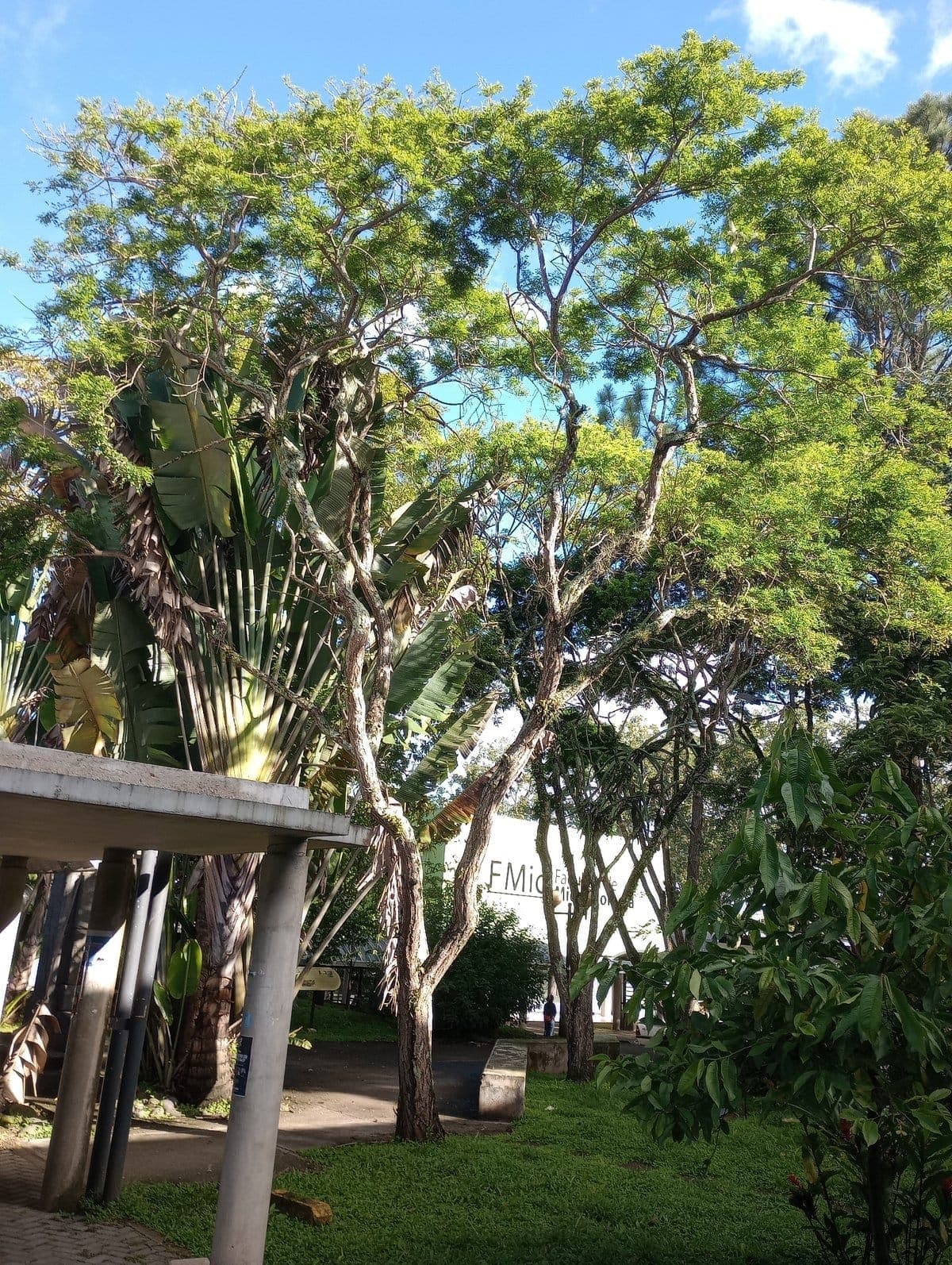
View source ↗Whole tree
📷 (c) laragartler, some rights reserved (CC BY-NC)(CC BY-NC)
View source ↗Photos sourced from iNaturalist community science database. View all observations →↗
Taxonomy and Classification
The Acacia Reclassification
The cornizuelo was long known as Acacia collinsii, but a major taxonomic revision in 2005 split the mega-genus Acacia (1,500+ species worldwide) into five separate genera based on molecular phylogenetic evidence. The New World ant-acacias were transferred to Vachellia (named after French botanist George Harvey Vachell, 1799–1839), while the name Acacia was retained for the Australian species under the principle of nomenclatural conservation — a decision that remains controversial among some botanists. The species epithet collinsii honors James Franklin Collins, an American botanist who collected the type specimen [1].
The common name "Cornizuelo" is a Spanish diminutive of "cuerno" (horn), meaning "little horn" — a reference to the paired, horn-shaped hollow thorns. The English name "Bull-horn Acacia" likewise describes the thorns' resemblance to cattle horns. In Guanacaste, you may also hear "cachito" (little horn) or "acacia de hormigas" (ant acacia).
Common Names
Physical Description
Overall Form
The Cornizuelo is a small to medium-sized deciduous tree typically reaching 10–20 meters in height with a trunk diameter of 30–40 cm. It develops a spreading, irregular crown with horizontal branches that create an open, umbrella-like canopy — a silhouette characteristic of savanna acacias worldwide. The tree is classified as a pioneer species, rapidly colonizing disturbed areas, forest edges, and roadsides in dry tropical forest zones.
Distinctive Features
Thorns — The Defining Feature
- Type: Modified stipular spines (not true thorns)
- Shape: Paired, swollen, bull-horn–shaped
- Length: 3–10 cm, extremely sharp
- Interior: Hollow with thin woody shell
- Color: Green when young, brown and woody when mature
- Function: Ant domatia — specifically evolved to house ant colonies
- Ant entrance: Ants chew small hole at tip to access interior
Trunk and Bark
- Bark: Rough, dark gray to brownish, becoming fissured with age
- Young branches: Smooth, greenish, with prominent stipular thorns
- Wood density: 650–750 kg/m³; reddish-brown heartwood
- Form: Often branching low, multi-stemmed in open areas
Leaves
- Type: Bipinnately compound (twice-divided, fern-like)
- Length: 8–15 cm total
- Pinnae: 4–15 pairs per leaf
- Leaflets: 10–30 pairs per pinna, 3–8 mm long, elliptical
- Extrafloral nectaries: Orange-red glands on petiole secreting sugar solution
- Beltian bodies: Protein-lipid nodules at leaflet tips — ant food
Flowers and Fruit
- Flowers: Cream to yellow, dense globular spikes (1–2 cm diameter); numerous stamens give fuzzy appearance
- Season: Dry season (February–May)
- Pollinators: Bees, flies; ants allow pollinators to visit
- Fruit: Flat legume pods, 8–15 cm long, 1–2 cm wide
- Seeds: 6–15 per pod; hard, dark brown; require scarification for germination
The Ant-Acacia Mutualism
One of Biology's Most Famous Partnerships
The obligate mutualism between Cornizuelo and Pseudomyrmex ants is a textbook example of coevolution. The tree provides three distinct rewards — housing (hollow thorns), carbohydrates (extrafloral nectar), and solid food (Beltian bodies). In return, the ants provide military-grade defense against herbivores, vine encroachment, and even competing plants. Neither partner thrives without the other: unoccupied trees are rapidly defoliated by herbivores, while the specialized ants cannot survive independently.
What the Tree Provides
What the Ants Provide
The Ant Partners
The primary mutualist ant species are in the genus Pseudomyrmex (subfamily Pseudomyrmecinae), highly specialized arboreal ants with slender bodies, excellent vision, and powerful stings:
Janzen's Landmark Research
In 1963–1966, Daniel Janzen conducted his now-famous ant-removal experiments at Santa Rosa, Guanacaste. He systematically removed Pseudomyrmex colonies from cornizuelo trees and documented the consequences. Within 2–12 months, ant-free trees were heavily defoliated by herbivorous insects, overgrown by vines, and shaded out by competing vegetation. Most died within a year. Meanwhile, neighboring ant-occupied trees remained healthy and vigorous. This elegant experiment demonstrated that the mutualism was truly obligate — neither partner could survive alone — and helped establish the concept of "coevolutionary arms races" in tropical ecology [4].
Beltian Bodies — Evolutionary Innovation
Beltian bodies are among the most remarkable structures in the plant kingdom. These small (1–2 mm), yellowish, detachable nodules grow at the tips of leaflets and are specifically designed as ant food. Chemical analysis reveals they contain approximately 12–20% protein, 10–15% lipids, significant glycogen, and various vitamins — a nutritionally complete diet for the ant colony. The tree continuously regenerates harvested Beltian bodies, investing substantial metabolic resources in feeding its defenders.
The bodies were first described by Thomas Belt in his 1874 book The Naturalist in Nicaragua, making them one of the earliest documented examples of a plant producing specialized food for animal mutualists. Modern research has shown that Beltian body production increases when the tree is under herbivore attack — an inducted defense where the tree effectively "calls in reinforcements" by increasing food supply to its ant army [5].
Distribution and Habitat
Geographic Distribution
Elevation: 0-1000m
Native Range
Vachellia collinsii ranges from southern Mexico (Yucatán, Oaxaca, Chiapas) through all of Central America to northern Colombia and Venezuela. It is primarily a species of the Pacific dry forest corridor — the Mesoamerican dry forest belt that once stretched nearly continuously from Mexico to Panama but has been reduced to fragmented remnants.
Costa Rican Distribution
In Costa Rica, the Cornizuelo is concentrated in the Pacific lowland dry forests, particularly:
Habitat Ecology
The Cornizuelo thrives in seasonally dry tropical forests — ecosystems that receive 800–2,000 mm of rainfall annually but endure 4–6 months of severe drought. These forests are among the most threatened ecosystems in the Neotropics; in Costa Rica, less than 2% of the original Guanacaste dry forest remains intact. The cornizuelo is a characteristic species of secondary growth and forest edges within this biome, rapidly colonizing cleared areas thanks to its nitrogen-fixing ability and fast growth rate [6].
Ecological Role
Nitrogen Fixation
The Soil Builder
As a member of the legume family (Fabaceae), the Cornizuelo forms symbiotic relationships with nitrogen-fixing Rhizobium bacteria in specialized root nodules. These bacteria convert atmospheric nitrogen (N₂) into plant-available ammonium (NH₄⁺), enriching the soil beneath and around the tree. In nutrient-poor dry forest soils, this nitrogen input can increase soil fertility by 30–50% within the tree's root zone — a critical ecosystem service that facilitates succession of non-nitrogen-fixing species [7].
Successional Role
The Cornizuelo is an early to mid-succession pioneer. It rapidly colonizes disturbed areas — abandoned pastures, roadsides, forest clearings — where its nitrogen-fixing ability, drought tolerance, and fast growth rate give it a competitive advantage. Over decades, the improved soil beneath cornizuelo trees facilitates the establishment of slower-growing, shade-tolerant forest species, gradually building toward mature dry forest. In ecological restoration projects across Guanacaste, the cornizuelo is valued as a "nurse tree" that prepares the site for late-successional species.
Wildlife Interactions
Food Web Connections
- Pollinators: Native bees (Trigona, Apis), flies; ants permit pollinator access to flowers
- Seed dispersers: Seeds fall near parent; occasional dispersal by livestock and water
- Foliage browsers: Iguanas, caterpillars (when ants are absent or sparse)
- Nectar thieves: Some birds learn to access extrafloral nectaries without triggering ant defense
- Fruit/seed predators: Bruchid beetles oviposit in developing pods
The Ant Colony as Ecosystem
- A single cornizuelo may house 10,000–30,000 ants
- Colony includes queen, workers, soldiers, and brood
- Ant waste (frass) accumulates in older thorns, providing direct nitrogen to the tree
- Dead ants decompose at the tree base, contributing nutrient cycling
- Colony alarm pheromones recruit defending ants within seconds of disturbance
- Ants also prey on small insects found on the tree, supplementing their Beltian body diet
Conservation
Status and Threats
While Vachellia collinsii itself is listed as Least Concern (LC) by the IUCN, the tropical dry forest ecosystem it depends on is critically endangered. In Central America, over 98% of Pacific dry forest has been converted to agriculture, pasture, and urban development. The cornizuelo's ability to colonize disturbed land keeps it from becoming rare, but its ecological context — the complex dry forest community it belongs to — is vanishing [8].
Protected Populations
Healthy populations are conserved in:
- Santa Rosa National Park — Janzen's original study site; large intact dry forest area
- Guanacaste Conservation Area (ACG) — 163,000 ha; the world's most important dry forest restoration zone
- Palo Verde National Park — Wetland-dry forest mosaic in the Tempisque basin
- Rincón de la Vieja National Park — Foothill dry forest transitioning to volcanic uplands
Sources: IUCN Red List↗, GBIF↗, Janzen (1966)↗, Miles et al. (2006)↗
Uses and Applications
Living Fences (Cercas Vivas)
In Guanacaste, cornizuelo is traditionally used for living fences — fence posts cut from branches will root and sprout, growing into a self-repairing, self-defending fence line. The aggressive ant colonies provide built-in security that deters livestock from pushing through. Success rate for branch cuttings planted during the onset of the rainy season is 60–80%.
Ecological Restoration
The cornizuelo's combination of nitrogen fixation, fast growth, and drought tolerance makes it valuable for restoring degraded dry forest lands. In the Guanacaste Conservation Area's ambitious dry forest restoration program (conceived by Janzen and Hallwachs), the species is among the pioneer trees that naturally recolonize former pastureland, preparing soils for the return of climax forest species.
Scientific and Educational Value
Sources: Janzen (1966)↗, Heil et al. (2001)↗, Clement et al. (2008)↗, GBIF↗
Cultural Significance
In Guanacaste Culture
The Cornizuelo is well-known throughout rural Guanacaste for its ferocious ant defenders. Children learn early to give the tree a wide berth, and the expression "más bravo que las hormigas del cornizuelo" (angrier than cornizuelo ants) is used to describe someone with a fierce temper. Cowboys and farmers in Guanacaste have a grudging respect for the tree — it makes an excellent living fence precisely because nothing dares cross it.
Indigenous Knowledge
The Maya of southern Mexico and Guatemala recognized the ant-plant relationship long before Western science documented it. The Maya name "subin" refers specifically to the ant-inhabited acacia, indicating an understanding of the biological partnership. Some indigenous communities historically avoided clearing cornizuelo trees, recognizing their soil-improving properties — an implicit understanding of nitrogen fixation centuries before the biochemistry was understood.
Scientific Legacy
Daniel Janzen's four decades of research in Guanacaste, beginning with his cornizuelo ant studies, ultimately led to the creation of the Guanacaste Conservation Area — one of the world's most ambitious ecological restoration projects. From a single ant-acacia experiment came a conservation vision that now protects 163,000 hectares of dry and wet tropical forest. Janzen and his partner Winnie Hallwachs received the 2014 Blue Planet Prize for this work. The cornizuelo, in a sense, is the tree that inspired the protection of an entire ecosystem [9].
Sources: Allen (2001)↗, Janzen (1966)↗, Blue Planet Prize laureates↗
Growing Guide
Propagation
From Seed
- Collect mature brown pods during dry season
- Extract seeds manually
- Scarify seed coat — mechanical abrasion, or soak in just-boiled water for 30 seconds
- Soak scarified seeds in room-temperature water for 24 hours
- Plant 1–2 cm deep in well-drained sandy soil
- Keep moist; germination in 7–21 days
- Ants will colonize naturally within 3–12 months
From Cuttings
- Large branch cuttings (30–50 cm diameter, 1.5–2 m long) root directly as living fence posts
- Best planted at onset of rainy season (May–June in Guanacaste)
- Success rate: 60–80%
- New shoots appear within 2–4 weeks
- Ant colonization follows once thorns develop
Cultivation Requirements
Safety Warning
The cornizuelo is NOT recommended for home gardens, public parks, school grounds, or any area with regular human or pet traffic. The combination of razor-sharp thorns (up to 10 cm) and thousands of aggressive stinging ants makes this tree genuinely dangerous to approach. Appropriate uses include ecological research stations, nature reserves, rural living fences well away from paths, and dry forest restoration projects. Always observe from at least 2 meters distance. If working near the tree is unavoidable, wear thick leather gloves, long sleeves, and be prepared for rapid ant swarming within seconds of contact.
Interesting Facts
Related Species in Costa Rica
References and Resources
Taxonomic revision splitting Acacia into Vachellia, Senegalia, and other genera based on phylogenetic evidence
Induced defense: nectar production increases following herbivore damage; jasmonic acid signaling pathway
Parasitic Pseudomyrmex species exploit the mutualism without providing defensive services
The landmark paper establishing obligate ant-acacia mutualism; ant-removal experiments at Santa Rosa
First description of Beltian bodies; pioneering tropical natural history observations
Foundational paper on dry forest conservation; less than 2% of original extent survives
Quantification of biological nitrogen fixation in tropical legume trees; soil enrichment rates
Global analysis of dry forest loss; Central American Pacific corridor among most degraded
Interview covering Janzen's career from ant-acacias to Guanacaste conservation; scientific legacy
Temperature buffering inside hollow thorns; brood development requirements; ant thermoregulation
Community science observations and distribution photos
Global occurrence records and distribution mapping
Conservation status and species assessment
Safety Information Disclaimer
Safety information is provided for educational purposes only. Individual reactions may vary significantly based on age, health status, amount of exposure, and individual sensitivity. Always supervise children around plants. Consult a medical professional or certified arborist for specific concerns. The Costa Rica Tree Atlas is not liable for injuries or damages resulting from interaction with trees described in this guide.
• Always supervise children around plants
• Consult medical professional if unsure
• Seek immediate medical attention if poisoning occurs
Information compiled from authoritative toxicology sources, scientific literature, and medical case reports.
Help improve this page
Know something about this tree? Share local knowledge, suggest a correction, or submit a photo to improve this guide for everyone.