Carboncillo
Acacia pennatula
Quick facts
Native Region
Mexico to Costa Rica
Max Height
8-15 meters (25-50 feet)
Family
Fabaceae
Conservation
LC — Least Concern
Uses
Safety Information
Toxicity Details
LOW toxicity. As with many Acacia/Fabaceae species, seeds may contain mild toxins if consumed raw in quantity. Tree has thorns. Generally safe livestock fodder when foliage consumed normally.
Skin Contact Risks
Thorns can cause puncture wounds. Handle with care.
Season
Flowering
Jan-Mar, Dec
Fruiting
Feb-May
How to identify
Carboncillo
Carboncillo (Acacia pennatula) takes its name from "carbón" (charcoal) — this small but tough tree produces some of the finest charcoal in Central America. Beyond fuel, it is a workhorse of Guanacaste's dry-forest pastoral systems: fixing atmospheric nitrogen, feeding cattle through brutal drought, providing thorny living fences, and defining the spiny silhouette of Costa Rica's pastoral lowlands. Where grasses fail, the Carboncillo endures.
Quick Reference
iNaturalist Observations
Community-powered species data
📸 Photo Gallery
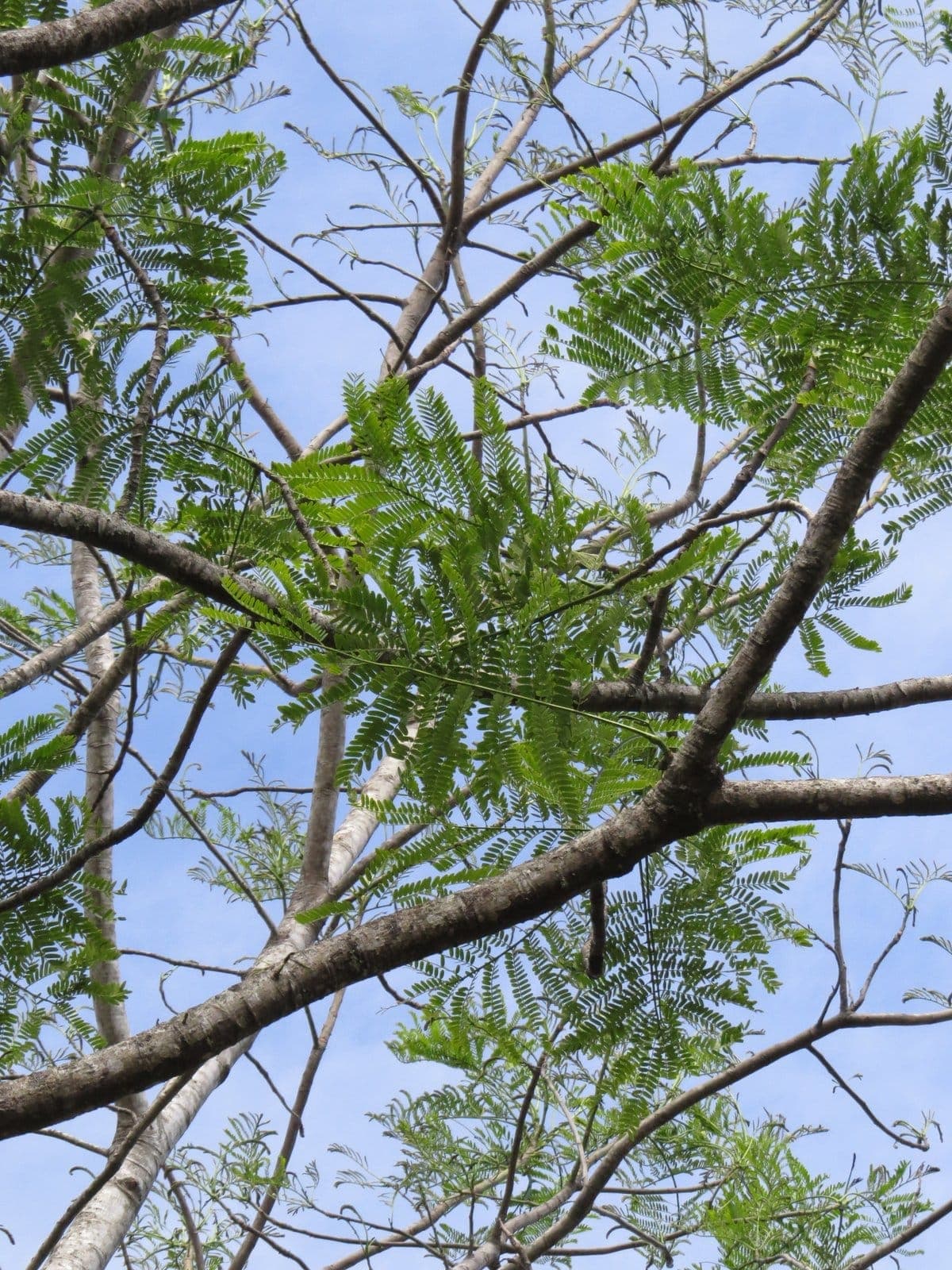
Whole tree
📷 (c) Sune Holt, some rights reserved (CC BY-NC)(CC BY-NC)
View source ↗Feathery leaves
📷 (c) Sune Holt, some rights reserved (CC BY-NC)(CC BY-NC)
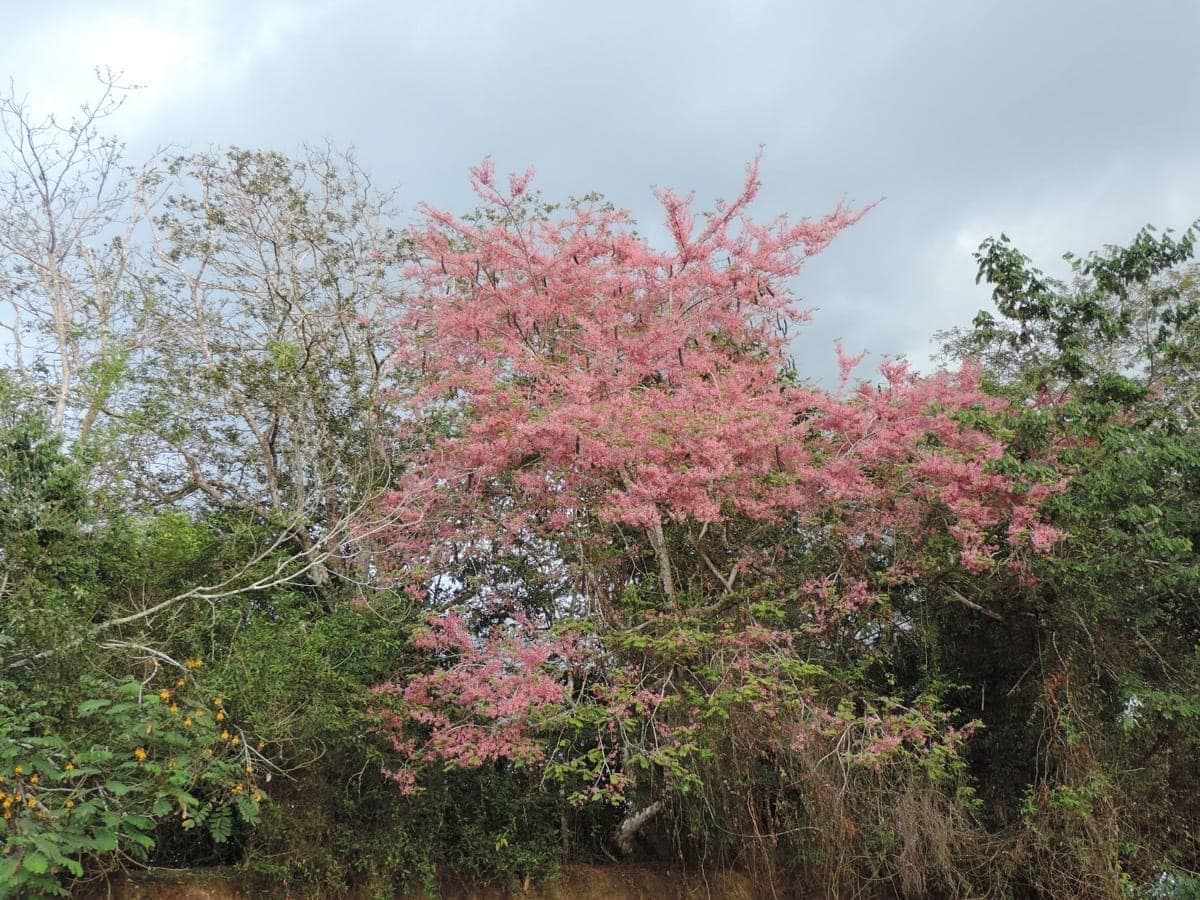
View source ↗Dry forest habitat
📷 no rights reserved(CC BY-NC)
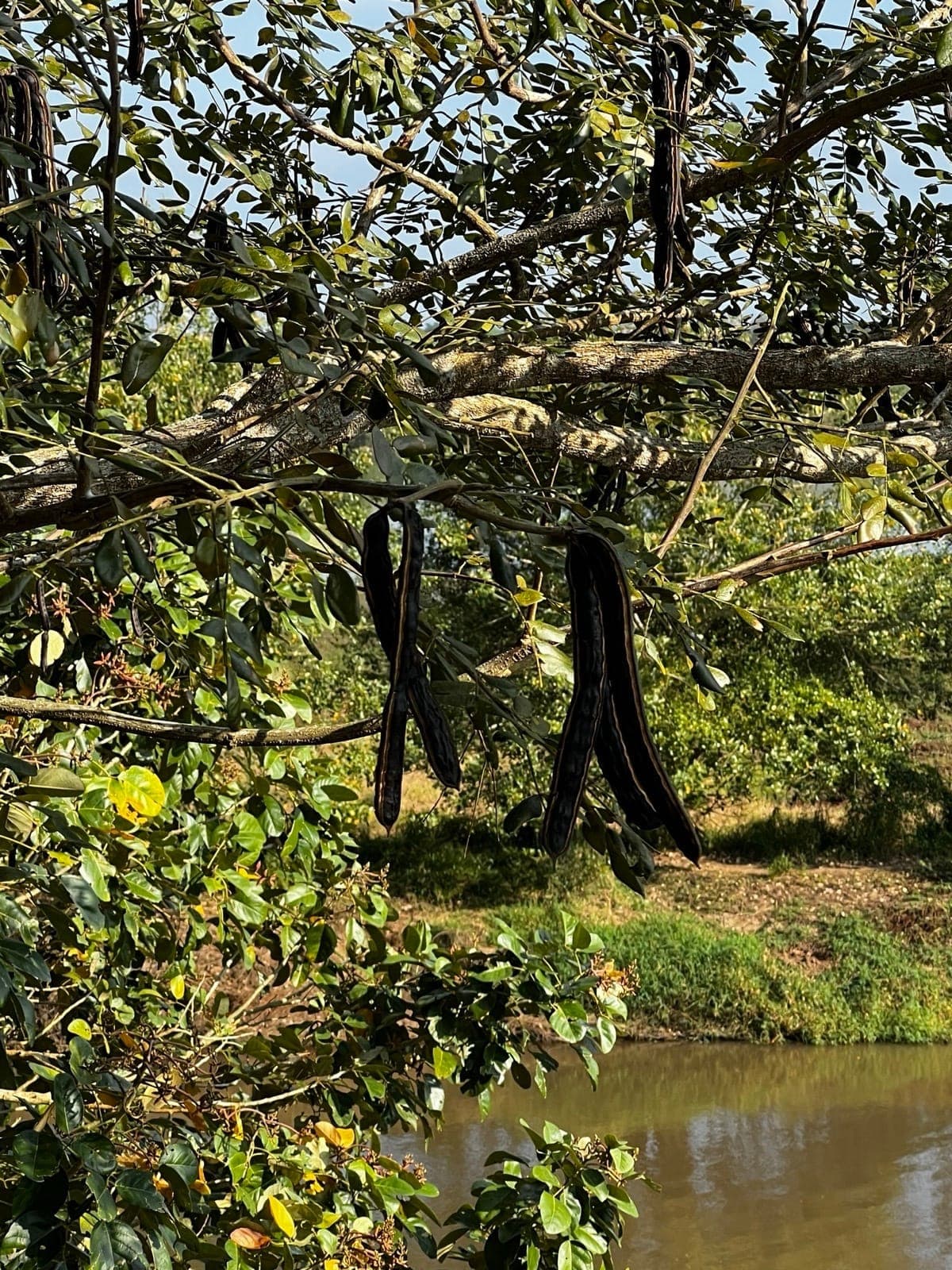
View source ↗Mature tree
📷 (c) María Eugenia Mendiola González, some rights reserved (CC BY-NC-SA)(CC BY-NC)
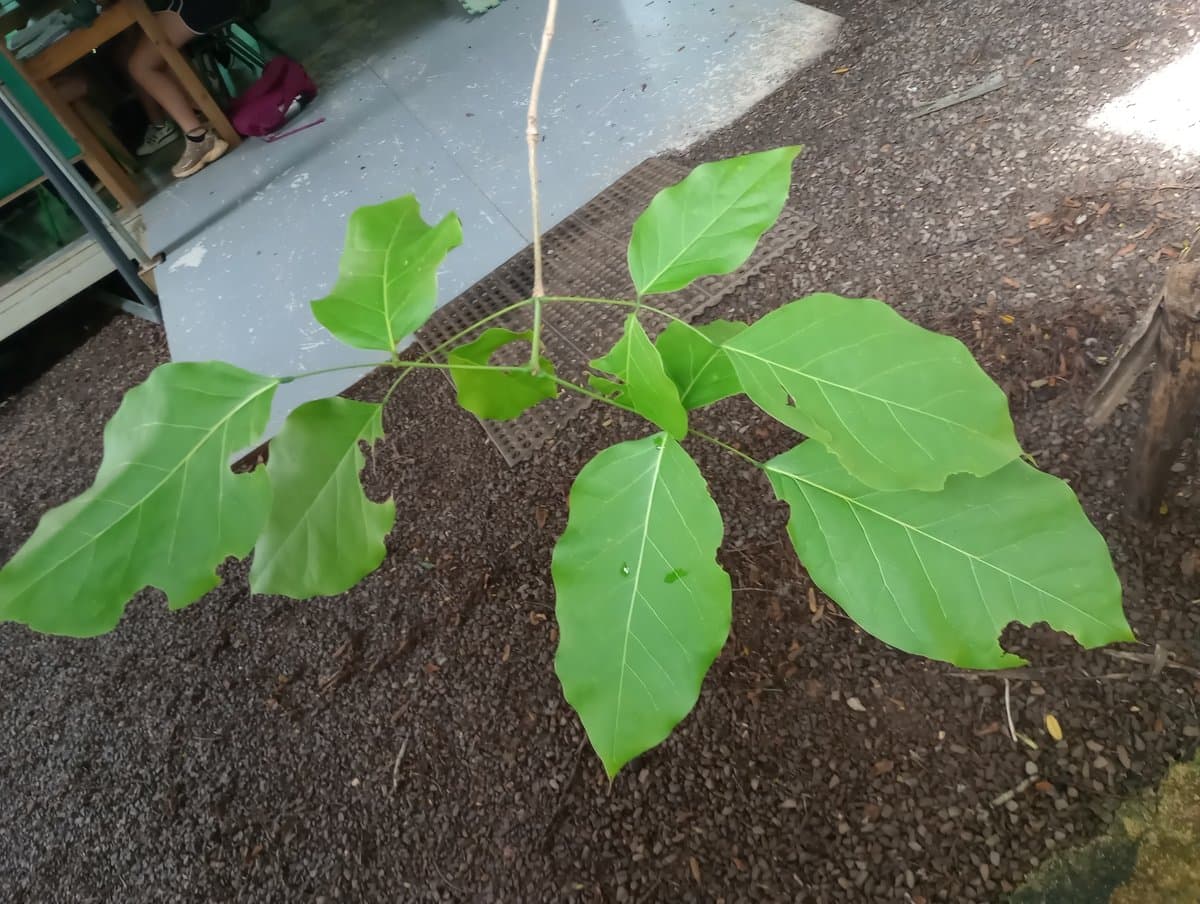
View source ↗Leaf detail
📷 (c) Sune Holt, some rights reserved (CC BY-NC)(CC BY-NC)
View source ↗Photos sourced from iNaturalist community science database. View all observations →↗
Taxonomy and Classification
Common Names
The Acacia Reclassification
Etymology
- Acacia / Vachellia: Acacia from Greek akantha (thorn); Vachellia honors George Harvey Vachell (1799-1839), a British clergyman and plant collector in China
- pennatula: Latin for "little feather" — describing the delicate, finely divided compound leaves
- Carboncillo: Spanish diminutive of carbón (charcoal) — "little charcoal tree," reflecting its premier use as fuel
Physical Description and Botany
Overall Form
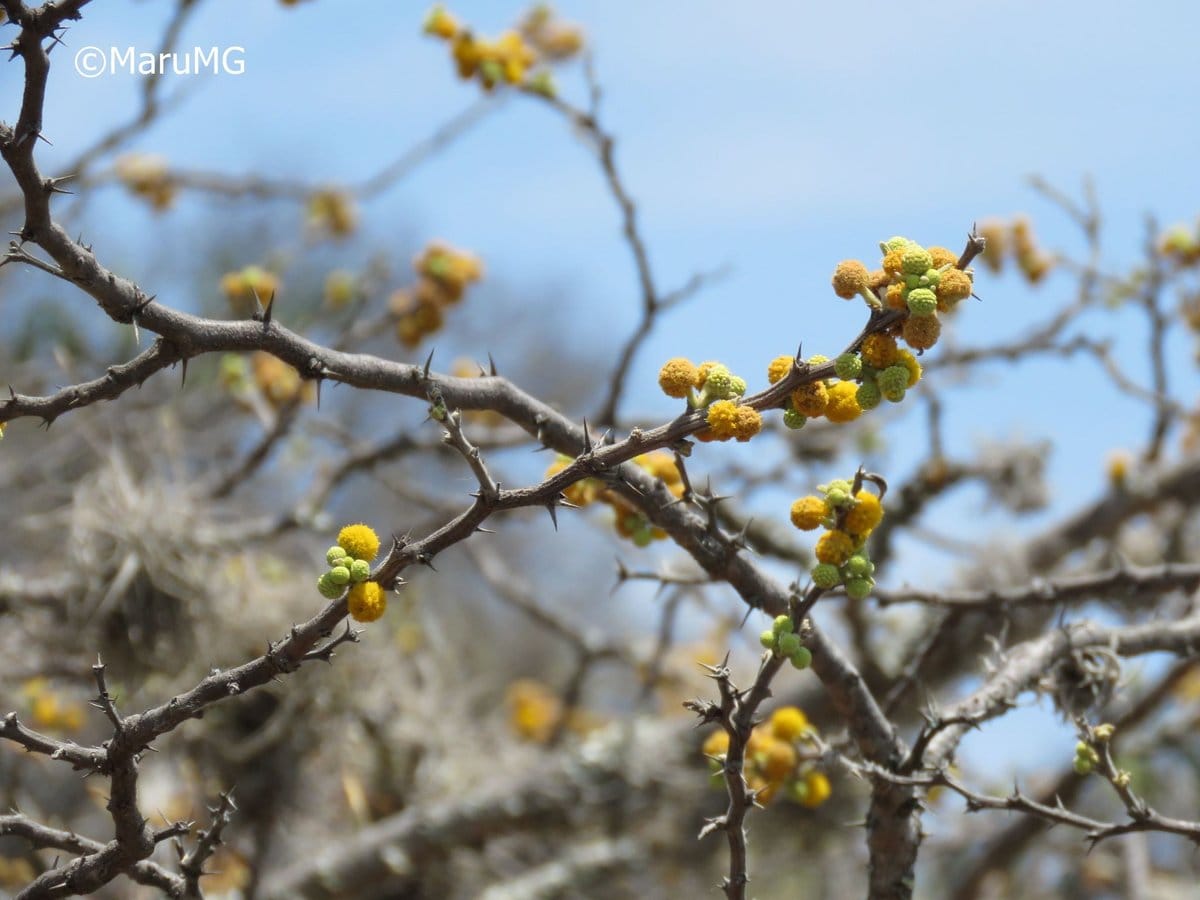
Carboncillo is a small to medium deciduous tree reaching 8-15 meters in height with a trunk diameter of 20-40 cm at breast height. The trunk is often crooked or leaning, and the crown is irregularly spreading, sometimes umbrella-shaped — a silhouette immediately recognizable in Guanacaste's open pastures. The branches are armed with paired stipular spines at the base of each leaf — a defensive adaptation shared with many other Vachellia species.
Bark and Wood
Bark: Dark gray to brown, becoming rough and deeply fissured with age. Contains moderate levels of tannins that contribute to pest resistance.
Wood: Remarkably dense and hard for such a small tree — specific gravity 0.65-0.80 — which is precisely what makes it exceptional for charcoal. The high density results from slow growth in nutrient-poor, dry-season conditions and produces wood with superior calorific value (approximately 7,000-7,500 kcal/kg as charcoal). The heartwood is dark brown, fine-grained, and naturally resistant to decay.
Leaves
The leaves are among the most finely divided of any Costa Rican tree — the "feather" of pennatula. Each bipinnate leaf carries 8-25 pairs of pinnae, with each pinna bearing 20-50 pairs of tiny leaflets (3-6 mm long). This extremely fine division creates a delicate, lace-like appearance that contrasts dramatically with the tree's fierce spines. The leaves are deciduous, falling during the dry season (December-April) and re-emerging rapidly with the first rains.
Flowers
The flowers are small individually but aggregate into dense globular heads (1-1.5 cm diameter) typical of the mimosoid clade. Numerous protruding stamens give each head a soft, fuzzy "powder puff" appearance. The sweet, honey-like fragrance attracts a wide range of pollinators including native stingless bees (Trigona, Tetragonisca), honeybees, beetles, and small butterflies. Flowering occurs during the dry season (December-March), often on leafless branches.
Fruit and Seeds
Pods: Legume pods, 10-15 cm long and 1.5-2 cm wide, straight to slightly curved, becoming dark brown and leathery when ripe. Pods are indehiscent (do not split open naturally), requiring animal digestion or physical breakage to release seeds.
Seeds: 6-12 per pod, hard-coated and oval, dark brown. Seeds are orthodox (can be stored dry) and require scarification for reliable germination. The pods are notably protein-rich (12-18% crude protein), making them excellent livestock fodder.
Dispersal: The primary dispersal agent is cattle — livestock consume the nutritious pods and pass the hard-coated seeds intact through their digestive tract, depositing them in fertile dung piles across the landscape. This cattle-mediated dispersal explains why Carboncillo is so abundant in active pastures — the tree and the ranching system co-evolved a mutually beneficial relationship.
Geographic Distribution
Geographic Distribution
A Tree Shaped by Ranching
Carboncillo's distribution in Costa Rica tells the story of 500 years of cattle ranching. Unlike most native trees that declined with deforestation, the Carboncillo actually expanded its range as forests were cleared for pasture. Cattle eat the protein-rich pods and disperse the hard seeds in their dung, effectively planting Carboncillo wherever they graze. Today, Carboncillo is more abundant in agricultural Guanacaste than it was in pre-Columbian intact dry forest — one of the few native trees that thrived alongside, rather than despite, the livestock industry.
Distribution in Costa Rica
The species is native from southern Mexico (Guerrero, Oaxaca, Chiapas) through Guatemala, El Salvador, Honduras, and Nicaragua to Costa Rica, reaching its southernmost limit in the Pacific lowlands.
Where to See Carboncillo
- Tempisque River basin — Abundant in cattle pastures; look for the distinctive thorny silhouette against the sky
- Parque Nacional Palo Verde — Forest edges and transitions between wetland and dry forest
- Santa Cruz-Nicoya corridor — Along fence lines and in silvopastoral landscapes
- Parque Nacional Santa Rosa — Secondary dry forest and restored pasture areas
- Route 1 (Interamericana through Guanacaste) — Visible from the highway in roadside pastures
Charcoal Production
Carboncillo wood produces charcoal of exceptional quality — dense, long-burning, and low-smoke. For centuries it was the preferred fuel for blacksmithing, cooking, and even gunpowder production throughout Mesoamerica. The traditional earth-pit kiln method, still practiced in some rural communities, represents living cultural heritage.
Why Carboncillo Makes Superior Charcoal
The superior quality stems from the wood's high density (specific gravity 0.65-0.80) and low moisture content at harvest time (the tree is deciduous, and wood is typically harvested during the dry season). Traditional carbonization uses earth-pit kilns (hornos de tierra) where stacked wood is covered with earth and slowly charred at 400-500°C over 2-3 days. The controlled, slow pyrolysis produces charcoal with high fixed carbon content and minimal volatile compounds — hence the clean, low-smoke burn.
Traditional vs. Modern Production
Silvopastoral Value
The Rancher's Ally
In Guanacaste's extensive cattle ranching system, few trees are as useful as the Carboncillo. It fixes nitrogen to improve pasture soil, drops protein-rich pods that sustain cattle through drought, provides thorny living fences, and yields firewood and charcoal. Ranchers have deliberately protected and promoted this tree in their pastures for generations — one of the earliest forms of agroforestry in the Neotropics.
Multiple Uses in Pastoral Systems
Drought Insurance
Ranchers in Guanacaste call Carboncillo "seguro de sequía" — drought insurance. During the 5-6 month dry season when all grasses wither, cattle can survive on fallen Carboncillo pods. The pods' high protein content (12-18% crude protein) and carbohydrates make them a nutritionally adequate emergency feed. Trees are deliberately left in pastures for this purpose — a form of traditional ecological knowledge, proven over centuries, that modern livestock scientists now recognize as an effective silvopastoral strategy.
Habitat and Ecology
Ecological Roles
Forest Associations
Carboncillo grows in association with characteristic Mesoamerican dry forest species:
- Guanacaste tree (Enterolobium cyclocarpum) — The national tree; co-dominant canopy species
- Quebracho (Lysiloma divaricatum) — Another nitrogen-fixing legume of dry forests
- Indio desnudo (Bursera simaruba) — Red-barked pioneer; shared habitat
- Cornizuelo (Acacia collinsii) — Ant-acacia; often confused with Carboncillo
- Jícaro (Crescentia alata) — Pasture tree with gourd-like fruits
Conservation Status
Sources: IUCN Red List↗, Plants of the World Online (Kew)↗, GBIF — Vachellia pennatula↗
Acacia pennatula (Vachellia pennatula) is assessed as Least Concern by the IUCN Red List. The species has a wide range across Mesoamerica, stable to increasing populations, and excellent adaptation to human-modified landscapes. Unlike most native trees, Carboncillo has benefited from deforestation and cattle ranching through its cattle-dispersal seed strategy.
Conservation Paradox
Carboncillo presents a conservation paradox: while its dry forest habitat is among the most threatened on Earth (less than 2% of original Mesoamerican dry forest remains), the tree itself has expanded its range through association with cattle. However, this apparent success masks genetic concerns — pasture populations may represent a narrow genetic subset adapted to disturbed conditions, lacking the genetic diversity found in intact forest populations. Conservation of remnant dry forest fragments remains critically important for maintaining the full genetic heritage of this and other dry forest species.
Conservation Priorities
Cultural Significance
The Blacksmith's Tree
Before modern fuels, Carboncillo charcoal was the premier fuel for blacksmithing throughout Central America. Spanish colonizers arriving in Guanacaste in the 16th century quickly recognized its value — the dense, hot-burning charcoal was ideal for forging iron tools, horseshoes, and weapons. Charcoal production (carbonería) became an important colonial industry, and the skills were passed down through generations of rural families. Even today, some Guanacaste families identify as carboneros — charcoal makers — maintaining expertise in the traditional earth-pit kiln method as cultural heritage.
Sabanero Landscape
For Guanacaste's sabaneros (cowboys), the Carboncillo is as iconic as the horse and the lasso. Its thorny silhouette against a dry-season sunset is the quintessential image of the Guanacaste pastoral landscape. Ranchers have a deep pragmatic appreciation for this tree — providing fencing, fuel, fodder, and shade from a single species. The traditional practice of selectively retaining Carboncillo in pastures represents one of the oldest forms of agroforestry in the Neotropics, predating formal scientific descriptions by centuries.
Phenological Calendar
Rural communities use Carboncillo's seasonal rhythms as a natural calendar. Flowering in December-January signals the deepening of the dry season and the need to reserve water. Pod drop in March-April provides emergency cattle feed during the harshest drought weeks. The first flush of green leaves with early May rains signals the time to prepare fields for planting — a phenological knowledge system that connects farming to the rhythms of the natural world.
Growing Carboncillo
Carboncillo requires a tropical dry climate with a pronounced dry season. It is not suitable for humid Caribbean conditions or high-elevation cloud forests. It performs best in Guanacaste and the Pacific lowlands below 1,000 m. Note: paired thorns make this tree unsuitable for areas with heavy foot traffic or play areas for children.
Propagation
Cultivation Requirements
Landscaping Uses
Excellent for: Silvopastoral systems, living fences and property boundaries, dry forest restoration on degraded pastures, firewood/charcoal plantations on marginal land, erosion control on slopes, pollinator and wildlife habitat.
Considerations: Paired thorns make this tree unsuitable near playgrounds, walkways, or high-traffic areas. Deciduous habit means bare branches during the dry season. Can form dense thickets if not managed — regular pruning maintains desired form. Pod drop attracts cattle, which may damage fencing or garden areas.
Similar Species
External Resources
Community observations and photos from Costa Rica and Mesoamerica
Global distribution records and specimen data
Nomenclatural records and synonymy
Accepted name, synonyms, and distribution data
Dry forest restoration programs using native species
Conservation status assessment
References
-
Janzen, D.H. (1988). Tropical dry forests: the most endangered major tropical ecosystem. In E.O. Wilson (ed.), Biodiversity, pp. 130-137. National Academy Press, Washington, DC.
-
LPWG (Legume Phylogeny Working Group). (2017). A new subfamily classification of the Leguminosae based on a taxonomically comprehensive phylogeny. Taxon 66(1): 44-77.
-
Maslin, B.R. (2008). Generic and subgeneric names in Acacia following retypification of the genus. Muelleria 26(1): 7-9.
-
Smith, G.F. & Figueiredo, E. (2011). Conserving Acacia Mill. with a conserved type: What happened in Melbourne? Taxon 60(5): 1504-1506.
-
Jiménez, Q. (1999). Árboles maderables de Costa Rica: ecología y silvicultura. Instituto Nacional de Biodiversidad (INBio), Santo Domingo de Heredia, Costa Rica.
-
Pezo, D. & Ibrahim, M. (1999). Sistemas silvopastoriles. CATIE, Turrialba, Costa Rica.
-
Sprent, J.I. (2009). Legume Nodulation: A Global Perspective. Wiley-Blackwell, Oxford.
-
Standley, P.C. & Steyermark, J.A. (1946). Flora of Guatemala. Fieldiana: Botany 24(4).
-
Hammel, B.E., Grayum, M.H., Herrera, C., & Zamora, N. (eds.) (2003-2015). Manual de Plantas de Costa Rica (Volumes I-VIII). Missouri Botanical Garden Press.
Safety Information Disclaimer
Safety information is provided for educational purposes only. Individual reactions may vary significantly based on age, health status, amount of exposure, and individual sensitivity. Always supervise children around plants. Consult a medical professional or certified arborist for specific concerns. The Costa Rica Tree Atlas is not liable for injuries or damages resulting from interaction with trees described in this guide.
• Always supervise children around plants
• Consult medical professional if unsure
• Seek immediate medical attention if poisoning occurs
Information compiled from authoritative toxicology sources, scientific literature, and medical case reports.
Help improve this page
Know something about this tree? Share local knowledge, suggest a correction, or submit a photo to improve this guide for everyone.