Bambu Gigante
Guadua angustifolia
Quick facts
Native Region
Northwestern South America; widely cultivated across tropical America including Costa Rica
Max Height
30 m (98 ft)
Family
Poaceae
Conservation
NE — Not Evaluated
Uses
Safety Information
Toxicity Details
No significant toxicity is associated with normal contact. Young shoots are edible when properly prepared in culinary contexts.
Skin Contact Risks
Leaf blades and sheath margins can cause minor cuts; use gloves and long sleeves for harvesting and pruning.
Allergenic Properties
Low allergen risk for most people, though dry leaf dust and processing dust may irritate sensitive individuals.
Structural Hazards
Dense clumps can drop heavy culms during wind events or after senescence. Rhizome expansion can affect nearby hardscape if unmanaged.
Wildlife & Pet Risks
Generally low toxicity risk for wildlife; dense clumps provide shelter but can reduce understory diversity if unmanaged.
How to identify
Bambu Gigante (Guadua)
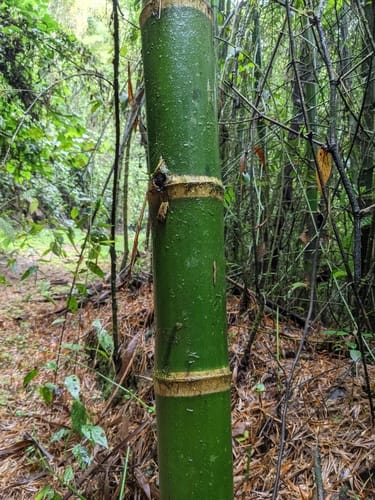
Bambu Gigante (Guadua angustifolia) is one of the most important construction bamboos in tropical America. In Costa Rica it can support agroforestry, erosion control, and low-carbon building systems when managed with regular thinning.
Quick Reference
iNaturalist Observations
Community-powered species data
📸 Photo Gallery
Whole tree
📷 (c) Alison Guerra, some rights reserved (CC BY)(CC BY)
View source ↗Leaves
📷 (c) Alison Guerra, some rights reserved (CC BY)(CC BY)
View source ↗Whole tree
📷 (c) thinkbamboo, some rights reserved (CC BY-NC)(CC BY-NC)
View source ↗Leaves
📷 (c) Alison Guerra, some rights reserved (CC BY)(CC BY)
View source ↗Whole tree
📷 (c) Rodriguez Ariel, some rights reserved (CC BY-NC)(CC BY-NC)
View source ↗Images are sourced via GBIF occurrence media and iNaturalist observation records under listed licenses.
Taxonomy & Classification
Physical & Botanical Description
- Culms commonly reach 15-30 m with thick woody walls.
- Clumps produce many culms of different ages from a shared rhizome base.
- Branching can be dense in upper sections; lower culms may be thorny in some management stages.
- Leaves are narrow, lanceolate, and abundant in mature stands.
- Flowering is infrequent and irregular, sometimes synchronized over large regions.
Geographic Distribution
Geographic Distribution
Elevation: 0-1800 m
In Costa Rica, giant bamboo is mostly cultivated in farms, riparian buffers, and restoration projects rather than primary native forest.
Habitat & Ecology
- Performs best in warm valleys and foothills with deep moisture-retentive soils.
- Excellent for slope stabilization and riverbank protection.
- Creates dense habitat for birds and small mammals.
- Requires active management to avoid over-dominance in mixed native plantings.
Uses & Applications
Construction and materials
- Engineered bamboo poles for housing and light structures.
- Fencing, scaffolding, furniture, and artisan products.
- Renewable source for low-carbon building material chains.
Agroforestry and land management
- Windbreak and watercourse stabilization species.
- Biomass production for circular farm systems.
- Shade and microclimate regulation in mixed production landscapes.
Conservation Status
IUCN Red List: Not Evaluated (NE).
The species is widely cultivated and regionally important, but sustainability depends on responsible harvest cycles and clump management.
Growing Bambu Gigante
- Establish clumps with rhizome divisions at rainy-season onset.
- Keep thick organic mulch to preserve soil moisture.
- Thin old culms annually to stimulate healthy new shoot emergence.
- Maintain root/rhizome boundaries near infrastructure.
- Harvest mature culms on rotating cycles for structural quality.
Bambu gigante is highly productive when treated as a managed stand rather than an unmanaged ornamental clump.
Advanced Care Guidance
Site Design and Planting
- Establish clumps in deep alluvial or loamy soils with strong drainage and dependable moisture.
- Keep 8-12 m spacing between production clumps, depending on harvest access needs.
- Install containment design (trenches, root barriers, or service lanes) near roads, walls, and utilities.
Watering Program
- Establishment (0-12 months): Deep watering 2 times weekly during dry periods to support rhizome expansion.
- Juvenile stand (1-3 years): Water every 7-10 days in prolonged drought, especially before shoot flushes.
- Managed mature stand: Supplemental irrigation during severe dry season to maintain culm quality and shoot survival.
Fertilization Schedule
- Apply composted manure and mulch at planting to improve soil carbon and moisture retention.
- Fertilize at early and mid rainy season with balanced nutrients plus potassium support for culm strength.
- Recycle leaf litter and branch residues inside the stand to reduce external input needs.
Pruning and Stand Structure
- Thin weak, damaged, or overcrowded culms every year after rainy-season growth.
- Maintain mixed age classes so each clump contains young, mature, and harvest ready culms.
- Keep internal access lanes clear for airflow, safe harvest movement, and reduced pest pressure.
Pest and Disease Management
- Scout for stem borers, fungal staining, and shoot dieback in humid low-airflow conditions.
- Remove and destroy heavily infected culms to protect stand productivity.
- Use sanitation-first management and avoid unnecessary broad-spectrum chemical treatments.
Companion Planting
- Recommended companions: Cacao, Guaba species, plantain strips, and soil-binding native shrubs.
- Agroforestry role: Wind buffering, erosion control, and renewable structural biomass.
- Avoid nearby: Septic fields, shallow foundations, and unmanaged narrow urban plots.
Seasonal Care Calendar (Costa Rican Conditions)
- Dry season (Dec-Apr): Irrigation support, culm inventory, and harvest planning.
- Early rains (May-Jul): Main planting and rhizome division window; fertilization and mulch renewal.
- Peak rains (Aug-Oct): Disease scouting, drainage maintenance, and selective thinning.
- Transition (Nov): Harvest cycle review and stand sanitation before dry stress period.
Growth Timeline and Production Notes
- New culms emerge rapidly during favorable moisture and reach full height in a single season.
- Structural maturity for construction use commonly develops after 3-4 years per culm.
- Productivity is highest when harvest rotation and clump sanitation remain consistent year after year.
Field Identification and Similar Species
Practical recognition cues
- Clumping growth form with dense culm bases distinguishes it from running bamboos in most managed Costa Rican landscapes.
- Mature culms are thick-walled and can reach exceptional height under humid tropical conditions.
- Culm internodes and branch architecture are consistent with structural-grade bamboo management systems.
- Young shoots emerge in concentrated seasonal flushes from established rhizome centers.
- Stand-level context (managed production clump vs ornamental patch) helps with interpretation of growth form.
Common confusion with other large bamboos
Identification workflow for production and restoration teams
- Confirm whether the stand is planted, naturalized, or mixed with other bamboo taxa.
- Record culm diameter range, internode profile, and branching distribution.
- Note rhizome containment features and management history when available.
- Validate species naming against credible local references before technical harvest planning.
- Reconfirm identity before large-scale propagation from source clumps.
Seasonal Operations Calendar in Costa Rica
For giant bamboo, calendar discipline is as important as species selection. Use this annual matrix for production-oriented and restoration-support stands.
Stand Management Playbook
Clump architecture management
- Maintain mixed age classes so each clump contains juvenile, maturing, and harvest-ready culms.
- Remove dead, cracked, or severely leaning culms before peak wind periods.
- Keep internal pathways open to improve airflow, safety, and harvest access.
- Avoid full clear-cutting of individual clumps, which destabilizes productivity.
Rhizome boundary control
- Inspect perimeter trenches or barriers at least twice annually.
- Remove escape shoots near drains, foundations, and utility lines immediately.
- Maintain service strips between clumps and infrastructure for rapid access.
- Document boundary interventions to improve future layout planning.
Production-quality harvest strategy
- Harvest by age class rather than visual convenience.
- Tag culms by cohort year to reduce cutting errors.
- Prioritize dry-weather harvest windows for safer transport and lower fungal staining risk.
- Cure and store harvested culms under ventilated, elevated conditions.
Ecological integration in mixed systems
- Pair giant bamboo with shade-tolerant crops or native shrubs where compatible.
- Prevent total understory suppression by managing clump density.
- Preserve wildlife transit corridors between dense bamboo blocks.
- Integrate erosion-control goals with biodiversity targets in riparian projects.
Culm Quality Grading for Structural Use
Monitoring Checklist (First Ten Years)
Common Mistakes and Corrective Actions
Where to See Bambu Gigante in Costa Rica
- Agroforestry farms near Turrialba and Cartago.
- Riverbank stabilization projects in San Carlos and northern plains.
- Rural construction landscapes in Pacific and Central Valley regions.
- Botanical and sustainable-building demonstration sites.
External Resources
- IUCN Red List search↗
- iNaturalist taxon page↗
- GBIF species profile↗
- Plants of the World Online (Kew)↗
Field Workbook Appendix
This appendix is a practical planning tool for teams managing this species in real field conditions. Use it as a repeatable operations reference for maintenance, reporting, and adaptive decisions.
Detailed Monthly Checklist
January
- Confirm dry-season access routes for maintenance and monitoring.
- Review irrigation backup plans for recently established individuals.
February
- Recheck mulch depth and root-zone moisture retention.
- Log any early stress indicators before peak dry pressure.
March
- Inspect structural form and remove urgent hazard defects only.
- Prepare materials and crew plans for rainy-season intervention.
April
- Finalize nursery or replacement stock lists for next planting pulse.
- Validate field labels, plot IDs, and baseline photo points.
May
- Execute primary planting and replacement operations.
- Record weather windows and establishment conditions by microzone.
June
- Perform first rainy-season survival audit.
- Apply targeted nutrition only where growth response is weak.
July
- Update canopy and competition notes for each management unit.
- Correct minor structural issues while tissue recovery is strong.
August
- Intensify disease scouting during high humidity periods.
- Prioritize drainage checks in compacted or flood-prone microsites.
September
- Reassess stand density and airflow in crowded sectors.
- Schedule selective thinning where suppression risk is increasing.
October
- Evaluate reproductive output and wildlife interaction indicators.
- Flag priority plots for late-season corrective actions.
November
- Conduct pre-dry-season infrastructure and safety checks.
- Update next-year workplan based on observed bottlenecks.
December
- Complete end-of-year data consolidation and photo comparison sets.
- Confirm staffing, tools, and resource readiness for dry-season operations.
Site Decision Matrix
Annual Technical Audit Template
- Verify survival percentage by plot, zone, and planting cohort.
- Compare annual growth indicators against prior-year baseline.
- Review branch architecture and structural safety trends.
- Confirm canopy competition status relative to target companion species.
- Check root-zone condition and drainage functionality.
- Audit irrigation consistency during critical dry windows.
- Evaluate mulch quality and decomposition cycles.
- Verify nutrient applications and response outcomes.
- Review pest and disease records for trend acceleration.
- Confirm sanitation protocol compliance in all teams.
- Reassess access routes and emergency movement pathways.
- Validate all signage, species IDs, and plot coding systems.
- Confirm photo-monitoring points and archive completeness.
- Review phenology records for flowering and fruiting reliability.
- Check wildlife interaction notes where relevant.
- Evaluate erosion control performance in sensitive microsites.
- Reconcile field logs with digital records for data integrity.
- Identify repeated failure points and unresolved action items.
- Document successful interventions worth standardizing.
- Prioritize next-year investment areas by risk and impact.
- Update crew assignments for skill-critical operations.
- Confirm tool maintenance and replacement needs.
- Publish a short annual summary for project stakeholders.
- Carry unresolved high-risk items into the first quarter action plan.
Training Priorities for New Crew Members
- Species-safe handling protocols and PPE use expectations.
- Accurate field identification and uncertainty escalation steps.
- Proper planting depth and root preparation techniques.
- Early-stage pruning limits and timing windows.
- Weed-release standards for juvenile establishment.
- Mulch placement rules to prevent collar rot.
- Moisture-monitoring methods and irrigation documentation.
- Drainage troubleshooting in difficult microsites.
- Disease scouting basics and sanitation sequence.
- Pest threshold recognition for targeted response.
- Correct use of plot tags and label replacement workflow.
- Photo documentation standards for before/after comparison.
- Safe movement in muddy or unstable terrain.
- Storm response checklists and post-event hazard scans.
- Criteria for selective thinning versus no intervention.
- Data logging discipline and same-day record closure.
- Communication protocol for urgent field findings.
- Respectful coordination with local communities and landowners.
- Waste handling and residue management procedures.
- End-of-day quality review before leaving the site.
References
- GBIF Backbone Taxonomy: Guadua angustifolia.
- iNaturalist and GBIF occurrence media records for cultivated and wild stands.
- Plants of the World Online, Royal Botanic Gardens, Kew.
- Regional bamboo management literature for tropical agroforestry systems.
Safety Information Disclaimer
Safety information is provided for educational purposes only. Individual reactions may vary significantly based on age, health status, amount of exposure, and individual sensitivity. Always supervise children around plants. Consult a medical professional or certified arborist for specific concerns. The Costa Rica Tree Atlas is not liable for injuries or damages resulting from interaction with trees described in this guide.
• Always supervise children around plants
• Consult medical professional if unsure
• Seek immediate medical attention if poisoning occurs
Information compiled from authoritative toxicology sources, scientific literature, and medical case reports.
Help improve this page
Know something about this tree? Share local knowledge, suggest a correction, or submit a photo to improve this guide for everyone.