Mango
Mangifera indica
Marañón
Anacardium occidentale
Mango vs. Marañón (Cashew): Urushiol Cousins Compared
Key Difference
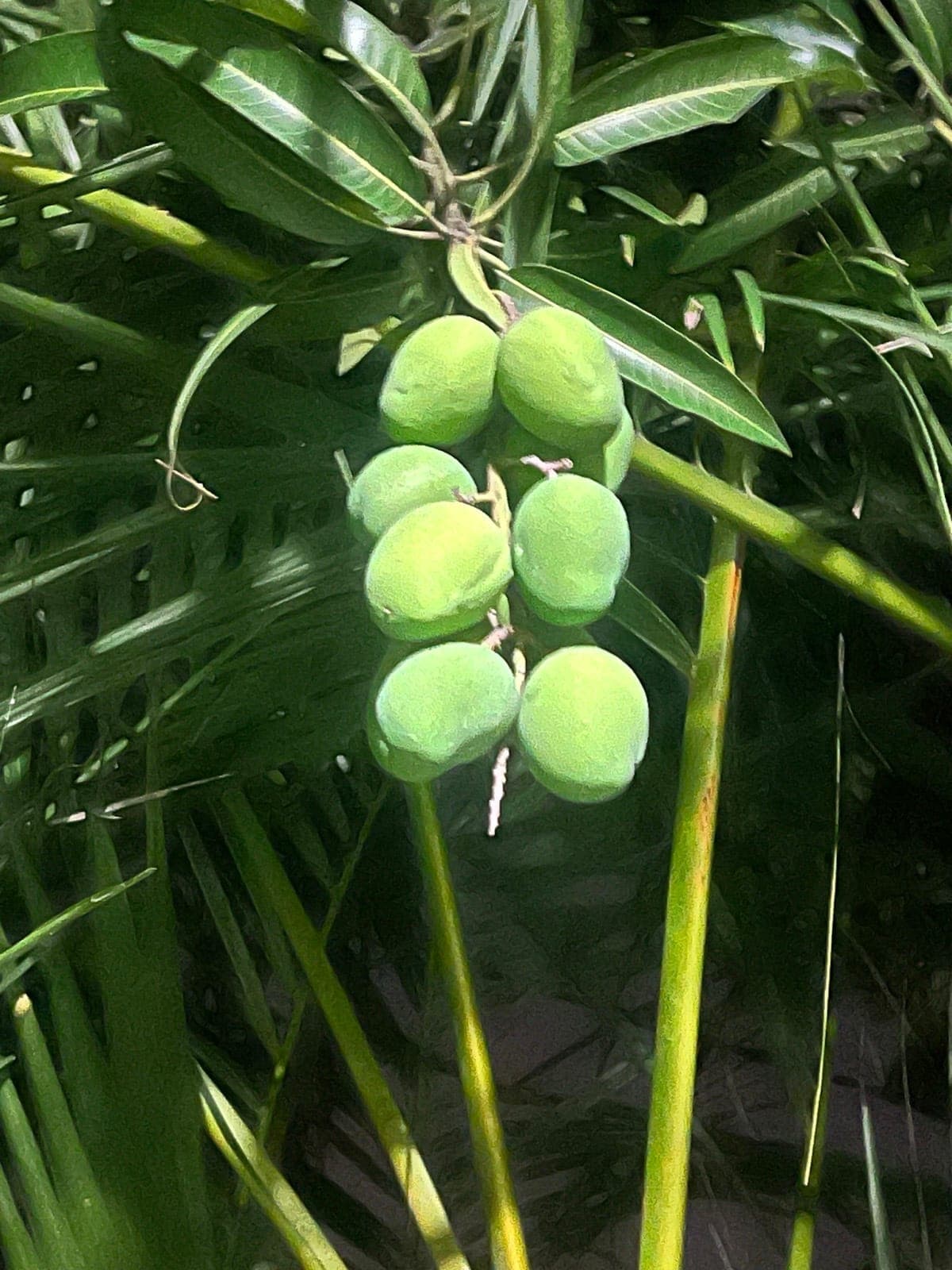
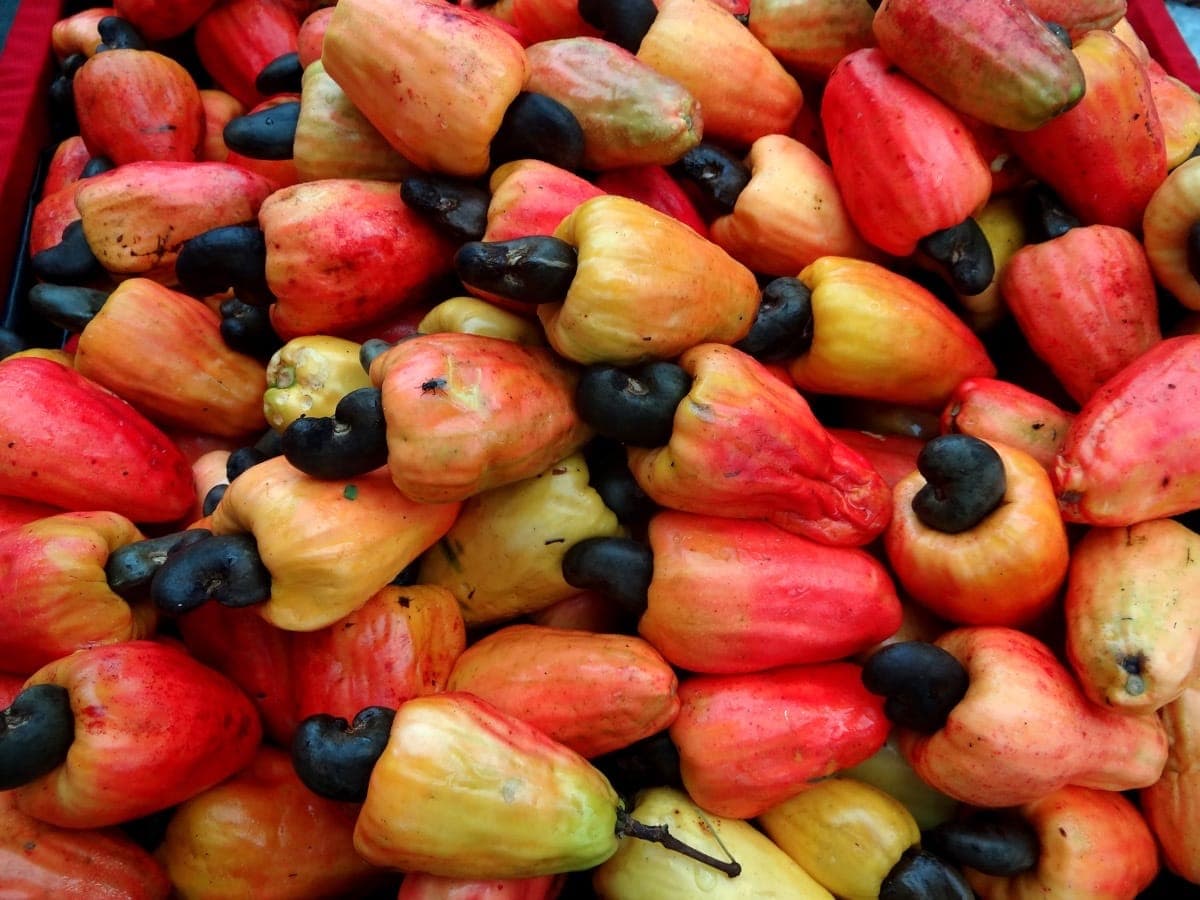
Mango has a single large mango fruit hanging from stem; Marañón has a cashew 'apple' with kidney-shaped nut attached at bottom.
Mango vs. Marañón: Anacardiaceae Fruit Trees
Both mango and marañón (cashew) are beloved fruit trees in Costa Rica from the Anacardiaceae family. While experienced gardeners know them well, beginners often confuse them - both have similar leaves, both produce fleshy fruits, and both contain urushiol compounds that can cause skin reactions. Here's how to tell them apart.
Mango: Single large oval/kidney-shaped fruit (green to red/yellow) hanging from a stem. Edible flesh surrounds a large flat seed. Marañón (Cashew): Unique structure - fleshy "cashew apple" (yellow/red pear-shaped) with hard kidney-shaped nut attached at the bottom. Nut must be roasted before eating!
Side-by-Side Comparison
Detailed Comparison Table
| Feature | Mango (Mangifera indica) | Marañón/Cashew (Anacardium occidentale) | | ----------------------- | ------------------------------------ | ----------------------------------------------- | | Fruit Type | True drupe (single fruit) | Accessory fruit (apple) + true fruit (nut) | | Fruit Appearance | Oval/kidney-shaped, 10-25 cm long | Pear-shaped apple + kidney nut at bottom | | Fruit Colors | Green, yellow, red, orange (various) | Yellow to bright red cashew apple | | Edible Parts | Flesh around seed (eaten fresh) | Apple (eaten fresh) + nut (must be roasted) | | Seed/Nut | Large flat seed inside (not eaten) | Kidney-shaped nut attached outside (cashew nut) | | Tree Height | 15-30 m (can be 40 m) | 8-15 m (rarely taller) | | Tree Form | Upright, dense rounded crown | Irregular, spreading, crooked branches | | Leaf Size | Large: 15-30 cm long | Medium: 8-20 cm long | | Leaf Shape | Lanceolate to oblong, pointed tip | Obovate (wider at tip), rounded end | | Leaf Color | Dark green, often reddish when new | Light green to yellowish-green | | Flowers | Small pale yellow/pink, in panicles | Small pink/red, in terminal panicles | | Flowering Season | December-March | December-April | | Fruiting Season | April-August | March-June | | Bark | Rough, dark gray-brown, fissured | Rough, corky, reddish-brown | | Origin | Southeast Asia (India/Burma) | Brazil, spread to Central America | | Conservation Status | Least Concern (widely cultivated) | Least Concern (widely cultivated) |
Key Identification Features
1. Fruit Structure (Diagnostic!)
Mango:
- Single fleshy drupe fruit
- Familiar mango shape - oval to kidney-shaped
- Fruit hangs from stem
- Flesh (mesocarp) surrounds large flat seed
- Colors: green (unripe) to yellow/red/orange (ripe)
- One seed inside that is NOT eaten raw
Marañón (Cashew):
- Unique double structure: Fleshy "apple" (accessory fruit) + hard nut (true fruit)
- Cashew "apple" (pseudocarp): Pear-shaped, fleshy, juicy, swollen stem
- Cashew nut: Kidney-shaped, attached at BOTTOM of apple
- Apple colors: Yellow to bright red when ripe
- Apple is edible fresh (sweet, astringent)
- Nut must be roasted to remove toxic shell oil
2. Leaves
Mango:
- Large leaves: 15-30 cm long, 2-8 cm wide
- Lanceolate to oblong shape
- Pointed tip (acuminate)
- New leaves often reddish or bronze, turning dark green
- Alternate arrangement
- Clusters at branch tips
- Strong mango scent when crushed
Marañón:
- Medium leaves: 8-20 cm long, 5-10 cm wide
- Obovate shape (wider near tip, rounded end)
- Rounded to slightly notched tip
- Light green to yellowish-green
- Alternate arrangement
- Leathery texture
- Resinous smell when crushed
3. Tree Form & Size
Mango:
- Large tree: 15-30 m tall (can reach 40 m)
- Dense, rounded, symmetrical crown
- Upright growth habit
- Straight trunk
- Extensive root system
- Professional appearance
Marañón:
- Smaller tree: 8-15 m tall
- Irregular, spreading crown
- Often crooked, twisted trunk
- Multiple stems common
- Sprawling growth habit
- Somewhat "messy" appearance
4. Bark
Mango:
- Rough texture
- Dark gray-brown color
- Deeply fissured on older trees
- Thick bark
- Resin when damaged
Marañón:
- Rough, corky texture
- Reddish-brown to gray
- Irregular fissuring
- Exfoliating in patches
- Dark resinous sap when cut
Urushiol Safety - CRITICAL for Both Species
Both trees contain urushiol (same compound in poison ivy) and can cause allergic contact dermatitis. Handle with care!
Mango Urushiol Exposure
- Skin (peel): Highest concentration in peel/rind
- Sap: All parts have some urushiol when damaged
- Fruit flesh: Generally safe to eat (peel carefully)
- "Mango Mouth": Rash around mouth from eating unpeeled fruit
- Severity: Moderate - reactions less severe than cashew
Marañón (Cashew) Urushiol Exposure
- Raw nut shell oil: EXTREMELY TOXIC - contains high urushiol concentration
- Never eat raw nuts: Can cause severe poisoning
- Roasting required: Traditional roasting removes toxic shell oil
- Cashew apple: Generally safe to eat (avoid contact with nut)
- Severity: HIGH - raw nut shell oil is dangerous
Safety Tips
- Wear gloves when harvesting or handling either tree
- Peel mangoes carefully - don't let peel touch face
- NEVER eat raw cashew nuts - only properly processed cashews
- Wash hands after handling fruits or trees
- People sensitive to poison ivy should exercise extra caution
- Cross-reactivity: Allergic to one? May react to the other
When They Look Most Similar
Young Seedlings
- Both have alternate leaves
- Leaf shape not yet diagnostic
- Solution: Wait for fruit or check leaf tip shape (pointed vs. rounded)
From a Distance
- Both are medium-sized trees with spreading crowns
- Leaf color can look similar
- Solution: Look for fruit structure if present, or check tree size (mango much larger)
Without Fruit
- Both have similar flowering panicles
- Bark can look similar
- Solution: Check leaf shape (mango pointed, cashew rounded tip)
Fruit Uses & Processing
Mango
Eaten Fresh:
- Peel carefully (urushiol in skin!)
- Slice flesh away from flat seed
- Popular in smoothies, salads, desserts
Processed:
- Dried mango
- Mango juice/nectar
- Mango chutney
- Pickled green mango
Marañón (Cashew)
Cashew Apple:
- Eaten fresh (sweet but astringent)
- Juice (popular in Costa Rica)
- Fermented into wine
- Jams and preserves
Cashew Nut:
- Must be roasted: Traditional roasting over fire removes toxic shell oil
- Commercially processed with careful safety protocols
- Cashew nuts sold in stores are always processed
- NEVER attempt to eat raw cashews from tree
Quick Field Test
🔍Quick ID
-
Is there a kidney-shaped nut attached to the bottom of a fleshy fruit?
- YES → Marañón (Cashew)
- NO → Mango
-
Are the leaves rounded at the tip?
- YES → Marañón
- NO (pointed) → Mango
-
Is the tree very large (20-30+ m)?
- YES → Probably Mango
- NO (8-15 m) → Probably Marañón
-
Is the crown irregular and sprawling?
- YES → Marañón
- NO (dense, rounded) → Mango
Cultural & Economic Importance
Mango
- King of Fruits - one of world's most popular
- Hundreds of varieties worldwide
- Major commercial crop in Costa Rica
- Fresh export market
- National fruit of India, Pakistan, Philippines
Marañón (Cashew)
- Two products: Apple (local use) + nut (commercial)
- Cashew nut is valuable export commodity
- Traditional processing is skilled labor
- Cashew apple often underutilized (ferments quickly)
- Native to Brazil, now tropical worldwide
Planting Considerations
Mango
- Space needed: Large tree - plant 10-12 m from buildings
- Water: Moderate, drought-tolerant once established
- Soil: Adaptable, well-drained
- Fruiting: 3-5 years from seed, 2-3 years grafted
- Pruning: Essential for size control and fruit production
Marañón
- Space needed: Smaller - plant 6-8 m from buildings
- Water: Low, extremely drought-tolerant
- Soil: Tolerates poor, sandy soil
- Fruiting: 3-4 years
- Maintenance: Low, naturally small
- Processing expertise: Need knowledge to process nuts safely
Related Anacardiaceae Trees
Both are in the cashew family. Related Costa Rican species include:
- Jobo (Spondias mombin) - Yellow mombin, similar urushiol content
- Jocote (Spondias purpurea) - Red mombin
- Maraño de montaña (wild cashew relatives)
All share urushiol chemistry - handle with care!
Tips for Beginners
Look for the fruit first - the double structure of marañón (apple + nut) is unmistakable.
Check leaf tips - pointed (mango) vs. rounded (marañón) is reliable year-round.
Size matters - mangos become very large trees; cashews stay smaller.
Respect urushiol - wear gloves when handling either species if you're sensitive to poison ivy.
Don't eat raw cashew nuts - this cannot be emphasized enough. Proper roasting is essential.
Want to explore more?
Use our interactive tool to compare these species side by side.
Compare in interactive tool